Akagera National Park: Rwanda’s Big Five Safari Beyond the Gorillas.

Akagera National Park is Rwanda’s Big Five savanna reserve, 2.5 hours from Kigali. See wildlife, lodges, costs & best time to go; plan your safari.

Akagera National Park is Rwanda’s only Big Five safari destination, a 1,122-square-kilometer reserve of open savanna, acacia woodland, and interlinked lakes in the country’s far east, roughly two and a half hours by road from Kigali. Co-managed by African Parks and the Rwanda Development Board since 2010, the park has been rebuilt from a poached-out, war-damaged remnant into a genuine game-viewing destination holding lion, leopard, elephant, buffalo, and both black and white rhino, alongside more than 500 recorded bird species, including the prehistoric-looking shoebill stork. In October 2025, National Geographic named Akagera one of its 25 must-visit destinations worldwide for 2026, citing exactly the quality that makes it valuable to a gorilla trekking itinerary: authentic Big Five wildlife without the vehicle congestion of Kenya’s or Tanzania’s more famous plains. For a traveller who has already committed to trekking mountain gorillas in Volcanoes National Park, Akagera answers the obvious next question: what to do with the rest of the trip without adding a border crossing or a second country. The park rewards two nights and comfortably fills three, with morning and night game drives, a boat safari across Lake Ihema, and a small handful of genuinely excellent lodges. What follows covers the wildlife, how Akagera compares with East Africa’s better-known parks, where to stay, what it costs, and how to build it into a wider Rwanda safari.

Permits are limited — spaces fill months ahead

Reserve Your Private Gorilla Trek

Speak with a Rwanda-based specialist today. We secure permits, match you to the right gorilla family, and plan every detail around your schedule.

No group departures · Private itineraries only · Direct Rwanda expertise

What Is Akagera National Park? Rwanda’s Conservation Comeback Story

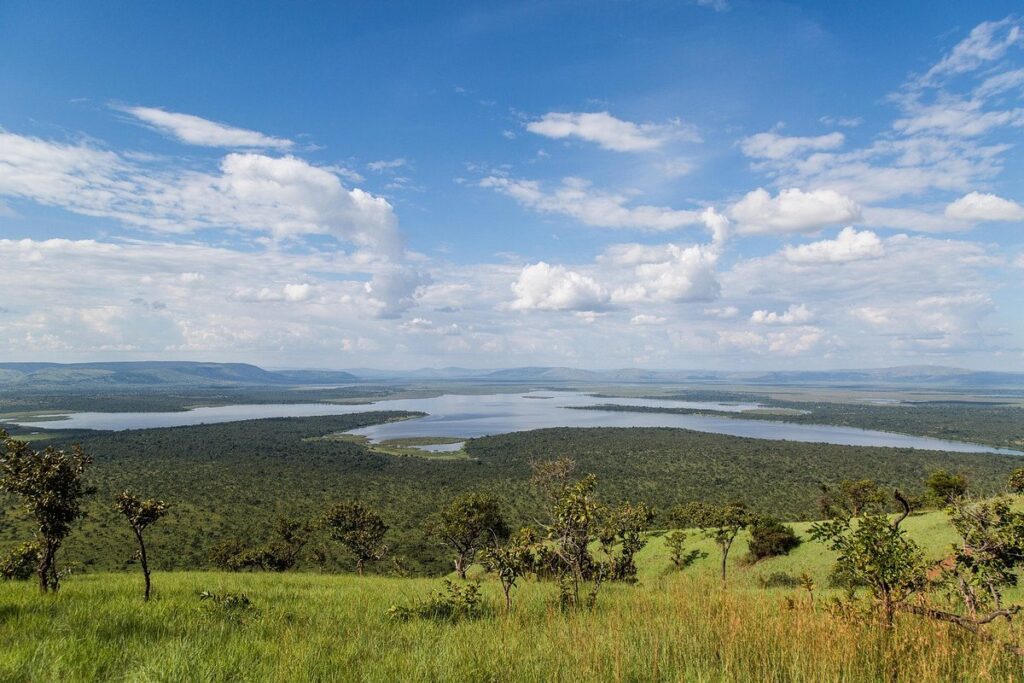
Akagera National Park is a 1,122-square-kilometer protected area in northeastern Rwanda, hugging the Tanzanian border, jointly run by the Rwanda Development Board and the Johannesburg-headquartered conservation NGO African Parks since 2010, in what is now considered one of the most complete park recoveries on the continent. The park takes its name from the Kagera River, which forms its eastern boundary and feeds the chain of lakes Ihema, Shakani, Rwanyakazinga, Mihindi, and others that together make up more than a third of the park’s total area, the largest protected wetland system in East and Central Africa.
Akagera National Park: Rwanda's Big Five Safari Guide 2027

From 2,500 Square Kilometers to Near-Collapse

Belgian colonial authorities established Akagera in 1934 as a hunting and wildlife reserve of roughly 2,500 square kilometers. Its fortunes turned after the 1994 genocide against the Tutsi, when hundreds of thousands of returning refugees settled inside the park’s boundaries; by 1997 more than half its land had been formally degazetted for resettlement and cattle grazing, shrinking Akagera to its current 1,122 square kilometers. The wildlife that survived the encroachment did not survive the following decade; cattle herders protecting livestock poisoned the park’s last lions by the early 2000s, and the final confirmed black rhino sighting came in 2007. By the time African Parks arrived, Akagera had lost its Big Five entirely and much of its wider game population besides.

The African Parks Turnaround

The 2010 management agreement between the Rwanda Development Board and African Parks brought an initial capital investment of roughly USD 10 million, starting with a single, unglamorous intervention: a 120-kilometer predator-proof fence around the park’s boundary. That fence ended the human-wildlife conflict that had driven the earlier poisoning and poaching, and it is what allowed the reintroduction program that followed to actually succeed rather than repeat the losses of the 1990s. The results, in sequence, form one of Africa’s clearest conservation-recovery timelines:

Year Milestone
2015 Seven lions were reintroduced from KwaZulu-Natal reserves in South Africa; the first cubs were born within a year of arrival.
2017 18 eastern black rhinos relocated from South Africa, the first rhino in the park in a decade.
2019 Five more black rhinos arrive from three European zoos, marking the first-ever rhino relocation directly from a zoo population into the wild.
2021 30 white rhinos translocated from Phinda Private Game Reserve, South Africa.
2025 70 additional white rhinos arrive from South Africa in June, the largest single rhino translocation in the park’s history.

By 2025, Akagera was welcoming 67,661 visitors a year and, in a recent reporting year, generated USD 4.8 million in tourism revenue, up from USD 3.7 million the year before. These figures, which in 2022 already covered as much as 92 percent of the park’s own operating expenses, represent a genuinely rare achievement among African protected areas, most of which still depend heavily on donor funding. In October 2025, National Geographic named Akagera one of its 25 Best of the World destinations for 2026, external validation of a recovery that Rwanda specialists had been quietly recommending for years. Akagera is now the only park in Rwanda that holds all Big Five species and one of the relatively few places in Africa where a traveller can see lion, leopard, elephant, buffalo, and both rhino species in a single, compact game-viewing circuit. For context on how this park fits within Rwanda’s wider protected-area network, see our complete Rwanda safaris guide.

Akagera National Park at a Glance

Detail Akagera National Park
Size 1,122 km² (433 sq mi)
Established 1934; refounded under African Parks co-management in 2010
Location Eastern Rwanda, bordering Tanzania
Distance from Kigali ~110 km / approx. 2.5 hours by road
Altitude 1,250 – 1,825 metres
Habitat Savanna, acacia woodland, papyrus swamp, lake system
Big Five present Lion, leopard, elephant, buffalo, black & white rhino
Bird species 500+
Entry fee (non-resident) USD 50 per person, per day
Best months June–September and January–February

Wildlife in Akagera: The Big Five and What Else You’ll See

Akagera is the only park in Rwanda where lion, leopard, elephant, buffalo, and rhino can realistically be seen inside a single itinerary, and its lake system adds a density of hippo, crocodile, and waterbird life that few savanna parks anywhere can match.

Predators and Big Game
Rwanda Safaris: The Complete Expert Guide (2027)

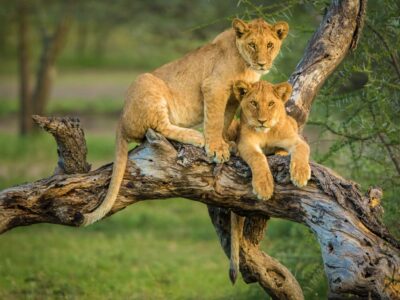
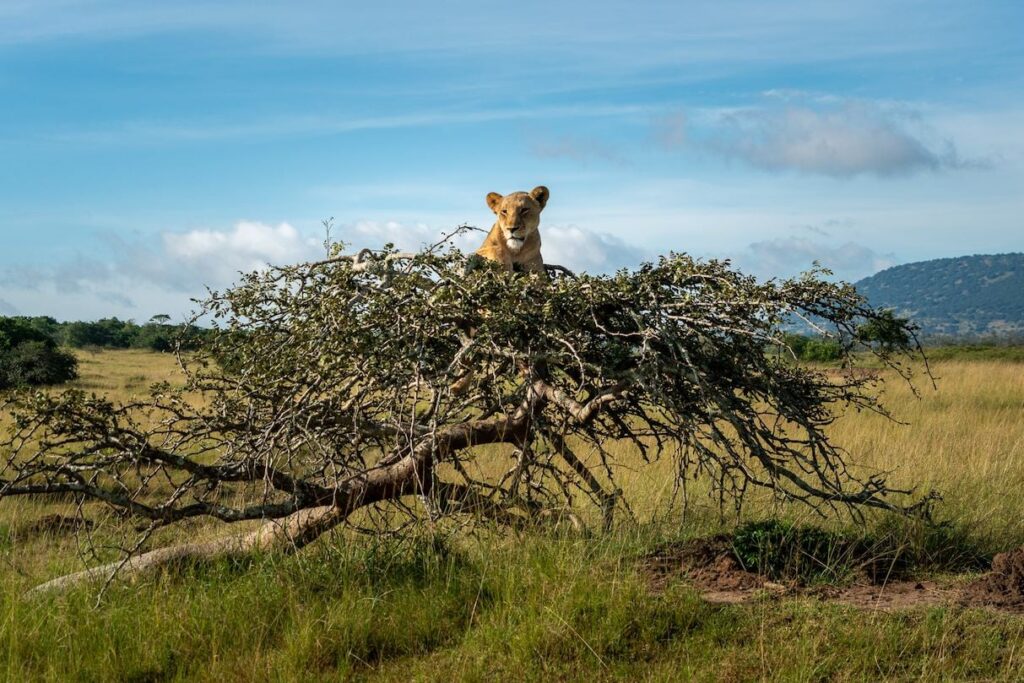
The descendants of the seven lions reintroduced in 2015 have grown into multiple prides spread across the park’s central and southern sectors, most consistently encountered on morning game drives around open grassland. Leopard is present but genuinely elusive, and a guided night drive offers a far better chance of a sighting than daytime game viewing. You can see elephants and buffalo with reasonable consistency, typically in woodland and around the lakeshore in the early morning and late afternoon. Both the black rhino, a critically endangered subspecies, and the white rhino, whose numbers grew substantially after the June 2025 translocation of 70 individuals from South Africa, are present, though rangers sometimes restrict access to specific monitoring zones to protect the animals from disturbance while newer arrivals settle in.

The Water World: Hippos, Crocodiles, and the Shoebill

Lakes and papyrus swamps cover more than a third of Akagera, and Lake Ihema, Rwanda’s second-largest lake, holds one of the country’s densest hippo populations alongside basking Nile crocodiles, both easily seen on a boat safari. Further north, the swamps around Lake Rwanyakazinga and Lake Shakani are the realistic home range of the shoebill stork, a large, prehistoric-looking bird that ranks among Africa’s most sought-after sightings for serious birders and is one of the clearest reasons a keen photographer or birdwatcher should choose Akagera over a park without comparable wetland habitat.

Plains Game and Birdlife

Giraffe, zebra, eland (Africa’s largest antelope), topi, roan antelope, oribi, and impala are all resident, with Kilala Plain, in the park’s center, the single most reliable spot for concentrated sightings. Giraffe and zebra in particular gather here in numbers at night for safety from predators, making early-morning and late-afternoon drives through this area especially rewarding. Akagera’s bird list runs past 500 species, including the African fish eagle, papyrus gonolek, and swamp flycatcher, giving the park a genuine claim to being one of Rwanda’s two or three best birding destinations alongside Nyungwe.

Where to Find Akagera’s Signature Species

Species Where to Look Best Activity
Lion Central & southern grassland Morning or night game drive
Leopard Riverine woodland, rocky outcrops Night game drive
Elephant Woodland & lakeshore Game drive, boat safari
Black & white rhino Northern & central monitoring zones Guided game drive with ranger
Buffalo Open grassland herds Game drive
Hippo & Nile crocodile Lake Ihema, Lake Shakani Boat safari
Shoebill stork Papyrus swamps near Rwanyakazinga Early-morning boat safari
Giraffe & zebra Kilala Plain Game drive
500+ resident & migrant birds Throughout, lakeshore best Walking safari, boat safari

How Akagera Compares with East Africa’s Other Safari Parks

Akagera is a fraction of the size of East Africa’s most famous savanna parks, and it does not attempt to compete with them on sheer volume of plains game; its value proposition is different: genuine Big Five wildlife inside the same country as your gorilla trek, seen without the vehicle density that can affect sightings at the region’s better-known parks during peak season.

Park Country Approx. Size Signature Wildlife Pairs with Gorilla Trekking?
Akagera Rwanda 1,122 km² Big Five, shoebill stork, low crowds Yes, same country, no border crossing
Serengeti Tanzania ~14,750 km² Great Migration, Big Five No, separate country & flight sector
Masai Mara Kenya ~1,510 km² Big Five, wildebeest migration (Jul–Oct) No, separate country & flight sector
Queen Elizabeth NP Uganda ~1,978 km² Tree-climbing lions, Kazinga Channel boat safari Yes, if paired with the Bwindi land border crossing

For travellers specifically wanting migration-scale herds, Rwanda Gorilla Expeditions builds multi-country itineraries that combine Rwanda with the Serengeti or the Masai Mara. See our Gorillas & the Great Migration and Primates & Plains itineraries. For travellers who want a complete, single-country Big Five and primate circuit without a second visa or flight sector, Akagera alongside Volcanoes National Park and Nyungwe Forest National Park is the more efficient choice, and it is the reason most first-time Rwanda travellers ultimately add Akagera to their plans rather than treating gorilla trekking as a standalone trip.

Plan Your Rwanda Safari

Start Planning a Private Gorilla Trek

Rwanda gorilla permits sell out months in advance. Secure your dates before the season closes.

How to Experience Akagera: Game Drives, Boat Safaris & Night Drives.

Akagera offers four distinct ways to see wildlife: day game drives, night game drives, boat safaris on Lake Ihema, and guided walking safaris. This combination is not available in any of Rwanda’s other national parks and is one of the park’s clearest advantages over the primate-focused experience of Volcanoes and Nyungwe.

Day Game Drives

Most Akagera itineraries build around a morning and an afternoon game drive, each roughly three to four hours, timed around the cooler parts of the day when animals are most active. Drives cover different sectors depending on recent ranger reports of predator and rhino movement, with Kilala Plain in the park’s center consistently the most productive area for concentrated sightings.

Night Game Drives

Night drives are one of Akagera’s genuine differentiators within Rwanda, offering the best realistic chance of spotting leopard, along with side-striped jackal, white-tailed mongoose, and other nocturnal species rarely seen during the day. Only guests staying at lodges inside or immediately adjacent to the park can book night drives, since they depart after the park’s standard daytime hours. One reason lodge choice matters as much as itinerary design for wildlife-focused travellers is that it can significantly enhance the overall experience.

Boat Safaris on Lake Ihema

A one-hour boat safari on Lake Ihema gets close to hippo pods and basking Nile crocodiles, while the lake’s papyrus fringes hold much of the park’s exceptional birdlife. Travellers focused specifically on the shoebill stork should instead arrange a boat safari further north around Lake Rwanyakazinga, accessible primarily through Wilderness Magashi Peninsula.

Walking Safaris and Rhino Tracking

Guided walking safaris, with an armed ranger, are available in designated sectors and provide a quieter way to see wildlife, which is better for birding and for noticing smaller things like insects, plants, and tracks that a vehicle passes too quickly to see. Some lodges can arrange a more specialized rhino-tracking experience alongside the park’s monitoring team, subject to availability and current rhino locations.

Akagera Activities: Duration & Indicative Cost

  1. Morning or afternoon game drive 3 to 4 hours from around USD 400–650 per vehicle (private, up to 4–6 guests)
  2. Night game drive approx. 2 hours from around USD 100–150 per person, lodge guests only
  3. Lake Ihema boat safari 1 hour around USD 35–45 per person
  4. Guided walking safari: 1.5 to 2 hours from around USD 40–60 per person
  5. Full-day game drive with picnic lunch 6 to 8 hours from around USD 600–900 per vehicle

Where to Stay in Akagera National Park

Akagera’s four principal lodges cover the full luxury spectrum, from an ultra-exclusive new tented camp to a straightforward hilltop hotel, and the right choice depends more on your priorities, privacy, birding, or value than on budget alone.

Family Rwanda Safari Style

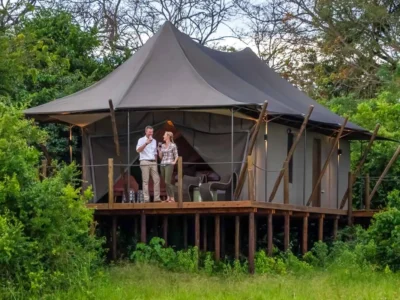
Wilderness Magashi Peninsula

Magashi, Akagera’s ultra-luxury choice, is positioned on the shore of Lake Rwanyakazinga in the park’s remote northern sector and reopened in an expanded, elevated form in late 2025. Accessible only by boat or light aircraft from the main camp area, it is the best base in the park for shoebill searching and for travelers who want total privacy alongside Big Five game viewing.

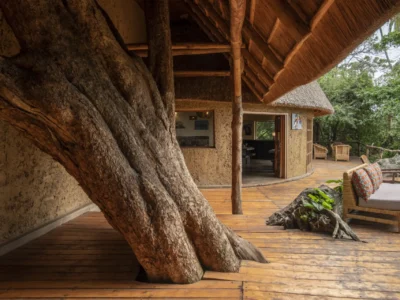
Ruzizi Tented Lodge

Ruzizi Tented Lodge

Set on the shore of Lake Ihema, close to the park’s southern entrance, Ruzizi is a comfortable, mid-range tented lodge that offers strong value for first-time Big Five travellers and easy access to the daily boat safari.

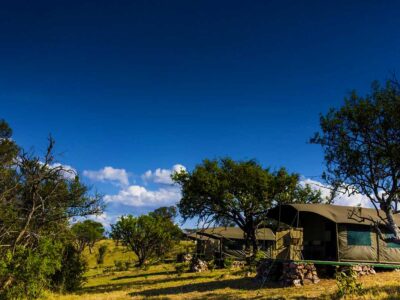
Karenge Bush Camp

Karenge Bush Camp

Recently renovated, Karenge sits in the park’s quieter northern reaches and offers a more rustic, adventurous stay for travelers who want a deeper sense of remoteness than the more established properties near the main gate.

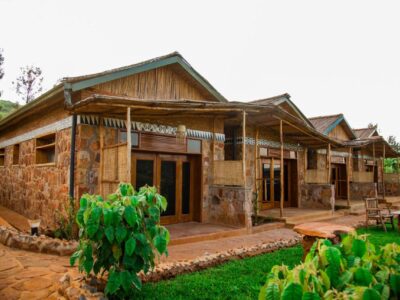
Akagera Game Lodge

Akagera Game Lodge

A hotel-style property with a swimming pool set on a hilltop overlooking the park, Akagera Game Lodge is the most accessible option for travellers prioritising value, families, or larger groups travelling together.

Plan Your Rwanda Safari

Start Planning a Private Gorilla Trek

Rwanda gorilla permits sell out months in advance. Secure your dates before the season closes.

Combining Akagera with Gorilla Trekking: Building the Right Itinerary

The single most common way experienced travellers use Akagera is as a two- to three-night complement to gorilla trekking in Volcanoes National Park, and the routing decision of whether to visit Akagera first or the gorillas first matters more than most travellers initially assume.

Akagera First: The Gentle Start

Beginning with Akagera, let travelers acclimatize to Rwanda at a lower altitude and a gentler physical pace, with vehicle-based game drives rather than a forest hike, before the more demanding trekking day in the Virunga foothills. This ordering works particularly well for travelers arriving on long-haul flights who want a day or two to recover before the exertion of gorilla trekking.

Gorillas First, Akagera After: The Wind-Down

Reversing the order places the physically demanding trek early in the trip, while energy levels are highest, and uses Akagera’s relaxed, vehicle-based safari as a lower-effort close to the journey. Many honeymoon and older-traveller itineraries favour this sequencing for exactly that reason.

Adding Nyungwe for the Full Three-Park Circuit

Travellers with eight days or more frequently add Nyungwe Forest National Park for chimpanzee trekking and the canopy walkway, creating the complete three-park Rwanda circuit: Big Five savanna in Akagera, mountain gorillas and golden monkeys in Volcanoes, and primates and rainforest in Nyungwe, usually bookended by two nights in Kigali. This is the itinerary structure most first-time Rwanda visitors describe as the most complete short safari available anywhere in East Africa, and it is the foundation of our own Rwanda safari styles planning approach.

Exclusive Gorilla Trekking in Rwanda

Best of Rwanda’s National Parks (10 Days)

The definitive way to see Akagera properly: gorilla trekking in Volcanoes, chimpanzee tracking in Nyungwe, and two to three nights of Big Five game viewing in Akagera, bookended by time in Kigali.

Rwanda Safari Styles: Which Travel Style Is Right for You?

Primates & Plains: Rwanda & Kenya

For travellers who want an introduction to Akagera’s Big Five, followed by the migration-scale plains game of the Masai Mara, this multi-country itinerary pairs Rwanda’s gorillas and Akagera with Kenya’s signature safari landscape.

Getting to Akagera National Park

Akagera’s Southern (Kiyonza) entrance gate sits roughly 110 kilometers and 2.5 hours by road from Kigali International Airport, via Rwamagana and Kayonza on a paved, well-maintained highway. Rwanda Gorilla Expeditions provides this transfer in a private 4×4 vehicle with an experienced driver-guide as standard on every itinerary. Travellers on a tight schedule sometimes charter a light aircraft from Kigali instead, cutting the journey significantly, though the flight is arranged case by case through specialist charter operators rather than as a scheduled service. If you are travelling on to Volcanoes National Park afterward, the return leg typically routes back through or near Kigali, adding roughly four to five hours of total driving time for the connection. Most specialists recommend a one-night buffer in Kigali between the two parks rather than attempting a same-day transfer.

Costs at a Glance

Item Indicative Cost
Park entrance fee (non-resident) USD 50 per person, per day
Full-day private game drive USD 400 – 900 per vehicle
Lake Ihema boat safari USD 35 – 45 per person
Night game drive USD 100 – 150 per person
Accommodation (per person, per night) USD 150 (value) to USD 1,000+ (ultra-luxury)
Rwanda tourist visa (30 days, on arrival) USD 50

A well-designed 7-day Rwanda safari combining gorilla trekking, Akagera, and premium lodges typically runs USD 8,000–15,000 per person depending on season and property selection.

When to Visit Akagera National Park.

Best time for gorilla trekking.

The two dry seasons, June to September and January to February, offer the best game viewing, with shorter grass, clearer visibility, and firmer roads. The long rains (March–May) and short rains (around November) make some internal roads harder to navigate and push wildlife into taller grass, though the park remains open and accessible year-round with a reliable vehicle and guide. Because this dry-season window overlaps closely with Volcanoes National Park’s gorilla trekking peak, most fully combined itineraries are naturally built around the same June–September or December–February periods.

What to Pack for an Akagera Safari

What to Pack for gorilla trekking

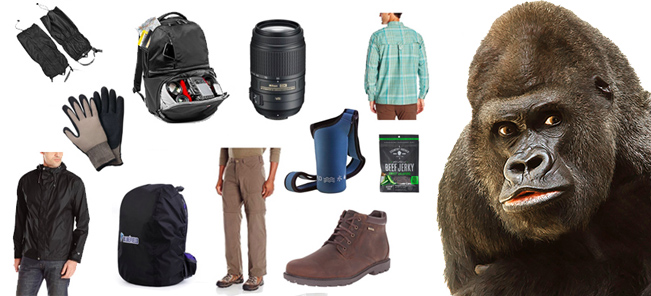
  • Neutral-colored clothing in khaki, olive, or stone tones rather than bright colors or black, which are more comfortable in Akagera’s savanna heat than the darker layers recommended for gorilla trekking
  • A wide-brimmed hat, high-SPF sunscreen, and polarized sunglasses for long hours in an open-sided vehicle
  • A light long-sleeved layer for early-morning and night drives, when temperatures drop noticeably even in the dry season
  • Binoculars are more valuable here than almost anywhere else in Rwanda, given the distances involved in spotting rhinos, leopards, and the shoebill stork
  • Anti-malarial medication and insect repellent, given the park’s lower altitude and correspondingly higher mosquito activity than Volcanoes National Park
  • A camera with a 300mm-or-longer zoom lens, which makes a far greater difference to photo quality on open savanna than a phone camera alone

What Tour Operators Won’t Always Tell You About Akagera

  • Not every game drive delivers all of the Big Five, or even most of them; rhino and leopard sightings genuinely depend on ranger radio contact on the day, and any operator promising a guaranteed sighting is overselling the experience.
  • Kilala Plain is the single most productive spot for concentrated game viewing; if wildlife density matters more to you than covering the whole park, ask your guide to prioritize it on your first drive rather than saving it for later.
  • Malaria risk in Akagera is real and often glossed over in marketing that focuses on Rwanda’s high-altitude gorilla parks budget for prophylaxis and repellent specifically for this leg of the trip, not just generically for “Rwanda.”
  • Boat safaris sell out at busy lodges in peak season because only one or two boats operate on Lake Ihema at any time. Book this activity alongside your accommodation, not as an afterthought on arrival.
  • The rhino population is still being actively integrated following the 2025 translocation of 70 white rhino; ask your operator for the current status of sightings rather than assuming every rhino in the park is equally easy to find yet.

Plan Your Rwanda Safari

Start Planning a Private Gorilla Trek

Rwanda gorilla permits sell out months in advance. Secure your dates before the season closes.

Frequently Asked Questions About Akagera National Park

How do I get to Akagera National Park from Kigali?

Akagera National Park sits roughly 110 kilometers east of Kigali, a drive of approximately two and a half hours on a paved and well-maintained road that runs through Rwamagana and Kayonza before reaching the park’s southern entrance gate. Rwanda Gorilla Expeditions provides this transfer in a private 4×4 vehicle with an experienced driver-guide as standard on every Akagera itinerary, rather than a shared shuttle. Some travellers on a tight schedule use a light aircraft charter from Kigali instead, which can cut the journey significantly, though this is arranged case by case through specialist charter operators rather than as a scheduled service. If you are travelling to Volcanoes National Park afterward, the return leg typically routes back through or near Kigali, adding roughly four to five hours of total driving for the connection, which is why most specialists recommend a one-night buffer in Kigali between the two parks.

How much does it cost to visit Akagera National Park?

International visitors pay a park entrance fee of USD 50 per person per day, which covers access to the park’s road network but not accommodation, transport, or activities. A private half- or full-day game drive typically costs in the range of USD 400 to 900 depending on group size and duration, and a one-hour boat safari on Lake Ihema adds a further USD 35 to 45 per person. Night game drives and guided walking safaris are priced separately and are usually only available to guests staying inside the park. Accommodation is the largest variable in an Akagera budget, ranging from around USD 150 per person per night at the value-oriented Akagera Game Lodge to well over USD 1,000 per person per night at Wilderness Magashi Peninsula. Rwanda Gorilla Expeditions builds Akagera into a fully quoted, all-inclusive itinerary alongside your gorilla trekking permit, so there are no surprise add-ons once you arrive.

Is Akagera National Park worth visiting?

For a traveller who has already committed to the cost and effort of a gorilla trekking permit in Rwanda, Akagera is very much worth the additional two to three nights, because it is the only place in the country offering genuine Big Five savanna game viewing to complement the primate-focused experience of Volcanoes National Park. National Geographic named Akagera one of its 25 must-visit destinations worldwide for 2026, specifically highlighting the low visitor numbers relative to more famous parks like the Serengeti. Akagera welcomed 67,661 visitors in 2025, a fraction of the crowds at Kenya’s Masai Mara or Tanzania’s Serengeti during peak migration season, which means game drives here rarely involve the vehicle congestion that can affect sightings elsewhere in East Africa. The honest caveat is that Akagera’s animal densities, while excellent for Rwanda, are lower than those of the Serengeti or Masai Mara at peak season, so travellers expecting migration-scale herds should calibrate their expectations accordingly.

Can you see the Big Five in Akagera National Park?

Yes, Akagera is the only national park in Rwanda where all Big Five species, lion, leopard, elephant, buffalo, and rhino, are present, following the successful reintroduction of seven lions in 2015 and eighteen black rhinos in 2017. Leopard is the most elusive of the five and is most reliably encountered on a guided night game drive rather than during standard daytime viewing. Elephant and buffalo are seen with reasonable consistency on most two-night visits, typically in woodland areas and around the lakeshores in the early morning and late afternoon. Both black rhino, a critically endangered subspecies, and white rhino, whose population grew substantially after a translocation of 70 individuals from South Africa in June 2025, are present, though rangers often restrict access to specific monitoring zones to protect the animals. No single game drive guarantees all five species; most travelers who see all five do so across two to three days of dedicated game viewing rather than a single outing.

How many days do you need in Akagera National Park?

Two nights is the practical minimum for a worthwhile Akagera visit, allowing for one full day of game driving plus a boat safari on Lake Ihema, with arrival and departure absorbing the transfer time on either end. Three nights is the ideal length for travellers who want to add a night game drive, explore the park’s northern sector, and build in a buffer for weather or slow wildlife days without feeling rushed. A one-day trip from Kigali is possible, but it means roughly five hours of driving for perhaps four hours inside the park, a poor use of time for travelers who have already invested in a Rwanda gorilla trekking permit and a long-haul flight. Rwanda Gorilla Expeditions typically recommends two nights at Ruzizi Tented Lodge or Magashi Camp as the standard addition to a gorilla trekking itinerary, extending to three nights for photography-focused travellers or those with a particular interest in the rhino and shoebill Itineraries.

What is the best time to visit Akagera National Park?

The two dry seasons, June through September and January through February, offer the best game viewing in Akagera, with shorter grass, clearer visibility, and more reliable road conditions than the wetter months. Rwanda’s long rains, March through May, and shorter rains around November make some of the park’s internal roads harder to navigate and push wildlife into taller grass, though the park remains open and accessible year-round with a reliable vehicle and guide. Because Akagera’s dry season aligns closely with Volcanoes National Park’s gorilla trekking peak season, most fully combined Rwanda itineraries are naturally built around the same June-to-September or December-to-February windows. Birders should note that the wet season, despite tougher game-drive conditions, brings migratory bird species into the park’s wetlands, making March to May and October to November genuinely rewarding for a birding-focused Akagera visit even though it is the low season for general game viewing.

Can I combine Akagera with gorilla trekking in Rwanda?

Yes, and this is by far the most common way experienced Rwandan travellers use Akagera; the park pairs naturally with a gorilla trekking day in Volcanoes National Park because both experiences are in the same small country, roughly two and a half hours from Kigali in opposite directions, with no border crossing or additional visa required. Most itineraries place Akagera either immediately before the gorilla trek, as a lower-altitude, physically gentler introduction to Rwanda, or just after, as an easier, vehicle-based wind-down following the exertion of trekking. A well-paced combined itinerary runs five to seven days: two nights in Akagera, one or two nights in transit or Kigali, and two nights near Volcanoes National Park for the gorilla trek itself, with permits and accommodation coordinated as a single booking. For travellers with additional time, Nyungwe Forest National Park can be added as a third stop, completing the full three-park Rwanda circuit.

Is Akagera safe, and what about malaria?

Akagera National Park is professionally managed with trained ranger guides, well-maintained roads, and no history of security incidents affecting tourists; Rwanda as a whole is consistently rated among the safest countries in Africa for travelers. The more relevant health consideration is malaria risk, which is meaningfully higher in Akagera than in the high-altitude Volcanoes National Park, because Akagera sits at a much lower elevation, between roughly 1,250 and 1,825 meters, where mosquitoes are more active. Anti-malarial prophylaxis is generally recommended for the Akagera portion of a Rwanda itinerary, and travelers should pack reliable insect repellent and consider covering up in the evenings around lakeshore lodges. Wild animal safety follows standard safari protocol: guests remain inside vehicles or with an armed ranger at all times during walking safaris, and lodges brief arriving guests on basic precautions around camp, particularly regarding hippos, which can be dangerous if encountered on land after dark.

Where can I see the shoebill stork in Akagera National Park?

The shoebill stork, a large, prehistoric-looking bird with a distinctive shoe-shaped bill, is one of Africa’s most sought-after bird sightings and is found in the papyrus swamps around Lake Rwanyakazinga and Lake Shakani in Akagera’s northern sector, an area most easily accessed by guests staying near Wilderness Magashi Peninsula. Sightings are not guaranteed on any single visit, as the shoebill is a solitary, shy bird that favors dense papyrus cover, but early-morning boat safaris in this part of the park offer the best realistic chance, guided by rangers who track known territories. Serious birders should budget at least two mornings in the Magashi area specifically for shoebill searching, rather than treating it as an add-on to a general game drive. Beyond the shoebill, Akagera’s wetlands support more than 500 recorded bird species in total, making the park a genuinely serious birding destination as well as a Big Five one.

How does Akagera compare to the Serengeti or Masai Mara?

Akagera is a fraction of the size of the Serengeti (roughly 14,750 square kilometers) or the Masai Mara (roughly 1,510 square kilometers) at 1,122 square kilometers, and its wildlife densities, while strong for Rwanda, do not match the sheer volume of plains game found on the Serengeti-Mara ecosystem during the wildebeest migration. What Akagera offers instead is genuine Big Five game viewing without competing for sightings against dozens of other vehicles, a routine occurrence at popular Masai Mara or Serengeti sightings during peak migration months. Akagera also has the significant practical advantage of sitting inside Rwanda itself, meaning it can be added to a gorilla trekking itinerary without a border crossing, additional visa, or a second country’s logistics, whereas combining gorilla trekking with the Serengeti or Masai Mara requires a full separate flight sector into Tanzania or Kenya. For travellers who want migration-scale plains game as well as gorillas, Rwanda Gorilla Expeditions designs multi-country itineraries pairing Rwanda with the Serengeti or the Masai Mara; for a complete single-country circuit, Akagera alongside Volcanoes and Nyungwe is the more efficient choice.

Can I self-drive in Akagera National Park?

Self-driving is technically permitted in Akagera, unlike Volcanoes National Park, where a ranger guide is mandatory for every activity, and travellers with their own capable 4×4 vehicle can navigate the park’s main road network independently after registering and paying the entrance fee at park headquarters. In practice, only a few of Rwanda Gorilla Expeditions’ clients choose to self-drive, because a private guide dramatically improves the odds of finding predators and rhino, both of which are tracked and radioed between ranger teams in ways an independent visitor cannot access, and because renting a genuinely capable 4×4 in Rwanda is neither cheap nor straightforward for a short visit. For travellers who do want to self-drive as part of a broader Rwanda road trip, hiring a ranger guide at park headquarters for a modest additional fee is strongly recommended and meaningfully improves sightings.

Where should I stay in Akagera National Park?

Akagera offers a genuinely well-differentiated set of lodges rather than a single dominant option: Wilderness Magashi Peninsula, reopened in expanded form on the shore of Lake Rwanyakazinga in late 2025, is the park’s ultra-luxury choice and the best base for shoebill searching; Ruzizi Tented Lodge, positioned on Lake Ihema, offers a comfortable mid-range tented experience with strong value for first-time Big Five travellers; Karenge Bush Camp, recently renovated, provides a more rustic, adventurous stay in the park’s quieter northern sector; and Akagera Game Lodge, a hotel-style property with a swimming pool on a hilltop, is the most accessible option for travellers prioritising value or larger groups. Rwanda Gorilla Expeditions matches travelers to the right property based on budget, group composition, and whether shoebill birding or classic Big Five game viewing is the priority.

Do I need a separate permit or visa to visit Akagera National Park?

No separate permit is required to visit Akagera beyond the standard park entrance fee of USD 50 per person per day, unlike gorilla trekking in Volcanoes National Park, which requires a dedicated USD 1,500 permit booked months in advance; this makes Akagera comparatively easy to add to an itinerary at short notice. Most nationalities can obtain a thirty-day Rwanda tourist visa on arrival at Kigali International Airport for USD 50, or via the online visa portal in advance, and this single visa covers travel to Akagera, Volcanoes, and Nyungwe National Parks without any additional paperwork. East African Community passport holders, including Ugandan, Kenyan, Tanzanian, and Burundian citizens, enter Rwanda visa-free. Activity fees for game drives, boat safaris, and night drives are booked separately and are typically arranged in advance by your operator rather than paid at the gate.

What should I pack for an Akagera safari?

Neutral-coloured clothing khaki, olive, or stone tones rather than bright colors or black, works well for game drives and is more comfortable in the heat than the darker layers recommended for gorilla trekking in the cooler Volcanoes National Park. A wide-brimmed hat, high-SPF sunscreen, and polarized sunglasses are essential, since much of the day is spent in an open-sided vehicle with little shade, and a light long-sleeved layer for early morning and night drives is worth packing even in the dry season. Binoculars are more valuable in Akagera than almost anywhere else in Rwanda, given the distances involved in spotting rhinos, leopards, and the shoebill stork across open terrain. Anti-malarial medication, insect repellent, and a basic first aid kit are sensible given the park’s lower altitude, and a good zoom lens of 300mm or longer makes a significant difference to photography quality on open savanna compared with a phone camera alone.

Plan Your Akagera & Gorilla Trekking Safari

Akagera is easiest to arrange as part of a single, coordinated Rwanda booking rather than as a separate add-on you organize yourself, especially since gorilla permits and the best Akagera lodges sell out so quickly in peak months. Tell us your travel dates, and we’ll check gorilla permit availability, confirm space at Magashi or Ruzizi, and build a full day-by-day itinerary usually within a few minutes of your inquiry. Reach the team on WhatsApp or by email, or visit our contact page for every way to get in touch.

Ready to Trek? Permits are limited — plan early.