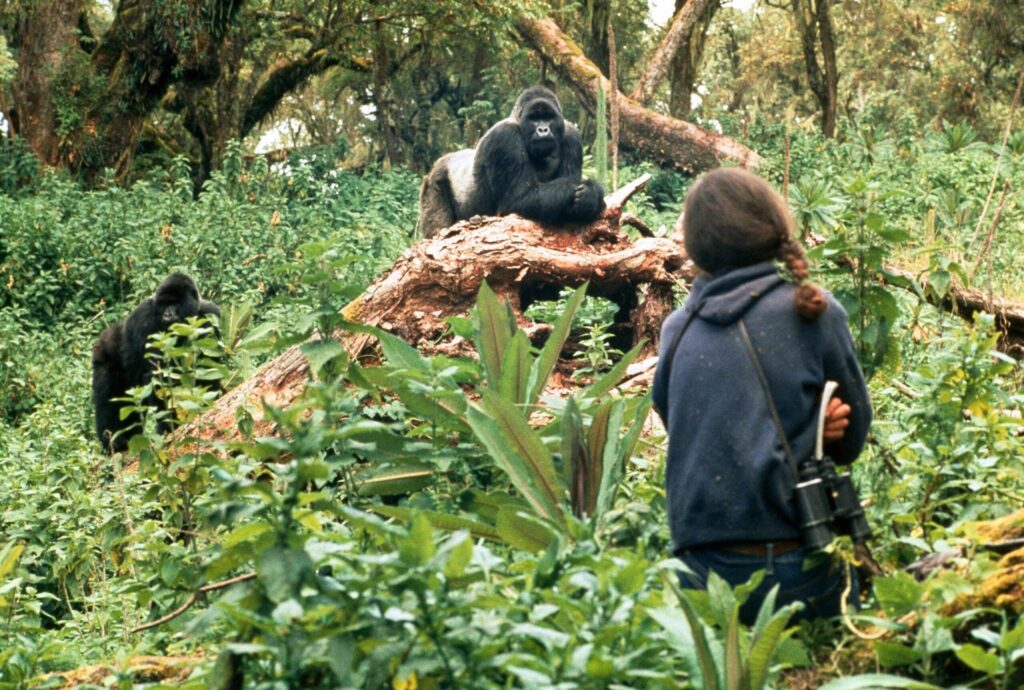
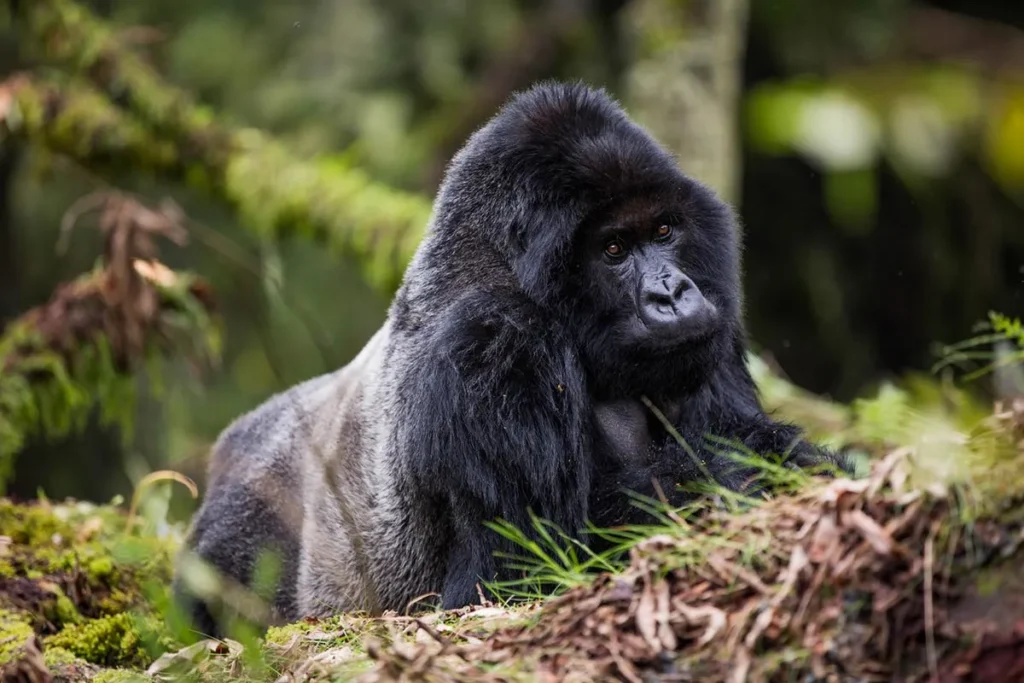
Nyungwe Forest National Park: Chimpanzees and the Canopy Walk
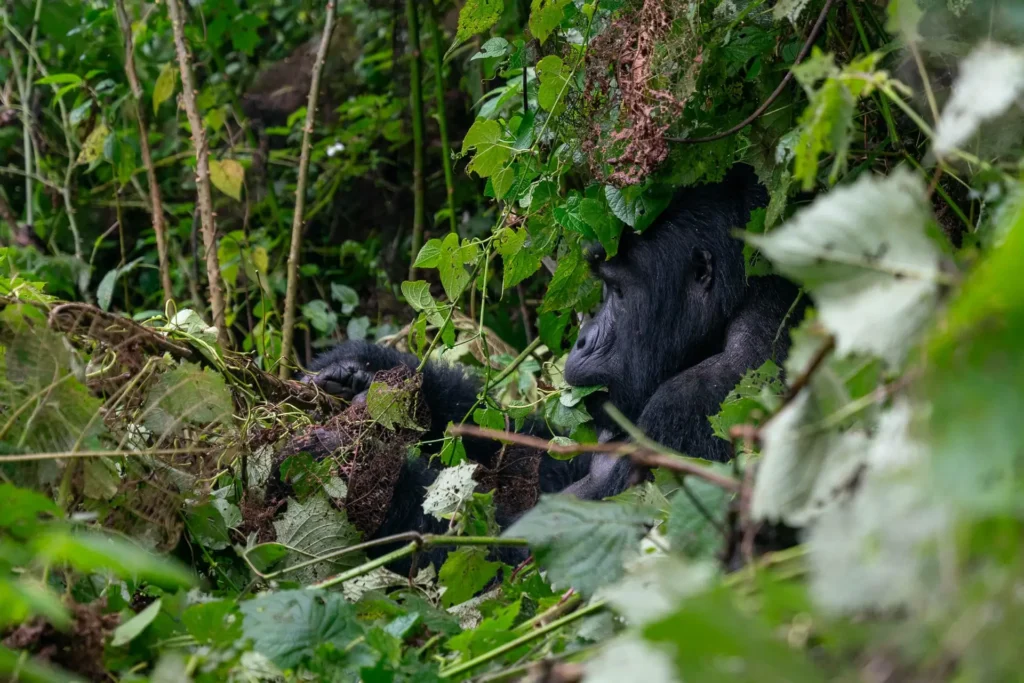
Nyungwe Forest National Park in southwestern Rwanda is one of Central Africa’s oldest and most biodiverse montane rainforests, covering 1,020 square kilometers of unbroken canopy that has remained largely undisturbed for over a million years. The park protects thirteen primate species, including chimpanzees and the Angolan colobus, a black-and-white monkey that forms troops of up to 400 individuals and generates one of the most dramatic wildlife displays in Africa when a large troop moves through the canopy overhead.
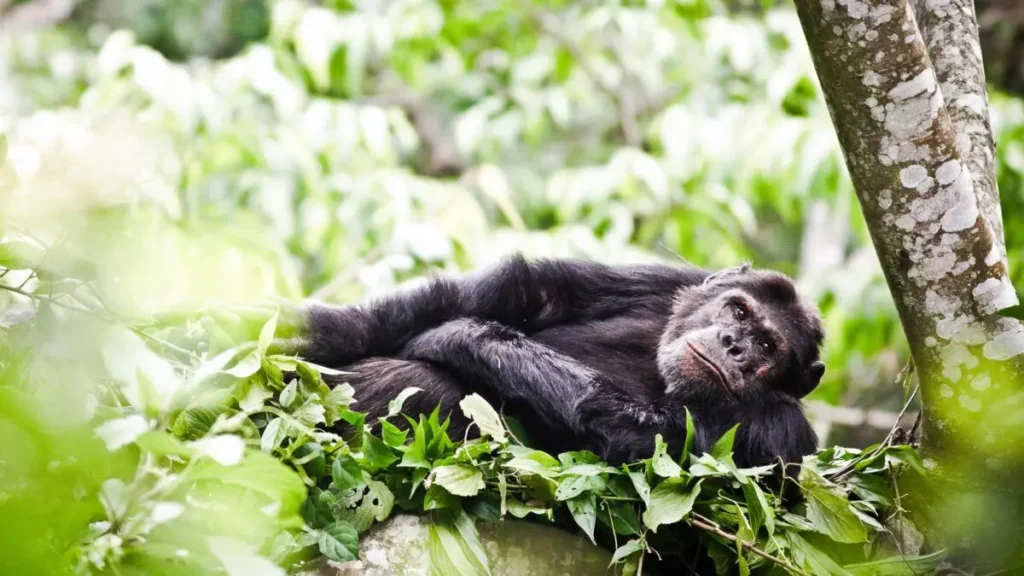
Chimpanzee trekking in Nyungwe requires a permit issued by the RDB and is priced at USD 150 per person, substantially lower than gorilla trekking, but an encounter of genuine depth with our closest living relatives in a forest ecosystem of world-heritage quality. The park also offers the Canopy Walkway, a 200-meter suspension bridge suspended 70 meters above the forest floor that provides a perspective on the rainforest that is impossible to appreciate from the ground. Birders will find Nyungwe extraordinary: the park hosts over 300 bird species, including 29 Albertine Rift endemics.
Nyungwe sits approximately five hours by road from Kigali or four hours from Volcanoes National Park via the scenic Lake Kivu corridor, a drive that passes through some of the most dramatic terrace-farmed mountain landscapes in Africa. Most itineraries that include Nyungwe combine it with a night on Lake Kivu to break the journey, creating a natural circuit that adds the lake experience to the safari without unnecessary backtracking.
Golden Monkey Trekking in the Virunga Mountains
Considerably less widely known than gorilla trekking but almost equally rewarding, golden monkey trekking takes place in the same bamboo-and-forest habitat of Volcanoes National Park. The golden monkey (Cercopithecus kandti) is an Albertine Rift endemic found nowhere else on earth, and the two habituated groups in the park number over 80 individuals, making encounters richly dynamic. Unlike gorilla trekking, where the encounter is intimate and quiet, golden monkey groups are mobile, noisy, and acrobatic, providing an entirely different but equally spectacular wildlife experience.
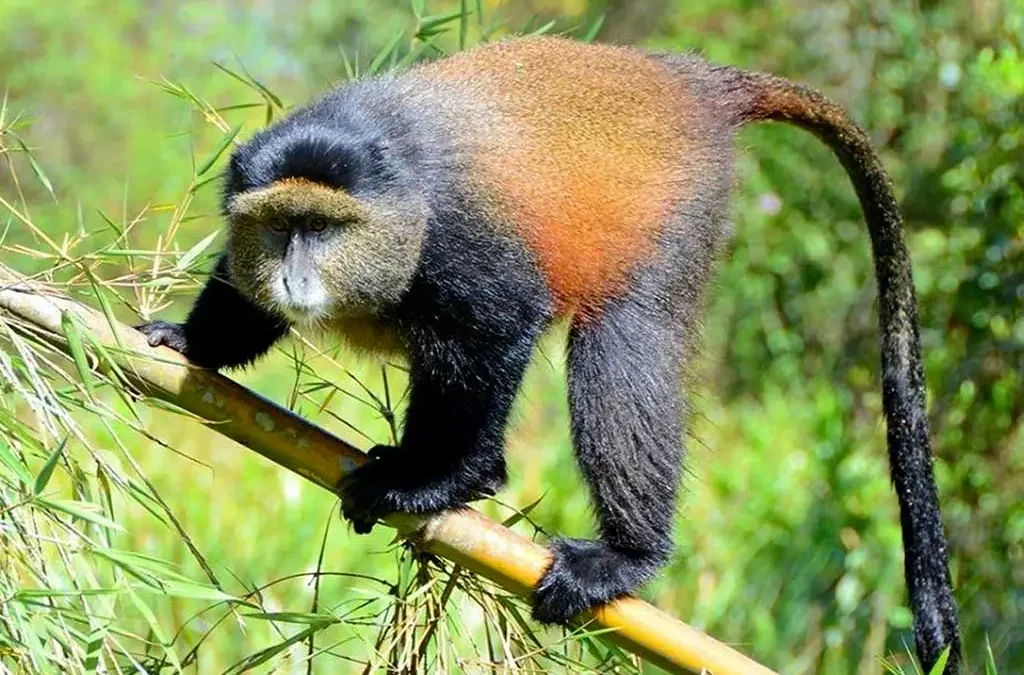
Golden monkey permits cost USD 100 per person and are often available at shorter notice than gorilla permits. Many Rwanda safari itineraries of three days or more include both experiences: gorilla trekking one day and golden monkeys the next, as the park logistics and accommodation requirements are identical. This pairing is particularly popular with photography-focused travellers, as the two species present dramatically contrasting photographic challenges.
Lake Kivu: Rwanda’s Inland Riviera
Straddling the border between Rwanda and the Democratic Republic of Congo, Lake Kivu is one of Africa’s Great Rift Valley lakes and one of its most visually arresting, a 2,700-square-kilometer expanse of deep blue water set against a backdrop of volcanic hills and dense forest, at an altitude of 1,460 meters above sea level that keeps temperatures permanently pleasant. The Rwandan shore, anchored by the resort town of Gisenyi (Rubavu) in the north and the more genteel Kibuye (Karongi) further south, has developed steadily as a leisure destination for both regional visitors and international travelers.
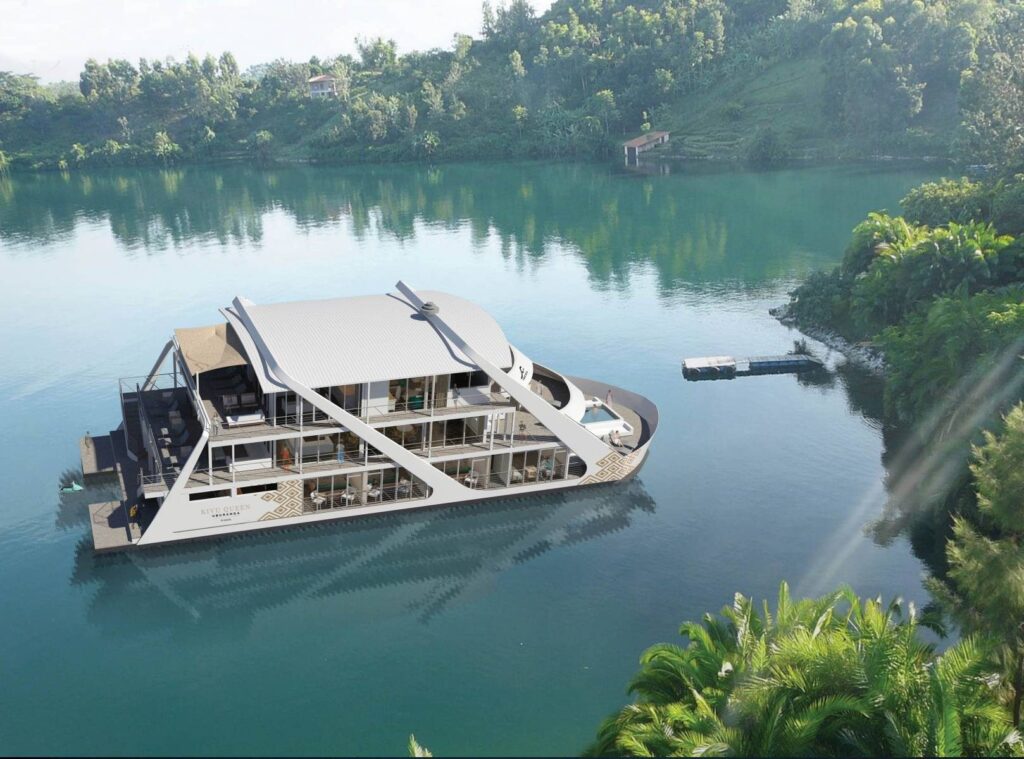
For Rwanda safari itineraries, Lake Kivu serves primarily as a transition point between Volcanoes National Park and Nyungwe Forest, but it warrants at least one overnight in its own right. Kayaking among the lake’s many islands, fishing for Nile perch, taking a boat to the Napoleonic island of Ijwi, or simply sitting on a terrace above the water watching the sunset over the DRC mountains, these are experiences that exist in almost no other safari destination on earth, and they add a dimension of tropical leisure to a wildlife-focused itinerary that many travelers find unexpectedly memorable.
Kigali: Africa’s Most Liveable Capital
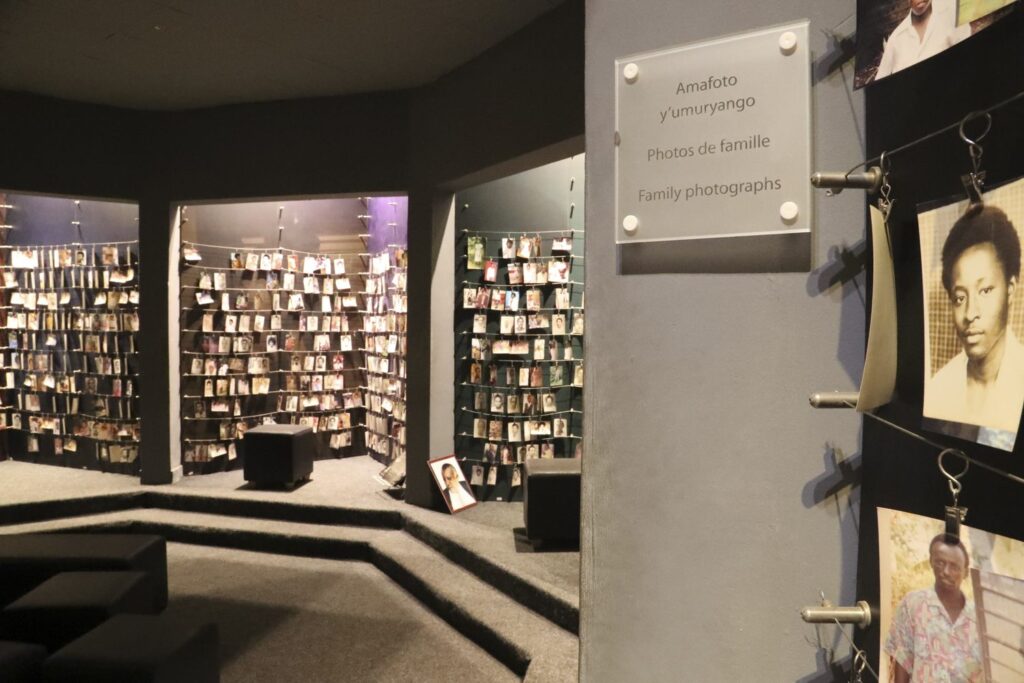
Every Rwanda safari begins or ends in Kigali, and the capital deserves more than a single night in transit. Consistently ranked as Africa’s cleanest and safest city by Mercer and the Economist Intelligence Unit, Kigali is a city of unexpected elegance, tree-lined boulevards, outstanding restaurants, vibrant contemporary art galleries, and an emerging café culture fueled by excellent Rwandan single-origin coffee. The Kigali Genocide Memorial, a sobering and sensitively presented monument to the 1994 genocide, is a visit that many travellers describe as profoundly moving and essential for understanding the country’s contemporary trajectory.
The Kimironko Market and Nyamirambo neighborhood provide access to the city’s local texture: fabric workshops, street food, live music, and the warmth of everyday Kigali life. Inema Arts Centre and the Ivuka Arts Kigali studio represent a contemporary arts scene of genuine quality. For dining, Kigali now supports restaurants of a standard that rivals Nairobi or Cape Town from rooftop cocktail bars in the CBD to farm-to-table restaurants in the Nyarutarama hills. Allowing two nights in Kigali on either side of a Rwanda safari is not a compromise; it is an enhancement.
The Best Time to Go on a Rwanda Safari
Rwanda has two dry seasons and two rainy seasons, though the country’s equatorial position and varied topography mean that the concept of “dry season” is relative rather than absolute. The two primary dry seasons, June through September and December through January, are the most popular periods for Rwanda safaris and represent the easiest trekking conditions in Volcanoes National Park: drier trails, clearer sightlines in the forest, and generally more predictable access.

June through September is peak safari season, aligning with the northern hemisphere’s summer holiday period and offering the driest trekking conditions of the year. This is also the period when gorilla permits become most constrained and prices for premium lodges reach their annual highs. December through January represents a shorter, slightly softer peak with excellent conditions, lower lodge occupancy, and better permit availability than June through September.
The longer rains (March through May) bring lush green landscapes, dramatically reduced lodge rates, fewer competing visitors, and trekking conditions that most operators describe as perfectly manageable with appropriate waterproof gear. Many experienced Rwanda safari travelers specifically choose this period for the atmosphere of mist-draped volcanoes, vivid vegetation, and an intimacy with the forest that the dry-season crowds can dilute. The shorter rains of October and November are typically lighter and rarely disrupt trekking schedules.
For comprehensive seasonal planning tailored to specific experiences, the Rwanda Gorilla Expeditions travel guide provides regularly updated guidance on conditions across all park areas.
Rwanda Safari Costs: What to Budget and Expect
Rwanda is not an inexpensive destination, nor does it attempt to be. The country has deliberately positioned itself at the premium end of the African safari market with high permit costs, required park entry fees, and a lodge ecosystem anchored by properties that charge USD 500 to USD 2,000 per person per night. This is not accidental. Rwanda’s conservation strategy is built on the economic principle that high value equals low volume and that genuine wildlife protection requires genuine financial investment from those who wish to experience it.
A gorilla trekking permit is USD 1,500 per person. A chimpanzee permit in Nyungwe is USD 150. Golden monkey permits cost USD 100. Akagera park entry for international visitors is USD 50 per person per day. Against these fixed costs, the variables are accommodation, ground transport, and guide fees. A well-designed seven-day Rwanda safari combining gorilla trekking, Akagera, and Nyungwe staying in the country’s premier lodges will typically cost between USD 8,000 and USD 15,000 per person, depending on the season and specific properties selected.
For travellers comparing Rwanda with Uganda, where gorilla permits cost USD 800 rather than USD 1,500, the Rwanda vs. Uganda gorilla trekking comparison covers the full picture: Rwanda’s higher permit cost is offset by superior infrastructure, shorter trekking times on average, and a logistical efficiency that makes the overall experience considerably more seamless.