Uganda vs Rwanda vs DR Congo: How the Three Gorilla Countries Compare
Uganda is the only one of the three gorilla trekking countries where a single itinerary, with no border crossing required, can combine mountain gorillas, a full Big Five savannah safari, chimpanzee tracking, and one of Africa’s most dramatic river systems. Rwanda, Uganda, and the Democratic Republic of Congo are the only three countries on earth where wild gorilla trekking exists, and each has built a distinct model around the same underlying resource. Our complete gorilla trekking guide covers all three destinations in full technical detail; the table below distills the decision to the factors that matter most for a first booking.
| Factor |
Uganda |
Rwanda |
DR Congo |
| Standard gorilla permit (2026) |
USD 800 (USD 600 low season) |
USD 1,500 (flat, year-round) |
USD 400 (currently restricted) |
| Habituated gorilla families |
Roughly 25+ across Bwindi and Mgahinga |
Up to 24 in Volcanoes National Park |
Small number in Virunga NP; more in Kahuzi-Biega |
| Distance from main international airport |
8-10 hrs by road from Entebbe (or ~90 min by air) |
2-2.5 hrs by road from Kigali |
Variable; access via Goma or Rwanda border |
| Non-gorilla wildlife in the same country |
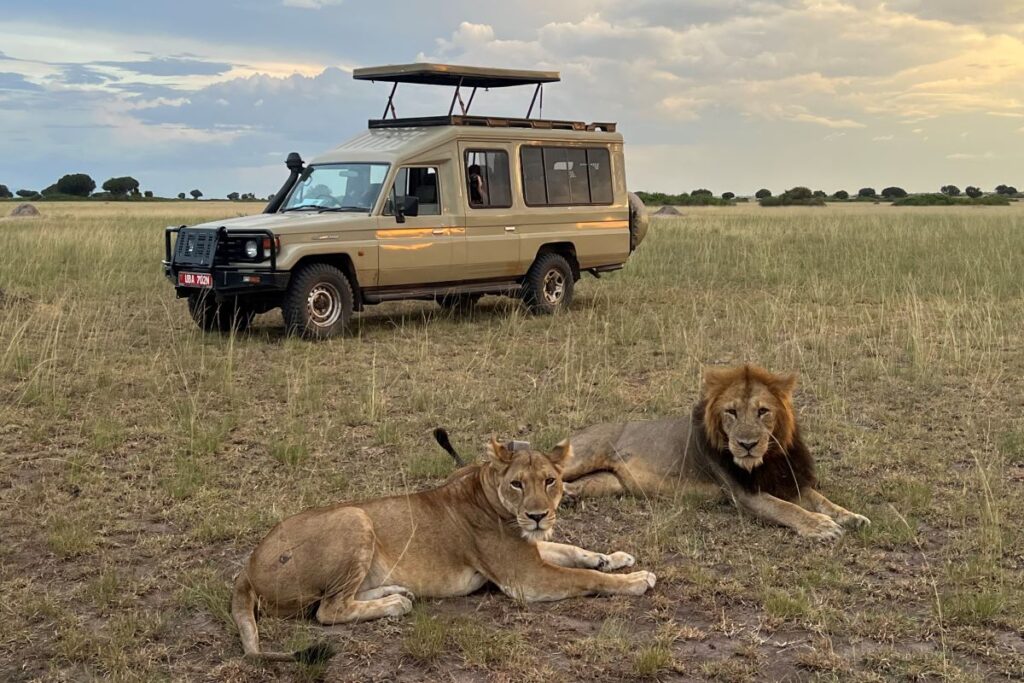
Big Five, chimpanzees, tree-climbing lions, the Nile |
Big Five (Akagera), chimpanzees (Nyungwe) |
Eastern lowland gorillas (Kahuzi-Biega) |
| Issuing authority |
Uganda Wildlife Authority (UWA) |
Rwanda Development Board (RDB) |
Institut Congolais pour la Conservation de la Nature (ICCN) |
Uganda’s Gorilla Permit Advantage
The price gap between Uganda and Rwanda is not a rounding error; it is the single biggest lever in a gorilla trekking budget. For a couple, choosing Uganda over Rwanda saves USD 1,400 on permits alone before a single lodge night or flight is booked, and Uganda’s low-season rate widens that gap further still. That saving is a large part of why a meaningful share of travelers who originally planned a Rwanda-only trip end up asking about a Uganda add-on or a Uganda-first itinerary with Rwanda folded in afterwards.
What Uganda Trades for the Lower Price
Rwanda’s Volcanoes National Park runs every trek from a single headquarters at Kinigi, two to two-and-a-half hours from Kigali International Airport. Bwindi Impenetrable Forest, by contrast, is organized into four separate trekking sectors that can be hours apart by road, and the park itself sits far deeper into Uganda’s southwest, close to the borders with Rwanda and the DRC. This is genuinely the trade travellers are making: a longer, more rugged approach in exchange for a permit that costs roughly half as much and a forest widely described as older, denser, and wilder than Rwanda’s more manicured volcanic slopes.
Uganda’s Signature National Parks for a Safari
Uganda protects ten national parks in total, but five specific parks, Bwindi, Mgahinga, Queen Elizabeth, Kibale, and Murchison Falls, form the backbone of virtually every Uganda safari itinerary built for an international traveler. Each occupies a genuinely different ecosystem, which is precisely why a Uganda-only trip can feel as varied as a multi-country East Africa circuit.
Bwindi Impenetrable National Park
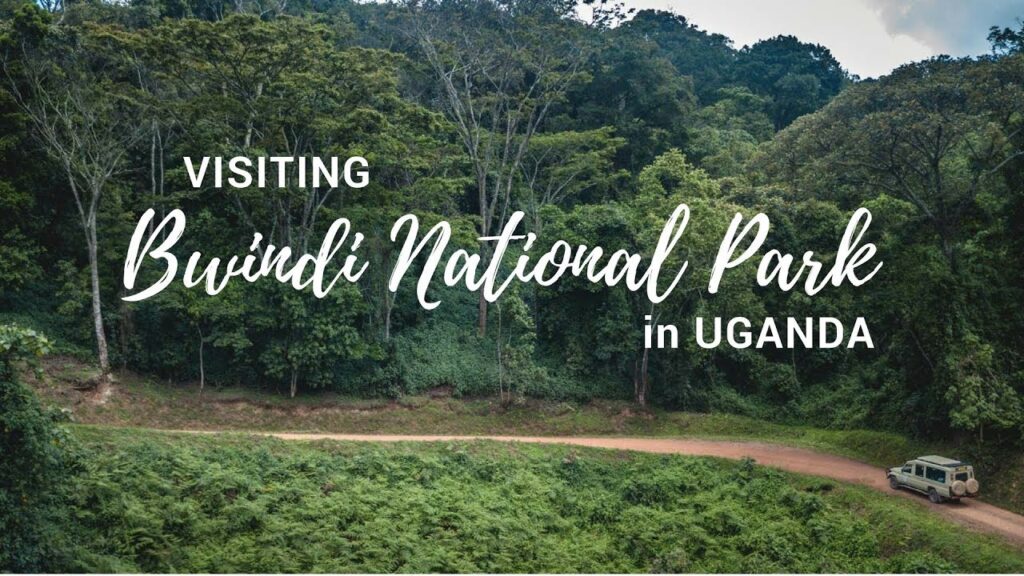
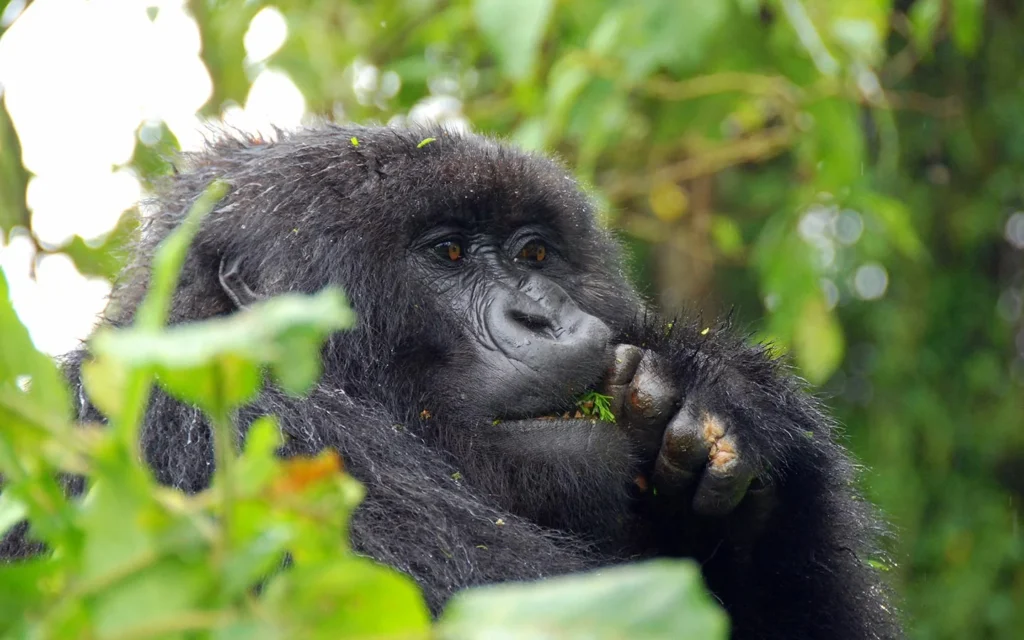
Bwindi Impenetrable National Park is a UNESCO World Heritage Site in Uganda’s far southwest and the country’s primary gorilla trekking destination, holding the majority of Uganda’s habituated gorilla families across four geographically distinct trekking sectors, each with its own access road, ranger station, and character. The forest itself is one of the oldest rainforests in Africa, and its density is precisely why it is called “impenetrable”: vegetation here is thicker, and the terrain, on average, is steeper than the bamboo-and-volcanic-slope habitat that travelers encounter in Rwanda’s Volcanoes National Park.
| Sector |
Nearest town |
Character |
Best suited to |
| Buhoma |
Northern Bwindi, closest to Kanungu |
The original, most established sector; gentler average terrain |
First-time trekkers, families |
| Ruhija |
Eastern Bwindi, near the Echuya Forest |
Higher altitude, cooler, excellent birding |
Birders and travellers combining gorillas with forest walks |
| Rushaga |
Southern Bwindi, closest to the Rwanda border |
The most habituated families host the gorilla habituation experience. |
Travellers wanting a family choice or the 4-hour habituation permit |
| Nkuringo |
Southwestern Bwindi, dramatic hillside setting |
Steepest average terrain; fewer visitors |
Fit, experienced trekkers seeking a quieter sector |
Mgahinga Gorilla National Park
Mgahinga Gorilla National Park is Uganda’s smaller Virunga-range park, sharing the same volcanic massif as Rwanda’s Volcanoes National Park and the DRC’s Virunga National Park, and it currently holds a single habituated gorilla family, offering a quieter, lower-volume alternative to Bwindi with the added appeal of golden monkey trekking and volcano hiking on the same peaks visible from Rwanda’s side of the border. Because Mgahinga is smaller and less consistently staffed for gorilla trekking than Bwindi, travellers should always confirm current family availability before building a fixed-date itinerary around it.
Queen Elizabeth National Park
Queen Elizabeth National Park covers 1,978 square kilometers of savannah, wetland, crater lake, and forest in western Uganda and is the country’s most biodiverse park, recording 95 mammal species and more than 600 bird species. The Kasenyi Plains in the park’s north deliver reliable lion, elephant, and Uganda kob sightings on conventional game drives, while the Kazinga Channel, connecting Lake George and Lake Edward, offers a boat cruise widely regarded as one of the best wildlife-viewing experiences in East Africa, bringing visitors within close range of hippos, crocodiles, elephants, and dense waterbird colonies.
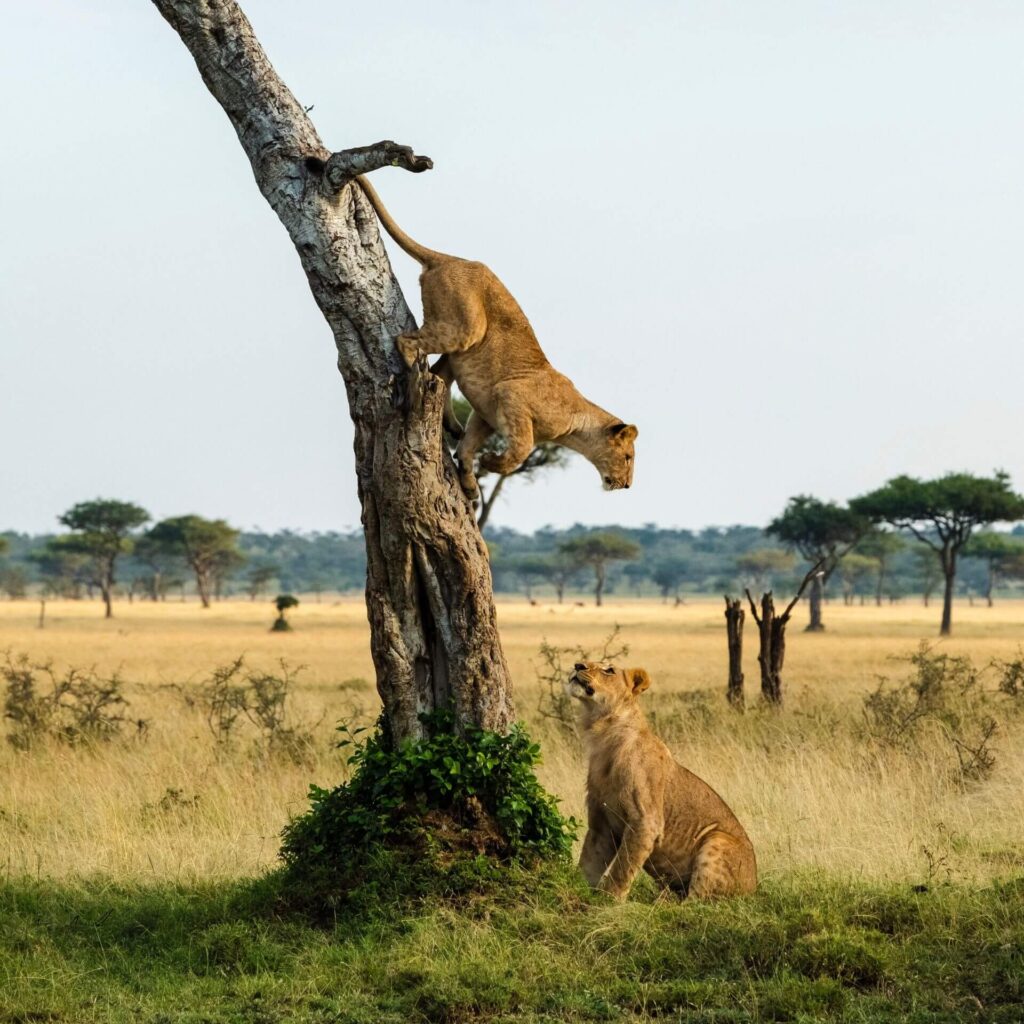
In the park’s southern Ishasha sector, lions have developed the unusual, only partly understood habit of resting in the branches of large fig trees during the heat of the day, a behavior shared with only one other population on earth, in Tanzania’s Lake Manyara. Chimpanzee tracking is also available inside the park at Kyambura Gorge, a forested rift valley corridor nicknamed the “Valley of Apes,” for a permit considerably cheaper than Kibale’s. For travellers who have already experienced Rwanda’s Akagera National Park, Queen Elizabeth offers a genuinely different savannah experience built around water and channel-based game viewing rather than open plains alone.
Kibale Forest National Park
Kibale Forest National Park, near the town of Fort Portal in western Uganda, is widely considered the premier chimpanzee trekking destination in Africa, home to the continent’s highest density of primates and a sighting success rate for habituated chimpanzees that runs around 95 percent year-round. Beyond chimpanzees, the forest holds thirteen primate species in total, including black-and-white and red colobus, grey-cheeked mangabey, and olive baboon, alongside strong forest birding that includes the African pitta and green-breasted pitta.
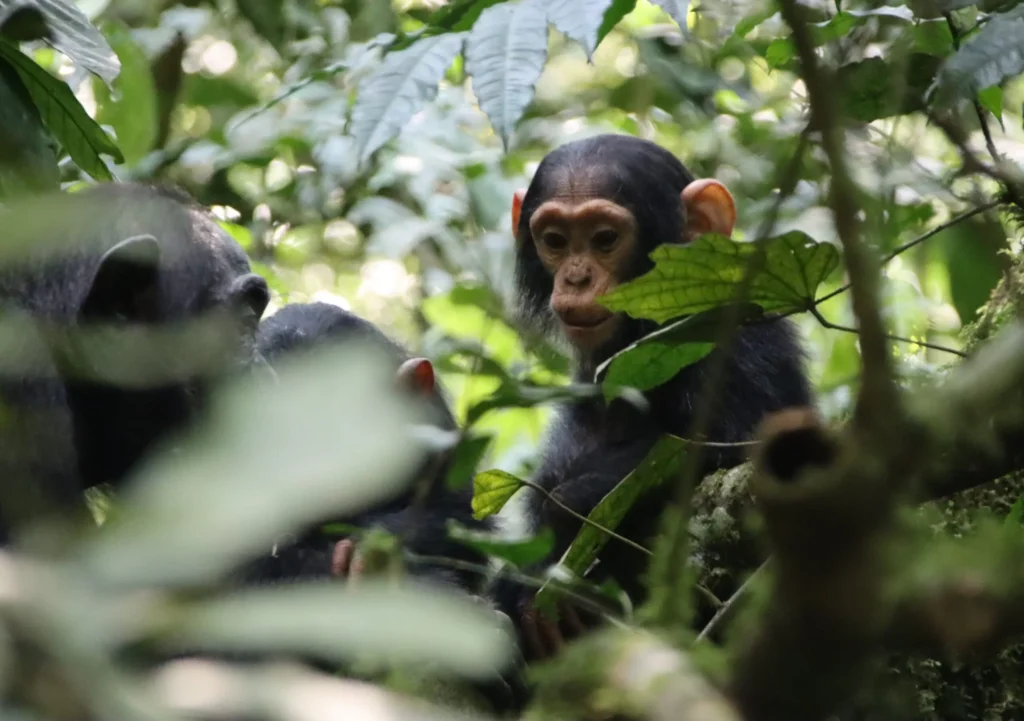
Travellers who have trekked chimps in Rwanda’s Nyungwe Forest National Park will find Kibale’s higher sighting reliability a notable point of contrast; Nyungwe’s chimpanzee communities range more widely and are located largely by ear, while Kibale’s are tracked and located each morning with far greater consistency.
Murchison Falls National Park
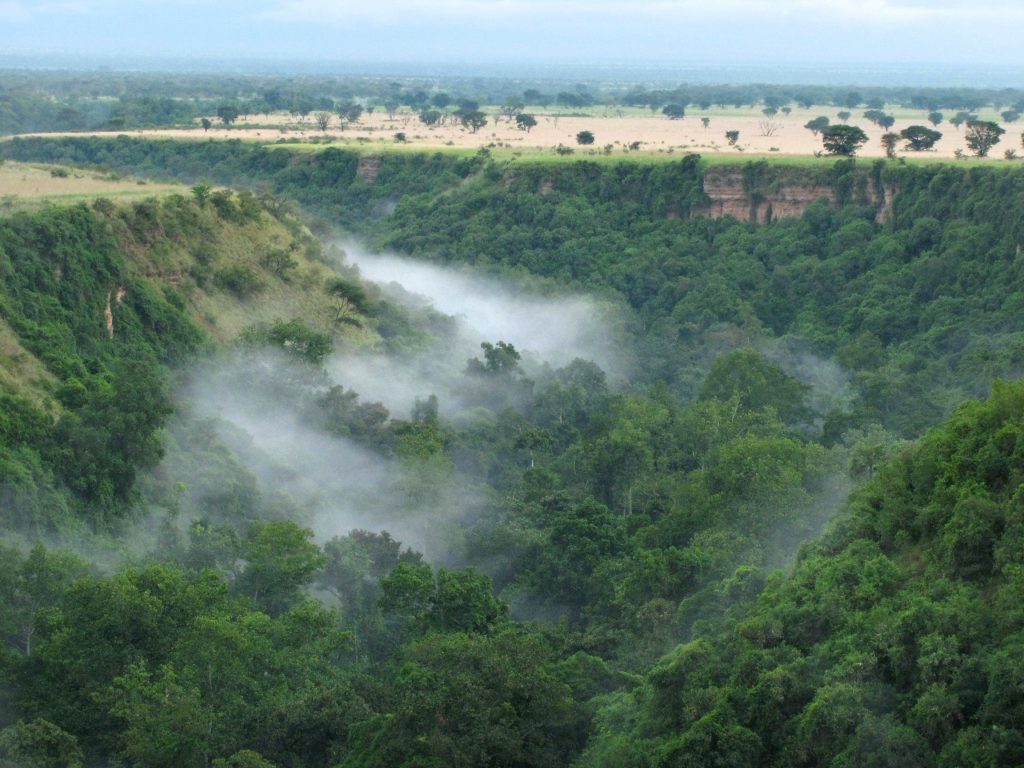
Murchison Falls National Park, in Uganda’s north, is the country’s largest protected area and its most dramatic single natural landmark: the entire Victoria Nile is forced through a rock gorge only seven meters wide before plunging 43 meters into the Albert Nile below. Game drives across the park’s northern savannah reveal elephant, giraffe, buffalo, and lion, while a boat trip along the Nile toward the base of the falls passes some of Uganda’s largest concentrations of hippo and Nile crocodile. Murchison sits far enough north that it is usually treated as a separate northern circuit rather than combined with Bwindi and Queen Elizabeth on the same trip, unless a traveler has ten days or more to work with.