Ngorongoro Crater: The Complete Guide to Africa’s Big Five Caldera.

Ngorongoro Crater packs all of Africa’s Big Five into one collapsed volcano. Compare costs, seasons & lodges, then tell us your dates to start planning.

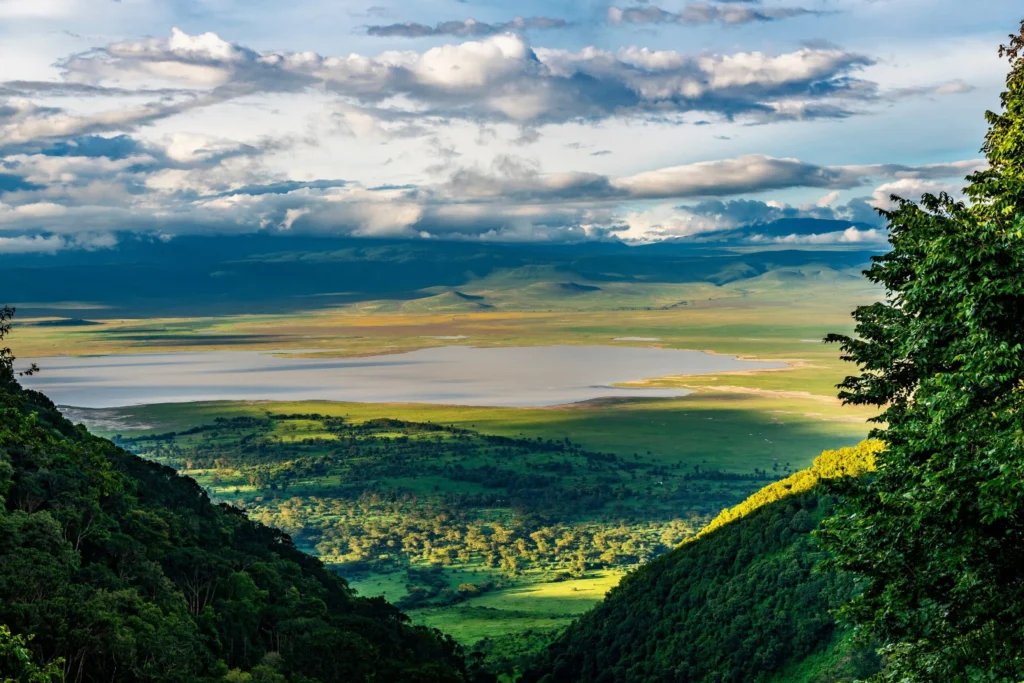
The Ngorongoro Crater is a collapsed volcano in northern Tanzania that holds one of the highest concentrations of wildlife anywhere on the continent, including all five of Africa’s Big Five species, inside a single unbroken caldera floor roughly 260 square kilometers wide. Formed when a volcano larger than Kilimanjaro erupted and its cone collapsed inward two to three million years ago, the crater’s steep, unbroken walls enclose an estimated 25,000 to 30,000 large mammals year-round, a population that neither migrates out nor needs to, since permanent water and grazing sustain it in every season.

Ngorongoro Crater Safari Guide: Big Five, Cost & Best Time

Unlike the Serengeti’s migratory herds, which move across a vast, open landscape chasing rain, Ngorongoro’s wildlife is essentially resident, which means visitors can reasonably expect to see lions, elephants, buffalo, leopards, and the critically endangered black rhino within a single game drive in any month of the year. The crater rim sits at roughly 2,286 meters (7,500 feet) above sea level, while the floor lies about 600 meters (2,000 feet) below at approximately 1,700 meters, a vertical drop that creates two distinct microclimates within a few kilometers of each other: chilly, often misty mornings on the rim and a noticeably warmer, sun-drenched floor by mid-morning. The crater sits inside the wider 8,292-square-kilometer Ngorongoro Conservation Area (NCA), a UNESCO World Heritage Site since 1979 and one of the few protected areas on Earth designed explicitly to let wildlife and the semi-nomadic Maasai people who have grazed cattle here for generations share the same land.

For most travelers building a Tanzania itinerary, Ngorongoro anchors the eastern end of the country’s Northern Safari Circuit, typically paired with the Serengeti, Lake Manyara, and Tarangire, and, increasingly, for travelers who have already trekked mountain gorillas in Rwanda, as the plains-and-predators counterpart to a primate-focused itinerary further west.

Permits are limited — spaces fill months ahead

Reserve Your Private Gorilla Trek

Speak with a Rwanda-based specialist today. We secure permits, match you to the right gorilla family, and plan every detail around your schedule.

No group departures · Private itineraries only · Direct Rwanda expertise

What Is the Ngorongoro Crater? Geology, Scale, and a Living Landscape.

Ngorongoro Crater is the world’s largest intact, unfilled volcanic caldera, a distinction that separates it from craters that have since flooded, fractured, or eroded into an incomplete rim. It began roughly two to three million years ago as a massive stratovolcano, likely taller than Mount Kilimanjaro stands today, part of the same East African Rift volcanic chain that also produced Kilimanjaro, Mount Meru, and the still-active Ol Doinyo Lengai. When the magma chamber beneath it emptied, the cone had nothing left to support it and collapsed inward on itself, leaving behind a bowl roughly 16 to 19 kilometers in diameter and covering approximately 260 square kilometers of floor, ringed by a wall that in places rises more than 600 meters above the grassland below. The name itself comes from a Maasai phrase generally translated as “Big Bowl,” a description that, once you have actually stood on the rim looking down, is difficult to improve upon.

The Conservation Area vs. the Crater Itself

It helps to separate two things that are often used interchangeably. “Ngorongoro” can refer either to the specific crater described above or to the much larger 8,292-square-kilometer Ngorongoro Conservation Area that surrounds it, which also contains the Ngorongoro Highlands, the smaller Empakaai and Olmoti calderas, Olduvai Gorge, the Ndutu Plains bordering the Serengeti, and numerous Maasai settlements. When people talk about “visiting Ngorongoro” on a standard safari, they almost always mean a game drive down onto the crater floor specifically, which represents only a small fraction of the total Conservation Area in land area.

Wildlife and People Sharing the Same Land

The Ngorongoro Conservation Area is one of the few protected landscapes in Africa built around a deliberate multiple land-use policy rather than the exclusion of people. When the original Serengeti National Park was divided in 1959, the NCA was carved out specifically to allow the Maasai to continue their traditional pastoralist life, grazing cattle and goats, within the same boundaries as protected wildlife. Cattle grazing is permitted on the crater rim and across the highlands, but not down on the crater floor itself, a distinction that keeps the caldera’s ecosystem intact for wildlife while still honoring the Maasai’s historic presence on the land around it. This coexistence model is part of what makes a visit to Ngorongoro feel different from a purely wildlife-focused park: it is possible to see Maasai herders moving cattle along the rim road on the same morning you photograph a pride of lions on the floor below.

Ngorongoro Crater Quick Facts
Type World’s largest intact, unfilled volcanic caldera
Formed Approximately 2-3 million years ago
Crater floor size ~260 sq km (100 sq mi)
Diameter 16-19 km (10-12 mi)
Crater depth ~600 m (2,000 ft)
Rim altitude ~2,286 m (7,500 ft)
Floor altitude ~1,700 m (5,577 ft)
Wider Conservation Area 8,292 sq km
UNESCO status World Heritage Site since 1979
Resident large mammals ~25,000-30,000

Wildlife in Ngorongoro Crater: The Big Five in a Single Bowl.

Ngorongoro Crater Safari Guide: Big Five, Cost & Best Time

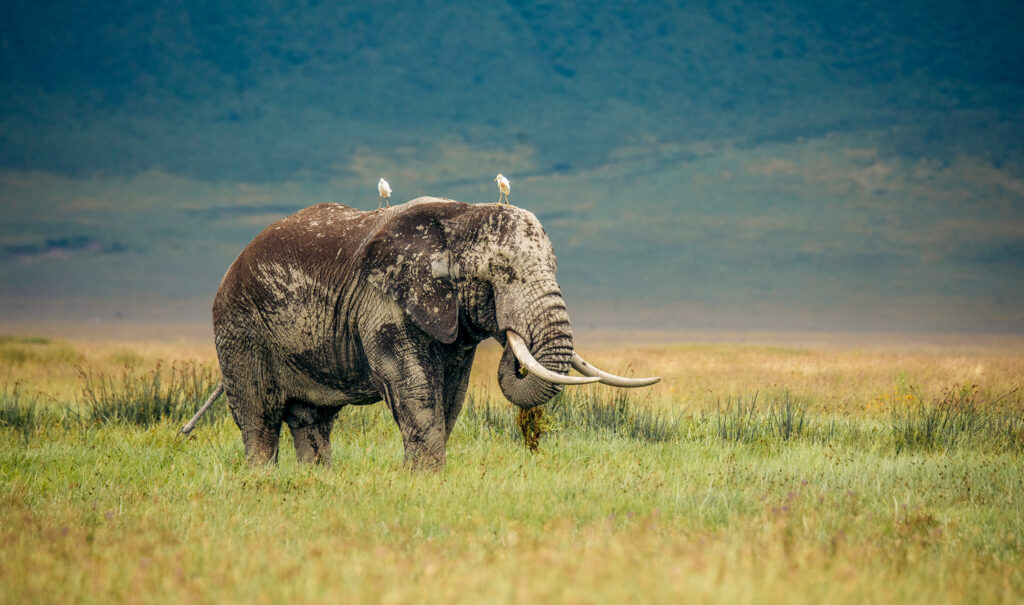
Ngorongoro is regarded by many experienced safari guides, including Bradt travel guide author Philip Briggs, as the single best place in Africa to see the Big Five, largely because it holds the continent’s highest recorded densities of lion, elephant, and buffalo, alongside a genuinely wild population of the critically endangered black rhino. Around 60 to 70 lions live in the crater, organized into several distinct prides that hold territory around the swamps and forest edges; the crater’s isolation has made this one of the most intensively studied lion populations in Africa and also one of the more genetically constrained, a bottleneck that researchers continue to monitor closely. Elephants in Ngorongoro are almost exclusively large, mature bulls, since females and calves tend to favor the surrounding highland forests over the open crater floor. Buffalo herds, sometimes several hundred strong, graze the swampy Mandusi and Gorigor systems near the crater’s center. Black rhino, reduced to a handful of individuals during the poaching crisis of the 1980s, have been carefully protected and monitored ever since, and sightings, while never guaranteed, are meaningfully more likely here than almost anywhere else on the continent outside a dedicated rhino sanctuary.

Two animals that are common across the wider East African savanna are conspicuously rare or effectively absent from the crater floor itself: giraffe and impala. Giraffes struggle with the crater’s steep access roads, and, more fundamentally, the floor lacks the acacia woodland that constitutes the bulk of a giraffe’s diet, so nearly all of the Conservation Area’s giraffe population stays up on the rim and in the highlands rather than descending. Impala, too, are essentially absent from the floor, though present elsewhere in the wider Conservation Area, a detail that surprises many first-time visitors expecting a complete cross-section of savanna species in one place. It is precisely why most well-designed Northern Circuit itineraries pair a Ngorongoro game drive with at least one additional park rather than treating the crater as a stand-alone safari.

Predators, Scavengers, and Birdlife

Beyond lions, the crater supports a notably dense spotted hyena population, organized into some of the largest and best-studied hyena clans in Africa, along with golden and black-backed jackals and a resident cheetah presence, though cheetahs tend to favor the open plains at the crater’s edges over the denser central swampland where lion prides dominate. More than 500 bird species have been recorded across the wider Ngorongoro Conservation Area, and the crater floor’s shallow soda lake, Lake Magadi, regularly attracts thousands of lesser and greater flamingos alongside pelicans and a wide range of migratory waterfowl.

The wildlife that most travelers come to see includes:

  • Lions: approximately 60-70 individuals across several resident prides
  • Elephants: present mostly as large, mature bulls
  • Black rhino: a small, closely monitored, and genuinely wild population
  • Buffalo: herds of several hundred around the Mandusi and Gorigor swamps
  • Hippos: concentrated at Ngoitokitok Springs near the picnic area
  • Flamingos: thousands gather on Lake Magadi in season
  • Birdlife: 500+ species recorded across the wider Conservation Area

Ngorongoro Crater vs. the Serengeti: Understanding Tanzania’s Northern Circuit.

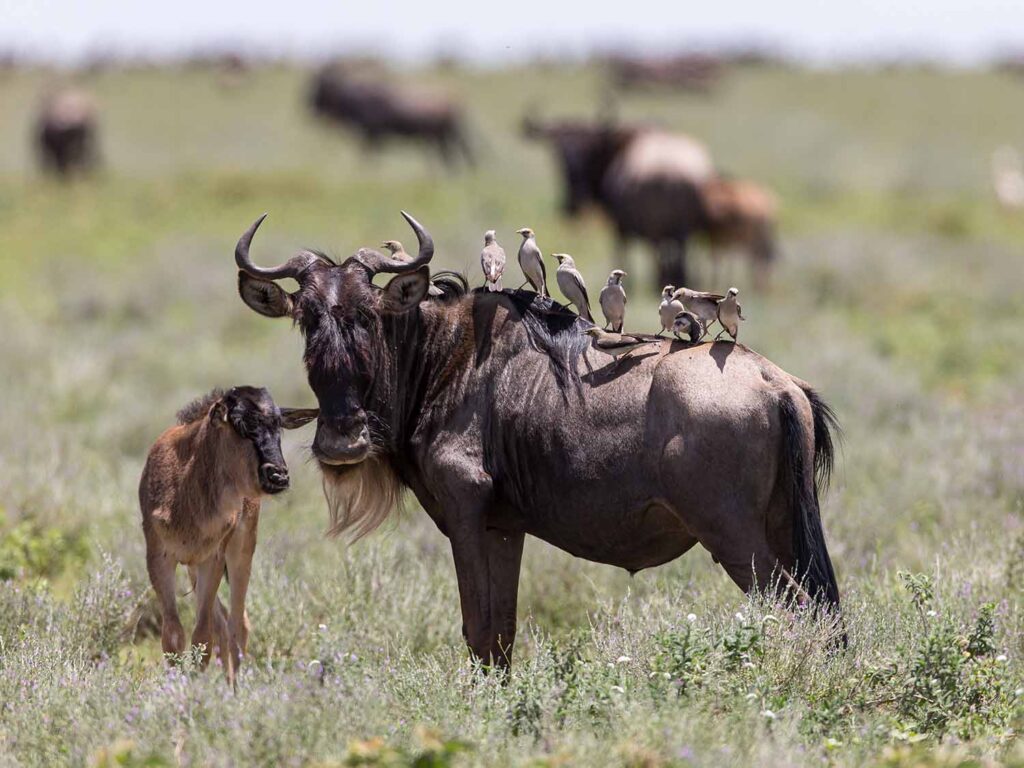
Serengeti Wildebeest Calving Season

Ngorongoro Crater and the Serengeti are frequently confused by first-time Tanzania travelers, in part because they sit next to each other and are almost always visited together, but they offer genuinely different safari experiences. The Serengeti spans nearly 14,763 square kilometers of largely open plains and is defined by the Great Migration, the seasonal, weather-driven movement of over a million wildebeest and zebra across its ecosystem. Ngorongoro Crater, by contrast, concentrates a comparable variety of species inside a single, enclosed 260-square-kilometer bowl where the wildlife does not migrate out, which is precisely why Ngorongoro delivers such consistent, high-density Big Five viewing regardless of the month.

When to Combine Both the Ngorongoro Crater and the Serengeti.

Most Northern Circuit itineraries visit both parks, and for good reason: Ngorongoro delivers efficient, near-guaranteed Big Five sightings within a single day, while the Serengeti rewards a longer, more exploratory stay with a wider variety of landscapes, from the short-grass plains near Ndutu to the riverine forest around Seronera and the rockier kopjes further north. Travelers hoping to time a Tanzania trip around the Great Migration should note that the migration itself moves through the Serengeti ecosystem on a broadly predictable annual cycle and that the migration’s dramatic December-to-March calving season plays out on the Ndutu Plains, technically inside the Ngorongoro Conservation Area’s southern boundary but well outside the crater itself.

Ngorongoro Crater Serengeti National Park
Size ~260 sq km (crater floor) ~14,763 sq km
Wildlife pattern Resident, year-round Largely migratory
Best known for Concentrated Big Five, black rhino The Great Migration
Typical visit length 1 full day / 1 night 2-4 nights or more
Best time to visit Year-round, June-Oct for driest conditions Varies by migration location
Landscape Enclosed caldera, grassland & swamp Open plains, kopjes, riverine forest

Plan Your Rwanda Safari

Start Planning a Private Gorilla Trek

Rwanda gorilla permits sell out months in advance. Secure your dates before the season closes.

The Best Time to Visit Ngorongoro Crater

Ngorongoro is a genuinely year-round safari destination, since its wildlife lives inside the crater permanently rather than migrating away for part of the year. That said, the two dry-season windows, June through October, deliver the firmest roads, clearest skies, and the most reliable concentration of animals around permanent water sources, which is why they represent the busiest and highest-priced months on the crater rim.

Best time for gorilla trekking.

Dry Season: June to October

This is peak season for the entire Northern Circuit. Rainfall is minimal, visibility across the crater floor is excellent, and animals cluster predictably around the Mandusi Swamp, Lake Magadi, and Ngoitokitok Springs, which makes for efficient, high-yield game drives. The trade-off is traffic: this period is also when the highest number of vehicles descend onto the crater floor each morning, and rim lodges should be booked six months or more in advance for travel in this window.

Green Season: November to May

The short rains fall in November and December and the long rains from March through May, both bringing lush, vividly green scenery, noticeably lower lodge rates, and a much quieter crater floor. Roads can be muddier and some photography conditions less crisp, but many experienced safari travelers and photographers specifically favor this period for its softer light and dramatic skies. January and February are a good time between the two rainy stretches: the landscape is green, wildebeest and zebra are active on the surrounding plains, and visitor numbers remain well below the June-to-September peak.

The Great Migration and Ngorongoro

Serengeti National Park 2027: The Complete Migration Guide

Travelers planning a trip specifically around the Great Migration’s dramatic calving season should understand precisely where it happens: the herds concentrate on the Ndutu Plains at the Conservation Area’s southern edge, bordering the Serengeti, typically from December through March, not on the Ngorongoro Crater floor itself. A well-designed itinerary during these months often bases travelers at a lodge or camp near Ndutu specifically to access the migration, with a separate excursion to the crater floor for Big Five viewing.

Getting to Ngorongoro Crater: Flights, Roads & Distances.

Ngorongoro sits in northern Tanzania’s safari heartland, and reaching it is straightforward once you understand the two realistic entry points: Kilimanjaro International Airport for international arrivals, and Arusha as the regional hub from which road and air connections fan out across the Northern Circuit.

By Air

Kilimanjaro International Airport (JRO) is Tanzania’s main international gateway and the usual starting point for a Ngorongoro safari, situated roughly 230 kilometers from the crater, a four-and-a-half to five-hour drive. Because most international flights land at Kilimanjaro late in the evening, an overnight stay in Arusha before continuing on is standard practice rather than an inconvenience to avoid. From Arusha, a domestic charter flight to an airstrip near the crater rim takes approximately 45 minutes, a practical option for travelers on a tighter schedule or those already flying between multiple Northern Circuit destinations. Lake Manyara Airstrip, roughly 60 kilometers south of the crater, is the closest airstrip for travelers arriving from Zanzibar, Dar es Salaam, or other domestic routes, with a further 90 minutes to two hours by road to reach the crater rim.

By Road

The classic overland route runs from Arusha through the town of Karatu and on to the Conservation Area’s Lodoare entrance gate, a distance of approximately 180 to 190 kilometers that takes three-and-a-half to four-and-a-half hours on a mostly paved highway. Onward road connections link Ngorongoro to the rest of the Northern Circuit for travelers continuing their safari overland rather than by air.

From Distance Approx. Drive Time
Kilimanjaro Int’l Airport (JRO) ~230 km / 143 mi 4.5-5 hours
Arusha ~180-190 km / 112-118 mi 3.5-4.5 hours
Lake Manyara National Park ~60-80 km / 37-50 mi 1.5-2 hours
Tarangire National Park ~180 km / 112 mi ~4 hours
Serengeti (Seronera) ~140-145 km / 87-90 mi ~3 hours

Ngorongoro Crater Entry Fees, Permits & Crater Rules

Ngorongoro is one of the more expensive single-day safari experiences in East Africa, and understanding the fee structure in advance avoids surprises. Fees are set and periodically revised by the Ngorongoro Conservation Area Authority (NCAA), the government body responsible for managing the Conservation Area, and are paid electronically rather than in cash at the gate.

Conservation Area and Vehicle Fees

Non-East African visitors currently pay approximately USD 70.80 per person for a 24-hour Conservation Area entrance permit, with reduced rates for children roughly between the ages of 5 and 15 and free entry for children under 5. A separate USD 295 crater service fee is charged per vehicle, not per person, and applies only if you actually descend onto the crater floor; travelers simply transiting through the Conservation Area en route to or from the Serengeti without descending pay the standard entrance fee but not this additional charge. Because the vehicle fee is per vehicle rather than per traveler, it is typically absorbed into a shared safari vehicle’s cost across several passengers rather than billed individually. Camping inside the Conservation Area adds a further fee, from roughly USD 30 per person per night at a basic public site to considerably more at a special or luxury campsite. As with any government-set park fee, these rates are revised periodically and are best confirmed at the time of booking; we verify current NCAA rates directly before finalizing any quotation.

The Six-Hour Crater Floor Rule

Vehicles are generally limited to six hours on the crater floor per descent, a rule the NCAA enforces to manage congestion inside a caldera considerably smaller than the Serengeti. Access is further governed by fixed gate times: the Seneto descent road typically stops accepting new entries in mid-afternoon, and every vehicle must be backed up on the rim before the Conservation Area closes for the evening at 6:00 PM. Only one descent is permitted per 24-hour permit, so a lodge lunch break followed by a second afternoon session is not possible; instead, most itineraries include a full picnic breakfast and lunch, typically taken at Ngoitokitok Springs near the crater’s hippo pools, to maximize a single extended visit. Three fixed roads govern movement in and out of the crater: Seneto for descent only, Lerai for ascent only, and Lemala (also called the Sopa road) for either direction. Off-track driving is prohibited throughout the Conservation Area, and a 25-kilometer-per-hour speed limit applies at all times to protect wildlife moving freely across the roads.

Fee Approximate Cost (2026)
Conservation Area entrance (non-resident adult, per 24 hrs) ~USD 70.80 per person
Conservation Area entrance (child, ~5-15 years) ~USD 20 per child
Children under 5 Free
Crater service / vehicle descent fee ~USD 295 per vehicle, one descent per 24-hr permit
Basic public campsite From ~USD 30 per person per night
Special / luxury campsite ~USD 100+ per person per night

Plan Your Rwanda Safari

Start Planning a Private Gorilla Trek

Rwanda gorilla permits sell out months in advance. Secure your dates before the season closes.

Where to Stay: Ngorongoro Crater Lodges and Camps

Accommodation near Ngorongoro splits into two clear categories: a small number of properties directly on the crater rim, offering the shortest possible access to the descent road and, in most cases, views straight down onto the caldera floor, and a wider, generally more affordable range of options in and around the town of Karatu, roughly 30 to 45 minutes from the main gate.
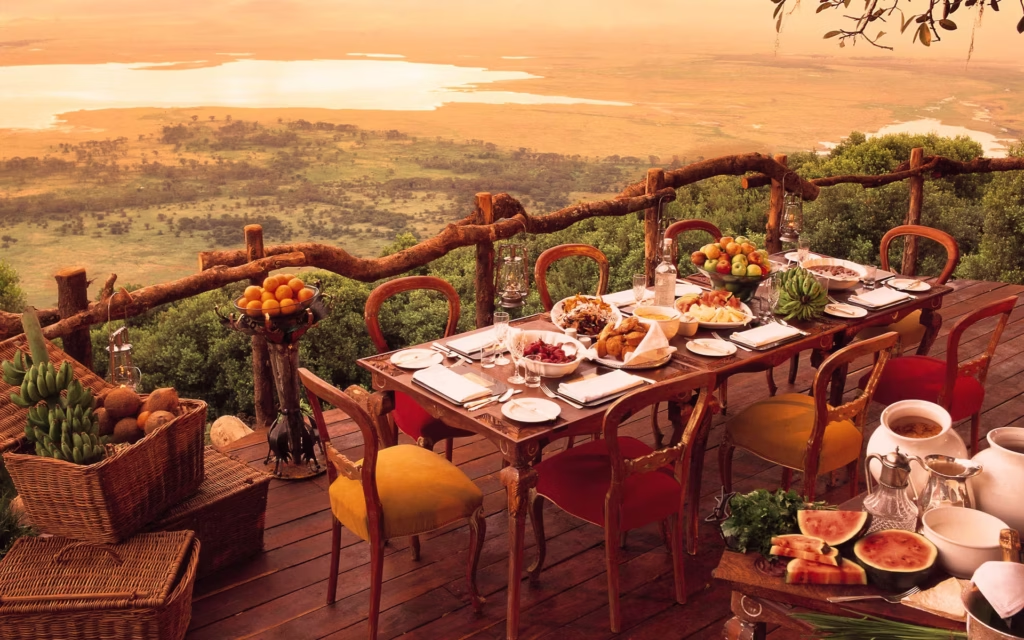
&Beyond Ngorongoro Crater Lodge

&Beyond Ngorongoro Crater Lodge

On the Rim

Ngorongoro Serena Safari Lodge is built into the rim’s stonework and river rock, with roughly 75 rooms strung along the crater edge, each with a private balcony over the caldera. Ngorongoro Sopa Lodge sits at one of the highest points on the entire rim and is known for some of the best sunset views in the region. Asilia’s The Highlands, positioned on the slopes of the neighboring Olmoti volcano, and Entamanu Ngorongoro, on the crater’s western rim, offer a more intimate, less conventional style of luxury camp, with sweeping views toward both the crater and, in Entamanu’s case, the Serengeti plains beyond. The renowned &Beyond Ngorongoro Crater Lodge, long considered one of the most extravagant safari properties on the continent, is currently closed for a full refurbishment through early 2027, so travelers specifically hoping to stay there should confirm its reopening status before finalizing a rim itinerary.

Karatu: The Softer, More Flexible Base

Karatu offers a genuine alternative for travelers who prioritize value, seek a wider choice of properties, or desire a change of pace from rim-edge luxury. Gibb’s Farm, a former colonial coffee estate turned boutique lodge, is among the most characterful options in the area, set among working coffee gardens with views toward the Ngorongoro Highlands, and sits close enough to the main gate to make an early crater descent entirely practical.

What to Pack and Wear for a Ngorongoro Crater Safari

A Ngorongoro game drive is a fundamentally different physical experience from mountain gorilla trekking: you are seated in an open-sided vehicle rather than hiking through forest, so the packing priorities shift toward temperature management, optics, and photography rather than trekking gear.
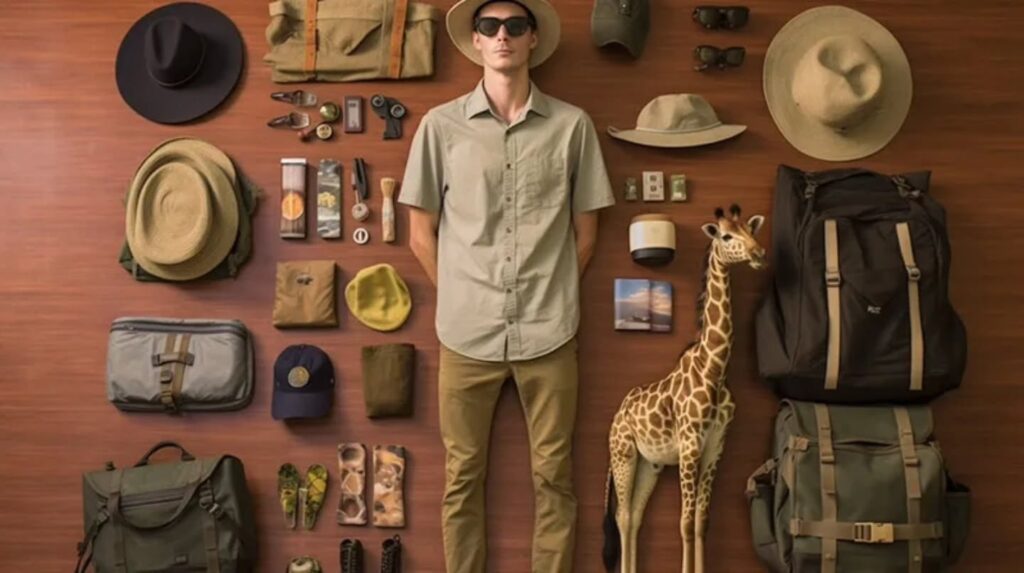
What to Pack and Wear for a Ngorongoro Crater Safari

Clothing and Layers

Layering is the single most important packing principle here. Crater rim mornings can genuinely drop to single-digit Celsius temperatures, especially during the pre-dawn departure. Most rim lodges schedule to reach the descent road at opening time, while the crater floor itself warms considerably by mid-morning, often into the high teens to mid-20s Celsius. A warm fleece or packable jacket, a hat, and gloves are worth having for the drive down, alongside lighter layers to shed once the sun is up. Neutral safari tones such as khaki, olive, and beige remain sensible, along with sunglasses and a wide-brimmed hat for the strong equatorial sun at altitude.

Gear for Game Drives

Binoculars matter considerably more on a Ngorongoro safari than during gorilla trekking, since sightings across the open crater floor can occur at real distance, and a decent pair transforms the experience of spotting a distant rhino or a pride resting in the grass. A camera with a telephoto or zoom lens, spare batteries, and extra memory cards is worth carrying, since the six-hour floor window passes quickly once sightings begin. High-SPF sunscreen, a reusable water bottle, and a light scarf or buff for dust on drier-season roads round out the essentials. Because only one crater descent is permitted per 24-hour permit, a packed breakfast and lunch arranged through your lodge in advance is standard practice, not an optional extra.

Beyond the Crater Floor: Olduvai Gorge, Empakaai & the Maasai

The Ngorongoro Conservation Area extends well beyond the crater itself, and travelers with an extra day or two can add genuinely distinctive experiences to a standard game drive.

Olduvai Gorge: The Cradle of Mankind

Olduvai Gorge, a steep ravine roughly midway between Ngorongoro and the Serengeti, is among the most significant paleoanthropological sites on Earth. Excavations led by the Leakey family from the 1930s onward uncovered some of the oldest known hominid fossils and stone tools, including the “Zinjanthropus” skull that Mary Leakey discovered in 1959, which found that reshaped scientific understanding of human origins. A small site museum sits close to the gorge and is commonly visited as a stopover on the drive between Ngorongoro and the Serengeti, adding historical depth to what is otherwise a wildlife-focused itinerary. Nearby Laetoli holds fossilized hominid footprints estimated at 3.6 million years old, among the oldest direct evidence of upright, bipedal walking, though the footprint site itself is not generally open to casual visitors.

Empakaai and Olmoti: The Conservation Area’s Other Craters

North of the main crater, Empakaai Crater is a smaller caldera roughly six kilometers wide, its floor covered by a deep soda lake that serves as an important flamingo breeding site, with views from the rim stretching toward the Great Rift Valley, Lake Natron, and the active volcano Ol Doinyo Lengai. Olmoti Crater, a shallower caldera near The Highlands lodge, features a waterfall and is typically explored on a guided walking safari, an activity not available on the main crater floor itself given its wildlife density.

Maasai Cultural Visits

Because the Ngorongoro Conservation Area’s founding policy explicitly protects Maasai pastoralist life alongside wildlife, visits to Maasai villages within the NCA are both accessible and meaningfully grounded in the area’s actual land-use history, rather than staged for tourism alone. These visits typically involve a guided walk through a boma, conversations about grazing patterns and daily life, and traditional dance, and are best arranged in advance through your lodge or safari operator.

How Ngorongoro Fits Into a Rwanda Gorilla Safari

For travelers who have already trekked mountain gorillas in Rwanda’s Volcanoes National Park, Ngorongoro Crater is the natural second act: the open plains, the Big Five counterpart to the forest-based intimacy of a gorilla encounter. The two experiences are genuinely complementary rather than repetitive. A gorilla trek delivers one hour, on foot, at close range, with a single family of habituated gorillas; a Ngorongoro game drive delivers six hours, from a vehicle, across an entire enclosed ecosystem holding tens of thousands of animals. Combining both within a single trip, typically 10 to 16 days in total, gives travelers a genuinely complete picture of East and Central Africa’s wildlife, from the misty bamboo forests of the Virunga Mountains to the open volcanic bowl of northern Tanzania.
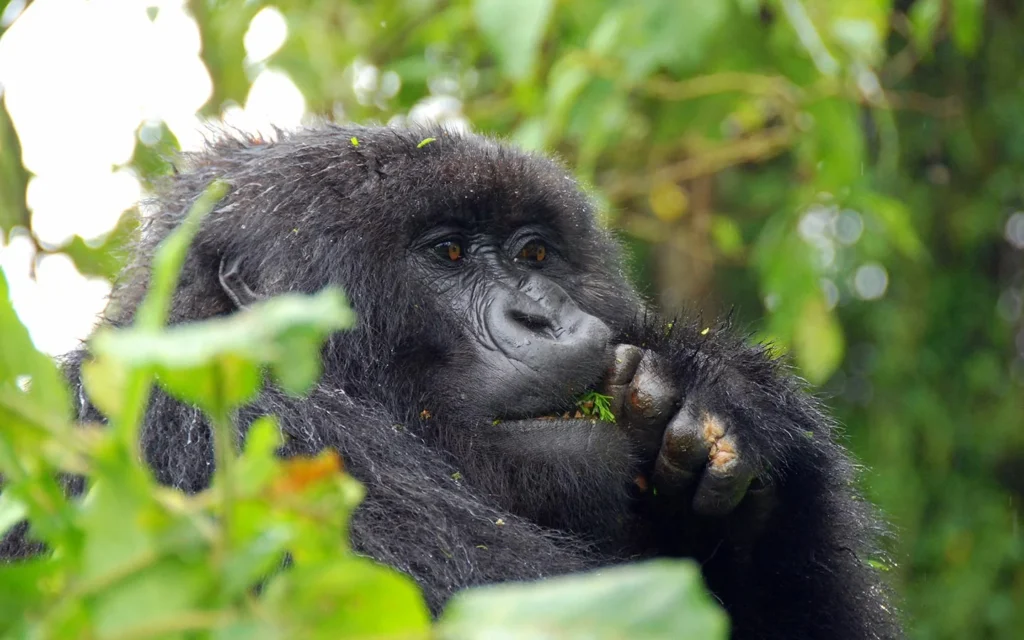
Uganda vs. Rwanda Gorilla Trekking: Costs, Permits & Guide

Sequencing matters. Most experienced travelers tackle gorilla trekking first, while still physically fresh, since it is the more demanding of the two activities, and then transition into the largely vehicle-based, lower-exertion game drives of the Tanzania Northern Circuit. The connection itself typically routes from Kigali through Nairobi to Kilimanjaro or Arusha, and should be budgeted as a half-day to full-day connection with a comfortable buffer rather than scheduled back-to-back with a morning gorilla trek. Rwanda Gorilla Expeditions designs and coordinates exactly this kind of multi-country itinerary directly, sequencing Rwanda’s gorilla permits alongside Tanzania’s Conservation Area logistics into a single, carefully planned journey. Explore the full range of Rwanda safari experiences and Rwanda safari styles that pair naturally with a Tanzania extension, or get in touch directly to start planning a combined itinerary.

Plan Your Rwanda Safari

Start Planning a Private Gorilla Trek

Rwanda gorilla permits sell out months in advance. Secure your dates before the season closes.

Frequently Asked Questions About Ngorongoro Crater.

What is the Ngorongoro Crater?

Ngorongoro Crater is the world’s largest intact, unfilled volcanic caldera, a collapsed volcano in northern Tanzania that today functions as a natural, walled-in wildlife sanctuary. The crater floor is about 600 meters below the surrounding rim and covers about 260 square kilometers. It was formed two to three million years ago when the magma chamber of a large stratovolcano emptied and its cone collapsed inward. It lies within the 8,292-square-kilometer Ngorongoro Conservation Area (NCA) in northern Tanzania, close to the southeastern edge of the Serengeti ecosystem. The crater is famous for holding an estimated 25,000 to 30,000 large mammals within its walls year-round, including all of Africa’s Big Five species. Because the wildlife here is largely resident rather than migratory, Ngorongoro offers some of the most reliable game viewing in Africa in any season. It has been a UNESCO World Heritage Site since 1979 and is widely regarded as one of the Seven Natural Wonders of Africa.

How much does it cost to visit Ngorongoro Crater?

Visiting Ngorongoro Crater costs approximately USD 70.80 per person for a 24-hour Conservation Area entrance permit for non-East African visitors, plus a separate USD 295 per-vehicle crater service fee if you plan to actually descend onto the crater floor. Children between roughly 5 and 15 years old pay a reduced entrance rate, while children under 5 generally enter free. The USD 295 descent fee is charged once per 24-hour permit and per vehicle, not per person, so it is typically divided among the passengers sharing a safari vehicle. Camping inside the Conservation Area incurs further costs, starting at around USD 30 per person per night at a basic public campsite and increasing significantly at a special or luxury site. These figures are set by the Ngorongoro Conservation Area Authority (NCAA), are typically quoted exclusive of an 18 percent government tax, and are revised periodically, so it is worth confirming current rates at the time of booking. Most travelers combining Ngorongoro with a Rwanda safari include these fees in an itemized quotation rather than paying separately at the gate.

How do I get to Ngorongoro Crater?

Most travelers reach Ngorongoro Crater by flying into Kilimanjaro International Airport (JRO), Tanzania’s main international gateway, and then continuing by road or a short domestic flight. From Kilimanjaro Airport, it is roughly a 230-kilometer, four-and-a-half to five-hour drive to the crater rim, usually broken up with an overnight in Arusha since most international flights land late in the evening. From Arusha itself, the drive is shorter, around 180 to 190 kilometers and three-and-a-half to four-and-a-half hours on a mostly paved road through the town of Karatu. Travelers short on time can instead take a domestic charter flight from Arusha, which takes about 45 minutes to an airstrip near the crater rim, or fly into the smaller Lake Manyara Airstrip and drive the remaining 60 kilometers, roughly 90 minutes to two hours, to the crater. Coming from the Serengeti’s Seronera area, the drive to Ngorongoro is roughly 140 kilometers and takes about three hours.

What is the best time to visit Ngorongoro Crater?

The best time to visit Ngorongoro Crater for classic dry-weather game viewing is June through October, when clear skies, firm roads, and animals concentrating around permanent water sources combine for the most reliable sightings and sharpest photography. Because Ngorongoro’s wildlife is resident year-round rather than migratory, the crater delivers strong Big Five viewing in every month, which sets it apart from the Serengeti’s more seasonal migration patterns. The short rains fall in November and December and the long rains from March through May, both bringing lush, dramatically green scenery, lower lodge rates, and noticeably fewer vehicles on the crater floor, at the cost of muddier roads. January and February offer a useful middle ground: the landscape is green and photogenic, wildebeest and zebra are active on the surrounding plains, and visitor numbers have not yet reached the June-to-September peak. Travelers hoping to combine Ngorongoro with the Great Migration should note that the famous calving season happens primarily on the Ndutu Plains at the Conservation Area’s southern boundary rather than inside the crater itself, typically between December and March. Whichever season you choose, booking rim lodges well in advance is important, since the handful of properties directly on the crater rim sell out quickly during the June-to-September peak.

Can you see the Big Five in Ngorongoro Crater?

Yes, Ngorongoro Crater is widely considered the single best place in Africa to see all five of the continent’s Big Five species, lion, elephant, buffalo, leopard, and black rhino, in one place. The crater supports approximately 60 to 70 lions across several resident prides, herds of buffalo numbering in the hundreds around its central swamps, and a small but closely monitored population of critically endangered black rhino that is genuinely difficult to see reliably anywhere else in East Africa outside a dedicated sanctuary. Elephants are present too, though almost exclusively large, mature bulls, since females and calves tend to remain in the surrounding highland forests rather than descending to the crater floor. Leopard sightings are the least predictable of the five, as they favor the wooded Lerai Forest at the crater’s edge and remain naturally elusive throughout their range. Bradt travel guide author Philip Briggs has noted that Ngorongoro holds the highest density of elephant, lion, and buffalo found anywhere on the continent. Most full-day crater safaris deliver at least four of the five species, and many deliver all five within a single six-hour game drive.

How far is Ngorongoro Crater from Arusha?

Ngorongoro Crater is approximately 180 to 190 kilometers from Arusha, a drive that typically takes three-and-a-half to four-and-a-half hours depending on road conditions and stops along the way. The route runs through the town of Karatu, the last significant settlement before the Conservation Area’s Lodoare entrance gate, and passes through farmland, coffee plantations, and Maasai grazing land en route. Travelers arriving at Kilimanjaro International Airport typically transfer first to Arusha, about 50 to 60 kilometers and roughly an hour away, before continuing on to Ngorongoro, often with an overnight stop in Arusha given that most international flights arrive late in the day. A domestic charter flight from Arusha to an airstrip near the crater rim is also available and takes approximately 45 minutes, a popular option for travelers on tighter schedules. Road conditions on the main Arusha-to-Karatu highway are generally good and paved, though the final stretch into the Conservation Area can be rougher, particularly during the rainy season.

How far is Ngorongoro Crater from the Serengeti?

Ngorongoro Crater is roughly 140 to 145 kilometers from the Serengeti’s central Seronera area, a drive that takes approximately three hours under normal conditions, longer if you stop along the way for wildlife sightings, which is common given the abundance of game between the two parks. The two destinations share the Naabi Hill Gate as a boundary crossing point, and most Northern Circuit itineraries route travelers between them in one direction or the other, commonly stopping at Olduvai Gorge partway through the journey. Because the road crosses the Ngorongoro Conservation Area en route to or from the Serengeti, travelers pay the standard NCA transit fee even if they do not plan to descend into the crater itself on that leg of the journey. Many travelers choose to fly one direction, into or out of the Serengeti’s Seronera or Grumeti airstrips, and drive the other, which both saves time and allows for a scenic game drive through the connecting Ngorongoro Highlands and Ndutu Plains.

Is Ngorongoro Crater worth visiting?

Yes, for the overwhelming majority of travelers, Ngorongoro Crater is genuinely worth the cost and logistical planning it requires, largely because nowhere else in Africa delivers such reliable, concentrated Big Five viewing within a single game drive. The crater’s roughly 25,000 to 30,000 resident large mammals, enclosed within a dramatic, unbroken caldera wall, create an experience genuinely distinct from the wider, more dispersed game viewing found on the open Serengeti plains. The trade-offs are real and worth understanding in advance: the crater floor sees meaningful vehicle traffic during peak season, the six-hour floor time limit is a genuine logistical constraint, and the fees are among the highest of any wildlife destination in East Africa. For travelers who value near-guaranteed sightings of all five iconic species, including one of the most accessible wild black rhino populations on the continent, in a single compact, spectacular setting, Ngorongoro consistently earns its reputation as one of Africa’s essential safari destinations.

How long should I spend at Ngorongoro Crater?

Most travelers spend a single full day, typically one six-hour game drive, on the Ngorongoro Crater floor, which is generally enough time to see most or all of the Big Five given the density of wildlife in a relatively compact area. The most common itinerary structure involves a one-night stay near the crater rim, with travelers arriving in the afternoon and descending for a full-day game drive the following morning, which aligns well with the region’s fee and access rules. Some travelers with more flexible schedules choose two descents on consecutive days, one morning and one afternoon session, to experience different light and animal behavior, though this option effectively doubles the per-vehicle crater service fee. Because the Conservation Area also contains Olduvai Gorge, the Ndutu Plains, and the Empakaai and Olmoti Craters, travelers with two to three nights in the area can extend well beyond a single crater descent. Within a wider Tanzania itinerary, one to two nights at Ngorongoro is typical, usually bracketed by time in the Serengeti and, for many international travelers, a beach extension to Zanzibar.

Is there a time limit inside the Ngorongoro Crater?

Yes, vehicles are generally limited to six hours on the Ngorongoro Crater floor per descent, a rule the Ngorongoro Conservation Area Authority applies to manage congestion within a caldera considerably smaller than the Serengeti or other major East African parks. In practice, access is also governed by fixed gate times: the main descent road typically closes to new entries by mid-afternoon, and every vehicle must be backed up on the rim before the Conservation Area closes for the evening. Only one descent is permitted per 24-hour permit, which means travelers cannot return to their lodge for lunch and then head back down for a second session on the same ticket; most itineraries instead include a full picnic breakfast and lunch to maximize a single, extended visit to the floor. Popular picnic spots such as Ngoitokitok Springs, near the crater’s hippo pools, offer shade and basic facilities for exactly this purpose. Vehicles must also stay on designated tracks, observe a 25 kilometers per hour speed limit throughout the Conservation Area, and use one of three fixed access roads: Seneto for descent, Lerai for ascent, and Lemala for either direction.

Where can I stay near Ngorongoro Crater?

The most sought-after accommodation sits directly on the crater rim, offering rooms with private balconies looking straight down onto the caldera floor, though these properties are limited in number and book out quickly during peak season. Ngorongoro Serena Safari Lodge, built into the rim’s stonework with roughly 75 rooms, and Ngorongoro Sopa Lodge, positioned at one of the highest points on the rim with panoramic sunset views, are among the more established rim properties, alongside more intimate options such as Asilia’s The Highlands, set on the slopes of the neighboring Olmoti volcano, and Entamanu Ngorongoro on the western rim. The renowned &Beyond Ngorongoro Crater Lodge, considered one of the most luxurious safari properties in Africa, is currently closed for a full refurbishment until early 2027, so travelers hoping to stay there should confirm its reopening status when planning. For travelers seeking a wider range of accommodation styles, lower rates, or additional activities, the town of Karatu, roughly 30 to 45 minutes from the Conservation Area’s main gate, offers alternatives such as the former coffee estate Gibb’s Farm.

What animals will I not see in the Ngorongoro Crater?

Giraffe and impala, both common across the wider East African savanna, are notably scarce or effectively absent from the Ngorongoro Crater floor itself, a detail that surprises many first-time visitors expecting to see every classic savanna species in one place. Giraffes struggle with the crater’s steep access roads, and more fundamentally, the crater floor lacks the acacia woodland that forms the bulk of a giraffe’s natural diet, so the Conservation Area’s giraffe population remains almost entirely up on the rim and in the surrounding highlands rather than descending. Impala are likewise essentially absent from the crater floor, present elsewhere in the wider Conservation Area but not typically encountered during a standard game drive on the caldera floor itself. This is a useful detail to know in advance, since it means a Ngorongoro game drive, however exceptional for the Big Five, is not quite the complete cross-section of savanna wildlife that a Serengeti or Tarangire game drive can offer, which is precisely why most Northern Circuit itineraries pair the crater with at least one additional park.

Is Ngorongoro Crater safe to visit?

Yes, Ngorongoro Crater is considered a safe destination for international travelers, both in terms of wildlife safety and general personal security. All game drives take place from within enclosed safari vehicles under the guidance of trained, licensed driver-guides, and the Conservation Area’s strict rules, including the ban on leaving marked roads, exist specifically to keep both wildlife and visitors safe. Tanzania overall maintains a stable tourism infrastructure and low rates of violent crime against visitors, and the Ngorongoro Conservation Area Authority enforces its access and vehicle rules consistently at the main gates. As with any wildlife destination, standard common-sense precautions apply: remaining inside the vehicle except at designated stops, following your guide’s instructions during any walking safari or cultural visit, and securing valuables during transfers. Rwanda Gorilla Expeditions works only with vetted, experienced ground operators for the Tanzania portion of any combined itinerary.

Do I need a visa to visit Tanzania for Ngorongoro Crater?

Most international visitors need a visa to enter Tanzania, which can typically be obtained either in advance through Tanzania’s official e-visa portal or on arrival at Kilimanjaro International Airport for eligible nationalities, generally as a single-entry tourist visa valid for a stated period. Requirements and eligible nationality lists are periodically updated by the Tanzanian government, so travelers should verify current visa rules and processing timelines directly with Tanzania’s immigration authorities or the nearest Tanzanian embassy well before departure. Travelers combining a Tanzania safari with a Rwanda gorilla trek should note that Rwanda and Tanzania have separate visa regimes with different requirements, so a Rwanda visa does not automatically cover entry into Tanzania. Yellow fever vaccination documentation may also be required depending on your prior travel history, particularly if arriving from a yellow fever-endemic country. Rwanda Gorilla Expeditions provides guests planning a combined Rwanda-Tanzania itinerary with a checklist of entry requirements for both countries ahead of travel.

What is the difference between Ngorongoro Crater and Serengeti National Park?

The core difference is that Ngorongoro Crater holds a compact, largely resident wildlife population inside a single enclosed caldera of about 260 square kilometers, while the Serengeti spreads a much larger and substantially migratory population across nearly 14,763 square kilometers of open plains. This means Ngorongoro offers dense, highly concentrated, near-guaranteed Big Five viewing within a single short game drive, while the Serengeti offers a more expansive, varied landscape and, for much of the year, the chance to witness the Great Migration’s enormous wildebeest and zebra herds moving across the plains. Ngorongoro’s wildlife viewing is essentially consistent year-round because the animals do not migrate out of the crater, whereas Serengeti sightings shift dramatically by season and by which part of the park the migration currently occupies. Most Northern Circuit itineraries visit both, using Ngorongoro for concentrated, efficient game viewing and the Serengeti for a longer, more exploratory safari experience.

Can I combine Ngorongoro Crater with gorilla trekking in Rwanda?

Yes, combining Ngorongoro Crater with a Rwanda gorilla trek is one of the more popular multi-country itineraries in East African travel, pairing the region’s most intimate primate encounter with its most concentrated open-plains game viewing in a single trip. A typical combined itinerary runs 10 to 16 days, starting with three to five days in Rwanda for gorilla trekking in Volcanoes National Park, then connecting via Kigali to Kilimanjaro or Nairobi for the Tanzania leg covering Ngorongoro, the Serengeti, and often a Zanzibar beach extension. Most travelers sequence the trip with Rwanda first, since gorilla trekking is the more physically demanding component and benefits from being tackled while fresh, followed by the largely vehicle-based, lower-exertion game drives of the Tanzania Northern Circuit. Flight connections between Kigali and Kilimanjaro or Arusha typically route through Nairobi and take a half-day to a full day, including layover time, so this connection should be built into the itinerary with a buffer rather than scheduled back-to-back. Rwanda Gorilla Expeditions designs and coordinates these full multi-country journeys directly, sequencing permits, flights, and lodges across both countries into a single, seamless itinerary.

What should I pack for a Ngorongoro Crater safari?

Layering is the single most important packing principle for a Ngorongoro Crater safari, since the crater rim can be genuinely cold in the early morning, occasionally dropping into single-digit Celsius temperatures, while the crater floor warms considerably by mid-morning, often reaching the high teens to mid-20s Celsius. A warm fleece or jacket, a hat, and gloves are worth having for the pre-dawn departure from most rim lodges, alongside lighter layers for the warmer hours on the floor. Neutral safari colors such as khaki, olive, and beige are sensible, along with sunglasses, a wide-brimmed hat, and high-SPF sunscreen given the strong equatorial sun at altitude. Binoculars matter considerably more here than on a gorilla trek, since Big Five sightings on the open crater floor can occur at meaningful distance, and a camera with a telephoto lens, spare batteries, and extra memory cards is worth carrying, since the six-hour floor window passes quickly once game viewing begins. Because only one crater descent is permitted per 24-hour permit, a packed breakfast and lunch, arranged in advance through your lodge, is standard practice rather than an optional extra.

How do I book a Ngorongoro Crater safari?

Booking a Ngorongoro Crater safari typically starts with confirming travel dates, the number of travelers, and whether the visit will stand alone or form part of a broader Northern Circuit or multi-country itinerary, since this shapes both routing and lodge selection. From there, a specialist operator handles the Conservation Area entrance permits, the crater service fee, rim or Karatu lodge reservations, and ground transport or domestic flight connections, ideally confirming rim lodge availability well in advance given how limited the on-rim inventory is during peak season. Travelers combining Ngorongoro with a Rwanda gorilla trek should book both legs together where possible, since gorilla permits and rim lodges are both subject to their separate high-demand booking windows. Rwanda Gorilla Expeditions handles this exact process for travelers building a combined Rwanda-Tanzania itinerary, coordinating permits, lodges, and cross-border logistics into a single, fully planned journey rather than two separately booked trips. To begin, tell us your dates, and we’ll check permit availability within a few minutes.

Ready to Trek? Permits are limited — plan early.

Plan Your Ngorongoro Crater Safari

Ngorongoro Crater rewards exactly the kind of trip that pairs it with something else, whether that is the Serengeti’s open plains, Zanzibar’s beaches, or, for travelers drawn to East Africa’s full range of wildlife encounters, a Rwanda gorilla trek at the start of the journey. Rwanda Gorilla Expeditions designs and coordinates precisely these multi-country itineraries, sequencing permits, flights, and lodges across Rwanda and Tanzania into a single, carefully planned journey rather than two separately booked trips. Whether you are planning a focused Rwanda gorilla trek with a Ngorongoro extension or a full multi-country East Africa circuit, tell us your dates and we’ll check permit availability within a few minutes.

Enquire Now            WhatsApp Us