What Happens on a Chimpanzee Trek: A Morning in Nyungwe.
A chimpanzee trek in Nyungwe follows a consistent sequence: a pre-dawn start, a ranger briefing, a guided walk guided by sound and tracker reports, up to one hour with the chimpanzees, and a return to the lodge by late morning or early afternoon. The details below reflect how the morning typically runs for our guests, and they will help you judge whether you are suited to the early start.
Before dawn: the start and the briefing
Your driver-guide collects you from your lodge in the dark. For Uwinka, the drive to the reception center is short, and your briefing is from around 5:00 to 5:30 a.m. For Cyamudongo, the departure is typically between 4:30 and 5:00 a.m., and the drive on a rough track takes about 90 minutes, so a packed breakfast and a flask of coffee are standard. At the briefing, rangers explain the rules, the likely terrain, and the expected trek length and assign you to a group. Your guide will have flagged your fitness and any mobility concerns in advance. A porter can be arranged here for USD 10 to 15 plus a tip, and we recommend one for Cyamudongo in particular.
On the trail: finding chimpanzees by ear
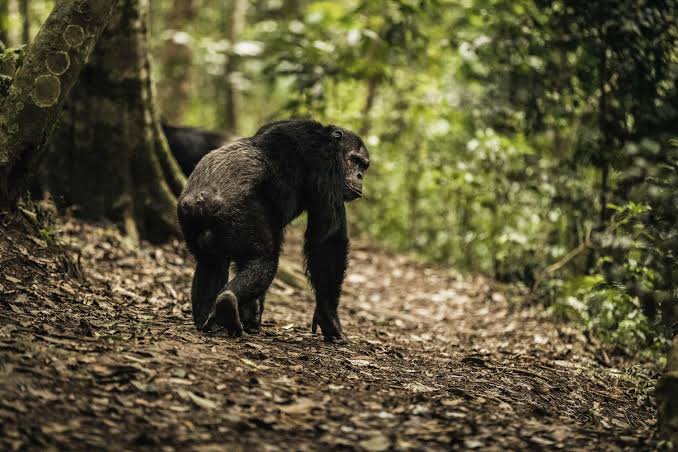
Trackers have usually been in the forest since first light, working from the previous evening’s nest sites and listening for contact calls. They relay their positions to your guide by radio. Then the walk becomes a lesson in forest craft. Experienced Nyungwe guides stop, tilt their heads, and wait for the pant-hoot, then decide whether the party is feeding, travelling, or resting before committing to a route. A practical tip not found in brochures: when your guide stops and falls silent, you should also stop and be quiet. The fastest way to lose a chimpanzee party is a group that keeps talking while the guide is listening. The terrain involves steep, slippery slopes, stream crossings, and low roots, and the forest floor is damp even in the dry season.
The hour with the chimpanzees
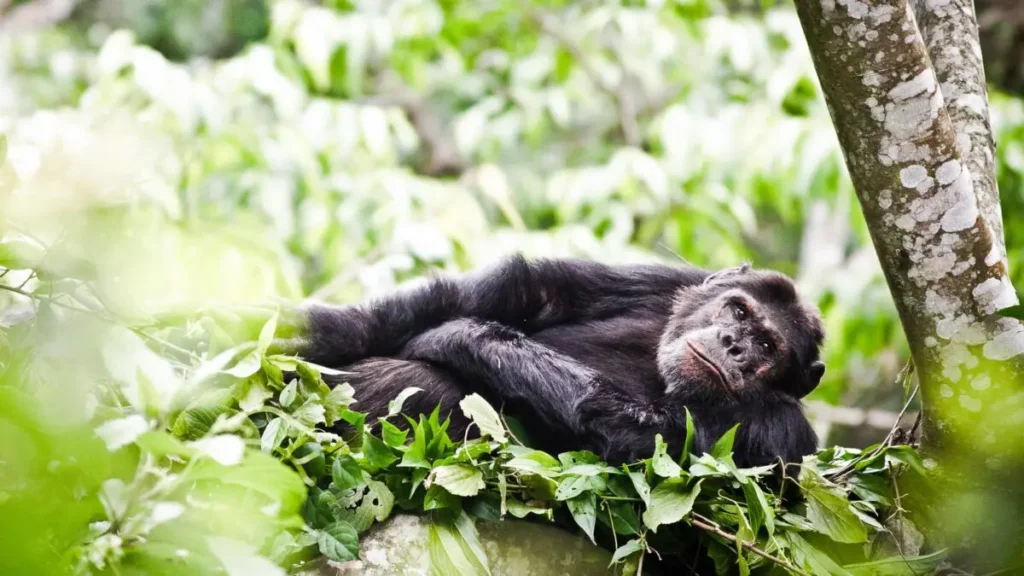
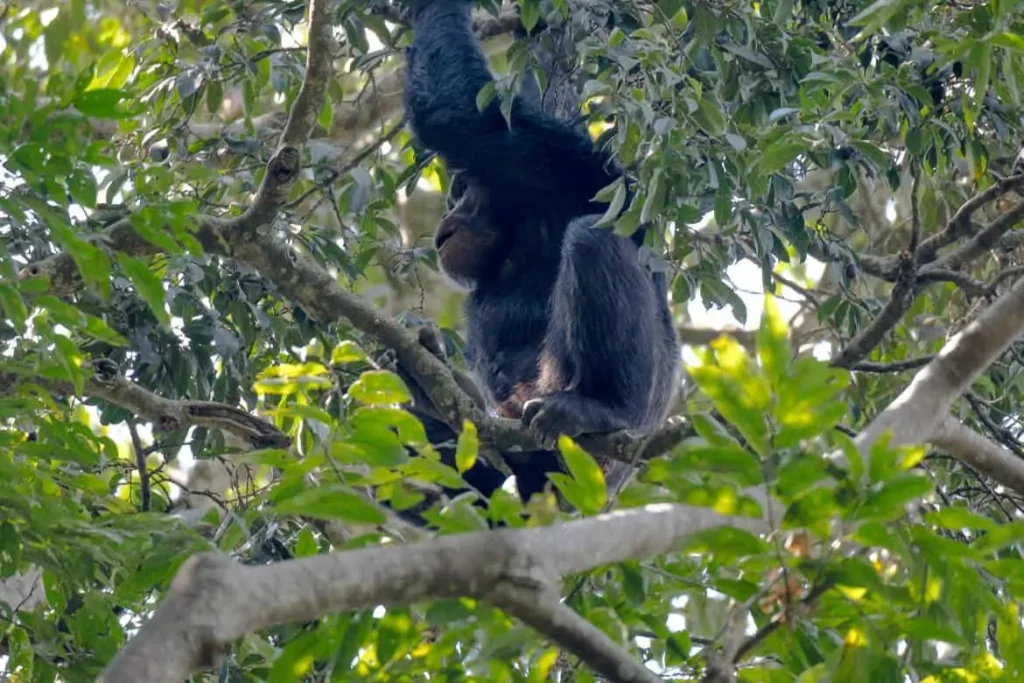
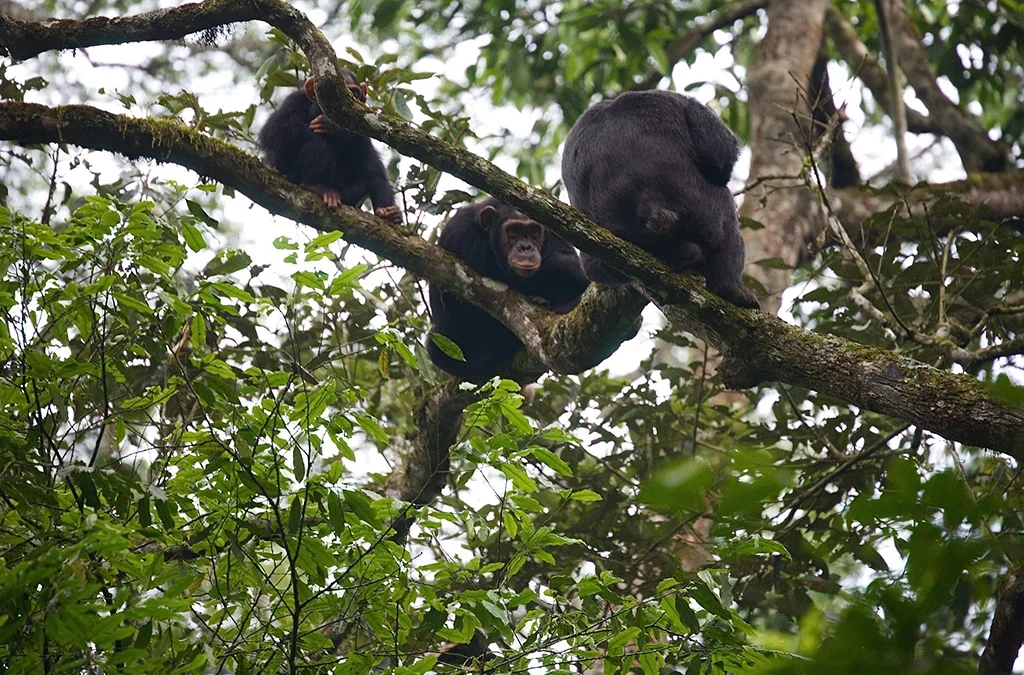
When trackers confirm the party’s position, you leave bulky bags with your guide or porter and approach quietly. From that point you are allowed one hour at a respectful distance. What you see depends on the day. On a good morning you may find chimpanzees feeding in a fruiting fig at eye level, grooming in family clusters, juveniles wrestling and tumbling, and adult males displaying with sudden, startling charges. On a more frustrating morning, the chimpanzees may stay high in the canopy, glimpsed through gaps in the leaves, with the most memorable moments being the sounds: branches cracking, fruit dropping through the foliage, and calls rolling across the valley. Both mornings are authentic, and your guide will help you understand what you are seeing.
Rules of conduct around chimpanzees
Rangers will brief you on the rules and enforce them without compromise. Visitors keep a minimum distance that is larger than for gorillas, stay together as a group, never touch or feed the animals, do not eat or drink in their presence, and speak quietly. Flash photography is prohibited. Because chimpanzees are susceptible to human respiratory illnesses, anyone with a cough, cold, or flu may be refused entry to the trek without a refund, and rangers may ask you to wear a face mask near the animals. If a chimpanzee approaches, stay calm, avoid direct eye contact, and let the ranger direct you; adult males sometimes charge as a display and then move on.
After the trek
You walk back out, often by a different route, and are usually at the lodge by late morning or by early afternoon for a longer Cyamudongo day. A late lunch, a shower, and a quiet afternoon are the sensible reward, and most guests find that a massage or a walk through the tea plantation is precisely what the legs want. Because the day starts so early, we do not schedule other major activities on the same afternoon.
How Difficult Is Chimpanzee Trekking in Rwanda?
Chimpanzee trekking in Nyungwe is moderately demanding: physical effort is comparable to a medium-length gorilla trek at Volcanoes National Park, but the duration is less predictable and the terrain is wetter and more slippery. Treks last from about one hour to five hours of walking; the trails climb and descend through forest at roughly 2,000 to 2,500 meters, and the Cyamudongo option adds a very early start and a long drive on top of the walk.
Terrain, altitude, and weather
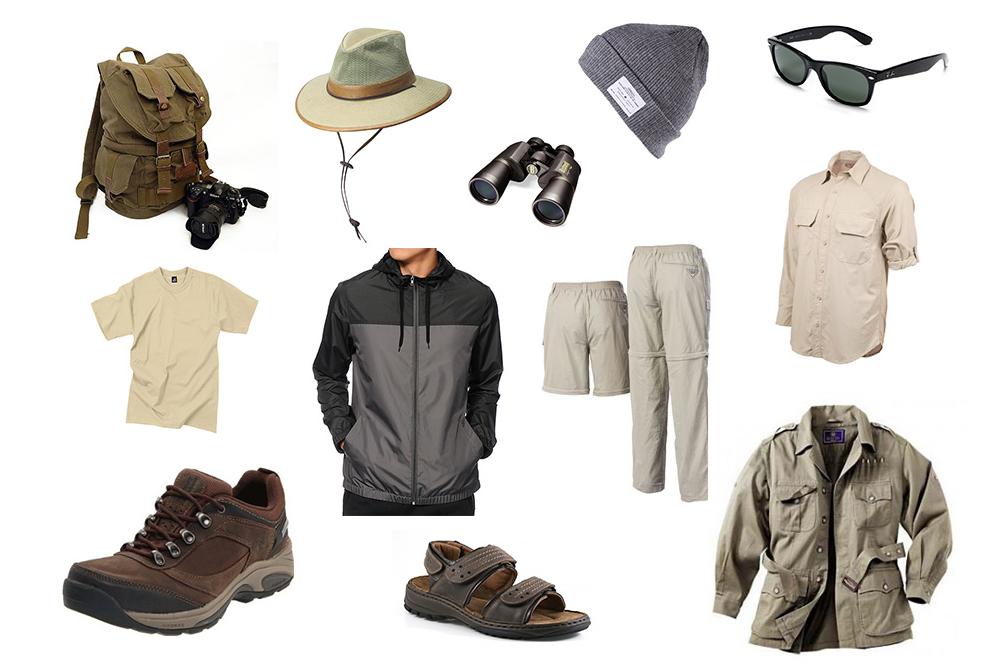
Nyungwe is steeper, wetter, and more slippery underfoot than most travelers expect from a rainforest at this latitude. Trails follow ridges and drop into stream valleys, roots and mud are constant, and it rains in some form on the majority of days regardless of season. Altitude is a modest factor rather than a serious one: the Uwinka area sits at about 2,500 meters, so you will notice the thinner air on steep sections but rarely struggle with it, unlike at the higher elevations of the volcano slopes. Mornings can be genuinely cold, in the low teens Celsius or below, before warming quickly once the sun clears the canopy, so layers matter.
Fitness level and who should think twice
A reasonable level of fitness is enough: you should be comfortable walking for three to four hours on uneven ground with some steep sections. Regular hiking or brisk hill walking in the weeks beforehand is the best preparation. The honest caveat is that the chimpanzees, not the schedule, decide the length of a trek. A fast-moving party can require sustained effort, and travellers with significant mobility limitations, heart or breathing conditions, or severe knee and balance problems should discuss options with us before booking. Cyamudongo, with its smaller forest, can often mean a shorter walk once you arrive even though the drive is more demanding, which is the kind of nuance a specialist operator should explain to you.
Age limits and accessibility
The minimum age for chimpanzee trekking in Rwanda is 15, in line with gorilla trekking. There is no formal upper age limit, and we regularly guide travellers in their seventies who are in excellent walking condition. Porters are strongly recommended for anyone who is not in regular training: for a modest fee they carry your daypack, steady you on slippery sections, and provide direct income to a local household. Walking sticks are available at the park.
Chimpanzee Trekking Permits in Rwanda: Cost, What’s Included, and How to Book
A chimpanzee trekking permit in Rwanda costs USD 150 per person for international visitors, issued by the Rwanda Development Board, and it covers park entry, an assigned ranger guide, and one hour with a habituated community. Foreign residents in Rwanda are reported to pay USD 75 and East African citizens USD 25. The permit is a fraction of the USD 1,500 charged for mountain gorillas, which is why chimpanzees are among the best-value primate additions to any Rwanda itinerary.
Full cost breakdown for a chimpanzee trek
| Item |
Typical cost per person |
Notes |
| Chimpanzee trekking permit (international) |
USD 150 |
Issued by the Rwanda Development Board. Covers park entry, ranger guide, and one hour with the chimpanzees. |
| Nyungwe canopy walkway |
USD 40 |
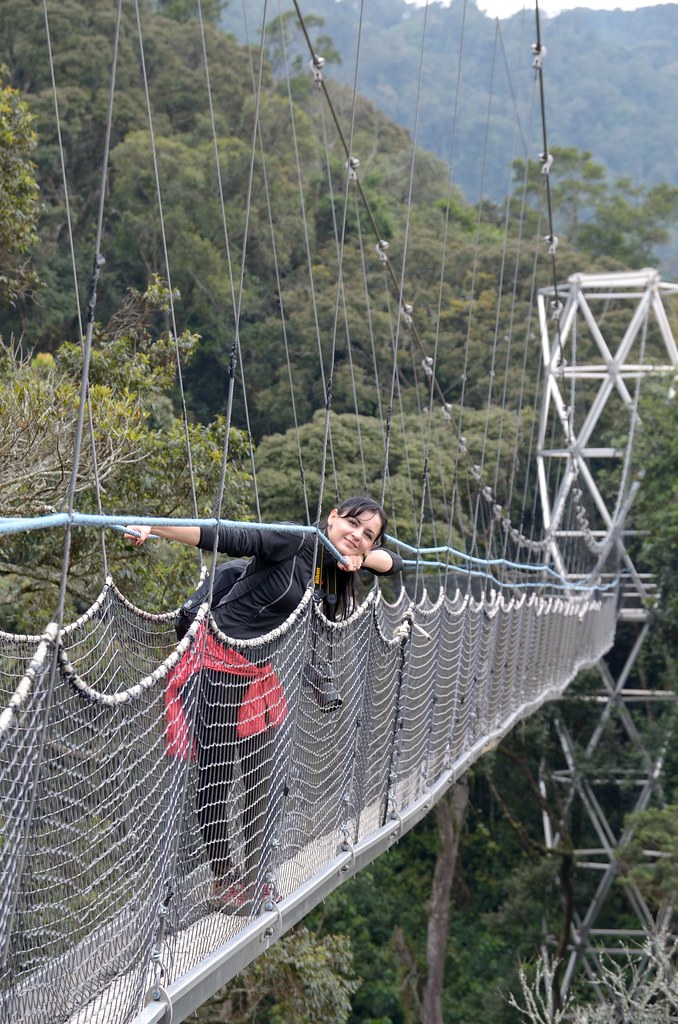
This activity is a separate fee and requires a separate booking, payable whether or not you trek chimpanzees that day. |
| Porter (optional, recommended) |
USD 10 to 15 plus tip |
Hired at the park. Particularly useful for Cyamudongo. |
| Additional Nyungwe Park entry |
Reported at about USD 100 for one night, USD 150 for two |
Some third-party operators list a per-night entry fee on top of the permit. We confirm exact charges for your dates before quoting. |
| Luxury lodging near Nyungwe |
Roughly USD 500 to 2,000 per person per night at the top end of the Rwanda market |
One&Only Nyungwe House is at the premium end. |
| Private vehicle and driver-guide |
Included in our packages |
A 4×4 is strongly advised for the Cyamudongo road. |
| Gratuities |
USD 20 to 30 per day for your guide; smaller amounts for rangers, trackers, and porters |
Guidance only; your guide will advise on the day. |
What the permit does not include
The permit does not include accommodation, transfers, meals, porters, the canopy walkway, or tips. Travellers occasionally arrive assuming one permit covers both the chimpanzee trek and the canopy walk, and it does not: they are priced and booked separately, and same-day canopy slots can be limited in peak season. When we build a Nyungwe itinerary, both bookings are confirmed in writing before you travel.
How far in advance to book
Chimpanzee permits are issued in limited numbers per day across the habituated communities. Our own Nyungwe guidance puts the daily allocation at about two dozen permits. That is far smaller than the pressure on gorilla permits, but permits can still sell out in the June to September and December to January peak periods, so booking two to three months ahead is a sensible minimum for fixed dates, and earlier is better if you want a specific day relative to your gorilla trek. The most important coordination is not with the chimpanzee permit itself but with your lodge and your gorilla date: the finest properties around Nyungwe and Volcanoes can fill before permits do.
Who issues permits and how booking works
All chimpanzee permits are issued by the Rwanda Development Board and are normally purchased through a licensed tour operator, who pays the RDB in full to confirm your date. With us the process is short: you tell us your travel dates, fitness level, and preferred community, we check live availability and hold the permits, and you receive a written confirmation with every fee itemized. Permits are issued in the name on your passport, so spelling matters, and they are generally non-transferable and non-refundable once confirmed, which is a further reason to settle your dates before you pay.
Best Time for Chimpanzee Trekking in Rwanda
The best time for chimpanzee trekking in Rwanda depends on whether you prioritize firm trails or settled chimpanzees: the dry seasons of June to September and December to February give the easiest walking, while the wetter months of March to May and October to November can actually improve sightings because food is abundant and chimpanzee communities range less widely. Nyungwe is open and trekkable all year, and no month is a poor choice if you pack well.

Why the rainy season can be better for chimpanzees
Safari planning habits teach travelers to treat the dry season as always superior, and for most Rwanda activities, that is a good rule. Chimpanzees are an exception worth knowing about. During the long rains of March to May and the shorter rains of October and November, fruit is abundant across the forest, and chimpanzee communities tend to stay closer to their core range rather than travel long distances to find fruiting trees. Several Nyungwe guides specifically recommend the wetter months for this reason. The June to August period also coincides with heavy fig fruiting in parts of the forest, which provides another excellent window for activity. In other words, food drives chimpanzee success in Nyungwe as much as weather does.
Season-by-season guide
| Season |
Months |
Weather |
Trails and roads |
Chimpanzee notes |
Crowds and value |
| Long dry season |
June to September |
Driest. Nyungwe about 12 to 22°C (54 to 72°F), cold dawns |
Firmest trails; best road conditions for the long transfers |
Fig fruiting in parts of the forest; good activity |
Peak. Permits and lodges sell out early. Highest rates. |
| Short dry season |
December to February |
Dry and bright, similar temperatures |
Good trails and roads |
Reliable; less competition for permits than mid-year |
Busy but easier availability. Strong value for quality. |
| Long rains |
March to May |
Wettest. Cool, misty, frequent heavy showers |
Muddy, slippery trails; waterproofs and porters are essential |
Abundant food can keep chimpanzees closer to their core range. |
Quietest. Lowest lodge rates. Lush forest. |
| Short rains |
October to November |
Lighter, more intermittent rain |
Mostly manageable; delays after heavy showers |
Similar food advantage to the long rains |
Shoulder season. Good availability and value. |
Month-by-month considerations
January and February are reliably bright and cool, with some of the best trekking conditions of the year and noticeably easier lodge availability than July. March and April are the heart of the long rains, with the greenest forest and the fewest visitors; book now if you want the chimpanzees to yourselves and are happy to trade comfort for atmosphere. May is a transition month where rains begin to ease. June through September is the classic window: clear skies, the firmest trails, and the busiest calendar, with early September overlapping Kwita Izina, the gorilla-naming ceremony at Volcanoes National Park, which adds pressure on lodges. October and November bring shorter showers and rapidly improving availability, and December returns to the bright, dry pattern ahead of the festive peak.
For a first Rwanda primate safari, we recommend June to September or December to February if you want the simplest logistics, and late October to November or March to May if you want fewer people, richer forest, and, for chimpanzees specifically, communities that may be easier to find. Whichever you choose, build in a buffer: staying at least two nights in Nyungwe means that if a first attempt is cut short by weather or a fast-moving party, you still have a second morning in hand.
Chimpanzee Trekking in Rwanda vs Uganda and Tanzania.
Rwanda offers a lower-cost, better-supported, and more compact chimpanzee trek than most alternatives, while Uganda offers more places and larger populations, and Tanzania offers a far more remote and expensive experience in the Mahale Mountains and Gombe. Which is right for you depends on your budget, your route, and how much uncertainty you will accept.
Rwanda versus Uganda
Uganda is the other premier East African chimpanzee destination, with trekking in Kibale Forest, Budongo Forest near Murchison Falls, Kyambura Gorge, and Kalinzu. Kibale in particular holds a much larger population, commonly cited at around 1,500 chimpanzees, and has been tracking visitors since the 1990s. The trade-off is price and distance. Kibale’s tracking permit is around USD 250 for foreign non-residents, and the Ugandan authority has reportedly announced a revision to USD 300 from 1 January 2027, which is roughly double Rwanda’s USD 150. Uganda also offers a chimpanzee habituation experience in Kibale that allows a much longer period with a community still being habituated, at a higher permit price, and Rwanda has no equivalent standard offering in Nyungwe.
Where Rwanda wins is infrastructure, cost, and convenience. The roads to Nyungwe are paved, the lodges around Gisakura are among the finest in the region, and a Nyungwe chimpanzee trek fits naturally into the same road circuit as the gorillas of Volcanoes National Park, which sits only four to six hours away. If you are also weighing where to see gorillas, our guide to Rwanda versus Uganda gorilla trekking sets out the cost, permit, and logistics differences in detail, and many of our guests combine the two countries through the Cyanika border crossing.
| Destination |
Permit (international) |
Approx. population |
Character |
| Nyungwe, Rwanda |
USD 150 |
More than 300 (UNESCO) |
Montane rainforest; two habituated communities; canopy walkway; luxury lodges |
| Kibale, Uganda |
About USD 250; reported USD 300 from 2027 |
About 1,500 |
Large, well-established tracking; habituation experience available |
| Budongo, Uganda |
About USD 130 |
Several hundred |
Combined easily with Murchison Falls safaris |
| Kyambura Gorge, Uganda |
About USD 100 |
Small community |
Short walk in a dramatic gorge in Queen Elizabeth National Park |
| Gishwati-Mukura, Rwanda |
No single published tariff |
About 25 semi-habituated |
Emerging and less predictable |
Tanzania: Mahale and Gombe
Tanzania’s Mahale Mountains and Gombe Stream, on the shore of Lake Tanganyika, offer the most remote and storied chimpanzee experiences on the continent, with Gombe forever tied to the research of Jane Goodall. They require flights, boat transfers, and a very high budget, so they suit travelers building a dedicated primate expedition rather than adding chimpanzees to a gorilla trip. Rwanda’s Nyungwe is far more efficient for the typical luxury traveller who wants to combine gorillas, golden monkeys, and chimpanzees in a single week.
How to Get to Nyungwe Forest and Where to Stay
Nyungwe is about 225 kilometers and roughly five hours by road from Kigali and about four to six hours from Volcanoes National Park via the scenic Lake Kivu road, with a small airstrip at Kamembe offering a faster charter option. Because the drive is long, most travelers treat the transfer as part of the safari rather than a cost of reaching it.
From Kigali
The usual route runs southwest through Muhanga and Nyanza to Huye, then on to Gisakura on the western edge of the forest. The drive is the best introduction to rural Rwanda: terraced hillsides, cyclists hauling goods along the verges, and tea estates rising to meet the forest. Two stops reward the time spent. At Nyanza, the reconstructed royal palace introduces Rwanda’s monarchy and its long-horned Inyambo cattle. In Huye, the National Museum of Rwanda is widely regarded as the country’s finest. Allow about five hours of driving plus stops, and plan to arrive in the afternoon so that you have time to settle before an early start.
From Volcanoes National Park via Lake Kivu
From the gorilla country around Musanze, the road west to Nyungwe follows the ridges above Lake Kivu through Rubavu and Karongi. The distance is long enough that a lakeside lunch, or better still an overnight on the water, turns the transfer into one of the highlights of the journey. Driving time is roughly four to six hours depending on road conditions, stops, and any works. Our itinerary design usually places Nyungwe before the volcanoes so that the gorillas come as the finale, but the route works in either direction.
By air to Kamembe
A small domestic airstrip at Kamembe, near Cyangugu, cuts the journey from Kigali to roughly an hour by air, but scheduling depends on charter availability and should be confirmed well ahead of travel. For travellers with tight schedules or those who want to avoid a full day of driving at either end, a charter into Kamembe followed by a road transfer of about two hours can be worthwhile.
Where to stay near Nyungwe
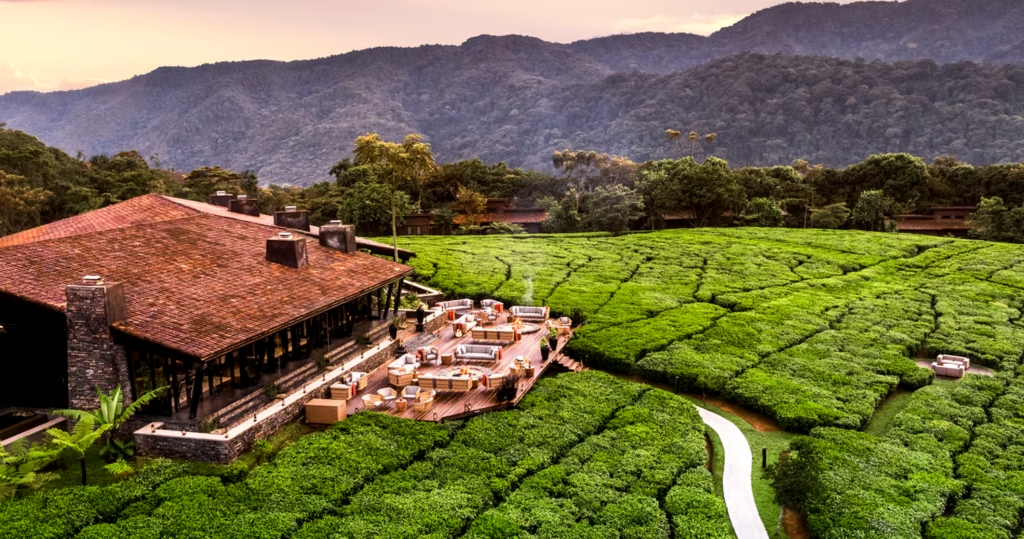
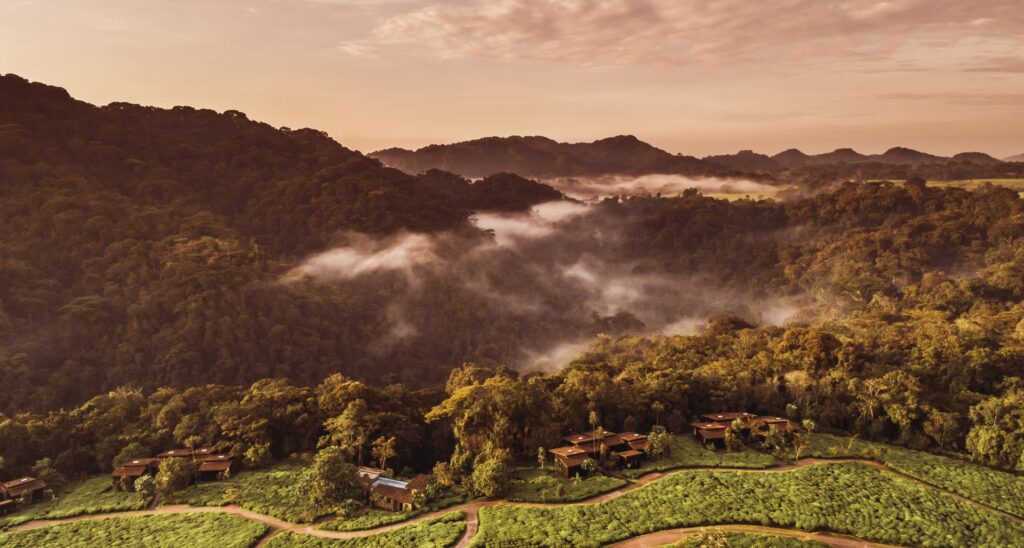
Most accommodation clusters around Gisakura on the western edge of the forest, within a manageable transfer of both the Uwinka reception area and the Cyamudongo access road. One&Only Nyungwe House is the standout luxury property, built on a working tea estate at the forest’s edge, with suites that open onto the plantation and a position that makes early departures easy. For comfortable mid-range stays, Nyungwe Forest Lodge and Nyungwe Top View Hill Hotel both sit near Gisakura and offer forest or valley views at a lower price point. Travellers building a longer circuit often add a night on the shore of Lake Kivu between Volcanoes and Nyungwe. We recommend at least two nights near the park, and three if you want to add the canopy walkway, a dawn birding walk, and a second chimpanzee option without rushing.