What Is Akagera National Park? Rwanda’s Conservation Comeback Story
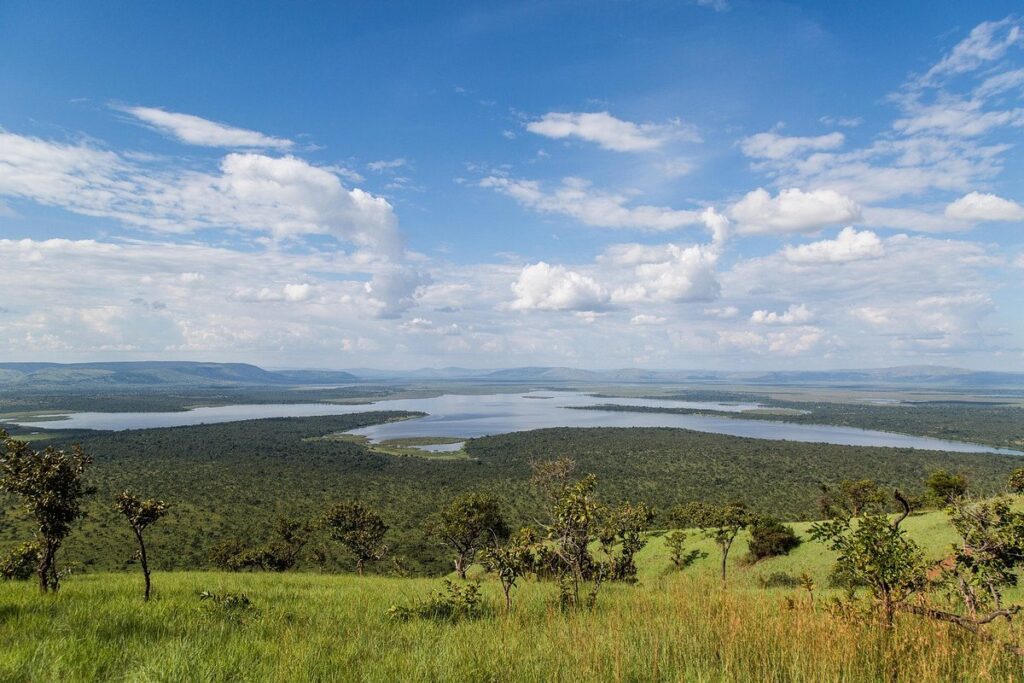
Akagera National Park is a 1,122-square-kilometer protected area in northeastern Rwanda, hugging the Tanzanian border, jointly run by the Rwanda Development Board and the Johannesburg-headquartered conservation NGO African Parks since 2010, in what is now considered one of the most complete park recoveries on the continent. The park takes its name from the Kagera River, which forms its eastern boundary and feeds the chain of lakes Ihema, Shakani, Rwanyakazinga, Mihindi, and others that together make up more than a third of the park’s total area, the largest protected wetland system in East and Central Africa.
From 2,500 Square Kilometers to Near-Collapse
Belgian colonial authorities established Akagera in 1934 as a hunting and wildlife reserve of roughly 2,500 square kilometers. Its fortunes turned after the 1994 genocide against the Tutsi, when hundreds of thousands of returning refugees settled inside the park’s boundaries; by 1997 more than half its land had been formally degazetted for resettlement and cattle grazing, shrinking Akagera to its current 1,122 square kilometers. The wildlife that survived the encroachment did not survive the following decade; cattle herders protecting livestock poisoned the park’s last lions by the early 2000s, and the final confirmed black rhino sighting came in 2007. By the time African Parks arrived, Akagera had lost its Big Five entirely and much of its wider game population besides.
The African Parks Turnaround
The 2010 management agreement between the Rwanda Development Board and African Parks brought an initial capital investment of roughly USD 10 million, starting with a single, unglamorous intervention: a 120-kilometer predator-proof fence around the park’s boundary. That fence ended the human-wildlife conflict that had driven the earlier poisoning and poaching, and it is what allowed the reintroduction program that followed to actually succeed rather than repeat the losses of the 1990s. The results, in sequence, form one of Africa’s clearest conservation-recovery timelines:
| Year |
Milestone |
| 2015 |
Seven lions were reintroduced from KwaZulu-Natal reserves in South Africa; the first cubs were born within a year of arrival. |
| 2017 |
18 eastern black rhinos relocated from South Africa, the first rhino in the park in a decade. |
| 2019 |
Five more black rhinos arrive from three European zoos, marking the first-ever rhino relocation directly from a zoo population into the wild. |
| 2021 |
30 white rhinos translocated from Phinda Private Game Reserve, South Africa. |
| 2025 |
70 additional white rhinos arrive from South Africa in June, the largest single rhino translocation in the park’s history. |
By 2025, Akagera was welcoming 67,661 visitors a year and, in a recent reporting year, generated USD 4.8 million in tourism revenue, up from USD 3.7 million the year before. These figures, which in 2022 already covered as much as 92 percent of the park’s own operating expenses, represent a genuinely rare achievement among African protected areas, most of which still depend heavily on donor funding. In October 2025, National Geographic named Akagera one of its 25 Best of the World destinations for 2026, external validation of a recovery that Rwanda specialists had been quietly recommending for years. Akagera is now the only park in Rwanda that holds all Big Five species and one of the relatively few places in Africa where a traveller can see lion, leopard, elephant, buffalo, and both rhino species in a single, compact game-viewing circuit. For context on how this park fits within Rwanda’s wider protected-area network, see our complete Rwanda safaris guide.
Akagera National Park at a Glance
| Detail |
Akagera National Park |
| Size |
1,122 km² (433 sq mi) |
| Established |
1934; refounded under African Parks co-management in 2010 |
| Location |
Eastern Rwanda, bordering Tanzania |
| Distance from Kigali |
~110 km / approx. 2.5 hours by road |
| Altitude |
1,250 – 1,825 metres |
| Habitat |
Savanna, acacia woodland, papyrus swamp, lake system |
| Big Five present |
Lion, leopard, elephant, buffalo, black & white rhino |
| Bird species |
500+ |
| Entry fee (non-resident) |
USD 50 per person, per day |
| Best months |
June–September and January–February |
Wildlife in Akagera: The Big Five and What Else You’ll See
Akagera is the only park in Rwanda where lion, leopard, elephant, buffalo, and rhino can realistically be seen inside a single itinerary, and its lake system adds a density of hippo, crocodile, and waterbird life that few savanna parks anywhere can match.
Predators and Big Game
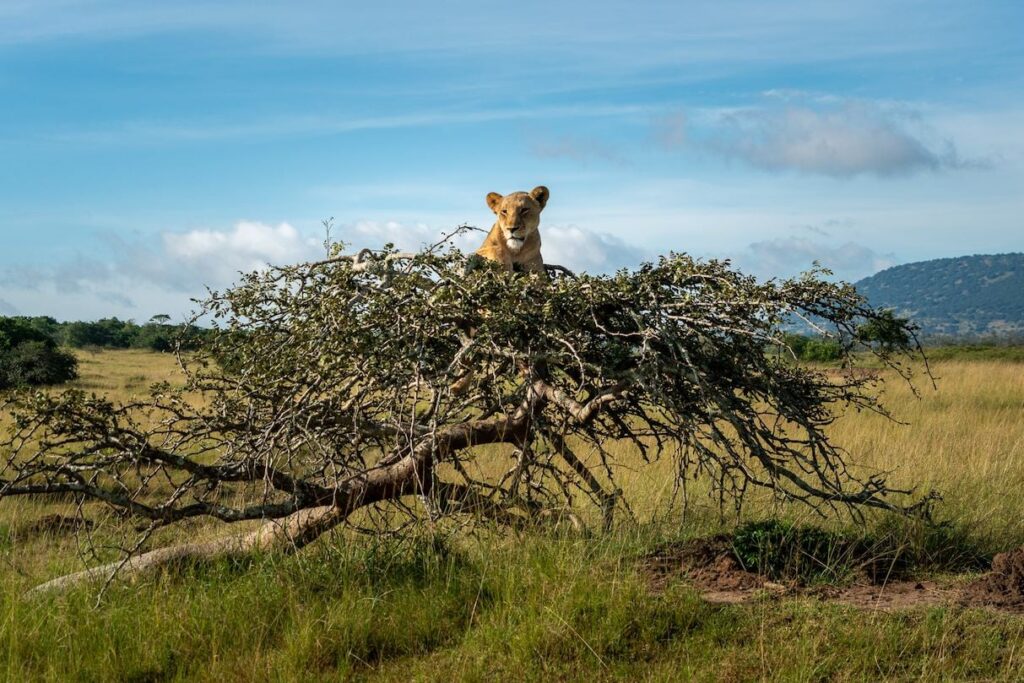
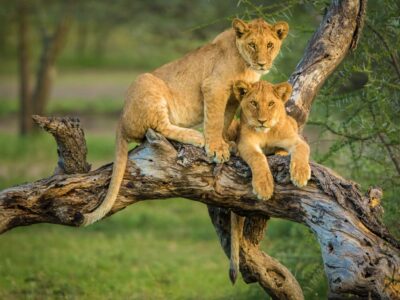
The descendants of the seven lions reintroduced in 2015 have grown into multiple prides spread across the park’s central and southern sectors, most consistently encountered on morning game drives around open grassland. Leopard is present but genuinely elusive, and a guided night drive offers a far better chance of a sighting than daytime game viewing. You can see elephants and buffalo with reasonable consistency, typically in woodland and around the lakeshore in the early morning and late afternoon. Both the black rhino, a critically endangered subspecies, and the white rhino, whose numbers grew substantially after the June 2025 translocation of 70 individuals from South Africa, are present, though rangers sometimes restrict access to specific monitoring zones to protect the animals from disturbance while newer arrivals settle in.
The Water World: Hippos, Crocodiles, and the Shoebill
Lakes and papyrus swamps cover more than a third of Akagera, and Lake Ihema, Rwanda’s second-largest lake, holds one of the country’s densest hippo populations alongside basking Nile crocodiles, both easily seen on a boat safari. Further north, the swamps around Lake Rwanyakazinga and Lake Shakani are the realistic home range of the shoebill stork, a large, prehistoric-looking bird that ranks among Africa’s most sought-after sightings for serious birders and is one of the clearest reasons a keen photographer or birdwatcher should choose Akagera over a park without comparable wetland habitat.
Plains Game and Birdlife
Giraffe, zebra, eland (Africa’s largest antelope), topi, roan antelope, oribi, and impala are all resident, with Kilala Plain, in the park’s center, the single most reliable spot for concentrated sightings. Giraffe and zebra in particular gather here in numbers at night for safety from predators, making early-morning and late-afternoon drives through this area especially rewarding. Akagera’s bird list runs past 500 species, including the African fish eagle, papyrus gonolek, and swamp flycatcher, giving the park a genuine claim to being one of Rwanda’s two or three best birding destinations alongside Nyungwe.
Where to Find Akagera’s Signature Species
| Species |
Where to Look |
Best Activity |
| Lion |
Central & southern grassland |
Morning or night game drive |
| Leopard |
Riverine woodland, rocky outcrops |
Night game drive |
| Elephant |
Woodland & lakeshore |
Game drive, boat safari |
| Black & white rhino |
Northern & central monitoring zones |
Guided game drive with ranger |
| Buffalo |
Open grassland herds |
Game drive |
| Hippo & Nile crocodile |
Lake Ihema, Lake Shakani |
Boat safari |
| Shoebill stork |
Papyrus swamps near Rwanyakazinga |
Early-morning boat safari |
| Giraffe & zebra |
Kilala Plain |
Game drive |
| 500+ resident & migrant birds |
Throughout, lakeshore best |
Walking safari, boat safari |
How Akagera Compares with East Africa’s Other Safari Parks
Akagera is a fraction of the size of East Africa’s most famous savanna parks, and it does not attempt to compete with them on sheer volume of plains game; its value proposition is different: genuine Big Five wildlife inside the same country as your gorilla trek, seen without the vehicle density that can affect sightings at the region’s better-known parks during peak season.
| Park |
Country |
Approx. Size |
Signature Wildlife |
Pairs with Gorilla Trekking? |
| Akagera |
Rwanda |
1,122 km² |
Big Five, shoebill stork, low crowds |
Yes, same country, no border crossing |
| Serengeti |
Tanzania |
~14,750 km² |
Great Migration, Big Five |
No, separate country & flight sector |
| Masai Mara |
Kenya |
~1,510 km² |
Big Five, wildebeest migration (Jul–Oct) |
No, separate country & flight sector |
| Queen Elizabeth NP |
Uganda |
~1,978 km² |
Tree-climbing lions, Kazinga Channel boat safari |
Yes, if paired with the Bwindi land border crossing |
For travellers specifically wanting migration-scale herds, Rwanda Gorilla Expeditions builds multi-country itineraries that combine Rwanda with the Serengeti or the Masai Mara. See our Gorillas & the Great Migration and Primates & Plains itineraries. For travellers who want a complete, single-country Big Five and primate circuit without a second visa or flight sector, Akagera alongside Volcanoes National Park and Nyungwe Forest National Park is the more efficient choice, and it is the reason most first-time Rwanda travellers ultimately add Akagera to their plans rather than treating gorilla trekking as a standalone trip.