Bwindi Impenetrable National Park: Uganda’s Original Gorilla Forest

Bwindi Impenetrable National Park is home to half the world’s mountain gorillas, spread across four trekking sectors. See when to go, permit costs & how to book.

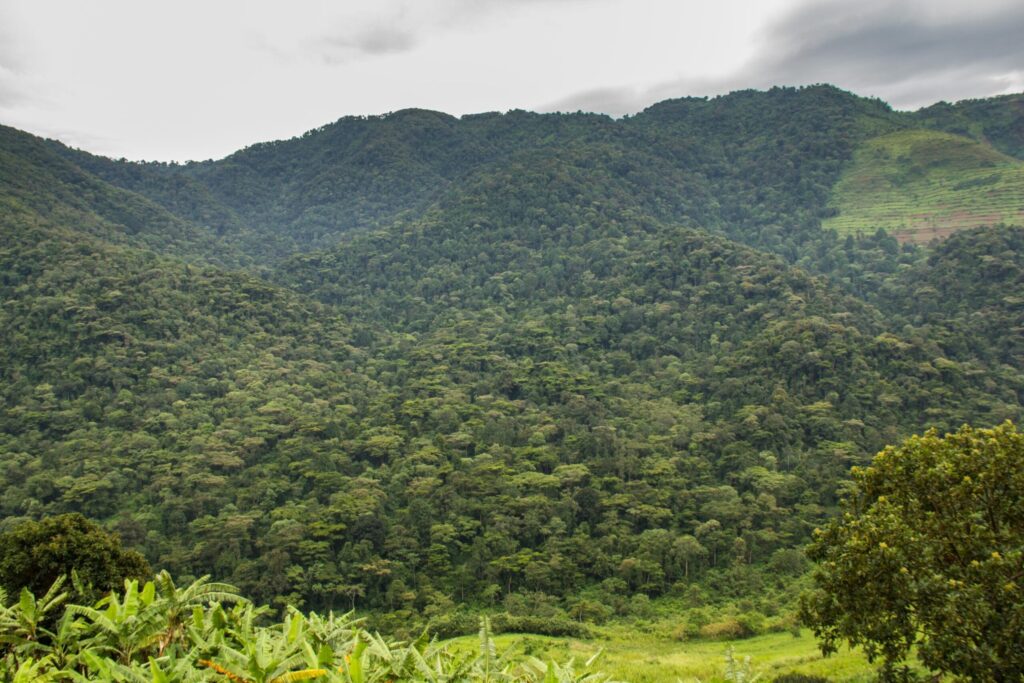
Bwindi Impenetrable National Park is a 331-square-kilometre UNESCO World Heritage rainforest in southwestern Uganda that protects roughly half of the world’s remaining mountain gorillas, more than any other single park on Earth. Gazetted as a national park in 1991 and inscribed as a UNESCO World Heritage Site in 1994, Bwindi sits on the eastern edge of the Albertine Rift, its elevation climbing from 1,160 metres in its river valleys to 2,607 metres along its forested ridges. The park is divided into four separate trekking sectors, Buhoma, Ruhija, Rushaga, and Nkuringo, each with its ranger headquarters, its own habituated gorilla families, and its own access road, so the sector you choose shapes almost everything else about your trip.

Bwindi Impenetrable National Park: Complete Trekking Guide 2027

A standard permit for gorilla trekking in Uganda, issued by the Uganda Wildlife Authority (UWA), costs USD 800 per person, roughly half of what the equivalent permit costs across the border in Rwanda’s Volcanoes National Park. Bwindi’s forest is also one of the oldest in Africa, thought to have survived the last Ice Age largely intact, which helps explain why it supports over 120 mammal species, more than 350 recorded bird species, and upwards of 200 tree species alongside its gorillas. For travellers weighing Rwanda against Uganda, or planning a first mountain gorilla trek from anywhere in the world, Bwindi is usually the destination that wins on value, forest immersion, and sheer biological weight, at the cost of a longer, wilder journey to reach it.

Permits are limited — spaces fill months ahead

Reserve Your Private Gorilla Trek

Speak with a Rwanda-based specialist today. We secure permits, match you to the right gorilla family, and plan every detail around your schedule.

No group departures · Private itineraries only · Direct Rwanda expertise

What Is Bwindi Impenetrable National Park?

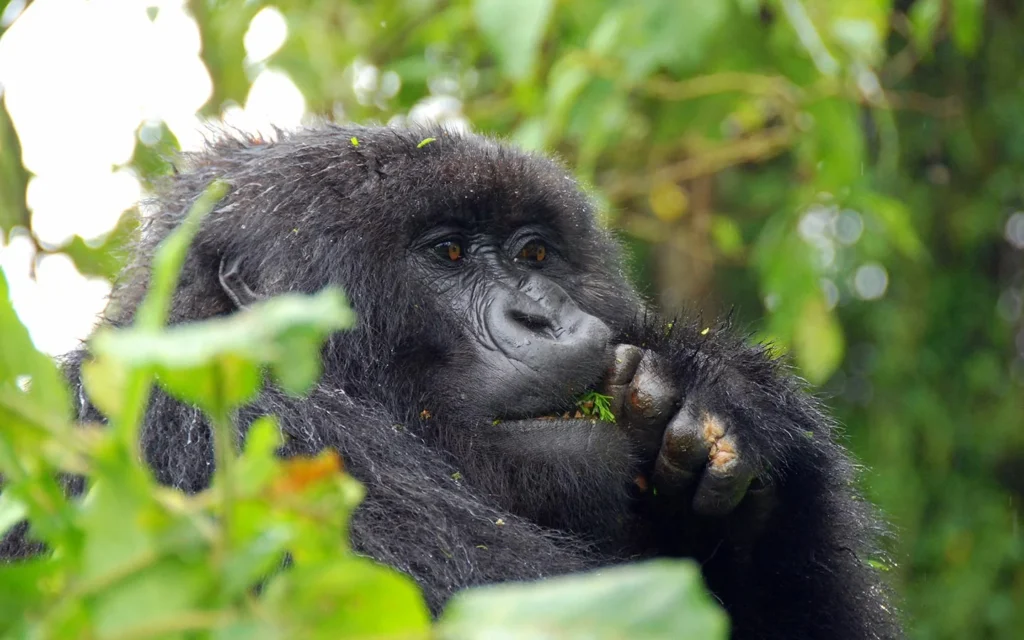
Bwindi Impenetrable National Park is one of only two places on Earth where the mountain gorilla, Gorilla beringei beringei, survives in the wild, the other being the Virunga Massif shared by Rwanda, Uganda, and the Democratic Republic of Congo, roughly 25 kilometers to the south. Genetic studies have confirmed that Bwindi’s gorillas and the Virunga population, though the same subspecies, have been geographically isolated from one another long enough to show measurable genetic differentiation, which is why conservationists manage them as two distinct populations rather than one interchangeable group, a distinction that surprises many first-time visitors who assume all mountain gorillas belong to a single interbreeding population. Bwindi’s name comes from a local Rukiga phrase roughly translating to “place of darkness,” a reference to the density of its undergrowth rather than any lack of daylight, and it is this same density that makes trekking here noticeably different from the more open volcanic slopes of Rwanda.

Location and Geography

Bwindi sits across Uganda’s Kanungu, Kabale, and Kisoro districts in the extreme southwest of the country, bordering the Democratic Republic of Congo’s Virunga National Park to the west and lying close to Rwanda’s northern border near the Cyanika crossing to the south. The terrain is genuinely mountainous rather than gently hilly: valleys run as low as 1,160 meters above sea level, while the highest ridges reach 2,607 meters, a range that creates several distinct forest zones and explains why trek difficulty can vary so sharply from one gorilla family to the next, even within the same sector. Because the park straddles this elevation range, weather and vegetation change noticeably as you move between sectors and even within a single day’s trek from valley floor to ridge.

History and UNESCO Status

The forest that is now Bwindi was first gazetted as two separate crown forest reserves in 1932, Kayonza in the north and Kasatora in the south, and was managed for timber and controlled hunting for most of the twentieth century rather than for conservation. Uganda’s government formally gazetted the combined area as Bwindi Impenetrable National Park in 1991, specifically to protect its mountain gorilla population from the same pressures that had devastated gorilla numbers elsewhere in the region, and UNESCO inscribed it as a World Heritage Site in 1994 in recognition of its exceptional biodiversity. Gorilla tourism itself began two years before UNESCO listing, in 1993, when the Buhoma sector’s Mubare family became the first Bwindi gorilla group habituated for tourism, a title Mubare still holds today as the park’s original trekking family and the direct ancestor of Uganda’s entire gorilla tourism industry.

Biodiversity Beyond the Gorillas

Bwindi is routinely described as one of the most biologically rich forests in Africa, home to more than 120 mammal species, over 350 recorded bird species, including several Albertine Rift endemics found almost nowhere else on Earth, and more than 200 tree species alongside roughly 100 species of fern. Beyond mountain gorillas, the forest holds a separately habituated chimpanzee community in the Ruhija area, forest elephants, several colobus and other monkey species, and forest duikers, all sharing a forest old enough that some ecologists believe it served as a Pleistocene refuge, a pocket of surviving habitat through past periods of regional climate upheaval. For birders specifically, Bwindi is frequently ranked among the two or three best forest birding destinations on the African continent, a reputation that in academic and birding circles actually predates its fame for gorilla trekking by several decades.

The Four Gorilla Trekking Sectors of Bwindi

Every Bwindi gorilla trekking permit is issued for one specific sector, Buhoma, Ruhija, Rushaga, or Nkuringo, and travellers cannot switch sectors on the day of their trek, which makes the sector decision the single most consequential choice in planning a Bwindi trip. Each sector operates its own park headquarters, its own morning briefing point, and its own cluster of habituated families, and the four are spread widely enough around the forest’s perimeter, in places a half-day’s drive apart, that a traveller based at one sector’s lodges cannot simply relocate to trek from another sector the same morning.

Uganda vs. Rwanda Gorilla Trekking: Costs, Permits & Guide

Buhoma Sector: The Original Gateway

Buhoma, in the park’s north, is where Uganda’s gorilla tourism industry began in 1993 and remains the most established and accessible of the four sectors. It sits closest to Queen Elizabeth National Park and the Kihihi airstrip, making it the natural choice for travellers combining Bwindi with Uganda’s savannah parks or arriving by air, and its longer operating history means it has developed the widest range of lodges of any sector, from simple guesthouses to genuine luxury properties. Buhoma’s gorilla families, including Mubare, Habinyanja, and Rushegura, are generally considered to offer some of the more moderate terrain in the park, though, as in every sector, this depends entirely on where a family has moved to on the specific morning of your trek.

Ruhija Sector: Cool Highlands and Serious Birding

Ruhija occupies the park’s eastern highlands at a noticeably higher and cooler elevation than the other three sectors, and it has built its reputation as much on birding as on gorilla trekking, regularly cited as one of Uganda’s premier forest birding locations. The sector holds several habituated gorilla families and is also home to Bwindi’s habituated chimpanzee community, giving travellers based here a genuinely rare opportunity to combine trekking for two different great apes without relocating lodges between activities. Because Ruhija sits at a higher altitude, mornings here can be sharply cold even by Bwindi standards, and travellers should pack an extra warm layer even though the daytime trek itself can still be physically demanding.

Rushaga Sector: The Most Families and the Habituation Experience

Rushaga, in the south of Bwindi, has the most habituated gorilla families of any sector, which means it usually has the best permit availability during busy times, and it is the only sector in Bwindi that offers the four-hour gorilla habituation experience. Rushaga is also the most convenient sector for travellers arriving from Rwanda through the Cyanika border post or from Kisoro town, a genuinely useful detail for anyone building a Rwanda-based itinerary with a Uganda extension. Terrain here ranges from moderate to steep depending on the assigned family, and its cluster of lodges, several of them genuinely luxury-grade, has grown considerably over the past decade to match rising demand from exactly this kind of cross-border traveller.

Nkuringo Sector: The Toughest Trek and the Best Views

Nkuringo, in Bwindi’s southwest, is consistently described by guides and past trekkers as the most physically demanding of the four sectors, with steep, often muddy terrain that rewards fit, adventurous travellers with some of the best panoramic views in the park, including sightlines toward the Virunga volcanoes on a clear day. It is also the closest sector to the Cyanika border crossing from Rwanda, making it a realistic add-on for Rwanda-based itineraries despite its reputation for tougher walking. Nkuringo’s relative remoteness has kept visitor numbers lower than Buhoma or Rushaga, which many travelers who specifically want a quieter, wilder forest experience consider a genuine advantage rather than a drawback.

Plan Your Rwanda Safari

Start Planning a Private Gorilla Trek

Rwanda gorilla permits sell out months in advance. Secure your dates before the season closes.

Bwindi’s Four Sectors at a Glance

Sector Location in Park Best Known For Nearest Access Point Typical Terrain
Buhoma North Original sector; widest lodge range; most accessible Kihihi airstrip / Queen Elizabeth NP Moderate
Ruhija East Cooler climate; top birding; chimp trekking nearby Kabale town Moderate to steep
Rushaga South Most gorilla families; habituation experience Kisoro town / Cyanika border (Rwanda) Moderate to steep
Nkuringo Southwest Toughest terrain; best panoramic views; fewest crowds Cyanika border (Rwanda) Steep, demanding

Gorilla Trekking Permits in Bwindi: Cost, Booking Rules & What’s Included

A standard Bwindi gorilla trekking permit costs USD 800 per person for foreign non-resident visitors, issued by the Uganda Wildlife Authority, and covers park entry, a professional ranger guide, and a strictly enforced one-hour observation window with your assigned gorilla family. As of March 2026, UWA no longer sells permits directly to individual foreign travelers; every non-resident permit must now be booked through a licensed Ugandan tour operator, and the previous seven-day reservation hold has also been eliminated, meaning full payment is required at the time of booking rather than after a short grace period. This is a meaningful change from how Bwindi permits worked as recently as 2025, and travellers relying on older guides or forum threads should treat any reference to booking directly with UWA or to a refundable reservation window as outdated information.

Bwindi Gorilla Permit Costs (2026 Tariff)

Category Standard Season Low Season (Apr, May, Nov)
Foreign non-resident USD 800 USD 600
Foreign resident in Uganda USD 700 USD 500
Rest of Africa (ROA) citizen USD 500 Not discounted
East African Community citizen UGX 300,000 (approx. USD 85) Not discounted
Gorilla Habituation Experience (Rushaga only) USD 1,500 per person Not discounted

What the Permit Includes and Doesn’t

The Bwindi gorilla permit fee covers park entrance for the day, ranger guide and tracker services throughout the trek, and the one-hour observation period once your group reaches the assigned gorilla family, along with a printed trekking certificate issued at the end of the day. It does not cover accommodation, ground transport, porter fees, gratuities, or the discretionary tip that most travellers give their guide and tracker team; these are budgeted separately and typically arranged as part of a full safari package rather than paid individually on the day. A maximum of eight visitors is permitted per gorilla family per day, identical to the rule in Rwanda and the Democratic Republic of Congo, and the same seven-meter minimum distancing rule applies throughout the encounter.

The Gorilla Habituation Experience

Bwindi’s gorilla habituation experience is offered exclusively in the Rushaga sector and allows up to four visitors per day to spend up to four hours, rather than the standard one hour, with a gorilla family that is still in the process of becoming accustomed to human presence. The experience places participants alongside the researchers and trackers actually doing the habituation work, offering a less polished but considerably deeper encounter than standard trekking, and its far smaller daily capacity, four permits against Rushaga’s much larger standard trekking allocation, means it should be booked well in advance for anyone building it into a fixed-date itinerary.

How to Get to Bwindi Impenetrable National Park

Reaching Bwindi takes real planning, and understanding the realistic travel times before booking dates or lodges is one of the most important logistics decisions in a Bwindi trip. Unlike Rwanda’s Volcanoes National Park, which sits roughly two and a half hours from Kigali International Airport on a single well-maintained highway, Bwindi has no single obvious gateway; the right route depends entirely on which of the four sectors your permit is issued for.

How to Get to Bwindi Impenetrable National Park

From Kigali, Rwanda

For travellers already in Rwanda or arriving via Kigali International Airport, the most common route runs via the Cyanika border post: roughly 3 hours and 119 kilometres of driving to reach the border, plus border formalities that typically take about an hour, plus a further 1 to 2 hours on to your specific sector. Rushaga and Nkuringo, Bwindi’s two southern sectors, are the fastest to reach from Rwanda, giving a realistic door-to-door journey of approximately 4 to 5 hours. Buhoma, in the park’s north, is generally reached via the Katuna (Gatuna) border instead, which adds meaningfully to the drive, pushing total travel time from Kigali closer to 5 to 6 hours.

From Entebbe or Kampala by Road

Travellers starting from Entebbe International Airport or Kampala face a considerably longer overland journey: roughly 500 to 550 kilometers and 8 to 10 hours of driving, depending on the specific sector and road conditions on the day. Many operators break this journey with an overnight stop at Lake Mburo National Park or in the Kigezi highlands rather than attempting it in a single push, turning what would otherwise be an exhausting transfer day into a scenic two-day introduction to western Uganda.

By Domestic Flight from Entebbe

For time-limited travellers, particularly those on a luxury itinerary where the goal is to minimise transit and maximise time in the forest, Aerolink Uganda operates scheduled flights from Entebbe to two airstrips serving Bwindi: Kihihi, which serves the Buhoma and Ruhija sectors, and Kisoro, which serves Rushaga and Nkuringo. Flight time runs approximately 1 hour to Kihihi and just over an hour to Kisoro, with one-way fares typically in the USD 250 to 350 range, followed by a further 1 to 2 hour road transfer from the airstrip to your lodge. This single flight replaces a full day of driving each way and is the option most luxury operators choose when time, rather than budget, is the binding constraint.

Route Comparison to Bwindi

From Route Approx. Total Time Best Suited To
Kigali (Cyanika border) Road 4–5 hours Rushaga & Nkuringo sectors; Rwanda-based itineraries
Kigali (Katuna border) Road 5–6 hours Buhoma sector
Entebbe / Kampala Road 8–10 hours Overland circuits, budget itineraries
Entebbe Flight to Kihihi or Kisoro 1–1.5 hrs flight + 1–2 hrs road transfer Time-limited, luxury itineraries

Plan Your Rwanda Safari

Start Planning a Private Gorilla Trek

Rwanda gorilla permits sell out months in advance. Secure your dates before the season closes.

The Best Time to Visit Bwindi: Weather, Seasons & Permit Timing

Bwindi has two dry seasons and two wet seasons, and gorilla trekking runs year-round in all of them, so the real question is not whether you can trek but which trade-off between trail conditions, crowds, and permit pricing suits your trip. The two dry seasons, June through September and December through February, offer the firmest, least muddy trails and are considered the best time to visit Bwindi by most operators and repeat travellers, which also makes them the periods of highest demand and tightest permit availability.

Best time for gorilla trekking.

The wetter months of March through May and October through November bring heavier rainfall and noticeably muddier, more physically demanding trails, particularly in Nkuringo and the higher reaches of Ruhija. Uniquely among the three gorilla trekking countries, however, Uganda turns three of these wetter months, April, May, and November specifically, into a genuine value opportunity: UWA’s discounted USD 600 permit applies on fixed dates during these months, a saving of USD 200 per person compared to the standard season, though these discounted permits are non-reschedulable once booked, so travellers need real certainty about their dates before committing.

For peak-season travel, June through September or December through February, permits should be secured six to twelve months ahead wherever possible, as demand across Bwindi’s four sectors, and especially the more accessible Buhoma and Rushaga, can outstrip supply well before the travel date itself. Shoulder and low-season travel is generally more forgiving on lead time, though earlier booking remains preferable given the March 2026 change requiring full payment at the point of booking rather than after a reservation hold.

What to Pack and How to Prepare for a Bwindi Gorilla Trek

Bwindi trekking difficulty spans a genuinely wide range and cannot be predicted in advance, because it depends entirely on where your assigned gorilla family happens to be on the specific morning of your trek rather than on any fixed property of the sector itself. At the easier end, some families are reached within 30 to 60 minutes of moderate walking on established paths; at the more demanding end, particularly in Nkuringo or when a family has moved deep into a valley overnight, a trek can run 5 to 8 hours over steep, muddy, densely vegetated terrain. No operator, including the Uganda Wildlife Authority itself, can guarantee trek length in advance, and this variability is precisely why Bwindi has a reputation as tougher walking than Rwanda’s more predictable Volcanoes National Park.

Hiring a porter at the sector briefing point is genuinely worth doing regardless of personal fitness level: these porters are local community members who carry your day pack and provide practical assistance on difficult sections, the fee is modest, and the arrangement puts direct income into the community bordering the park. A sturdy walking stick, usually available for hire at the briefing point, and boots that are already broken in rather than brand new for the trip, make a disproportionate difference to comfort across a multi-hour hike over Bwindi’s uneven forest floor.
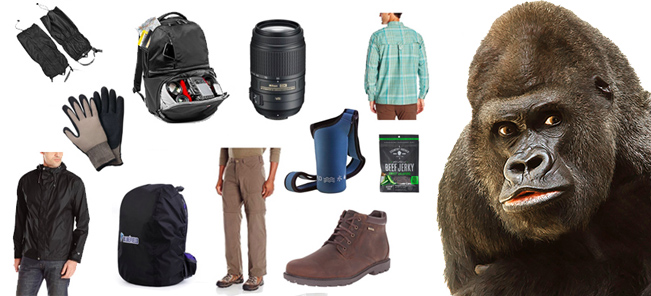
What to Pack for gorilla trekking

Bwindi Gorilla Trek Packing List

  1. Long-sleeved shirt and long trousers in dark, neutral colors (olive, khaki, dark green, or grey); avoid bright colors and white.
  2. Waterproof, ankle-supporting trekking boots with an aggressive tread; trainers and sandals are genuinely inadequate for Bwindi’s terrain.
  3. A packable waterproof rain jacket; Bwindi receives rain year-round, and it can arrive with little warning.
  4. Gardening or lightweight work gloves for pushing through dense vegetation and gaiters to keep out stinging nettles and moisture.
  5. At least two liters of water, plus a packed lunch or snacks for treks that run long.
  6. A basic first aid kit, insect repellent, and sunscreen for the exposed sections of the walk.
  7. A camera or phone with spare batteries and memory cards; flash photography is strictly prohibited during the gorilla encounter itself.
  8. Bring small-denomination US dollars or Ugandan shillings in cash for porter fees and gratuities, as card facilities are limited at sector headquarters.

Bwindi vs. Rwanda’s Volcanoes National Park: Which Should You Choose?

Bwindi and Rwanda’s Volcanoes National Park both deliver the same core encounter: an hour on foot with a wild, habituated mountain gorilla family. However, the surrounding experience differs enough in cost, terrain, and logistics that the right choice genuinely depends on what a given traveller is optimising for. Rwanda wins decisively on convenience: Volcanoes National Park sits roughly two to two and a half hours from Kigali International Airport on a single well-maintained road, and its entire trekking itinerary runs from one headquarters at Kinigi rather than four separate sectors spread across a much larger, wilder park. Bwindi wins decisively on value and sheer scale of habituated families: at USD 800 against Rwanda’s flat USD 1,500, and with a genuinely older, denser, more biodiverse forest, many experienced trekkers consider Bwindi the more immersive wilderness experience of the two, at the cost of longer transfers and generally tougher walking.

For travellers with the time and interest, doing both is increasingly common and genuinely rewarding: the Cyanika border crossing puts Bwindi’s southern sectors within a half-day’s drive of Rwanda’s Volcanoes National Park, making a combined Rwanda-Uganda gorilla safari a realistic single-trip itinerary rather than two separate journeys. A full side-by-side breakdown of permit cost, terrain, accessibility, and accommodation style between the two countries is covered in detail in our own dedicated comparison.

Rwanda vs. Uganda Gorilla Trekking, which is worth reading alongside this page before deciding where to trek or whether to do both.

Bwindi vs. Volcanoes National Park at a Glance

Factor Bwindi (Uganda) Volcanoes NP (Rwanda)
Permit cost USD 800 (USD 600 low season) USD 1,500 year-round
Habituated families 20+ across 4 sectors 24, dispatched from one hub
Drive time from Kigali 4–6 hours (southern sectors fastest) 2–2.5 hours to Kinigi
Trekking structure 4 separate sector headquarters Single Kinigi headquarters
Typical terrain Older, denser forest; generally tougher Volcanic slopes; generally more predictable
Lodge landscape Wide range, from budget to luxury, by sector Concentrated ultra-luxury cluster near Kinigi

Where to Stay Near Bwindi: Lodges by Sector

Bwindi’s accommodation landscape has grown considerably over the past decade, and unlike Rwanda’s single-hub cluster around Kinigi, lodges here are spread across four separate sectors, which means where you stay is dictated first by which sector your permit is issued for, not by preference alone. Because sector assignment happens at the point of booking the permit itself, choosing accommodation and permit sector together, rather than sequentially, avoids the common mistake of booking a beautiful lodge only to discover it is a two-hour drive from the trailhead.
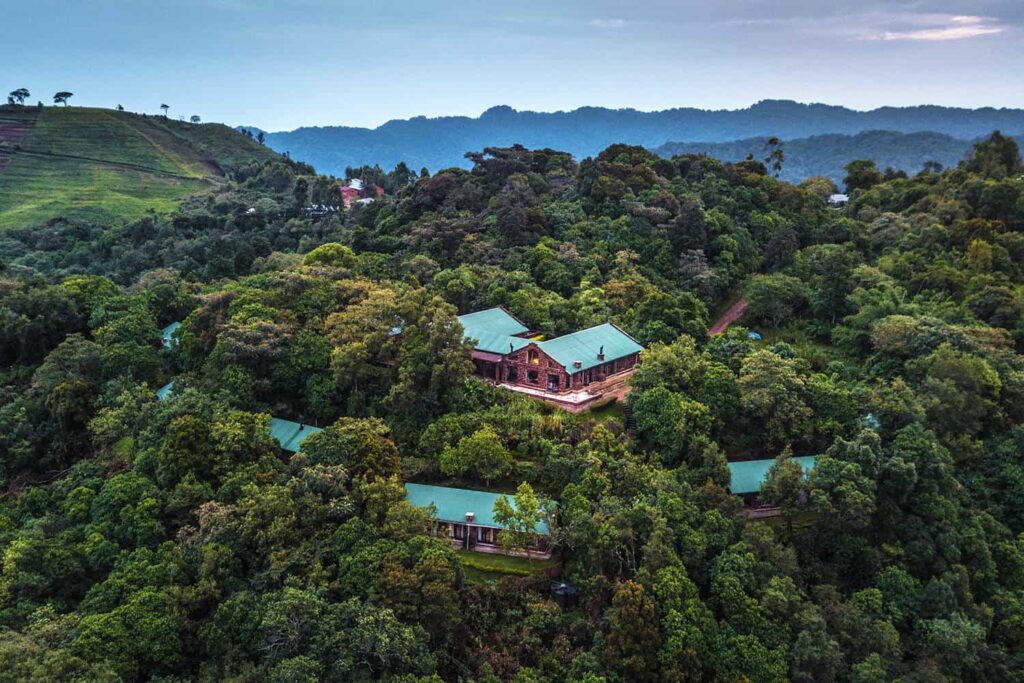
Clouds Mountain Gorilla Lodge

Clouds Mountain Gorilla Lodge

Buhoma

Buhoma’s longer operating history has produced the widest accommodation range of any Bwindi sector, from simple community-run guesthouses through to genuine luxury properties positioned directly against the park boundary, several with private decks that look straight into the forest canopy. Its proximity to Queen Elizabeth National Park also makes it a natural base for travelers extending their trip into Uganda’s savannah parks rather than looping back toward Rwanda.

Ruhija

Lodges in Ruhija tend to be smaller and more intimate than Buhoma’s, reflecting the sector’s quieter, birding-focused character, with several properties positioned to take advantage of the cooler highland climate and long forest views that make this sector’s mornings especially atmospheric.

Rushaga and Nkuringo

Rushaga and Nkuringo, Bwindi’s two southern sectors and the most convenient for Rwanda-based itineraries, have seen the fastest growth in luxury accommodation over the past several years, driven directly by cross-border demand from travelers combining a Rwanda gorilla trek with a Uganda extension. Several genuinely five-star-calibre properties have opened in this corridor specifically to serve that traveller, offering a level of design, service, and privacy that would have been difficult to find in southern Bwindi even a decade ago. As with every element of a Bwindi trip, exact lodge selection and current rates should be confirmed directly against live availability, since the pace of new openings in this corridor means published lists age quickly.

Beyond Gorillas: Other Things to Do in and Around Bwindi

Gorilla trekking is the reason almost every traveller first books a trip to Bwindi, but treating the park as a single-activity destination undersells what a longer stay actually offers, particularly for those who have already secured a permit and want to fill a second or third day meaningfully.

The Batwa Cultural Trail
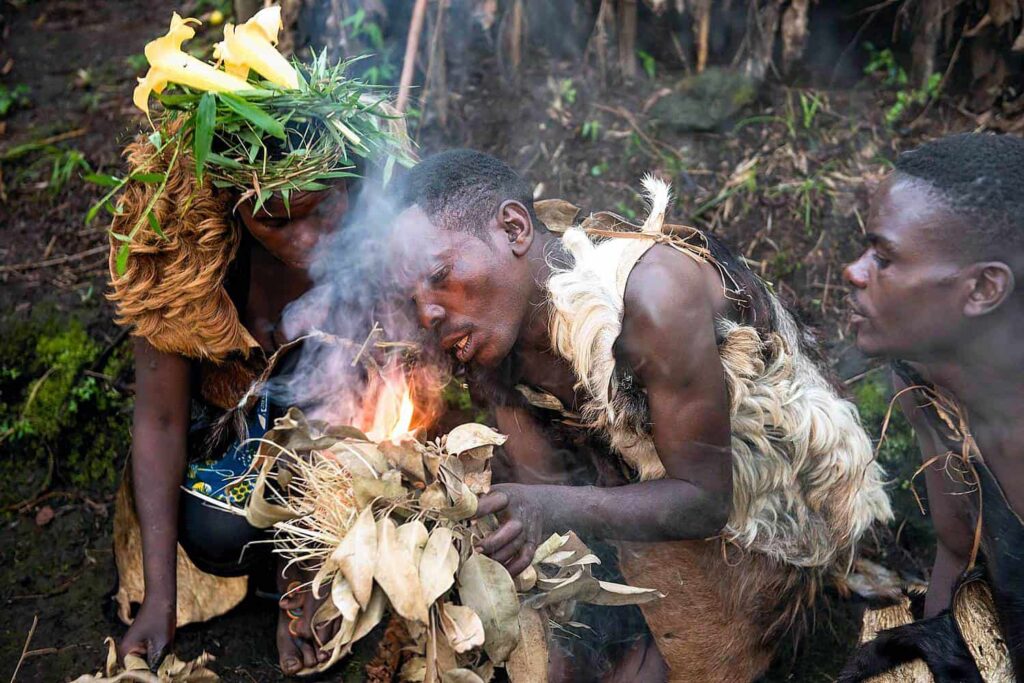
The Batwa Cultural Trail

The Batwa were Bwindi’s original forest inhabitants before the park’s 1991 gazettement required their resettlement outside its boundaries, and the Batwa Cultural Trail, run by former forest-dwelling community members, offers a guided walk through the same forest they once called home, covering traditional hunting and gathering techniques, medicinal plant use, and honey collection. It is one of the more direct, community-benefiting cultural experiences available anywhere in the gorilla trekking region, and it pairs naturally with a rest day between two trekking days.

Chimpanzee Trekking Near Ruhija

Bwindi holds a separately habituated chimpanzee community in the forest around Ruhija, giving travellers based in that sector the option to trek two different remarkable apes, gorillas and chimpanzees, without changing lodges, a combination that is difficult to replicate anywhere else in East Africa within a single, compact itinerary.

Forest Walks, Waterfalls, and Birding

Beyond the primate-focused activities, Bwindi offers several shorter guided forest walks and waterfall trails, most notably around Buhoma, that require no gorilla permit and suit travellers looking for a lighter second-day activity or families with members under the minimum trekking age. Given the park’s standing as one of Africa’s premier forest birding destinations, a half-day guided birding walk with a specialist local guide is also a genuinely worthwhile addition for any traveller with even a casual interest in birds, particularly in the Ruhija sector.

Plan Your Rwanda Safari

Start Planning a Private Gorilla Trek

Rwanda gorilla permits sell out months in advance. Secure your dates before the season closes.

Frequently Asked Questions About Bwindi Impenetrable National Park.

Where is Bwindi Impenetrable National Park located?

Bwindi Impenetrable National Park is located in southwestern Uganda, spread across Kanungu, Kabale, and Kisoro districts, on the edge of the Albertine Rift. It borders the Democratic Republic of Congo’s Virunga National Park to the west and sits close to Rwanda’s northern border, roughly 25 kilometers from the Virunga Massif that Rwanda, Uganda, and the DRC share. The park covers 331 square kilometers and ranges in elevation from 1,160 meters in its valleys to 2,607 meters along its highest ridges. Its four gorilla trekking sectors, Buhoma, Ruhija, Rushaga, and Nkuringo, sit at different points around the park’s perimeter, which is why the specific sector assigned to your permit determines your travel route far more than the park’s general location does. Most international travellers reach Bwindi either via Kigali, Rwanda, and the Cyanika or Katuna border posts, or via Entebbe International Airport and a long overland drive or short domestic flight.

How much does a gorilla trekking permit cost in Bwindi?

A standard Bwindi gorilla trekking permit costs USD 800 per person for foreign non-residents, issued directly by the Uganda Wildlife Authority. Foreign residents of Uganda pay USD 700, Rest of Africa citizens pay USD 500, and East African Community citizens pay UGX 300,000, roughly USD 85. A discounted low-season rate of USD 600 applies to foreign non-residents on fixed, non-reschedulable dates during April, May, and November. The permit covers park entry, a ranger guide, and one hour of observation time with your assigned gorilla family but does not include accommodation, transport, or porter fees. As of March 2026, permits must be booked through a licensed Ugandan tour operator rather than purchased directly from UWA, and full payment is required at the time of booking.

How many gorilla families are in Bwindi Impenetrable National Park?

Bwindi has more than 20 habituated gorilla families spread across its four trekking sectors, though published counts vary, with recent 2026 figures ranging from roughly 19 to 25. The Rushaga sector holds the largest concentration of habituated families of the four, which is part of why it generally offers the best permit availability during busy periods. Buhoma’s Mubare family was the first ever habituated in Bwindi, back in 1993, and remains in the park’s active roster today. Because gorilla families split and occasionally merge over time as young silverbacks mature and leave to form their own groups, any published total should be treated as a snapshot rather than a permanently fixed figure. A specialist operator with current, ground-level contacts can confirm the live count and discuss family characteristics for a specific sector before you book.

Which Bwindi sector is best for gorilla trekking?

There is no single best sector in Bwindi; the right choice depends on what a traveler is prioritizing, whether that is accessibility, birding, permit availability, or terrain. Buhoma suits first-time visitors and those combining Bwindi with Queen Elizabeth National Park, thanks to its established infrastructure and proximity to the Kihihi airstrip. Ruhija suits birders and travellers who want a cooler climate and the option to trek chimpanzees in the same area. Rushaga offers the highest number of gorilla families and is the only sector with the gorilla habituation experience, and it is also the most convenient sector for travelers arriving from Rwanda. Nkuringo suits fit adventurous travellers who want the fewest crowds and the most dramatic views, at the cost of the toughest walking in the park.

How do I get to Bwindi Impenetrable National Park from Kigali?

From Kigali, most travellers drive roughly 3 hours and 119 kilometres to reach the Cyanika border post, then continue a further 1 to 2 hours depending on their assigned sector, for a total door-to-door journey of approximately 4 to 5 hours to Rushaga or Nkuringo, Bwindi’s two southern sectors. Buhoma, in the park’s north, is typically reached instead via the Katuna border, pushing total travel time closer to 5 to 6 hours. Border crossings at Cyanika are open daily and generally take about an hour to clear with the right documentation. Some travellers choose to overnight near the border or in Kisoro town rather than attempt the full journey and a gorilla trek on the same day. Rwanda Gorilla Expeditions arranges these cross-border transfers directly as part of a combined Rwanda-Uganda itinerary.

Is Bwindi harder to trek than Rwanda's Volcanoes National Park?

Bwindi is generally considered more physically demanding than Rwanda’s Volcanoes National Park, owing to its older, denser forest, steeper and less-maintained trails, and treks that can run considerably longer on a difficult day. Rwanda’s volcanic slopes tend to have clearer, more consistently maintained paths, and the park’s single-hub trekking system at Kinigi makes logistics more predictable overall. That said, actual difficulty in either country depends entirely on where the assigned gorilla family is located on the specific morning of the trek, so no operator can promise an easy day in either destination. Bwindi’s Nkuringo sector has the strongest reputation for genuinely tough terrain, while Buhoma is usually considered the more forgiving of Bwindi’s four sectors. Travellers with real fitness or mobility concerns should communicate this clearly when booking, in either country, so guides can factor it into family assignments where operationally possible.

What is the best time to visit Bwindi for gorilla trekking?

The two dry seasons, June to September and December to February, offer the firmest trails and are considered the best time to visit Bwindi by most operators and repeat travelers. April, May, and November fall within Uganda’s wetter months but carry a discounted USD 600 permit rate for foreign non-residents, a genuine value opportunity unique to Uganda among the three gorilla trekking countries. Trails are muddier, and treks can run longer during the wet months, particularly in Nkuringo and the higher parts of Ruhija. Gorilla trekking itself operates year-round in Bwindi regardless of season, so the choice is really about trail comfort and permit cost rather than access. Peak-season permits, especially for the more popular Buhoma and Rushaga sectors, should be booked six to twelve months in advance.

How do I book a Bwindi gorilla trekking permit?

As of March 2026, Uganda Wildlife Authority permits can no longer be purchased directly by individual foreign travelers and must instead be booked through a licensed Ugandan tour operator. Full payment is required at the time of booking, since the previous seven-day reservation hold that once allowed travelers to provisionally hold a permit before paying in full has been removed. This change was introduced specifically to reduce permit fraud and streamline the booking process across all four Bwindi sectors. A specialist operator with a verified relationship with UWA can secure your permit, accommodation, and transfers for a specific sector and date as a single itinerary. Booking early remains essential, particularly for peak-season dates in Buhoma and Rushaga.

Can I combine Bwindi with a Rwanda gorilla trekking safari?

Yes, Bwindi combines naturally with a Rwanda gorilla safari via the Cyanika or Katuna border posts, and a growing number of travellers trek both countries on a single trip specifically to compare the two experiences directly. Rushaga and Nkuringo, Bwindi’s two southern sectors, sit within roughly 4 to 5 hours of Kigali, making a combined itinerary genuinely practical rather than a significant detour. This combination allows travellers to experience Rwanda’s more polished, single-hub Volcanoes National Park alongside Uganda’s older, wilder, four-sector Bwindi forest, often at a meaningfully lower total permit cost than trekking twice in Rwanda alone. Rwanda Gorilla Expeditions designs exactly this kind of cross-border, multi-country itinerary, coordinating permits, transfers, and accommodation across both countries as a single, seamlessly managed trip. Tell us your dates, and we can advise on the most realistic sequencing for a combined Rwanda-Uganda gorilla safari.

What should I pack for a Bwindi gorilla trek?

Pack long trousers and a long-sleeved shirt in dark, neutral colors such as olive, khaki, or grey, since bright colors and white are discouraged near the gorillas. Waterproof, ankle-supporting trekking boots with a firm tread are essential, as Bwindi’s forest floor is wet and uneven on most days of the year, regardless of season. A packable rain jacket, gardening or lightweight work gloves for pushing through vegetation, and gaiters to keep out stinging nettles complete the core kit. Pack at least two liters of water, snacks or a packed lunch, insect repellent, sunscreen, and a camera with spare batteries, since flash photography is prohibited during the encounter itself. Small-denomination cash is also worth carrying for porter fees and gratuities, since card payment facilities are limited at Bwindi’s sector headquarters.

How long does a Bwindi gorilla trek take?

A Bwindi gorilla trekking day is a full-morning commitment, typically beginning with registration and a ranger briefing between 7:00 and 8:00 a.m. at your assigned sector’s headquarters. The walk to reach the gorillas can range from as little as 30 minutes to as long as 8 hours, depending entirely on where the family has moved to overnight, which is confirmed fresh each morning by trackers who leave before dawn. Once contact is made, the observation period is capped at exactly one hour for standard trekking permits or up to four hours for the Rushaga-only gorilla habituation experience. Including the return walk, vehicle transfer, and certificate issuance, most trekking days conclude by early to mid-afternoon. No operator can guarantee a short trek in advance, so travellers should plan the rest of their day with flexibility built in.

Is Bwindi Impenetrable National Park safe to visit?

Bwindi is considered safe for tourism, with every trek conducted under the direct supervision of trained Uganda Wildlife Authority rangers and a security presence that has operated reliably for over three decades. Uganda as a whole is generally regarded as a stable and welcoming destination for international travelers, with tourism treated as a national economic priority. Bwindi’s location close to the Democratic Republic of Congo border occasionally raises questions from travellers who have read about instability in eastern DRC, but this does not extend into Ugandan territory or affect park operations. As with any international trip, travelers should check current government travel advisories for the specific region before departure and work with an operator who monitors conditions in real time. The gorillas themselves, approached correctly under ranger guidance, pose minimal risk to visitors who follow briefing instructions.

What is the gorilla habituation experience in Bwindi?

The gorilla habituation experience is a longer, more immersive alternative to standard trekking, offered exclusively in Bwindi’s Rushaga sector. It allows a maximum of four visitors per day to spend up to four hours with a gorilla family that is still undergoing the habituation process, rather than the standard one hour granted with a fully habituated family. Participants join the actual research and habituation team, offering a less predictable but considerably deeper window into gorilla behavior and the science behind the trekking industry itself. The experience is priced above the standard USD 800 trekking permit and, given its far smaller daily capacity, should be booked well in advance for any fixed-date itinerary. It is best suited for travellers with a genuine interest in conservation science, rather than for those simply wanting the shortest, most efficient gorilla encounter.

What's the minimum age for gorilla trekking in Bwindi?

The minimum age for gorilla trekking in Bwindi is 15 years, a rule enforced by the Uganda Wildlife Authority without exception regardless of a younger traveller’s fitness or a parent’s preference. The restriction exists primarily to protect gorillas from childhood illnesses that younger visitors may be more likely to carry, given how closely related gorillas and humans are genetically. Families travelling with children under 15 are not excluded from a wider Bwindi visit; forest walks, the Batwa cultural trail, and birding activities carry no comparable age restriction. Some families choose to split activities, with adults trekking gorillas while younger travelers join a shorter, permit-free forest walk on the same morning. This rule is identical across Rwanda, Uganda, and the Democratic Republic of Congo.

How many days do I need for Bwindi Impenetrable National Park?

A minimum of two nights is needed to complete a single gorilla trekking day in Bwindi, given the long transfer times involved in reaching any of the four sectors from either Rwanda or Entebbe. Three to four nights allow time for a second activity, such as the gorilla habituation experience, a Batwa cultural walk, or chimpanzee trekking in the Ruhija area, without a rushed schedule. Travellers combining Bwindi with a Rwanda gorilla safari should generally add at least one additional night to account for the border crossing and transfer between the two countries’ trekking areas. Those combining Bwindi with Uganda’s savannah parks, particularly Queen Elizabeth National Park via Buhoma, should plan for a longer overall Uganda itinerary of seven days or more. The right length ultimately depends on how many of Bwindi’s activities beyond gorilla trekking genuinely interest you, and a specialist operator can help right-size your itinerary against your available time.

Ready to Trek? Permits are limited — plan early.

Plan Your Bwindi Gorilla Trek

Bwindi rewards exactly the kind of planning that comes from working across the Rwanda-Uganda border regularly, knowing which sector actually fits your fitness and dates, which border crossing saves the most time from Kigali, and how to sequence a Bwindi trek against a Rwanda gorilla safari so neither trip feels rushed. Whether you’re planning a single focused trek in Rushaga, a full Uganda-Rwanda primate circuit, or simply trying to decide between Bwindi and Volcanoes National Park, Rwanda Gorilla Expeditions can help you plan it properly. Tell us your dates and we’ll check permit availability within a few minutes.