Getting to Know Rwanda’s Most Storied Gorilla Families
A handful of Volcanoes National Park’s 24 families carry decades of documented history, and understanding their stories adds real depth to a trek, whether or not you end up assigned to that specific family on the day.
Susa: The Original Research Family
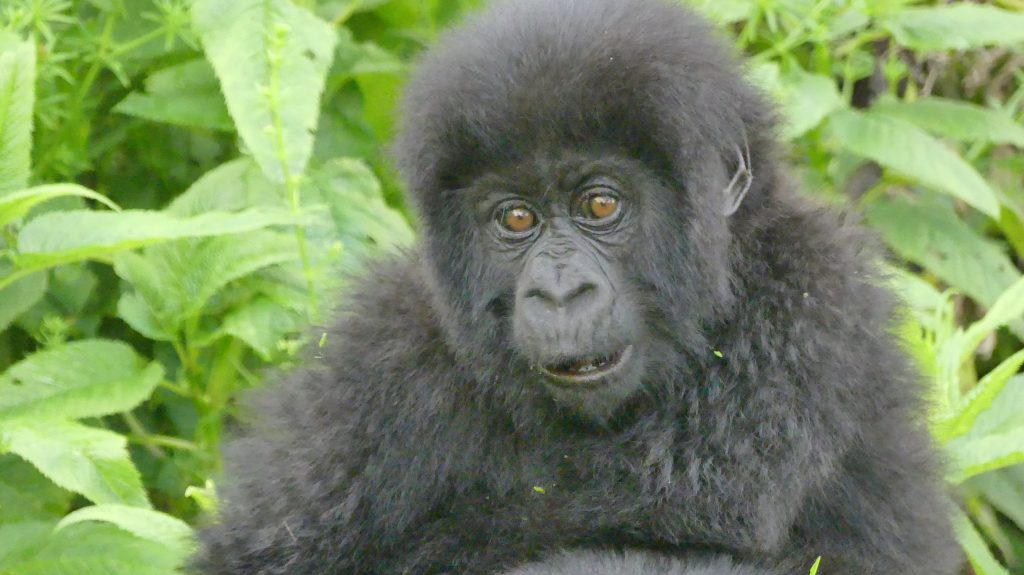
Intarutwa: The Playful Juvenile of the Susa Family
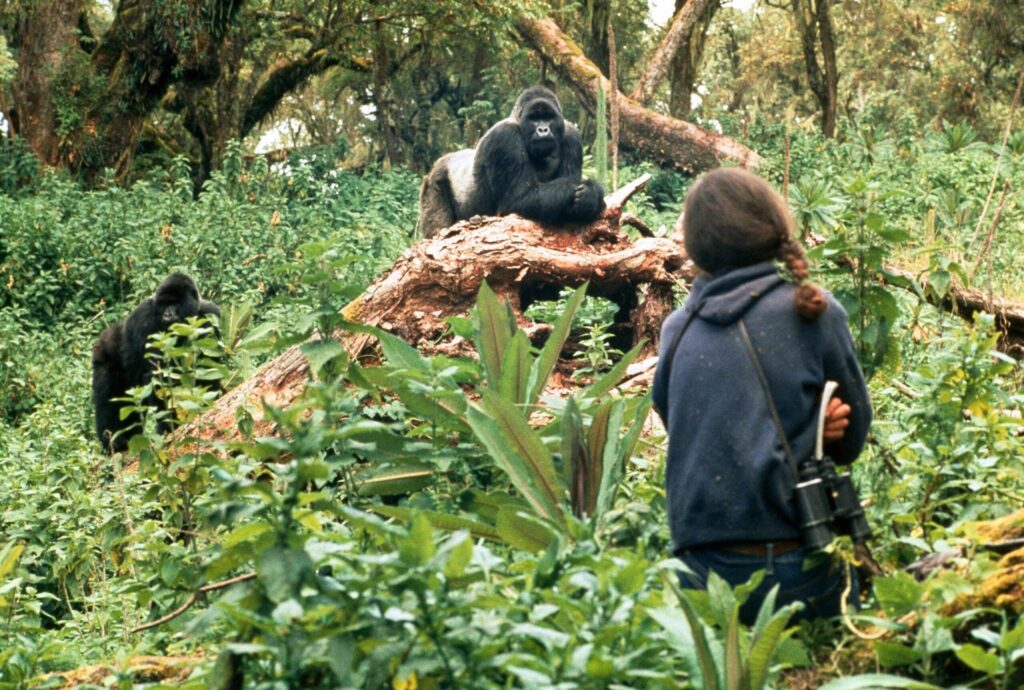
Susa is the family most people picture when they imagine gorilla trekking in Rwanda. It was one of the groups Dian Fossey studied directly from her Karisoke Research Centre beginning in the late 1960s, and at its peak it held more than 40 individuals, making it the largest gorilla family ever recorded in the park. Susa is also famous for a genuinely rare event in gorilla biology: the birth of surviving twins, Byishimo and Impano. The family has since split into multiple independent groups, including Igisha and Isimbi, but the remaining Susa family still ranges at high altitude on Mount Karisimbi, which keeps it the single most physically demanding trek in the park reserved, in practice, for travelers who have specifically requested a challenging hike and are in strong physical condition.
Titus: A Story of Survival
Titus is named for a silverback whose early life reads like the origin story of the entire conservation movement Rwanda now depends on. As an infant during Dian Fossey’s research period, his family was targeted by poachers; he survived and was absorbed into another family, eventually maturing into a dominant silverback who left to found his own group. Titus lived to roughly 35 years old, an unusually long life for a wild silverback, and his family remains one of the most extensively documented in the park’s history, a living reminder of exactly why permit revenue funds anti-poaching patrols as a first priority, not an afterthought.
Sabyinyo and Amahoro: The More Accessible Families
Sabyinyo and Amahoro are consistently the two families most often mentioned when travelers ask about an easier gorilla trek. Sabyinyo ranges near the base of Mount Sabyinyo, close to the park’s southern boundary, which has historically made it one of the shorter treks on offer. Amahoro Kinyarwanda for “peace” has built a reputation among guides for a notably calm, unhurried temperament, and Umubano, which split from Amahoro, tends to range in a similar lower-altitude zone. None of these options is a guarantee: every family moves overnight, and a family with an accessible reputation can occasionally be found at the top of a ridge on any given morning. This arrangement means travelers who flag limited mobility or fitness concerns when booking are more likely, though never certain, to be matched with one of these groups.
Kwitonda, Hirwa, and Agashya: The Cross-Border and Reorganized Families
Kwitonda’s history reflects the reality that the Virunga Massif is one continuous ecosystem, not three separate parks with a fence between them: the family’s lineage traces back to gorillas that moved into Rwanda’s Volcanoes National Park from the Congolese side of the range, and its silverback’s name, Kwitonda, “the humble one,” has become the group’s identity ever since. Hirwa, meaning “the lucky one,” formed when gorillas from several existing families came together into a new group and completed habituation in the mid-2000s; it has periodically been reported ranging close to the Uganda border, a reminder that these are wild animals moving through a shared, cross-border landscape regardless of which country issues the trekking permit. Agashya, known in older literature by its earlier designation “Group 13,” took its current name following a change in silverback leadership, a reminder that family names in Volcanoes National Park are not fixed labels but living records of leadership and history.
Pablo: A Direct Line to Fossey’s Research
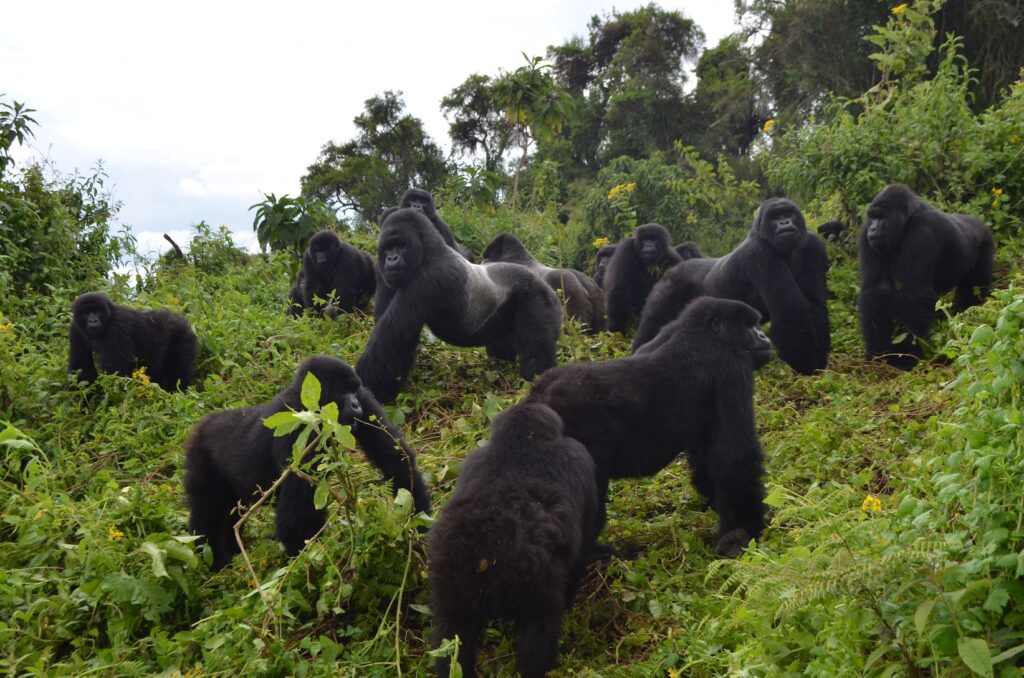
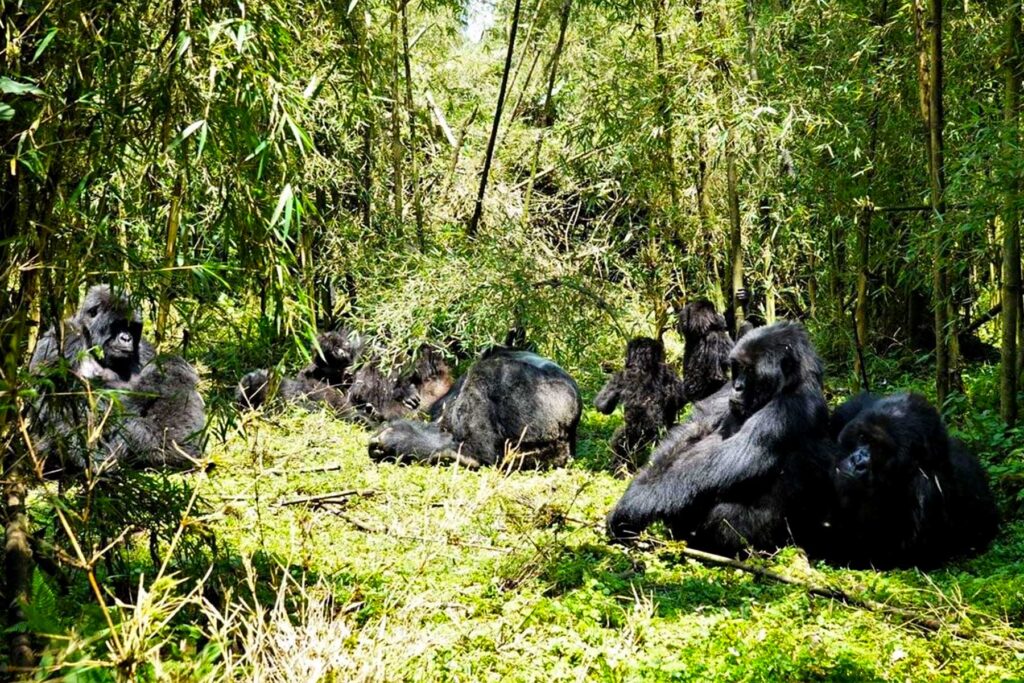
Pablo Gorilla Family
Pablo has historically ranked among the largest families ever recorded in the park, and its lineage connects directly to one of Dian Fossey’s original research groups. Families with this kind of documented depth are part of why gorilla trekking in Rwanda carries a different weight than most wildlife encounters: you are not simply observing an animal; you are, in a very literal sense, standing in front of a family whose story has been recorded for close to sixty years.
How Gorilla Families Are Actually Assigned to Trekkers
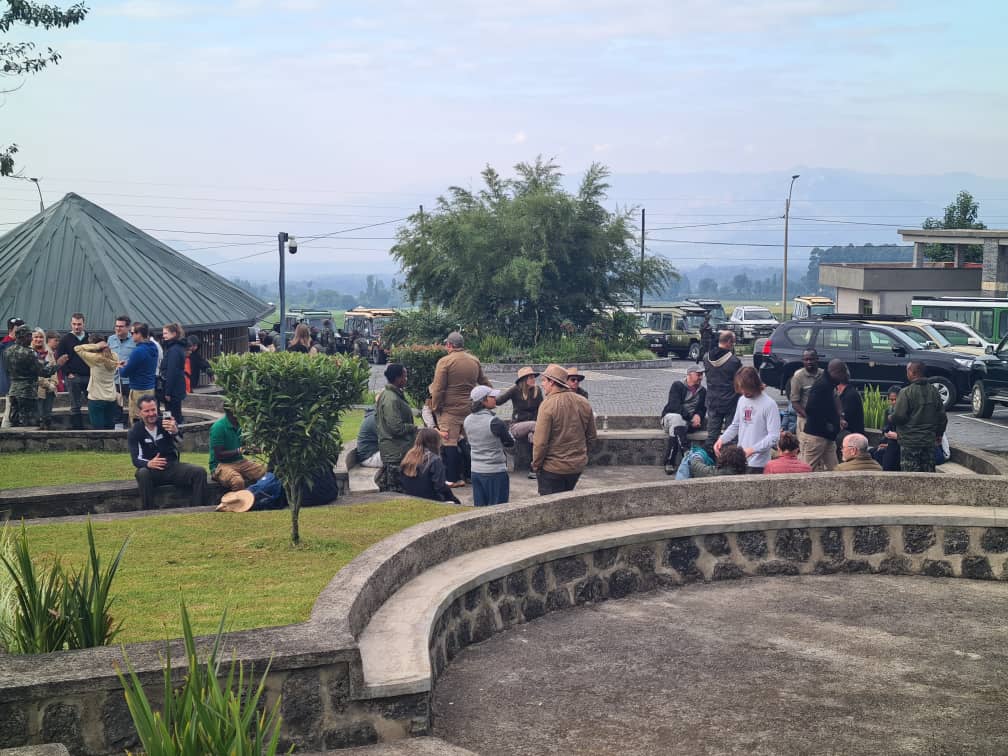
Family assignment occurs on the morning of your trek, not at booking, because the Rwanda Development Board’s process is based on where the gorillas are that day, not where they were expected to be. Trackers leave the park before dawn, following the trail each family left the previous evening, and relocate the group’s current position by radio contact with the ranger station well before your 7:00 a.m. briefing at Kinigi. Rangers then match each group of up to eight visitors to a specific family based on three factors: the family’s confirmed location and the resulting expected trek length, the terrain and altitude involved, and the fitness level your group has reported. This is why being honest, not modest, about your physical condition during booking and again at the briefing genuinely changes your outcome. Rangers cannot match you appropriately to a family they don’t have accurate information about.
It also means that no operator, including Rwanda Gorilla Expeditions, can promise a specific family or a specific trek duration in advance under a standard permit. What a good operator can do is communicate your fitness level, interests, and any physical limitations clearly to the park in advance, request a family known for a particular type of terrain when operationally possible, and manage your expectations honestly rather than overpromising a specific outcome. For travelers who want a guarantee rather than a probability, the exclusive-use gorilla permit arranged directly through the Rwanda Development Board at a significantly higher price point allows a single group to select and privately visit one specific family for the full day, with no other visitors present.
Choosing a Gorilla Family Based on Fitness and Interest
While no family assignment is ever guaranteed, Volcanoes National Park’s 24 families do fall into rough, historically consistent categories based on where they typically range. Use the comparison below as a planning guide for setting expectations and communicating your priorities to your operator, not as a booking promise.
| Profile |
Typically Includes |
What to Expect |
| More accessible |
Sabyinyo, Amahoro, Umubano |
Historically found at lower elevation and closer to the park boundary; often a shorter walk, though never guaranteed. |
| Moderate |
Kwitonda, Hirwa, Agashya, Pablo |
A realistic middle ground of moderate distances and terrain, suitable for most reasonably fit travelers. |
| More demanding |
Susa, Igisha, Isimbi |
Historically, they range at higher altitudes on the slopes of Mount Karisimbi and are best requested by travelers in strong physical condition who specifically want a serious hike. |
If your priority is minimizing physical exertion for an older traveler, someone with joint concerns, or simply a preference for more time to enjoy the encounter rather than the hike, say so explicitly when booking. If your priority is the story behind the family more than the trek length, request Susa, Titus, or Pablo by name and understand you may be trekking for several hours to reach them. Either way, hiring a porter at the Kinigi briefing center is worth doing regardless of fitness level: it meaningfully reduces physical strain, directly supports a local livelihood, and frees you to focus on the forest rather than your footing.