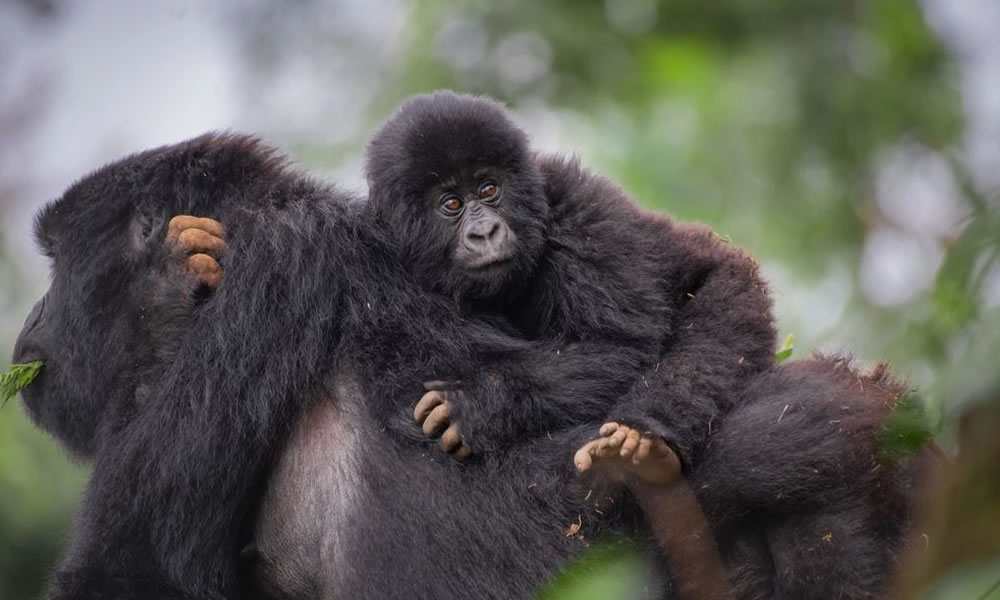
Kenya Safaris: The Complete Guide to Parks, Costs, and the Best Time to Go.

Kenya safaris explained: Masai Mara, Amboseli, and Laikipia costs, best months, and how to pair it with Rwanda’s gorillas. Tell us your dates.

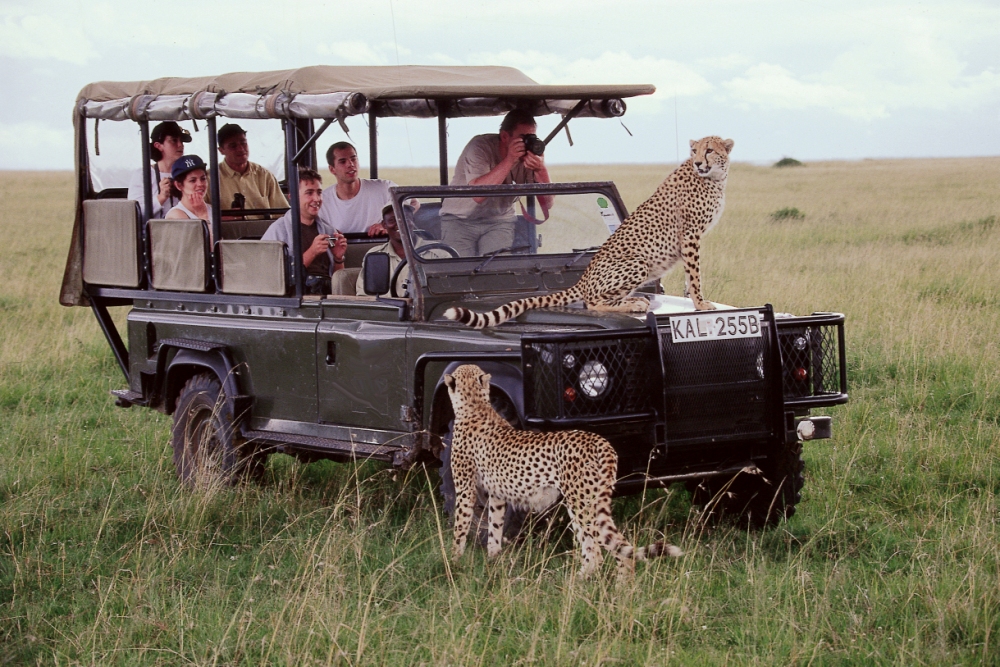
Kenya safaris center on a handful of genuinely different wildlife regions rather than one uniform destination, and the choice between the Masai Mara, Amboseli, the Laikipia Plateau, Tsavo, and Samburu shapes the quality of a trip far more than the specific camp or operator eventually booked. Kenya protects wildlife across 23 national parks and 28 national reserves administered chiefly by the Kenya Wildlife Service, and a fast-growing network of private and community conservancies now holds roughly 65 percent of the country’s wildlife outside any formally gazetted park boundary. A first-time visitor chasing the wildebeest migration wants the Masai Mara between July and October; a traveler prioritizing elephant herds and a mountain backdrop wants Amboseli; a repeat visitor seeking rhino tracking on foot, night drives, and total privacy wants a private conservancy on the Laikipia Plateau; and a traveler building a beach-and-bush itinerary wants Tsavo or Samburu paired with the Kenyan coast. Non-resident park fees now range from USD 80 a day in Tsavo and Nairobi National Park to USD 200 a day in the Masai Mara during peak migration months, under a new Kenya Wildlife Service tariff structure introduced on 1 October 2025 and a separate Narok County fee schedule that governs the Mara.

Kenya Safaris 2027: Complete Guide to Parks, Cost & Timing

Most international travelers land at Nairobi’s Jomo Kenyatta International Airport before connecting onward by light aircraft to a park airstrip, and nearly every non-East African nationality now needs an Electronic Travel Authorization rather than a traditional visa. For travelers already planning mountain gorilla trekking in Rwanda, Kenya has become the natural second half of a single East Africa journey, connecting through Kigali and Nairobi in a matter of hours rather than days. This guide covers exactly how Kenya’s safari regions differ, what each one costs, when to go for the specific wildlife spectacle that matters most, and how the logistics work if a Kenya safari is being routed around the dates for Rwanda’s gorilla permits.

Our team at Rwanda Gorilla Expeditions is a Rwanda-based gorilla trekking specialist, not a Kenya ground operator, and this guide exists to give an accurate, thorough picture of Kenya so travelers know exactly what to ask for before building the combined itinerary from the Rwanda side. It draws on our dedicated guides to the Masai Mara, Amboseli National Park, and Laikipia Plateau, each covered in far greater depth on its own page, and adds the Kenya regions, Tsavo, Samburu, Lake Nakuru, Nairobi National Park, and the coast, which do not yet have a dedicated guide of their own.

Permits are limited — spaces fill months ahead

Reserve Your Private Gorilla Trek

Speak with a Rwanda-based specialist today. We secure permits, match you to the right gorilla family, and plan every detail around your schedule.

No group departures · Private itineraries only · Direct Rwanda expertise

How Kenya’s safari regions differ and which is right for you.

Kenya’s safari geography splits into distinct regions that rarely overlap on a single day’s game drive, and understanding which one matches specific priorities is the first real planning decision. The Masai Mara delivers the world’s most famous wildlife spectacle for four to five months a year and the country’s highest lion density; Amboseli trades scale for intimacy, a compact park built around elephant herds and an unmistakable mountain backdrop; the Laikipia Plateau abandons the national-park model altogether in favor of private conservancies that permit walking safaris, night drives, and horseback riding; Tsavo, Kenya’s largest protected area, offers space and value with a fraction of the Mara’s visitor numbers; and Samburu, in the arid north, holds five species found almost nowhere else in the country.

Very few travelers attempt more than two or three of these regions in a single trip, since the light-aircraft connections between them add a genuine half-day of logistics for a change in scenery rather than a change in species list, and the more rewarding combination usually pairs one Kenya region with something genuinely different: a beach finale on the coast, or, for a growing number of serious wildlife travelers, mountain gorilla trekking in Rwanda, which delivers an intimate, on-foot forest encounter that no Kenyan savannah, however excellent, can replicate.

Region Core Experience Typical Cost Driver Best For
Masai Mara Migration crossings; highest lion density; private conservancies USD 100-200/day reserve fee, plus conservancy and lodge First Kenya safari; peak migration season
Amboseli Elephant herds beneath Kilimanjaro USD 90/day KWS fee, plus camp A compact two- to three-night add-on
Laikipia Plateau Private conservancies; rhino and wild dog tracking; night drives; walking safaris USD 500-2,500+ pp/night, conservancy fees included Repeat travelers seeking privacy and rare species
Tsavo East & West Kenya’s largest wilderness; red elephants; Mzima Springs USD 80/day KWS fee, plus camp Space, value, and fewer vehicles
Samburu The Samburu Special Five: arid northern landscapes USD 85/day reserve fee, plus camp Distinctive northern species found nowhere else
Lake Nakuru Rhino sanctuary; Rift Valley soda lake USD 90/day KWS fee An easy one- to two-night add-on from Nairobi
Nairobi National Park Safari with a skyline and dense black rhino population USD 80/day KWS fee A half-day layover safari
Kenyan Coast Beaches, Swahili culture, diving Resort rates A relaxing finale after a wildlife-heavy itinerary

The Masai Mara: Kenya’s Migration Icon

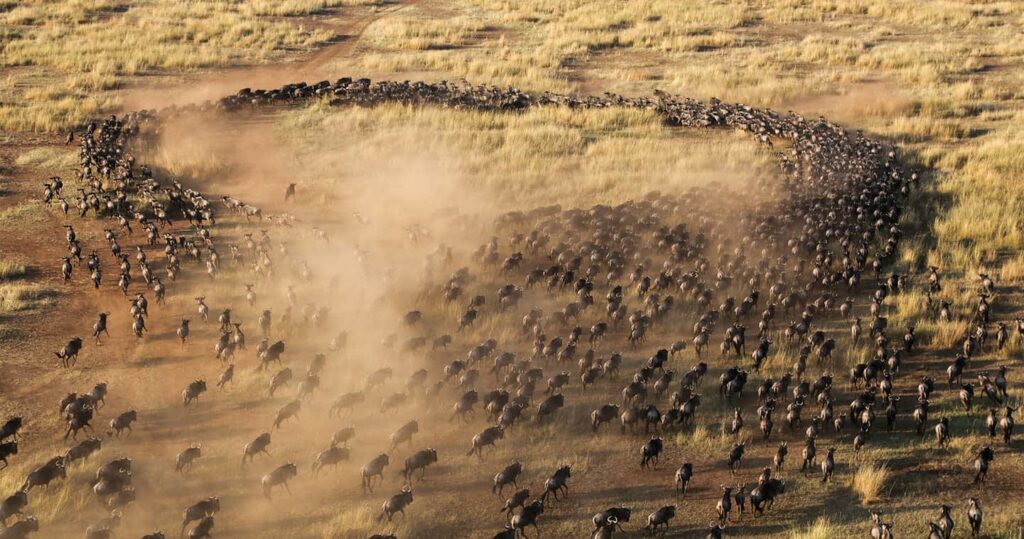
Great Migration in the Masai Mara

The Masai Mara National Reserve is a 1,510-square-kilometer reserve in southwestern Kenya’s Narok County, the northern extension of the same unfenced ecosystem as Tanzania’s Serengeti National Park, and it is the single most requested safari destination in the country. Most visitors come for the Mara River crossings, the headline chapter of the Great Migration, when close to two million wildebeest, zebra, and gazelle push north from the Serengeti between roughly July and October. Beyond the migration, the Mara holds among the highest lion densities anywhere in Africa, and a ring of private conservancies bordering the reserve, Mara North, Olare Motorogi, and Naboisho, among the best known, roughly doubles the ecosystem’s protected area and permits night drives and walking safaris that the core reserve does not allow.

Reserve, Triangle, or Conservancy

Non-resident reserve fees changed substantially in 2026: Narok County now charges USD 100 per adult per day from January through June and USD 200 per adult per day from July through December, a seasonal structure introduced specifically to manage demand during the migration months, while the independently managed Mara Triangle sector follows a similar fee schedule with cashless-only, online payment. Private conservancy fees run separately, typically USD 80 to 150 per person per night, and are almost always included in a camp’s nightly rate. Our full Masai Mara guide breaks down the reserve versus conservancy decision, the month-by-month migration calendar, and where to stay in far greater detail than this overview allows.

Amboseli National Park: Elephants Beneath Kilimanjaro

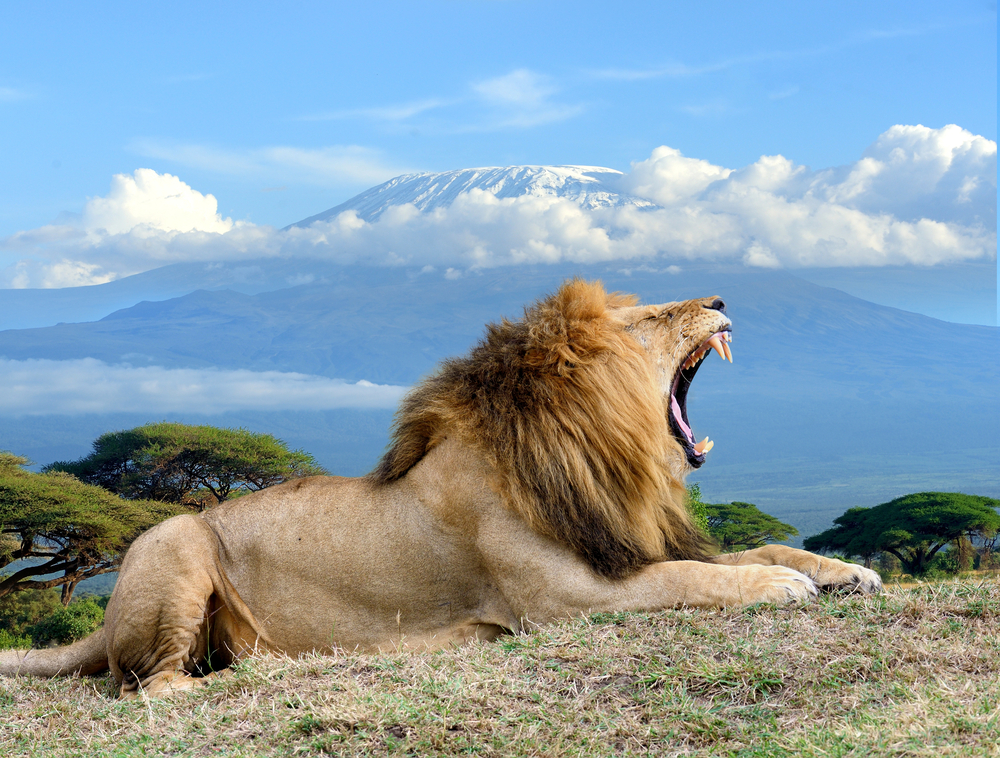
Amboseli National Park is a 392-square-kilometer reserve pressed against the Tanzanian border, and it is the most rewarding place in East Africa to watch free-roaming elephants at close range with the snowcapped mass of Mount Kilimanjaro rising behind them. Permanent swamps fed by meltwater seeping down from Kilimanjaro through volcanic rock keep the park green through the dry season, drawing elephants, buffalo, zebra, and hippo to concentrate where the wider, roughly 8,000-square-kilometer ecosystem otherwise runs dry. The Amboseli Trust for Elephants has followed the same elephant families here since 1972, the longest continuous study of wild elephants anywhere, and a knowledgeable guide can often identify a matriarch by name and family history.

Amboseli National Park: Elephants, Kilimanjaro & Luxury Camps

Non-resident entry costs USD 90 per adult per 24 hours under the Kenya Wildlife Service’s premium tariff, introduced on 1 October 2025, and the park is best visited on a stay of two to three nights, compact enough to see thoroughly without the longer commitment that a Mara safari demands. Amboseli is rarely a stand-alone destination on the itineraries we help plan; it works best as one chapter of a longer Kenya circuit, typically paired with the Masai Mara or the Laikipia Plateau. Our dedicated Amboseli guide covers the full cost breakdown, seasonal calendar, and camp-by-camp comparison.

Plan Your Rwanda Safari

Start Planning a Private Gorilla Trek

Rwanda gorilla permits sell out months in advance. Secure your dates before the season closes.

The Laikipia Plateau: Rhinos, Wild Dogs, and Total Privacy.

The Laikipia Plateau is Kenya’s premier private-conservancy safari region, a high rangeland of more than 9,000 square kilometers northwest of Mount Kenya, and it solves the two problems that increasingly define high-end Kenya travel: crowding and restriction. Rather than a single park, it is a mosaic of conservancies, Ol Pejeta, Lewa, and Loisaba among the best known, coordinated since 1992 through the Laikipia Wildlife Forum, and because the land is privately or communally owned rather than government-gazetted, guides can offer night drives, walking safaris, camel treks, and horseback riding that Kenya’s national parks and reserves generally prohibit.
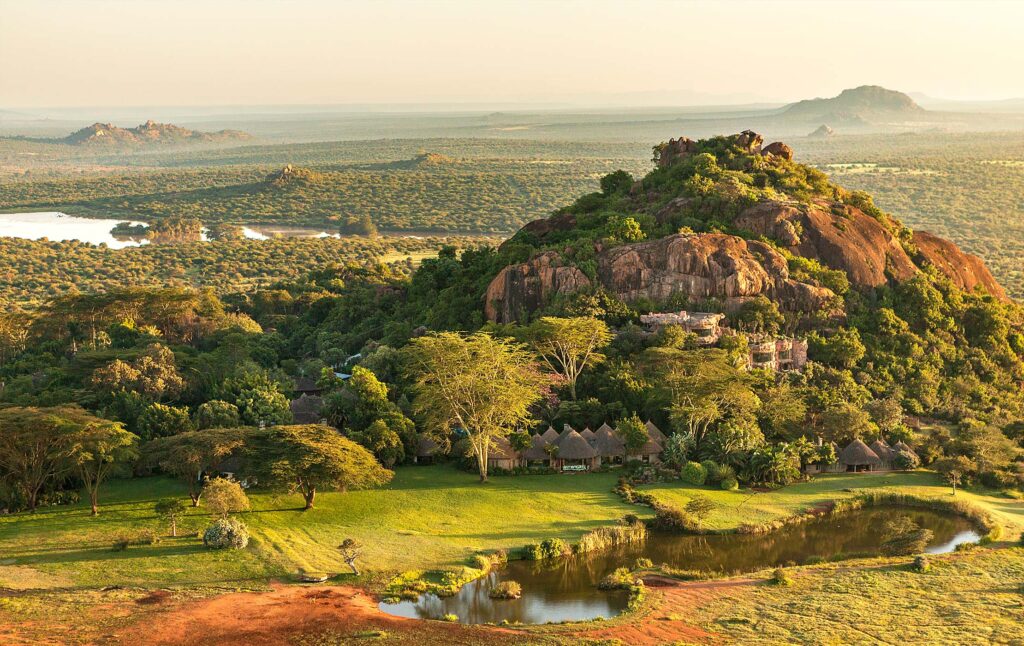
Laikipia Plateau Safari Guide: Rhinos, Wild Dogs & Star Beds

Laikipia’s species list justifies the extra flight time on its own: Ol Pejeta Conservancy shelters the world’s last two northern white rhinos alongside East Africa’s largest black rhino sanctuary, Lewa Wildlife Conservancy protects nearly 230 black and white rhinos and the largest single population of endangered Grevy’s zebra, and the Samburu-Laikipia Wild Dog Project has tracked African wild dog numbers recovering from two packs to nine since a 2017 distemper outbreak. Budgets range from roughly USD 500 per person per night at entry-level luxury camps to more than USD 2,500 at the most exclusive private-use houses, generally including conservancy fees. Our full Laikipia Plateau guide covers every major conservancy, activity pricing, and how to combine a Laikipia stay with a Rwanda gorilla trek.

Tsavo East and West: Kenya’s Wilderness Heartland.

Tsavo National Park is Kenya’s largest protected area, combining Tsavo East, at 13,747 square kilometers, and Tsavo West, at 9,065 square kilometers, into a single ecosystem of roughly 22,000 square kilometers, an area larger than the entire country of Wales. Gazetted in April 1948 as a single unified reserve before colonial administrators split it into two sections later that year for practical management, Tsavo lies roughly 240 kilometers southeast of Nairobi and sits directly on the Mombasa road and railway corridor, which makes it a natural stop for travelers routing between Nairobi and the Kenyan coast rather than a stand-alone flight destination. Non-resident entry costs USD 80 per adult per 24 hours under the Kenya Wildlife Service’s Wilderness tariff, among the lowest gate fees of any major Kenya park, which keeps a Tsavo safari meaningfully more affordable than a comparable Masai Mara or Amboseli itinerary.

Tsavo East vs. Tsavo West

Tsavo East is defined by flat, open, red-dust plains, the Galana River, and the Yatta Plateau, the longest lava flow on Earth, and its elephants are famous for the ochre-red dust bathing that gives them their distinctive color. Tsavo West is volcanic, hillier, and considerably greener, centered on Mzima Springs, a crystal-clear natural spring fed by underground volcanic filtration where hippos and crocodiles can be observed through an underwater viewing chamber, and the dramatic Shetani Lava Flow, a field of jagged black rock from a comparatively recent volcanic eruption. Most first-time Tsavo visitors choose one park rather than both given the driving distances involved, and Tsavo West’s greater variety of landscape and its rhino sanctuary at Ngulia tend to edge out Tsavo East for travelers with only a single park to spare, while Tsavo East’s vast, uncrowded plains reward photographers who prioritize space and light over species density.

Samburu and the Northern Frontier: The Special Five

Samburu National Reserve sits in Kenya’s arid north, a 165-square-kilometer reserve that anchors a wider ecosystem approaching 12,000 square kilometers alongside neighboring Buffalo Springs and Shaba National Reserves, coordinated in large part through the Northern Rangelands Trust. It is best known for the Samburu Special Five: the gerenuk, a long-necked antelope that stands on its hind legs to browse; the Grevy’s zebra, the largest wild equid, identified by its narrow stripes and enormous rounded ears; the reticulated giraffe, with liver-colored patches defined by crisp white lines; the beisa oryx, marked by a black stripe along its flank; and the blue-necked Somali ostrich, all species found here and almost nowhere else in Kenya.
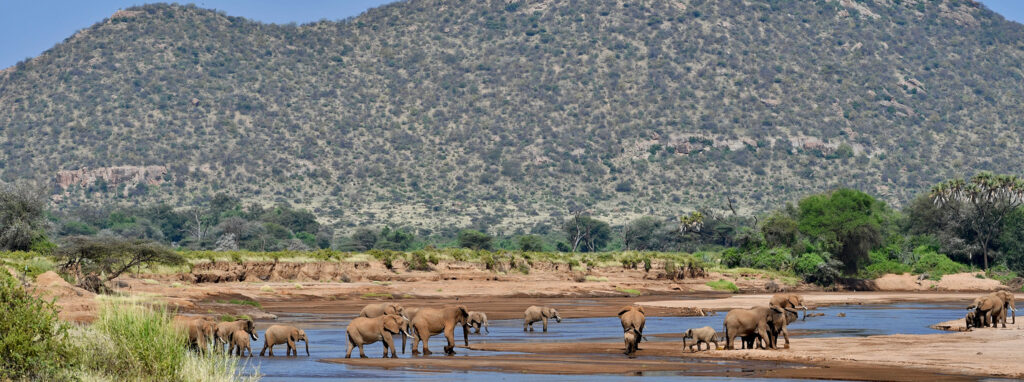
Samburu National Reserve

The Ewaso Ng’iro River cuts through Samburu’s arid, scrub-covered landscape and concentrates wildlife along its banks, including some of Kenya’s most consistent leopard sightings in the riverine forest that fringes it, alongside well-studied, habituated elephant herds that have made Samburu a center for long-running elephant research. Non-resident entry costs approximately USD 85 per adult per 24 hours, and the reserve is reached either by a long drive from Nairobi, crossing the equator en route, or a scheduled light-aircraft flight, making it a natural addition for travelers who have already covered the classic southern circuit and want a genuinely different landscape and species list on a second Kenya trip.

Lake Nakuru and the Rift Valley Lakes

Lake Nakuru National Park is a compact, 188-square-kilometer park in the Great Rift Valley, roughly three and a half hours by road from Nairobi, and it is the single most reliable rhino destination among Kenya’s KWS-managed parks. Declared Kenya’s first national rhino sanctuary in 1987, the park is fully fenced, a deliberate anti-poaching measure rather than a restriction on wildlife movement, and it now shelters a substantial concentration of both black and white rhino alongside a healthy population of the endangered Rothschild’s giraffe, relocated here for safety beginning in 1977. Lions, leopards, and cheetahs are all present, and the park’s dense woodland is also known for its resident pythons.
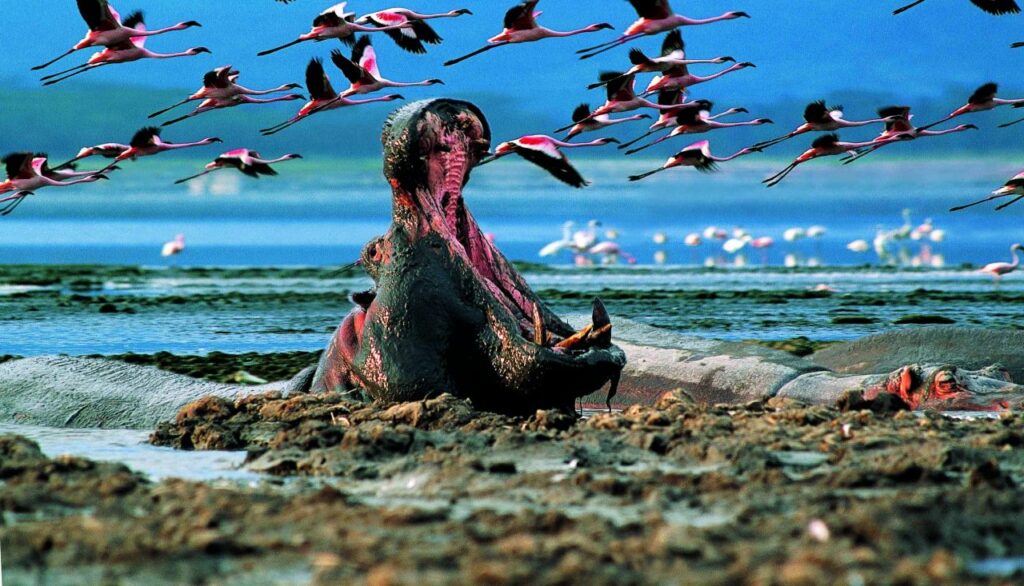
Lake Nakuru National Park

Lake Nakuru itself, a shallow soda lake within the park, was once famous for hosting up to two million flamingos in a single vivid pink fringe along its shores, though shifting water levels since around 2012 have made the flamingo spectacle considerably less predictable than it once was; travelers visiting specifically for the birdlife should treat it as a possible bonus rather than a guarantee. Non-resident entry costs USD 90 per adult per 24 hours under the KWS Premium tariff, and because the park sits directly on the main road between Nairobi and western Kenya, it works well as a one- or two-night add-on for travelers who want a reliable rhino sighting without committing to a full Laikipia or Mara itinerary.

Nairobi National Park: Safari at the Capital’s Doorstep

Nairobi National Park, gazetted in 1946, is Kenya’s first national park and the only national park in the world located within a capital city, just seven kilometers from downtown Nairobi and a short drive from Jomo Kenyatta International Airport. Despite covering only 117 square kilometers, one of the smallest parks in Kenya, it supports a remarkable density of wildlife, including lion, leopard, cheetah, buffalo, giraffe, zebra, and more than 400 recorded bird species, all visible with the city’s skyline occasionally in frame. The park has earned the nickname Kifaru Ark, Swahili for “rhino ark,” for sheltering around 50 black rhino, the densest concentration of the species anywhere in Africa, though notably the park has no resident elephants, a genuine gap for travelers prioritizing the full Big Five in a single visit.
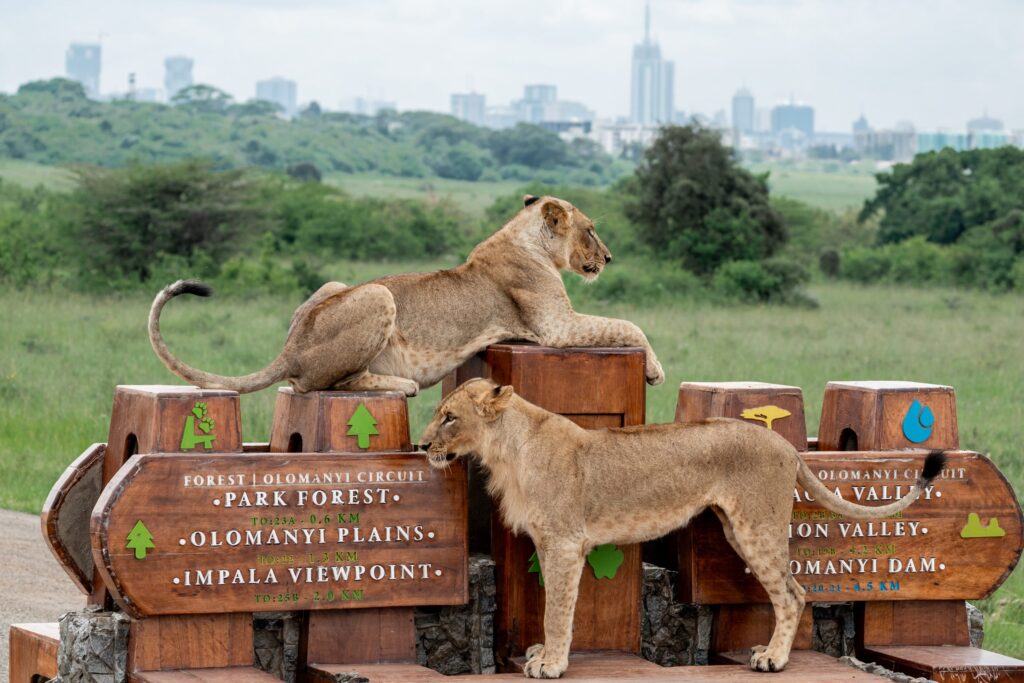
Nairobi National Park

Non-resident entry costs USD 80 per adult per 24 hours under the KWS Wilderness tariff, and the park works best as a half-day or full-day excursion rather than a multi-night stay, making it a natural way to use a layover between international flights or a spare afternoon before or after the main safari begins. The park sits adjacent to the David Sheldrick Wildlife Trust’s elephant orphan nursery, a popular add-on for travelers with a free morning in Nairobi, and it remains genuinely useful for travelers whose itinerary does not allow time for a fly-in safari but who still want a real, if compact, taste of Kenya’s wildlife before departure.

The Kenyan Coast: Diani, Watamu, and Lamu

For a substantial share of Kenya travelers, the safari is only half the trip, and the Indian Ocean coastline supplies the beach half. Diani Beach, south of Mombasa, is generally regarded as the strongest all-round choice on the coast, a long stretch of white sand and turquoise water backed by coral cliffs and a wide range of luxury villas and resorts, reached by daily flights from Nairobi to the Ukunda airstrip or by road through Mombasa via the Likoni ferry. Watamu, further north near Malindi, pairs its beaches with the coral reefs of Watamu Marine National Park and the ruins of the ancient Swahili town of Gede, while Lamu, reached by light aircraft, is a genuinely different register of coastal Kenya: a UNESCO World Heritage-listed old town of narrow streets and carved wooden doors, with dhow sailing, donkey transport in place of cars, and a strong Omani-Swahili cultural heritage.
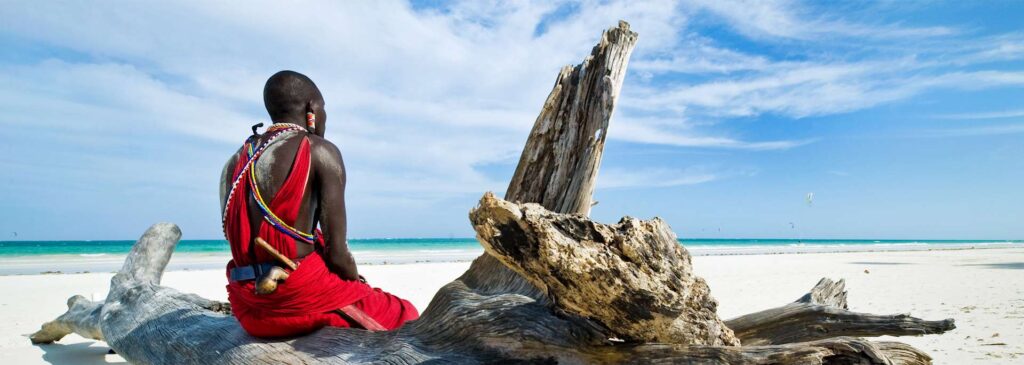
Kenyan Coast

The best time to visit Kenya’s coast runs from December to March, when skies are clear and the water is at its calmest for snorkeling and diving, with a secondary window from July to October that overlaps conveniently with the Masai Mara’s peak migration season, allowing a single itinerary to close with several days on the sand after the safari portion ends. Reaching the coast from a safari circuit typically means a short domestic flight from Nairobi or directly from a safari airstrip, and pairing three or four nights on the coast with a Kenya safari, or with a Rwanda gorilla trek and Kenya combination, is one of the more natural ways to close out a longer East Africa itinerary.

What a Kenya Safari Costs

Kenya safari costs break into three layers, government park or reserve fees, accommodation, and internal transport, and the Kenya Wildlife Service’s fee structure changed substantially with a new four-tier tariff that took effect on 1 October 2025. Premium parks, Amboseli and Lake Nakuru, now charge non-resident adults USD 90 per 24 hours; wilderness parks, Tsavo East, Tsavo West, and Nairobi National Park, charge USD 80; and the county-run Masai Mara charges USD 100 per adult from January through June and USD 200 from July through December, with Samburu National Reserve charging separately at roughly USD 85. These government fees are fixed regardless of which operator is booked, and children generally pay around half the adult rate.

Accommodation is where the widest cost variation happens. A comfortable tented camp or lodge inside a national park or the main Masai Mara reserve typically runs USD 400 to 800 per person per night on a full-board basis, while the benchmark ultra-luxury conservancy properties, Angama Mara, Mahali Mzuri, and Mara Plains Camp in the Mara’s conservancies, or Segera and Loisaba in Laikipia, run USD 1,200 to 2,500 per person per night inclusive of meals, drinks, and guided activities. At the very top of the market, the Ritz-Carlton Masai Mara, which opened in 2025 with private plunge pools and an in-house photography studio, prices upward of USD 5,000 per night. Internal light-aircraft flights between park airstrips typically run USD 150 to 320 per person per sector, and a multi-park itinerary with two or three internal flights should budget accordingly.

Taken together, a realistic mid-range Kenya safari of seven to ten days runs from roughly USD 4,000 to 8,000 per person, while a genuinely high-end, fully fly-in itinerary across two or three private conservancies runs from USD 8,000 to well over USD 15,000 per person, depending on season and property tier. For travelers combining Kenya with a Rwanda gorilla trek, the single largest fixed cost on the Rwanda side is the USD 1,500 gorilla trekking permit, issued by the Rwanda Development Board, with a combined ten- to fourteen-day, two-country itinerary typically running from roughly USD 9,000 to over USD 20,000 per person depending on lodge tier and the number of Kenya regions covered. We provide fully itemized quotations covering the Rwanda leg of any combined itinerary so there are no hidden costs once dates are confirmed; explore the full range of Rwanda safari experiences and Rwanda safari styles that pair naturally with a Kenya extension.

Plan Your Rwanda Safari

Start Planning a Private Gorilla Trek

Rwanda gorilla permits sell out months in advance. Secure your dates before the season closes.

The Best Time to Visit Kenya.

There is no single best month for a Kenya safari, because the right answer depends on which region and which wildlife spectacle matter most. Kenya’s climate follows two rainy seasons, the long rains from roughly March to May and the short rains in November, bracketing two drier windows that account for most of the year’s visitor traffic and, for the Masai Mara specifically, the migration’s presence in the ecosystem. Laikipia and the coast are genuine year-round destinations, since neither depends on a migrating herd.

Best time for gorilla trekking.

Season Months Conditions Best For
Migration crossings July – October Dry, dusty, highest visitor numbers Masai Mara river crossings; Amboseli mountain views
Short dry season January – February Hot, clear, fewer vehicles Laikipia rhino tracking; quieter Amboseli and Mara
Long rains March – May Heaviest rainfall; lush landscape Lowest rates of the year; resident wildlife, not migration
Short rains November Light, mostly afternoon rain Underrated value month; birding; herds departing south

Rwanda’s own long dry season, from June to September, overlaps closely with Kenya’s peak migration window, which is precisely why the two destinations combine so naturally on a single itinerary: a traveler can trek gorillas in dry, firm forest conditions and then fly on to catch the Mara at its most active without fighting the calendar in either country.

Getting to Kenya: Flights, the eTA, and Getting Around.

Nearly every international traveler reaches Kenya through Nairobi’s Jomo Kenyatta International Airport (JKIA), which holds direct connections to major hubs across Europe, the Middle East, and Asia, and a nonstop Kenya Airways route to New York’s JFK, among the few nonstop links between East Africa and North America. From JKIA, safari flights depart not from the international terminal but from Nairobi’s Wilson Airport, a separate domestic airfield roughly 40 minutes to an hour away depending on traffic, so travelers arriving on an international flight should plan a minimum three-hour connection buffer or, more comfortably, an overnight in Nairobi before continuing on safari.

Kenya abolished its traditional visa system on 1 January 2024 and replaced it with an Electronic Travel Authorization, or eTA, applied for online through etakenya.go.ke at a processing fee of roughly USD 30 to 34. Applications are typically approved within two to three business days, though applying at least two to four weeks before departure is the safer practice given occasional delays, and citizens of East African Community states, including Rwanda, Uganda, and Tanzania, are exempt from the requirement entirely. Travelers building a Rwanda-and-Kenya circuit should also weigh the East Africa Tourist Visa, a single USD 100 document valid for Rwanda, Uganda, and Kenya for up to 90 days with multiple entries, issued by whichever of the three countries is entered first, against Kenya’s standalone eTA.

Once in Kenya, scheduled light aircraft, chiefly operated by Safarilink and AirKenya Express, connect Wilson Airport with the airstrips serving the Masai Mara, Amboseli, Laikipia, Samburu, and Tsavo, with flight times ranging from 45 minutes to just over an hour and one-way fares typically running USD 150 to 320 per person. Driving remains a slower, scenic alternative for travelers linking regions overland or continuing across the border into Tanzania through Namanga, though the final stretch into many parks turns from tarmac to gravel, and light-aircraft luggage limits of around 15 kilograms in soft-sided bags should shape how travelers pack from the outset. For travelers flying in from Rwanda, the direct Kigali-to-Nairobi connection takes roughly one and a half to two hours on Kenya Airways, RwandAir, or Brussels Airlines.

What to Pack for a Kenya Safari

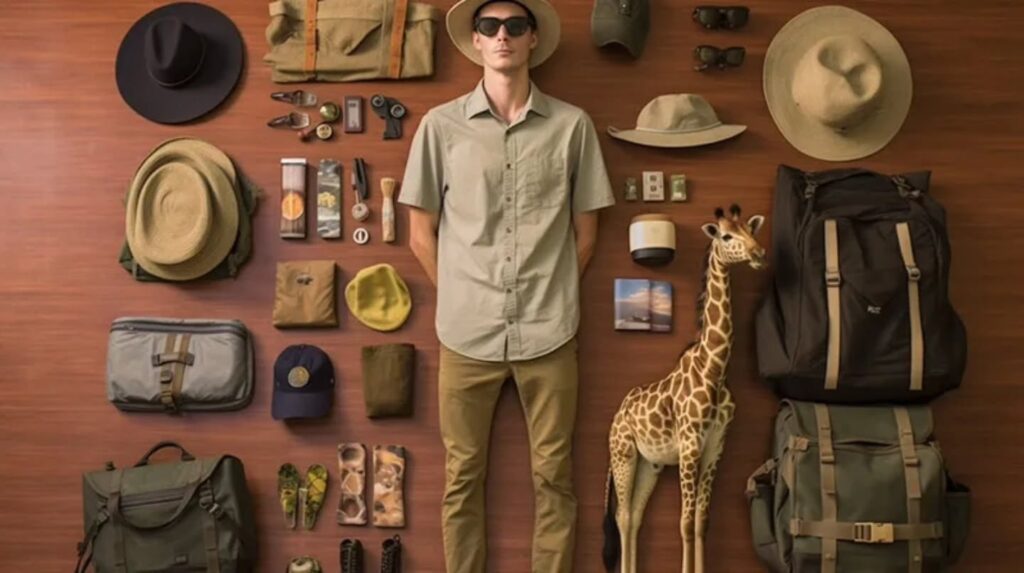
Packing for a Kenya safari is a vehicle-based, open-plains exercise rather than the forest-hiking kit needed for gorilla trekking in Rwanda, so the priorities shift from waterproof boots and gaiters to sun protection, optics, and layers for cool early-morning game drives that warm quickly once the sun clears the horizon. Neutral-colored clothing in khaki, olive, and stone tones works well across every region covered here, avoiding bright colors and dark blacks or navy that can attract tsetse flies in certain areas, and a warm fleece or packable jacket is essential for pre-dawn departures and any hot air balloon flight over the Mara, when temperatures on the open plains can drop into the low teens Celsius before warming quickly by mid-morning.

What to Pack and Wear for a Ngorongoro Crater Safari

A wide-brimmed hat, sunglasses, and high-SPF sunscreen are non-negotiable given the intensity of the equatorial sun on open grassland, even on overcast days, and binoculars, ideally one pair per traveler rather than shared, matter considerably more here than on a forest-based trek, since much of Kenya’s wildlife viewing happens at genuine distance across open country. A camera with a telephoto lens of at least 200mm, spare batteries, and ample memory card storage is worth the extra luggage weight, and a soft-sided duffel bag rather than a rigid suitcase is essential given the roughly 15-kilogram limits enforced on light-aircraft transfers between camps. Malaria prophylaxis, discussed with a travel medicine specialist in advance, is generally advised for Kenya’s lower-elevation safari regions, which carry meaningfully higher malaria risk than Rwanda’s high-altitude gorilla trekking zones in Volcanoes National Park.

What to Book in Advance

The items that sell out first on a combined Rwanda-and-Kenya itinerary are the Rwanda gorilla permit and the smallest private conservancy camps, so both should be secured before flights and transfers are finalized. The timings below reflect what we advise for peak-season travel.

Item Recommended Lead Time Why It Matters
Rwanda gorilla permit (USD 1,500) 6-12 months for June-September and December-January 192 permits issued daily across 24 habituated families
Small conservancy camps (Laikipia, Mara conservancies) 9-12 months for July-October Some camps hold fewer than 10 suites
Light-aircraft seats, Wilson Airport to safari airstrips 3-6 months for peak dates Limited daily seats and strict luggage rules
Kenya eTA At least 2-4 weeks before travel Required for every traveler, including children
Travel insurance with medical evacuation At the time of booking Covers remote locations and cancellations across both countries

Why Travelers Pair Kenya With Rwanda’s Mountain Gorillas

Gorilla trekking and a Kenya safari are not competing choices; they are complementary halves of the same continent’s best wildlife experiences, and an increasing number of travelers researching where to go in East Africa end up booking both rather than choosing between them. Mountain gorilla trekking in Rwanda’s Volcanoes National Park is an intimate, on-foot forest encounter with an endangered great ape at close range, capped at eight visitors per gorilla family and a strictly enforced one-hour observation window; a Kenya safari is an open-plains, vehicle-based experience built around scale, predator density, and, in season, one of the largest wildlife movements on Earth. The two journeys draw on entirely different registers of wildlife travel, and routed correctly through Kigali and Nairobi, they combine comfortably into a single ten- to fourteen-day East Africa circuit.

Exclusive Gorilla Trekking in Rwanda

Sequencing matters. Most experienced travelers tackle gorilla trekking first, while still physically fresh, since it is the more physically demanding of the two activities, a walk that can run from thirty minutes to five hours through steep, dense forest, and then transition into the largely vehicle-based, lower-exertion game drives of a Kenya safari. Because Rwanda’s gorilla permits are date-specific and allocated by the Rwanda Development Board on a first-booked basis, we generally recommend confirming the gorilla trekking dates first, then building the Kenya portion of the trip around them, rather than locking in Kenya camps first and risking a mismatch with permit availability. Our Luxury Rwandan Primate Safari and Best of Rwanda’s National Parks itineraries are both routed to end in Kigali, making a same-day or next-day connection to Nairobi and onward to Kenya genuinely realistic, and our Rwanda vs. Uganda gorilla trekking comparison is a useful starting point for travelers weighing a third country’s primates alongside a Kenya safari as well.

Health, Safety, and Practical Preparation

Kenya is a well-established, professionally managed safari destination visited by well over a million international travelers each year, and standard safari safety protocols, staying inside vehicles during game drives except at designated points, following ranger and guide instructions, and respecting minimum wildlife distances, are consistently and effectively enforced across its parks, reserves, and conservancies. As with most East African wildlife destinations, the primary practical risks for travelers are environmental rather than security-related: malaria prophylaxis is generally recommended for the country’s lower-elevation safari regions, and a yellow fever vaccination certificate is required for travelers arriving from or transiting through an endemic country, a category that includes Rwanda and directly affects anyone combining the two destinations.

Standard travel vaccinations recommended for East Africa more broadly include hepatitis A and B and typhoid, and a pre-departure consultation with a travel medicine specialist is worth scheduling several weeks ahead of travel rather than in the final days beforehand. Comprehensive travel insurance with medical evacuation cover is sensible for any remote safari itinerary, particularly one that moves between light-aircraft-served bush camps in two countries. Any combined Rwanda-and-Kenya itinerary should include a checklist covering both countries’ specific entry and vaccination requirements, since they are administered by entirely separate governments with separate rules, and a reputable operator briefs every guest thoroughly on both before departure.

Plan Your Rwanda Safari

Start Planning a Private Gorilla Trek

Rwanda gorilla permits sell out months in advance. Secure your dates before the season closes.

Frequently Asked Questions About Kenya Safaris

What is Kenya best known for on safari?

Kenya is best known for the Masai Mara’s wildebeest migration and for holding the widest range of safari landscapes of any single East African country, from the savannah plains of the Mara and Amboseli to the arid north around Samburu and the private rhino conservancies of the Laikipia Plateau. It protects wildlife across 23 national parks and 28 national reserves under the Kenya Wildlife Service, alongside a growing network of private conservancies that now hold roughly 65 percent of the country’s wildlife outside any formally gazetted park. Amboseli adds the added draw of elephant herds photographed against Mount Kilimanjaro, and Nairobi is the only capital city on earth with a national park, complete with black rhino, inside its boundary.

How much does a Kenya safari cost?

A realistic mid-range Kenya safari of seven to ten days, covering two or three regions such as the Masai Mara and Amboseli, runs from roughly USD 4,000 to 8,000 per person, while a high-end itinerary built around private conservancy camps in Laikipia or the Mara’s exclusive-use conservancies runs from USD 8,000 to well over USD 15,000 per person. This covers accommodation, guiding, park and conservancy fees, and internal flights but typically excludes international flights, the Kenya eTA, tips, and travel insurance. Government park fees alone range from USD 80 a day at Tsavo and Nairobi National Park to USD 200 a day in the Masai Mara during the July to December peak, figures that stay constant regardless of which operator is booked.

What is the best time to visit Kenya for a safari?

The best time to visit Kenya depends on what matters most: June to October is the long dry season and the classic window for the Masai Mara migration, Amboseli’s elephant herds, and clear views of Kilimanjaro, while January and February form a shorter, quieter dry season with excellent game viewing and noticeably fewer vehicles. The long rains from March to May bring the lowest rates and lushest scenery at the cost of muddier tracks and a dispersed migration, and the short rains in November are a genuinely underrated month with light afternoon showers and strong value. Kenya’s private conservancies, including Laikipia, reward visits in any month since they are not tied to a migrating herd.

When is the Great Migration in the Masai Mara?

The Great Migration typically arrives in the Masai Mara from late June or July, as the front of roughly two million wildebeest, zebra, and gazelle cross north from Tanzania’s Serengeti in search of fresh grazing, with the dramatic Mara River crossings clustering most heavily from late July through September. August is widely regarded by guides who work the ecosystem year-round as the single most reliable month for witnessing multiple crossings, though no crossing is ever guaranteed on a specific day. The herds typically linger on the Mara’s plains through October before the short rains pull them back south toward the Serengeti by late October or November, at which point the reserve returns to its substantial resident wildlife rather than the migratory herds.

What is the difference between the Masai Mara and Amboseli?

The Masai Mara is a 1,510-square-kilometer reserve famous for the wildebeest migration and the highest lion density in the country, while Amboseli is a much smaller, 392-square-kilometer park built around permanent swamps, elephant herds, and unobstructed views of Mount Kilimanjaro across the Tanzanian border. The Mara rewards a longer stay of four to six nights, especially during the July to October migration, while Amboseli is easily covered in two to three nights and pairs naturally as a shorter add-on to a longer Kenya circuit. Most first-time visitors combine the two, spending two or three nights in Amboseli followed by three or four in the Mara, and our dedicated guides to the Masai Mara and Amboseli cover each destination’s costs, camps, and logistics in full.

Do I need a visa to visit Kenya?

Most international visitors no longer need a traditional Kenyan visa; Kenya abolished its visa system on 1 January 2024 and replaced it with an Electronic Travel Authorization, or eTA, which almost every non-East African nationality must obtain online before travel at a processing fee of roughly USD 30 to 34 through etakenya.go.ke. Applications are typically approved within two to three business days, though applying at least two to four weeks ahead is the safer practice given occasional processing delays. Citizens of East African Community member states, including Rwanda, Uganda, and Tanzania, are exempt from the eTA requirement, and travelers combining Kenya with Rwanda or Uganda can instead consider the East Africa Tourist Visa, a single USD 100 document valid for all three countries for up to 90 days.

How do I get around Kenya during a safari?

Most luxury Kenya itineraries move between regions by scheduled light aircraft, typically operated by Safarilink or AirKenya Express, departing Nairobi’s Wilson Airport rather than the international Jomo Kenyatta airport, with flights of 45 minutes to just over an hour reaching the Masai Mara, Amboseli, or a Laikipia airstrip. Driving is the slower, more scenic alternative and suits travelers linking parks overland or continuing on to Tanzania through the Namanga border crossing, though the final stretch of road into many parks turns from tarmac to gravel and adds real time. Within a park or conservancy, a private 4×4 with a dedicated driver-guide is standard for the kind of itinerary we plan, and conservancy camps typically include daily game drives in their nightly rate.

Is Kenya safe for tourists?

Yes, Kenya is a well-established, professionally managed safari destination visited by well over a million international travelers each year, and its major parks, reserves, and conservancies enforce standard safari safety protocols consistently, including staying inside vehicles during game drives except at designated points and following ranger and guide instructions around wildlife. The United States State Department rates Kenya at Level 2, exercise increased caution, the same level assigned to many popular travel destinations worldwide, and most advisories flag banditry risk in specific northern counties rather than the parks and conservancies themselves. As with most East African wildlife destinations, the primary practical risks for travelers are environmental, chiefly malaria in lower-elevation savannah regions, rather than security-related, and a reputable operator briefs every guest thoroughly before travel.

How many days do I need for a Kenya safari?

Seven to ten days is the realistic sweet spot for a satisfying Kenya safari covering two regions, such as three to four nights in the Masai Mara paired with two to three nights in Amboseli or Laikipia, since a shorter trip leaves little margin if a migration crossing or a specific sighting takes an extra day to materialize. A single-region trip, such as a four- to five-night Masai Mara safari, works well for travelers with tighter schedules or those adding Kenya onto a longer East Africa circuit. Travelers combining Kenya with a Rwanda gorilla trek typically budget ten to fourteen days for the full two-country journey, with the Kenya portion alone usually accounting for five to eight of those days.

What is the Big Five, and where can I see them in Kenya?

The Big Five, lion, leopard, elephant, buffalo, and rhino, were originally named for the five animals big-game hunters considered most dangerous to track on foot, and the term now describes the benchmark checklist for a first safari. The Masai Mara and Laikipia’s conservancies offer the most reliable combined sightings of all five, since Laikipia holds Kenya’s densest concentration of black and white rhino, including the world’s last two northern white rhinos at Ol Pejeta Conservancy, while Amboseli is not a rhino park and Nairobi National Park, despite its rhino density, lacks free-roaming elephants. Rwanda’s Akagera National Park offers a Big Five alternative for travelers adding a gorilla trek to their itinerary, having reintroduced black rhinos in 2017 and 2019 to complete its own Big Five roster.

Can I combine a Kenya safari with Rwanda gorilla trekking?

Yes, and this is one of the most requested combinations in East African luxury travel. Mountain gorilla trekking in Rwanda’s Volcanoes National Park delivers an intimate, on-foot forest encounter capped at eight visitors per gorilla family, while a Kenya safari delivers open-plains wildlife viewing and, in season, one of the largest wildlife movements on Earth, and routed through Kigali and Nairobi, a flight of roughly one and a half to two hours, the two experiences combine comfortably into a single ten- to fourteen-day itinerary. Because Rwanda’s gorilla permits are date-specific and allocated by the Rwanda Development Board on a first-booked basis, we generally recommend confirming the gorilla trekking dates first, then building the Kenya portion of the trip around them. Rwanda Gorilla Expeditions coordinates the Rwanda side of exactly this kind of combined journey.

What should I pack for a Kenya safari?

Pack neutral-colored clothing in khaki, olive, and stone tones, a warm layer for cool pre-dawn game drives and any hot air balloon flight, a wide-brimmed hat and high-SPF sunscreen, and binoculars, ideally one pair per traveler, given how much of Kenya’s wildlife viewing happens at genuine distance across open plains. A camera with at least a 200mm telephoto lens, spare batteries, and ample memory card storage is worth the extra luggage weight, and light-aircraft transfers typically limit baggage to around 15 kilograms in soft-sided duffel bags rather than hard suitcases. This kit differs meaningfully from gorilla trekking packing for Rwanda, which prioritizes waterproof boots, gaiters, and rain gear for forest conditions rather than sun and dust management on open plains.

What is the best Kenya safari for a first-time visitor?

For a first-time visitor, the strongest Kenya itinerary pairs the Masai Mara with Amboseli: three to four nights in the Mara for the density of predators and, if timed for July to October, the migration itself, followed by two to three nights in Amboseli for elephant herds beneath Kilimanjaro and an easier, more relaxed pace to close the trip. This combination covers the two most photographed landscapes in Kenya without the added logistics of a third region, and it fits comfortably into seven to eight days, including a Nairobi arrival buffer. Repeat visitors, or those specifically seeking privacy, walking safaris, and rare northern species, are better served by adding the Laikipia Plateau on a second trip.

How do I book a Kenya safari?

Booking a Kenya safari starts with fixing travel dates and priorities, whether that is the July to October migration, a specific conservancy, or a particular combination of regions, since this shapes both routing and camp selection. For travelers combining Kenya with Rwanda, Rwanda Gorilla Expeditions handles the Rwanda side of the process directly, securing gorilla permits with the Rwanda Development Board and coordinating cross-border timing through Kigali and Nairobi, while advising on the Kenya portion so dates and seasons align across both countries. Peak-season camps and Rwanda’s gorilla permits should both be requested six to twelve months ahead of July to October or December to January travel; tell us your dates, and we will check gorilla permit availability within a few minutes.

What is the difference between a national park, a national reserve, and a private conservancy in Kenya?

A national park in Kenya, such as Amboseli, Tsavo, or Nairobi National Park, is managed directly by the government-run Kenya Wildlife Service under national legislation. A national reserve, such as the Masai Mara or Samburu, is managed instead by county government or, in the Mara Triangle’s case, by an independent nonprofit conservancy, which is why fee structures and rules can differ from KWS parks even within the same ecosystem. A private or community conservancy, such as those on the Laikipia Plateau or bordering the Mara, sits on land leased from private or community landowners and sets its own rules, typically permitting night drives, walking safaris, and off-road driving that formal parks and reserves prohibit, with entry restricted to guests staying at a lodge physically inside that conservancy.

Can I see the Big Five in a single Kenya park?

Yes, several Kenyan destinations offer realistic odds of all five species in a single stay, though none guarantees it on any particular day. The Masai Mara’s core reserve and surrounding conservancies hold lion, leopard, elephant, and buffalo in strong numbers, with black rhino present in smaller numbers in specific conservancies, while Laikipia’s conservancies, particularly Ol Pejeta and Lewa, offer the strongest combined odds given their exceptional rhino density alongside healthy lion, leopard, elephant, and buffalo populations. Amboseli offers four of the five reliably, elephant, buffalo, lion, and (more elusive) leopard, but is not a rhino park, while Nairobi National Park is unusual in offering rhino density but no free-roaming elephants.

Do I need malaria tablets for a Kenya safari?

Most travel clinics recommend malaria prophylaxis for the Masai Mara, Amboseli, Tsavo, and Samburu, all of which sit at lower elevations where mosquitoes are present, particularly after rain, though risk varies through the year and between individuals, so a consultation with a travel-medicine specialist four to six weeks before departure is worth scheduling. A yellow fever vaccination certificate is required if arriving from or transiting through a yellow fever-endemic country, a category that includes Rwanda and Uganda, which is relevant directly for travelers routing a Kenya safari around a Rwanda gorilla trek. Standard travel vaccinations recommended for East Africa more broadly include hepatitis A and B and typhoid, and a reputable operator briefs every guest on health preparation well before travel.

Ready to Trek? Permits are limited — plan early.

Plan Your Kenya Safari With Rwanda Gorilla Expeditions

Kenya’s safari regions and Rwanda’s mountain gorillas are, between them, some of the most complete wildlife experiences East Africa has to offer, and the travelers who see both rarely regret the extra days it takes to plan them properly. Our team at Rwanda Gorilla Expeditions specializes in the Rwanda half of that journey, securing gorilla permits directly with the Rwanda Development Board, matching travelers to the right gorilla family, and coordinating the cross-border routing through Kigali and Nairobi so a Kenya safari lines up cleanly with a gorilla trek rather than fighting against it. Whether the Masai Mara migration, Amboseli’s elephants, or Laikipia’s private conservancies matter most, or if your Kenya plans are still taking shape alongside a Rwanda-only trip, please get in touch through WhatsApp or email. Tell us your dates and we’ll check permit availability within a few minutes.