Getting to the Masai Mara: Flights, Kenya’s ETA, and Driving.
Nearly every international traveler reaches the Masai Mara via Nairobi, landing at Jomo Kenyatta International Airport (NBO) before connecting onward to the reserve. Kenya abolished its visa system entirely on 1 January 2024 and replaced it with an Electronic Travel Authorization (eTA): almost every non-East African nationality must apply online at etakenya.go.ke, paying a processing fee of roughly USD 30 to 34, before travel, and while applications are typically approved within two to three business days, applying at least two weeks ahead is the safer practice given occasional processing delays. Citizens of East African Community member states, including Rwanda, Uganda, Tanzania, Burundi, and South Sudan, are exempt from the eTA requirement entirely, a detail worth knowing for travelers building a multi-country itinerary, though it does not exempt a US, UK, German, or Australian passport holder simply because their trip begins in Rwanda.
From Nairobi, the fastest and by far the most common way into the Mara is by light aircraft: scheduled flights operated chiefly by Safarilink and AirKenya Express depart Wilson Airport, a 15-to-30-minute transfer from central Nairobi, multiple times daily and land at one of the reserve’s roughly seven airstrips, Musiara, Keekorok, Mara Serena, Ol Kiombo, and Kichwa Tembo, among the busiest, in around 45 minutes. One-way fares typically run from roughly USD 150 to 300 per person depending on the specific airstrip and season, and several conservancy camps coordinate transfers directly with their preferred airstrip.
Driving is the slower, more scenic alternative: the Mara sits roughly 225 to 275 kilometers southwest of Nairobi depending on which gate you’re entering through, and the route runs through the Great Rift Valley escarpment, with genuine viewpoints over the valley floor, and the market town of Narok, the last sizeable settlement before the reserve. Plan on five to six and a half hours of driving, since the final 70 to 75 kilometers shifts from tarmac to a rougher gravel track that slows progress considerably. Most self-drive and private-vehicle itineraries break the return journey with a lunch stop in Narok rather than attempting it without a break.
For travelers building a Rwanda-then-Kenya circuit, the connection from Kigali routes through Nairobi in roughly two hours of flying time, with same-day onward connections to the Mara realistic for most arrival times, considerably shorter than the equivalent Rwanda-to-Tanzania routing through Kilimanjaro. Reach out through Rwanda Gorilla Expeditions or on WhatsApp, and we will map the exact routing against your dates.
What a Masai Mara Safari Costs
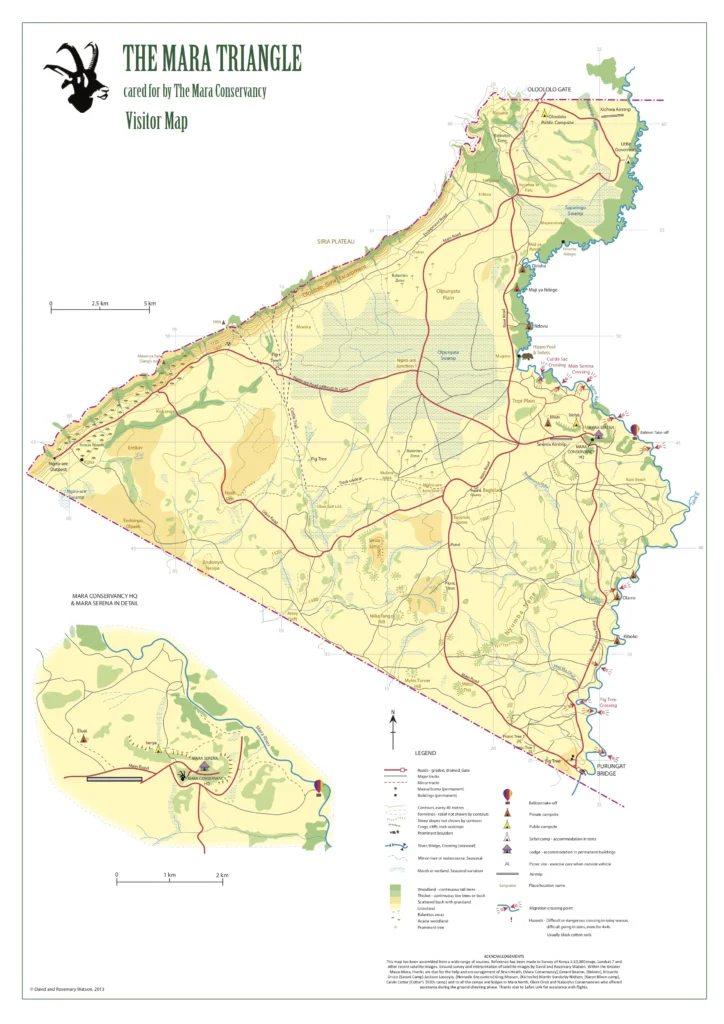
Masai Mara safari costs break into three layers, reserve or conservancy entry fees, accommodation, and internal transport, and the reserve’s fee structure changed substantially in 2026. Narok County now charges non-resident adults USD 100 per person per day from January through June and USD 200 per person per day from July through December, a deliberate seasonal split designed to manage demand during the migration’s peak months; children aged 9 to 17 pay USD 50 year-round, and children under 9 enter free. The ticket itself covers a 12-hour daylight window, roughly 6:00 AM to 6:00 PM, rather than a full 24 hours, a change introduced in 2023 that means a late-morning arrival can represent poor value for the day, and payment at most gates is cashless only, Visa, Mastercard, or M-Pesa. The Mara Triangle, managed separately by the Mara Conservancy, follows a similar seasonal fee structure but processes payment exclusively online in advance rather than at the gate.
Private conservancy fees run entirely separately from reserve entry, typically USD 80 to 150 per person per night, and are almost always bundled directly into a camp’s nightly rate rather than billed as a standalone line item; entry to a given conservancy is restricted to guests actually staying at a lodge inside it. On accommodation, a comfortable tented camp or lodge inside the main reserve typically runs USD 400 to 800 per person per night on a full-board basis, while the ecosystem’s benchmark ultra-luxury conservancy properties, Angama Mara, Mahali Mzuri, and Mara Plains Camp, among them, run USD 1,200 to 2,500 per person per night inclusive of meals, house drinks, two daily game drives, and conservancy fees. At the very top of the market, the Ritz-Carlton Masai Mara, which opened in 2025 with private plunge pools, butler service, and an in-house photography studio with professional camera equipment available to guests, prices upward of USD 5,000 per night, setting a genuinely new benchmark for the ecosystem. A hot air balloon safari, one of Mara’s signature activities, runs roughly USD 450 to 650 per person, including a champagne bush breakfast on landing, and has limited daily capacity that should be reserved before arrival rather than requested on the ground.
Taken together, a realistic mid-range Mara safari of four to five nights runs from roughly USD 3,000 to 6,000 per person, while a high-end conservancy-based itinerary with the ecosystem’s benchmark luxury camps runs from USD 6,000 to well over USD 12,000 per person depending on season and property. For travelers combining the Mara with a Rwanda gorilla trek, the single largest fixed cost on the Rwanda side is the USD 1,500 gorilla trekking permit, issued by the Rwanda Development Board, with a combined 10-to-14-day, two-country itinerary typically running from roughly USD 9,000 to over USD 18,000 per person depending on lodge tier and season. We provide fully itemized quotations covering the Rwanda leg of any combined itinerary so there are no hidden costs once your dates are confirmed; explore the full range of Rwanda safari experiences and Rwanda safari styles that pair naturally with a Masai Mara extension.
Where to Stay: Reserve Lodges and Conservancy Camps
Choosing where to stay in the Masai Mara comes down to three questions: reserve or private conservancy, proximity to the river crossings versus quieter plains, and lodge versus tented camp, and the right answer depends far more on your travel dates and priorities than on any fixed ranking of the ecosystem’s best properties. Inside the main reserve, Mara Serena Safari Lodge holds one of the classic five-star positions, set high above the Mara Triangle with sweeping views across the crossing points, while Governors’ Camp and Keekorok Lodge anchor the reserve’s northern and central sectors, respectively, with decades of established operating history. Sarova Mara Game Camp offers a strong, gentler-priced luxury tented alternative near Talek Gate with particularly excellent family facilities.
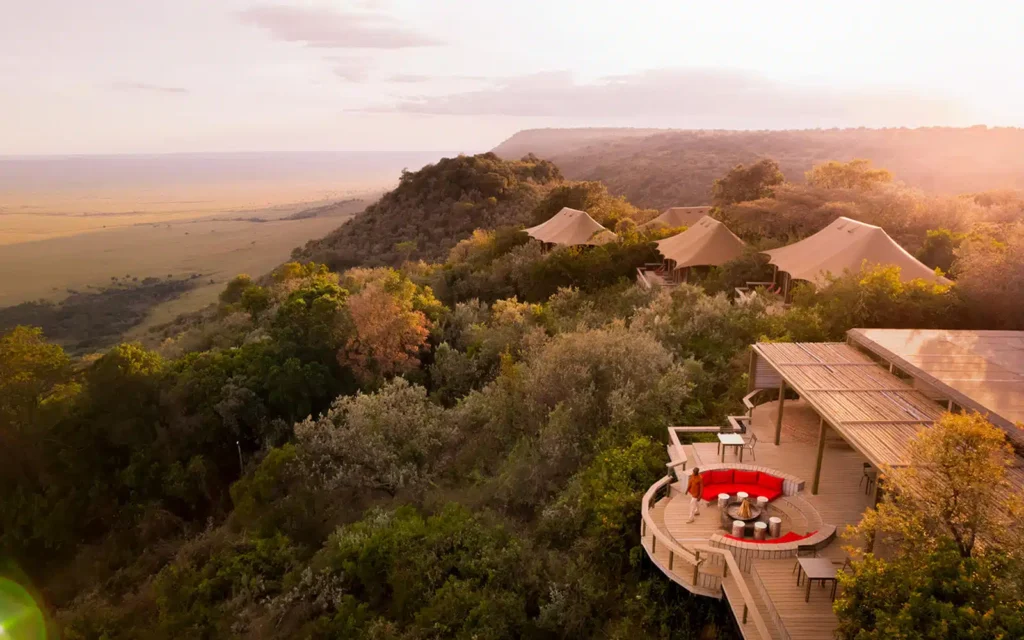
In the private conservancies, Angama Mara sits directly on the edge of the Oloololo Escarpment with glass-fronted suites overlooking the Mara Triangle, widely regarded as one of the most photographed views in African safari accommodation. Mahali Mzuri, Sir Richard Branson’s Virgin Limited Edition property in the 140-square-kilometer Olare Motorogi Conservancy, offers twelve modern tented suites raised on stilts along a ridge with an infinity pool and a strong reputation for its kitchen. Cottar’s 1920s Camp, on its own private conservancy near Olderkesi on the reserve’s southeastern boundary, recreates a deliberately old-world safari atmosphere with a private butler for every tent and, given its conservancy status, offers night drives that are unavailable inside the reserve proper. Mara Plains Camp, also in Olare Motorogi, offers just seven secluded tented suites for travelers prioritizing intimacy and low camp density above all else. For travelers combining a Mara stay with a Rwanda gorilla trek, the lodge landscape around Volcanoes National Park is, by any global standard, comparable in caliber: Singita Kwitonda Lodge, Wilderness Bisate, One&Only Gorilla’s Nest, and Wilderness Sabyinyo Silverback Lodge sit within twenty to forty minutes of the Kinigi trekking headquarters and are covered in full in our dedicated Volcanoes National Park guide.
What to Pack for a Masai Mara Safari
Packing for the Masai Mara is a genuinely different exercise from packing for gorilla trekking in Rwanda: this is vehicle-based, open-plains travel rather than forest hiking, so the priorities shift from waterproof boots and gaiters to sun protection, optics, and layers for cool early-morning game drives that warm quickly once the sun clears the horizon. Neutral-colored clothing in khaki, olive, and stone tones works well, avoiding bright colors and dark blacks or navy that can attract tsetse flies in some areas, and a warm fleece or packable jacket is essential for pre-dawn game drives and any hot air balloon flight, when temperatures on the open plains can drop into the low teens Celsius before warming quickly by mid-morning.
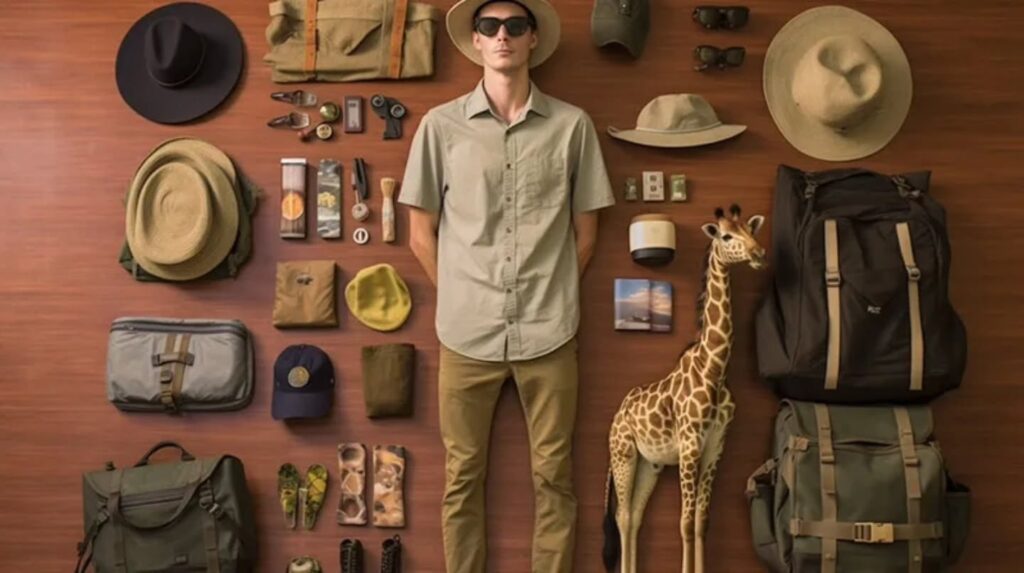
A wide-brimmed hat, sunglasses, and high-SPF sunscreen are non-negotiable given the intensity of the equatorial sun on open grassland, even on overcast days, and binoculars, ideally one pair per traveler rather than shared, matter considerably more here than on a forest-based trek, since much of the Mara’s wildlife viewing happens at genuine distance across open country. A camera with a telephoto lens of at least 200mm, spare batteries, and ample memory card storage is worth the extra luggage weight for both game drives and any balloon safari, and comfortable closed walking shoes are useful for the limited guided walks available within the conservancies. Malaria prophylaxis, discussed with a travel medicine specialist in advance, is generally advised for the Mara’s lower-elevation savannah, which carries a meaningfully higher malaria risk than Rwanda’s high-altitude gorilla trekking zones in Volcanoes National Park.
Health, Safety, and Practical Preparation
The Masai Mara is a well-established, professionally managed safari destination visited by hundreds of thousands of international travelers each year, and standard safari safety protocols, staying inside vehicles during game drives except at designated points, following ranger and guide instructions, and respecting minimum wildlife distances, are consistently enforced across both the reserve and the surrounding conservancies. As with any wildlife destination, the primary practical risks are environmental rather than security-related: malaria prophylaxis is generally recommended for the Mara’s lower-elevation savannah, and standard travel vaccinations recommended for East Africa more broadly include hepatitis A and B, typhoid, and, for wildlife-focused travelers, rabies.
A pre-departure consultation with a travel medicine specialist is worth scheduling several weeks ahead of your trip rather than in the final days before departure. Reputable ground operators brief every guest thoroughly on health and safety before travel, and any combined Rwanda-and-Kenya itinerary should include a checklist covering both countries’ specific entry requirements, since Kenya’s Electronic Travel Authorization and Rwanda’s own entry rules are administered by entirely separate governments.