The Canopy Walkway and Nyungwe’s Other Primates
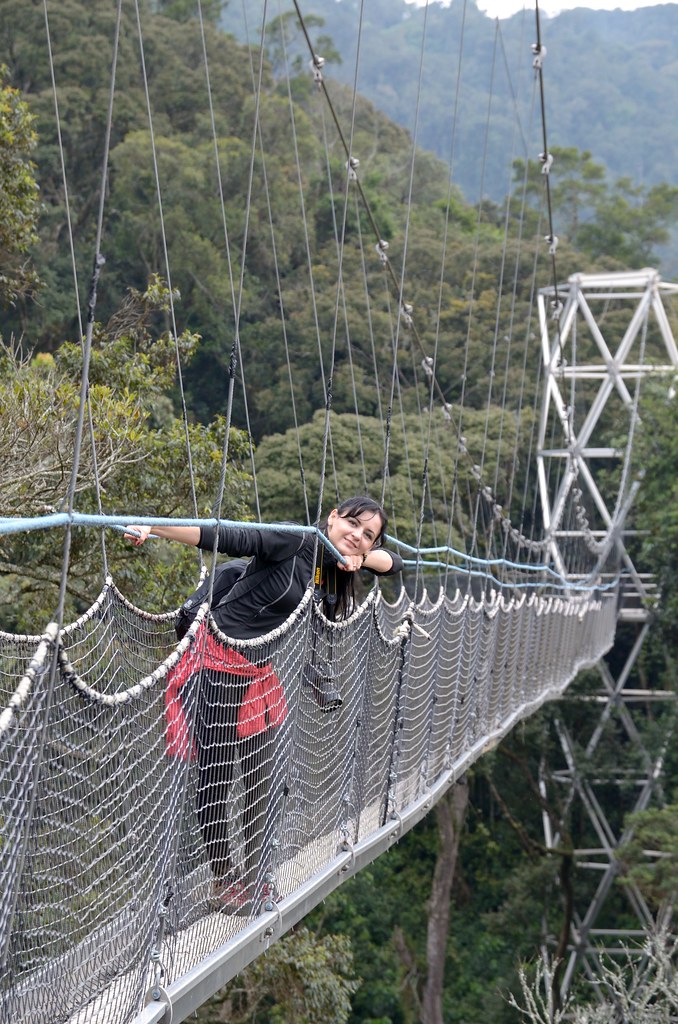
The Nyungwe canopy walkway is a 160-meter suspension bridge divided into three linked sections of roughly 25, 45, and 90 meters, reaching its highest point of approximately 70 meters above the forest floor at the longest span, and it is the only structure of its kind in East Africa. Reaching it involves a roughly 45-minute to two-hour guided hike along the 2.1-kilometer Igishigishigi Trail from the Uwinka Visitor Centre, which sits at around 2,500 meters above sea level, through dense rainforest before the trail opens onto the bridge itself. Because it is a separate activity from chimpanzee trekking, with its own USD 40 international visitor fee according to Rwanda Development Board pricing published via Visit Rwanda, it pairs naturally with either the Uwinka or Cyamudongo chimp trek on a two-to-three-night Nyungwe stay.
What the Canopy Walk Involves
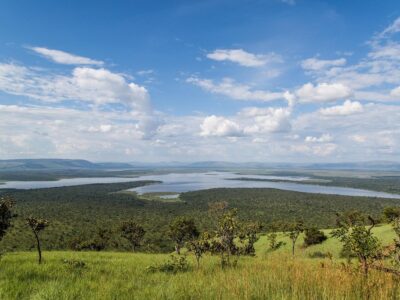
The walk itself takes roughly two hours round trip, including the approach hike, and is open to visitors from around six years old, though anyone uneasy with heights should know that the central 90-meter span offers no view of the ground below, only the forest canopy on either side. The bridge sways gently underfoot in wind, a sensation most visitors describe as thrilling rather than alarming, and the elevated vantage delivers views over the forest canopy toward Lake Kivu and, on a clear day, the hills of neighboring Burundi and the Democratic Republic of Congo. Guides typically point out canopy-dwelling primates and birds that are difficult or impossible to see from the forest floor, making this one of the only vantage points in Rwanda from which the forest ecosystem can be observed from above rather than below.
The Other Twelve Primates of Nyungwe
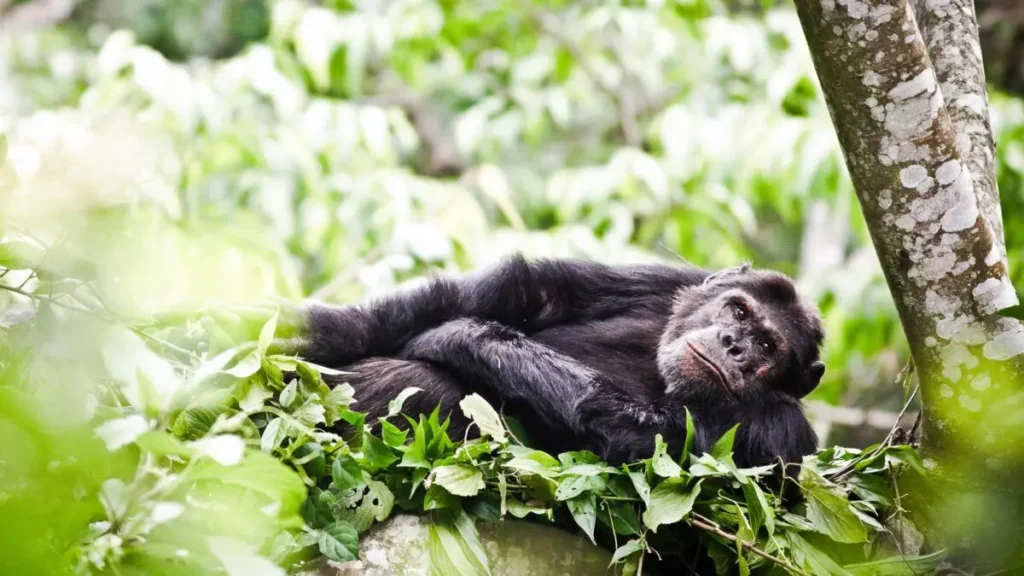
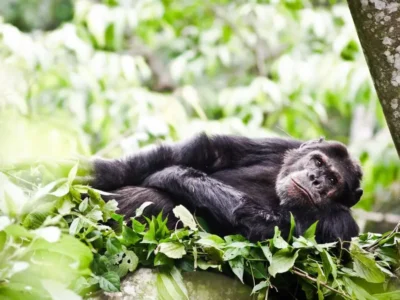
Chimpanzees draw the headlines, but Nyungwe’s real distinction is primate density: 13 species live within its boundaries, more than any other park in Rwanda, and several are found nowhere else in the country. The Angola colobus is the park’s most visually spectacular resident, forming super-troops of up to several hundred individuals that move through the canopy together, a sight and sound that captivates most visitors even before they see a chimpanzee. The Albertine Rift endemic L’Hoest’s monkey and the more widespread blue monkey, silver monkey, grey-cheeked mangabey, red-tailed monkey, Dent’s mona monkey, vervet monkey, and olive baboon round out a primate list that rewards travelers who build in time beyond a single chimp trek.
Primate Species of Nyungwe Forest National Park
| Species |
Notable feature |
| Eastern chimpanzee |
Two habituated communities: Uwinka (~60) and Cyamudongo (~30) |
| Angola colobus |
Forms super-troops of up to several hundred individuals |
| L’Hoest’s monkey |
Albertine Rift endemic |
| Silver monkey |
Found in the higher-altitude forest zones |
| Grey-cheeked mangabey |
Loud, distinctive whooping calls |
| Blue monkey |
Widespread through the main forest block |
| Red-tailed monkey |
Distinctive white nose spot and reddish tail |
| Dent’s Mona Monkey |
Small, agile canopy dweller |
| Vervet monkey |
Common at forest edges near Gisakura |
| Olive baboon |
Ground-dwelling, seen on forest fringe roads |
| Owl-faced monkey |
Rare, deep-forest sightings |
| Golden monkey (occasional range overlap) |
Primarily associated with Volcanoes National Park |
| Greater galago (bushbaby) |
Nocturnal, heard more often than seen |
Birdwatching, Waterfalls, and Nyungwe’s Other Signature Experiences
Nyungwe Forest National Park holds one of the richest bird lists of any single site in East Africa, with more than 300 recorded species, roughly 29 of them Albertine Rift endemics found in few other places on Earth. Serious birders plan multi-day stays around this list alone, and the forest’s dawn chorus, layered from the canopy down to the understory, is reason enough for non-specialist travelers to add an early guided walk to their itinerary.
Birding Hotspots
The Karamba trail and the forest edges around Uwinka and Gisakura are the most productive birding zones, known for species such as the Rwenzori turaco, red-collared babbler, Rockefeller’s sunbird, Chapin’s flycatcher, and the strange weaver, most of which are difficult or impossible to see outside the Albertine Rift ecosystem. Guided birding walks are typically arranged through the park reception centers and are best done at first light, before the general forest traffic of the day picks up and the canopy activity settles.
Waterfall Hikes and Tea Estates
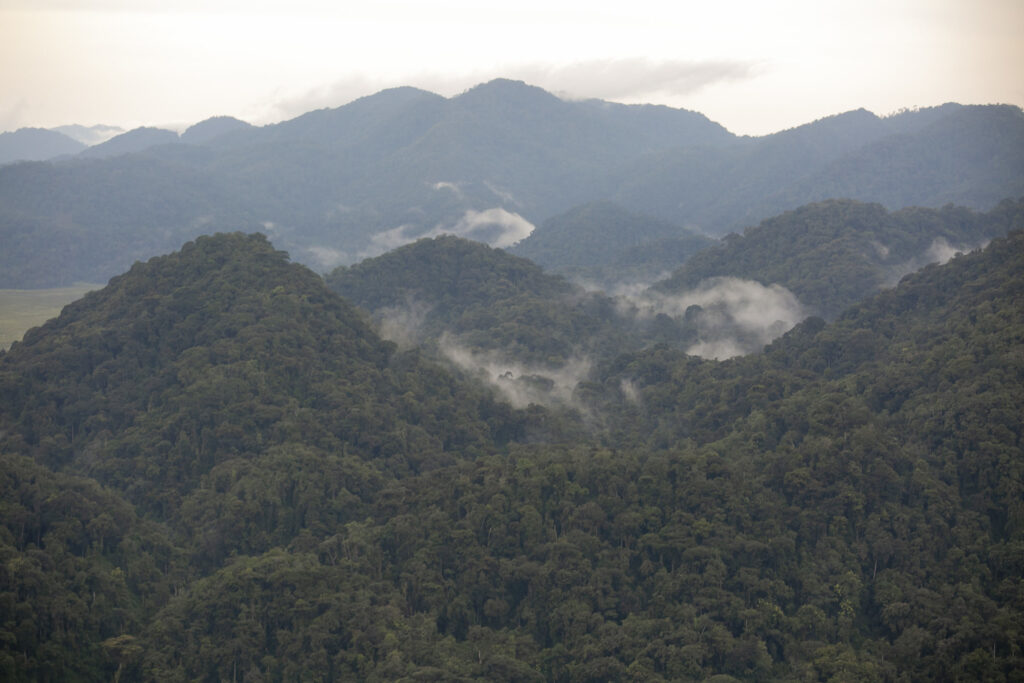
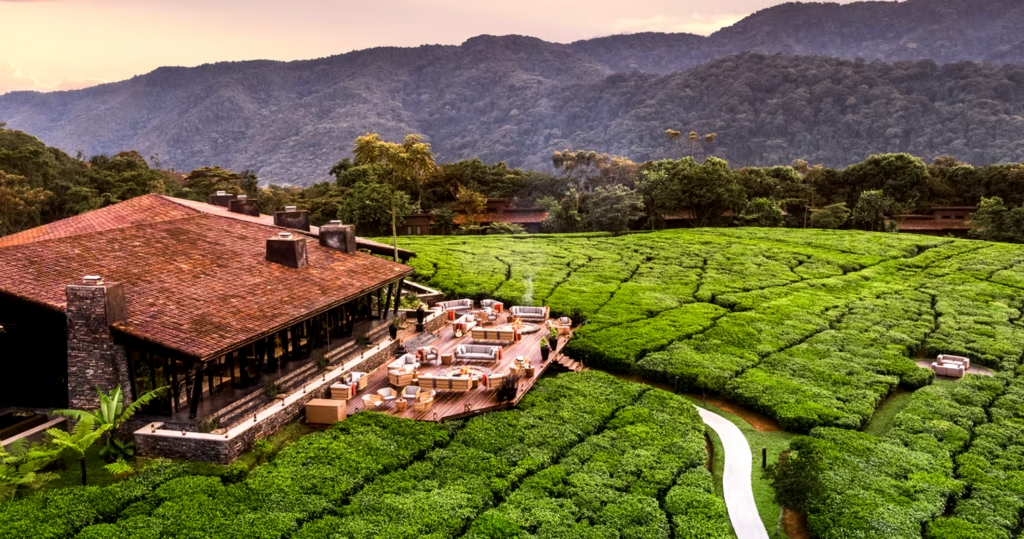
Nyungwe’s trail network extends well beyond the canopy walkway, with the hike to Kamiranzovu Waterfall and the shorter Isumo Waterfall trail offering a quieter, less structured way to experience the forest, often with a strong chance of colobus or blue monkey sightings along the way. The Gisakura area, at the forest’s western edge, is bordered by working tea estates whose neat, undulating rows of tea bushes provide a striking visual contrast to the wall of rainforest immediately behind them, and a short stop here is a natural add-on for travelers staying at lodges in this part of the park.
The Best Time to Visit Nyungwe Forest National Park
Nyungwe is accessible year-round, and unlike some rainforest destinations, the rainy season here is not simply something to be endured; for chimpanzee trekking specifically, it can genuinely be the better choice. Rwanda’s two dry seasons, June through September and December through February, offer firmer trails, easier hiking, and the most comfortable conditions for the canopy walkway and waterfall hikes, which is why they remain the busiest and most popular months to visit.

Why the Rainy Season Can Mean Better Chimp Sightings
During the long rains of March through May and the shorter rains of October and November, food is more abundant throughout the forest, which tends to keep chimpanzee communities more settled and closer to their core range rather than ranging widely in search of fruiting trees. Several Nyungwe-based guides specifically recommend the wetter months for this reason, a nuance that is easy to miss if you assume, as with most safari planning, that dry season is always operationally superior. The June to August period also coincides with heavy fig fruiting in parts of the forest, another window locally regarded as excellent for chimp activity, so trekking success in Nyungwe is driven as much by food availability as by rainfall.
Nyungwe Forest National Park by Season
| Season |
Months |
Trekking conditions |
Chimp trekking notes |
| Long dry season |
June – September |
Firmest trails, easiest canopy walk conditions |
Fig-fruiting period in parts of forest; good general activity |
| Short dry season |
December – February |
Good trail conditions, fewer crowds than June–Sept |
Reliable, slightly less competition for permits |
| Long rains |
March – May |
Muddier trails, waterproof gear essential |
Food abundance can keep chimps closer to their core range. |
| Short rains |
October – November |
Lighter, more intermittent rainfall |
Similar advantage to the long rains, shorter duration |