Where Volcanoes National Park Is and What Makes Its Landscape Unique
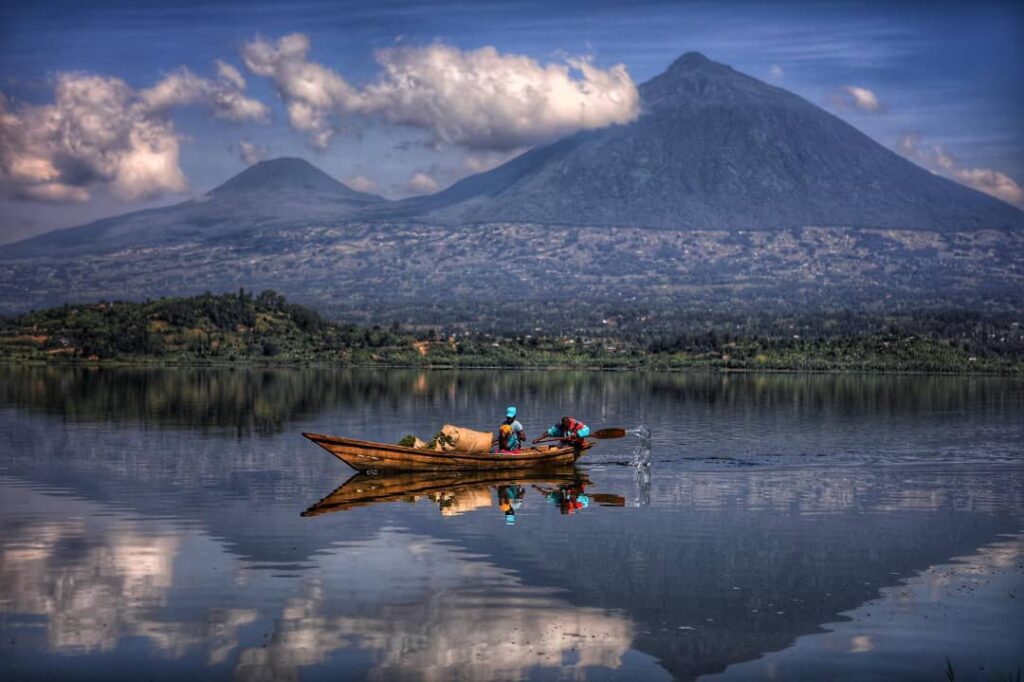
Volcanoes National Park occupies the northwestern tip of Rwanda, in Musanze District, forming part of a single transboundary ecosystem that continues into Uganda’s Mgahinga Gorilla National Park to the east and the Democratic Republic of Congo’s Virunga National Park to the west. Together, the three parks protect the Virunga Mountains, a chain of eight volcanoes that erupted, cooled, and forested over millions of years to create the only high-altitude habitat on earth where mountain gorillas survive alongside Uganda’s separate Bwindi population. Rwanda’s share of that massif covers 160 square kilometers and includes five of its eight peaks entirely or in part.
The Five Volcanoes of Rwanda’s Virunga Sector
Karisimbi, Bisoke, Sabyinyo, Gahinga, and Muhabura rise along the park’s northern boundary in a rough arc, each with its own character, altitude, and place in the trekking and hiking landscape.
| Volcano |
Elevation |
Notable feature |
Public access |
| Karisimbi |
4,507 m |
Rwanda’s highest point; frost or light snow near the summit |
Two-day guided hike, overnight camp |
| Bisoke (Visoke) |
3,711 m |
A roughly 400 m-wide crater lake at the summit |
One-day hike, 6-8 hours round trip |
| Sabyinyo |
3,669 m |
Jagged ridge at the Rwanda-Uganda-DRC tripoint |
Gorilla trekking terrain; not offered as a public summit hike |
| Muhabura |
4,127 m |
Steep, near-symmetrical cone with a small crater lake |
One-day hike, full-day commitment |
| Gahinga |
3,474 m |
Smallest and least-visited, with a swampy former crater |
One-day hike, moderate difficulty |
Ecological Zones, from Farmland to Afro-Alpine
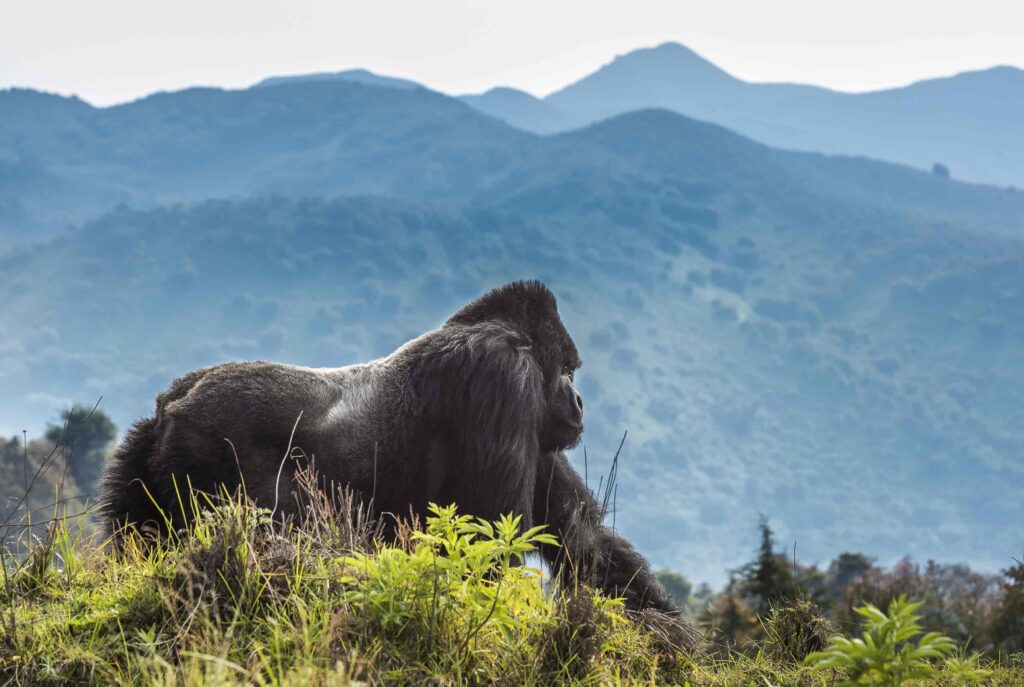
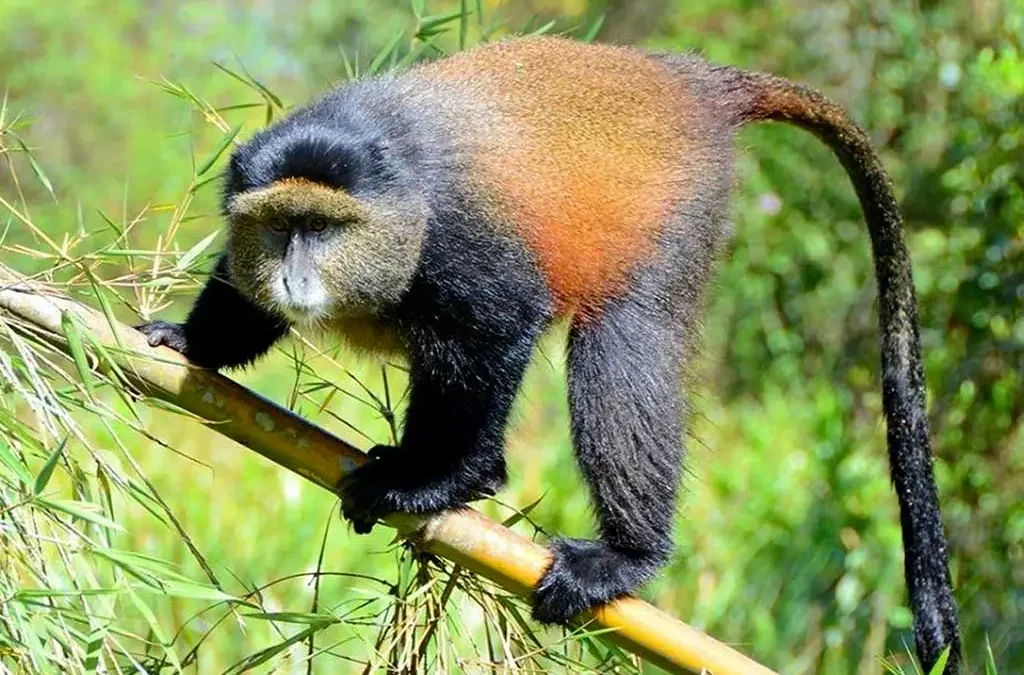
The park’s ecology changes dramatically with altitude, moving through roughly five distinct bands: cultivated land bordering the park boundary, montane and mixed forest at around 2,400 to 2,500 metres, dense bamboo forest that forms prime gorilla and golden monkey habitat, Hagenia-Hypericum woodland draped in old man’s beard lichen, and, above roughly 3,500 metres, a sub-alpine and afro-alpine zone of giant lobelias, tree groundsel and heather that would look more at home on Kilimanjaro than in equatorial Africa. This layered terrain supports species found nowhere outside the Albertine Rift, and it explains why a single volcano hike here can pass through more distinct vegetation zones in six hours than most parks show in a week. The mechanics of gorilla trekking itself, covered in full in our complete gorilla trekking guide, follow from this same geography: gorilla families move constantly between the bamboo and Hagenia zones depending on season and food availability, which is why trek duration is never fixed in advance.
The History of Volcanoes National Park, From Africa’s First Gazetted Park to a Global Conservation Model
Volcanoes National Park is not simply the oldest national park in Rwanda; by most accounts, it is the oldest formally gazetted national park on the entire African continent, a status dating to a Belgian colonial decree of 21 April 1925.
1925: Carl Akeley and the Birth of Africa’s Oldest Park
The park’s founding traces to the American naturalist and taxidermist Carl Akeley, who, alarmed by the scale of gorilla hunting in the Virunga volcanoes, persuaded Belgium’s King Albert I to place the triangle of forest formed by Karisimbi, Bisoke and Mikeno under formal protection. The result, gazetted on 21 April 1925, became Albert National Park after a 1929 expansion of the reserve to roughly 8,090 square kilometers spanning Rwanda and the Belgian Congo. Rwandan independence in the early 1960s split the park along the new international border: the Congolese share became Virunga National Park, and Rwanda’s smaller remaining portion, reduced to today’s 160 square kilometers, took the name Parc National des Volcans, known in English as Volcanoes National Park.
Dian Fossey and the Karisoke Research Centre
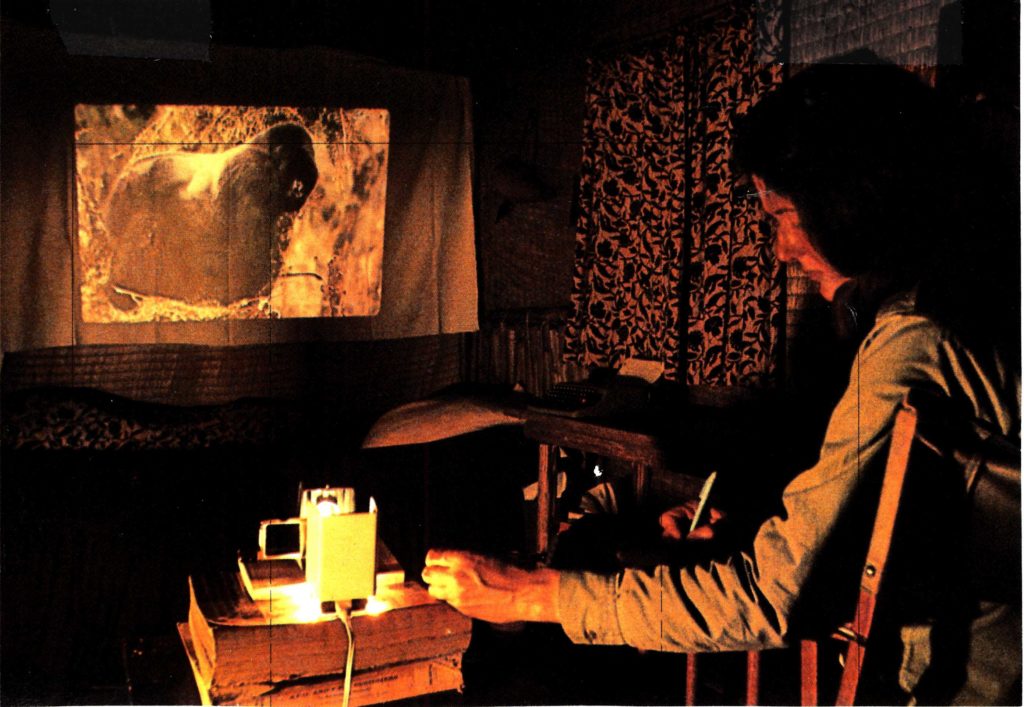
Dian Fossey at her study desk at Karisoke Research Center
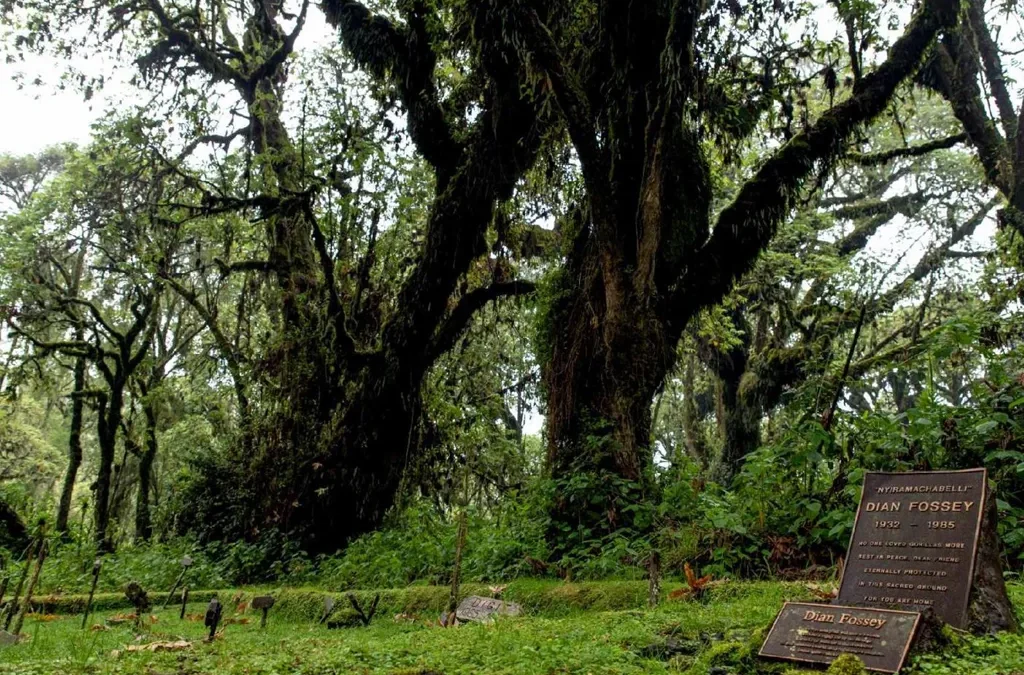
In 1967, after political instability forced her out of a research station in the Congo, the American primatologist Dian Fossey relocated across the border and established the Karisoke Research Centre in the saddle between Mount Bisoke and Mount Karisimbi, at roughly 3,000 meters of elevation. Over eighteen years, Fossey’s daily, patient, non-invasive contact with wild gorilla groups produced the behavioral science and the habituation methodology that underpins every gorilla trek conducted in Rwanda today. Her 1983 book Gorillas in the Mist and the 1988 film adaptation, shot on location in the park, brought the plight of the mountain gorilla to a global audience for the first time. Fossey was killed at her Karisoke cabin on 26 December 1985, in a case that remains formally unsolved; she is buried at the old research site beside Digit, the gorilla whose killing by poachers had hardened her opposition to hunting in the park. The Dian Fossey Gorilla Fund, the organization she founded, continues active conservation and research work in the Virunga Massif today, and a hike to her grave remains one of the park’s most quietly powerful activities.
War, Closure, and a Global Benchmark
The park’s history has been disrupted. In February 1992, amid Rwanda’s civil war, the park headquarters came under attack, two staff members were killed, and the Karisoke Research Centre was evacuated; trekking operations closed for several years through the genocide period that followed in 1994. Reconstruction of the tourism programme in the late 1990s and 2000s, under the direct management of the Rwanda Development Board rather than a co-management model, produced the park’s modern character: fewer daily visitors than Uganda’s Bwindi, a materially higher permit price, and a level of infrastructure investment, from the Kinigi headquarters to the ring of luxury lodges along the park boundary, that no other gorilla trekking destination has matched. Since 2005, the park has hosted Kwita Izina, an annual public naming ceremony for gorilla infants born that year, modelled loosely on Rwanda’s traditional child-naming customs and now one of the country’s signature conservation events, drawing government officials, conservationists, and international visitors to Kinigi each September.
The 24 Gorilla Families and How Trekking Is Organized at Kinigi
Every gorilla trek in Rwanda departs from a single administrative hub: Kinigi Park Headquarters, on the southern edge of the volcanic range. This arrangement is a structural difference worth understanding before you book, because it shapes how far you’ll drive on a trekking morning and what kind of lodge location makes sense.
Kinigi: One Headquarters, Not a Sector System
Uganda’s Bwindi Impenetrable Forest operates through four separate trekking sectors, Buhoma, Ruhija, Rushaga, and Nkuringo, each with its own access road and briefing point, sometimes hours apart by road. Volcanoes National Park works differently: all 24 habituated families are briefed, assigned, and dispatched from the single Kinigi headquarters each morning at 7:00 a.m., and vehicles then transfer each group from Kinigi to the trailhead nearest their assigned family’s overnight location, a drive that typically runs somewhere between fifteen minutes and just over an hour depending on which family you’ve been allocated. This single-hub model is a large part of why lodges clustered around Kinigi, Bisate, Singita Kwitonda, One&Only Gorilla’s Nest, and Sabyinyo Silverback Lodge can all credibly market a short pre-dawn transfer regardless of which gorilla family a given guest ends up trekking.
How Group and Trailhead Assignment Works
Rangers assign each morning’s eight-person groups based on overnight tracker reports on each family’s most recent location and a rough read of each traveler’s stated fitness. Because the total daily capacity across all 23 families is capped at 184 visitors, eight per family, and because each family receives only a single visit per day, permits are genuinely finite and allocated by the Rwanda Development Board on a first-booked basis. For travelers who want to choose their gorilla family in advance rather than accept a morning assignment, exclusive gorilla trekking through the RDB’s private-use permit removes that variable entirely, at a considerably higher price point. A full breakdown of the individual families, their sizes, and their personalities is maintained on our dedicated gorilla families page, useful reading before you request a specific group.
| Metric |
Detail |
| Habituated gorilla families |
23 |
| Daily visitor capacity |
184 (8 per family) |
| Standard permit cost |
USD 1,500 per person |
| Exclusive-use permit cost |
Approximately USD 15,000 per group |
| Briefing location and time |
Kinigi Park Headquarters, 7:00 a.m. |
| Minimum age |
15 years |