6-Day Luxury Rwanda Safari: Akagera Big Five, Mountain Gorillas & Golden Monkeys.

A private 6-day Rwanda safari that pairs Akagera’s Big Five game drives with mountain gorilla and golden monkey trekking in Volcanoes NP.

Rwanda is not one country. It is three: a savannah kingdom of elephant and lion in the east, a chain of cloud-wrapped volcanoes cradling the last mountain gorillas in the north, and a capital of glass and hillside gardens tying them together. This six-day journey, crafted by Rwanda Gorilla Expeditions, is built for travelers who have exactly one week and refuse to spend any of it on compromise, a private, fully guided arc from the plains of Akagera to the bamboo slopes of the Virunga Mountains, with a single gorilla permit and a golden monkey trek held at its heart.

6-Day Luxury Rwanda Safari: Akagera & Gorilla Trekking

Most six-day Rwanda itineraries make a choice: savannah or gorillas, wildlife or primates. This one refuses the trade-off. It is engineered around the country’s geography rather than around a single park, opening on the acacia plains of Akagera National Park, where lion, elephant, rhino, and buffalo now roam a landscape restored almost entirely from scratch, then closing in the volcanic highlands of Volcanoes National Park, where a single hour with a mountain gorilla family reframes what most travelers thought a wildlife encounter could be. In between sits nothing wasted, no filler day, no repeated game drive, and no itinerary padding disguised as culture.

This is the itinerary we build for the traveler who has one week in Rwanda and intends to leave having seen the country properly: the honeymoon couple who wants savannah romance before the intensity of the forest, the seasoned safari-goer who has done the Serengeti and wants something rarer, and the family or small group who wants the Big Five and the great apes without stitching together two separate trips. Every transfer, every lodge, and every permit in this itinerary is sequenced by Rwanda Gorilla Expeditions specifically to protect your time and your comfort because on a week-long luxury safari, the itinerary architecture matters as much as the wildlife itself.

Guests joining this Rwanda safari typically want more structure and comfort than a backpacker circuit but more immersion than a rushed corporate incentive trip. If that describes you, explore our broader Rwanda safari styles to see how this itinerary compares with our other private journeys, or continue reading for the full day-by-day detail below.

6-Day Luxury Rwanda Safari Itinerary at a Glance.

Duration 6 Days / 5 Nights
Starting / Ending Point Kigali International Airport (Kigali, Rwanda)
Parks & Experiences Covered Akagera National Park (Big Five game drives, Lake Ihema boat cruise) and Volcanoes National Park (mountain gorilla trekking, golden monkey trekking)
Number of Gorilla Treks 1 trek, 1 hour with a habituated gorilla family
Group Size Private throughout; gorilla trekking groups are capped by the Rwanda Development Board at 8 guests per family.
Trek Difficulty Moderate, varying by altitude and the gorilla family’s location on the day.
Accommodation Tier Luxury and exclusive-tier lodges throughout.
Best Season June–September and December–February (long and short dry seasons)
Permit Type Included 1 Gorilla Trekking Permit (USD 1,500) and 1 Golden Monkey Permit (USD 100).

Permits are limited — spaces fill months ahead

Reserve Your Private Gorilla Trek

Speak with a Rwanda-based specialist today. We secure permits, match you to the right gorilla family, and plan every detail around your schedule.

No group departures · Private itineraries only · Direct Rwanda expertise

Detailed Itinerary for the 6-Day Luxury Rwanda Safari. (Day by Day)

Day 1: Arrival in Kigali

Your journey begins the moment you step off the aircraft at Kigali International Airport, where a Rwanda Gorilla Expeditions representative will be waiting past immigration, gorilla-branded signage in hand, ready to fold your arrival into the calm efficiency that defines this itinerary from the outset. The drive into central Kigali takes roughly thirty minutes, tracing the terraced hillsides and eucalyptus groves that give the city its unusually green, orderly character among East African capitals.

There is no rush on this first day. Kigali rewards a slow arrival: check into your lodge, shower off the flight, and use the remaining daylight either to rest fully or to take an optional short orientation drive through the city’s hillside neighborhoods, past the roundabouts of glass-fronted towers and the calm, tree-lined diplomatic quarter. Dinner is taken at your accommodation, where the kitchen will typically offer a refined take on East African and continental dishes, a gentle first note in a week built around quality rather than pace.

Logistics note: no early wake-up call is required today. Guests arriving on overnight flights are encouraged to treat this as a true rest day; the safari’s physical demands begin properly on Day 2.

Meals: Dinner

Day 2: Kigali to Akagera National Park (Big Five Game Drive & Boat Cruise)

Depart your lodge after an early breakfast for the roughly two-and-a-half-hour drive east to Akagera National Park, Rwanda’s last remaining savannah wilderness and one of the continent’s genuine conservation turnaround stories. The tarmac gives way gradually to a rolling landscape of terraced hillsides, banana plantations, and small trading towns before the road drops into the acacia woodland and papyrus wetland mosaic that signals the park boundary.

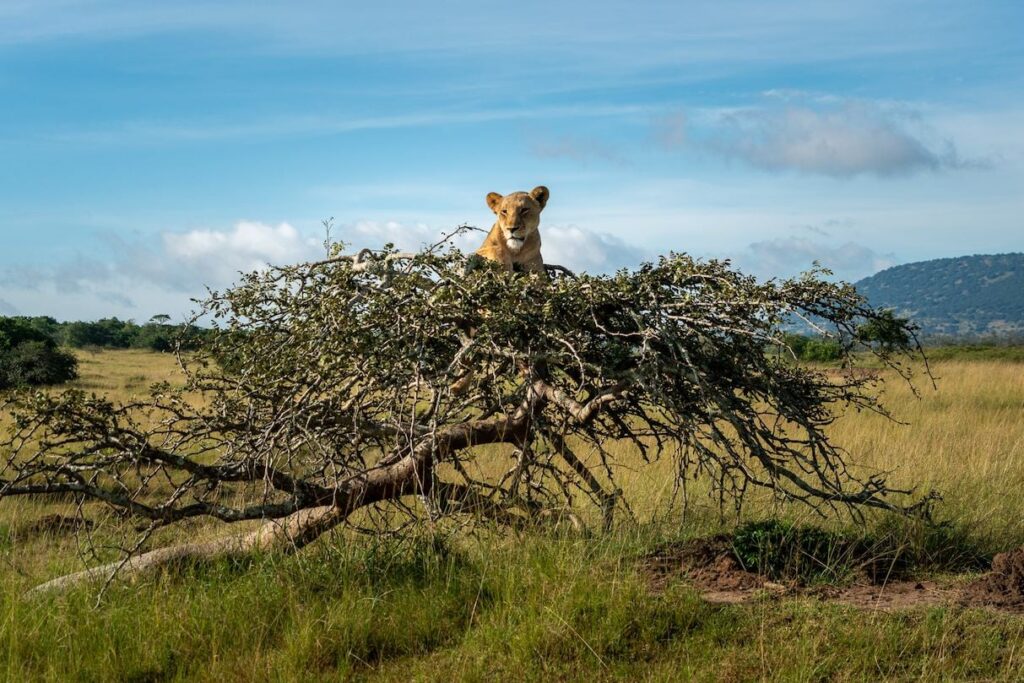
On arrival, settle into your lodge before heading out for an afternoon game drive through Akagera’s savannah and lakeshore habitat. This is a Big Five country in the true sense: elephant and buffalo move through the woodland in loose herds, giraffes browse the acacia canopy, and both black rhino and lion reintroduced to the park in successful, closely monitored programs over the past decade are realistic, if never guaranteed, sightings. Your guide will read the terrain for you, favoring the lakeshore tracks in the cooler hours when game movement peaks.

6-Day Luxury Rwanda Safari: Akagera & Gorilla Trekking

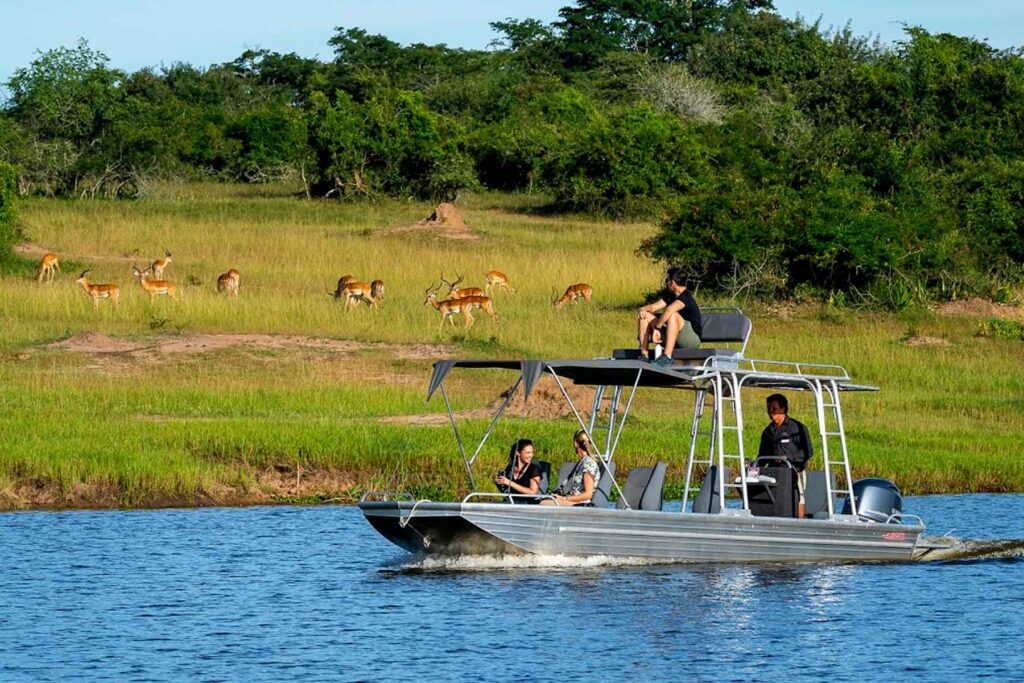
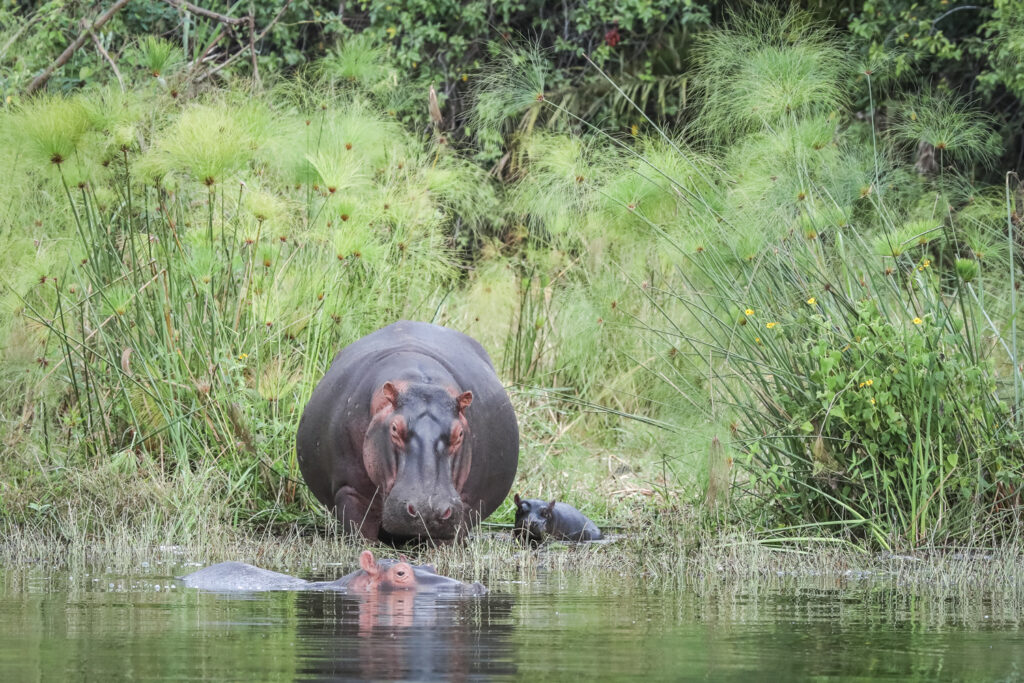
Late afternoon brings a boat cruise on Lake Ihema, the park’s second-largest lake and one of its defining features. From the water, hippo pods surface in loud, rolling groups, the Nile crocodile basks motionless on the mudbanks, and the birdlife accelerates dramatically: fish eagles, herons, and, for the fortunate, the prehistoric silhouette of a shoebill stork stalking the reed beds. It is a gentler, quieter counterpoint to the game drive and one of the most photographed hours of the entire safari.

Return to your lodge for dinner overlooking the lake or savannah, depending on your chosen property. Mornings in Akagera start early to make the most of cooler game-viewing hours, so an early night is recommended.

Meals: Breakfast, Lunch, Dinner

Day 3: Full-Day Akagera Game Drive

Today is dedicated entirely to Akagera, with a full-day game drive running from the park’s southern sector dominated by open savannah and seasonal wetland up toward its wilder northern reaches, where the terrain rises into wooded hills and the sightings shift toward the park’s larger, more elusive residents.

Rwanda Safaris: The Complete Expert Guide (2027)

An early departure, timed to first light, gives you the best chance of catching predators before the heat sets in: lion prides moving back toward cover, or the last hour of nocturnal hunters still active at dawn. As the morning progresses, expect encounters with elephant family groups working through the woodland, journeys of giraffe silhouetted against the escarpment, and substantial herds of buffalo, zebra, topi, and impala grazing the open plains. Akagera’s bird checklist exceeds 500 species, making even the quieter stretches between big-game sightings genuinely rewarding for anyone with an interest in birdlife.

A picnic-style lunch is taken in the field or back at the lodge depending on the day’s game-drive route, allowing flexibility to stay out if the sightings warrant it, one of the quiet advantages of a private, non-shared vehicle. The afternoon light over Akagera’s lakes, particularly around Lake Rwanyakazinga and Lake Mihindi, is some of the most cinematic in the park, and your guide will time the return drive to make use of it before heading back to the lodge for dinner and a full night’s rest ahead of the transfer north.

Meals: Breakfast, Lunch, Dinner

Day 4: Akagera to Volcanoes National Park via Kigali

Depart Akagera after breakfast for the transfer north to Volcanoes National Park, a drive of roughly four to five hours broken naturally by a stop in Kigali for lunch and, for guests who wish it, a visit to the Kigali Genocide Memorial, a sober, essential counterpoint to the wildlife-focused days on either side of it, and one that most returning guests describe as the most quietly powerful stop of the week. This activity is entirely optional and can be adjusted in your final itinerary.

From Kigali, the road climbs steadily north through Rwanda’s densely terraced highlands, the scenery that gives the country its Land of a Thousand Hills epithet, before the profile of the Virunga Mountains rises on the horizon: a chain of eight volcanoes, several still active, straddling the borders of Rwanda, Uganda, and the Democratic Republic of Congo. As you approach Kinigi, the park’s headquarters town, the air noticeably cools and the vegetation shifts from banana plantation to eucalyptus to the dense montane forest that shelters the gorillas above.

Arrival at your lodge in the late afternoon leaves time to unpack properly, absorb the volcanic scenery Bisoke and Karisimbi are often visible from lodge grounds on clear evenings, and rest ahead of tomorrow’s trek. Your lodge team will typically host a short pre-trek briefing over dinner, covering timing, gear, and what to expect, though the official Rwanda Development Board briefing takes place at park headquarters the following morning.

Meals: Breakfast, Lunch, Dinner

Day 5: Mountain Gorilla Trekking & Cultural Village Visit

This is the day the entire itinerary has been building toward. After an early breakfast, transfer to Kinigi Park headquarters for the official Rwanda Development Board briefing. Trackers will report each gorilla family’s overnight location, rangers will assign your group accordingly, and you’ll receive a final rundown of the conservation etiquette that governs every trek in Volcanoes National Park: the seven-meter distancing rule, appropriate behavior around the animals, and the one-hour observation limit that applies once you reach the family.

The trek itself is unlike any other wildlife activity in Africa, precisely because its length cannot be promised in advance. Some gorilla families range close to the park boundary and can be reached in under an hour; others require three to four hours of climbing through bamboo forest and volcanic undergrowth, often on steep, muddy terrain above 2,500 meters. Your guide and porters manage the pace to match your fitness, and the ascent itself is part of the experience, thick bamboo giving way to Hagenia woodland draped in old man’s beard lichen, with golden monkeys occasionally crossing the trail overhead.

Volcanoes National Park Rwanda: Gorilla Trekking Guide 2027

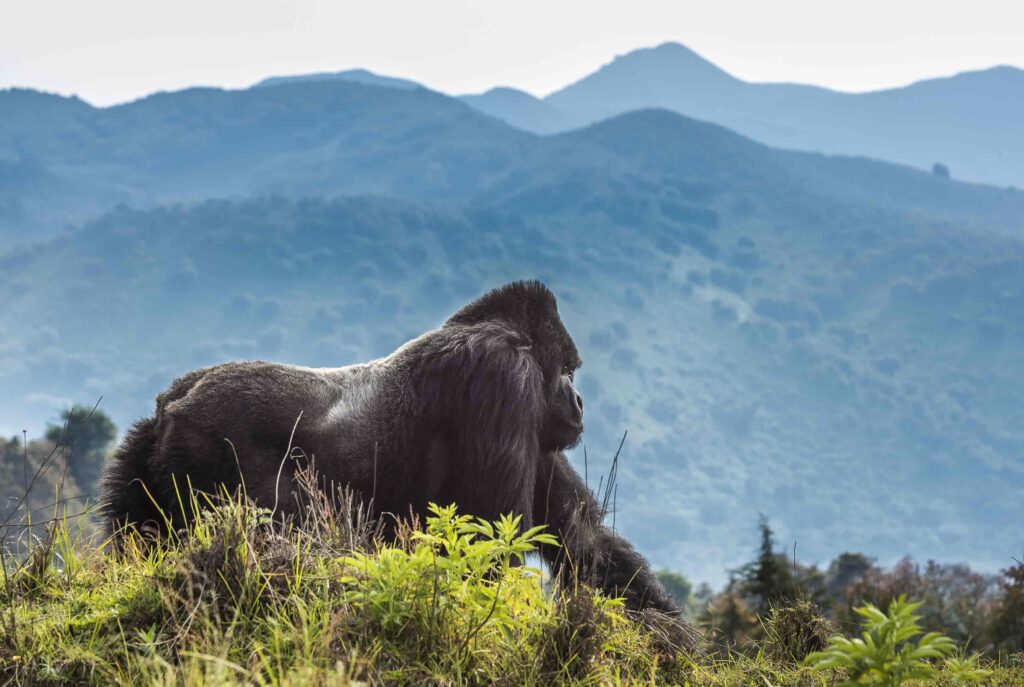
Then, without ceremony, the forest simply opens, and the family is there: a silverback the size of a doorway, blackbacks watching from the undergrowth, juveniles tumbling through the vegetation, infants clinging to their mothers. The hour that follows moves at its own pace; the gorillas largely ignore your presence, going about feeding, resting, and interacting exactly as they would without you there, and it is this unstaged quality, more than the animal’s scale, that tends to leave the deepest impression. Photography is encouraged, but flash is strictly prohibited.

Descend to the trailhead for a well-earned lunch back at the lodge, then spend the afternoon at the Iby’iwacu Cultural Village near the park boundary, where a former poachers’ community now shares traditional dance, brewing demonstrations, and storytelling as part of Rwanda’s broader model of linking conservation revenue to local livelihoods. It is a meaningful, unhurried close to the most significant day of the trip, and dinner back at the lodge that evening tends to run long with shared trek stories.

Expect an early wake-up call (typically 5:30–6:00 AM), waterproof hiking boots and rain gear are essential regardless of season, and porter hire is strongly recommended for the ascent.

Meals: Breakfast, Lunch, Dinner

Day 6: Golden Monkey Trek & Departure

Your final morning brings a markedly gentler counterpoint to the previous day’s climb: the golden monkey trek. After breakfast, transfer back to park headquarters for a shorter briefing before heading into the bamboo forest zone that the endangered, endemic Albertine Rift species calls home.

4-Day Exclusive Rwanda Gorilla & Golden Monkey Safari

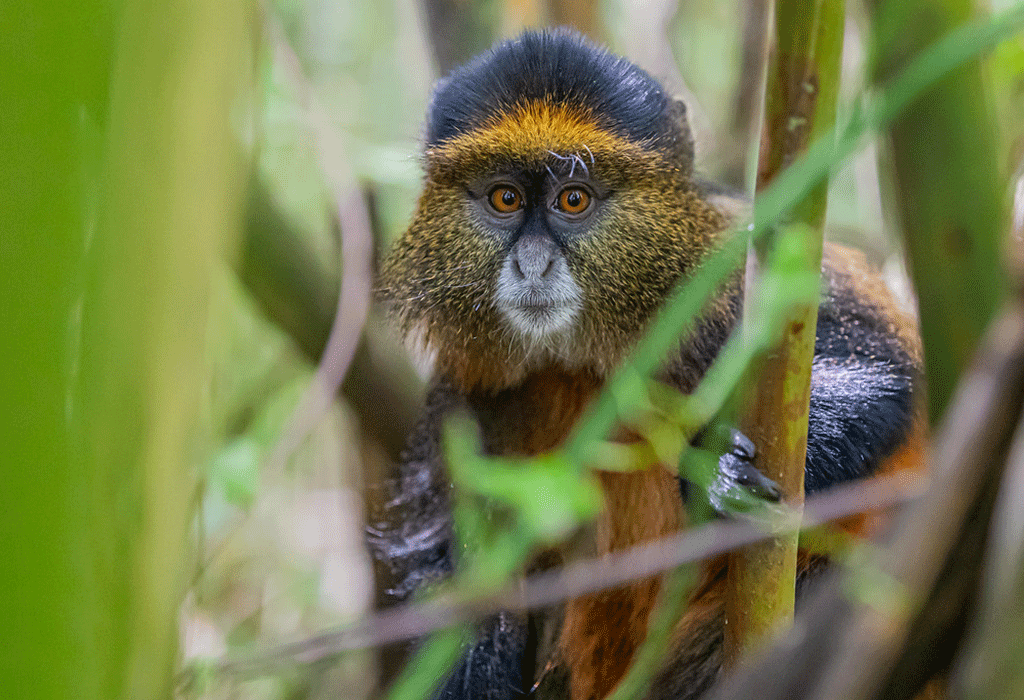
Golden monkeys move in far larger, noisier troops than gorillas, often eighty animals or more, and their energy is correspondingly different: acrobatic, fast-moving, and constantly vocal as they strip young bamboo shoots overhead. The terrain is gentler and the trek shorter than gorilla trekking, typically wrapping up within two to three hours round trip, which makes it a comfortable, high-reward final activity before a travel day.

Return to the lodge for a final hot lunch, then transfer south to Kigali International Airport for your onward or homeward flight, roughly a two-and-a-half to three-hour drive depending on traffic through the capital. Guests on later evening flights are welcome to arrange a day-use room or a final Kigali coffee stop en route. Your Rwanda Gorilla Expeditions guide will confirm timing based on your specific departure.

Meals: Breakfast, Lunch

Plan Your Rwanda Safari

Start Planning a Private Gorilla Trek

Rwanda gorilla permits sell out months in advance. Secure your dates before the season closes.

Gorilla Families & Trekking Difficulty

Unlike almost every other wildlife activity sold as a fixed-difficulty product, gorilla trekking cannot honestly be graded in advance, and any operator who tells you otherwise is guessing. Each morning, trackers who have followed the habituated gorilla families since before dawn report their overnight location to Rwanda Development Board rangers at Kinigi headquarters, and group assignments are made on the spot based on that location, on group fitness levels declared at check-in, and on ranger discretion. A family that took ninety minutes to reach on Monday may take four hours on Wednesday.

What we can promise is that assignment works in your favor: guests who disclose lower fitness levels, mobility concerns, or a strong preference for a shorter trek are typically matched with closer-ranging families, while more experienced hikers are often assigned to the more remote groups partly because trekking pressure is deliberately spread across all habituated families to protect them from overexposure. Porters, available for hire at the trailhead, are worth every dollar regardless of fitness level; they are drawn from the local community, and their fee is a direct, meaningful contribution to households living around the park.

Accommodation & Lodges

This itinerary is built exclusively around luxury and exclusive-tier properties, chosen for their proximity to the park entrances, their design sensibility, and just as importantly, their kitchens and service standards after a physically demanding day in the field.
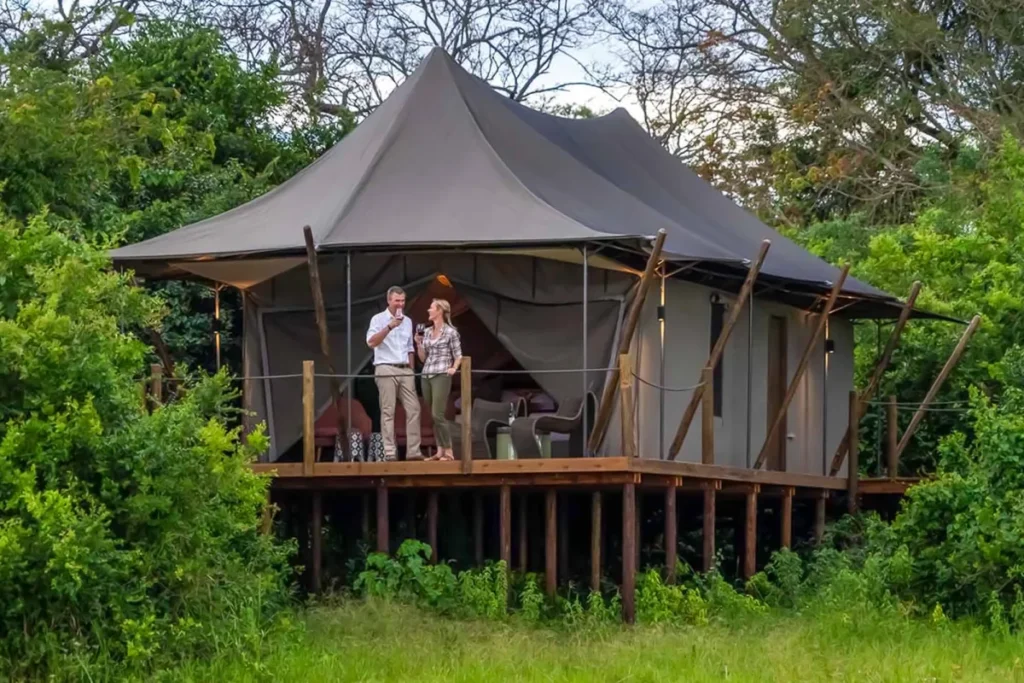
Family Rwanda Safari Style

In Akagera, guests typically stay at properties positioned along the lakeshore or on elevated bush sites overlooking the savannah, where tented-luxury design lets the park’s soundscape, hippo calls, birdsong, and the occasional distant lion carry into the room itself. Wilderness Magashi Camp on the shore of Lake Rwanyakazinga is our benchmark reference for this leg: intimate, six-tent, unfenced, and built specifically around Akagera’s Big Five resurgence.

In Volcanoes National Park, the lodge landscape has become one of the most architecturally ambitious in African luxury travel. Bisate Lodge sits inside a reforested volcanic crater with six forest-villa suites and views directly onto Bisoke and Karisimbi; Singita Kwitonda Lodge occupies land contributed to the park’s buffer zone as part of its conservation model; One&Only Gorilla’s Nest offers the closest proximity to Kinigi headquarters with a spa built for post-trek recovery; and Wilderness Sabyinyo Silverback Lodge remains a longstanding favorite for its stone cottages and volcano-facing terraces. Your final selection depends on your preferred balance of design style, trailhead proximity, and rate, and we will talk you through the trade-offs during planning rather than defaulting to a single property.

Wildlife & Nature to Expect

Beyond the two headline primate encounters, this itinerary delivers a genuinely wide cross-section of East African nature. Akagera contributes elephant, buffalo, giraffe, zebra, topi, and eland herds; reintroduced lion and black rhino; substantial hippo and Nile crocodile populations around its lake system; and a bird list that rewards even a casual glance with fish eagles, herons, and with some luck the shoebill stork.
Rwanda Safaris: The Complete Expert Guide (2027)

Volcanoes National Park shifts the register entirely: montane bamboo forest and Hagenia woodland climbing toward Bisoke and Karisimbi, golden monkey troops moving through the bamboo canopy, forest birdlife including several Albertine Rift endemics, and the volcanic scenery itself, including views over the twin crater lakes of Burera and Ruhondo from several lodge vantage points that frame the entire second half of the trip.

Physical Difficulty & Fitness Requirements

Akagera’s game drives and boat cruise require no particular fitness beyond comfort with several hours in a safari vehicle on unpaved roads; this leg of the trip is accessible to nearly all travelers regardless of age or mobility.

Gorilla trekking is the itinerary’s genuine physical test. Treks begin at altitudes of roughly 2,500–3,000 meters and above, on volcanic terrain that is frequently steep, uneven, and muddy regardless of season, through dense bamboo and nettle-lined undergrowth. Trek duration is unpredictable and can run from under an hour to over four hours each way. A moderate baseline fitness and the ability to hike continuously on uneven ground at altitude are recommended, and hiking poles are strongly advised. As covered above, fitness disclosure at check-in genuinely affects your group assignment, so travelers with joint issues, cardiovascular concerns, or limited hiking experience should say so plainly; porters and ranger pacing can accommodate a wide range of ability levels. The golden monkey trek on Day 6 is considerably gentler and suitable for most fitness levels.

Best Time to Go

Rwanda’s two dry seasons, June through September and December through February, offer the firmest underfoot conditions for gorilla trekking and the clearest long-distance game-viewing sightlines in Akagera and are consequently this itinerary’s recommended windows. June through September in particular aligns with Rwanda’s high season, so gorilla permits for this period should be secured as far in advance as possible, ideally six to twelve months ahead.

Best time for gorilla trekking.

The wetter months (March–May and October–November) bring lower visitor numbers and lush, dramatic scenery in both parks, at the cost of muddier, more physically demanding gorilla trekking conditions and reduced overland visibility in parts of Akagera. Travelers with flexible dates who prioritize a quieter, more exclusive-feeling trip over guaranteed dry footing often prefer these shoulder months.

What’s Included / What’s Not Included

Included

  • Private ground transportation throughout in a 4×4 safari vehicle with an English-speaking driver-guide
  • 5 nights’ luxury accommodation as detailed in the itinerary, on a full-board basis where specified
  • 1 Gorilla Trekking Permit (USD 1,500), coordinated and confirmed in advance
  • 1 Golden Monkey Trekking Permit (USD 100)
  • Akagera National Park entrance fees, game drives, and the Lake Ihema boat cruise
  • Airport transfers to and from Kigali International Airport
  • Bottled mineral water in-vehicle throughout
  • Iby’iwacu Cultural Village visit

Not Included

  • International and domestic flights
  • Rwanda entry visa
  • Alcoholic beverages and items of a personal nature
  • Porter fees during gorilla and golden monkey trekking (recommended, paid locally)
  • Gratuities for guides, trackers, and lodge staff
  • Travel and medical evacuation insurance
  • Optional activities not listed in the itinerary

Gorilla Permits, Park Fees & Costs

Transparency on cost is a deliberate part of how we work. A standard gorilla trekking permit in Rwanda costs USD 1,500 per person, issued directly by the Rwanda Development Board and included in full in this itinerary’s price. The golden monkey permit is a separate USD 100 per person and is likewise included.

For travelers who want to go further, an exclusive gorilla permit granting a private group full-day access to a habituated family is available at a significantly higher cost and can be substituted into this itinerary on request; details are covered on our exclusive gorilla trekking page. Because standard permits are capped daily and frequently sell out months ahead of the June–September and December–February peak windows, we recommend confirming dates and securing your permit at least six months in advance for peak season and three to four months ahead for shoulder-season travel.

Packing & Gear List
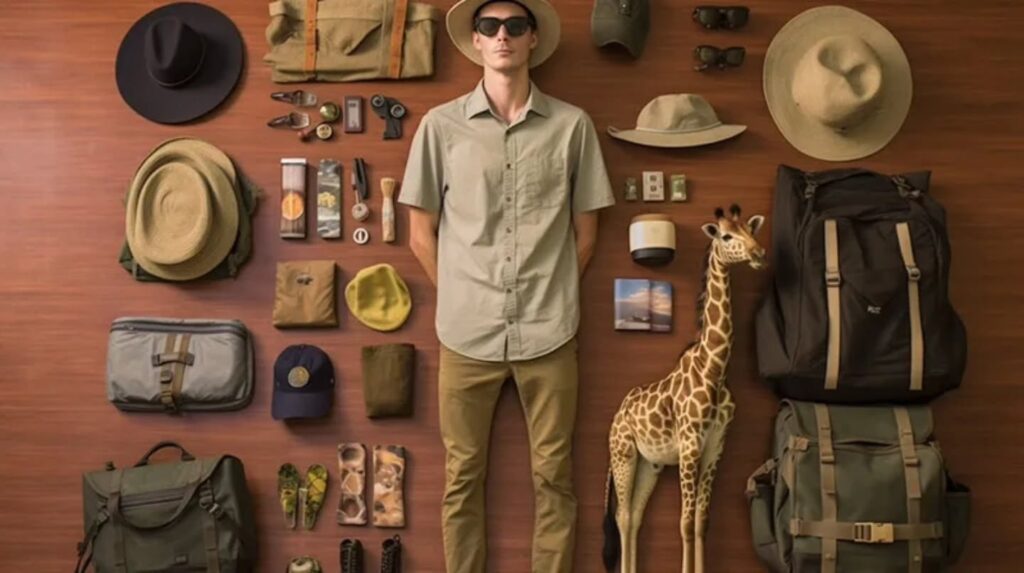
What to Pack and Wear for a Ngorongoro Crater Safari

  • Waterproof, ankle-supporting hiking boots, broken in before travel
  • Gardening-style gloves for gripping vegetation on steep sections
  • Long-sleeved shirts and trousers in neutral tones, for protection against stinging nettles and biting ants
  • A packable waterproof rain jacket, useful in any season
  • Layered clothing for temperature swings between savannah heat and volcanic-altitude cold
  • A daypack with a rain cover, water, and snacks for trek days
  • Binoculars for Akagera game drives and forest birdlife
  • A camera with a versatile zoom lens; flash photography is prohibited near gorillas
  • Insect repellent and high-SPF sunscreen
  • A modest cash reserve in USD for porter fees and gratuities

Getting There

All international arrivals land at Kigali International Airport (KGL), served by direct or one-stop connections from most major European, Middle Eastern, and African hubs. A Rwanda Gorilla Expeditions guide meets every guest inside the arrivals hall for the private transfer into Kigali, roughly thirty minutes from the airport.

From Kigali, Volcanoes National Park lies roughly two to three hours north by private vehicle, and Akagera National Park roughly two to two-and-a-half hours east; both transfers are fully included in this itinerary, in the private 4×4 vehicle assigned to your group for the duration of the trip.

Plan Your Rwanda Safari

Start Planning a Private Gorilla Trek

Rwanda gorilla permits sell out months in advance. Secure your dates before the season closes.

Frequently Asked Questions about the 6-Day Luxury Rwanda Safari.

How much does gorilla trekking cost in Rwanda?

A standard gorilla trekking permit in Rwanda costs USD 1,500 per person, issued by the Rwanda Development Board and covering one hour of observation with a habituated gorilla family. This fee funds park protection, ranger salaries, and community conservation programs and is included in full in this six-day itinerary.

Is a 6-day Rwanda safari combining Akagera and gorilla trekking worth it?

For travelers with roughly a week available, combining Akagera’s Big Five savannah with gorilla trekking in Volcanoes National Park delivers two distinct ecosystems and wildlife experiences in a single trip, without the added flight time and cost of extending into Uganda or Tanzania for similar variety. It suits travelers who want breadth as well as the marquee gorilla encounter.

How difficult is gorilla trekking in Rwanda?

Difficulty varies daily and cannot be predicted in advance, since it depends on where the assigned gorilla family is ranging that morning. Treks can take anywhere from under an hour to over four hours each way, over steep, muddy, high-altitude terrain above 2,500 meters. Fitness disclosure at the pre-trek briefing helps rangers assign a more accessible family to less experienced hikers.

What is the best time of year for this itinerary?

June through September and December through February are Rwanda’s two dry seasons, offering firmer trekking conditions and clearer game-viewing sightlines, and are the recommended windows for this itinerary. These months also coincide with peak demand, so permits should be booked well in advance.

Can I see the Big Five in Rwanda?

Yes. Akagera National Park has successfully reintroduced lion and black rhino alongside its existing elephant, buffalo, and leopard populations, making Rwanda one of the few countries where travelers can realistically combine Big Five game viewing with mountain gorilla trekking on a single trip.

How fit do I need to be for this trip?

Akagera’s game drives and boat cruise require no particular fitness. Gorilla trekking is more demanding and benefits from a moderate baseline fitness level, since it involves sustained hiking at altitude on uneven terrain. Porters and ranger pacing can accommodate a wide range of ability levels, and disclosing your fitness honestly at check-in leads to a better-matched trek.

What is included in the gorilla permit fee?

The USD 1,500 gorilla permit covers park entry for the trekking day, the services of trained rangers and trackers, and one hour of observation time once your group reaches the assigned gorilla family. It does not cover porter fees, which are paid separately and directly support the local community.

How far in advance should I book gorilla permits?

For travel during the June–September or December–February peak seasons, we recommend securing permits at least six months in advance, since the Rwanda Development Board issues a strictly limited daily allocation that regularly sells out. Shoulder-season travel allows more flexibility, though three to four months’ notice is still advisable.

What is the difference between gorilla trekking in Rwanda and Uganda?

Rwanda’s gorilla permits cost more than Uganda’s but come with shorter transfer times from the capital, generally better road infrastructure, and a more concentrated luxury lodge scene around Volcanoes National Park. A detailed side-by-side comparison is available on our Rwanda vs Uganda gorilla trekking guide.

What should I pack for gorilla trekking?

Waterproof hiking boots, gardening-style gloves, long sleeves and trousers, a rain jacket, and layered clothing for altitude swings are essential regardless of season. A full packing list is detailed above.

Will I definitely see the gorillas?

Sightings are extremely reliable, since trackers locate each habituated family before guests set out each morning, but they are not contractually guaranteed, as gorillas are wild animals. If a family cannot be located, the Rwanda Development Board typically offers a repeat trek.

What is a golden monkey trek and how is it different from gorilla trekking?

Golden monkey trekking follows large, fast-moving troops of this endangered, Albertine Rift-endemic primate through the bamboo forest zone of Volcanoes National Park. It is shorter and physically easier than gorilla trekking, typically taking two to three hours round trip and costing a separate USD 100 permit.

Can this itinerary be extended to include Nyungwe chimpanzee trekking?

Yes. Travelers with additional days available frequently extend this route to include chimpanzee trekking in Nyungwe Forest National Park; our Luxury Rwandan Primate Safari itinerary is built around exactly this combination.

Are children permitted on this safari?

Akagera’s game drives and boat cruise are suitable for most ages, but Rwanda Development Board regulations require gorilla trekkers to be at least 15 years old, so this itinerary as structured suits families with teenagers rather than young children.

What currency and payment methods are used in Rwanda?

The Rwandan franc is the local currency, though USD is widely accepted for permits, lodges, and larger purchases. We recommend carrying a modest reserve of small-denomination USD for porter fees and gratuities, since ATM access is limited outside Kigali.

Is this itinerary suitable for solo travelers or only couples and groups?

This itinerary is run as a private, guided journey and works equally well for solo travelers, couples, and small groups, since the vehicle, guide, and pacing are dedicated to your party regardless of size.

Plan Your Rwanda Safari

Start Planning a Private Gorilla Trek

Rwanda gorilla permits sell out months in advance. Secure your dates before the season closes.

Ready to Plan Your 6-Day Rwanda Safari?

Gorilla and golden monkey permits for this itinerary are issued in strictly limited daily numbers, and peak-season dates move quickly. The Rwanda Gorilla Expeditions team handles every detail, permit confirmation, lodge selection, and the full ground logistics between Akagera and Volcanoes National Park, so your only decision is when to travel.

Reach out via WhatsApp or email, check current permit availability and begin planning your dates, or browse our other gorilla trekking itineraries and safari experiences, including our Best of Rwanda’s National Parks and 5-day Gorilla & Golden Monkey Discovery Safari, if you’d like to compare formats before booking. For travelers with less time available, our short Rwanda gorilla trekking safaris and our Travel guide are useful starting points as well.