Virunga Mountains: Rwanda, Uganda, and Congo’s Gorilla Trekking Volcanoes

The Virunga Mountains are an 8-volcano chain across Rwanda, Uganda & DR Congo, home to mountain gorillas. Compare countries & costs to plan your trek.

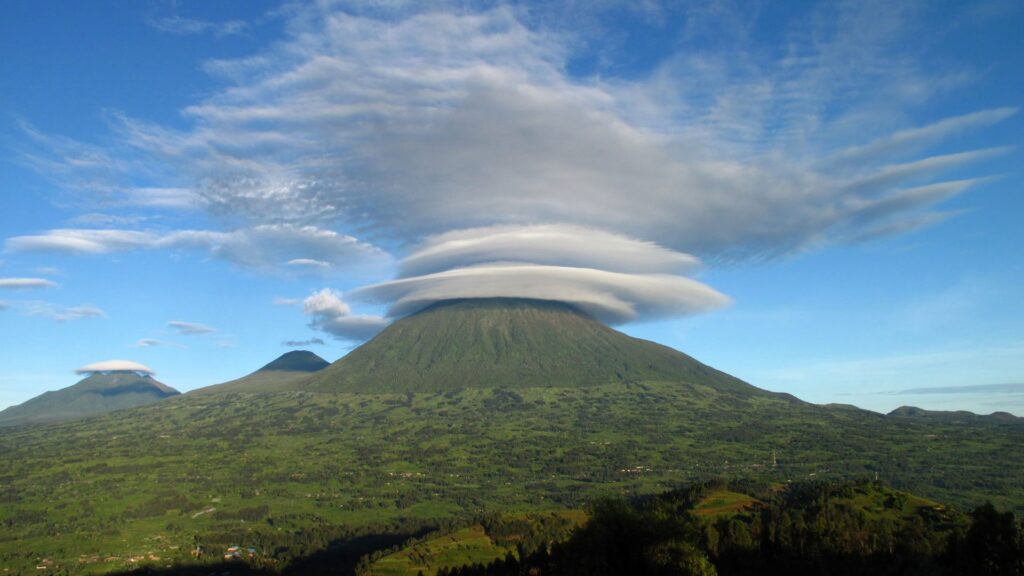
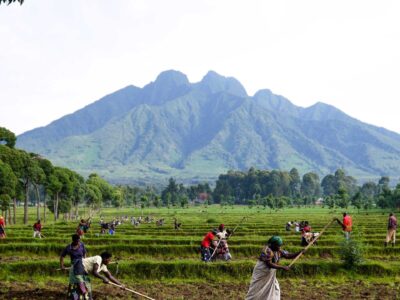
The Virunga Mountains are a chain of eight volcanoes straddling the borders of Rwanda, Uganda, and the Democratic Republic of Congo, and they are the primary home of the world’s roughly 1,000 remaining mountain gorillas. Mount Karisimbi, the range’s highest peak at 4,507 meters, anchors a massif protected by three separate national parks: Volcanoes National Park in Rwanda, Mgahinga Gorilla National Park in Uganda, and Virunga National Park in the Democratic Republic of Congo.

Virunga Mountains: Gorilla Trekking & Volcano Hikes Guide

For a first-time traveller deciding where to trek, the Virunga Mountains, not Uganda’s separate Bwindi Impenetrable Forest, are the massif most people picture when they imagine gorilla trekking, and Rwanda’s side of it is by far the most consistently accessible and best-equipped for luxury travel. Beyond gorillas, the range offers some of East Africa’s most rewarding volcano hikes, including the day hike up Bisoke to its crater lake and the two-day climb to Karisimbi’s summit. This guide covers which side of the Virunga Mountains to choose, what gorilla trekking and volcano climbing actually involve, current access realities on the DRC side, where to stay, and how to combine the mountains with the rest of a Rwanda safari.

Permits are limited — spaces fill months ahead

Reserve Your Private Gorilla Trek

Speak with a Rwanda-based specialist today. We secure permits, match you to the right gorilla family, and plan every detail around your schedule.

No group departures · Private itineraries only · Direct Rwanda expertise

What Are the Virunga Mountains? Geography, Volcanoes, and National Parks

The Virunga Mountains are a volcanic mountain range roughly 80 kilometers long, part of the Albertine Rift branch of the East African Rift, sitting between Lake Kivu and Lake Edward at the meeting point of Rwanda, Uganda, and the Democratic Republic of Congo. The name comes from the Kinyarwanda word “ibirunga,” meaning “volcanoes,” and the range is known in Uganda by its older name, Mufumbiro. Most of the eight volcanoes are extinct or dormant; only two, Nyiragongo and Nyamuragira, both entirely inside the DRC, remain regularly active, with Nyiragongo notably holding one of the largest lava lakes on Earth.

The Eight Volcanoes

Mount Sabyinyo, whose jagged, weathered summit is the oldest formation in the range, sits at the exact tripoint where Rwanda, Uganda, and the DRC meet the only place on the continent where a single hike can put you in three countries within a few hundred meters. Mount Karisimbi is both the tallest peak in the Virungas and the highest point in Rwanda, its upper slopes cold enough to occasionally see frost even at this latitude close to the equator.

Volcano Height Status Country/Border
Karisimbi 4,507 m Dormant (last erupted c. 8050 BCE) Rwanda–DRC border
Nyiragongo 3,470 m Active; lava lake DR Congo
Muhabura 4,127 m Inactive Rwanda–Uganda border
Mikeno 4,437 m Extinct DR Congo
Bisoke (Visoke) 3,711 m Dormant (last erupted 1957) Rwanda–DRC border
Sabyinyo 3,669 m Extinct; oldest in the range Rwanda – Uganda – DRC tripoint
Gahinga 3,474 m Extinct Rwanda–Uganda border
Nyamuragira 3,058 m Africa’s most active volcano DR Congo

Three Countries, Three National Parks

Each country protects its own sector of the massif under a different name and management authority. Rwanda’s Volcanoes National Park covers 160 square kilometers of the range’s southeastern slopes, including Karisimbi, Bisoke, Muhabura, Gahinga, and Sabyinyo, and is the sector this article focuses on. Uganda’s Mgahinga Gorilla National Park, the smallest of Uganda’s parks at roughly 34 square kilometers, covers the northern slopes of Muhabura, Gahinga, and Sabyinyo. The Democratic Republic of Congo’s Virunga National Park is by far the largest of the three, Africa’s oldest national park, established in 1925, and the only sector containing the range’s two active volcanoes, Nyiragongo and Nyamuragira, along with Mount Mikeno. All three parks are contiguous and, in principle, form a single transboundary protected ecosystem, though political and security realities mean the three sides currently operate as three separate tourism experiences rather than one seamless park.

Gorilla Trekking in the Virunga Mountains: Choosing Your Country

All three Virunga countries offer mountain gorilla trekking, but they are not interchangeable options, and the differences in cost, access, and reliability matter more than most first-time researchers expect.

Rwanda: Volcanoes National Park
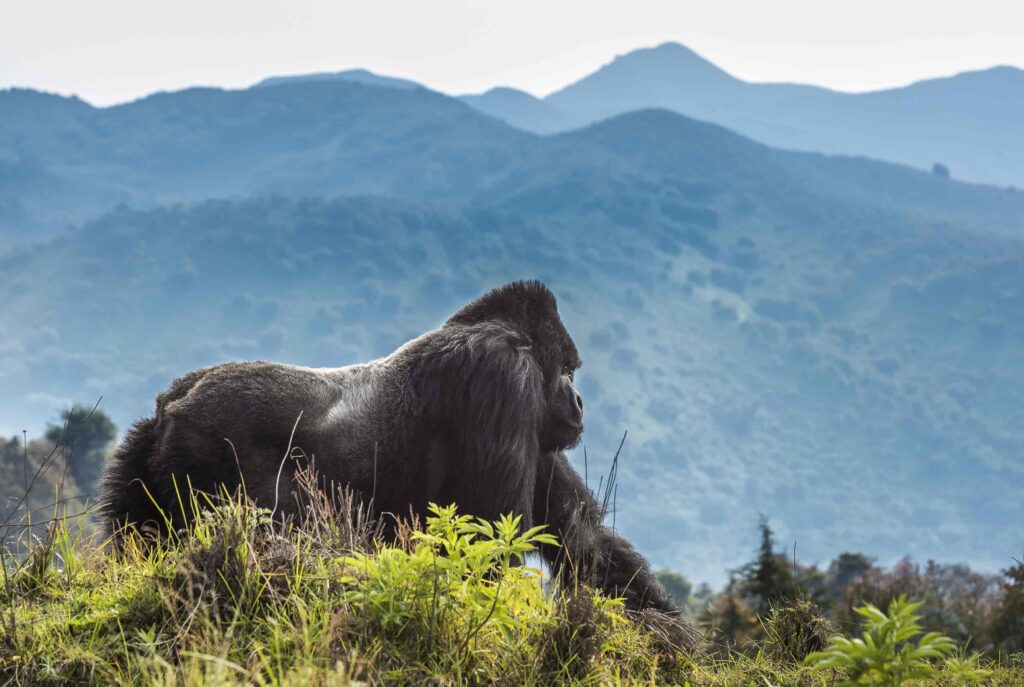
Volcanoes National Park Rwanda: Gorilla Trekking Guide 2027

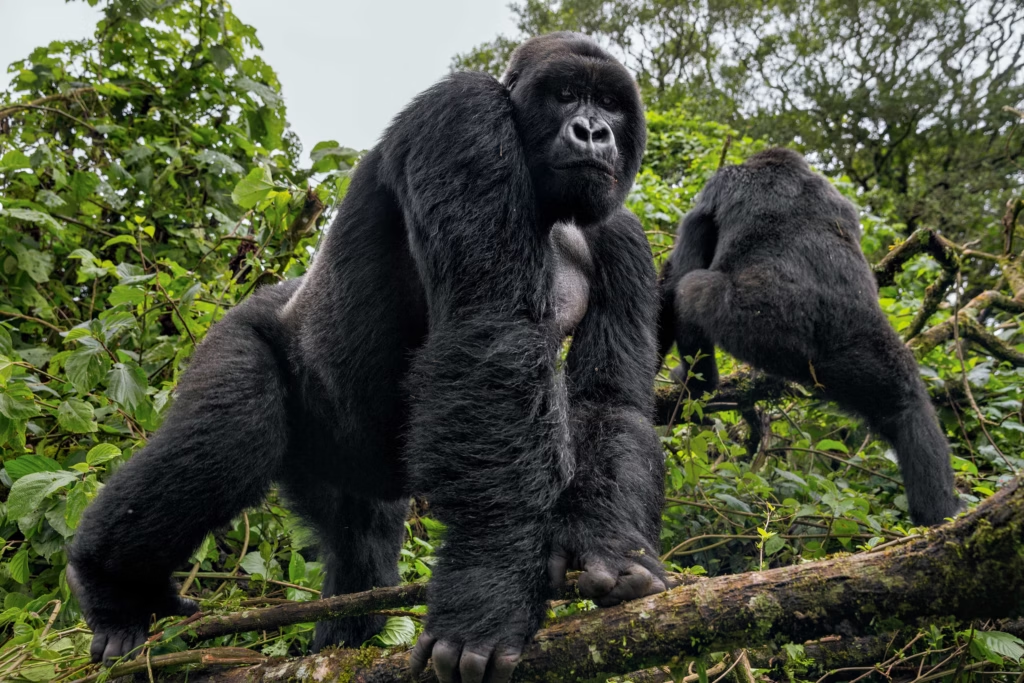
Rwanda’s side of the Virungas holds 24 habituated gorilla families, the largest number of trekking-accessible groups anywhere in the world, supported by a mature network of luxury lodges and a permit system priced at USD 1,500 per person specifically to keep visitor numbers controlled. For the international traveller this guide is written for, Rwanda is, in practical terms, the default choice: the shortest, most reliable transfer from an international airport, the deepest bench of five-star accommodation, and zero exposure to the access uncertainty that affects the Congolese side. Our gorilla trekking guide covers full details on permits, trekking difficulty, and what a trekking day actually involves, including information about the gorilla families of Volcanoes National Park.

Uganda: Mgahinga Gorilla National Park

Mgahinga is genuinely part of the Virunga massif, but it is a minor gorilla trekking destination within Uganda, home to only one regularly monitored family, the Nyakagezi group, which sometimes ranges across the border into Rwanda or the DRC entirely, meaning a permit here does not guarantee a sighting on any given day. The vast majority of Uganda’s gorilla trekking, and the reason Uganda holds its permit price of USD 800, actually happens in Bwindi Impenetrable Forest, a separate forest ecosystem roughly two hours south of the Virungas that is not, geologically or geographically, part of this mountain range at all. Travellers researching “gorilla trekking in Uganda” usually find themselves directed toward Bwindi, not Mgahinga. See our full Rwanda vs. Uganda gorilla trekking comparison for the complete picture.

DR Congo: Virunga National Park
Virunga National Park

The Congolese side of the Virungas holds a substantial share of the world’s mountain gorillas, alongside the singular experience of climbing to the edge of Nyiragongo’s active lava lake, and has historically been priced as low as USD 400 per gorilla permit, the cheapest of the three countries. The honest caveat that matters more than the price is access: eastern DRC’s security situation has repeatedly forced Virunga National Park to suspend tourism, sometimes for months, sometimes for years at a stretch, following incidents involving armed groups operating in North Kivu province. At the time of writing, Virunga National Park permits remain suspended due to ongoing regional security restrictions, and this status can change with little notice in either direction. We do not include DRC trekking as a default recommendation in any itinerary until our team has confirmed the current, on-the-ground status directly, and we advise every traveller considering it to do the same rather than relying on a published tour listing.

Plan Your Rwanda Safari

Start Planning a Private Gorilla Trek

Rwanda gorilla permits sell out months in advance. Secure your dates before the season closes.

Gorilla Trekking by Country: A Quick Comparison

Country Park (in the Virungas) Permit Cost Access Today
Rwanda Volcanoes National Park USD 1,500 Fully open. 24 habituated families, deep luxury lodge network
Uganda Mgahinga Gorilla NP USD 800 Open only 1 regularly trekked family; most Uganda trekking is at Bwindi instead
DR Congo Virunga National Park ~USD 400 (historical) Currently suspended, confirm live status before booking

Climbing the Virunga Volcanoes: Bisoke, Karisimbi, Muhabura, and More

Volcano climbing is the part of a Virunga Mountains trip most first-time gorilla trekkers don’t know is available, and it is genuinely one of the range’s best-kept secrets: distinct permits, separate from gorilla trekking, that let you summit the same peaks the gorillas live on.

Mount Bisoke: The Accessible Summit

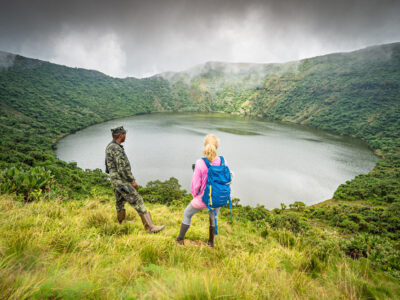
Bisoke is the volcano climb most travellers actually do, a demanding but achievable single-day hike of roughly six to seven hours round trip, rewarded with a crater lake at the 3,711-metre summit that fills much of the caldera. Cloud tends to roll in by mid-to-late morning, so an early departure gives the best chance of a clear view from the top rather than a wall of mist.

Mount Karisimbi: The Two-Day Summit

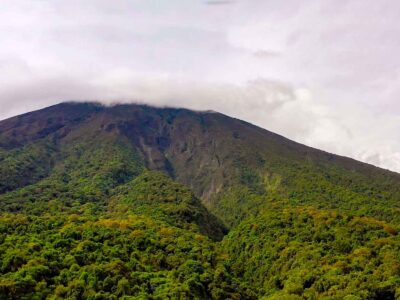
Karisimbi is a different proposition entirely: a two-day, one-night expedition to the Virungas’ highest point at 4,507 metres, with porters carrying camping equipment to an overnight site near 3,700 metres before a pre-dawn push to the summit for sunrise. Nights at camp regularly drop close to or below freezing even during Rwanda’s dry season, a detail most tour listings underplay far more than they underplay the physical difficulty of the climb itself.

Muhabura and Sabyinyo: The Harder Options

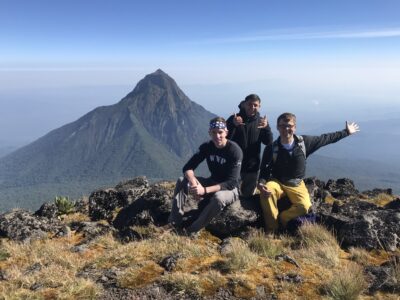
Muhabura, at 4,127 metres, is a steep single-day return hike of eight to nine hours, less frequently climbed than Bisoke and correspondingly quieter. Sabyinyo’s summit hike is the range’s most technical, involving metal ladders and rope-assisted scrambling on the exposed upper ridge, and its reward is unique: the summit sits directly on the point where Rwanda, Uganda, and the DRC meet, the only tripoint hike of its kind in Africa. Availability varies by season and trail conditions, so confirm with your operator whether it is being offered on your travel dates rather than assuming it is a standing option.

Virunga Volcano Hikes at a Glance

Mount Bisoke Hike

Mount Bisoke (3,711 m)

Single day, 6–7 hour round trip
Moderate to Strenuous
Crater Lake Summit
Permit from around USD 75

Mount Karisimbi

Mount Karisimbi (4,507 m)

2 days, 1 night
Strenuous, cold-weather camping
Highest point in the Virungas
Permit from around USD 400

Mount Muhabura

Mount Muhabura (4,127 m)

Single day, 8–9 hour round trip
Strenuous
Quieter trail
Permit from around USD 75

Mount Sabyinyo

Mount Sabyinyo (3,669 m)

Single day
Strenuous, technical scrambling near the summit
Three-country tripoint view
Permit from around USD 75

Beyond Gorillas: Golden Monkeys, Dian Fossey, and Local Culture

The Virunga Mountains reward travellers who give them more than a single trekking day, and three experiences beyond the standard gorilla trek consistently rank among visitors’ favourite parts of a Rwanda itinerary.

Golden Monkey Trekking

The golden monkey, a vividly colored primate found only in the Virunga Massif and Uganda’s neighboring forests, moves through the bamboo zone in large, acrobatic troops that make for an energetic, easygoing contrast to the quieter gravitas of a gorilla encounter. At USD 100 per permit, it is inexpensive relative to gorilla trekking and easily combined into a two-activity day on shorter itineraries.

Dian Fossey’s Karisoke and the Grave Hike

Dian Fossey Tomb Hike

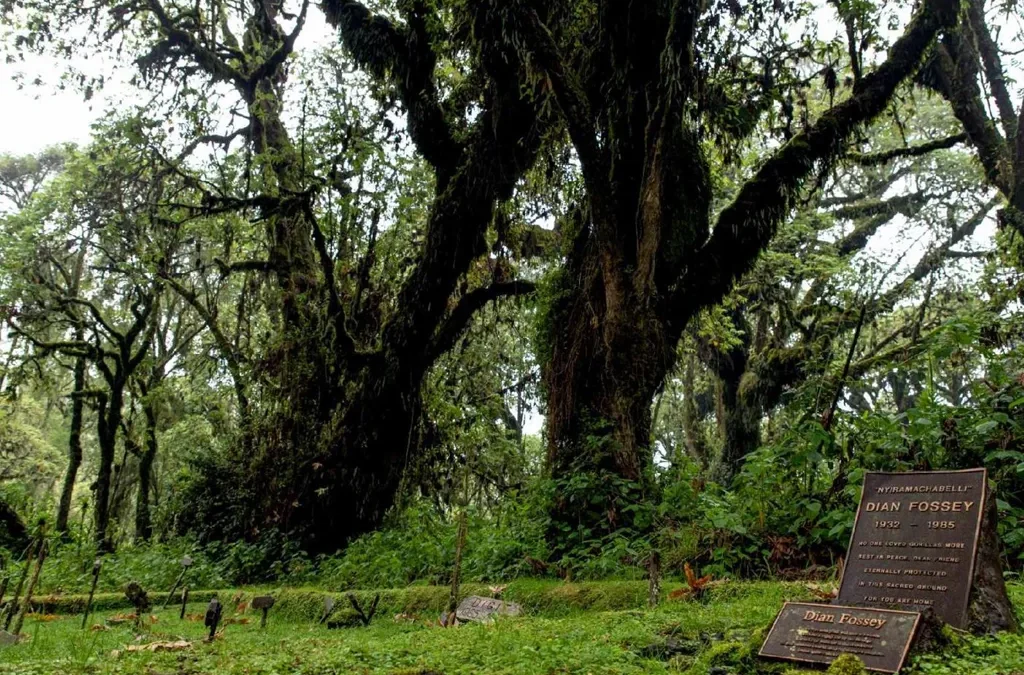
American primatologist Dian Fossey founded the Karisoke Research Centre in these mountains in September 1967, beginning the patient, multi-year habituation process that the entire modern gorilla trekking industry is still built on. A guided hike to her original research camp and grave, roughly two to three hours each way, is available as a standalone permit and gives genuine historical weight to a trip that might otherwise be framed purely as wildlife tourism. In 2022, the Dian Fossey Gorilla Fund opened the Ellen DeGeneres Campus near Kinigi, a purpose-built research and education center that continues Karisoke’s work and is worth combining with the grave hike for travellers with a deeper interest in gorilla conservation history; see the Dian Fossey Gorilla Fund for more on the organization’s ongoing work in the region.

Cultural Villages

Several community-run cultural villages sit just outside the park boundary, offering dance performances, traditional healing demonstrations, and craft demonstrations that channel tourism revenue directly to the communities living alongside the volcanoes. The Iby’iwacu Cultural Village near Kinigi is the best known and is easily combined with either a gorilla trek or a volcano hike on the same trip, adding a half-day of cultural context without extending the itinerary significantly.

Where to Stay in the Virunga Mountains

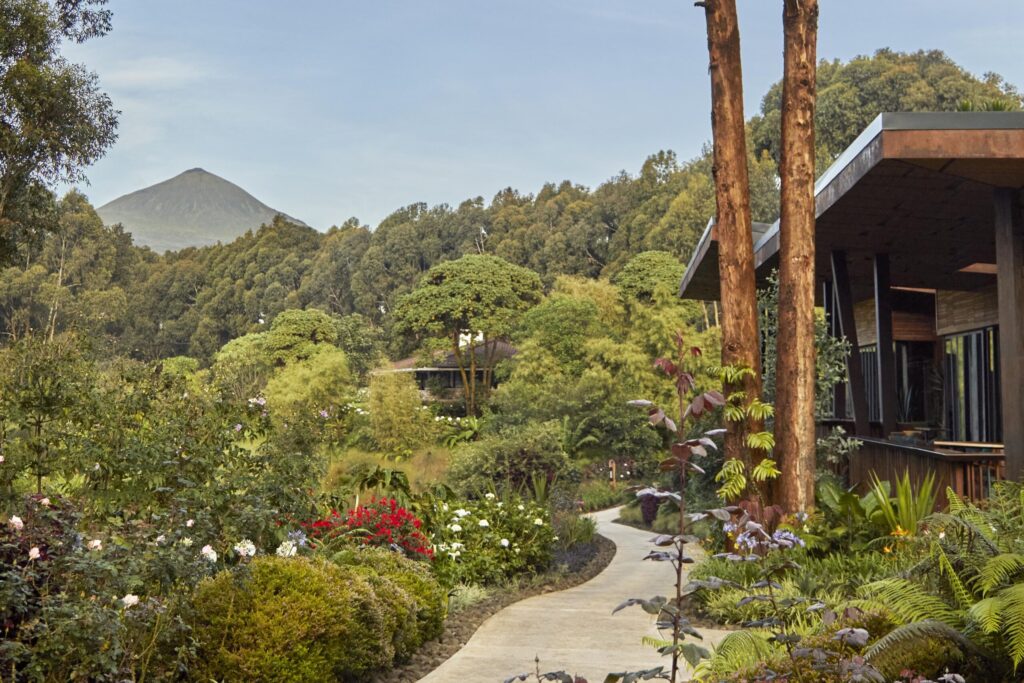
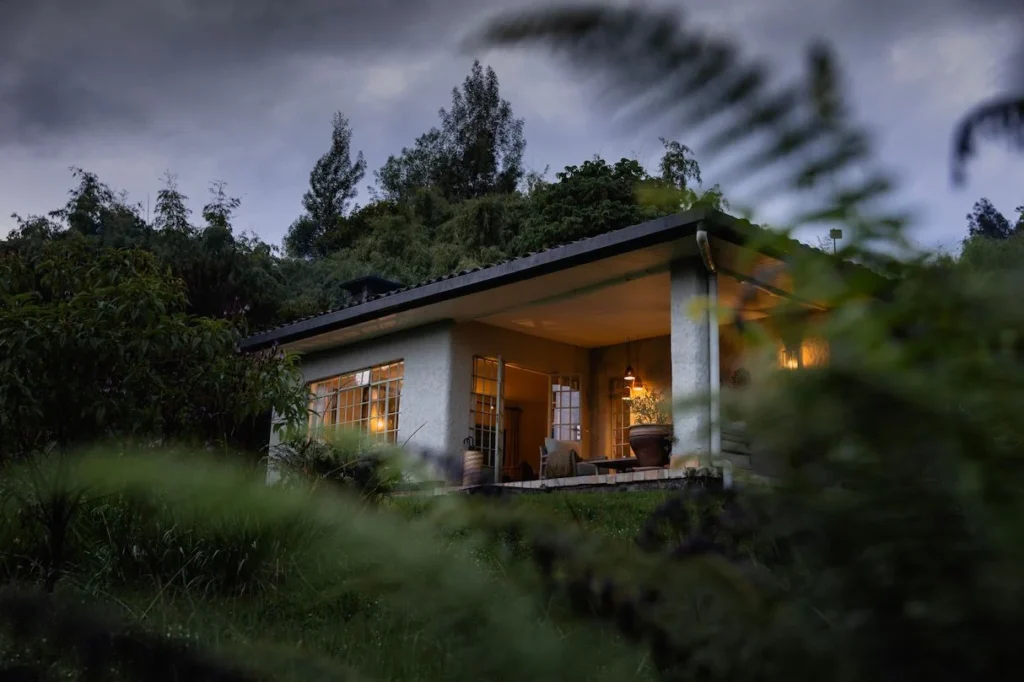
The lodge landscape at the foot of the Rwandan Virungas is exceptional by global standards, with a small cluster of five-star properties that rank among the finest safari accommodations on the African continent, each with a genuinely distinct design identity rather than a shared template.

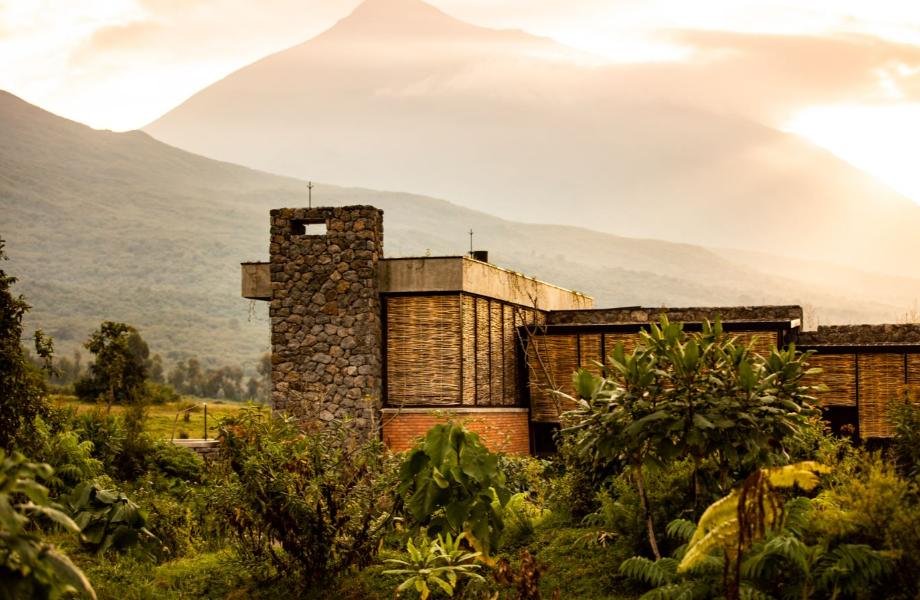
Singita Kwitonda Lodge

Singita Kwitonda Lodge

Set right at the park boundary with uninterrupted views of the volcanic range, Kwitonda combines Singita’s signature design elegance with a guiding team that knows the Virunga landscape’s birds, gorillas, and wider ecology very well.

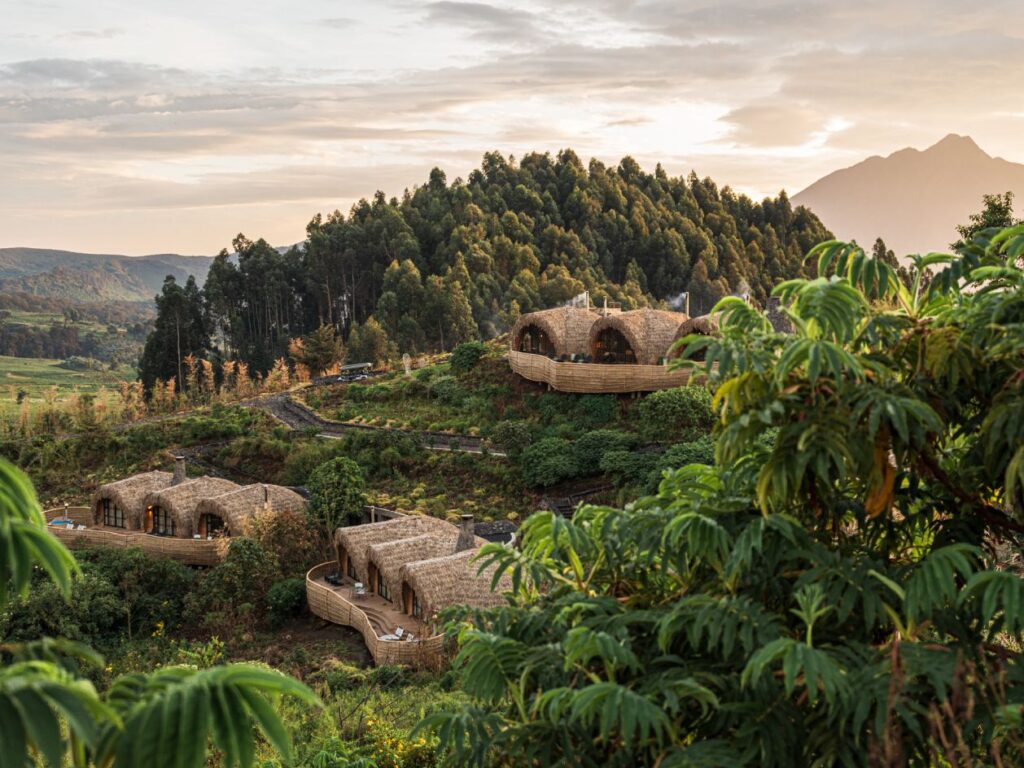
Wilderness Bisate

Bisate Lodge

Perhaps the most distinctive property in the area, Bisate’s handful of forest villas sit on a former eroded hillside that has been actively reforested with native planting, close enough to the park that golden monkeys regularly move through the trees around each villa.

One&Only Gorilla’s Nest

One&Only Gorilla Nest

Positioned at the very edge of the national park, Gorilla’s Nest delivers the One&Only brand’s polished service standard in gardens and suites designed as an unhurried counterpoint to the physical intensity of a trekking day.

Wilderness Sabyinyo Silverback Lodge

Wilderness Sabyinyo Lodge

One of the original luxury properties in the area, Sabyinyo Silverback is community-owned and managed by Wilderness under a genuine social-enterprise model, positioned dramatically at the base of the range’s oldest volcano.

Lodge Signature Feature Best For
Singita Kwitonda Lodge Direct park-boundary position, expert guiding team Design-focused travellers, serious birders
Wilderness Bisate Reforested hillside setting, resident golden monkeys Honeymooners, photographers
One&Only Gorilla’s Nest Edge-of-park location, polished five-star service Travellers prioritizing classic luxury service
Wilderness Sabyinyo Silverback Lodge Community-owned, social-enterprise model Travellers who value measurable community impact

Plan Your Rwanda Safari

Start Planning a Private Gorilla Trek

Rwanda gorilla permits sell out months in advance. Secure your dates before the season closes.

Combining the Virunga Mountains with a Wider East Africa Circuit

The Virunga Mountains rarely stand alone in a well-designed itinerary; their location at the meeting point of three countries makes them a natural anchor for either a focused single-country Rwanda trip or a genuine multi-country circuit.

The Virunga Circuit: Three Countries in One Trip

For travellers who want to experience all three sides of the massif, a coordinated circuit through Rwanda, Uganda, and the DRC is possible in principle, crossing land borders between Volcanoes National Park, Mgahinga, and Virunga National Park. In current practice, most travelers build their itinerary as a two-country Rwanda–Uganda trip and treat the DRC leg as an optional addition confirmed closer to travel dates, given the access realities described above. Our Virunga Circuit itinerary offers this flexibility rather than a fixed three-country routing.

Pairing with Akagera and Nyungwe

Within Rwanda alone, the Virunga Mountains pair naturally with the Big Five savanna of Akagera National Park and the primate-rich rainforest of Nyungwe Forest National Park, creating a complete three-park Rwanda circuit without a single border crossing. This single-country routing is, for most travelers on this site, the more practical and reliably bookable version of a Virunga-anchored trip than of a full cross-border circuit.

Practical Logistics: Getting There, Costs, and What to Pack

This is the section that matters most once you’ve decided to go: the real-world details of reaching the mountains, what the various permits and activities actually cost, and how to prepare for genuinely high-altitude conditions.

Getting There

Rwanda’s side of the Virungas is reached via park headquarters at Kinigi, roughly two to two and a half hours by road from Kigali International Airport, on a route Rwanda Gorilla Expeditions covers with a private 4×4 vehicle and driver-guide on every itinerary. The Uganda side, Mgahinga Gorilla National Park, is accessed via the town of Kisoro, itself roughly three to four hours by road from Kigali across the Cyanika or Katuna border post, or a considerably longer drive from Kampala or Entebbe, which is why most travellers combining Rwanda and Uganda cross overland from the Rwandan side rather than starting in Uganda. Access to the DRC side runs through the city of Goma, a short boat or road transfer from Rwanda’s Lake Kivu shore in ordinary conditions, though this route is directly affected by the same security situation that governs Virunga National Park’s current tourism status.

Costs at a Glance

Item Indicative Cost
Rwanda gorilla trekking permit USD 1,500 per person
Rwanda gorilla habituation experience USD 1,500 per person (max 4 per day)
Rwanda exclusive gorilla permit (private family) ~USD 15,000
Golden monkey trekking permit (Rwanda) USD 100 per person
Uganda gorilla permit (Mgahinga/Bwindi) USD 800 per person
DR Congo gorilla permit (Virunga NP) ~USD 400 per person: currently suspended, confirm status
Bisoke/Muhabura/Sabyinyo volcano hike permit ~USD 75 per person
Karisimbi 2-day climb permit ~USD 400 per person
Dian Fossey tomb hike permit ~USD 105 per person
Rwanda tourist visa (30 days, on arrival) USD 50

None of these fees include accommodation, transfers, or guiding; see our gorilla trekking permit guide for how these combine into a full itinerary cost.

Altitude and Fitness

The gorilla trekking trails in Volcanoes National Park sit between roughly 2,200 and 3,400 meters, altitudes most reasonably fit travellers can manage without difficulty, but the volcano climbs are a different matter: Karisimbi’s overnight camp and Muhabura’s summit both sit above 3,700 meters, high enough for genuine altitude-related headaches, fatigue, or nausea in a meaningful minority of climbers regardless of general fitness. Travellers with cardiovascular or respiratory conditions should consult a doctor before booking Karisimbi specifically, and everyone attempting it should spend at least a night or two at Rwanda’s more moderate elevations. Kigali sits at around 1,500 metres before the climb rather than arriving and summiting within the same 48 hours.

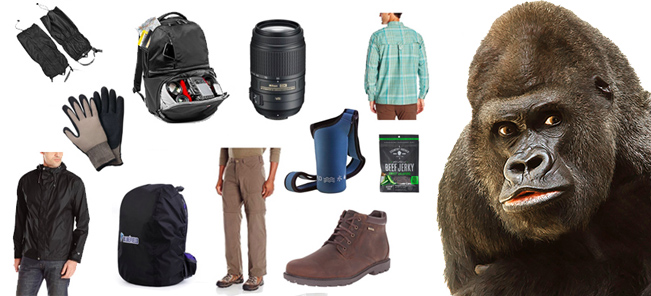
What to Pack

What to Pack for gorilla trekking

  • Layered clothing for gorilla trekking long sleeves and trousers in neutral, dark tones, plus a packable waterproof outer layer for sudden forest rain
  • A genuinely warm layer and, for Karisimbi, a sleeping bag rated to near-freezing temperatures; most travellers underestimate how cold the overnight camp gets
  • Waterproof, ankle-supporting trekking boots with strong grip; gaiters are worth packing or hiring at park headquarters for both gorilla trekking and volcano hikes
  • Trekking poles for the volcano climbs, particularly Karisimbi and Muhabura, where the descent is harder on the knees than the ascent
  • A headlamp for the pre-dawn Karisimbi summit push, plus spare batteries
  • Binoculars and a camera with a 300mm-or-longer zoom lens for golden monkeys and distant gorilla sightings in dense forest light

Plan Your Rwanda Safari

Start Planning a Private Gorilla Trek

Rwanda gorilla permits sell out months in advance. Secure your dates before the season closes.

Frequently Asked Questions About the Virunga Mountains

What are the Virunga Mountains?

The Virunga Mountains are a chain of eight volcanoes roughly 80 kilometers long, straddling the borders of Rwanda, Uganda, and the Democratic Republic of Congo at the meeting point of the two countries’ branches of the Albertine Rift. The range takes its name from the Kinyarwanda word “ibirunga,” meaning “volcanoes,” and is also known in Uganda by the older name Mufumbiro. Mount Karisimbi, at 4,507 meters, is the highest peak, while Nyiragongo and Nyamuragira, both in the DRC, are the only two volcanoes still regularly active. The Virunga Mountains are the primary habitat of the world’s mountain gorillas, protected across three separate national parks, one in each bordering country, and are the most travellers picture when they imagine gorilla trekking in Africa.

How many volcanoes are in the Virunga Mountains?

There are eight major volcanoes in the Virunga Mountains: Karisimbi (4,507 m), Mikeno (4,437 m), Muhabura (4,127 m), Bisoke (3,711 m), Sabyinyo (3,669 m), Gahinga (3,474 m), Nyiragongo (3,470 m), and Nyamuragira (3,058 m). Six of the eight are dormant or extinct, while Nyiragongo and Nyamuragira, both located entirely within the Democratic Republic of Congo, remain active, with Nyiragongo holding one of the largest lava lakes on Earth. Mount Sabyinyo, the oldest formation in the range, sits at the exact tripoint where Rwanda, Uganda, and the DRC meet.

Which country is best for gorilla trekking in the Virunga Mountains?

Rwanda’s Volcanoes National Park is the most practical choice for the vast majority of international travellers, with 24 habituated gorilla families, the largest number of trekking-accessible groups in the world, and a mature network of five-star lodges immediately outside the park boundary. Uganda’s Mgahinga Gorilla National Park is genuinely part of the Virunga massif but holds only one regularly trekked family, and most Uganda gorilla trekking actually takes place at Bwindi Impenetrable Forest instead, a separate ecosystem outside the range entirely. The Democratic Republic of Congo’s Virunga National Park holds a substantial share of the world’s mountain gorillas at the lowest historical permit price, but current access is subject to suspension due to regional security conditions and should always be confirmed directly before booking.

How much does gorilla trekking cost in the Virunga Mountains?

A Rwanda gorilla trekking permit costs USD 1,500 per person, issued by the Rwanda Development Board and covering park entrance, a ranger guide, and one hour of observation with a habituated family. A Uganda permit costs USD 800 per person, whether trekking at Mgahinga or Bwindi. The Democratic Republic of Congo has historically priced Virunga National Park permits at around USD 400 per person, the lowest of the three countries, though this figure should be treated as indicative given the park’s current access status. None of these fees include accommodation, transfers, or international flights, and Rwanda Gorilla Expeditions provides a fully itemized quotation covering every additional cost before you book.

Can you climb Mount Karisimbi?

Yes, Mount Karisimbi, the Virunga Mountains’ highest peak at 4,507 meters, can be climbed on a guided two-day, one-night expedition from Rwanda’s Volcanoes National Park, with porters carrying camping equipment to an overnight site near 3,700 meters before a pre-dawn push to the summit for sunrise. The climb is genuinely strenuous, and nights at the overnight camp regularly drop close to or below freezing even during Rwanda’s dry season, a detail worth planning around with proper cold-weather gear. A separate permit, distinct from the gorilla trekking permit, is required, and travelers with cardiovascular or respiratory conditions should consult a doctor before booking, given the altitude involved.

How long does it take to hike Mount Bisoke?

The Bisoke hike is a single-day round trip of roughly six to seven hours from the trailhead in Rwanda’s Volcanoes National Park to the 3,711-meter summit and back. The reward at the top is a crater lake that fills much of the caldera, though cloud tends to roll in by mid-to-late morning, so an early departure meaningfully improves your chances of a clear summit view. Bisoke is considered moderate to strenuous, achievable for most reasonably fit travellers without technical climbing experience, and is the volcano hike that most first-time visitors to the Virunga Mountains choose over the longer Karisimbi expedition.

Is it safe to visit Virunga National Park in DR Congo?

The DRC side of the Virunga Mountains has experienced repeated tourism suspensions over the past two decades due to armed conflict in North Kivu province, most recently affecting access to Virunga National Park, and permits remain suspended at the time of writing due to ongoing regional security restrictions. Rwanda’s and Uganda’s sides of the massif do not share this risk profile and operate as consistently accessible, well-established tourism destinations. Any traveller specifically interested in the DRC side, including Nyiragongo’s lava lake climb, should treat published tour listings as provisional and request direct, current confirmation of on-the-ground access status from a specialist operator before booking flights or paying a deposit.

What is the difference between the Virunga Mountains and Bwindi Impenetrable Forest?

The Virunga Mountains and Bwindi Impenetrable Forest are the two separate forest ecosystems that together hold the entire world population of mountain gorillas, and they are not the same place, despite both being described loosely as “gorilla trekking in Uganda or Rwanda.” The Virunga Mountains are a volcanic massif spanning Rwanda, Uganda, and the DRC, while Bwindi is a non-volcanic, ancient montane rainforest entirely within southwestern Uganda, roughly two hours’ drive south of the Virungas and geologically unrelated to the volcanic chain. Most gorilla trekking permits in Uganda are sold for Bwindi rather than the Virunga side of Uganda, Mgahinga Gorilla National Park, which holds only one regularly trekked family.

Can I see gorillas in more than one country in the Virunga Mountains?

Yes, though most travellers choose one country per trip rather than trekking on consecutive days in different countries, since each requires a separate permit, a separate park registration, and often an overland border crossing. A coordinated multi-country circuit through Rwanda and Uganda is genuinely achievable and is the basis of itineraries like our Virunga Circuit safari; adding the DRC leg is possible in principle but depends on the country’s current access status, which should be confirmed before it is built into a fixed itinerary. For most first-time trekkers, a single, well-executed trek in Rwanda delivers the complete experience without the added logistics of a border crossing.

What is the best time to visit the Virunga Mountains?

The two dry seasons, June to September and December to February, offer the firmest trails and most reliable conditions for both gorilla trekking and volcano climbing, with June to September considered peak season and the period requiring the earliest permit booking. The long rains from March to May and the shorter rains around October and November make trails muddier and volcano summits more likely to be clouded over, though gorilla trekking itself remains possible year-round since permit numbers are not seasonally discounted or restricted. Travellers planning a volcano climb specifically, rather than gorilla trekking alone, benefit most from targeting the dry season, when summit visibility and underfoot conditions are significantly better.

How difficult is climbing in the Virunga Mountains?

Difficulty varies significantly by peak: Bisoke is a moderate to strenuous single-day hike manageable by most reasonably fit travellers, while Karisimbi is a genuinely demanding two-day expedition that involves overnight camping above 3,700 metres and a pre-dawn summit push in near-freezing conditions. Muhabura is a steep, strenuous single-day return hike of eight to nine hours, and Sabyinyo’s summit approach involves rope- and ladder-assisted scrambling on an exposed ridge, making it the most technical of the standard volcano hikes. None of these require prior mountaineering experience, but all reward a reasonable baseline of cardiovascular fitness, and Rwanda Gorilla Expeditions can advise you on which peaks suit your fitness level and available time.

Where does Dian Fossey fit into the Virunga Mountains' history?

American primatologist Dian Fossey founded the Karisoke Research Centre in the Virunga Mountains in September 1967, beginning the long, patient process of habituating wild gorilla families to human presence that the entire modern trekking industry is built on. She was murdered at her research camp in December 1985 and is buried there among the gorillas she studied in a grave that visitors can reach on a dedicated guided hike of roughly two to three hours each way. The Dian Fossey Gorilla Fund, the nonprofit she founded, continues this work today and opened the Ellen DeGeneres Campus near Kinigi in 2022, a modern research and education center that visitors interested in gorilla conservation history can combine with the grave hike.

How do I get to the Virunga Mountains from Kigali?

Rwanda’s side of the Virunga Mountains is reached via Volcanoes National Park headquarters at Kinigi, roughly two to two and a half hours by road from Kigali International Airport on a well-maintained route through Musanze. Rwanda Gorilla Expeditions provides this transfer as a private 4×4 vehicle with an experienced driver-guide on every itinerary, and some travelers on a tight schedule break the journey with a night at a lodge en route rather than attempting a same-day arrival-to-trek connection. For travellers wanting to reach the Uganda side, Mgahinga Gorilla National Park near Kisoro, the drive from Kigali is roughly three to four hours, including a land border crossing.

What should I pack for high-altitude hiking in the Virunga Mountains?

Layered clothing is the core principle: long-sleeved shirts and trousers in neutral, dark tones for gorilla trekking, plus a genuinely warm layer and a near-freezing-rated sleeping bag for anyone attempting the Karisimbi overnight climb, where camp temperatures regularly approach zero degrees Celsius even in the dry season. Waterproof, ankle-supporting trekking boots with strong grip are essential for every activity in the range, and gaiters, either packed or hired at park headquarters, protect against stinging nettles and wet undergrowth. Trekking poles meaningfully ease the descent on Karisimbi and Muhabura; a headlamp is necessary for the pre-dawn Karisimbi summit push, and binoculars with a 300 mm or longer camera zoom make a significant difference for golden monkey and distant gorilla sightings in low forest light.

How far in advance should I book a Virunga Mountains gorilla trek?

For Rwanda’s peak season, June to September, and the December-to-January holiday period, booking six to twelve months in advance is strongly advisable, since permits across the 24 habituated families sell out at a fixed daily capacity of 192 visitors. Shoulder and low-season travel generally requires three to six months of lead time, though earlier booking is always preferable given demand consistently exceeds available slots. Volcano hike permits, being separate from gorilla permits and less universally in demand, typically have more flexible booking windows, but Karisimbi specifically benefits from advance notice because it requires coordinating porters and overnight camping logistics. Rwanda Gorilla Expeditions checks live availability directly with the Rwanda Development Board and advises on realistic booking windows for your specific dates.

Plan Your Virunga Mountains Safari

The Virunga Mountains reward careful planning more than almost any other destination in this guide, given the interplay of permit scarcity, altitude, and, on the DRC side, access status that changes with little notice. Tell us your travel dates and we’ll check gorilla permit availability within a few minutes, confirm which volcano hikes are running, and build a full day-by-day itinerary around Rwanda’s side of the range or a wider cross-border circuit. Reach the team on WhatsApp or by email, or visit our contact page for every way to get in touch.

Ready to Trek? Permits are limited — plan early.