

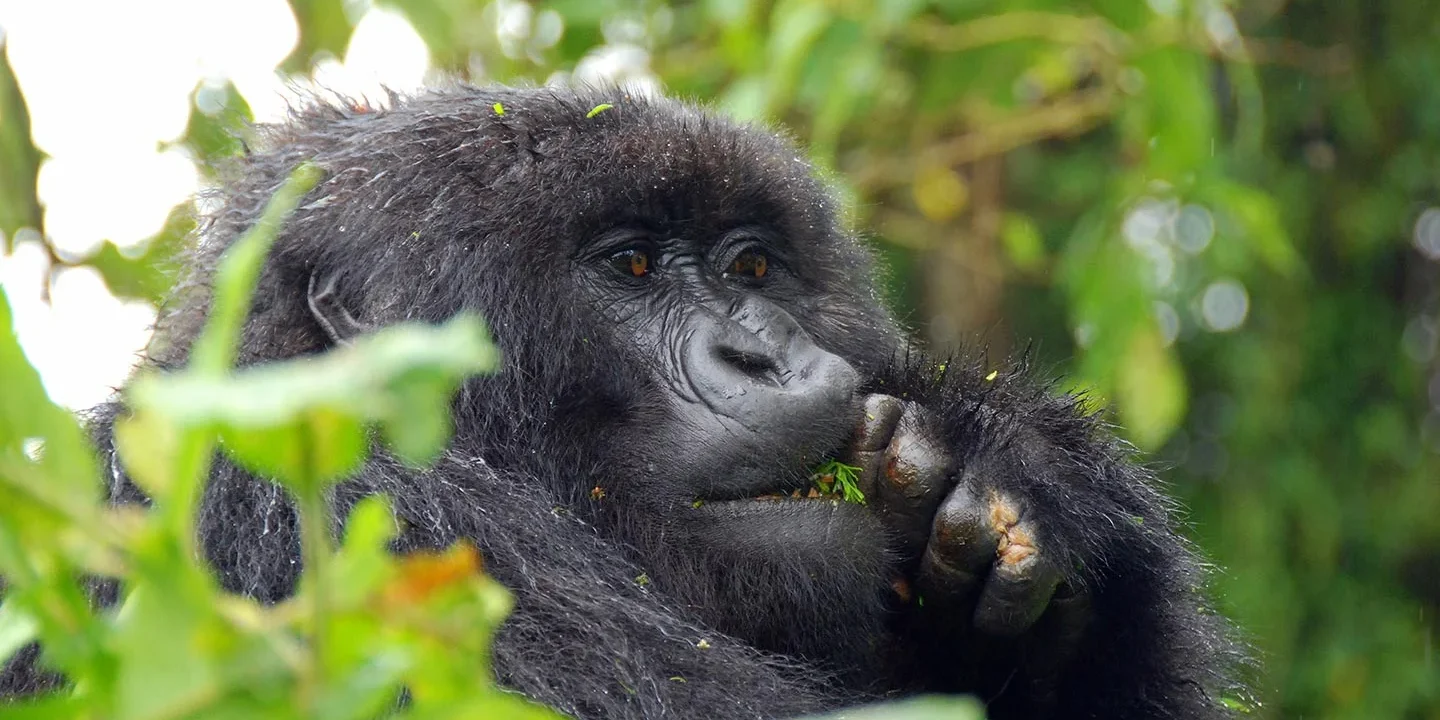
Uganda vs. Rwanda Gorilla Trekking: Which Country Is Right for Your Safari?
Uganda or Rwanda for gorilla trekking? Please compare the 2027 permit costs, terrain, lodges, and logistics, and then let us know your dates so we can confirm availability.
Uganda and Rwanda both deliver world-class mountain gorilla trekking, but the honest answer is that Rwanda suits travelers who want a shorter, more polished, higher-comfort trip built around Volcanoes National Park, just two to two-and-a-half hours from Kigali, while Uganda suits visitors who want more gorilla families, a broader wildlife itinerary, and a meaningfully lower permit cost across Bwindi Impenetrable National Park and Mgahinga Gorilla National Park. A Rwanda gorilla permit currently costs USD 1,500 per person, issued by the Rwanda Development Board (RDB) for a single trek in Volcanoes National Park, with no low-season discount and no exceptions. A Uganda gorilla permit currently costs USD 800 per person in peak months, dropping to USD 600 during the officially discounted low season of April, May, and November, issued by the Uganda Wildlife Authority (UWA) for treks across Bwindi’s four sectors or Mgahinga. Both countries enforce the same core conservation rules: a maximum of eight visitors per habituated gorilla family, a strict one-hour observation window once the family is located, and a seven-meter minimum distancing guideline.
The physical trek itself tends to be shorter and somewhat gentler in Rwanda, where trailheads sit closer to a single park headquarters, while Uganda’s Bwindi forest, true to its name, is steeper, denser, and more physically demanding, a quality many travelers count as part of the appeal rather than a drawback. Neither country is objectively the better choice; the right one depends on how much time you have, what else you want to see in East Africa, and whether Rwanda’s efficient luxury model or Uganda’s wilder, more varied one suits your travel style.
Uganda vs. Rwanda: Gorilla Trekking at a Glance
The fastest way to understand gorilla trekking in Uganda versus Rwanda is to see both countries’ core trekking parameters side by side, because nearly every downstream decision, budget, itinerary length, and lodge tier flows from these variables.
| Factor | Rwanda | Uganda |
| Trekking park(s) | Volcanoes National Park only | Bwindi Impenetrable NP (4 sectors) + Mgahinga NP |
| Standard permit cost | USD 1,500, year-round | USD 800 peak / USD 600 low season (Apr, May, Nov) |
| Issuing authority | Rwanda Development Board (RDB) | Uganda Wildlife Authority (UWA) |
| Habituated gorilla families | 24 tourism-accessible families* | ~19-20 across Bwindi, plus 1 in Mgahinga |
| Approx. daily permits | 192 | ~160 |
| Distance from main airport | 2-2.5 hrs road, Kigali to Kinigi | 8-10 hrs road, or ~1-1.5 hr charter flight, from Entebbe |
| Habituation experience | USD 1,500 pp, up to 4 guests, full day | USD 1,800 pp, up to 4 guests, 4 hrs, Rushaga only |
| Minimum age | 15 | 15 |
| Typical trek difficulty | Moderate; shorter average approach | More demanding; steep, dense terrain |
Where Gorilla Trekking Actually Happens: Volcanoes National Park vs. Bwindi and Mgahinga
Rwanda’s mountain gorilla trekking is confined entirely to one park, Volcanoes National Park, while Uganda spreads its gorilla trekking across two parks and five distinct trekking sectors, a structural difference that shapes nearly every other part of this comparison, from lodge choice to travel time to the sense of variety within a single trip.
Volcanoes National Park, Rwanda
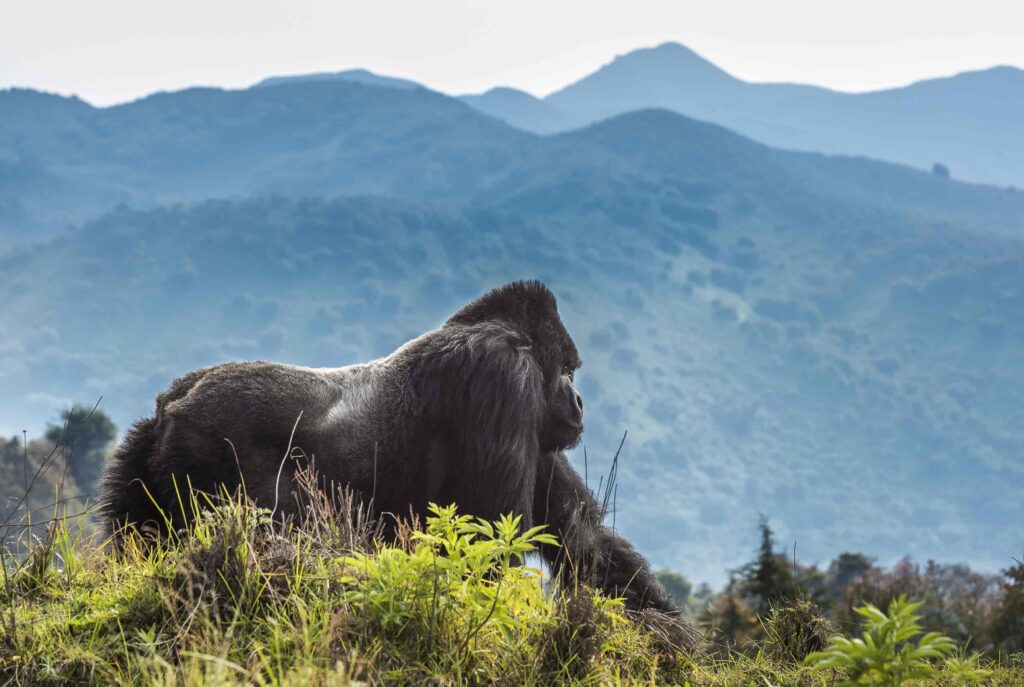
Volcanoes National Park covers 160 square kilometers of montane forest in northwestern Rwanda, forming part of the wider Virunga Mountains massif shared with Uganda and the DRC. Five volcanoes, Karisimbi, Bisoke, Muhabura, Gahinga, and Sabyinyo, form its dramatic backbone, and all trekking operates from a single gateway: the park headquarters at Kinigi, where every group assembles for the 7:00 AM briefing before being assigned a gorilla family for the day. This single-gateway model is precisely why Rwanda’s logistics feel so streamlined compared to Uganda’s: one road in, one briefing point, one set of trailheads radiating out from Kinigi. It is also the site of Dian Fossey’s Karisoke Research Centre, founded in 1967, the origin point of the habituation techniques that underpin gorilla tourism across the entire Virunga Massif today.
Bwindi Impenetrable Forest and Mgahinga, Uganda
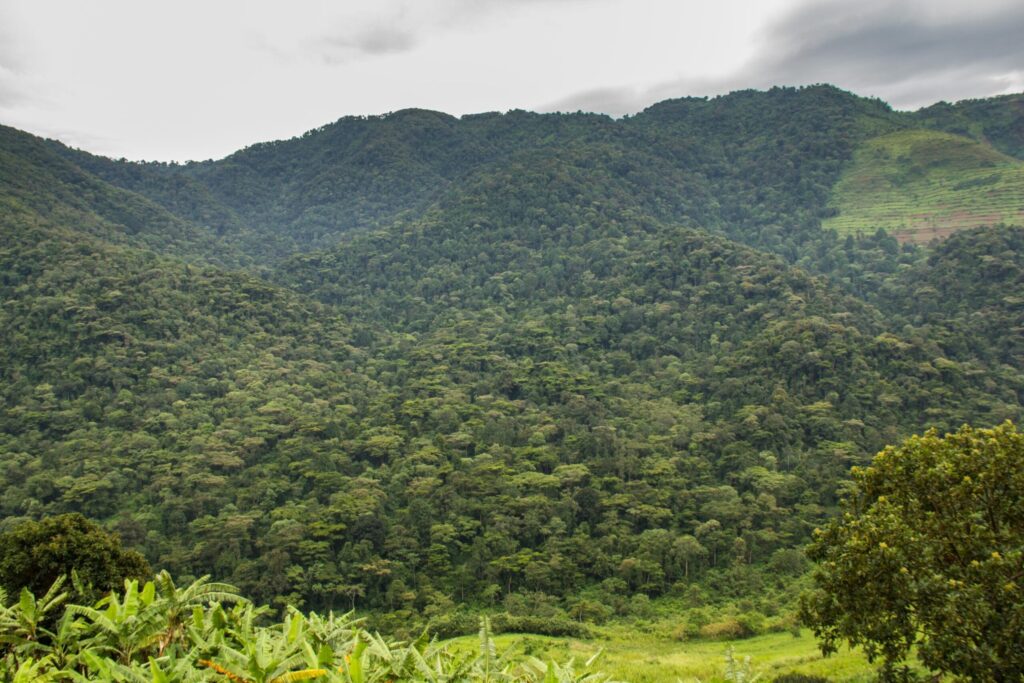
Bwindi Impenetrable Forest covers 331 square kilometers of ancient rainforest in southwestern Uganda, on the edge of the Albertine Rift, and has been a UNESCO World Heritage Site since 1994. Unlike Rwanda’s single-gateway model, Bwindi is divided into four separate trekking sectors, each with its headquarters, its own habituated families, and its cluster of lodges, meaning your choice of sector materially shapes your itinerary and travel time:
- Buhoma: the original and most established sector, in the north, with the widest range of lodges from mid-range to luxury and the gentlest average terrain.
- Ruhija: the highest-altitude sector, favored by birdwatchers and photographers, with cooler temperatures and fewer visitors.
- Rushaga: the southern sector with the most habituated families of any single sector and the only location for Uganda’s gorilla habituation experience.
- Nkuringo: the most remote and physically demanding sector, prized by fit, experienced trekkers for its dramatic ridge-top scenery and low visitor numbers.
Mgahinga Gorilla National Park, Uganda’s smaller second gorilla park, sits directly across the border from Volcanoes National Park within the same Virunga Massif and is home to a single habituated family, the Nyakagezi group, known for occasionally crossing between all three Virunga countries.
Plan Your Rwanda Safari
Start Planning a Private Gorilla Trek
Rwanda gorilla permits sell out months in advance. Secure your dates before the season closes.
The Real Cost of Gorilla Trekking: Uganda vs. Rwanda Permit Prices in 2026
Permit price is the single largest line-item difference between the two countries, and the detail most travelers ask about first: a Rwanda gorilla trekking permit costs USD 1,500 per person with no seasonal variation, while Uganda’s standard permit costs USD 800 in peak months and drops to USD 600 during the government’s official low season of April, May, and November, a discount UWA introduced in February 2026.
| Category | Rwanda (RDB) | Uganda (UWA) |
| Foreign non-resident, standard trek | USD 1,500 | USD 800 peak / USD 600 low season |
| Foreign resident | USD 500 | USD 700 |
| Rest-of-Africa citizen | USD 500 | USD 500 |
| East African Community citizen | USD 200 | UGX 300,000 (approx. USD 80) |
| Gorilla habituation experience | USD 1,500 pp, up to 4 guests, full day | USD 1,800 pp, up to 4 guests, 4 hrs, Rushaga only |
| Exclusive, full-day private access | Approx. USD 15,000, the entire family reserved | Not currently offered |
Both permits cover the same core inclusions: park entrance for the trek day, ranger and tracker guidance, and the one-hour observation period once the family is located. Neither covers accommodation, transfers, flights, tips, or porter hire, all of which sit on top of the permit price in either country. One booking-process detail worth knowing before you commit dates: as of March 1, 2026, UWA eliminated the previous seven-day reservation hold in Uganda, meaning full payment is now required at the time of booking rather than after a short hold period, which mirrors Rwanda’s long-standing full-payment-upfront model via the RDB’s Irembo platform.
On a short trip, Rwanda’s higher permit cost is sometimes partly offset by shorter, cheaper transfers and a single night’s accommodation near the park; on a longer trip, or for travelers considering a second trek or the habituation experience, Uganda’s savings compound meaningfully. A useful rule of thumb: if you are trekking once, staying two or three nights, and value time above all else, Rwanda’s total trip cost gap narrows. If you are trekking twice, adding chimpanzee tracking, or building a longer safari, Uganda’s lower unit costs add up fast.
Trekking Difficulty and Terrain: Which Country Is Physically Harder?
Uganda’s Bwindi terrain is, on balance, more physically demanding than Rwanda’s Volcanoes National Park, a difference rooted in geography rather than marketing: Bwindi’s name literally translates to “impenetrable,” and its steep, densely tangled hillsides, ranging from roughly 1,160 to 2,607 meters in elevation, require more sustained climbing, more machete-cleared trails, and more unpredictable footing than Rwanda’s comparatively more open bamboo and Hagenia forest at similar altitudes. That said, both countries share the single most important truth about trek difficulty: it varies daily, in both directions, because gorilla families move overnight and no operator, park authority, or guidebook can guarantee a short trek on any given morning.
In Rwanda, treks can range from roughly thirty minutes to five hours depending on where the assigned family is that day, with trailheads radiating from the single Kinigi gateway. In Uganda, treks can run anywhere from two to six or seven hours, and Bwindi’s layout means you sometimes descend into a valley first and climb back out at the end of the day, tired, rather than the reverse. For travelers with joint concerns, limited trekking experience, or simply a preference for a gentler morning, Rwanda’s terrain and Rwanda’s exclusive gorilla trekking option, which allows more deliberate family and fitness matching, are generally the safer bet. Hiring a porter, available in both countries for a modest fee, is strongly recommended regardless of destination: porters carry your day pack, offer a steadying hand on difficult ground, and the fee directly supports a local livelihood.
Gorilla Families and Your Odds of a Great Encounter
Uganda has more habituated gorilla families available to trekkers in different sectors than Rwanda, which has only one trekking point, a natural consequence of Bwindi’s larger forest area and four-sector structure, though both countries report gorilla sighting success rates above 95 percent on any given trek. Rwanda concentrates its smaller number of tourism-accessible families inside a single park, which simplifies logistics but offers less choice of trekking location; Uganda’s greater spread across Buhoma, Ruhija, Rushaga, and Nkuringo means more flexibility in matching a family and a sector to your fitness level, lodge preference, or interest in photography versus a quieter encounter.
- Gorillas move overnight, so the family assigned to your group on any given morning may be near the trailhead or hours away, regardless of which country you choose.
- Rangers assess visitor fitness at the morning briefing and assign accordingly, so travelers with mobility concerns should mention this when booking rather than on arrival.
- Neither Rwanda’s RDB nor Uganda’s UWA allows advance requests for a specific family under a standard permit; family assignment happens on trek-day morning based on tracker reports.
- Larger, well-known families (such as Rwanda’s Susa group, associated with Dian Fossey’s original research) tend to range farther and can mean a longer trek, a trade-off worth discussing with your operator if a shorter walk matters more than a storied family history.
Plan Your Rwanda Safari
Start Planning a Private Gorilla Trek
Rwanda gorilla permits sell out months in advance. Secure your dates before the season closes.
Getting There: Flights, Airports, and Road Transfer Times
Rwanda’s single biggest logistical advantage over Uganda is proximity: Volcanoes National Park sits roughly two to two-and-a-half hours by road from Kigali International Airport, meaning a traveler can land in Kigali, transfer directly, and be trekking gorillas the following morning. Uganda’s gorilla parks sit much farther from the country’s main airport, and the road transfer reflects that distance.
| Route | Typical time |
| Kigali International Airport → Kinigi (Volcanoes NP) | 2–2.5 hrs by road |
| Entebbe/Kampala → Buhoma (Bwindi) | 8–10 hrs by road |
| Entebbe → Kihihi or Kisoro airstrip → Bwindi | Approx. 1–1.5 hr charter flight + short transfer |
| Kigali → Cyanika/Kisoro border → Bwindi or Mgahinga | Approx. 4–5 hrs by road, for combined itineraries |
Most travelers visiting Uganda’s gorilla parks either accept the long road transfer as part of a broader safari itinerary that also takes in Queen Elizabeth National Park or Kibale Forest en route or book a short charter flight from Entebbe to Kihihi or Kisoro airstrip, which cuts the journey to roughly ninety minutes and is the preferred option for travelers with limited time. Both countries are part of the East Africa Tourist Visa, which is a single visa that covers Rwanda, Uganda, and Kenya, making it much easier to plan a combined itinerary. Standard single-country e-visas are also easy to arrange in advance for either destination.
Luxury Lodges and Accommodation: Rwanda vs. Uganda
Rwanda has built one of the most concentrated clusters of ultra-luxury safari lodges anywhere on the continent directly against the boundary of Volcanoes National Park, a deliberate outcome of the country’s high-value, low-volume tourism strategy. Singita Kwitonda Lodge, Wilderness Bisate, One&Only Gorilla’s Nest, and Wilderness Sabyinyo Silverback Lodge sit within minutes of Kinigi and represent design, service, and cuisine standards that rival anywhere in Africa, but with correspondingly premium nightly rates and very little in the way of a genuine budget or mid-range tier.
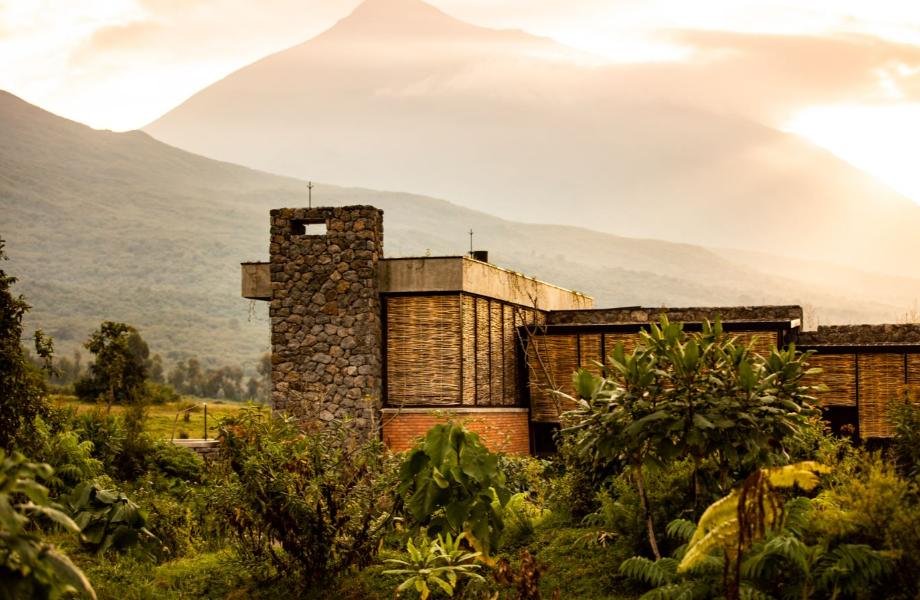
Singita Kwitonda Lodge
Uganda offers luxury too, with properties near Bwindi that stand up against Rwanda’s best, but the meaningful difference is breadth: Uganda’s four trekking sectors support a much wider mid-range tier, generally in the USD 150–250 per person per night range, alongside its luxury lodges, giving travelers considerably more accommodation flexibility at a lower average cost. Travelers who want to stay in five-star properties with minimal logistics will find that Rwanda is better; however, those looking for good value across a range of budgets without sacrificing quality will prefer Uganda’s wider lodge market for its flexibility.
What Else You Can Combine With Gorilla Trekking
Neither country is a one-activity destination, and what you can realistically pair with your gorilla trek is one of the more underrated differences between them.
Beyond gorillas in Rwanda
Golden monkey trekking in Volcanoes National Park (USD 100 per permit) pairs easily with a gorilla trek into a single two-activity day, chimpanzee tracking in Nyungwe Forest National Park (USD 150 per permit) adds an ancient rainforest dimension, Big Five game drives in Akagera National Park complete a classic savannah experience, and the newer Gishwati-Mukura National Park offers an emerging, lower-traffic chimp and golden monkey option.
Beyond gorillas in Uganda
Uganda’s larger land area and ten national parks create a genuinely different pairing profile: chimpanzee tracking in Kibale Forest, which has the highest density of habituated chimpanzees in Africa, tree-climbing lions and Kazinga Channel boat safaris in Queen Elizabeth National Park, and cultural encounters with the Batwa communities who once lived in Bwindi. Uganda’s variety provides a genuine structural advantage for travelers seeking both gorillas and a complete classic-safari wildlife experience, especially when compared to Rwanda’s more concentrated, primate-focused offerings.
Booking Your Permit: Process, Lead Times, and What to Book in Advance
In Rwanda, permits are booked through the Rwanda Development Board, most commonly via the Irembo platform or through a specialist operator working directly with RDB, and full payment is required to confirm your date; six to twelve months of lead time is genuinely advisable for June-to-September and December-to-January travel. In Uganda, permits are booked through the Uganda Wildlife Authority and, as of March 2026, also require full payment at the time of booking rather than a short hold; peak-season dates warrant six to nine months of lead time, Christmas and New Year closer to nine to twelve, and the gorilla habituation experience, in either country, should be secured at least six months out given its far more limited daily availability.
What to book in advance, beyond the permit itself: your lodge, particularly the small handful of properties directly at the park boundary in either country, which sell out for peak dates even faster than permits; any charter flight into Kihihi or Kisoro if you are trekking in Uganda on a tight schedule; and, if you intend to trek twice or add the habituation experience, both permits at the same time rather than sequentially, since availability for a second date can close quickly once the first is confirmed. This is precisely the kind of real-time availability check that is hardest to do accurately on your own; a specialist working daily with both RDB and UWA can confirm what is genuinely open on your dates rather than what a booking calendar shows as theoretically available.
What to Pack and Wear for Gorilla Trekking in Either Country
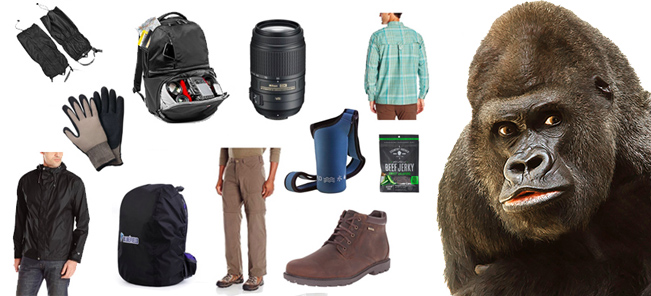
Packing requirements are essentially identical whether you trek in Rwanda or Uganda, since both operate in the same high-altitude, densely vegetated forest environment and enforce the same conservation-driven dress rules.
- Long-sleeved shirt and long trousers in a neutral, dark color, olive, brown, or grey; bright colors and white can disturb the gorillas and attract insects.
- Waterproof, ankle-supporting trekking boots with a firm sole and strong grip; sandals, trainers, and flat-soled shoes are genuinely inadequate on this terrain.
- Gaiters, to keep vegetation and stinging nettles out of your boots, often available for hire at the briefing center in either country.
- A light, packable waterproof outer layer; forest rain at altitude arrives quickly and without warning in both parks.
- Gardening or lightweight work gloves, for pushing through dense undergrowth on the way in.
- At least two liters of water, packed snacks or a lunch, a small first aid kit, insect repellent, and sunscreen for your day pack.
- A camera or phone in a protective case; flash photography is strictly prohibited around the gorillas in both countries, so a lens with good low-light performance is more valuable than resolution alone.
- Cash in small denominations for porter fees and tips, since card payment is rarely available at trailheads in either country.
Plan Your Rwanda Safari
Start Planning a Private Gorilla Trek
Rwanda gorilla permits sell out months in advance. Secure your dates before the season closes.
Best Time to Go: Seasons Compared
Both countries share broadly the same two-dry-season, two-wet-season pattern, since Volcanoes National Park and Bwindi sit within a few hundred kilometers of each other on the same equatorial highland belt, which means the seasonal decision comes down more to permit pricing and crowd tolerance than to dramatically different weather.

| Season | Rwanda | Uganda |
| June–September | Long dry season; peak demand, book 6–12 months out | Dry season, peak demand, firmer trails |
| December–February | Short dry season; excellent alternative to peak | Good trekking conditions, somewhat less crowded |
| March–May | Long rains, muddier trails, no permit discount | Long rains; USD 600 low-season permit in May |
| October–November | Short rains, quieter parks, no permit discount | Short rains; USD 600 low-season permit in November |
This is one area where Uganda holds a genuine, quantifiable edge for value-conscious travelers: because UWA’s low-season discount applies specifically in April, May, and November, a Uganda trek timed to the tail end of the rains can combine a meaningfully lower permit cost with a quieter park, a combination Rwanda’s flat year-round pricing simply does not offer.
Safety and Health Considerations
Both Rwanda and Uganda are considered safe, well-established gorilla trekking destinations, and both conduct every trek under the supervision of trained park rangers whose presence is standard protocol rather than a response to any specific risk. Rwanda is consistently rated among the safest countries in Africa for tourism generally, with low crime rates and strong infrastructure; Uganda’s gorilla trekking regions in the southwest are similarly safe and well-traveled, with the standard precautions of any East African safari destination applying rather than anything specific to the gorilla parks. Health preparation is nearly identical for both: a yellow fever vaccination certificate is required for entry if arriving from or through an endemic country, standard travel vaccinations such as hepatitis A and B and typhoid are commonly recommended, and malaria prophylaxis is generally advised for lower-altitude portions of a trip, though risk is reduced at the higher elevations of both Volcanoes National Park and Bwindi. Anyone with symptoms of a communicable illness, including a common cold, will be asked not to trek in either country, since mountain gorillas are highly susceptible to human respiratory disease and a single infected visitor can pose a genuine risk to an entire family group.
Which Country Should You Choose? A Decision Framework by Traveler Type
There is no single right answer to Uganda versus Rwanda gorilla trekking, but most travelers’ priorities sort fairly cleanly into one of the following profiles.
| If you are… | Consider… |
| Short on time (3–5 days total) and want minimal logistics | Rwanda’s fastest airport-to-trek turnaround in the region |
| Budget-conscious or planning to trek more than once | Uganda lower permit cost per trek, more sectors to combine |
| A honeymooner or celebrating a milestone with maximum privacy | Rwanda’s exclusive private-family permit and dense luxury lodge cluster |
| Building a first big East Africa trip around varied wildlife | Uganda chimps, tree-climbing lions, and gorillas in one country |
| A photographer or fitness-conscious older traveler | Rwanda generally has gentler terrain and more deliberate family matching |
| Drawn to remote, physically demanding, less-crowded trekking | Uganda’s Nkuringo and Ruhija sectors have lower visitor density |
| Unable to choose and open to doing both | A cross-border itinerary |
Can You Do Both? Combining Rwanda and Uganda in One Trip
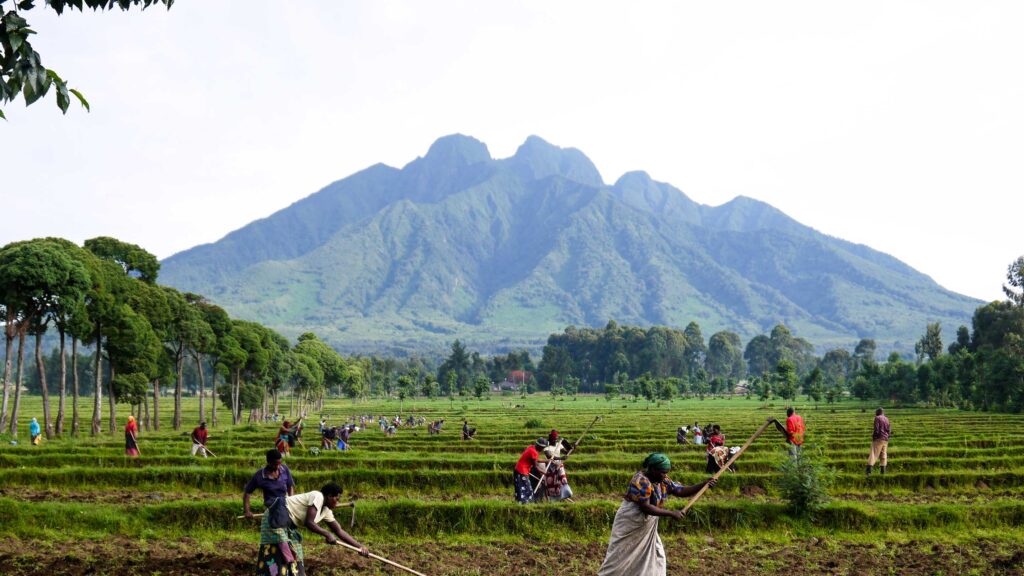
Yes, and for travelers with ten days or more, a dual-country gorilla trekking itinerary is genuinely one of the most rewarding ways to experience the Virunga Massif, since the road crossing between the two countries at Cyanika or Kisoro takes roughly four to five hours and can be built directly into a single circuit rather than treated as two separate trips. A common and highly effective routing trek starts in Rwanda first, taking advantage of the short Kigali transfer to start immediately, then crosses overland into Uganda for a second trek, a change of terrain, and often a chimpanzee tracking day in Bwindi or beyond. This approach gives you two countries, two distinct trekking experiences, and, for many travelers, a stronger sense of the full Virunga conservation landscape than either country alone provides. Our Virunga Trail itinerary specifically follows this routing and serves as the clearest starting point if a combined trip appeals to you.
Plan Your Rwanda Safari
Start Planning a Private Gorilla Trek
Rwanda gorilla permits sell out months in advance. Secure your dates before the season closes.
Frequently Asked Questions: Uganda vs. Rwanda Gorilla Trekking
Is Uganda or Rwanda better for gorilla trekking?
Neither country is universally better; the right choice depends on your time, budget, and travel style. Rwanda suits travelers who want a short, polished trip built around Volcanoes National Park, just two to two-and-a-half hours from Kigali International Airport, with a dense cluster of five-star lodges at the park boundary. Uganda suits travelers who want a lower permit cost, USD 800 versus Rwanda’s USD 1,500, more habituated gorilla families across four Bwindi sectors plus Mgahinga, and a broader wildlife itinerary that can include chimpanzees and tree-climbing lions in the same country. Many first-time trekkers choose Rwanda for its logistics; many repeat trekkers and value-focused travelers choose Uganda.
How much does a gorilla trekking permit cost in Uganda vs. Rwanda?
A gorilla trekking permit for Rwanda costs USD 1,500 per person year-round, issued by the Rwanda Development Board with no seasonal discount. A Uganda gorilla trekking permit costs USD 800 per person during peak and shoulder months, dropping to USD 600 during the official low season of April, May, and November, issued by the Uganda Wildlife Authority. Both permits cover park entry, ranger guidance, and one hour with a habituated gorilla family but exclude accommodation, transfers, and tips in either country.
Which country has more gorilla families?
Uganda has more habituated gorilla families overall, spread across Bwindi Impenetrable National Park’s four trekking sectors, Buhoma, Ruhija, Rushaga, and Nkuringo, plus a single family in neighboring Mgahinga Gorilla National Park. Rwanda concentrates a smaller number of tourism-accessible families inside the single Volcanoes National Park, currently around 24 according to Rwanda’s official tourism board, though this figure fluctuates as families split, merge, or complete habituation. Both countries report gorilla sighting success rates above 95 percent on any given trekking day.
Is gorilla trekking harder in Uganda or Rwanda?
Gorilla trekking in Uganda’s Bwindi Impenetrable Forest is generally more physically demanding than trekking in Rwanda’s Volcanoes National Park, owing to Bwindi’s steeper, denser terrain and its name, which literally means impenetrable. Rwanda’s trails tend to be somewhat more open, and its average approach is shorter, though trek duration varies daily in both countries, from as little as thirty minutes to five or more hours, because gorilla families move overnight and no operator can guarantee a short trek in advance. Travelers with fitness or joint concerns are generally better served by Rwanda’s terrain and its more flexible exclusive-trekking options.
Can I do gorilla trekking in both Uganda and Rwanda on the same trip?
Yes, and it is one of the most rewarding ways to experience the Virunga Massif for travelers with ten days or more. The land border crossing between the two countries, most commonly at Cyanika or Kisoro, takes roughly four to five hours by road and can be built directly into a single circuit itinerary that treks gorillas in both countries, rather than requiring two separate trips. Rwanda Gorilla Expeditions plans this exact routing as part of a nine-day multi-country itinerary spanning Rwanda, Uganda, and the DRC.
How do I get from Kigali to Bwindi, Uganda?
The overland journey from Kigali to Bwindi Impenetrable National Park in Uganda takes roughly four to five hours by road via the Cyanika or Kisoro border crossing, making it a realistic day-trip transfer for travelers combining both countries in one itinerary. Travelers flying directly into Uganda instead typically transfer from Entebbe International Airport, which takes eight to ten hours by road to reach Bwindi, or roughly ninety minutes by chartered light aircraft to the Kihihi or Kisoro airstrips, followed by a short road transfer to the lodge.
What is the best time of year to go gorilla trekking?
The long dry season from June to September is the most popular and generally most comfortable period for gorilla trekking in both Rwanda and Uganda, with firmer trails and minimal rainfall. The short dry season from December to February is an excellent, somewhat less crowded alternative in both countries. Uganda offers one seasonal advantage Rwanda does not: an official low-season permit discount, USD 600 instead of USD 800, during April, May, and November, making those months attractive for value-focused travelers willing to accept a higher chance of rain.
How far in advance should I book a gorilla trekking permit?
For peak-season travel from June to September or December to January, travelers should book gorilla trekking permits six to twelve months in advance in either Rwanda or Uganda, as permits in both countries routinely sell out during these times. Shoulder and low-season travel generally allows a shorter lead time of three to six months, though earlier is always safer. The gorilla habituation experience, offered in both countries with far fewer daily slots, warrants at least six months of lead time regardless of season. Both the Rwanda Development Board and the Uganda Wildlife Authority require full payment at the time of booking to confirm a permit.
What is the gorilla habituation experience, and is it worth it?
The gorilla habituation experience allows a small group, up to four visitors, to spend significantly longer than the standard one hour with a gorilla family that is still in the process of becoming accustomed to human presence, accompanied by researchers and trackers rather than a standard guide alone. In Rwanda, it costs USD 1,500 per person for a full day; in Uganda, it costs USD 1,800 per person for four hours and is offered exclusively in Bwindi’s Rushaga sector. It is genuinely worth considering for travelers who have already trekked a standard family and want a deeper, more research-oriented encounter, though the standard one-hour trek remains the right choice for most first-time visitors.
Is it safe to travel to Uganda or Rwanda for gorilla trekking?
Both Rwanda and Uganda are considered safe, well-established destinations for gorilla trekking, with every trek in both countries conducted under the supervision of trained, armed park rangers as standard protocol. Rwanda is consistently rated among the safest countries in Africa for tourism broadly, while Uganda’s southwestern gorilla trekking region is similarly safe and well-traveled, with the same standard precautions that apply to any East African safari destination. Neither the gorillas themselves nor the trekking environment poses meaningful risk to visitors who follow ranger instructions.
What is the minimum age for gorilla trekking?
The minimum age for gorilla trekking is 15 years old in both Rwanda and Uganda, a rule set by the Rwanda Development Board and the Uganda Wildlife Authority with no exceptions in either country. The restriction exists primarily to protect gorillas from childhood illnesses to which they may be especially vulnerable and also reflects the physical demands of the trekking environment. Families traveling with younger children can consider golden monkey trekking in Rwanda or a game drive in Queen Elizabeth National Park in Uganda as alternatives with no minimum age.
Do I need a visa for Rwanda and Uganda?
Most foreign visitors need a visa for both Rwanda and Uganda, though both countries participate in the East Africa Tourist Visa, a single visa also valid in Kenya that simplifies a combined itinerary considerably. Single-country e-visas are straightforward to arrange online in advance for either destination individually.
What should I wear and pack for a gorilla trek?
Long-sleeved shirts and long trousers in neutral, dark colors, olive, brown, or grey, are the correct choice for gorilla trekking in either country, paired with waterproof, ankle-supporting trekking boots with strong grip. A light waterproof jacket, gardening or work gloves for pushing through dense vegetation, and gaiters to keep the lower leg protected from stinging nettles complete the essential kit. Bright colors and flash photography are discouraged or prohibited around the gorillas in both Rwanda and Uganda, and a day pack with at least two liters of water, snacks, and insect repellent is recommended for the full trekking day.
How much does a full gorilla trekking safari cost, not just the permit?
A full gorilla trekking safari cost depends heavily on lodge tier, trip length, and how many countries or activities you combine, but as a general guide, a focused two- to three-night Rwanda gorilla trip at a luxury lodge typically runs well into the thousands of dollars per person once permits, accommodation, and private transfers are included, while a comparable Uganda trip is generally lower due to the cheaper permit and the wider mid-range lodge tier available across Bwindi’s four sectors. Rwanda Gorilla Expeditions provides transparent, itemized quotations for every itinerary with no hidden costs, so you can see exactly what drives the total before committing to dates.
Which country has better luxury lodges for gorilla trekking?
Rwanda has the most concentrated cluster of ultra-luxury lodges directly at the park boundary, including Singita Kwitonda, Wilderness Bisate, and One&Only Gorilla’s Nest, representing some of the finest safari accommodation on the continent. Uganda offers strong luxury options near Bwindi as well, but its real advantage is breadth: a much wider mid-range tier across its four trekking sectors gives travelers more accommodation choice and generally lower average nightly rates without sacrificing quality. Travelers prioritizing an unbroken run of five-star stays tend to prefer Rwanda; those wanting flexibility across budgets tend to prefer Uganda.
Can gorilla trekking permits be refunded or rescheduled?
Refund and rescheduling policies differ by country and are generally restrictive in both, since permits are tied to a specific date and gorilla family allocation. But rescheduling in Uganda is very possible. As a general practice, booking well in advance and purchasing travel insurance that explicitly covers safari and permit cancellations is strongly advisable regardless of which country you choose.
How do Rwanda Gorilla Expeditions help me choose between Uganda and Rwanda?
Rwanda Gorilla Expeditions builds every itinerary around your specific dates, fitness level, budget, and interests rather than adjusting a fixed package, and that includes an honest conversation about whether Rwanda alone, Uganda alone, or a combined cross-border trip genuinely fits what you are looking for. We check real-time permit availability directly with the relevant authority, advise on realistic booking windows, and coordinate every detail, permits, lodges, private transfers, and border logistics if you choose a dual-country trip, so the Uganda-versus-Rwanda decision becomes a conversation rather than a guessing game.
Plan Your Rwanda Safari
Start Planning a Private Gorilla Trek
Rwanda gorilla permits sell out months in advance. Secure your dates before the season closes.
Ready to Decide? Let’s Plan Your Trek
Whichever way this comparison points you, Rwanda, Uganda, or both, the next step is the same: get real dates on the table and let someone who works inside both countries’ permit systems every day tell you what is actually possible. Tell us your dates, and we’ll check permit availability within a few minutes, then build a private itinerary around exactly what you’re looking for, no group departures, no generic packages, just a Rwanda-based team that knows this landscape firsthand.