DR Congo Safaris: The Complete Guide to Gorilla Trekking, Nyiragongo, and Virunga

The DR Congo safaris center on gorilla trekking in Virunga or Kahuzi-Biega and Nyiragongo’s lava lake. Get honest 2026 safety facts before you plan yours.

The DR Congo safaris center on two gorilla parks: Virunga National Park for mountain gorillas and Kahuzi-Biega National Park for the far larger eastern lowland gorilla, plus the volcanic spectacle of Mount Nyiragongo’s lava lake, all at permit prices roughly a quarter of Rwanda’s. A permit for trekking gorillas in Virunga costs approximately USD 400, and a Kahuzi-Biega permit costs a similar USD 400, compared with USD 1,500 in Rwanda’s Volcanoes National Park and USD 800 in Uganda’s Bwindi Impenetrable Forest. DR Congo is also the only country on earth where two distinct gorilla subspecies, the mountain gorilla and Grauer’s gorilla, can be trekked, and the only place a traveler can pair a gorilla encounter with a hike to the edge of one of the largest lava lakes on the planet.

DR Congo Safaris 2027: Gorilla Trekking, Cost & Safety Guide

The honest complication, and the reason this guide exists, is that both gateway cities have been under the control of the M23/AFC armed group since early 2025: Goma, the access point for Virunga, fell in January 2025, and Bukavu, the access point for Kahuzi-Biega, fell weeks later. As of August 2026, the U.S. State Department rates North Kivu, South Kivu, and Ituri provinces at its highest advisory level, Level 4: Do Not Travel, while the country overall sits at Level 3: Reconsider Travel. Virunga National Park’s own tourism program has been suspended throughout this period, while Kahuzi-Biega has, at points, continued operating on a more limited basis further south, though its gateway city is affected by the same conflict, so any ‘still safe’ claim online deserves real-time verification, not blind trust. None of this makes DR Congo gorilla trekking permanently unbookable: a ceasefire framework signed in Doha, a further roadmap agreed in Switzerland in late August 2026, and a national dialogue opened in Kinshasa point toward gradual normalization, and specialist operators with genuine ground contacts do continue to monitor the situation closely.

For travelers who want a mountain gorilla encounter with certainty on fixed dates this year, Rwanda’s Volcanoes National Park, a two-and-a-half-hour drive from the DRC border, remains the dependable way to experience the same Virunga ecosystem. This guide covers exactly where DR Congo gorilla trekking happens, what it costs, what the current security picture says province by province, how the Nyiragongo climb works, and how to weigh DR Congo sensibly against Rwanda and Uganda for a 2027 or 2028 booking decision.

Permits are limited — spaces fill months ahead

Reserve Your Private Gorilla Trek

Speak with a Rwanda-based specialist today. We secure permits, match you to the right gorilla family, and plan every detail around your schedule.

No group departures · Private itineraries only · Direct Rwanda expertise

Where Gorilla Trekking Happens in DR Congo: Virunga and Kahuzi-Biega

The Democratic Republic of Congo has exactly two national parks where gorilla trekking is offered to travelers: Virunga National Park in North Kivu, home to mountain gorillas, and Kahuzi-Biega National Park in South Kivu, home to the eastern lowland gorilla, also called Grauer’s gorilla. Both are managed under the framework of the Institut Congolais pour la Conservation de la Nature (ICCN), and both sit at the eastern edge of the country, wedged against the Rwandan border and Lake Kivu, a detail that matters enormously for logistics, because nearly every DR Congo gorilla itinerary begins and ends on the Rwandan side of that border. Something worth understanding before comparing prices: these are not interchangeable experiences. Virunga’s mountain gorillas are the same subspecies found in Rwanda and Uganda, part of the shared Virunga Massif population. Kahuzi-Biega’s Grauer’s gorillas are a genetically and physically distinct subspecies found nowhere else on the planet, making DR Congo the only country where a traveler can meaningfully compare two different gorilla species on a single trip, security conditions permitting.

Virunga National Park: Africa’s Oldest Park and Its Mountain Gorillas

Virunga National Park: Congo's Gorillas & Nyiragongo Lava Lake

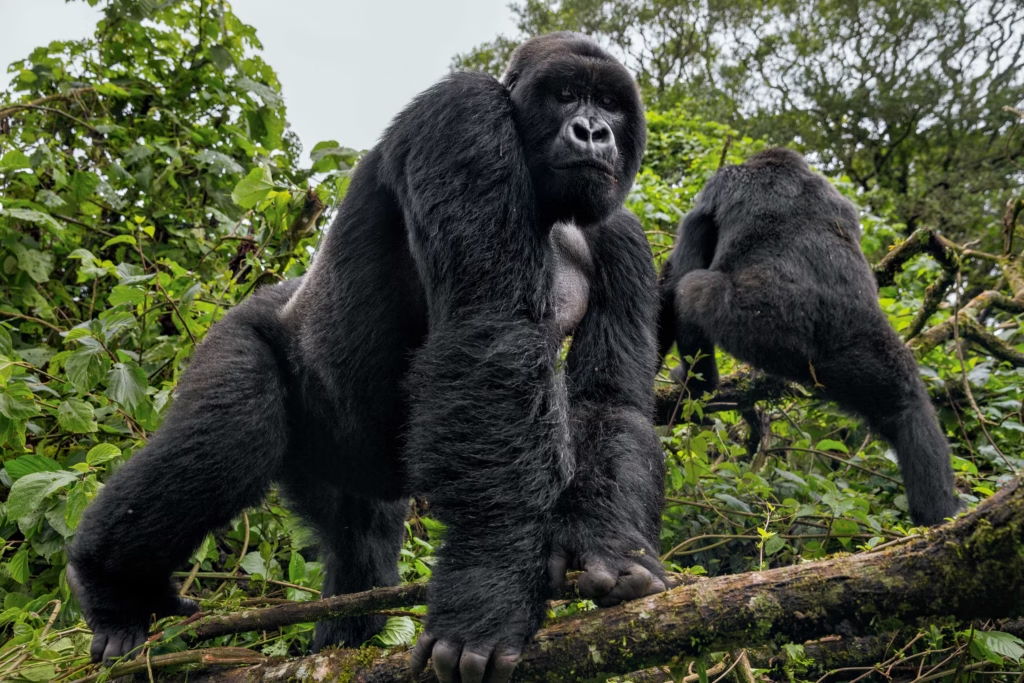
Virunga National Park was gazetted in April 1925 under Belgian colonial rule as part of the original Albert National Park, the same protected area that later split at independence into Rwanda’s Volcanoes National Park and Uganda’s Mgahinga Gorilla National Park. That shared origin is why the three countries’ parks still form a single ecological unit, the Virunga Mountains, even though they now operate as three entirely separate tourism systems. Virunga is by far the largest of the three, covering roughly 7,800 square kilometers and stretching from the volcanic Mikeno sector in the north, where the mountain gorillas live, down through the active volcanoes Nyiragongo and Nyamuragira, across the savanna and hippo-filled shores of Lake Edward, to the Rwenzori mountain glaciers in the far south. The mountain gorilla trekking itself takes place specifically in the Mikeno sector, a small, forested corner of this vast park bordering Rwanda’s Volcanoes National Park, where a handful of habituated gorilla families range across broadly the same bamboo-and-Hagenia terrain found on the Rwandan side of the border. Virunga’s gorillas are part of the wider Virunga Massif population shared with Rwanda and Uganda a population that has grown from under 300 individuals in the early 1980s to several hundred within this specific massif today, part of a total mountain gorilla population now above 1,000 across both the Virunga Massif and Uganda’s separate Bwindi forest.

Kahuzi-Biega National Park: Home to the World’s Largest Gorilla

Kahuzi-Biega National Park 2027: Access, Cost & Safety Guide

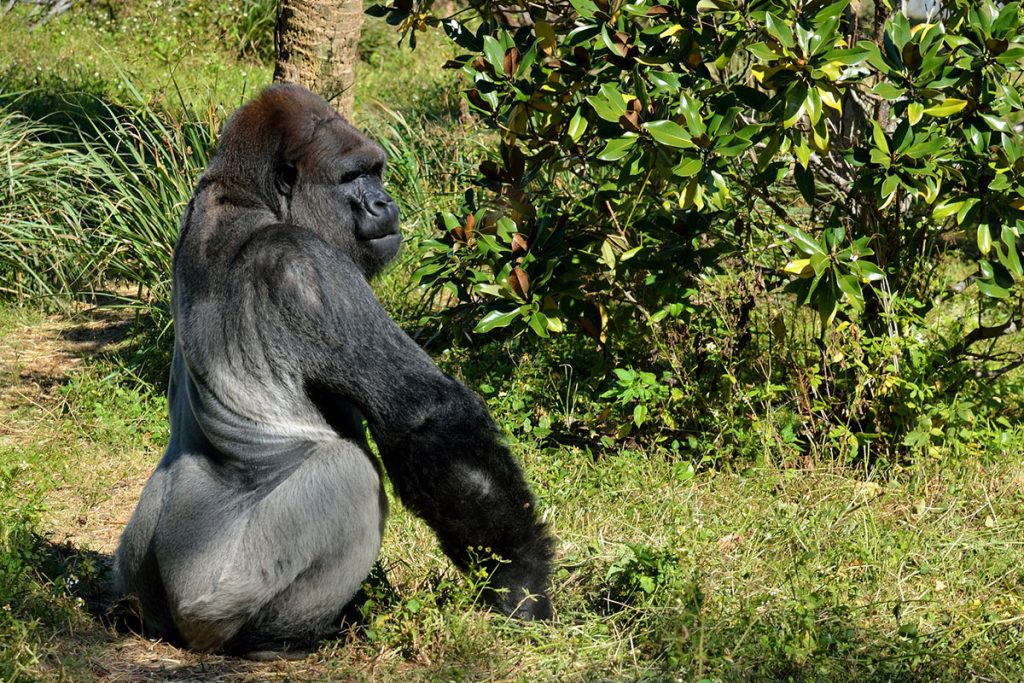
Kahuzi-Biega National Park, established in 1970 and inscribed as a UNESCO World Heritage Site in 1980, sits roughly 30 kilometers west of Bukavu in South Kivu province, well over 200 kilometers south of Virunga and entirely outside the volcanic Virunga chain. The park takes its name from two dormant volcanoes within its boundaries, Mount Kahuzi (3,308 meters) and Mount Biega (2,790 meters), and it protects the world’s largest population of the eastern lowland gorilla, or Grauer’s gorilla (Gorilla beringei graueri), the largest living gorilla subspecies, which has been classified as Critically Endangered on the IUCN Red List since 2016. The park is split into two very different zones: a roughly 600-square-kilometer highland sector open to tourism, where the habituated gorilla groups live in montane bamboo forest not unlike Volcanoes National Park’s terrain, and a vast, far larger lowland sector stretching toward Kisangani that remains closed to visitors and considerably harder to protect. Kahuzi-Biega has historically operated with a small number of habituated Grauer’s gorilla groups available for trekking, often just one or two at a time, expanding gradually as ICCN’s habituation programme progresses which is a fraction of Rwanda’s 24 habituated gorilla families or Uganda’s habituated roster, and a direct consequence of decades of underinvestment and periodic insecurity in this part of eastern DRC. The park’s own conservation overview, published by Kahuzi-Biega National Park’s official information site, is a useful reference for travelers who want the full picture beyond a single guide.

Feature Virunga National Park Kahuzi-Biega National Park
Gorilla species Mountain gorilla (Gorilla beringei beringei) Eastern lowland / Grauer’s gorilla (Gorilla beringei graueri)
Gateway city Goma, North Kivu Bukavu, South Kivu
Established 1925 (Africa’s oldest national park) 1970; UNESCO World Heritage Site since 1980
Approx. park size ~7,800 km² ~6,000 km² (only ~600 km² open to tourism)
Gorilla permit (approx.) USD 400 USD 400
Habituated gorilla groups A small number in the Mikeno sector Historically as few as one or two
Signature add-on Mount Nyiragongo lava lake climb Mount Kahuzi / Mount Biega hikes, waterfall trails
Current tourism status Suspended Historically more resilient, but Bukavu itself is affected verify in real time

Plan Your Rwanda Safari

Start Planning a Private Gorilla Trek

Rwanda gorilla permits sell out months in advance. Secure your dates before the season closes.

Is DR Congo Safe for Travel Right Now?

The U.S. State Department rates the North Kivu, South Kivu, and Ituri provinces of DR Congo at Level 4: Do Not Travel, its highest advisory category, while the country overall sits at Level 3: Reconsider Travel, a distinction that matters enormously here, because both gorilla parks discussed in this guide sit inside the two provinces carrying that highest warning. You can read the State Department’s current advisory directly, and any operator you work with should be checking it and their ground contacts before confirming your dates.

What’s Actually Happening in North and South Kivu

The M23 armed group, operating alongside its Alliance Fleuve Congo (AFC) partners, captured Goma, the capital of North Kivu and the gateway to Virunga National Park, in January 2025, and captured Bukavu, the capital of South Kivu and the gateway to Kahuzi-Biega National Park, weeks later in February 2025. Both cities have remained under M23/AFC administration since. Diplomatic efforts have not stood still: a framework agreement was signed in Doha, Qatar; a ceasefire verification mechanism began deploying into South Kivu earlier in 2026; and five days of talks in Switzerland from August 17 to 21, 2026, produced a further roadmap for negotiations, alongside a national dialogue that opened in Kinshasa on August 27, 2026. But the ground reality has not caught up with the diplomacy. Fighting has continued in South Kivu’s Kalehe, Fizi, and Mwenga districts, all within the same province as Bukavu and Kahuzi-Biega, with both sides reportedly using armed drones and heavy artillery in populated areas. The honest summary is that the situation is fluid, any ceasefire remains fragile, and territorial control is still actively contested in exactly the districts a DR Congo safari would pass through.

The Ebola Factor.

A separate but equally important complication for American travelers specifically: an active Ebola outbreak in eastern DRC prompted a U.S. Department of Homeland Security order, updated in July 2026, requiring that any U.S. citizen or national who has been present in the DRC within 21 days of their intended departure remain outside the country before they can board a flight into the United States. This is a purely practical, non-negotiable scheduling fact that has nothing to do with the armed conflict and everything to do with public health policy, and it has real implications for how a DR Congo leg would need to be sequenced relative to a return flight home.

Virunga vs. Kahuzi-Biega: Two Different Risk Pictures

Virunga National Park’s own tourism program has been suspended throughout the current crisis; the park’s official channels state that gorilla treks and the Nyiragongo climb are closed until further notice. Kahuzi-Biega has, at various points over the past decade, proven more resilient; its highland gorilla sector sits somewhat apart from the most intense fighting, and older travel content, some of it still circulating, describes it as ‘still safe’ or ‘still operating.’ Treat that framing with real caution in 2027. Bukavu itself, the only practical gateway to Kahuzi-Biega, has been under non-government control since February 2025, and the South Kivu districts immediately around it have seen renewed clashes. A trip that was genuinely bookable eighteen months ago is not automatically bookable today, and a blog post written before Bukavu fell is not a substitute for a current, ground-level answer from someone actively monitoring the region. If DR Congo gorilla trekking is a firm priority for you, the right move is a direct conversation with a specialist who checks live conditions, not a booking based on search results.

DR Congo Gorilla Trekking Permits: Cost, What’s Included, and How They Compare

A DR Congo gorilla trekking permit costs approximately USD 400 per person, whether trekking mountain gorillas in Virunga National Park or eastern lowland gorillas in Kahuzi-Biega National Park, roughly a quarter of Rwanda’s USD 1,500 fee and half of Uganda’s USD 800, making it historically the least expensive gorilla trekking option anywhere in Africa. Some seasons and sources have quoted DRC permits as low as USD 200 during the traditional October-to-December low season and closer to USD 400 during peak months, a discounting structure neither Rwanda nor Uganda applies to its permits. The fee, when the parks are operating, covers park entrance, a ranger guide and tracker team, and one hour of observation time with a habituated gorilla family, following the same seven-meter minimum distance and flash-photography ban enforced across all three gorilla trekking countries. It does not cover accommodation, transport, porters, or gratuities, all of which are budgeted separately, exactly as with a Rwandan or Ugandan permit.

Country / Park Permit cost (approx.) Gorilla species Booking authority
Rwanda: Volcanoes National Park USD 1,500 Mountain gorilla Rwanda Development Board (RDB)
Uganda: Bwindi / Mgahinga USD 800 (USD 600 low season on fixed dates) Mountain gorilla Uganda Wildlife Authority
DR Congo: Virunga National Park ~USD 400 (currently suspended) Mountain gorilla ICCN / Virunga National Park
DR Congo: Kahuzi-Biega National Park ~USD 400 Eastern lowland (Grauer’s) gorilla ICCN

One genuine advantage of the DRC permit system, historically, has been lead time. Because visitor volumes are far lower than Rwanda’s or Uganda’s, a Kahuzi-Biega permit has typically been bookable with only a few weeks’ notice rather than the six-to-twelve-month runway that peak-season Rwanda travel requires, an advantage that only matters once accessibility is confirmed. Given the current situation, the single most important booking rule for a DR Congo permit is this: do not pay a large non-refundable deposit against a fixed date without a clear, written contingency plan, ideally one that lets you redirect the same budget toward a confirmed Rwanda or Uganda trek if conditions have not improved by the time you’re due to travel.

Plan Your Rwanda Safari

Start Planning a Private Gorilla Trek

Rwanda gorilla permits sell out months in advance. Secure your dates before the season closes.

Climbing Mount Nyiragongo: The Volcano Everyone Asks About
Climbing Mount Nyiragongo

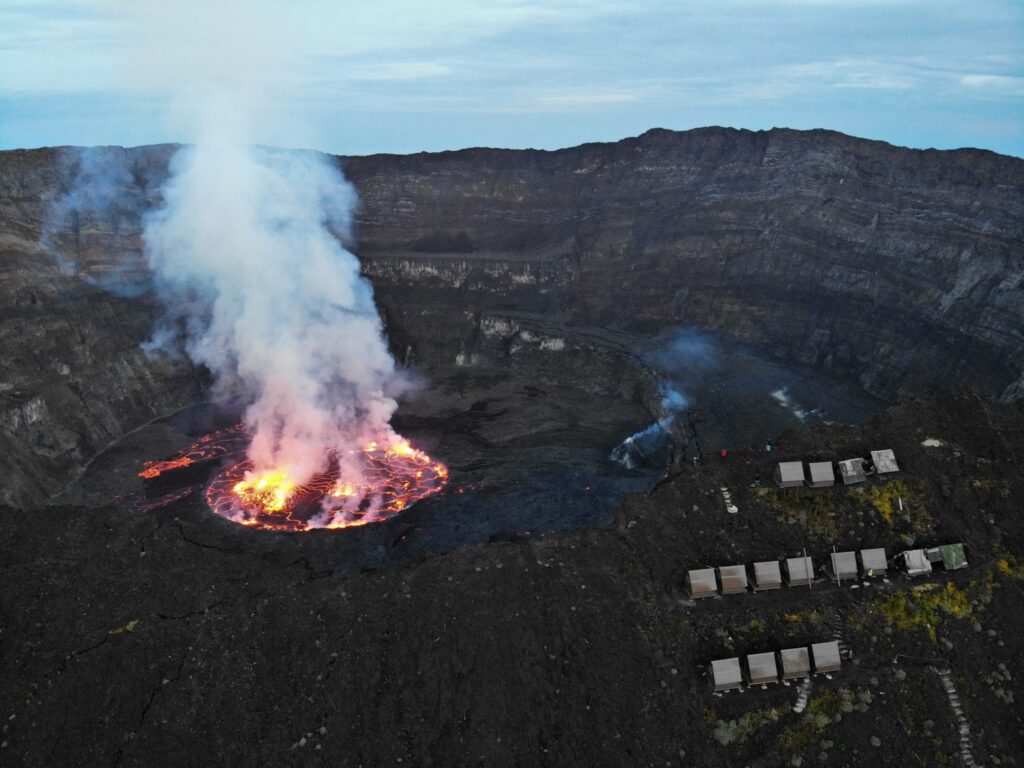
Mount Nyiragongo, at 3,470 meters inside Virunga National Park’s Mikeno sector, holds one of the largest lava lakes on Earth and is climbed on a two-day, one-night guided trek that ends with a night spent in summit cabins on the crater rim, looking down into a churning pool of molten rock hundreds of meters below. The ascent itself takes roughly four to six hours over a demanding but non-technical trail, gaining significant altitude through several distinct vegetation zones before the forest gives way to bare volcanic rock near the summit. A short distance away, Mount Nyamuragira, Africa’s most consistently active volcano, erupts far more frequently than Nyiragongo but is not part of the standard tourist circuit. The Nyiragongo climb is booked and priced separately from a gorilla trekking permit; it is an entirely different activity, with its own permit, that can in principle be combined with gorilla trekking on the same Virunga trip when both are operating. At present, the climb runs through exactly the same suspended Virunga tourism program covered above, so it is not currently available to book on fixed dates, and travelers drawn specifically to Nyiragongo should treat it the same way as the gorilla trek: a genuinely extraordinary experience and one to revisit once the security situation and Virunga’s own official channels confirm a resumption.

How to Get to DR Congo’s Gorilla Parks: Borders, Flights, and Visas

Nearly every DR Congo gorilla itinerary is built around Rwanda as the entry point, not because DR Congo lacks its own airports, but because Kigali International Airport offers by far the most reliable international connections in the region, and both Virunga and Kahuzi-Biega are only a few hours from the Rwandan border by road.

Reaching Virunga via Goma

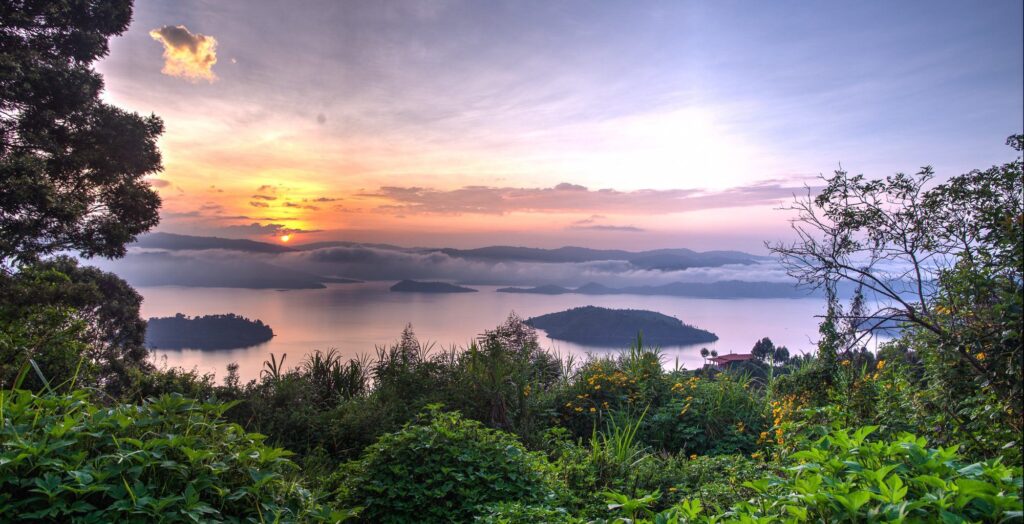
Goma sits on the northern shore of Lake Kivu, directly across the border from Rwanda’s lakeside town of Rubavu (Gisenyi), connected by two land border crossings known as the Grande Barrière and Petite Barrière. The drive from Kigali to the Rwandan border town takes roughly three hours on paved roads, followed by a short walk or vehicle transfer across the border into Goma itself, and onward transfers into Virunga’s Mikeno sector from there. Goma also has its own international-capable airport (GOM) with domestic connections to Kinshasa, though scheduling and reliability have varied considerably given the security situation.

Reaching Kahuzi-Biega via Bukavu

Bukavu sits at the southern tip of Lake Kivu, connected to Rwanda’s Rusizi district and the town of Cyangugu by the Ruzizi border crossings. The drive from Kigali around the western shore of Lake Kivu to the Rwandan border takes five to six hours on a scenic but winding road, considerably longer than the Virunga route, followed by the border crossing and a further roughly ninety-minute drive from Bukavu to Kahuzi-Biega’s Tshivanga park headquarters. Kavumu Airport, north of Bukavu, offers an alternative for travelers arranging domestic DRC charter flights rather than the full road transfer.

Visas and Entry Requirements

DR Congo operates an e-visa system for most nationalities, and a yellow fever vaccination certificate is mandatory for entry, checked at both airports and land borders, exactly as it is entering Rwanda and Uganda. In ordinary times, this is a straightforward process handled well in advance of travel. Under current conditions, both the Goma and Bukavu crossings are administered in territory controlled by M23/AFC rather than the Congolese national government, which means the normal visa and entry process can be disrupted, inconsistent, or subject to change with little notice. Another concrete, practical reason to have a specialist operator with live ground contacts is to confirm entry logistics before you commit to non-refundable flights.

A DR Congo Gorilla Trekking Day: What Actually Happens

When Virunga and Kahuzi-Biega are operating normally, a day of gorilla trekking in DR Congo follows broadly the same structure used across the entire Virunga Massif, with a few distinctly Congolese details worth knowing in advance.

  1. An early breakfast at your lodge or tented camp, typically followed by a transfer to the park’s briefing point Bukima for Virunga’s Mikeno sector or Tshivanga Visitor Center for Kahuzi-Biega.
  2. A ranger briefing covering trekking rules, group formation, and the day’s likely gorilla family assignment, based on tracker reports from earlier that morning.
  3. The trek itself, typically ranging from one to four hours depending on where the gorilla family has moved overnight, is generally shorter on average than Rwanda’s higher-altitude treks, though never guaranteed.
  4. A strictly enforced one-hour observation period once the family is located, held at a minimum seven-meter distance, with no flash photography permitted.
  5. The return hike to the trailhead and a transfer back to your lodge, typically wrapping up by early-to-mid afternoon, leaving the rest of the day free.

The most consequential practical difference from a Rwanda trek is infrastructure density. Rwanda’s Kinigi headquarters processes 24 gorilla families and a well-oiled daily rhythm; Virunga and Kahuzi-Biega process a small fraction of that volume, which in ordinary times has translated into a quieter, more exclusive-feeling encounter, fewer fellow trekkers on the trail, and a genuinely different atmosphere from the more polished Rwandan experience, part of what has long drawn adventurous travelers to DR Congo despite the extra logistical effort.

What to Pack for a DR Congo Safari

Packing for DR Congo starts from the same baseline as a Rwanda or Uganda gorilla trek, with a handful of Congo-specific additions that matter more here than almost anywhere else in the region.
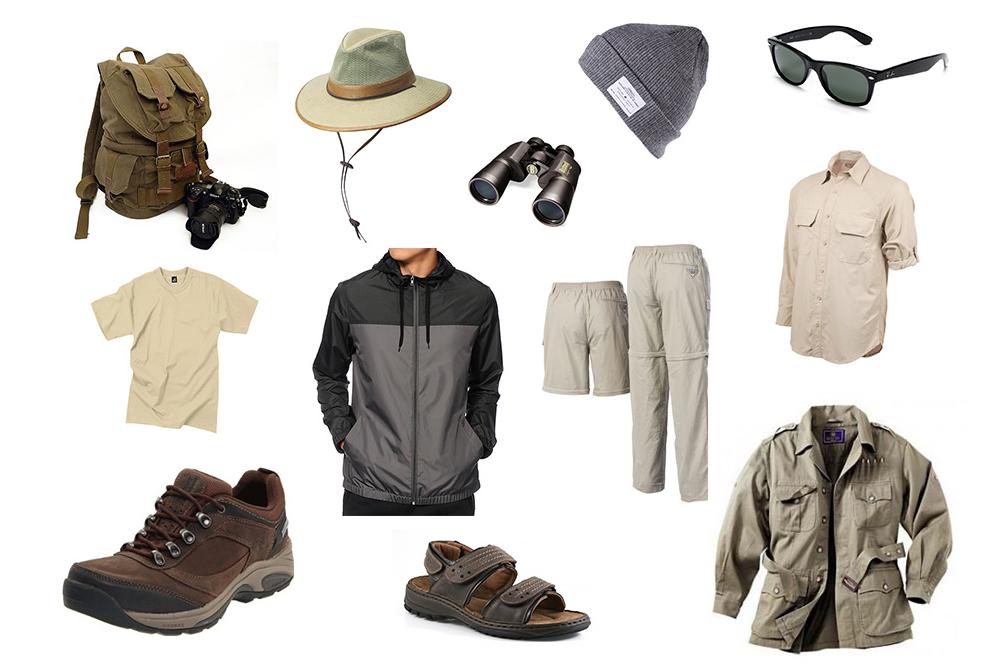
What to Pack for a Safari

  • Long-sleeved shirts and trousers in dark, neutral colors, plus a packable waterproof outer layer identical to Rwanda’s forest-trekking requirements.
  • Waterproof, ankle-supporting trekking boots with strong grip; DR Congo’s forest trails are at least as uneven and wet as Rwanda’s.
  • US dollars in genuinely crisp, undamaged condition and from a recent series. DR Congo’s cash economy is notably strict about bill condition, and it frequently refuses torn, marked, or older-series notes.
  • A comprehensive travel insurance policy that explicitly includes medical evacuation coverage for conflict-affected regions, purchased well before departure and confirmed in writing with the insurer.
  • A satellite communication device or subscription, given inconsistent mobile network coverage and the value of an independent way to reach your operator or embassy if needed.
  • Copies of your passport, visa, and yellow fever certificate stored separately from the originals, along with your embassy’s emergency contact details.

Best Time to Visit DR Congo for Gorilla Trekking

DR Congo follows the same broad seasonal pattern as Rwanda and Uganda because all three countries share the same equatorial East African climate belt. The long dry season, June through September, and the short dry season, December through February, offer the firmest trails and the most comfortable trekking conditions in both Virunga’s Mikeno sector and Kahuzi-Biega’s highland forest.

Best time for gorilla trekking.

The long rains from March through May and the shorter rains in October and November bring muddier, more physically demanding trails, though they also correspond to the traditional low-season permit discounting mentioned earlier in this guide. In an ordinary year, this seasonal calculus would be the main planning consideration. In 2027, it is very much the secondary one: the question of whether the parks are accessible at all currently outweighs the question of which month offers the best trail conditions, and any seasonal planning should happen only after a specialist operator has confirmed current access for your intended dates.

DR Congo vs. Rwanda vs. Uganda: Which Country Should You Choose

All three countries protect part of the same mountain gorilla population. The Virunga Massif spans Rwanda, Uganda, and DR Congo, as covered in detail in our Virunga Mountains guide, but they differ enormously in cost, infrastructure, and, right now, basic accessibility.

Factor Rwanda Uganda DR Congo
Permit cost USD 1,500 USD 800 ~USD 400
Habituated gorilla families 24 ~20 across Bwindi & Mgahinga A small number, historically 1–2 per park
Transfer from the international airport 2–2.5 hrs (Kigali) 8–10 hrs road or short charter (Entebbe) 3–6 hrs via the Rwanda border, then further transfer
Luxury lodge infrastructure Extensive (Singita, Wilderness, One&Only) Growing, mid-range to high-end Historically modest, tented camps
Current accessibility (Aug 2026) Fully open Fully open Suspended
Best suited to Fixed dates, luxury, certainty Value, larger habituated roster Flexible dates, adventurous travelers, once reopened

Choose Rwanda if you want a mountain gorilla encounter on fixed, non-refundable dates within a fully mature luxury infrastructure. It is the safest, most reliable choice for most travelers reading this in 2027 and the one this operator specializes in and can fully commit to. Choose Uganda if value matters more than polish and you’re comfortable with a longer overland transfer; our Rwanda vs. Uganda gorilla trekking comparison covers that decision in full. Consider DR Congo only if you have genuine flexibility in your travel dates, an appetite for a rawer, less-developed style of travel, and the patience to have access confirmed close to departure rather than booked far in advance and, honestly, primarily once the current security situation has meaningfully stabilized.

Where to Stay Near Virunga and Kahuzi-Biega

DR Congo’s accommodation landscape, even in ordinary times, sits at a very different tier from Rwanda’s. Around Virunga’s Mikeno sector, Mikeno Lodge and Bukima Tented Camp have historically served gorilla trekkers, with Lulimbi Tented Camp further south serving the Ishasha savanna sector and Tchegera Island Tented Camp offering a Lake Kivu base with views back toward Nyiragongo’s glowing crater at night. Around Kahuzi-Biega, lodging clusters in Bukavu itself, ranging from modest guesthouses to a handful of comfortable, Lake Kivu-facing hotels, generally more understated than purpose-built safari lodges. None of these options comes close to matching the five-star cluster of properties around Rwanda’s Volcanoes National Park, and that gap is precisely why most experienced regional travelers treat DR Congo as an adventurous add-on to a primarily Rwanda-based trip rather than a luxury destination in its own right. For a full picture of what that Rwandan luxury infrastructure actually looks like, properties like Singita Kwitonda, Wilderness Bisate, and One&Only Gorilla’s Nest, all clustered a short drive from the shared Virunga ecosystem this guide has been describing, see our full breakdown in the Volcanoes National Park guide and the wider Virunga Mountains guide. Most travelers building a serious Rwanda-based journey don’t stop at gorillas either pairing a trek with Nyungwe Forest National Park’s canopy walk and chimpanzee tracking, or Akagera National Park’s Big Five game drives, rounds out a full circuit within a single, fully accessible country, using the kind of luxury lodge infrastructure that DR Congo’s parks, for now, simply cannot match.

Plan Your Rwanda Safari

Start Planning a Private Gorilla Trek

Rwanda gorilla permits sell out months in advance. Secure your dates before the season closes.

Frequently Asked Questions About DR Congo Safaris

Is DR Congo safe for gorilla trekking right now?

As of 2027, the U.S. State Department rates North Kivu, South Kivu, and Ituri provinces at Level 4: Do Not Travel, the highest advisory level, while the country overall sits at Level 3: Reconsider Travel. The M23/AFC armed group has controlled Goma and Bukavu, the two gateway cities to Virunga and Kahuzi-Biega, since early 2025, and fighting has continued in surrounding South Kivu districts through 2026 despite ongoing Doha-framework peace talks. Virunga National Park’s tourism program is suspended, and Kahuzi-Biega should be checked in real time with a specialist operator rather than booked from an older listing.

How much does a gorilla trekking permit cost in DR Congo?

A DR Congo gorilla permit costs approximately USD 400 per person, whether trekking mountain gorillas in Virunga National Park or eastern lowland gorillas in Kahuzi-Biega National Park. Some sources cite a low-season rate closer to USD 200 during the traditional October-to-December window, a discount structure neither Rwanda’s fixed USD 1,500 permit nor Uganda’s USD 800 permit applies. The fee covers park entrance, ranger and tracker services, and one hour of gorilla observation and excludes accommodation, transport, and tips.

What is the difference between Virunga National Park and Kahuzi-Biega National Park?

Virunga National Park, near Goma in North Kivu, protects mountain gorillas and the active Nyiragongo volcano and forms part of the same Virunga Massif shared with Rwanda and Uganda. Kahuzi-Biega National Park, near Bukavu in South Kivu, protects the eastern lowland gorilla, also called Grauer’s gorilla, the largest living gorilla subspecies and a species found nowhere else on Earth. The two parks sit over 200 kilometers apart and require entirely separate trips and permits.

Can I climb Mount Nyiragongo right now?

Not currently. The Mount Nyiragongo lava-lake climb operates through Virunga National Park’s tourism program, which has been suspended since the security deterioration in North Kivu that began in January 2025 with the fall of Goma. The two-day, one-night climb to the crater rim remains one of the most extraordinary volcano experiences in Africa and is worth planning around once Virunga’s official channels confirm a resumption.

Is Virunga National Park open to tourists in 2027?

Virunga National Park’s official tourism program, including gorilla trekking and the Nyiragongo climb, has been suspended since the M23/AFC group captured Goma in January 2025. The situation is monitored closely by conservation and travel organizations, and reopening will likely be gradual and tied to verified security improvements in North Kivu rather than a single announced date, so travelers should check current status directly with a specialist operator rather than assume availability.

What is the eastern lowland gorilla (Grauer's gorilla), and how is it different from the mountain gorilla?

The eastern lowland gorilla, or Grauer’s gorilla (Gorilla beringei graueri), is the larger of the two eastern gorilla subspecies, found exclusively in the lower-altitude forests of eastern DR Congo, principally within Kahuzi-Biega National Park. The mountain gorilla (Gorilla beringei beringei), by contrast, lives at higher altitudes across the Virunga Massif, which is shared by Rwanda, Uganda, and DR Congo, and in Uganda’s separate Bwindi Impenetrable Forest. Grauer’s gorilla was listed as Critically Endangered on the IUCN Red List in 2016, reflecting a population decline driven heavily by decades of instability and mining activity across its forest range.

How do I get to Goma or Bukavu from Rwanda?

Goma, the gateway to Virunga National Park, sits directly across the border from Rwanda’s lakeside town of Rubavu (Gisenyi), roughly three hours by road from Kigali, connected by the Grande Barrière and Petite Barrière border crossings. Bukavu, the gateway to Kahuzi-Biega National Park, sits at the southern tip of Lake Kivu, roughly five to six hours by road from Kigali via the Ruzizi border crossing near Cyangugu. Both crossings are currently administered in territory held by the M23/AFC group rather than the Congolese national government, which can affect standard entry procedures.

Do I need a visa to visit DR Congo?

Yes. DR Congo operates an e-visa system for most nationalities, and a yellow fever vaccination certificate is mandatory for entry at all airports and land borders, exactly as it is entering Rwanda or Uganda. Under current conditions, both main gorilla-trekking gateway crossings, Goma and Bukavu, are administered by non-government authorities, so standard visa processing can be disrupted or inconsistent, and confirming entry logistics with an operator who has current ground contacts is strongly recommended before booking flights.

What vaccinations do I need for DR Congo?

A yellow fever vaccination certificate is mandatory for entry into DR Congo. Standard travel medicine guidance for the wider region also covers hepatitis A and B, typhoid, and malaria prophylaxis, particularly relevant at Goma and Bukavu’s lower Lake Kivu-shore elevations compared with the higher gorilla-trekking forest itself. Travelers should also be aware of an active Ebola outbreak in eastern DRC, which has prompted specific U.S. entry restrictions covered elsewhere in this guide, and they should consult a travel medicine specialist before departure.

How does DR Congo gorilla trekking compare to Rwanda and Uganda?

DR Congo’s gorilla permits, at approximately USD 400, cost roughly a quarter of Rwanda’s USD 1,500 and half of Uganda’s USD 800, and DR Congo uniquely offers both mountain gorillas and the distinct eastern lowland gorilla. Against that, Rwanda offers a two-to-two-and-a-half-hour transfer from Kigali International Airport, 24 habituated gorilla families, and the region’s deepest luxury lodge infrastructure, while Uganda offers a larger habituated family count at a mid-range price. Most significantly in 2027, Rwanda and Uganda are fully open and reliably bookable, while DR Congo’s two gorilla parks currently require real-time access verification due to the security situation in North and South Kivu.

Can Americans travel to DR Congo right now?

Americans can technically obtain a DR Congo visa, but the U.S. State Department currently advises against travel to North Kivu, South Kivu, and Ituri provinces at its highest level, 4: Do Not Travel, and against non-essential travel to the country overall at level 3. A separate, purely administrative complication also applies: due to an active Ebola outbreak in eastern DRC, U.S. citizens who have been present in the country within 21 days of their intended flight cannot board a flight to the United States, a scheduling detail that affects any DR Congo leg regardless of the security situation.

How do I book a gorilla trekking permit for DR Congo?

DR Congo gorilla permits, for both Virunga National Park and Kahuzi-Biega National Park, are issued through the Institut Congolais pour la Conservation de la Nature (ICCN) or through authorized tour operators working with ICCN directly. Given the current security situation, the safest booking approach is through a specialist regional operator who can confirm live access conditions before any deposit is paid, rather than booking directly against a fixed date without a documented contingency plan.

Is the eastern lowland gorilla population endangered?

Yes. The eastern lowland gorilla, or Grauer’s gorilla, was reclassified from Endangered to Critically Endangered on the IUCN Red List in 2016, reflecting a population decline of roughly 77 percent over roughly two decades, driven primarily by illegal mining, bushmeat hunting, and decades of armed conflict across its eastern DRC range. Kahuzi-Biega National Park protects the largest single population of the subspecies remaining in the wild, and conservation organizations such as the Dian Fossey Gorilla Fund continue to support protection work in the region, which is part of why continued, carefully managed tourism revenue matters so directly to the species’ survival once conditions allow it to resume.

Should I book a DR Congo safari for 2027 or 2028?

Given the current Level 4 travel advisory covering North Kivu and South Kivu, most specialist operators, including this one, would not recommend committing non-refundable funds to a fixed DR Congo trekking date. Whether 2027 becomes viable depends heavily on whether the ceasefire framework agreed in Doha and the further roadmap from the Switzerland talks translate into a durable, verified improvement on the ground in North and South Kivu, a question worth revisiting with a specialist operator closer to your intended travel dates rather than deciding a year in advance.

What is included in a DR Congo gorilla trekking permit?

A gorilla trekking permit for DR Congo, priced at approximately USD 400 per person, covers park entrance, a ranger and tracker guide team, and one hour of observation time with a habituated gorilla family, following the same seven-meter minimum distance and no-flash-photography rules enforced across Rwanda and Uganda’s parks. It does not cover accommodation, ground transport to and from the park, porter fees, or gratuities, all of which are budgeted separately as part of a full itinerary.

Ready to Trek? Permits are limited — plan early.

Plan Your Gorilla Trekking Journey

DR Congo’s mountain gorillas, Grauer’s gorillas, and Nyiragongo’s lava lake are genuinely extraordinary, and they belong on the radar of any serious wildlife traveler watching this region, but right now, the responsible way to act on that interest is to create a confirmed, bookable trek to see Rwanda’s gorillas today, in the same Virunga ecosystem, while keeping a close eye on the DRC situation for the future. Rwanda Gorilla Expeditions lives and works in this landscape every day, tracks the region’s security picture as closely as it tracks gorilla families and permit availability, and will always give you a direct, unembellished answer about what is realistically bookable on your timeline in Rwanda now or DR Congo once conditions genuinely allow it.

Browse our full range of Rwanda safaris, read more about how we work and why we’d rather give you an honest answer than a risky booking, and then get in touch. Tell us your dates, and we’ll check permit availability within a few minutes. Visit our contact page to start the conversation.