Zanzibar: The Complete Guide to Tanzania’s Spice Island Beach Escape.

Zanzibar is Tanzania’s spice-island beach escape, now reachable direct from Kigali in 2.5 hours. See beaches, costs, safety tips, and when to go.

Zanzibar is a semi-autonomous archipelago in the Indian Ocean off the coast of Tanzania, made up chiefly of Unguja, the main island most people mean when they say “Zanzibar,” and Pemba, its quieter, clove-scented neighbor to the north, together drawing travellers for coral-sand beaches, the UNESCO-listed Stone Town, and warm, turquoise water that stays swimmable year-round. Unguja alone covers roughly 1,666 square kilometers and is home to close to a million people, while the wider archipelago’s population runs to around 1.9 million, governed with its own president and parliament under Tanzania’s semi-autonomous union structure established in 1964.

Zanzibar Travel Guide: Beaches, Stone Town & Getting There

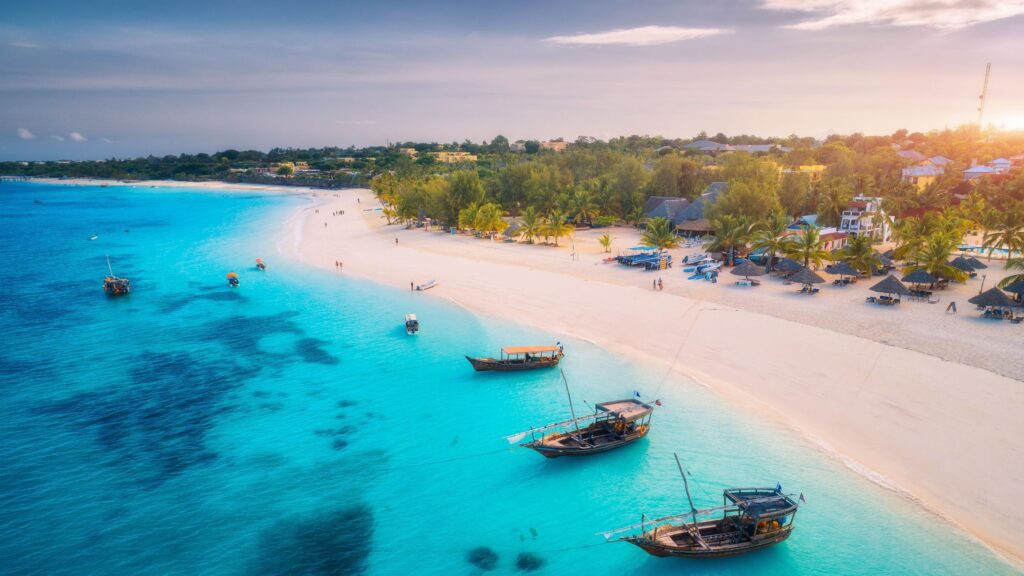
Zanzibar’s coastline breaks into genuinely distinct zones rather than one uniform beach: the calm, tide-sheltered north around Nungwi and Kendwa, the wind-driven kitesurfing coast at Paje in the southeast, and the quieter, reef-fringed northeast around Matemwe, gateway to the Mnemba Atoll marine reserve. Beyond the sand, the island’s single national park, Jozani Chwaka Bay, protects the Zanzibar red colobus monkey, a primate found nowhere else on Earth, while Stone Town’s eighteenth- and nineteenth-century coral-stone streets carry a complicated history as the historic center of the East African spice and slave trades. For international travellers already planning a Rwanda gorilla safari, Zanzibar has become considerably easier to reach: RwandAir launched a direct, nonstop flight from Kigali in December 2025, cutting what used to be a multi-stop connection down to a single two-and-a-half-hour hop and making a gorillas-then-beach itinerary genuinely straightforward to book for the first time.

This Zanzibar travel guide is written for the traveller researching a Rwanda gorilla trek, a wider East Africa wildlife safari, and a beach finale all at once, which is how most people searching for Zanzibar are actually planning their trip. Rwanda Gorilla Expeditions is a Rwanda-based specialist, and our core expertise sits with permits, guides, and lodges in Volcanoes National Park, not with running ground operations in Zanzibar itself. What we can do, and what this guide is built to do, is give you an accurate, thorough picture of the island so you know exactly what to ask for, when to go, and how the logistics of pairing it with a Rwanda gorilla trekking safari actually work, and then help you build that combined itinerary from the Rwanda side.

Permits are limited — spaces fill months ahead

Reserve Your Private Gorilla Trek

Speak with a Rwanda-based specialist today. We secure permits, match you to the right gorilla family, and plan every detail around your schedule.

No group departures · Private itineraries only · Direct Rwanda expertise

What and Where Is Zanzibar? Geography and the Two Islands

Zanzibar is an archipelago of the Indian Ocean lying roughly 25 and 50 kilometers off Tanzania’s eastern coastline, consisting of two main islands, Unguja and Pemba, along with a scatter of smaller islets, and it has held semi-autonomous status within the United Republic of Tanzania since the 1964 union of the Zanzibar Sultanate’s successor state with mainland Tanganyika. Zanzibar retains its president, parliament, and Ministry of Health separate from the mainland government in Dodoma, a distinction that occasionally surprises first-time visitors who assume “Zanzibar” and “Tanzania” are simply interchangeable terms for the same government.

Zanzibar Stone Town

Unguja, at approximately 1,666 square kilometers and home to close to a million residents, is what almost every visitor means by “Zanzibar Island”: it holds Stone Town, the international airport, and essentially all of the beach resort areas covered in this guide. Pemba, roughly 50 kilometers to the north, is smaller, more rural, and considerably less visited, known instead for clove production, quieter diving, and a slower pace that appeals to a small number of travellers seeking somewhere genuinely off the standard circuit. Unless a specific Pemba itinerary is the goal, this guide, like the overwhelming majority of Zanzibar travel, focuses on Unguja.

A Brief History of Zanzibar: Sultans, Spices, and Stone Town

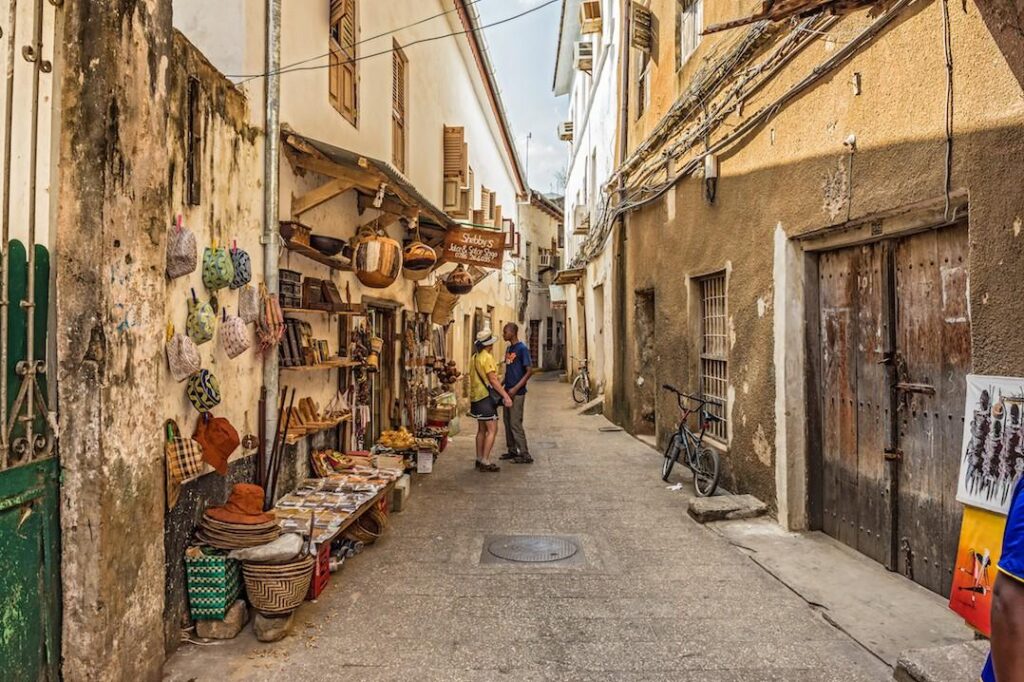
Zanzibar’s Stone Town has been inscribed as a UNESCO World Heritage Site since 2000, recognized for its virtually intact urban fabric as a Swahili coastal trading town shaped by more than a thousand years of contact between Africa, Arabia, India, and Europe. The town’s coral-stone core developed most intensively between the eighteenth and nineteenth centuries, reaching its peak when the Sultan of Oman relocated his capital to Zanzibar in 1840, transforming the town into the dominant commercial hub of the western Indian Ocean and giving it the distinctive Swahili-Arab architecture, ornately carved wooden doors, and labyrinthine street plan that define it today.

The Spice and Slave Trades

Zanzibar’s nineteenth-century wealth rested on two very different trades that ran in parallel: cloves, cinnamon, and nutmeg grown on the island’s plantations, which earned Zanzibar and Pemba the historical nickname “the Spice Islands,” and the trafficking of enslaved people, for which Zanzibar’s port became one of East Africa’s largest markets. Historians estimate that approximately 600,000 people were sold and transported through Zanzibar’s slave market between 1830 and 1863 alone, a history the town confronts directly rather than obscures: the Anglican Christ Church Cathedral, completed in 1873 on the site of the former slave market, positions its altar precisely where the market’s whipping post once stood, and the cathedral’s basement preserves the cramped holding chambers where captives were kept before auction.

From Sultanate to Union

The Old Fort, built by Omani Arabs between 1698 and 1701 on the site of an earlier Portuguese chapel, is Stone Town’s oldest surviving structure and today hosts craft stalls and the Zanzibar International Film Festival each July. Zanzibar briefly held the record for the shortest war in recorded history: the Anglo-Zanzibar War of 27 August 1896, triggered by a disputed succession to the sultanate, lasted only 38 to 45 minutes before the British Royal Navy shelled the sultan’s palace into surrender. The modern era arrived in January 1964, when the Zanzibar Revolution overthrew the sultanate, and in April of that year Zanzibar united with Tanganyika to form the United Republic of Tanzania, retaining the semi-autonomous status it holds to this day. One more, entirely different, footnote: Stone Town is the birthplace of Freddie Mercury, and his childhood home draws a steady stream of Queen fans to a modest doorway most visitors would otherwise walk straight past.

Zanzibar’s Best Beaches: Which Coast Is Right for You

Zanzibar’s beaches divide into genuinely different experiences depending on which coast you choose, and the single most important variable most first-time visitors underestimate is tide: the east coast around Paje and Jambiani experiences dramatic tidal swings that expose wide sand and seagrass flats twice a day, while the north coast around Nungwi and Kendwa stays swimmable at virtually any tide, a distinction that should weigh heavily on where you book if swimming access matters more to you than kitesurfing wind.

Beach / Area Coast Best For
Nungwi North tip Swimming at any tide, nightlife, sunset views, snorkeling, and diving day trips
Kendwa North (south of Nungwi) Legendary sunsets, full moon parties, minimal tidal effect, relaxed daytime pace
Matemwe Northeast Closest beach base to Mnemba Atoll, quieter luxury, romantic and honeymoon stays
Paje Southeast Kitesurfing and windsurfing capital of East Africa, big tidal flats, active traveller crowd
Jambiani South of Paje Slow pace, community tourism, red colobus sightings near the village, big tides
Stone Town West Coast History, culture, and restaurants: a base for exploring rather than a beach stay

For a first Zanzibar visit that prioritizes swimming and photogenic sunsets without sacrificing nightlife options, Nungwi or Kendwa are the safest recommendations; for travelers whose Rwanda safari already delivered the wildlife and who now want pure relaxation with world-class diving on the doorstep, Matemwe is the better-informed choice.

Plan Your Rwanda Safari

Start Planning a Private Gorilla Trek

Rwanda gorilla permits sell out months in advance. Secure your dates before the season closes.

Beyond the Beach: Wildlife, Spice Tours, and Cultural Experiences

Zanzibar’s single national park, Jozani Chwaka Bay, protects the only wild population of the Zanzibar red colobus monkey on Earth, a species found nowhere else in the world and one of the more genuinely rare wildlife encounters available anywhere on the East African coast. Established as a forest reserve in 1960 and upgraded to full national park status in 1984, the roughly 50-square-kilometer park combines mahogany forest, coral rag thicket, and a mangrove boardwalk, and its entrance fee of approximately USD 10 includes a mandatory ranger guide who will walk you directly to a red colobus troop, typically within a few minutes of the trailhead since the monkeys are notably unbothered by human presence.

Spice Farm Tours

A spice farm tour is the closest thing Zanzibar has to a signature cultural activity, walking visitors through working plantations of clove, cinnamon, nutmeg, vanilla, and black pepper while a guide identifies each plant by scent and taste, a direct link to the trade that built Stone Town’s wealth. Spice tours run roughly USD 25 to 30 on their own, or USD 60 to 80 when combined with a Jozani Forest visit as a single full-day excursion, and are usually paired with a simple Swahili lunch prepared with the same spices.

Prison Island and Kizimkazi Dolphins
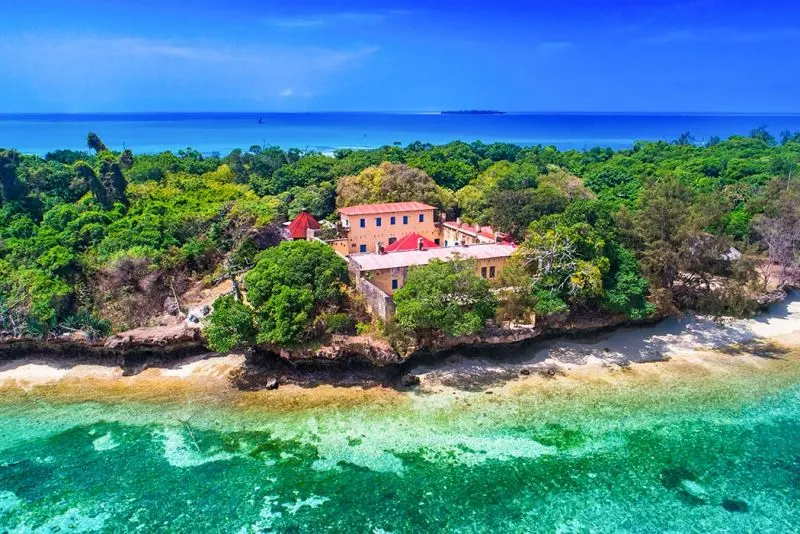
Prison Island (Changuu Island)

Prison Island (Changuu), a short boat ride from Stone Town, was built as a detention facility for rebellious slaves before becoming a quarantine station, and today it is best known for a colony of giant Aldabra tortoises, some reportedly more than a century old, alongside decent snorkeling on the surrounding reef. On the island’s south coast, Kizimkazi village is the departure point for dolphin-watching boat trips, with bottlenose and humpback dolphins present in the channel through much of the year and sightings most reliable in the morning during the dry season months.

Diving, Snorkeling, and Water Sports at Mnemba Atoll and Beyond

Mnemba Atoll, a small coral island roughly two kilometers off Zanzibar’s northeast coast near Matemwe, anchors a protected marine reserve widely regarded as the finest snorkeling and diving site in Zanzibar, with consistently clear water, healthy coral, and regular sightings of green turtles, reef sharks, and dolphins. Diving and snorkeling conditions peak during the two dry seasons, with visibility commonly reaching 20 to 30 metres between June and October and again from December into March, while the long rains from March to May bring plankton blooms that noticeably cloud the water and lead many dive operators to scale back or pause operations, particularly in April.

Kitesurfing at Paje

Paje’s combination of a shallow, reef-protected lagoon and reliably strong, consistent side-onshore wind has made it one of the most respected kitesurfing destinations in Africa, with two distinct wind seasons: the Kusi, blowing from the southeast at 15 to 25 knots from roughly mid-June to mid-October, and the Kaskazi, blowing from the northeast at 14 to 20 knots from roughly mid-December to mid-March. April and November sit between these seasons and are generally the weakest wind months, worth avoiding if kitesurfing is the primary purpose of your trip.

Whale and Dolphin Watching

Humpback whales migrate directly through the Zanzibar Channel between roughly July and October, with sightings possible on boat trips from the island itself, a genuine bonus for travelers whose Rwanda trip already falls in the June-to-September dry season. Whale sharks are a different matter: the reliable place to see them is Mafia Island, further south along the Tanzanian coast and a separate destination from Zanzibar, best visited between November and February; several Zanzibar-based operators run add-on trips there, but it is worth being clear-eyed that whale sharks are not a Zanzibar-proper wildlife encounter.

Combining Zanzibar With a Rwanda Gorilla Safari

Zanzibar has become a materially easier extension to a Rwanda itinerary since RwandAir launched a direct, non-stop Kigali-to-Zanzibar route in December 2025, operating four times a week on Mondays, Wednesdays, Fridays, and Sundays with a flight time of roughly two and a half hours, a route the airline has explicitly positioned as linking Rwanda’s gorilla trekking market with Zanzibar’s beach and leisure market. Before this route existed, reaching Zanzibar from Kigali meant a connection through Nairobi, Addis Ababa, or Dar es Salaam, typically adding several hours and an extra airport to the journey; the direct service removes that friction entirely and is the single biggest reason a combined itinerary now makes practical sense for travelers who previously would have treated the two destinations as separate trips.
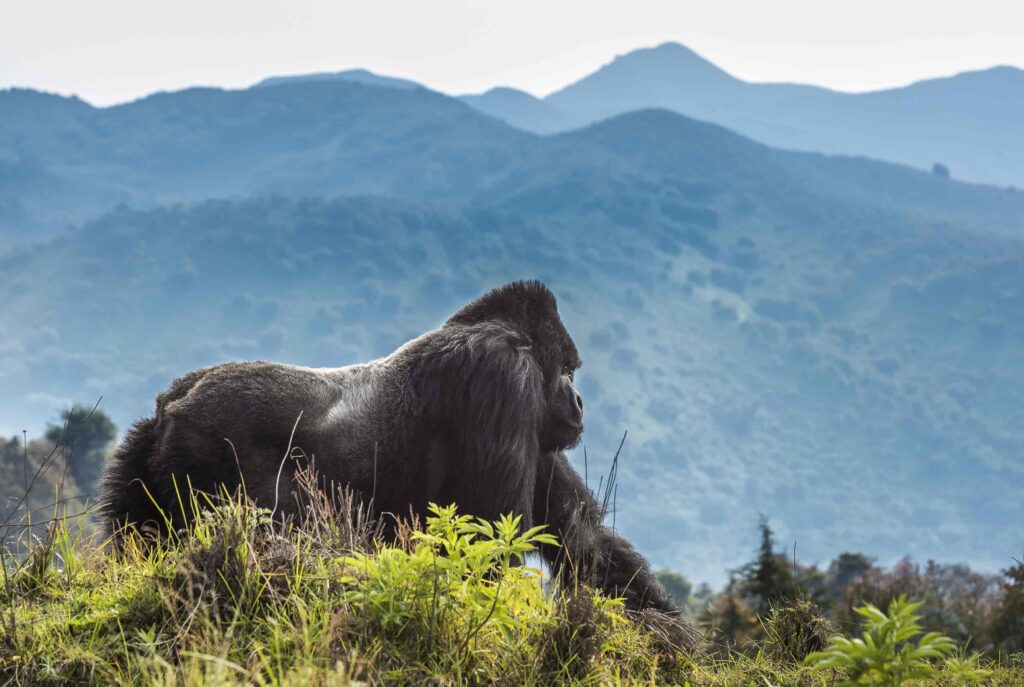
Volcanoes National Park Rwanda: Gorilla Trekking Guide 2027

The natural shape of a combined trip is gorillas first, beach second: trek in Volcanoes National Park, fly out of Kigali, and land in Zanzibar with several unstructured days ahead rather than a physically demanding trek still to come. Because Zanzibar’s two dry seasons (June to October and December to February) overlap closely with Rwanda’s own dry-season trekking windows, a well-timed itinerary can deliver firm forest trails for the gorilla trek and calm, clear water for the beach days without compromising on either. Our Luxury Rwandan Primate Safari and Best of Rwanda’s National Parks itineraries are both routed to end in Kigali, making a same-day or next-day connection to Zanzibar genuinely realistic, and we build the Zanzibar leg’s flights and transfers directly into the itinerary planning, even though our on-the-ground operations remain Rwanda-based.

Plan Your Rwanda Safari

Start Planning a Private Gorilla Trek

Rwanda gorilla permits sell out months in advance. Secure your dates before the season closes.

Practical Logistics: Getting There, Visas, Costs, and What to Pack.

Zanzibar is reached through Abeid Amani Karume International Airport (ZNZ) in Zanzibar City, served by RwandAir’s direct Kigali route, connections via Nairobi, Addis Ababa, or Dar es Salaam on Kenya Airways, Ethiopian Airlines, and Precision Air, and seasonal long-haul service from the Gulf and Europe, including Etihad’s Abu Dhabi route running June through September. Travellers combining Zanzibar with a mainland Tanzania safari also have the option of a roughly two-hour high-speed ferry from Dar es Salaam, run by operators including Azam Marine, as an alternative to flying.

Visa and Entry Requirements

Most nationalities require a Tanzania tourist visa, priced at USD 50 for the majority of passport holders or USD 100 for US citizens (issued as a multiple-entry visa), and this single visa, obtained through Tanzania’s official e-visa portal or on arrival, covers both mainland Tanzania and Zanzibar without needing a second application. Citizens of fellow East African Community states, including Rwanda, Uganda, Kenya, Burundi, and South Sudan, do not need a tourist visa at all. Since October 2024, Zanzibar has additionally required all visitors to carry mandatory travel insurance, administered as a tourism levy of approximately USD 60 per person, a requirement layered on top of the standard Tanzania visa rather than replacing it. A yellow fever vaccination certificate is required if you are arriving from, or transiting for more than twelve hours through, a yellow fever endemic country, a detail worth flagging directly to travelers connecting through Kigali, since Rwanda itself falls into that category.

Zanzibar Holiday Costs at a Glance

Item Indicative Cost
Tanzania tourist visa USD 50 (USD 100 for US citizens)
Zanzibar mandatory travel insurance / tourism levy ~USD 44 per person [CONFIRM]
Jozani Forest entrance (includes guide) ~USD 10
Spice farm tour USD 25–30 (USD 60–80 combined with Jozani)
Prison Island boat trip and entrance USD 20–30
Mnemba Atoll snorkeling excursion USD 40–70
Guided Stone Town walking tour USD 20–40

What to Pack for a Zanzibar Holiday

What to Pack and Wear for a Ngorongoro Crater Safari

  • Lightweight, breathable clothing for beach days, plus a modest cover-up (shoulders and knees covered) for Stone Town and village areas.
  • Reef-safe sunscreen, since standard sunscreen is discouraged or restricted at some marine reserve sites, including Mnemba Atoll.
  • A wide-brimmed hat and sunglasses: Zanzibar sits six degrees south of the equator, and sun exposure is intense year-round.
  • Sturdy sandals or water shoes for exploring exposed tidal flats and reef areas at low tide on the east coast.
  • Malaria prophylaxis and insect repellent, particularly if travelling during or shortly after the rainy season.
  • A printed or downloaded copy of your Tanzania e-visa and Zanzibar insurance confirmation, which you will need to show on arrival.

The Best Time to Visit Zanzibar

Zanzibar has two dry seasons that offer the best all-round conditions: June to October, cooler and driven by the Kusi wind, and December to February, hotter and driven by the Kaskazi wind, both delivering clear skies, calm-to-moderate seas, and the best diving and snorkeling visibility of the year. The long rains from March to May, with April typically the wettest month, bring daily afternoon downpours, rougher seas, and reduced underwater visibility, and a meaningful number of smaller properties close or scale back operations during this window. The short rains in November are lighter and briefer, and travellers planning around the two main dry seasons often overlook them.

Best time for gorilla trekking.

Period Conditions Best For
June–October Cooler (24–27°C), Kusi wind, driest visibility Diving, kitesurfing, humpback whales (Jul–Oct)
December–February Hot (28–34°C), Kaskazi wind, peak crowds Sunbathing, Christmas/New Year travel, kitesurfing
March–May Long rains occur from March to May, with April being the wettest month; some properties close during this period. Lowest prices, quietest beaches
November Short rains, brief and lighter Shoulder-season value, fewer crowds

Culture, Dress, and Respectful Travel on a Muslim-Majority Island

Zanzibar’s population is overwhelmingly Muslim, and while beach resort areas operate with Western norms, including alcohol service and swimwear on the sand, Stone Town and the island’s villages are considerably more conservative, and dressing modestly there, covering shoulders and knees, is both a matter of basic respect and, in practice, the more comfortable choice in a devout community. During Ramadan, dates of which shift each year on the Islamic lunar calendar, many local restaurants close or reduce hours during daylight, and visitors should expect a quieter, more subdued island atmosphere outside the resort bubble, though resorts themselves continue to operate largely as normal for guests. Photographing local people, particularly women, without asking first is poorly received, and a friendly request is virtually always granted.

Where to Stay: Zanzibar’s Luxury Lodge Landscape

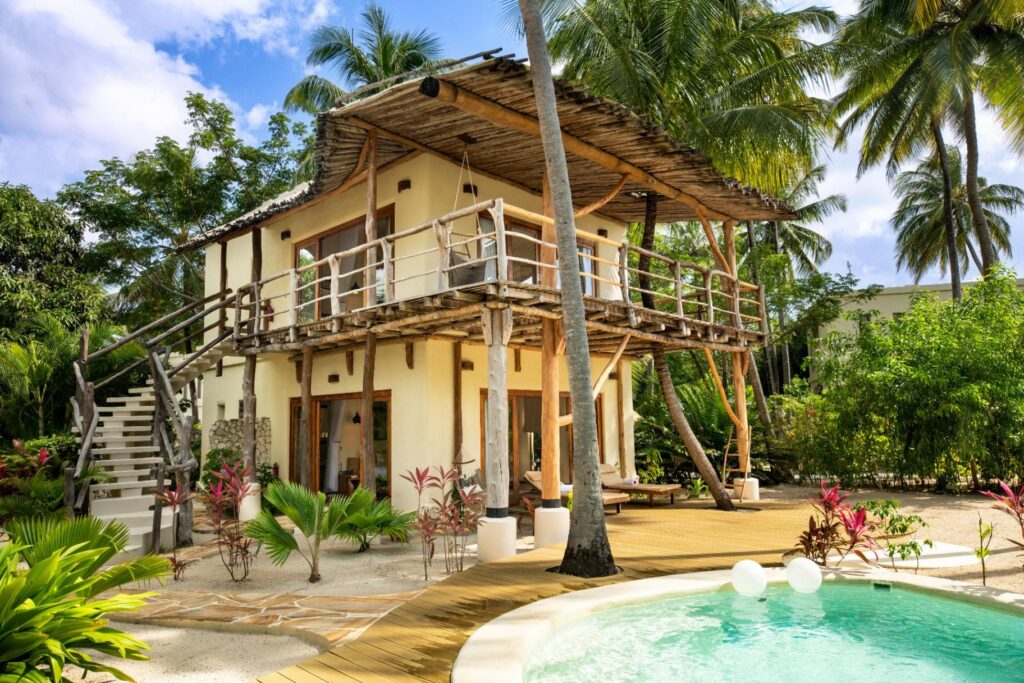
Zanzibar’s high-end accommodation has grown considerably in the past decade, with genuinely world-class properties now anchoring each of the island’s main beach zones rather than being concentrated in one area, giving travellers real choice over which coast’s character, tidal behavior, and activity focus best fits their trip.

Zanzibar White Sand Luxury Villas & Spa

Property Location Character
Kilindi, Zanzibar Kendwa area (north) Fifteen white-domed pavilion villas across 50 acres, full butler service, all-inclusive
Zuri Zanzibar Kendwa (north) 300-meter tide-free private beach, design-led, strong eco-focus
Gold Zanzibar Beach House & Spa Kendwa (north) Sunset-facing all-inclusive resort with a well-regarded spa
The Residence Zanzibar Kiwengwa (east-central) Sixty-six private bungalows, understated luxury, full-service beach club

For travellers who want their lodge choice matched precisely to the wider itinerary, sequencing, and season, our team can advise on Zanzibar property selection as part of a combined Rwanda-and-Zanzibar planning conversation, even though the booking itself sits outside our core Rwanda-based operations.

Plan Your Rwanda Safari

Start Planning a Private Gorilla Trek

Rwanda gorilla permits sell out months in advance. Secure your dates before the season closes.

Frequently Asked Questions About Zanzibar.

Where is Zanzibar located, and is it part of Tanzania?

Zanzibar is a semi-autonomous archipelago in the Indian Ocean, lying roughly 25 to 50 kilometers off the coast of mainland Tanzania, and it has been part of the United Republic of Tanzania since the 1964 union of Zanzibar and Tanganyika. Despite this union, Zanzibar retains its president, parliament, and government ministries, a distinction that matters practically since Zanzibar issues its own tourism requirements, including a mandatory insurance levy, separate from mainland Tanzania. The archipelago’s main island, Unguja, is what almost everyone means when they say “Zanzibar,” while the smaller, quieter island of Pemba lies further north.

How do I get to Zanzibar from Rwanda?

RwandAir launched a direct, non-stop flight from Kigali to Zanzibar in December 2025, operating four times a week on Mondays, Wednesdays, Fridays, and Sundays, with a flight time of approximately two and a half hours. Before this route existed, travelers connected through Nairobi, Addis Ababa, or Dar es Salaam, typically adding several hours to the journey. This direct service is the main reason a combined Rwanda gorilla trekking and Zanzibar beach trip has become straightforward to plan, and it is the routing we build into itineraries that pairs the two destinations.

Do I need a visa for Zanzibar?

Yes, most nationalities need a Tanzania tourist visa, which costs USD 50 for most passport holders or USD 100 for US citizens, and this single visa covers both mainland Tanzania and Zanzibar without a separate application. Citizens of East African Community member states, including Rwanda, Uganda, Kenya, Burundi, and South Sudan, are exempt from the tourist visa requirement. Since October 2024, Zanzibar has additionally required all visitors to carry mandatory travel insurance through a tourism levy of approximately USD 60 per person, layered on top of the standard Tanzania visa rather than replacing it.

How much does a trip to Zanzibar cost?

Entry costs alone run to roughly USD 94 to 144 per person before you book a single night, covering the Tanzania visa and Zanzibar’s mandatory insurance levy, and activities such as a Jozani Forest visit, a spice tour, or a Mnemba Atoll snorkeling trip typically range from USD 10 to 70 each. Accommodation varies enormously, from simple beach guesthouses to ultra-luxury villas such as Kilindi Zanzibar or Zuri Zanzibar, and the overall cost of a Zanzibar stay depends heavily on which of these tiers you choose and the season you travel in. For an accurate total, we recommend including Zanzibar in a combined quote with your gorilla trekking plans in Rwanda, since flights and timing affect the final cost significantly.

What is the best time of year to visit Zanzibar?

Zanzibar has two dry seasons that offer the best conditions: June to October, cooler and driven by the Kusi wind, and December to February, hotter and driven by the Kaskazi wind, both delivering clear skies and the best diving and snorkeling visibility of the year. The long rains from March to May, with April typically the wettest month, bring daily downpours and rougher seas, and several smaller properties reduce operations or close during this period. Because Zanzibar’s June-to-October dry season overlaps closely with Rwanda’s own prime gorilla trekking window, a single well-timed trip can deliver excellent conditions for both destinations.

Which Zanzibar beach should I choose?

Nungwi and Kendwa, on the island’s north tip, are the safest first-time choice since they remain swimmable at virtually any tide and offer strong sunset views and a lively evening atmosphere, particularly at Kendwa. Paje and Jambiani, on the southeast coast, experience dramatic tidal swings that expose wide sand and seagrass flats twice daily, making them better suited to kitesurfers and travelers who prioritize wind sports over guaranteed swimming access. Matemwe, on the northeast coast, sits closest to the Mnemba Atoll marine reserve and suits travellers seeking a quieter, more romantic base with world-class diving nearby.

Is Zanzibar safe to visit?

Zanzibar is generally considered safe for international travellers, with low rates of violent crime and a well-established tourism infrastructure in its main beach areas and Stone Town. As with most popular destinations, petty theft can occur in crowded markets and unlit areas at night, and standard precautions, using licensed tour operators, avoiding isolated beaches after dark, and securing valuables, are sufficient for the vast majority of visitors. The more relevant safety consideration for most travellers is practical rather than criminal: respecting tidal patterns when swimming on the east coast and using reputable operators for boat trips and water sports.

Is malaria a risk in Zanzibar?

Yes, though Zanzibar is classified as a malaria pre-elimination setting with a relatively low population prevalence, malaria transmission persists, particularly around the peaks of the two rainy seasons. Prophylaxis and mosquito precautions, including repellent and sleeping under a treated net, are generally recommended for visitors, even though the risk in Zanzibar’s main tourist beach areas is lower than in many parts of mainland East Africa. Travellers should consult a travel medicine specialist before departure, particularly if their itinerary also includes lower-altitude areas of a Rwanda or mainland Tanzania safari.

Can I combine Zanzibar with gorilla trekking in Rwanda?

Yes, and this has become considerably easier since RwandAir’s direct Kigali-to-Zanzibar flight launched in December 2025, cutting a journey that previously required a connection through Nairobi or Addis Ababa down to a single two-and-a-half-hour flight. The natural sequence is gorillas first and beach second: trek in Volcanoes National Park, fly out of Kigali, and arrive in Zanzibar with the physically demanding part of the trip already behind you. Our Luxury Rwandan Primate Safari and similar itineraries are routed with this connection specifically in mind.

What is there to do in Zanzibar besides the beach?

Zanzibar’s single national park, Jozani Chwaka Bay, protects the Zanzibar red colobus monkey, a species found nowhere else on Earth, and can be visited for roughly USD 10, including a guide. Stone Town, a UNESCO World Heritage Site since 2000, offers guided walks through its historic slave trade sites, the Old Fort, and the House of Wonders, while spice farm tours walk visitors through working clove, cinnamon, and vanilla plantations for around USD 25 to 30. Prison Island’s giant tortoise colony and Kizimkazi’s dolphin-watching boat trips round out the island’s non-beach activities.

Is Stone Town worth visiting?

Yes, Stone Town is Zanzibar’s single most significant cultural site, inscribed as a UNESCO World Heritage Site in 2000 for its virtually intact Swahili trading-town architecture and its role at the center of the nineteenth-century Indian Ocean spice and slave trades. The Christ Church Cathedral, built in 1873 on the site of the former slave market with its altar positioned where the whipping post once stood, is one of the most sobering and important historical sites in East Africa, and the Old Fort, dating to 1698, is the town’s oldest surviving building. A half- or full-day trip in Stone Town is generally recommended, even for travelers whose primary focus is the beach.

What should I wear in Zanzibar?

Beach resort areas operate under Western norms, so standard swimwear and light beachwear are entirely appropriate on the sand and around the pool. Stone Town and Zanzibar’s villages are considerably more conservative given the island’s predominantly Muslim population, and dressing modestly there, covering shoulders and knees, is both respectful and, in practice, more comfortable in a devout community setting. Lightweight, breathable fabrics work best given Zanzibar’s consistently high heat and humidity, and a cover-up for the transition between beach and town is worth packing.

How many days do I need in Zanzibar?

Four to seven days is the range that most travellers find gives a genuine sense of the island without feeling rushed: enough time for a Stone Town day, a spice tour or Jozani Forest visit, at least one Mnemba Atoll or diving excursion, and several unhurried beach days. Travellers combining Zanzibar with a Rwanda gorilla safari often allocate a shorter three-to-four-day beach finale given time constraints, while dedicated beach or honeymoon trips frequently extend to a week or more, particularly at properties like Kilindi Zanzibar or Zuri Zanzibar designed for slower, all-inclusive stays.

What is the Zanzibar red colobus monkey, and where can I see it?

The Zanzibar red colobus is a primate subspecies found nowhere else on Earth, endemic entirely to Unguja Island, and it is protected within Jozani Chwaka Bay National Park, the island’s only national park. Established as a forest reserve in 1960 and upgraded to full national park status in 1984, the roughly 50-square-kilometer park’s entrance fee of approximately USD 10 includes a mandatory ranger guide who typically locates a red colobus troop within a few minutes of the trailhead, since the monkeys show little concern about human observers. The park also includes a mangrove boardwalk and smaller populations of Sykes’ monkeys and blue vervet monkeys.

Can I dive or snorkel at Mnemba Atoll?

Yes, Mnemba Atoll, a small coral island roughly two kilometers off Zanzibar’s northeast coast near Matemwe, anchors a protected marine reserve widely regarded as the best diving and snorkeling site in Zanzibar, with regular sightings of green turtles, reef sharks, and dolphins. Conditions peak during the two dry seasons, June to October and December to March, when visibility commonly reaches 20 to 30 meters, while the March-to-May long rains bring plankton blooms that noticeably reduce underwater clarity. Snorkeling excursions to Mnemba typically cost USD 40 to 70 per person and are best booked from Matemwe or Nungwi.

How do I book a Rwanda gorilla safari with a Zanzibar extension?

Rwanda Gorilla Expeditions builds every itinerary from your dates, interests, and fitness level, and a Zanzibar extension is planned as part of that same conversation rather than a separate booking process. Because RwandAir’s direct Kigali-to-Zanzibar flight now makes the connection straightforward, we route your gorilla trekking days in Volcanoes National Park to end in Kigali with the Zanzibar flight already factored into the itinerary timing. Tell us your dates, and we will check gorilla permit availability, confirm the Zanzibar flight schedule, and build a full day-by-day itinerary covering both destinations, usually within a few minutes of your enquiry.

What is the mandatory Zanzibar travel insurance?

Since October 2024, Zanzibar has required all visitors to carry mandatory travel insurance, administered as a tourism levy of approximately USD 60 per person, separate from and in addition to the standard Tanzania tourist visa fee. This requirement applies specifically to Zanzibar and is not part of the mainland Tanzania entry process, which occasionally catches travelers off guard if they research only the mainland visa requirements. The exact rate and application process should be reconfirmed close to your travel dates, since Zanzibar’s entry requirements have changed more than once recently.

Ready to Trek? Permits are limited — plan early.

Plan Your Trip

Zanzibar’s beaches, Stone Town’s history, and the Zanzibar red colobus are worth the trip in their own right, and they become considerably more worthwhile when the physically demanding, once-in-a-lifetime part of your journey, gorilla trekking in Rwanda, comes first. Rwanda Gorilla Expeditions designs every itinerary around your specific dates and interests, and with RwandAir’s direct Kigali-to-Zanzibar route now running four times a week, pairing the two destinations into a single, well-sequenced trip has never been more straightforward. Tell us your dates, and we’ll check permit availability within a few minutes. You can reach the team on WhatsApp or by email, or visit our contact page for every way to get in touch.