Best Things to Do at Lake Kivu
The best things to do at Lake Kivu are slow ones: a private boat cruise to the islands, a coffee-country morning, a kayak or paddleboard session at dawn, an unhurried swim, and a sunset on the water, with the Congo Nile Trail available for travelers who want to walk. The lake rewards people who give it time, and it punishes anyone who tries to turn it into another checklist.
Private boat cruises and Napoleon Island
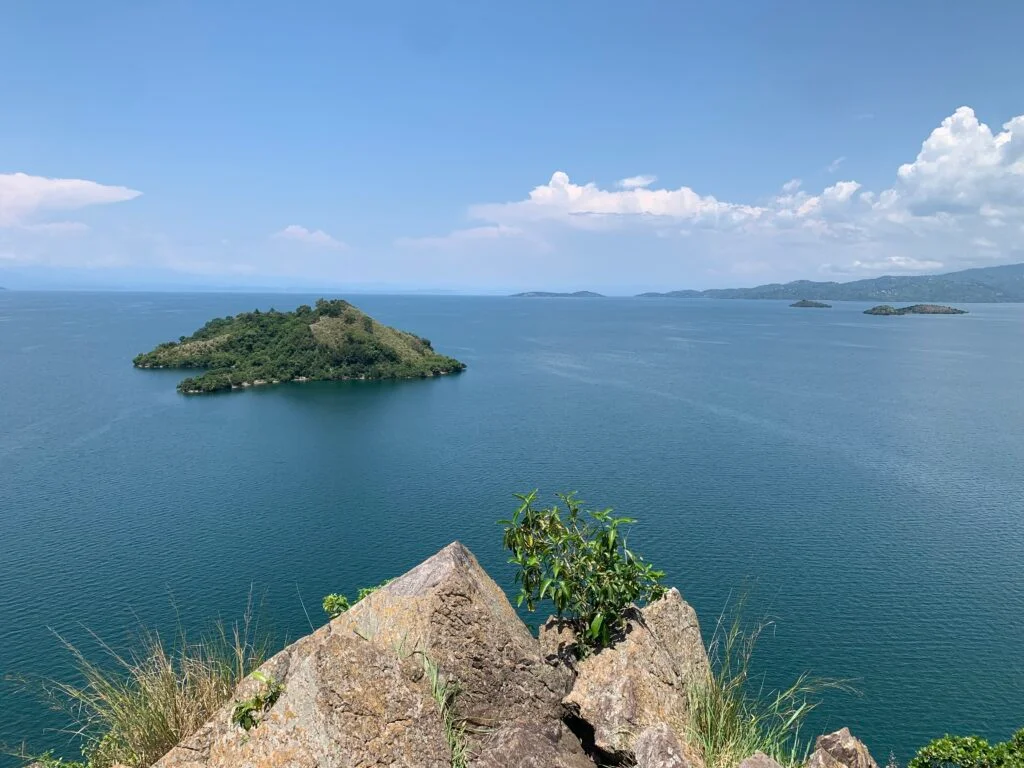
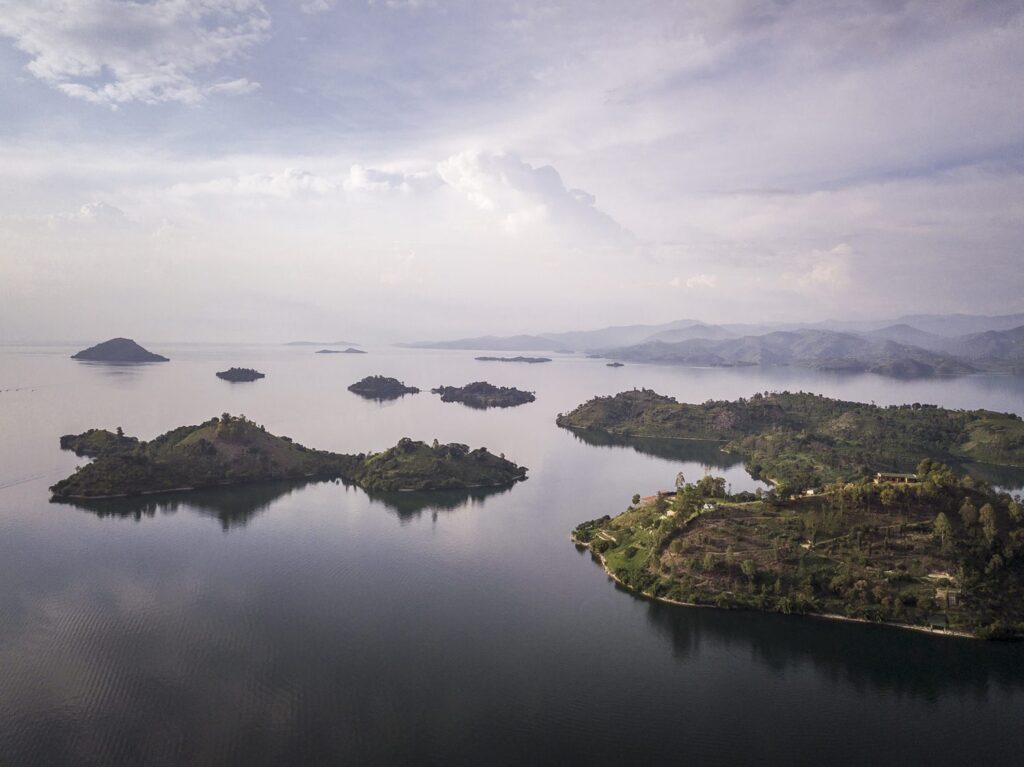
A boat trip is the single best way to understand Lake Kivu, because from the water you can see the full geometry of the terraced shoreline. From Karongi, a typical excursion takes about 30 minutes to reach Napoleon Island, named because its profile is said to resemble the hat. The island is known for a substantial colony of fruit bats, with local estimates running to tens of thousands of animals, and for a steep, rocky walk to a summit viewpoint over the lake and its neighboring islands. Birdlife includes African fish eagles, cormorants, and herons. Nearby islands, including the one locally called Monkey Island and Peace Island, can be combined into a half-day. The island walk is steeper than it looks, so it is best done in the cooler early morning, in proper shoes and with a guide. Local boat outings are inexpensive, but on a luxury safari we organize a private boat with life jackets, a captain, a guide, a picnic, and cold drinks, and we time it so that you are back on a terrace before the sun goes down.
Dawn fishing and the fishermen’s songs
Before sunrise, traditional wooden fishing boats go out in formation, lashed together in pairs and trios, with crews singing in rhythm as they paddle. Joining a dawn departure with a local crew is one of the quiet highlights of a Kivu stay, and it offers a more honest window into lakeside life than most staged cultural performances. Evening fishing, with lanterns drawing the small isambaza fish to the surface, is equally striking from the shore. It is a genuine working landscape, not a show, which is precisely why it is worth seeing.
Coffee country: washing stations and plantations
The hills above Lake Kivu are among Rwanda’s prime Arabica counties, and the shoreline is part of what is sometimes called the Kivu Belt. A visit to a working coffee plantation and washing station is a staple of our 6-day Lake Kivu itinerary, which includes a tour of the Kimbiri coffee plantation. The main harvest runs roughly from March to June, when cherries are hand-picked, floated, pulped, and laid out on raised drying beds within sight of the lake; outside of harvest, you can still see the full growing and processing story. A cupping session at the end, with the lake in the background, is a memorable way to taste what you have seen.
Kayaking, paddleboarding, and swimming
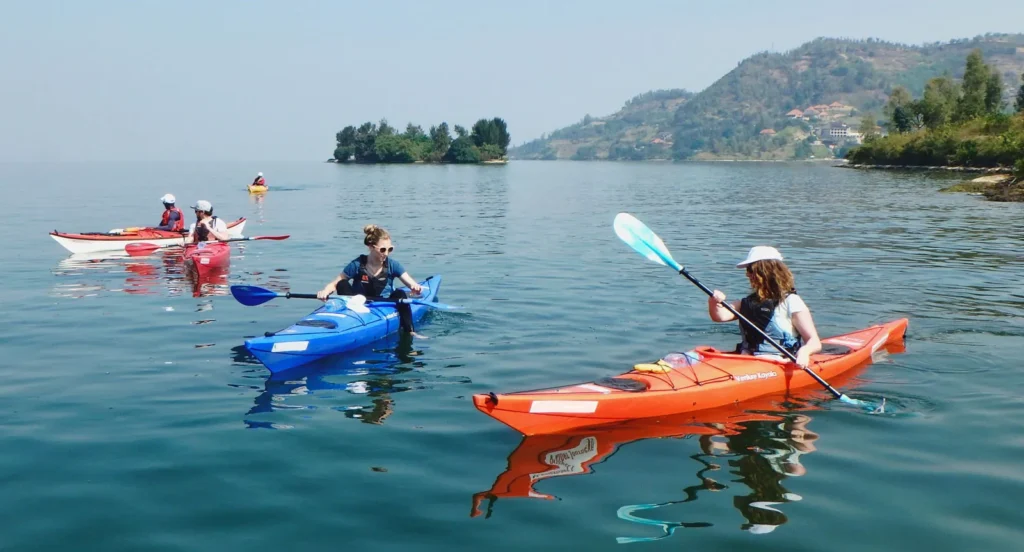
Most lakeside hotels keep kayaks and stand-up paddleboards, and Rwanda’s tourism board promotes kayaking on Lake Kivu as an adventurous way to explore. The water at this altitude is cooler and fresher than a typical equatorial lake, and the absence of hippos, crocodiles, and bilharzia means you can swim from a lodge beach without a second thought. Kayak at first light, when the lake is glassy and the air is still; by mid-morning a breeze often builds along the shoreline.
The Congo Nile Trail
The Congo Nile Trail runs about 227 kilometers along the Rwandan shore from Rubavu in the north to Rusizi in the south, passing through Rutsiro, Karongi, and Nyamasheke. It was developed by the Rwanda Development Board with the United Nations World Tourism Organization and SNV, and it can be hiked, cycled, or covered by vehicle in stages. Walkers typically allow around ten days to complete the trail on foot; a luxury traveller will more realistically want a single-day stage. A good day is the Karongi to Mugonero section of just under 20 kilometers, which delivers wide views of the islands and the winding Kivu Belt road, or a shorter half-day loop from your hotel with a guide, a car in support, and a picnic. The rainy seasons make the trail slippery, so we suggest the dry months for walking.
Spas, sundowners, and doing nothing well
Rwanda sits close to the equator, so sunset arrives just before 6pm all year round, which means the golden hour on the lake is predictable and reliable. Plan a boat or a terrace at 5pm. Several lakeside hotels offer spa treatments, infinity pools, and lakefront dining, and the best of them have their own gardens and coffee terraces. Treat the afternoon after a gorilla trek as a protected space in the itinerary: the legs will be weary, the mind will still be full, and a long, unscheduled afternoon beside the water is exactly what the body asks for.
Cultural and community experiences
Beyond the boats and the coffee, well-plannedod itinerary includes a short visit to a lakeside fishing community, a conversation with a coffee cooperative, and time at Bisesero or another memorial with a qualified Rwandan guide. These are the parts of a lake stay that people tend to discuss years later, and they are the parts that most reliably distinguish a locally run journey from a generic package. If you have a specific interest, whether birdwatching, photography, or Rwandan music, tell us early and we will shape the days around it.
Is Lake Kivu Safe? Methane, Limnic Eruptions, and Power Generation
Lake Kivu is safe to visit, swim in, and cruise on, and the methane beneath it is a monitored scientific and engineering matter rather than a tourist risk. It is, however, one of only three lakes in the world known to hold enough dissolved gas to be capable of a limnic eruption, the sudden release of gas that occurred in the 1980s at Lake Monoun and Lake Nyos in Cameroon, and a traveller who has read about this phenomenon deserves a straight explanation rather than reassurance alone.
What a limnic eruption is, and why Kivu is watched
A limnic eruption occurs when gas dissolved in deep water is released suddenly, for example, after a major disturbance. Lake Kivu’s deep waters hold large amounts of dissolved carbon dioxide and methane, with roughly 55 billion cubic meters of methane estimated at depths of around 300 meters. Because the lake is permanently stratified, with only the upper layer, down to about 70 meters, mixing, the gas stays trapped below. Rwanda and the Democratic Republic of Congo have worked with international experts for years on management prescriptions to govern how the gas is extracted and to keep the lake stable, and Rwanda’s Environment Management Authority runs monitoring to check that operators comply.
From hazard to electricity
Rwanda has turned the gas into an asset. The KivuWatt plant near Karongi draws water from around 350 meters down using a barge anchored about 13 kilometers offshore, separates the methane, and pipes it ashore to a plant of roughly 26 megawatts, while at the same time removing gas from the deep layers. It was the first large-scale methane-to-power project on the lake. As a visitor you will barely notice it; the barge sits far out on the horizon, and the only change to your stay is a more reliable electricity supply in the lakeside towns.
In practical terms, nothing about it affects a luxury holiday. Hotels operate normally, boats run daily, and local fishermen, swimmers, and kayakers use the lake year-round. We mention the geology because the best guides love to explain it and because it is the lake’s most interesting fact. It is the reason travellers who see the water on a still morning often say it feels like looking at something enormous and quietly alive.
Best Time to Visit Lake Kivu
The best time to visit Lake Kivu is during Rwanda’s long dry season from June to September or the short dry season from December to February, although the lake is pleasant and temperate in every month of the year. Because the lake sits at around 1,460 meters, daytime temperatures are typically in the mid-20s Celsius, nights are cooler, and the climate is gentler than the volcano slopes where you will trek.

The dry seasons: June to September and December to February
These are the months when roads are firm, boat days are clear, views across the lake to the Congolese mountains are sharpest, and the Congo Nile Trail is at its best. They also match the peak window for gorilla trekking, so if your dates are driven by gorilla permits, the lake will usually fall in excellent weather. Permits for these periods should be booked well ahead; we recommend six to twelve months for June to September and the December to January holiday window.
The rainy seasons: March to May and October to November
Rain falls mostly in short, heavy bursts rather than all day, and the shoreline turns an intense green. Boat days are still possible, but you should expect the odd storm, muddier trails, and some low cloud over the hills. The upside is quieter hotels, lower season rates at some properties, and the coffee harvest, which runs roughly from March to June, so that part of the rainy season gives you the lake’s most active agricultural weeks. Travellers who care more about solitude than guaranteed sun often choose May or November on purpose.
Choosing your month around the gorillas
If you are travelling in the wetter months, we suggest putting the lake after the gorilla trek so that you finish on a soft landing rather than starting on one. If you are travelling in the dry season, the order matters less, and we generally let the permit availability decide which day the trek falls on, then arrange the lake around it.
How to Get to Lake Kivu from Kigali and Volcanoes National Park.
Lake Kivu is reached by road from Kigali in about two and a half to three hours to Karongi, three to three-and-a-half hours to Rubavu, and about five hours to Rusizi, all on paved roads and all easily done in a single morning with a private driver-guide. Distances are modest, but the roads wind through hills, so allow more time than the map suggests.
From Kigali International Airport
All international visitors arrive at Kigali International Airport (KGL). Our team meets you inside the arrivals hall, and the transfer into the city takes about 30 minutes. Karongi lies about 130 kilometers west of Kigali, Rubavu about 155 kilometers northwest via Musanze, and Rusizi about 220 kilometers southwest via Huye and Nyungwe. Most guests spend the first night in Kigali and travel on the second morning.
From Volcanoes National Park
Rubavu is about an hour from Volcanoes National Park and the Kinigi headquarters, where gorilla briefings take place, which is why it is the natural post-trek base. Karongi is roughly two to three hours from Musanze, depending on road conditions and the stops you choose. Our 6-day gorilla and Lake Kivu itinerary includes a golden monkey trek on the morning of the transfer, followed by lunch and a lakeside check-in in the late afternoon.
From Nyungwe Forest
The journey from Nyungwe to Karongi or Rubavu runs along the lake’s southern and eastern edges and takes roughly three to four hours depending on your lodge and your destination on the lake. Our 7-day luxury Rwanda safari begins in Nyungwe, includes a sunrise boat cruise and island walk on the lake, and then continues to Musanze, while our 8-day route spends a night at the lake between Nyungwe and the volcanoes.
Road, air, and boat options
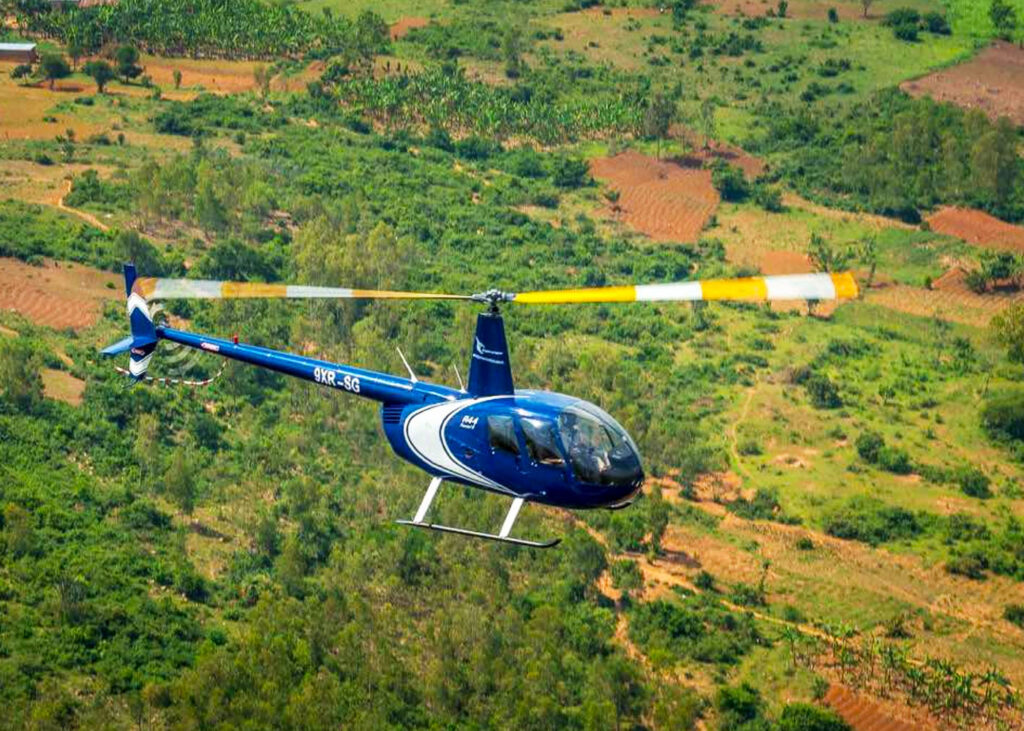
The overland route is the simplest and the one we recommend, because it shows you the countryside. For travellers who wish to shorten the transfer, we can arrange private charter flights and helicopter transfers on request and subject to availability. We will confirm the best transfer for your dates when we quote, including any road works on the Kivu Belt and the Karongi to Rubavu stretch, which have in the past been affected by damage and repairs.
What to book in advance
Three things need reserving early: the gorilla permit, which is the only fixed item that can sell out; the best lakefront room categories at Karongi and Rubavu during the dry seasons, which are far fewer than the number of guests who want them; and any domestic flight or charter you intend to use. Everything else, from the boat to the coffee tour, can be arranged within days.
Where to Stay at Lake Kivu: Luxury Hotels and Lodges
Lake Kivu’s accommodation is smaller and less polished than the lodge cluster around Volcanoes National Park, so the honest advice is to choose a base for its setting and service rather than for brand names. The best properties combine lakefront rooms, a private beach or jetty, a pool and a kitchen that serves fresh lake fish and excellent coffee, and the very best have a boat of their own.
Cleo Lake, Kivu, Karongi
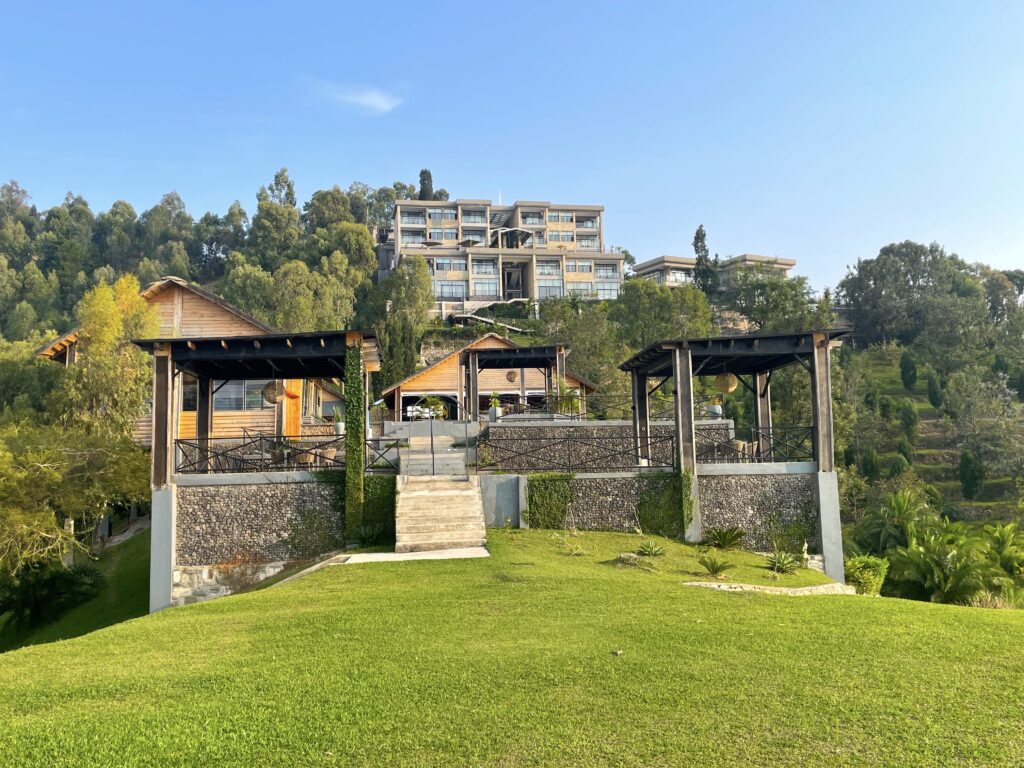
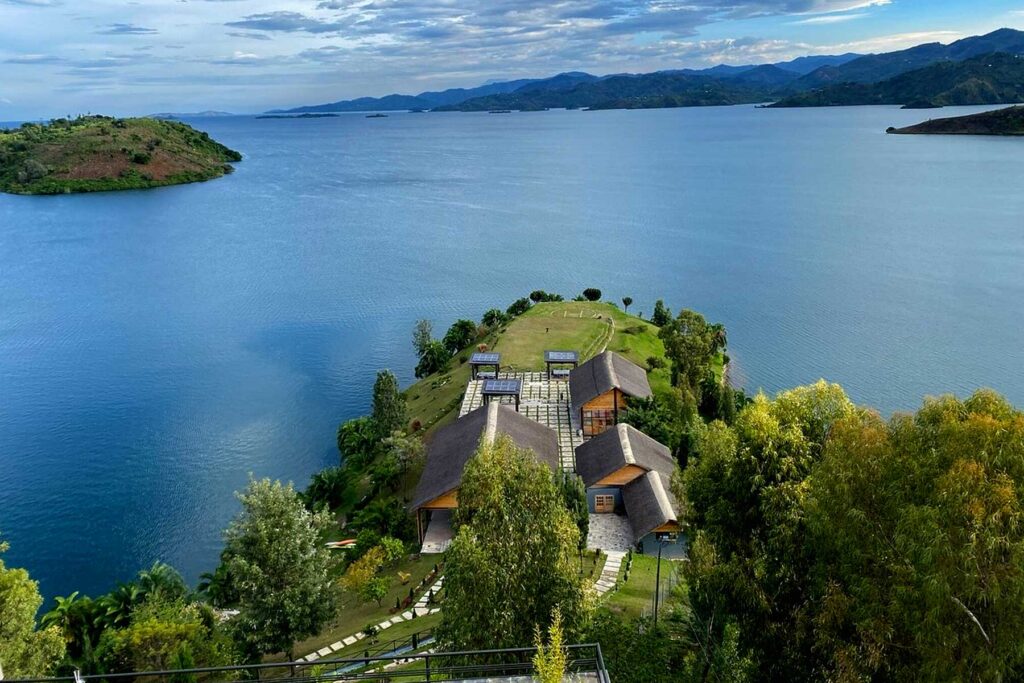
Cleo Lake Kivu is a boutique lakeside hotel in Bwishyura, Karongi, with a contemporary design, private terraces, and views over the water and its islands. It is one of the two lake options in our 8-day Rwanda luxury safari, and it suits couples who want a quieter, design-led base rather than a large resort.
Lake Kivu Serena Hotel, Rubavu
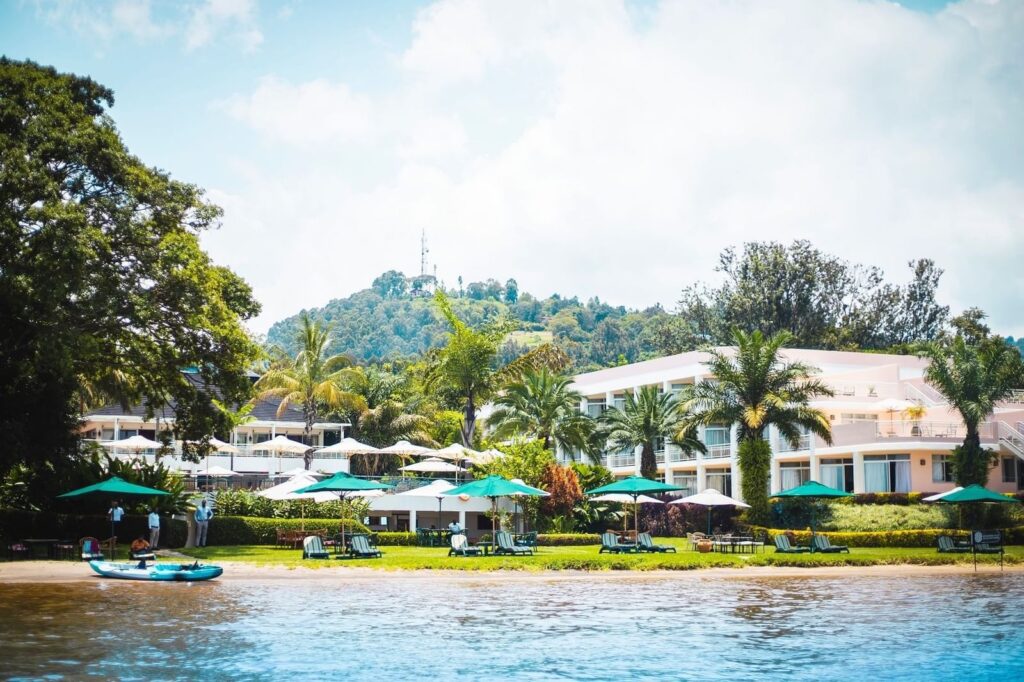
Lake Kivu Serena Hotel is the established luxury resort on the northern shore, with landscaped gardens, a private beach, and spa facilities. It is the better choice for travellers who want full resort services, a lively setting, and convenient access to Volcanoes National Park, and it is the other lake option on our 8-day journey.
Southern options
Around Rusizi, a small number of newer lakeside hotels, including Kivu Marina Bay, offer modern rooms and a lakeside pool and can serve as a calm base after Nyungwe. As noted below, parts of this district are subject to government advice, so we discuss southern stays individually.
Rates and what to expect
Lakefront luxury in Rwanda sits at a lower price point than the exclusive lodges near the gorillas, but it is not cheap, and rates move with the season. As an indicative guide only, better lakefront rooms commonly range from a few hundred US dollars to well above USD 700 per room per night in the dry seasons, and we quote exact current rates for your dates rather than publishing figures that go out of date. For a broader view of the full range of properties, see our guide to where to stay in Rwanda and the lodges around Volcanoes National Park.
Choosing the right style of lakeside stay
A boutique hotel suits honeymooners and anyone who wants quiet; a resort-scale property suits families and multigenerational groups who want pools and options; and a lakefront villa or private-use arrangement, where available, suits clients who want complete privacy. Tell us which you prefer, and we will match the property to the rest of your itinerary instead of defaulting to a single name.