Gishwati-Mukura National Park: Rwanda’s Smallest Park and Its Conservation Comeback.

Gishwati-Mukura National Park is Rwanda’s newest, smallest park, offering chimpanzee and golden monkey trekking. Plan your visit with local experts.

Gishwati-Mukura National Park is Rwanda’s fourth and smallest national park, a 34-square-kilometer montane forest in the Western Province that offers chimpanzee tracking and golden monkey tracking in a landscape actively recovering from near-total deforestation. Gazetted in 2015 and opened to visitors in 2019, the park protects a chimpanzee community most commonly cited at around 20 individuals, alongside golden monkeys, L’Hoest’s monkeys, blue monkeys, and more than 232 recorded bird species. Unlike Nyungwe Forest National Park or Volcanoes National Park, Gishwati-Mukura does not have a single fixed, published permit price; instead, access is arranged as an all-inclusive package through the Forest of Hope Guest House or the newer high-end concession run under a 25-year agreement between the Rwanda Development Board and a Wilderness Safaris subsidiary.

Gishwati-Mukura National Park: Rwanda's Newest Park Guide

Our guide covers the remarkable restoration story behind the park, how chimpanzee tracking here differs from Nyungwe, where to stay, what to budget, and how to fold a Gishwati-Mukura visit into a wider Rwanda itinerary. The park sits roughly 157 kilometers, about 3 to 4 hours, from Kigali along the Lake Kivu road, and its location between Volcanoes National Park and Nyungwe makes it a natural stop rather than a detour. For travelers who want to witness a genuine conservation comeback rather than tick off a guaranteed sighting, Gishwati-Mukura is one of Rwanda’s most rewarding under-the-radar additions.

Permits are limited — spaces fill months ahead

Reserve Your Private Gorilla Trek

Speak with a Rwanda-based specialist today. We secure permits, match you to the right gorilla family, and plan every detail around your schedule.

No group departures · Private itineraries only · Direct Rwanda expertise

Where Gishwati-Mukura National Park Is, and the Remarkable Story Behind It

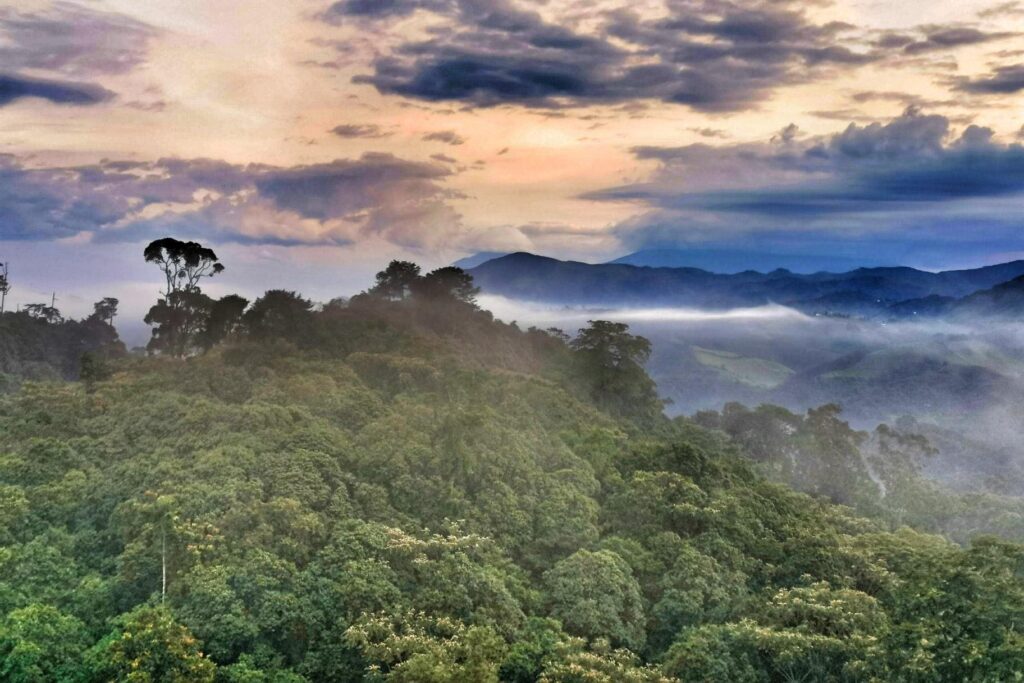
Gishwati-Mukura National Park sits in Rwanda’s Western Province, spanning the Rutsiro and Ngororero districts along the Congo-Nile Divide, the ridge separating the watersheds of the Congo and Nile rivers, in the heart of the Albertine Rift. The park is made up of two separate forest fragments, the larger Gishwati Forest and the smaller Mukura Forest, historically connected across a corridor that once ran unbroken from Volcanoes National Park in the north all the way south to Nyungwe. Only the Gishwati block is currently open to tourism; Mukura Forest remains closed to visitors, with no trail infrastructure yet built and comparatively little documented about its wildlife.

From 250,000 Acres to Rwanda’s Smallest Park

Gishwati Forest’s history is a stark illustration of how quickly a landscape can collapse. The forest once covered an estimated 250,000 acres, or roughly 1,000 square kilometers, as part of a continuous rainforest system that linked the Virunga volcanoes to Nyungwe and west into the Congo basin. Following the 1994 genocide, waves of returning refugees settled and cleared large sections of the forest for subsistence farming, livestock grazing, and illegal mining in its mineral-rich soils. By 2001, native forest cover had collapsed to roughly 1,500 acres, a loss of more than 90 percent, and the resident chimpanzee population fell to as few as 13 individuals, putting the population on the edge of local extinction.

A Conservation Comeback: How Gishwati-Mukura Became a National Park

Rwanda’s government passed legislation gazetting Gishwati-Mukura as the country’s fourth national park in 2015, formalizing years of prior reforestation work and giving the remaining forest and its wildlife legal protection. Restoration efforts, led on the ground by the Forest of Hope Association (FHA), have since recovered an estimated 67 percent of the original forest cover, and the chimpanzee community has grown from its early-2000s low back to roughly 20 individuals, with some more recent surveys suggesting numbers closer to 30. In 2019, the Rwanda Development Board signed a 25-year concession agreement with Imizi Ecotourism Development Ltd, a subsidiary of the pan-African operator Wilderness Safaris, to develop a high-end chimpanzee and primate trekking concession within the Gishwati block, while RDB remains responsible for ranger presence, law enforcement, and conservation research. In 2020, UNESCO recognized the wider Gishwati-Mukura landscape as a Biosphere Reserve. Understanding this trajectory is relevant for travelers: Gishwati-Mukura today sits between its rustic, community-led origins and a more polished, high-end future, which is precisely why many well-traveled visitors choose to see it now. This three-park structure, alongside Volcanoes National Park, Nyungwe Forest National Park, and Akagera National Park, is covered in full across our Rwanda safaris itineraries.

Detail Figure
Park size 34 square kilometers (Gishwati and Mukura forest blocks combined)
Status Rwanda’s fourth and smallest national park
Gazetted as a national park 2015 (open to tourism since 2019)
UNESCO recognition Biosphere Reserve, designated 2020
Chimpanzee population Approximately 20 individuals (some estimates up to 30)
Other primates Golden monkey, L’Hoest’s monkey, blue monkey, vervet monkey, olive baboon
Bird species 232+ recorded in Gishwati Forest, 163 in the closed Mukura block
Distance from Kigali Approximately 157 km / 3–4 hours by road
Distance from Volcanoes National Park Roughly 1.5–2 hours via the Musanze–Rubavu road

Chimpanzee Trekking in Gishwati-Mukura: What Makes It Different From Nyungwe

Chimpanzee tracking is the flagship activity in Gishwati-Mukura, but it is a meaningfully different experience from the habituated treks offered at Nyungwe Forest National Park, and setting expectations correctly is the single most important thing a first-time visitor can do before booking.

Chimpanzee Trekking in Gishwati-Mukura: What Makes It Different From Nyungwe

Semi-Habituated, Not Fully Habituated

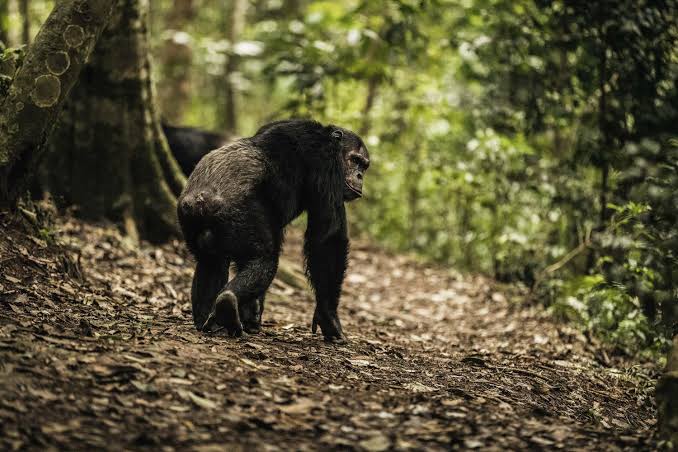
The Gishwati chimpanzee community is semi-habituated rather than fully habituated. Trackers and rangers know the troop’s general home range and can usually locate signs of recent activity, but the chimpanzees themselves are considerably less accustomed to human presence than the communities in Nyungwe’s Uwinka or Cyamudongo zones. This means a Gishwati trek can take longer, the group may be more wary once found, and a sighting, while likely, is genuinely uncertain on any given morning. Reputable operators are upfront about this trade-off rather than promising a certain outcome.

What a Gishwati Chimp Trek Actually Involves

Treks depart early from the park reception area near the Rubavu end of Gishwati Forest, typically following a briefing on trail conduct and safety before rangers lead small groups into the forest. Because the terrain regenerated relatively recently, sections of the forest are less dense than Nyungwe’s old-growth canopy, which in practice can make wildlife easier to spot once located, even if the chimpanzees themselves take longer to find. Treks generally run two to five hours depending on where the troop was last active, and visitors are typically permitted up to one hour of observation once contact is made, mirroring the standard used at Nyungwe and in Volcanoes National Park.

Factor Gishwati-Mukura Nyungwe Forest National Park
Habituation level Semi-habituated Fully habituated (Uwinka and Cyamudongo groups)
Sighting reliability Good, but not guaranteed. High reliability, especially at Cyamudongo
Typical trek duration 2–5 hours 1–5 hours, community-dependent
Crowd levels Very low; one of Rwanda’s least-visited parks Moderate, growing steadily
Forest character Younger, actively regenerating, more open in places Old-growth, dense montane rainforest
Best suited to Travelers prioritizing an intimate, low-traffic experience Travelers prioritizing sighting certainty

Plan Your Rwanda Safari

Start Planning a Private Gorilla Trek

Rwanda gorilla permits sell out months in advance. Secure your dates before the season closes.

Golden Monkeys and the Other Primates of Gishwati Forest

Gishwati Forest is one of only two places in Rwanda where golden monkeys can be tracked, the other being the bamboo zones of Volcanoes National Park, which makes it a genuine alternative for travelers who want this experience away from the busier Kinigi circuit.

Golden Monkey Tracking
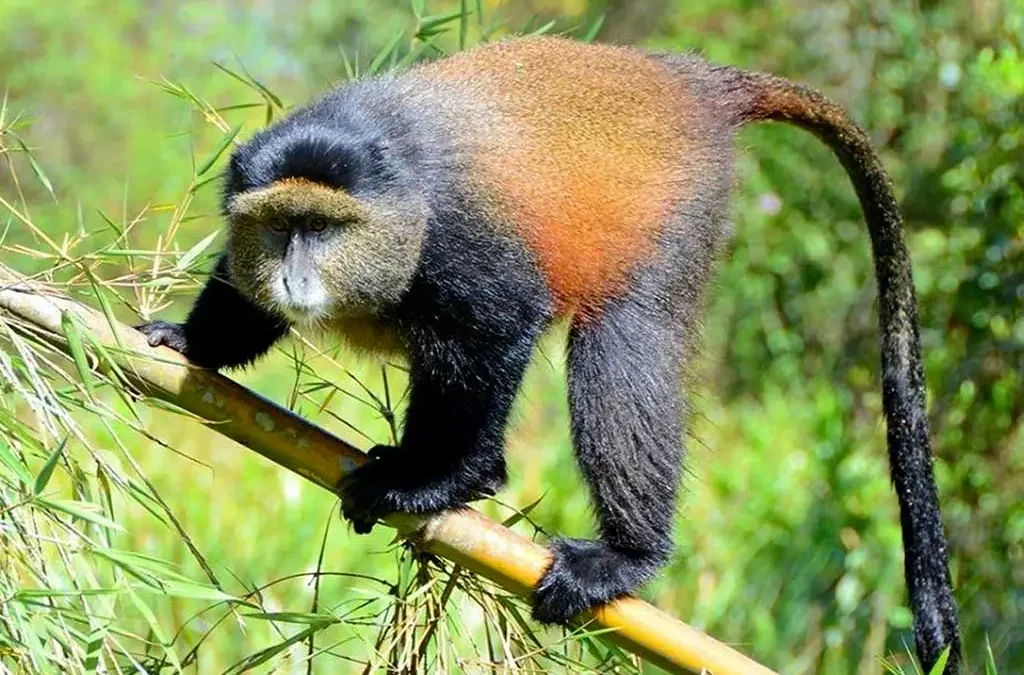
Golden Monkey Trekking

The Albertine Rift endemic golden monkey, listed as endangered, lives alongside Gishwati’s chimpanzee community, and tracking excursions run separately from chimp treks, typically departing from the same reception area. Groups are generally smaller and encounter quieter than the well-trodden golden monkey circuit in Volcanoes National Park, which appeals to travelers who have already tracked golden monkeys in the north and want a second, less crowded encounter, or who are looking for a lower-key alternative on a tighter schedule.

L’Hoest’s Monkey, Blue Monkey, and the Rest

Beyond chimpanzees and golden monkeys, Gishwati Forest shelters the vulnerable, Albertine Rift-endemic L’Hoest’s monkey, along with blue monkeys, vervet monkeys, and olive baboons, most often encountered along the forest’s edges and lower trail sections. The wider forest also supports side-striped jackals, servals, genets, pottos, and galagos (bushbabies), along with the endemic Rwenzori sun squirrel, though these are far less frequently seen than the primates that headline most visits.

Species Notable feature
Eastern chimpanzee Semi-habituated community of roughly 20 individuals in Gishwati Forest
Golden monkey Albertine Rift endemic, endangered; one of only two trackable populations in Rwanda
L’Hoest’s monkey Albertine Rift endemic, listed as vulnerable
Blue monkey Common through the mid-forest zones
Vervet monkey Frequently seen at forest edges
Olive baboon Ground-dwelling, seen along access roads and forest fringes

Birdwatching, Waterfalls, and Gishwati’s Hiking Trails

Gishwati Forest has three developed hiking trails, each offering a different combination of forest immersion, birding, and scenery, and each can be comfortably completed in half a day.
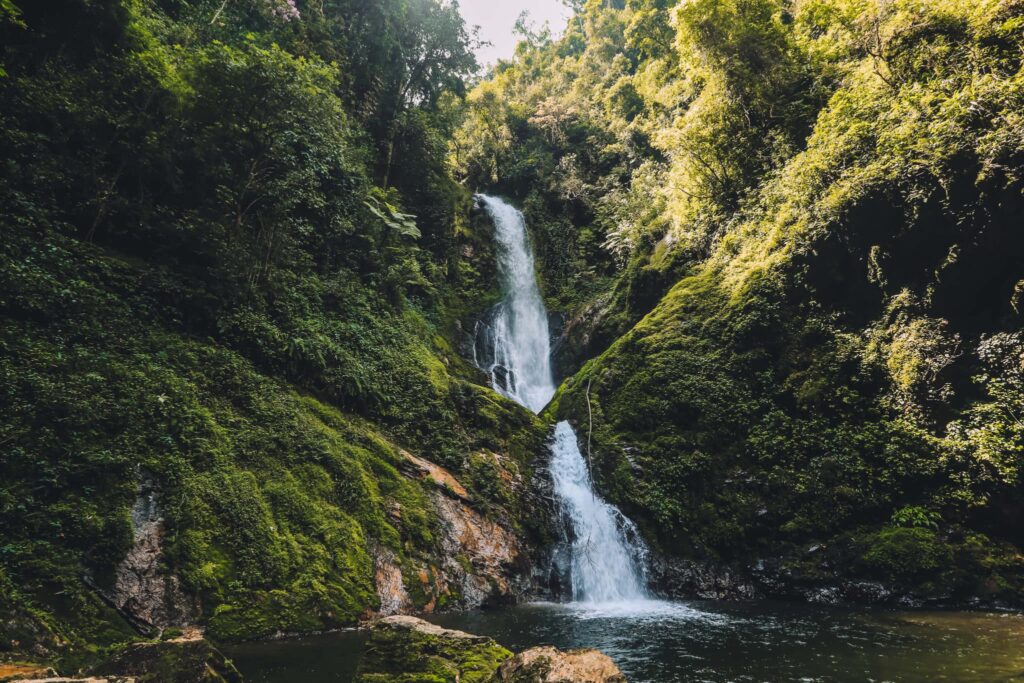
Kazeneza Waterfall in Gishwati

The Three Trails of Gishwati Forest

The Umushwati Trail is the park’s longest at roughly 8 kilometers, running directly through the heart of the forest and offering the best odds of primate and bird activity along its length. The Waterfall Trail, around 7 kilometers, starts near the Forest of Hope Guest House and leads to Kazeneza Waterfall, a scenic cascade in the forest interior that is one of the park’s signature photo stops. The Matyazo Hill Trail is a shorter, steeper 3-kilometer loop climbing to the park’s highest point at approximately 2,469 meters, rewarding the climb with panoramic views over the forest canopy and, on clear days, toward Lake Kivu; it can be combined with the Umushwati Trail for a fuller day out.

Birding in an Emerging Albertine Rift Destination

Gishwati Forest is home to over 232 bird species, including up to 18 Albertine Rift endemics and many forest specialists like the Rwenzori turaco, red-throated alethe, regal sunbird, and Grauer’s swamp warbler. The less dense regenerating forest in the park makes birding easier for spotting canopy and mid-story species, providing a genuine silver lining to the forest’s still-recovering state. The Congo-Nile Trail, Rwanda’s long-distance hiking and mountain-biking route along the ridge dividing the two watersheds, also passes close to the park’s western edge, with sweeping views over Lake Kivu for travelers who want to extend their time in the area on two wheels.

Best Time to Visit Gishwati-Mukura National Park

Gishwati-Mukura is accessible throughout the year, and the choice of season depends on whether firm trails or better wildlife odds matter more to your plans.

Best time for gorilla trekking.

Dry Season Advantages

Rwanda’s two dry seasons, June through September and December through February, deliver the firmest, least slippery trail conditions across all three of Gishwati’s hiking routes, which matters more here than at Nyungwe given the steeper, less-established paths in parts of the park. These months are also the most comfortable for the climb to Matyazo Hill’s viewpoint.

Why Some Guides Recommend the Rains

As with Nyungwe Forest National Park, several Gishwati-based guides recommend the wetter months, arguing that greater food availability during the rains keeps the semi-habituated chimpanzee community within a smaller, more predictable range rather than ranging widely in search of food. This is a genuine trade-off rather than a marketing line: firmer trails in the dry season versus potentially better odds of a settled troop in the rains, and honest operators will talk you through both before you commit to dates.

Season Months Trail conditions Wildlife notes
Long dry season June – September Firmest trails, easiest hiking on all three routes Good general primate activity
Short dry season December – February Good conditions, fewer visitors than mid-year Reliable, quiet season
Long rains March – May Muddier, steeper sections require care. Food abundance may keep chimps closer to core range.
Short rains October – November Lighter, more intermittent rainfall Similar advantage to the long rains

Plan Your Rwanda Safari

Start Planning a Private Gorilla Trek

Rwanda gorilla permits sell out months in advance. Secure your dates before the season closes.

Where to Stay: Gishwati-Mukura’s Limited but Distinctive Accommodation

Accommodation directly at Gishwati-Mukura is deliberately limited, a reflection of both the park’s youth and its community-conservation model, and most travelers choose between staying inside the concession or basing themselves on Lake Kivu and visiting for the day.

Forest of Hope Guest House

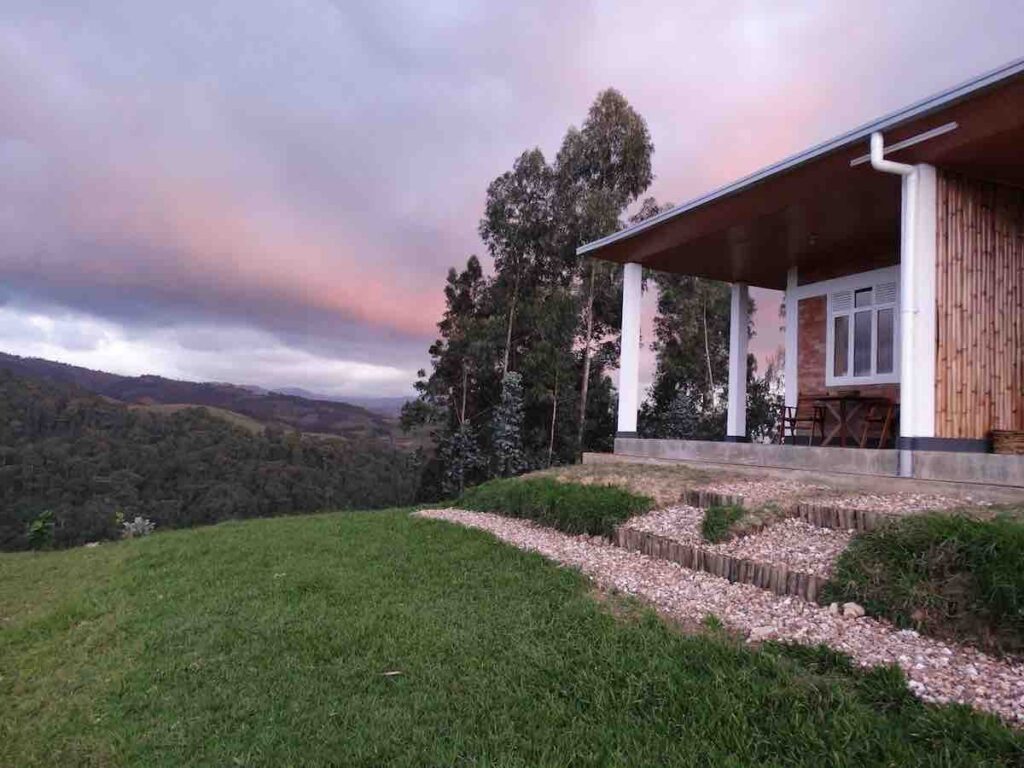
Forest of Hope Guest House in Gishwati Mukura

The Forest of Hope Guest House, run in partnership with the Forest of Hope Association, is the park’s original and most established lodging, a small mountaintop guesthouse roughly 40 minutes from Rubavu with a handful of en-suite twin rooms and a campsite option. Its all-inclusive rate bundles park fees, three meals a day, selected drinks, guided activities, and community visits into a single price, which genuinely simplifies budgeting compared with the separate permit-plus-lodging model used at Rwanda’s other parks.

The New High-End Concession and Staying on Lake Kivu Instead

Since the Rwanda Development Board’s 2019 concession agreement with the Wilderness Safaris subsidiary Imizi Ecotourism Development Ltd, a newer, higher-end eco-lodge has opened within the Gishwati concession for travelers who want a more polished stay without leaving the forest boundary; availability and rates for this option should be confirmed directly given how recently it has developed. The most common current approach, however, is to base at a lakeside property in Rubavu, roughly an hour from the park, and treat Gishwati-Mukura as a half- or full-day trip, which also allows seamless pairing with the wider Rwanda safari styles built around Lake Kivu.

Option Position Best for
Forest of Hope Guest House Inside the Gishwati concession, ~40 minutes from Rubavu Travelers who want to stay inside the forest with an all-inclusive rate
Gishwati concession eco-lodge Inside the Gishwati Forest concession Travelers seeking a higher-end in-forest stay should confirm current availability.
Lake Kivu, Rubavu (Gisenyi) ~1 hour from the park Travelers combining a Gishwati day trip with a Lake Kivu stay

Planning Your Visit: Permits, Getting There, and What to Pack

Gishwati-Mukura’s logistics work differently from Rwanda’s other parks in ways worth understanding before you book, particularly around cost, since this is the detail that most often surprises first-time visitors.

How to Get to Gishwati-Mukura National Park

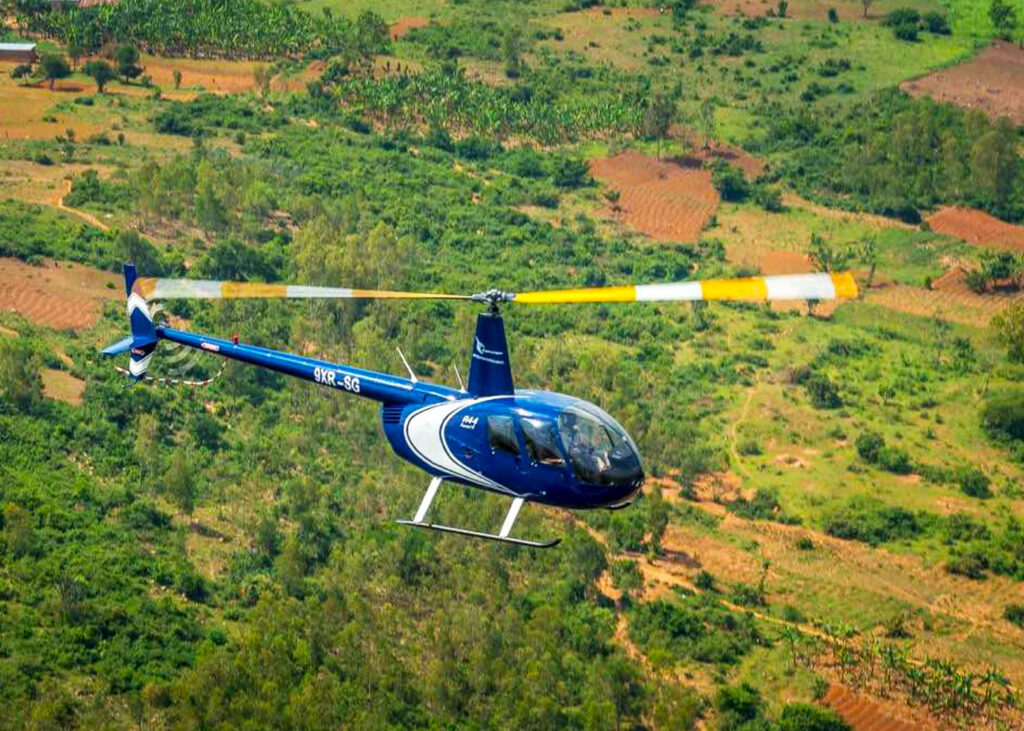
Rwanda Fly-In Safari Style

By road from Kigali, Gishwati-Mukura is approximately 157 kilometers, around 3 to 4 hours, following the Karongi (Kibuye) to Rubavu (Gisenyi) road along the eastern shore of Lake Kivu. From Volcanoes National Park, the drive takes roughly 1.5 to 2 hours via the scenic Musanze to Rubavu road, making a stop at Gishwati a natural link between gorilla trekking in the north and time on Lake Kivu. All Rwanda Gorilla Expedition transfers to Gishwati-Mukura are arranged in private vehicles with experienced driver-guides, since the park’s access roads are less developed than those serving Rwanda’s more established parks.

Permits and Costs

This is the detail worth reading closely: Gishwati-Mukura does not have a single fixed, published chimpanzee or golden monkey permit price the way Nyungwe’s USD 150 chimp permit or Volcanoes National Park’s USD 1,500 gorilla permit does. Access is instead arranged either through the Forest of Hope Guest House’s all-inclusive nightly rate, which bundles park fees, guiding, meals, and community visits, or through the newer Wilderness Safaris-linked concession’s own package pricing. In practical terms, the situation means budgeting for Gishwati-Mukura as a per-package quote from your operator rather than a per-activity fee you can look up independently, and it is worth confirming exactly what is included, park fees, guide fees, meals, or transfers, before finalizing dates.

Item How it’s typically priced
Chimpanzee and golden monkey tracking Bundled into an all-inclusive lodge or concession package rate, not sold as a standalone permit
Forest of Hope Guest House stay All-inclusive rate covering park fees, guiding, meals, and selected drinks
Concession eco-lodge stay The operator sets the package rate; please confirm current pricing directly.
Private vehicle transfer from Kigali or Volcanoes to Gishwati Included in the Rwanda Gorilla Expeditions packages

What to Pack

What to Pack for gorilla trekking

  • Sturdy, waterproof hiking boots with excellent ankle support: trail conditions vary more here than at Rwanda’s more established parks.
  • A packable rain jacket and a warm mid-layer; Gishwati’s elevation means mornings can be cool even in the dry season.
  • Long trousers and a long-sleeved shirt to guard against nettles and undergrowth on the narrower, less-manicured trail sections.
  • Gardening-style gloves, genuinely useful for steadying yourself on steep or overgrown stretches of the Matyazo Hill and Umushwati trails.
  • At least two liters of water and a snack, since treks can run up to five hours with limited services along the way.
  • A camera with a reasonably fast lens; the regenerating forest interior is often overcast and lower-light than Nyungwe’s open canopy sections.

What Gishwati-Mukura Guides Won’t Always Tell You

  • Here, you genuinely can’t count on a chimpanzee sighting the way you can at Nyungwe’s fully habituated groups. Because the community is only semi-habituated, some mornings end in a strong forest experience and animal signs rather than a face-to-face encounter, and honest operators will say so plainly rather than overpromise.
  • Mukura Forest is completely closed to visitors, and marketing material that shows dramatic Mukura imagery is generally using stock photography or drone footage rather than depicting an activity you can actually book; every current visit takes place in the Gishwati block only.
  • Because there is no fixed RDB permit price, quoted costs vary meaningfully between operators depending on which lodge or concession they route you through. Always ask exactly what is and is not included in a Gishwati-Mukura quote before comparing prices across operators.
  • The ‘new high-end lodge’ storyline is real but still developing. The Wilderness Safaris-linked concession represents a genuine and welcome upgrade in the pipeline, but travelers expecting the same polish as One&Only Nyungwe House or One&Only Gorilla’s Nest today should confirm exactly what stage of development the property is at before booking.
  • Because sightings and infrastructure are still evolving, Gishwati-Mukura rewards travelers who have already done a headline gorilla or chimp trek elsewhere in Rwanda and are looking for a quieter, conservation-focused add-on, more than it suits someone hoping for their single once-in-a-lifetime primate encounter.

Plan Your Rwanda Safari

Start Planning a Private Gorilla Trek

Rwanda gorilla permits sell out months in advance. Secure your dates before the season closes.

Frequently Asked Questions About Gishwati-Mukura National Park

What is Gishwati-Mukura National Park known for?

Gishwati-Mukura National Park is known for being Rwanda’s newest and smallest national park, a 34-square-kilometer montane forest offering chimpanzee tracking, golden monkey tracking, and one of Africa’s most dramatic forest-restoration stories. Gazetted in 2015 and opened to tourism in 2019, it is also recognized as a UNESCO Biosphere Reserve, designated in 2020, and is home to over 232 recorded bird species. Its recovery from near-total deforestation, led by the Forest of Hope Association alongside the Rwanda Development Board, makes it as much a conservation destination as a wildlife one.

How much does it cost to visit Gishwati-Mukura National Park?

Gishwati-Mukura National Park does not have a single fixed, published permit price the way Nyungwe or Volcanoes National Park does. You can access the park either through an all-inclusive package at the Forest of Hope Guest House, which includes park fees, meals, and guided activities in one nightly rate, or through the newer high-end concession run under a 25-year agreement between the Rwanda Development Board and Imizi Ecotourism Development Ltd, a Wilderness Safaris subsidiary. Budget for this park as a package quote rather than a per-activity permit fee, and always confirm current rates directly with your operator before booking.

How do I get to Gishwati-Mukura National Park from Kigali?

Gishwati-Mukura National Park is approximately 157 kilometers from Kigali, roughly a 3- to 4-hour drive along the Karongi (Kibuye) to Rubavu (Gisenyi) road on the shore of Lake Kivu. The park’s reception area sits near the Rubavu end of Gishwati Forest. Many travelers combine the drive with a stop on Lake Kivu or approach from Volcanoes National Park via the scenic Musanze to Rubavu road, which takes roughly 1.5 to 2 hours.

Is Gishwati-Mukura the same as gorilla trekking in Volcanoes National Park?

No. Gishwati-Mukura National Park does not have mountain gorillas; those are found only in Volcanoes National Park in Rwanda’s Virunga Mountains. Gishwati-Mukura instead offers chimpanzee tracking and golden monkey tracking in a smaller, less developed forest and is best understood as a complementary add-on to a Volcanoes National Park gorilla safari rather than a substitute for it.

How many chimpanzees live in Gishwati-Mukura National Park?

Gishwati Forest is home to a small community of around 20 Eastern chimpanzees, which has recovered from a low of roughly 13 individuals in the mid-2000s, when the forest was on the verge of losing its chimpanzee population entirely. Some more recent estimates put the number closer to 30, reflecting continued recovery as reforestation expands the available habitat. This makes Gishwati’s chimpanzee story as much about conservation recovery as wildlife viewing.

Are the chimpanzees in Gishwati-Mukura habituated?

The Gishwati chimpanzees are semi-habituated rather than fully habituated like the communities in Nyungwe Forest National Park. This means trackers know their general range, but the troop is less accustomed to visitors, so treks can take longer and sightings are genuinely uncertain. Guides are candid about this trade-off, and many travelers find the more unpredictable, quieter search itself part of the appeal rather than a drawback.

What is the best time to visit Gishwati-Mukura National Park?

Gishwati-Mukura National Park can be visited year-round, and the dry seasons, June to September and December to February, offer the firmest, least muddy trails for chimpanzee and golden monkey tracking. Some local guides instead recommend the wetter months, March to May and October to November, arguing that greater food availability keeps primates within a smaller, more predictable range, a seasonal pattern similar to the one seen at Nyungwe Forest National Park.

Can I see golden monkeys in Gishwati-Mukura National Park?

Yes. Gishwati Forest is one of only two places golden monkeys can be tracked in Rwanda, the other being the bamboo forests of Volcanoes National Park. The Gishwati population offers a quieter, less crowded alternative to the golden monkey groups tracked daily from Volcanoes National Park’s Kinigi headquarters, which makes it appealing to travelers who have already done that experience in the north and want a second, more private encounter.

Can I combine Gishwati-Mukura with gorilla trekking in one Rwanda safari?

Yes, and this is the most practical way to include Gishwati-Mukura in a first Rwanda trip. Because the park sits along the Musanze to Rubavu road, a short distance from Volcanoes National Park, it works well as a one-to-two-night extension before or after gorilla trekking, often paired with a night on Lake Kivu. Rwanda Gorilla Expeditions can build this extension around any of our core primate itineraries, including the Gorilla & Golden Monkey Discovery Safari.

Where should I stay near Gishwati-Mukura National Park?

The Forest of Hope Guest House, inside the Gishwati Forest concession, is the park’s original and most established accommodation, an all-inclusive small guesthouse roughly 40 minutes from Rubavu. A newer, higher-end eco-lodge has also opened within the concession as part of Wilderness Safaris’ involvement in the park, though availability should be confirmed directly given how recently it has developed. Many travelers instead base themselves on Lake Kivu in Rubavu, about an hour away, and visit Gishwati-Mukura as a day trip.

How long should I spend at Gishwati-Mukura National Park?

A single night or a well-planned day trip is enough to cover Gishwati-Mukura’s main activities, since only the Gishwati forest block is open to visitors and its three trails can each be completed within half a day. Most travelers pair one night here, or a day trip from Lake Kivu, with a longer stay in Volcanoes National Park rather than treating Gishwati-Mukura as a standalone multi-day destination.

Is Gishwati-Mukura National Park worth visiting compared to Nyungwe?

Gishwati-Mukura and Nyungwe Forest National Park serve different travelers rather than competing directly. Nyungwe is larger, more established, and offers fully habituated chimpanzee communities with a near-certain sighting and a dedicated 160-meter canopy walkway. Gishwati-Mukura is smaller, quieter, and still visibly recovering, appealing to travelers who value witnessing an active conservation story and a near-private forest experience over a guaranteed wildlife encounter.

What should I pack for a Gishwati-Mukura trek?

Essentials include sturdy waterproof hiking boots, a rain jacket, long trousers and sleeves, gardening-style gloves for grabbing vegetation on steep sections, and at least two liters of water for treks that can run two to five hours. A warm mid-layer is worth packing given the park’s elevation, and a camera with a fast lens helps in the frequently overcast, low-light forest interior, which is generally darker underfoot than Nyungwe’s more open old-growth canopy.

How do I book a Gishwati-Mukura safari with Rwanda Gorilla Expeditions?

Rwanda Gorilla Expeditions arranges Gishwati-Mukura visits as a custom extension to a Volcanoes National Park or wider Rwanda itinerary, coordinating the Forest of Hope Guest House or concession lodging, private transfers, and activity bookings directly on your behalf. Contact the team via WhatsApp or email with your travel dates, and they will confirm permit and lodging availability within a few minutes.

Is Gishwati-Mukura National Park safe to visit?

Gishwati-Mukura National Park is safe to visit and is managed jointly by the Rwanda Development Board, the Forest of Hope Association, and a Wilderness Safaris-linked concession operator, with all activities led by trained guides and rangers. The main practical considerations are environmental: steep, sometimes slippery trails and fast-changing mountain weather, both manageable with proper footwear and layering. International travelers consistently rate Rwanda as a whole among the safest countries in Africa.

Plan Your Gishwati-Mukura Visit

Gishwati-Mukura rewards travelers who plan with accurate expectations, from understanding that sightings are not guaranteed to knowing exactly what a quoted package includes. Rwanda Gorilla Expeditions designs every Gishwati-Mukura extension around your existing Rwanda itinerary, confirming current lodging, concession, and transfer details directly with our partners on the ground. Tell us your dates on WhatsApp or by email, and we will check permit and lodging availability within a few minutes.

Ready to Trek? Permits are limited — plan early.