Gorilla Trekking Rules & Safety Guidelines in Rwanda: The Complete 2027 Guide.

Rwanda gorilla trekking rules: 15+ age, 7 m distance, 1-hour limit, USD 1,500 permit. Know them all before you book. Ask us to check your dates.

Gorilla trekking in Rwanda is governed by a fixed set of Rwanda Development Board rules: you need a USD 1,500 permit in your name, you must be at least 15 years old and free of any contagious illness, you trek in a group of no more than eight people, you keep a minimum of 7 meters from the mountain gorillas, you spend no more than one hour with them, and you never use flash, eat, drink, touch, or chase an animal. Every one of these rules exists to protect roughly one thousand mountain gorillas from human disease and stress, and a second, quieter purpose is to keep you safe in a forest where steep volcanic terrain and altitude are a greater physical risk than the gorillas themselves. The gorilla trek takes place exclusively in Volcanoes National Park, a 160-square-kilometer protected area in northwestern Rwanda, roughly two to two-and-a-half hours by road from Kigali. The park currently offers 24 habituated families for standard visits, which caps daily capacity at 192 permits, and every visitor must attend the 7:00 AM briefing at Kinigi park headquarters, where rangers assign your group to a family and repeat the rules before you step into the forest. If you arrive late, arrive ill, or arrive without your permit and passport, you risk losing both the day and the fee, so the most valuable preparation is to understand the framework before you book, rather than discovering it at the trailhead.

Mountain Gorilla Conservation in Rwanda: The Full 2027 Guide

Rwanda’s gorilla rules are stable in their principles but not frozen in their details. Permit pricing, family numbers, and health protocols are reviewed periodically, and the Rwanda Development Board announced revised permit fees for Rwandan and East African residents at the start of 2026 that do not apply to international visitors.

Permits are limited — spaces fill months ahead

Reserve Your Private Gorilla Trek

Speak with a Rwanda-based specialist today. We secure permits, match you to the right gorilla family, and plan every detail around your schedule.

No group departures · Private itineraries only · Direct Rwanda expertise

Gorilla Trekking Rules in Rwanda: The Complete List at a Glance

Rwanda’s gorilla trekking rules fall into five groups: who may trek, how many may trek together, how close they may go, how long they may stay, and how they must behave. Understanding the groups first makes the individual rules easy to remember, because each rule answers a single protective question: is this person healthy enough to be near a mountain gorilla, is this group small enough not to overwhelm the gorilla family, is this distance wide enough to prevent disease transmission, is this exposure short enough to avoid stress, and is this behavior calm enough to keep both sides safe?

The eligibility rules say that every trekker needs a valid Rwanda Development Board permit issued in their name for a specific date, that the minimum age is fifteen with no exceptions, and that anyone showing symptoms of a cold, flu, persistent cough, fever, or any other communicable illness can be turned away at the briefing. The group rules say that a maximum of eight visitors may be assigned to any one habituated family on any one day and that each family receives a single visit per day. The distance rules require a minimum of 7 meters between you and any gorilla, with the International Gorilla Conservation Program’s Gorilla Friendly pledge recommending 10 meters where a mask is not worn and a surgical mask worn whenever you are close to the animals. The time rule limits the encounter to an hour from the moment the group settles with the family. The behavior rules prohibit flash photography, drones, eating, drinking, smoking, spitting, littering, touching, shouting, sudden movements, and running, and they require you to follow the ranger’s instructions immediately and without discussion.

Rwanda Gorilla Trekking Permit Rules: Cost, Booking, and Validity

A gorilla trekking permit for Rwanda costs USD 1,500 per person for international visitors, is issued by the Rwanda Development Board, and grants one visitor one hour with one habituated gorilla family on one named date. The fee covers your park entry, the services of the ranger guides and trackers who find the family each morning, and the observation hour itself, and it does not cover accommodation, transfers, meals, porters, tips, travel insurance, or anything else in your itinerary. The Rwanda Development Board also runs a revenue-sharing program under which ten percent of park tourism revenue is returned to the communities surrounding the park, funding schools, health centers, water systems, and cooperatives, and the balance sustains the ranger, veterinary, and monitoring work that keeps the gorillas alive.

Gorilla Trekking Photography Tours in Rwanda: Luxury Guide

The Rwanda Development Board announced revised permit prices for Volcanoes National Park: USD 200 for Rwandan citizens and residents of the East African Community and USD 500 for visitors from other African countries, excluding the peak tourism months of June to October. The standard price for international visitors from outside Africa remained USD 1,500.

How to Book a Gorilla Permit and How Far Ahead

Permits can be booked through a licensed Rwandan tour operator like us or directly through the Rwanda Development Board’s online booking portal, and the practical difference is that an operator checks availability across all 24 gorilla families and your preferred dates at once, matches the permit to your lodge nights, and absorbs the administrative work if your flights shift. Because the supply is limited to 192 permits a day for the whole country, and because the most desirable dates fill first, the lead time you need depends on when you travel. For the long dry season from June to September and the festive period from mid-December to early January, we advise booking six to twelve months ahead, including for shared-group treks in those windows. For the shoulder and green seasons, three to six months is usually workable, and a few late permits do surface through cancellations. A permit cannot be created for a fully sold-out date, and the most common planning mistake we see is a traveler who books flights and a lodge first and then discovers that no permits remain on those dates.

Rangers check names against the day’s roster, and a mismatch ends the discussion. Arrival time is the other condition attached to the permit: the briefing starts at 7:00 AM, and a traveler who misses it risks losing both the slot and the fee, because the family allocation has already been made and the groups have already left. Conditions for changes and cancellations vary based on the specific purchase terms, so we ask about them before paying and recommend travel insurance that covers the permit cost.

Exclusive and Behind-the-Scenes Permits

Two premium permit categories sit above the standard trek. An exclusive permit, priced at approximately USD 15,000, gives a single group sole access to a gorilla family for the day with no other visitors present, which means private briefings, flexibility over which family you visit, and a pace set by your own party rather than the slowest member of a shared group of eight. It suits honeymooners, multigenerational families, photographers, and senior travelers who value control. A behind-the-scenes gorilla trekking experience, priced at approximately USD 15,000 per person, runs over several consecutive days for a tiny group, typically no more than three, working alongside primatologists, veterinarians, and trackers. Both are subject to the same conservation rules as a standard trek, and both book out far in advance because the supply is tiny.

Who Can Go Gorilla Trekking: Age, Health, and Illness Rules.

Anyone 15 years of age or older who is healthy, holds a valid gorilla trekking permit, and can walk for several hours at altitude may trek, and there is no upper age limit. The age rule is applied strictly at Kinigi, and a family that arrives with a 14-year-old and a permit for the whole party will find that the younger traveller cannot go, which is why we ask for every traveler’s date of birth at the point of booking rather than the point of arrival. The reasoning is partly physical, because the terrain is demanding, and also biological, because children’s immune systems carry and shed a wider range of respiratory viruses than adults’. Families with children under fifteen are not excluded from Rwanda, and our family safari options are built around activities that younger travelers can do while the adults trek, including golden monkey trekking, cultural village visits, and game drives in Akagera.

The No-Illness Rule and How It Is Applied

The rule that is most likely to affect an otherwise well-prepared traveller is the health rule. Mountain gorillas share about 98 percent of their DNA with humans, which makes them susceptible to many of our respiratory and gastrointestinal infections. Viruses that cause a mild cold in you can cause pneumonia in a mountain gorilla that has never met them. The rule exists and is taken seriously because of documented outbreaks of respiratory disease in Virunga gorillas and the veterinary interventions that followed. If you wake on the morning of a trek with a cough, a runny nose, a sore throat, fever, vomiting, or diarrhea, you should tell your guide before you leave the lodge, not after you reach the park. The senior ranger at the briefing has authority to refuse access to anyone who appears to be carrying a communicable illness, and the decision is final.

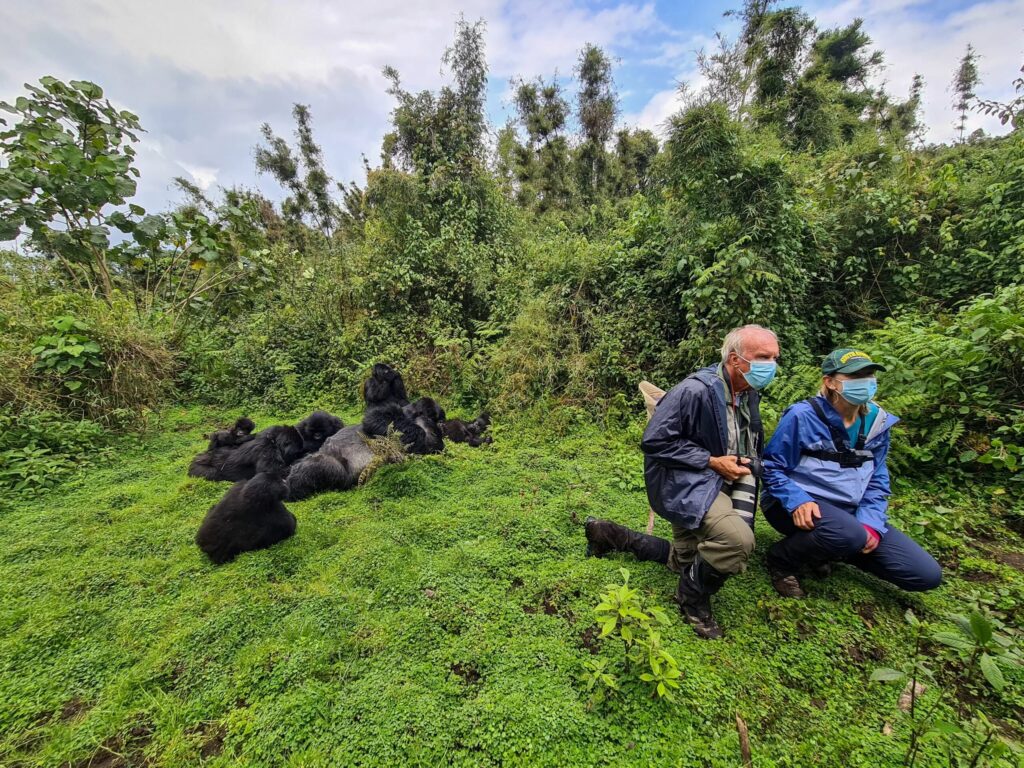
Allergies and chronic conditions are treated differently from infections, and rangers use judgment. A person with seasonal hay fever who sneezes occasionally is not the same biological risk as a person with an active chest infection, but it is the ranger who decides, so be candid and carry the evidence of your condition. If you take regular medication, bring it in its original packaging, and tell your guide if you are prone to altitude headaches, dizziness, or breathlessness. A practical tip from our guides: if you feel a cough or sneeze coming while you are with the gorillas, turn your head away from the animals, cover your nose and mouth with your elbow and mask, step back, and tell the ranger afterwards. The ranger will move the group if needed, and there is no penalty for honesty.

Masks, Hand Hygiene, and Other Health Protocols

Since the pandemic years, the protocols from the Rwanda Development Board, reinforced by the International Gorilla Conservation Program and its Gorilla Friendly pledge, have called for a surgical mask to be worn whenever you are near the gorillas, and rangers will remind you at the briefing. Carry several, because a damp mask is less effective after an hour of steep walking, and swap to a fresh one before you reach the family. Clean your hands before you enter the forest, and avoid touching vegetation unnecessarily near the animals, since gorillas feed on the plants around them. Visitors are also expected not to spit or blow their nose openly in the forest, to carry tissues in a sealed bag and take them out with them, and to follow the ranger’s instructions on where to relieve themselves if nature calls, which we cover below.

Plan Your Rwanda Safari

Start Planning a Private Gorilla Trek

Rwanda gorilla permits sell out months in advance. Secure your dates before the season closes.

Rules for the Forest: Distance, Group Size, Time, and Behavior

Once you are inside the park, five operational rules govern the encounter, and each is enforced in real time by the ranger guides who lead the trek. They are the rules that surprise people most, because the written version sounds mechanical and the lived version is a negotiation between your guide and the mountain gorilla that does not read the regulations.

The Minimum Distance Rule: 7 Meters, and Often More

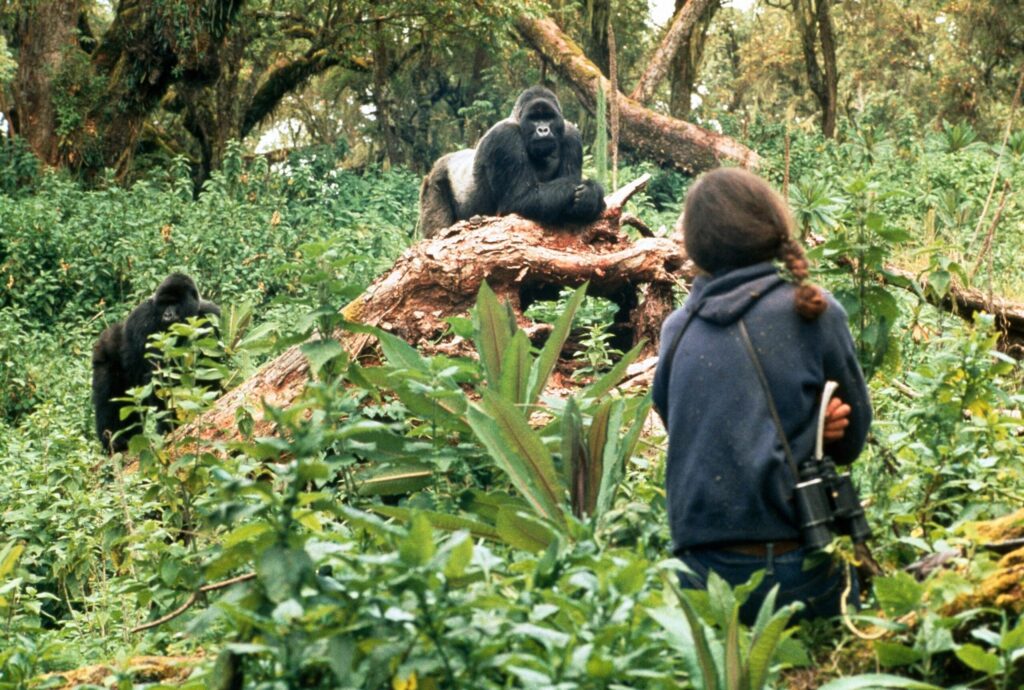
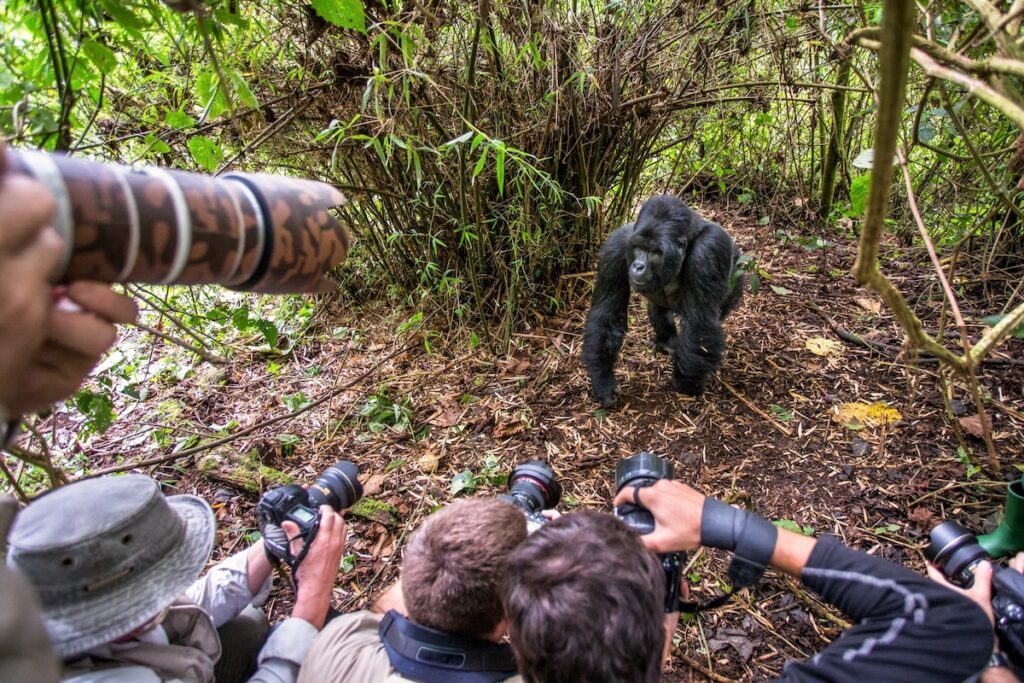
Rwanda’s standard visitor rule is a minimum of 7 meters, or roughly 23 feet, between every visitor and every mountain gorilla. Conservation guidelines published by the International Gorilla Conservation Program and the Gorilla Doctors recommend 10 meters when you are not wearing a mask, and the pledge that visitors are encouraged to take reflects that figure. In practice, your guide sets the walking distance on the day, and the ranger has the final say. What is relevant for planning is that the number is a minimum, not a target, and that it exists because respiratory droplets and bacteria travel and because a close approach raises the animal’s stress level. A habituated gorilla does not apply the rule to itself. Curious juveniles in particular will wander toward a group, and an adult may walk through the middle of a line of visitors on its way to a feeding patch. When that happens, the rule becomes dynamic: you stay still, you do not reach out, and the guide redirects the group by stepping back slowly and in unison.

Group Size and the Single Daily Visit

A maximum of eight visitors may be assigned to one gorilla family in a day, and each family is visited once per day, so a family is never subjected to a second group in the afternoon. This is the structural rule that makes the encounter possible: eight people can arrange themselves in a loose arc at a respectful distance and watch quietly, whereas twenty could not. It is also the reason that a shared permit puts you with up to seven strangers. If you want your party to be alone with the family, the exclusive gorilla permit described above is the best option, or you can purchase all eight permits for a single family on a given date, which is a simple but expensive way to achieve the same privacy.

The One-Hour Rule

The hour begins when the guide announces that the group has settled with the family, not when you first see a gorilla but when you reach the spot where you will stand to observe. It ends when the ranger calls time, and the group withdraws slowly, facing the gorillas until a safe distance is established. The limit exists to cap cumulative stress because a family that is visited every day of the year experiences human presence for a long time and to cap the window for disease transmission. Rangers can and do end an encounter early if the animals show signs of agitation or if the group cannot comply with the rules, and they conclude it quickly, regardless of the moment’s quality.

Behaviour Rules: Voices, Food, Movement and Waste

The behavior rules are simple to state. Speak softly or not at all. Do not eat, drink, smoke, or vape within sight of the mountain gorillas, because food and water attract attention and carry pathogens, so your drinking water stays with your porter until you have finished the one hour. Do not litter, and carry out everything you carry in. Avoid touching gorillas or imitating their sounds and behaviors, as your guides use specific vocalizations to signal calm, and any imitation could be misinterpreted by the silverback. Do not point, wave your arms, stand abruptly, or turn your back on an approaching  mountain gorilla. Stay with your group and keep your backpack zipped, as curious juveniles have been known to investigate loose items. If you need to relieve yourself in the forest, tell your guide before you reach the gorilla family, because rangers carry a small trowel and will take you to a suitable spot away from water, which is standard Leave No Trace practice.

Photography and Drone Rules

Photography and video are permitted throughout the encounter, subject to one absolute prohibition: no flash. A flash discharge at close range can startle a gorilla, and rangers sometimes check camera settings at the briefing. Drones are only allowed in or near the national park with specific authorization from the Rwanda Development Board, and in practice, commercial or recreational drone filming around the gorillas is prohibited. The pledge asks visitors to share only images that were taken at a safe distance and to avoid posting photographs that show people touching or crowding gorillas, because such images normalize behavior that endangers the animals.

What Happens If a Gorilla Charges or Approaches You

The safest response to a mock charge or an unexpected approach is to stay calm, crouch low, avoid direct eye contact, and do not run, because running can trigger a chase response and fleeing visitors are the single greatest source of risk in an otherwise safe activity. Mock charges are uncommon, but they do happen, and your briefing will cover them in detail, so it is worth rehearsing the sequence mentally before you go.

A silverback’s display is intended to communicate, not to injure. The behaviors that precede a charge include sustained staring, a stiff posture, chest beating, hooting, and tearing at vegetation, and they usually occur in response to something the animal perceives as a challenge, such as a visitor holding eye contact, a camera pointed directly at it, or a group that has moved closer than the guide intended. The charge itself is a short rush, frequently stopping a meter or two from the nearest person. The protocol your guide will teach you is consistent. Stay where you are. Lower your body by crouching or sitting if the guide signals you to. Look at the ground or off to the side rather than at the animal. Stay silent. Let the guide respond, because the guides use low-grunting vocalizations that gorillas understand as reassurance, and the combination of the guide’s voice and your stillness usually resolves the moment in seconds. Once the silverback has calmed, the guide will tell you when and how to resume.

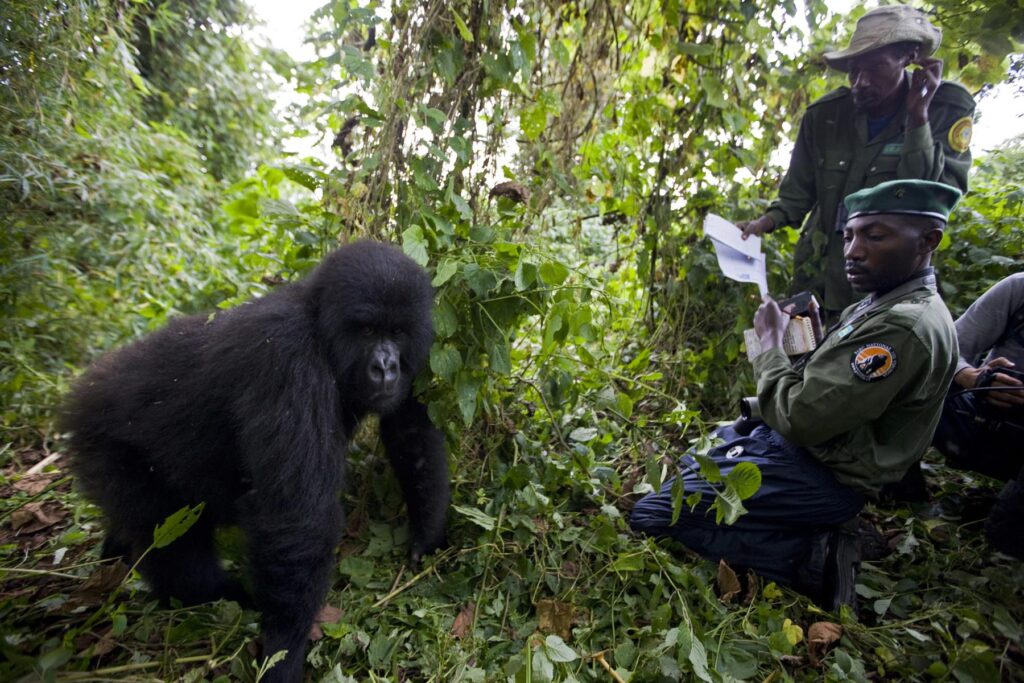
Gorillas also approach for entirely harmless reasons. Juveniles investigate, females with infants pass through, and an adult may simply need to cross the space you are standing in. In those cases, the ranger will often move the group back a few steps, and you should step back slowly in the indicated direction, without turning your back. Keep your distance from the gorilla, even if it touches you, and do not try to hold, stroke, or photograph it. Rangers in Volcanoes National Park carry weapons for protection against forest buffalo and elephants, not gorillas, and they work in close contact with these families every day. Injuries to visitors from gorillas on Rwanda’s trekking itinerary are exceedingly rare, and in almost every case that has been documented, the cause was a visitor leaving the group or breaking the distance and chase rules.

Is Gorilla Trekking Safe in Rwanda? Security, Wildlife, Altitude and Medical Care

Gorilla trekking in Rwanda is safe by the standards of any adventure activity, and the real risks are physical rather than predatory: slips on muddy slopes, altitude fatigue, dehydration, and the occasional encounter with stinging nettles or forest buffalo. Rwanda is consistently ranked among the safest countries in Africa for visitors, Kigali is among the cleanest and best-policed capitals on the continent, and the park itself is patrolled by rangers who accompany every trekking group. The historic security problems that once affected the Virunga region, which today are concentrated on the Congolese side of the border, have not touched Volcanoes National Park for many years, and the park is managed with a level of protection that few wilderness areas can match. Travellers who read headlines about eastern Congo should know that gorilla trekking on the Rwandan side of the border is a different operating environment, though it is worth checking your government’s travel advisory before you commit, as we do on behalf of every guest.

Mountain Gorilla Conservation

Altitude, Weather and Terrain

The trekking zone sits at roughly 2,400 metres and above, with some families ranging much higher on the slopes of Karisimbi and Bisoke, so oxygen is thinner than most visitors are used to. Kigali itself is at about 1,500 metres, which helps, and the practical advice is to arrive in the Musanze area at least the day before your trek, drink water steadily, avoid heavy alcohol, and move at the pace of the slowest member of your group. The Rwandan phrase pole pole, which means ‘slowly, slowly,’ captures the principle of moving slowly in the forest. The weather can change quickly, and rain is possible in any month, so carry a waterproof layer. The mud is the greater hazard, and the combination of volcanic soil and rain makes the descent after the encounter more slippery than the climb. Good boots, a walking stick and a porter are the practical answers.

Wildlife Other Than Gorillas

The park also supports forest buffalo, golden monkeys, bushbucks, duikers and a growing elephant presence on certain slopes, and a ranger with a rifle accompanies every group in case a buffalo or elephant cannot be diverted. You will hear and sometimes see these animals, and the instruction is always the same: stop, stay with the ranger and follow his lead. Stinging nettles are the most common nuisance, and long sleeves, long trousers, and gloves are the best solution. Insect repellent is worth carrying, particularly in the lower bamboo and farmland sections.

Medical Care, Insurance and Evacuation

Kigali has modern private hospitals, including King Faisal Hospital, while Musanze, the town nearest the park, has a referral hospital and several clinics; however, serious emergencies would normally be stabilised and moved to Kigali or evacuated. Comprehensive travel insurance with medical evacuation cover is essential because you could be hours from a road when an injury occurs, and it should also cover the cost of your permit and any non-refundable lodge deposits. Your ranger carries a first aid kit and radio communication, and in the event of injury or acute illness on the mountain, porters can carry or assist a visitor to the nearest vehicle point. We brief every guest on the medical arrangements as part of pre-departure planning.

Plan Your Rwanda Safari

Start Planning a Private Gorilla Trek

Rwanda gorilla permits sell out months in advance. Secure your dates before the season closes.

A Gorilla Trekking Day in Rwanda: Timings, Distances, and Logistics.

A trekking day starts with a 5:30 AM wake-up, a 6:30 AM transfer, a 7:00 AM briefing at Kinigi, a hike of between 45 minutes and five hours, a one-hour encounter, and a return to your lodge between roughly 11:00 AM and 3:00 PM. The distances involved are small and the schedule is rigid, which is why the logistics are worth planning carefully.

Getting From Kigali to the Park

Kigali International Airport is the gateway, and Kinigi, the park headquarters, lies about 90 to 110 kilometers north in Musanze District, a drive of two to two-and-a-half hours on a well-maintained paved road. You can arrive on an afternoon flight and reach a lodge in time for dinner, which is how most short itineraries work, and our 1-day Rwanda gorilla trek is designed for the traveller who wants to go from Kigali to the gorillas and back in a single day, though it means a 4:30 AM start and roughly five hours on the road. The one rule we hold firm is that you should not cut it fine on the morning of the trek. If you stay in Kigali, you must leave by 4:30 AM to make a 7:00 AM briefing, and a delayed convoy or a slow vehicle can cost you the permit, so for luxury travellers we nearly always recommend staying near the park the night before.

The Briefing, Family Allocation and Trailheads

You present your permit and passport copy at the Kinigi reception, sit through a briefing that usually lasts 20 to 30 minutes, and are assigned a family. Drivers take each group to the nearest trailhead, where rangers hand over to the guides and trackers for the final approach. Your driver waits for you at the trailhead.

After the Trek: Lunch and the Rest of the Day

After the trek, transfer from the trailhead back to the lodge for lunch and rest. The afternoon should be unplanned, because the emotional aftermath of the encounter is real, and many travelers find they want quiet. If you do wish to do something, the Dian Fossey Gorilla Fund’s Ellen DeGeneres Campus offers a thoughtful conservation education visit, the Iby’iwacu Cultural Village provides a community-run cultural afternoon, and a short walk in the buffer zone is pleasant. For a second day, golden monkey trekking is a gentler, cheaper activity, with permits at around USD 100 per person at the time of writing, and the hike up Mount Bisoke to its crater lake is a rewarding day for fit travelers, but schedule any volcano hike before, not after, your gorilla trek so that sore legs do not compromise your main event.

What to Wear and Pack for a Gorilla Trek in Rwanda.

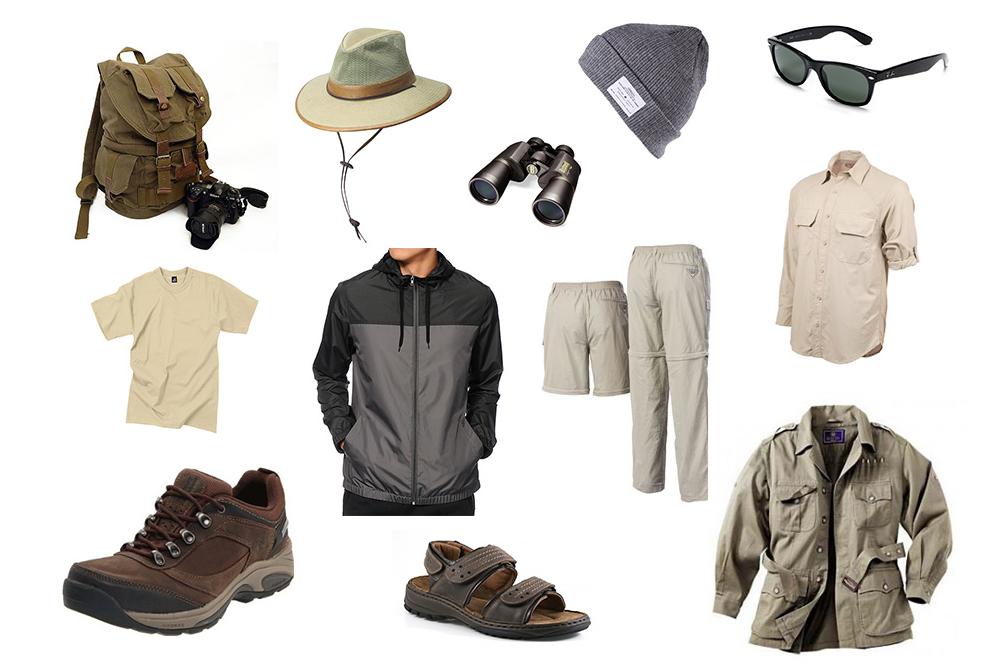
The right kit for a gorilla trek is long sleeves, long trousers, waterproof ankle-supporting boots, a packable rain jacket, gloves, gaiters, and a small daypack, and getting these right is the cheapest way to improve the day. The terrain is steep and wet, the vegetation includes stinging nettles that sting through thin fabric, and temperatures can swing from near ten degrees Celsius on a misty dawn to warm in the sun within a couple of hours.

Dress in layers in muted colors such as olive, khaki, brown, or grey, and avoid bright colors. Choose a moisture-wicking base layer, a fleece or light insulating layer for the early morning, and a waterproof shell that you can stuff into a pack. Wear long trousers tucked into your socks or into gaiters, which keep out mud, ants, and nettles. Light gardening gloves protect your hands when you grab vegetation on the climb, and many guests find them as useful as their boots. A brimmed hat and sunglasses are helpful above the tree line. Waterproof boots with an aggressive sole and good ankle support are the one piece of kit you should not compromise on, and they should be worn in before you travel.
What to Pack for a Safari

In your daypack carry at least two liters of water, energy snacks, a packed lunch from the lodge, a basic first aid kit with blister plasters, insect repellent, sunscreen, tissues, hand sanitizer, two or three surgical masks, a rain cover for your camera, your permit and passport in a waterproof sleeve, and a small amount of cash in small notes for tips. Leave valuables and large bags at the lodge.

Best Time to Trek: Seasons, Permit Availability, and Trail Conditions

Gorilla trekking runs every day of the year, and the best time for most travellers is the long dry season from June to September, with December to February as a close second. In the dry months, trails are firmer, the walking is easier, and clear mornings give better views of the volcanoes, but these are also the months when permits sell out first, so the rule on advance booking above applies with particular force.

Best time for gorilla trekking.

The rainy seasons, March to May and October to November, bring muddier trails, a greener forest, and fewer visitors, and international permit pricing does not generally fall in the rains, although the Rwanda Development Board has occasionally announced limited promotions, so we check at the time of booking. Lodge rates are also lower in the green season.

Luxury Lodges Near Volcanoes National Park: Where to Stay Before and After Your Trek

The best lodges near Volcanoes National Park combine a short transfer to Kinigi with a standard of service that makes the early start painless, and for a high-end traveler, the lodge is a core part of how the day feels. Singita Kwitonda Lodge sits on the park boundary with volcano views and an exceptional guiding team; Wilderness Bisate perches on a reforested hillside with villas designed like Rwandan royal palaces; One&Only Gorilla’s Nest offers the group’s trademark service in lush gardens; and Wilderness Sabyinyo Silverback Lodge, a community-owned property, delivers a strong social impact story at the foot of Mount Sabyinyo. Transfers from these lodges to Kinigi take roughly fifteen to forty minutes, so the wake-up on trek day is between 5:00 and 5:30 AM. Lodges in the Musanze area also pack breakfast to go, prepare lunch boxes, lend ponchos and walking sticks, and in some cases offer boot cleaning and laundry on your return, details that matter more than they sound.

Book your lodge nights at the same time as your permit and put your permit date first. Most luxury lodges here have fewer than twenty rooms, and in peak months they are full a year ahead. The reliable sequence is permit, then lodge, then flights, and we reverse nothing.

Photography and Filming Rules for the Gorilla Encounter.

You may photograph and film freely during the hour, provided you do not use flash, drones, or any artificial light, and the practical challenge is not the rules but the light. The forest is dark, the gorillas are black, and the canopy creates harsh contrast, so a camera with strong high-ISO performance and a fast lens is far more useful than a long zoom. Bodies that handle ISO 3200 and above cleanly, with a 70-200 mm f/2.8 or fast primes in the 85 to 135 mm range, work well. Mobile phones perform acceptably in decent light, but a dedicated camera is a real advantage in forest shade. Turn off flash, silence your shutter if you can, and do not use a monopod or tripod that might be mistaken for a threat. Keep your camera strap secure, carry spare batteries and cards, and shoot in bursts when a juvenile plays. Above all, put the camera down for several minutes, because the guests who remember the encounter most vividly are those who spent a portion of the hour simply watching.

Why the Rules Exist: Disease, Habituation, and Conservation.

The rules are not bureaucracy; they are the reason there are mountain gorillas to see. The subspecies Gorilla beringei beringei was reduced to an estimated 254 individuals in the early 1980s and now numbers a little over one thousand across the Virunga Massif and Bwindi; in 2018, the International Union for Conservation of Nature moved it from Critically Endangered to Endangered, making it one of the few true success stories in primate conservation. Roughly 600 live in the Virunga Massif, shared between Rwanda, Uganda, and the Democratic Republic of Congo. The gains were built on three things: sustained ranger protection, veterinary care from organizations such as Gorilla Doctors, and regulated tourism that gave local communities a stake in protecting the forest. Dian Fossey began the groundwork in 1967 when she founded the Karisoke Research Centre, and the work continues today through the Dian Fossey Gorilla Fund, whose campus near Musanze is open to visitors.
Exclusive Gorilla Trekking in Rwanda: The Private Trek Guide

Habituation is the process that makes trekking possible. Researchers and trackers visit a wild family daily for two to five years, getting the animals used to human presence without feeding or interacting with them. Only when a family shows consistent calm does it enter the tourism program. That is why a mountain gorilla is not a tame animal but a tolerant one, and why a visitor who breaks the rules does lasting harm to a relationship that took years to build.

Penalties for Breaking the Rules

Breaking the rules can end your trek, cost you your permit fee and, in serious cases, lead to a ban or legal action. Rangers have discretion to end an encounter early, to remove a visitor from the group, to confiscate or disable a camera, and to report a serious breach to the park warden. Typical causes of rule violations include using flash, approaching closer than permitted, touching a gorilla, trekking while visibly ill, using a drone, and leaving the group. In practice, a calm reminder from the ranger resolves almost every issue, and genuine problems are rare because guests understand the stakes.

Entry Requirements, Vaccinations, and Travel Insurance

Most visitors need a valid passport and an entry visa or authorization for Rwanda, which should be checked on the official immigration website before you travel because rules change. A yellow fever vaccination certificate is required if you are arriving from or have transited through a yellow-fever-endemic country, and officials do ask for it. Hepatitis A and B, typhoid, tetanus, and routine vaccinations are commonly advised, and malaria prophylaxis is generally recommended for travellers visiting lower-altitude areas such as Akagera, so consult a travel medicine clinic six to eight weeks before departure and the CDC Travellers’ Health Guide for Rwanda for current guidance. Travel insurance should cover medical treatment and evacuation, trip cancellation including your permit and lodge deposits, and adventure activities at altitude. Because the park may or may not compensate a missed trek due to illness, insurance is the reliable safeguard.
Plan Your Rwanda Safari

Start Planning a Private Gorilla Trek

Rwanda gorilla permits sell out months in advance. Secure your dates before the season closes.

Frequently Asked Questions About Gorilla Trekking Rules and Safety.

What are the rules for gorilla trekking in Rwanda?

The core rules are a valid Rwanda Development Board permit in your name, a minimum age of 15, a maximum of eight visitors per gorilla family, a minimum distance of 7 meters, a one-hour limit with the gorillas, and no flash, food, drink, touching, or running. Anyone with a cold, flu, cough, or other contagious illness can be refused at the 7:00 AM briefing at Kinigi. A surgical mask is expected whenever you are near the animals, and drones are not permitted. Rangers enforce every rule on the spot, and their decisions are final. The rules exist to protect roughly 1,000 mountain gorillas from human disease and stress. We brief every guest before travel so none of this is a surprise at the briefing.

How close can you get to mountain gorillas in Rwanda?

The minimum distance is seven meters, about 23 feet, and conservation guidelines recommend ten meters if you are not wearing a mask. Rangers set the working distance on the day and may ask the group to move further back. Gorillas ignore the rule and sometimes walk within arm’s reach, in which case you stay still, do not touch the gorilla, and step back slowly as directed. The 7-meter figure is a minimum, never a target. The distance exists to limit disease transmission and stress, since gorillas are vulnerable to human respiratory viruses.

How long do you spend with the gorillas in Rwanda?

You spend a maximum of one hour with a gorilla family, counted from the moment your group settles at the observation point. Rangers keep time and will not extend it, regardless of how good the encounter is. The total trekking day runs from about 5:30 AM to early or mid-afternoon, because the hike to the family can take between 45 minutes and five hours. The limit caps stress on the animals and reduces the window for disease transmission. If you want longer, the behind-the-scenes gorilla trekking experience runs over several days with a very small group.

What is the minimum age for gorilla trekking in Rwanda?

The minimum age is 15 years, and the Rwanda Development Board applies it without exception. A 14-year-old will be turned away at Kinigi even if the rest of the family has permits. There is no upper age limit, and we have guided travelers in their seventies who were well matched to a family and walked with porters. Younger children can enjoy golden monkey trekking, cultural visits, and Akagera game drives. Provide every traveler’s date of birth when you book so the permits are issued correctly.

Can you go gorilla trekking if you have a cold?

No, a visible cold, cough, fever, or other contagious illness can get you refused at the briefing. Gorillas share about 98 percent of our DNA and have little immunity to human respiratory viruses, so a mild cold in you can be serious for them. Tell your guide before you leave the lodge if you feel unwell, because the senior ranger has the final say. The Rwanda Development Board has historically refunded half of the permit fee when the warden formally declares a visitor unfit through illness, though terms can change, so confirm them at booking. Travel insurance that covers the permit is the best protection.

Is gorilla trekking in Rwanda safe?

Yes, gorilla trekking in Rwanda is safe, and the main risks are slips, altitude fatigue, and nettles rather than the gorillas. Rangers accompany every group, Rwanda is among the safest countries in Africa, and injuries from gorillas on the trekking program are exceedingly rare. The park lies at 2,400 metres and above, so a steady pace, good boots, and a porter matter more than anything else. Take out insurance with medical evacuation cover, because you may be hours from a road if you are injured. The situation across the border in eastern Congo is different, so check your government’s advice if you plan to cross.

What should I do if a gorilla charges me?

Stay where you are, crouch down, look at the ground, and do not run. A mock charge is a display, and it almost always stops short of contact. Running triggers a chase response and is the only genuinely dangerous reaction. Your guide will make low grunting sounds that reassure the gorillas, and the group will resume once the animal calms. Never raise your arms, shout, or try to take a photograph during a charge.

How much does a gorilla trekking permit cost in Rwanda in 2027?

A permit costs USD 1,500 per person for international visitors, and we treat that as the working figure for 2027 pending any Rwanda Development Board announcement. In January 2026 the board announced lower rates of USD 200 for Rwandans and East African residents and USD 500 for other Africans, which do not apply to international visitors and exclude June to October. The permit covers entry, rangers, and the one-hour encounter and excludes lodging, transfers, and tips. The exclusive permit costs about USD 15,000 for a private family, and the behind-the-scenes gorilla trekking experience is around USD 15,000 per person. We confirm the price in writing before you pay.

How do I book a gorilla permit in Rwanda, and how far ahead?

Book through a licensed Rwandan tour operator or the Rwanda Development Board’s online portal, ideally six to twelve months ahead for June to September and mid-December to early January. For other months, three to six months usually works. Only 192 permits are available per day across 24 habituated families, so popular dates sell out. Permits are non-transferable, tied to a passport and a date, and a late arrival at the 7:00 AM briefing can forfeit the fee. We check availability across all families and dates, then confirm the permit alongside your lodges.

What is the best time of year for gorilla trekking in Rwanda?

The best time is the long dry season from June to September, with December to February a strong alternative. Trails are firmer, and the walking is easier in these months, but permits sell out first. March to May and October to November are rainy, with muddier trails, fewer visitors, and greener scenery, and you should pack a proper waterproof shell. Gorilla trekking runs every day of the year in every season.

What should I wear and carry for gorilla trekking?

Wear long sleeves, long trousers in muted colors, waterproof ankle-supporting boots, gaiters, light gloves, and a waterproof jacket, and carry at least two liters of water in a small daypack. Bring a packed lunch, snacks, two or three surgical masks, insect repellent, sunscreen, blister plasters, and a rain cover for your camera and your permit and passport. Leave valuables at the lodge. Boots should be worn in for several weeks before travel. Nettles are common and will sting through thin trousers.

How difficult is gorilla trekking in Rwanda, and how fit do I need to be?

The difficulty ranges from a 45-minute walk to about five hours of steep climbing at 2,400 to 3,700 meters, depending on where the family spent the night. You need to be able to walk for several hours on uneven, muddy ground at altitude, and fitness does not have to be athletic. Rangers allocate families partly on the fitness level you declare, so be honest when you book. Porters cost about USD 15 to 20 and make a real difference. Eight weeks of hill walking in your trekking boots is the most useful preparation.

Can you take photos and use a drone near the gorillas?

You can take photos and video, but flash and drones are not allowed. Gorillas can be startled by flash at close range, and drone use around the park is not approved for visitors. The forest is dark, so a camera with good high-ISO performance and a fast lens works best, and phones do well in decent light. Put the camera down for part of the hour, because many guests say that is what they remember most. Share only images taken at a safe distance, as the Gorilla Friendly pledge asks.

Is it better to trek gorillas in Rwanda or Uganda?

Rwanda is better for speed, luxury, and polish, and Uganda is better for price and wilder forests. Rwanda’s permit costs USD 1,500, and the park is two to two-and-a-half hours from Kigali, while Uganda’s costs USD 800 and involves longer transfers to Bwindi. The rules are almost identical in both countries, including eight visitors per family and one hour. Many guests combine the two through the Cyanika border.

Is a gorilla trek worth the cost?

For most guests, the experience is intimate, tightly managed, and unlike any other wildlife encounter, and the fee directly funds the protection of the species. The permit supports rangers, veterinary care, and community projects around the park, and the tourism model is the reason the population has recovered from about 254 gorillas in the early 1980s. Costs beyond the permit, including lodges, transfers, and tips, depend on how you travel. The best way to judge is to see an itemized quotation. We provide one with no hidden extras.

Is it ethical to go gorilla trekking?

Yes, regulated tourism is the main funding source for protecting mountain gorillas, and they are habituated over two to five years by trained teams when it is done under strict rules. The ethical risks come from rule-breaking, such as getting too close, going while ill, or posting photographs of touching. Choose an operator that obeys the rules, take the Gorilla Friendly pledge, and use lodges that support the community. Nothing about the experience involves feeding or handling the animals. If in doubt, ask your operator how they manage compliance.

Ready to Trek? Permits are limited — plan early.

Plan Your Gorilla Trek With Rwanda Gorilla Expeditions

Understanding the rules is the first step toward a trek that goes smoothly, and the second is having a team on the ground who can secure the permit, protect your dates, match you to the right family, and handle every detail from your landing at Kigali to your trek briefing in Kinigi. Rwanda Gorilla Expeditions designs private, luxury itineraries across Rwanda, Uganda, Kenya, and Tanzania, and every journey begins with a conversation about your dates, fitness, travel party, and the standard of lodge you prefer.