Mount Karisimbi: The Complete Guide to Rwanda’s Highest Volcano Hike.

Mount Karisimbi is a 2-day, 4,507 m hike that requires a USD 400 permit. See the route, best time, packing, and safety, then tell us your dates to plan it.

Mount Karisimbi is Rwanda’s highest mountain and the tallest of the Virunga volcanoes at 4,507 meters, and it is climbed as a strenuous two-day, one-night guided hike inside Volcanoes National Park that costs USD 400 per person for the permit. You walk for roughly six hours on the first day to a high camp at about 3,700 meters, sleep in near-freezing air, and push for the summit before dawn on the second day, when the clouds that hide the volcano all afternoon often part to reveal the whole Virunga chain, the neighboring volcanoes of Congo, and, on the best mornings, the glint of Lake Kivu. It is the most physically demanding hike in Rwanda and the only one that requires a night on the mountain, which is why it attracts a different kind of traveller than the gorilla trekkers who share the same park. The Rwanda Development Board caps each Karisimbi group at twelve hikers, sets the minimum age at 15, and asks everyone to report at the park entrance at 7:00 am.

Mount Karisimbi Hike: Rwanda’s Highest Volcano Guide & Permit

For a luxury traveller who has already seen the gorillas or who wants to add something genuinely hard-won to a Rwanda safari, Karisimbi offers what no lodge can: altitude, silence, cold, and the kind of earned view that cannot be bought with a better room category. The summit sits above the bamboo and the moss-draped Hagenia woodland, in the Afro-alpine zone where giant lobelias and senecios stand in the mist, and the mountain is part of the same landscape in which Dian Fossey founded her Karisoke Research Centre on the saddle between Karisimbi and Bisoke. The name Karisoke is, in fact, a contraction of the two volcanoes’ names, which is a detail few visitors know and which makes the walk feel less like an excursion and more like an entry into the conservation story of the mountain gorilla.

Elevation 4,507 m, the highest point in Rwanda and in the Virunga range
Location Volcanoes National Park, on the Rwanda–DRC border
Hike format Two days, one night, guided, with a high camp
High camp altitude About 3,700 m
Permit (international visitor) USD 400 per person
Maximum group size 12 hikers
Minimum age 15 years
Reporting time 7:00 am at the park entrance
Difficulty Strenuous: Rwanda’s hardest volcano hike
Kigali to Kinigi (park headquarters) About 100 to 110 km, 2 to 2.5 hours by private vehicle
Companion permits Gorilla trek USD 1,500; golden monkey trek USD 100; Bisoke, Muhabura, Gahinga, and Dian Fossey tomb hikes USD 75 each

Permits are limited — spaces fill months ahead

Reserve Your Private Gorilla Trek

Speak with a Rwanda-based specialist today. We secure permits, match you to the right gorilla family, and plan every detail around your schedule.

No group departures · Private itineraries only · Direct Rwanda expertise

What Is Mount Karisimbi? Geography, Geology, and Name.

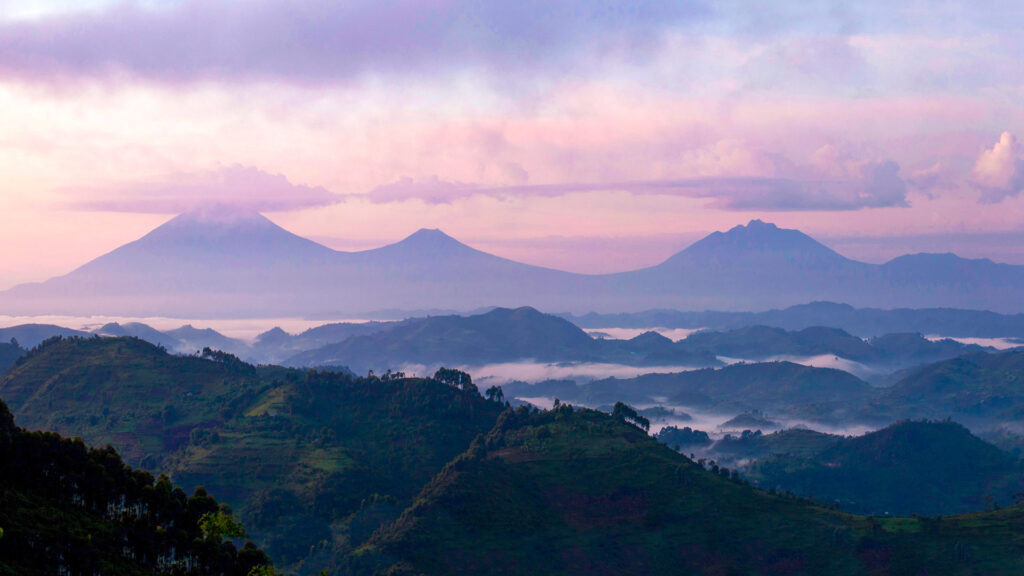
Mount Karisimbi is a dormant stratovolcano on the border between Rwanda and the Democratic Republic of Congo, and it is the summit that everything else in the Virunga landscape is measured against. It rises to 4,507 metres, and its broad, gently angled flanks are visible from Musanze and Kinigi on any clear morning, usually wearing a cap of cloud that lifts for an hour at dawn and again at dusk. Because the volcano is dormant, with no eruption in recorded history, the hike is a walk on old volcanic slopes rather than a risk on an active crater, but its neighbors are a reminder that the range is still alive: Nyiragongo and Nyamuragira, visible from the high ground on the Congolese side, are among the most active volcanoes in Africa.

The Virunga chain and where Karisimbi fits

Mount Karisimbi Hike: Rwanda’s Highest Volcano Guide & Permit

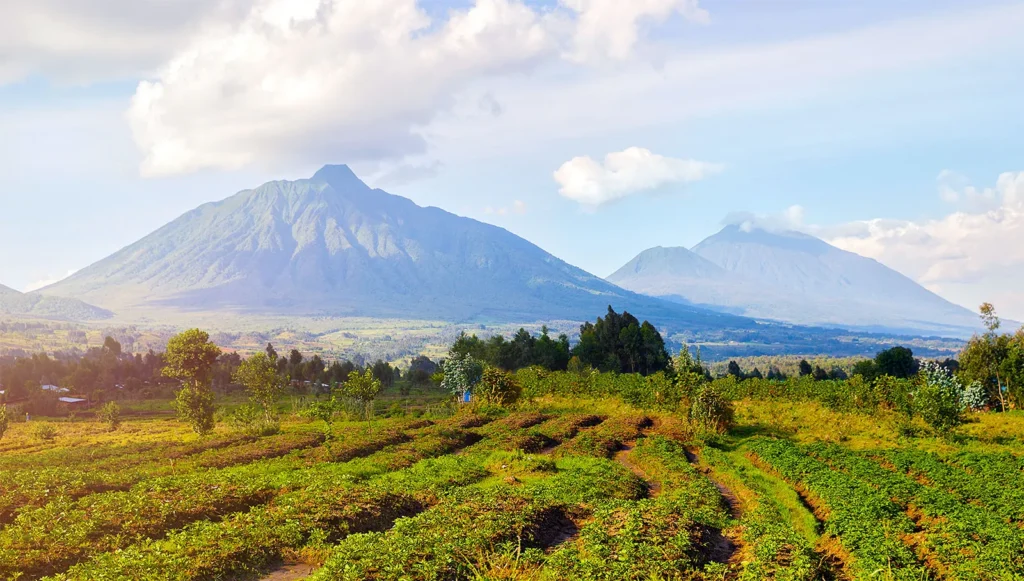
The Virunga Mountains form a chain of eight volcanoes shared by Rwanda, Uganda, and the Democratic Republic of Congo, built by the same rifting of the continent that created the Albertine Rift. Five of them are linked to Rwanda’s side of the range: Karisimbi, Bisoke, Muhabura, Gahinga, and Sabyinyo. Karisimbi is the giant among them. Seen from the saddle it shares with Bisoke, it looks less like a peak than a long, quiet wall, and it dominates the skyline above the lodges and the farmland of Musanze District.

What does the name Karisimbi mean

Karisimbi is usually translated from Kinyarwanda as “white shell,” a reference to the frost and occasional snow that dusts the summit. Local people use a related word for the white cowrie shells once used as ornaments, and the image fits: on a cold, clear morning the top of the mountain is pale against a dark sky. Snow is rare and never reliable, so guides avoid promising it. However, frost on the upper slopes and ice on the tents at camp are common, even in the dry season.

Karisoke and the gorillas of the saddle

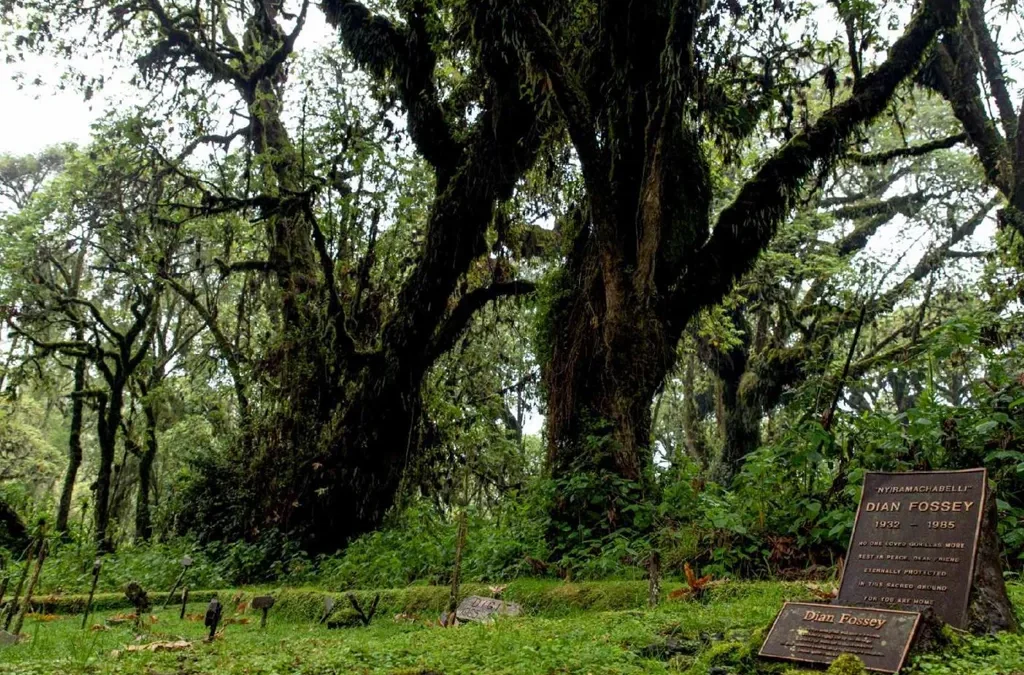
The Karisoke Research Centre, founded by the American primatologist Dian Fossey in 1967, took its name from Karisimbi and Bisoke because it was established in the saddle between them. Gorilla families still range across these upper slopes, and the area around the Karisimbi trail is where some of the longest-running studies of mountain gorilla behavior were carried out. The Dian Fossey Gorilla Fund continues that work today, and you can learn how the research and conservation model connects to tourism in our guide to gorilla conservation in Rwanda. If you want to see Fossey’s grave without a summit climb, the short hike to her tomb at about 2,967 meters costs USD 75 per person and takes three to four hours; it starts from the same trailhead region as the Bisoke and Karisimbi routes.

The ecological zones you climb through

Karisimbi is a vertical tour of Albertine Rift ecology. You begin in the farmland and eucalyptus belt at the park boundary, climb into dense bamboo forest, and then rise into Hagenia and Hypericum woodland, where trees are hung with moss and old man’s beard lichen. Higher still, above roughly 3,300 meters, the forest gives way to the Afro-alpine zone of giant lobelias, tree-sized senecios, everlasting flowers, and tussock grass, a landscape that looks closer to the high moorland of the Rwenzoris than to the rainforest below. Forest buffalo, bushbuck, black-fronted duiker, and golden monkeys occupy the lower forest, and bird enthusiasts will find Albertine Rift endemics, including the Rwenzori turaco.

The Mount Karisimbi Hike: Day-by-Day Itinerary

The Karisimbi hike follows a simple structure of a long climb to a high camp, a cold night, a pre-dawn summit push, and a descent, and the details that matter most are timing, pacing, and the weather window. The times below are typical rather than fixed, because they depend on the group’s pace, the condition of the trail, and the cloud.

Before the climb: the evening in Kinigi

Most of our guests sleep at a lodge near Kinigi the night before, because the hike begins early and a two-and-a-half-hour drive from Kigali on the morning of the climb would waste your best energy. Lodge breakfast is served early, your guide checks your boots, gloves, and layers, and any gear you have forgotten can usually be hired or sourced locally. This night is also the evening for a quiet conversation about altitude: sleep well, drink water steadily, and avoid alcohol. Our team will confirm that your permit has been secured and that porters are arranged.

Day 1: the park entrance, the trailhead, and the ascent to camp

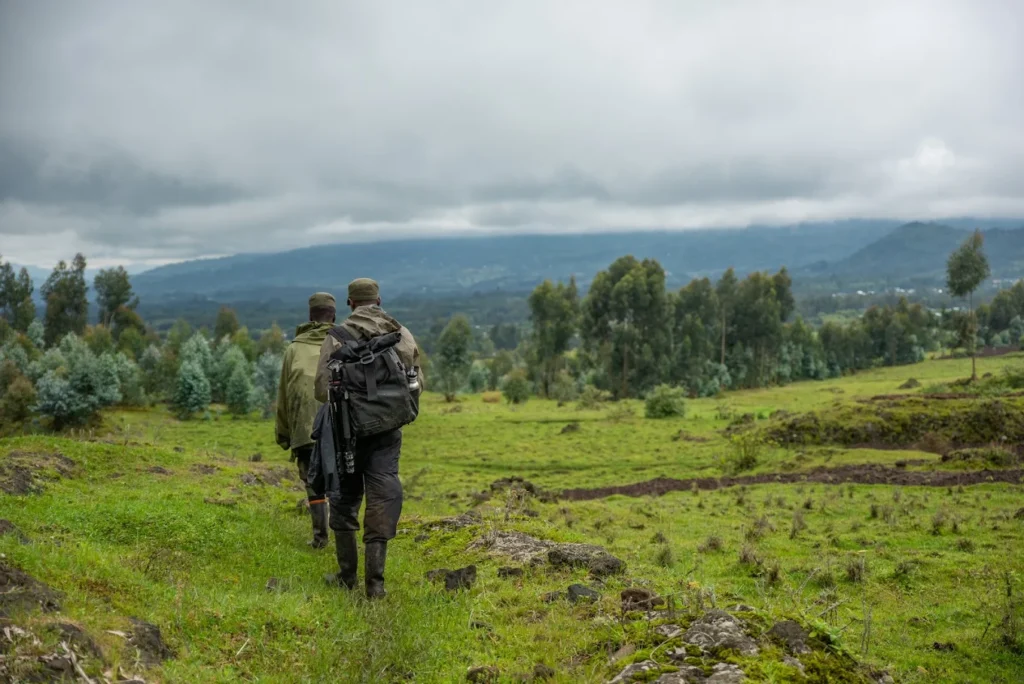
You report to the park entrance at 7:00 am, as the Rwanda Development Board requires, for registration and a ranger briefing, which covers the route, the pace, the wildlife, and the rules for the camp. From the headquarters, a vehicle takes you to the trailhead, which is around 45 minutes away over a rough road. The ascent begins through farmland and then bamboo, with the first hour often the muddiest, and the route climbs steadily through the Hagenia woodland to the Bisoke-Karisimbi saddle area before turning up the flank of Karisimbi itself. Allow roughly six hours of walking to reach the camp at about 3,700 meters, including rest stops and lunch. Armed rangers accompany every group, mainly as a precaution against encounters with forest buffalo and other wildlife, and porters carry the camping equipment and as much of your pack as you wish to hand over.

Trackers in Volcanoes National Park, Rwanda

The camp at 3,700 metres

Camp is a high-altitude tented camp set on the upper slopes. It is basic by the standards of the lodges down the mountain, and it is cold: temperatures regularly fall to or below freezing overnight, even in the dry season. Dinner is hot and early, and you eat wearing everything you have brought. By seven or eight in the evening, most of the group is in a sleeping bag. On a clear night, the stars are extraordinary, with almost no light pollution within reach and complete silence at this altitude. We recommend a hot-water bottle, a warm hat to sleep in, and a dry set of base layers kept strictly for the night.

Day 2: the summit push before dawn

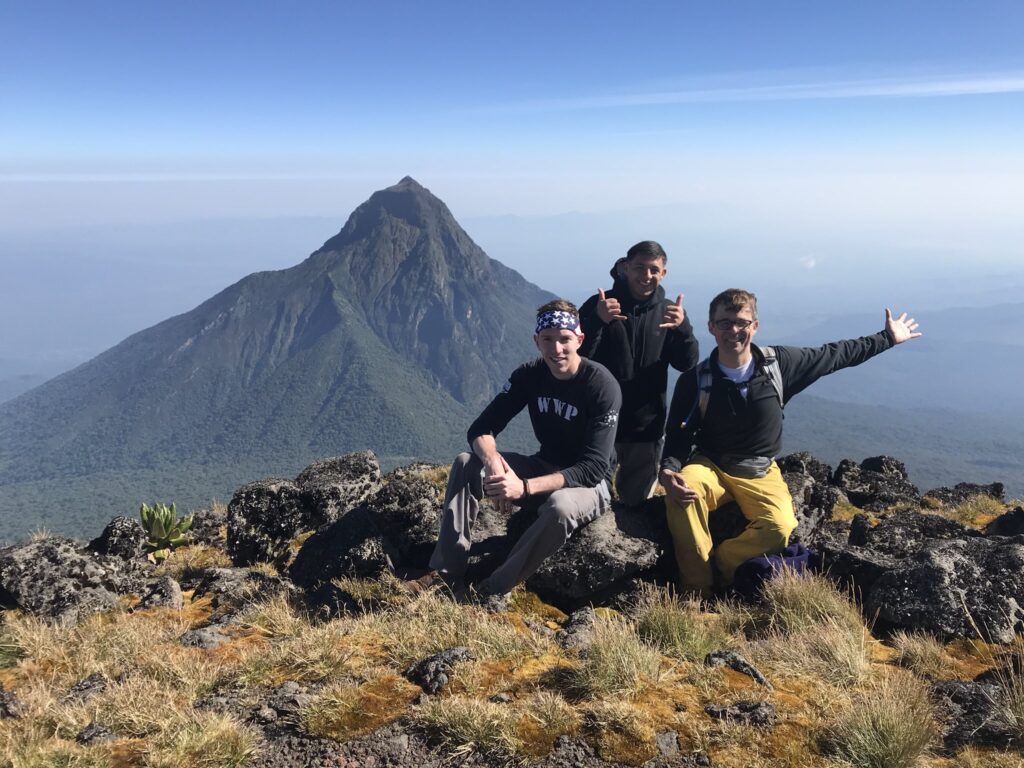
The summit push starts in the dark, usually between about 3:00 and 4:00 am, with headlamps, so that you reach the top for sunrise. The terrain above camp is an open Afro-alpine slope, with loose volcanic scree and cold wind, and the climb to the top takes in the region of two and a half to three hours at a steady pace. Altitude makes every step feel slow. On the summit, at 4,507 metres, the view depends entirely on the weather: on a good morning you can see across the whole Virunga chain, the crater lake of Bisoke, and the smoking Nyiragongo and Nyamuragira across the border and into Uganda. On a poor morning you see a white cloud and your own breath. We tell clients plainly that visibility is never guaranteed.

The descent

After photographs and a hot drink, you return to camp for breakfast, break camp, and descend to the trailhead. The descent is the part that surprises people, because the knees and the ankles work harder going down than they did climbing, and the trail becomes slippery on wet days. Plan on the order of five to six hours from the summit to the trailhead, including the stop at camp, and expect to be back at your lodge in the middle or late afternoon. A hot bath and a long dinner are the best reward.

How Difficult Is Mount Karisimbi? Fitness, Altitude, and Preparation.

Karisimbi is a strenuous hike, not a technical climb: no ropes or mountaineering skills are needed, but you must be fit, well-acclimatized, and prepared to walk for many hours at altitude in cold, wet conditions. It is a significantly bigger undertaking than a gorilla trek, and it is the hardest of the volcano hikes in Rwanda.

Why altitude is the real challenge

You begin the trip in Kigali at around 1,500 metres, sleep near Kinigi at about 2,400 metres, camp at roughly 3,700 metres, and summit at 4,507 metres. That is more than 3,000 metres of gain across a few days, and the final 800 metres or so happen in a single night and morning. Altitude sickness, with headache, nausea, poor sleep, and breathlessness, can affect fit and unfit hikers alike, and it is unrelated to your gym record. The best defenses are a slow pace, plenty of water, a good night’s sleep at Kinigi before you start, and an honest conversation with your guide about how you feel. If a hiker is unwell at camp, the safe decision is always to descend. Anyone with heart or lung conditions should consult a doctor before booking, and a travel-medicine appointment is worthwhile for everyone; the TravelHealthPro guide to Rwanda is a useful starting point.

How fit do you need to be?

You should be comfortable walking for six to eight hours with a day pack on steep, uneven, muddy ground, and you should have recently done at least a few long hill walks. The people who struggle most are those who treat Karisimbi like a gorilla trek, which can be as short as thirty minutes. In the six to eight weeks before you travel, build up long weekend walks, stair or hill sessions with a loaded pack, and a few back-to-back days on your feet. Break your boots in thoroughly. A walking pole makes a real difference on the descent, and poles can be hired at the trailhead.

Who should not do it?

The hike is not recommended for pregnant women, people with spinal injuries, or those with poor cardiovascular health, and it is not open to anyone under 15. Travellers with knee or ankle problems should be realistic about the descent. If your priority is comfort or a shorter outing, there are excellent alternatives, which we compare below.

Porters and support

Porters are available and strongly recommended. They carry camping equipment and, if you wish, your pack; they come from the communities around the park, so hiring them directly supports local households. A tip at the end of the trip is customary. Luxury travellers often ask whether the camp can be upgraded, and our approach is to discuss it openly: we can arrange additional porter support and carefully chosen equipment and food, but the camp remains a high-altitude mountain camp, not a lodge, and we would rather set that expectation clearly than oversell it.

Plan Your Rwanda Safari

Start Planning a Private Gorilla Trek

Rwanda gorilla permits sell out months in advance. Secure your dates before the season closes.

Mount Karisimbi Permit Cost, Booking Rules, and What Is Included

The Mount Karisimbi permit costs USD 400 per person for international visitors and must be booked through the Rwanda Development Board’s system, which allocates places on a first-come, first-served basis in groups of no more than twelve. It is separate from, and in addition to, any gorilla trekking permit.

Permit prices by visitor category

According to the Rwanda Development Board’s booking portal, the tourist permit is USD 400 for a foreign visitor, USD 250 for a foreign resident in Rwanda, USD 200 for an East African citizen, USD 300 for a foreign resident of East Africa, and RWF 30,000 for a Rwandan citizen. The minimum age is 15, and the maximum group is twelve. The Rwanda Development Board sets the prices, which may change, so we reconfirm them in every written quotation.

How other Volcanoes National Park permits compare

The wider range of activities in the park has completely unique prices, which matters when you are building a budget. A gorilla trekking permit is USD 1,500, an exclusive gorilla permit is about USD 15,000 for a private group, and a golden monkey permit is USD 100. The Bisoke, Muhabura, and Gahinga hikes and the Dian Fossey tomb hike are USD 75 each, while Karisimbi is USD 400 because it requires overnight camping, ranger support, and porters.

What is usually included in our Karisimbi arrangements?

On our journeys, we typically arrange the permit, ranger accompaniment, porters, camping equipment, ground transport, and your lodge stays so that you arrive at the trailhead with nothing to organize but your kit. We normally exclude flights, visas, insurance, personal gear, tips, and alcohol. A written quotation will itemize what applies to your dates.

How and when to book

Because Karisimbi places are limited and tied to dates that also have to fit your gorilla permit, we recommend contacting us as soon as your travel window is clear. For peak months from June to September and the December to January holidays, plan six to twelve months ahead for gorillas and as early as possible for Karisimbi. Our team will check availability with the Rwanda Development Board, hold the permits, and build the rest of the journey around the confirmed dates.

Best Time to Climb Mount Karisimbi

The best time to climb Mount Karisimbi is during Rwanda’s long dry season from June to September or the short dry season from December to February, when the trail is firmer and the summit has the best chance of a clear sunrise. The mountain is climbable all year, but weather above 3,500 meters changes fast, and rain, clouds, and mud change the hike from demanding to genuinely arduous.

Best time for gorilla trekking.

June to September: the coldest and clearest

The long dry season is the most reliable window, with the best summit visibility and the firmest ground. It is also the coldest period at altitude, and frost is common on the high slopes. In these months, most reports mention frost and, on rare occasions, a dusting of snow on the summit. This is also the peak season for gorilla permits, so book early.

December to February: the second dry window

The short dry season offers many of the same advantages, with somewhat warmer conditions and the added benefit of festive-season travel. Permits are tight around Christmas and the New Year, so dates need to be fixed far in advance.

March to May and October to November: the rains

During the rainy seasons, the trails on the lower slopes turn to deep mud, the cloud hangs low, and the summit often disappears from view. Some hikers choose these months for quieter trails and lush vegetation, and it can be done, but we advise it only for experienced, well-equipped walkers with flexible expectations. We usually recommend that travellers who can only visit in the wet months choose the shorter Bisoke hike or the Fossey tomb walk instead.

Time of day is more important than month.

Whatever the season, the mountain is clearest in the first hours after dawn. By mid-morning, cloud typically builds on the upper slopes, which is why the summit push begins in the dark and we never plan to arrive on the top after about 8:00 am.

What to Pack for Mount Karisimbi: Clothing and Gear for a Freezing Night at 3,700 Metres

Pack for three climates at once: warm, wet forest at the start, a freezing night at camp, and a windy, sub-zero summit morning. The guiding principle is layering, and the most common mistake we see is under-packing for the night rather than for the walk.
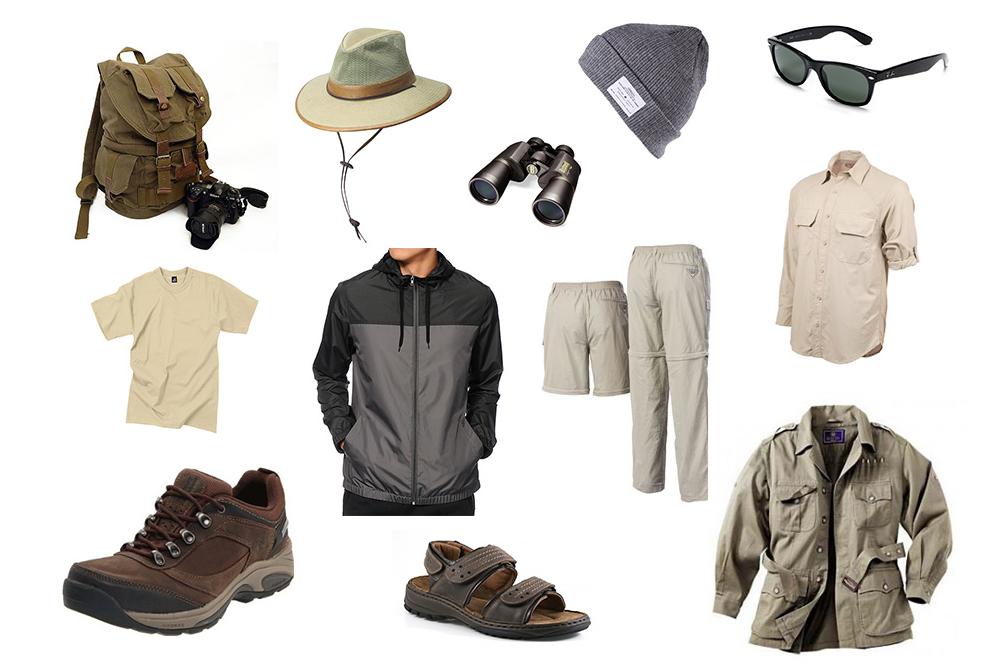
What to Pack for a Safari

Clothing layers

For the walk, wear a moisture-wicking base layer, a lightweight fleece or insulated mid-layer, and a genuinely waterproof jacket and trousers, because rain on the lower slopes is common in every season. For camp and the summit, add a warm-down or synthetic insulated jacket, a thermal base layer for sleeping, insulated gloves with a thin liner pair, a wool hat or beanie, a buff or neck gaiter, and spare thick socks. Keep one complete dry set strictly for the night, and never wear it on the trail. Long trousers matter in the lower forest, where stinging nettles are abundant, and gaiters keep mud and nettles out of your boots.

Footwear

Waterproof, ankle-supporting hiking boots with a firm sole and good grip are non-negotiable, and they must be well broken in. Sandals and trail runners are unsuitable on the slick volcanic mud. Bring spare laces and a pair of lightweight camp shoes or insulated slippers for the evening.

Sleeping and camp comfort

Our camping arrangements include equipment, but a personal sleeping-bag liner, a warm hat for sleeping, and a small hot-water bottle make a larger difference to your night than any other item. Earplugs and an eye mask help if you share a tent. A headlamp with spare batteries is essential for the pre-dawn summit push, and you should check that it works before you leave your lodge.

Day pack essentials

Carry at least two to three liters of water, high-energy snacks, sunscreen with a high SPF, polarized sunglasses, lip balm, a small first-aid kit with blister plasters, and any personal medication. At altitude, the sun is fierce, even when the air is freezing. Trekking poles are strongly recommended and can be hired at the trailhead. Your camera or phone battery will drain faster in the cold, so keep a spare warm in an inner pocket.

Money, documents, and tips

Carry some US dollars in small, clean notes for porter and guide tips, and keep your passport copy and permit confirmation in a waterproof pouch. Store non-essential luggage at your lodge in Kinigi; we organise the logistics so that you climb with a small bag only.

How to Get to Mount Karisimbi from Kigali: Distances, Transfers, and Timing

Mount Karisimbi is reached via the park headquarters at Kinigi, which lies about 100 to 110 kilometers northwest of Kigali, a drive of roughly two to two-and-a-half hours by private vehicle on a well-maintained tarmac road through Musanze. The trailhead is a further 45 minutes or so beyond Kinigi, so you should plan your accommodation to keep the early-morning drive short.

From Kigali International Airport

All international flights arrive at Kigali International Airport (KGL), where our team meets you inside the arrivals hall. Most guests spend the first night in Kigali and travel to Musanze the next morning, which allows time to rest from the flight and begin adjusting to the altitude. The drive climbs through terraced hillsides, and the outline of the Virunga Mountains appears long before you arrive.

From the lodges to the trailhead

Lodges around the park sit about 20 to 40 minutes from Kinigi, and the Karisimbi trailhead is roughly 45 minutes from the park offices. A lodge near the park boundary shortens the pre-dawn start. For a private departure at 6:00 am, our drivers collect you from the lodge, stop at Kinigi for registration and the 7:00 am briefing, and continue to the trailhead.

From Uganda and Lake Kivu

Travellers combining Rwanda with Uganda can cross by road from Kabale to Musanze, which is also the route to the Bwindi Impenetrable Forest, and those finishing at Lake Kivu can reach Rubavu in about an hour from Kinigi. See our guide to Lake Kivu and the 6-day gorilla trekking and Lake Kivu safari for ideas on a recovery stage after the mountain.

How to Combine Mount Karisimbi with Gorilla Trekking Without Wrecking Either.

Do not do Karisimbi the day before your gorilla trek, and do not do it the day after: Leave at least one full rest day between the two, ideally two. Both activities demand a lot from your legs and lungs, and the gorilla trek is the experience you cannot afford to spoil, as its permit is the scarcest and most expensive thing on your itinerary.

A gorilla permit is for a fixed date, and the walk to the family can last anywhere from thirty minutes to five hours at around 2,500 to 3,000 meters and above. If you arrive at the trailhead with weary legs and a night of broken sleep behind you, you will enjoy the hour with the gorillas far less than you should. Conversely, climbing Karisimbi after the gorillas is perfectly workable, as the gorilla trek acts as useful acclimatisation, but you should give your body a day to recover first. We generally fix the gorilla date, then place the mountain either two days before or two days after it.

Arrive in Kigali and spend a night; transfer to Kinigi and acclimatize with the shorter Dian Fossey tomb walk at about 2,967 meters, which costs USD 75; climb Karisimbi over the next two days; take a full rest day with a spa afternoon at your lodge; trek the gorillas; and finish with a golden monkey trek at USD 100 before heading to Lake Kivu or Kigali. This pattern allows your body to acclimatize gradually and ensures that the most important encounter occurs on your freshest day.

Karisimbi versus Bisoke, Muhabura, and Gahinga
9-Day Virunga Circuit Safari | Rwanda, Uganda & DRC

If Karisimbi sounds like too much, the other volcano hikes in the park offer a lot of reward for less commitment. Mount Bisoke, at 3,711 meters, costs USD 75, takes about six to eight hours as a round trip, and rewards the effort with a crater lake at the summit; it is moderate in difficulty and is the most popular option. Mount Muhabura, at 4,127 metres, costs USD 75, is a demanding full-day hike on a steep, near-symmetrical cone at the junction of Rwanda, Uganda, and the Democratic Republic of Congo, and is much quieter. Mount Gahinga, at 3,474 meters, is the smallest and least visited, with a swampy former crater and plenty of solitude. Mount Sabyinyo is gorilla terrain only and is not offered as a public summit hike. In short, Karisimbi is for experienced walkers who want Rwanda’s highest point; Bisoke is for most reasonably fit visitors; and Gahinga is for those who want quiet.

Where Karisimbi sits in a luxury itinerary

For high-end travellers, Karisimbi is best treated as a single, deliberate adventure within an otherwise comfortable journey, rather than as the centrepiece of an entire holiday. Pair it with the best gorilla encounters, with Lake Kivu for recovery, and, for photographers, with the golden monkeys of the bamboo forest. Our Rwanda safari styles guide explains how we shape journeys for honeymooners, families, photographers, and conservation-minded travelers, and our safari experiences guide lists the full range of activities we can add.

Where to Stay Near Mount Karisimbi: Luxury Lodges in Volcanoes National Park.

The best places to stay before and after Karisimbi are the luxury lodges around the park boundary, all of which are within 20 to 40 minutes of Kinigi and provide exactly the recovery a night in a freezing tent demands. There are no lodges inside the park itself, so the choice is about design, proximity, and service.

Bisate Lodge

Bisate is a collection of circular, thatched forest villas on a reforested hillside, with views toward Bisoke and Karisimbi, and it is one of the most distinctive properties in Rwanda. Golden monkeys are sometimes seen moving through the trees around the villas, and the lodge has been central to a habitat-restoration program.

Singita Kwitonda Lodge

Singita Kwitonda sits on the park boundary with views of the volcanic range and a strong ecological focus, and its guiding team is deeply knowledgeable about the gorillas, birds, and wider Virunga landscape. It is a particularly strong choice if you want to be as close to the trailheads as possible.

One&Only Gorilla’s Nest

Gorilla’s Nest is set in extensive gardens at the edge of the park, with spacious suites and a spa that is ideally suited to post-hike recovery. The deliberate calm of the property is a welcome contrast to the intensity of the trekking days.

Wilderness Sabyinyo Silverback Lodge

Sabyinyo Silverback is a community-owned lodge at the base of Mount Sabyinyo, with stone cottages and volcano-facing terraces. Its ownership structure means that a meaningful share of your stay benefits households living around the park.

Choosing and booking

Which lodge suits you depends on the style of stay you want and the dates you need, and rooms at the best properties are limited in the dry seasons. Our guide to where to stay in Rwanda gives an overview, and we recommend booking the lodges at the same time as the permits.
Plan Your Rwanda Safari

Start Planning a Private Gorilla Trek

Rwanda gorilla permits sell out months in advance. Secure your dates before the season closes.

Is Mount Karisimbi Safe? Security, Health, Ebola Measures, Visas, and Vaccinations.

Climbing Mount Karisimbi is open and operating, and the hike is conducted under ranger escort inside Volcanoes National Park, but because the mountain sits on the border with the Democratic Republic of Congo, you should read current government advice immediately before you book and again before you fly.

Security and the border region

The UK Foreign, Commonwealth and Development Office, in advice last updated on 4 September 2026, restricts travel only to parts of Rusizi District within 10 kilometers of the Congolese border, in the far south-west of Rwanda, on the shore of Lake Kivu. Volcanoes National Park is in the north-west, and the FCDO page for Rwanda does not list the park or Musanze District among the restricted areas at the time of writing. You should still read the UK FCDO travel advice for Rwanda in full and consult the equivalent from your country, because advice differs between governments and is revised without notice. The practical reality on the ground is that the park is guarded, the hike is led by armed rangers, and the route stays on the Rwandan side of the border. Guides tell hikers where the boundary runs and ask you not to wander beyond the marked route.

Ebola measures

Rwanda introduced enhanced Ebola screening in May 2026 in response to the outbreak in the Democratic Republic of Congo, and under those measures foreign nationals who had been in or transited through the DRC in the previous 30 days were refused entry. According to the Rwanda Biomedical Centre’s public notices, there have been no cases in Rwanda. The measures matter to you for one reason in particular: if your plans include a gorilla trek on the Congolese side or a stop in Goma or Bukavu, they would prevent you from entering Rwanda afterwards. We do not combine Karisimbi with any itinerary through the DRC at present. The Rwanda Biomedical Centre publishes the current notices, and we monitor them for every guest who is travelling.

Visas and entry

Most visitors need a visa for Rwanda. Commonwealth citizens, including British citizens, have been able to obtain a free 30-day visa on arrival, while other nationalities typically pay about USD 50 for a single-entry visa of 30 days. The East Africa Tourist Visa costs USD 100, lasts 90 days, and covers Rwanda, Uganda, and Kenya, which is useful on a multi-country journey. Apply online through Irembo, and check the current rules with the Directorate General of Immigration and Emigration. Your passport should have at least six months of validity and blank pages for stamps.

Vaccinations, malaria, and altitude medicine

A yellow fever certificate is required if you arrive from a country with a risk of transmission, and routine vaccinations should be up to date. Volcanoes National Park sits above the altitude where malaria transmission is most intense, but you will pass through Kigali and perhaps lower-lying areas such as Akagera, so take a clinician’s advice on prophylaxis. Ask your doctor about acetazolamide for altitude and discuss any existing conditions before booking. Travel insurance is a must for this hike, and it should explicitly cover trekking up to 4,500 meters and medical evacuation. The TravelHealthPro page for Rwanda lists current recommendations.

How Much Does a Mount Karisimbi Trip Cost? Permits, Porters, and Luxury Budget

The permit for Mount Karisimbi is USD 400 per person, but the realistic cost of a luxury Rwanda journey that includes it is driven far more by your lodges, your gorilla permit, and the length of your stay than by the mountain itself. It helps to think of the hike as a USD 400 add-on to an otherwise conventional Rwanda safari, plus the cost of porters, transport, and extra nights.

The fixed costs are set by the Rwanda Development Board: USD 400 for Karisimbi, USD 1,500 for a gorilla trek, USD 100 for a golden monkey trek, and USD 75 for each of the Bisoke, Muhabura, Gahinga, and Dian Fossey tomb hikes. A guest who climbs Karisimbi, treks gorillas once, and tracks golden monkeys will therefore spend USD 2,000 on permits alone before a single night of accommodation. Add the USD 150 chimpanzee permit in Nyungwe Forest if you want the full primate experience.

Lodge rates near the park range from several hundred dollars per person per night at the more modest luxury properties to well over USD 1,000 per person at the most exclusive, with the highest rates in the June to September and December to January peaks. Private vehicles, driver-guides, porters, and tips add to the total. As an indicative guide, a luxury Rwanda safari of six to eight days commonly costs somewhere between about USD 6,000 and USD 15,000 per person sharing, depending on the lodges chosen and the season, and a private gorilla trek is far more expensive. These ranges are indicative only; we send an itemized written quotation for your exact dates. International flights, visas, insurance, and personal gear usually aren’t included.

If your budget is finite, spend it on the nights either side of the mountain rather than on trying to upgrade the camp. A great lodge with a long hot bath is the most valuable thing you can give your body before a 4,500-meter climb and after it, and the extra night we recommend between the mountain and your gorillas costs far less than the cost of a poor gorilla day.

Mount Karisimbi Versus Other Mountain Experiences in East Africa

Karisimbi is the best high-altitude hike for travelers who want a serious but non-technical mountain experience in the same trip as gorillas, while Kilimanjaro and the Rwenzoris suit those whose main goal is the climb. It is shorter, cheaper, and less crowded than Kilimanjaro, and it places you within a day or two of the world’s best gorilla encounters.

Karisimbi versus Kilimanjaro

Kilimanjaro in Tanzania is 5,895 meters, takes between five and nine days, and demands far more preparation and expense. Karisimbi is a two-day climb to 4,507 metres, with a much smaller group and a much quieter trail. Travellers who have Kilimanjaro on a list for another year often use Karisimbi as a rehearsal because it tests how your body behaves above 4,000 metres. For travellers whose plans include Tanzania as part of a longer journey, our Tanzania safari pages cover the Serengeti, Ngorongoro, and Zanzibar.

Rwanda versus Uganda and Congo for volcano walking

Three countries share the Virunga volcanoes, and each offers different access. Uganda’s Mgahinga Gorilla National Park offers hikes up Muhabura and Sabyinyo and Gahinga, and its gorilla permits are cheaper.

Building a longer East African journey

A mountain is rarely the whole of an African holiday. Many of our guests continue from Rwanda to the Masai Mara and Amboseli in Kenya or to Uganda’s Queen Elizabeth and Kibale parks.

Practical Tips for Climbing Mount Karisimbi.

A few small decisions made before you leave Kinigi make the difference between a tolerable climb and a memorable one. These are the points worth repeating to every hiker.

Use the Fossey tomb walk to test your body.

Dian Fossey Tomb Hike

If you have never been above 3,000 metres, do the Dian Fossey tomb hike first. It costs USD 75, takes three to four hours, and reaches about 2,967 meters, so it tells you quickly how you sleep and breathe at height and gives you a chance to test your boots. It also lets you meet the history of the mountain before you climb it.

Start slowly, drink early, and eat little and often.

Most of the problems on Karisimbi come from going too fast in the first two hours, when the legs feel strong, and from not drinking enough in the cold, when you do not feel thirsty. Hot sweet tea at camp, a handful of nuts every hour, and a pace slow enough that you could hold a conversation are the simplest ways to protect yourself. Carry your own snacks rather than relying on the packed lunch alone.

Protect your phone and camera battery.

Cold drains batteries remarkably quickly, and the sunrise from the summit is the one photograph you will not repeat. Keep your phone and a spare battery inside your jacket overnight, and carry a lens cloth for the cloud.

Tip porters and rangers properly.

Porters and rangers are the backbone of the climb and are paid modestly. We recommend discussing tips with your guide before departure and carrying small US dollar notes, as already noted in our packing advice, so that you can pass your thanks on directly.

Have a flexible mindset about the summit.

If the weather closes in, the rangers will make the call, and a turn-around near the top is not a failure. The mountain will still be there, and the climb, with the forest and camp, is one of the most memorable things you can do in Rwanda. Building one flexible day into your plans for the hike makes it less stressful.

Plan Your Rwanda Safari

Start Planning a Private Gorilla Trek

Rwanda gorilla permits sell out months in advance. Secure your dates before the season closes.

Frequently Asked Questions About Mount Karisimbi

How high is Mount Karisimbi?

Mount Karisimbi is 4,507 meters (about 14,787 feet) high, making it the highest mountain in Rwanda and the tallest of the Virunga volcanoes. It is a dormant stratovolcano on the border between Rwanda and the Democratic Republic of Congo. The high camp used on the standard hike sits at roughly 3,700 meters, so the final push to the summit climbs around 800 meters. Frost is common on the upper slopes, and snow is rare. The name is usually translated from Kinyarwanda as “white shell.” The mountain lies within Volcanoes National Park.

How much does it cost to climb Mount Karisimbi?

The Mount Karisimbi permit costs USD 400 per person for international visitors, according to the Rwanda Development Board’s booking portal. Foreign residents in Rwanda pay USD 250, East African citizens USD 200, foreign residents of East Africa USD 300, and Rwandan citizens RWF 30,000. The permit is separate from a gorilla trekking permit, which is USD 1,500. Porters, ground transport, lodges, and tips are additional, and we itemize them in a written quotation. Prices are set by the Rwanda Development Board and can change, so we reconfirm them for your dates.

How long does it take to climb Mount Karisimbi?

The standard Karisimbi hike takes two days and one night. On the first day you walk for roughly six hours from the trailhead to the high camp at about 3,700 meters. On the second day, you set off between 3:00 and 4:00 am and take two and a half to three hours to reach the 4,507-meter summit for sunrise. The descent back to the trailhead takes a further five to six hours, including a stop at camp. Most guests are back at their lodge in the middle or late afternoon of day two.

Is Mount Karisimbi hard to climb?

Yes, Karisimbi is a strenuous hike and the hardest of the volcano hikes in Rwanda, although it needs no ropes or technical skills. The difficulty comes from altitude, length, and weather: you gain more than 3,000 meters over a few days from Kigali at about 1,500 meters, walk six to eight hours a day, and sleep near freezing at 3,700 meters. You should be comfortable walking six to eight hours with a day pack on steep, muddy ground. Preparing with long hill walks for six to eight weeks beforehand makes a major difference. Porters are available, and trekking poles help considerably on the descent.

What is the best time to climb Mount Karisimbi?

The best time to climb Mount Karisimbi is the long dry season from June to September or the short dry season from December to February. The trail is firmer, and the summit has the best chance of a clear sunrise in these months. June to September is also the coldest period at altitude, with frost common near the top. March to May and October to November are rainy, with deep mud and low cloud, and we advise them only for experienced walkers. Whatever the month, the mountain is clearest in the first hours after dawn, which is why the summit push starts in the dark.

Do you need a permit to climb Mount Karisimbi, and how do you book it?

Yes, you need a permit issued by the Rwanda Development Board, and places are allocated on a first-come, first-served basis in groups of no more than twelve. You book by telling us your dates and group size, after which we check availability with the Rwanda Development Board, hold the permits, and build your lodges and transfers around them. Because Karisimbi must also fit around your gorilla permit date, we recommend contacting us as soon as your travel window is clear. For June to September and the December to January holidays, plan six to twelve months ahead.

How far ahead should I book Mount Karisimbi and my gorilla trek?

For peak months, book six to twelve months in advance and book the gorilla permit and Karisimbi dates together. Gorilla permits are limited to eight visitors per gorilla family per day, so peak dates sell out first. The Karisimbi group cap is twelve hikers per day. For the shoulder months of March to May and October to November, three to six months is usually sufficient. Lodges near the park are small and fill quickly in the dry seasons, so we secure rooms at the same time as the permits.
What is the minimum age to climb Mount Karisimbi?

The minimum age to climb Mount Karisimbi is 15 years. The Rwanda Development Board applies the same age limit to gorilla trekking, and the hike is demanding because of the altitude, the cold night at camp, and the length of the walking days. The hike is not recommended for pregnant women, people with spinal injuries, or those with poor cardiovascular health. Anyone with a heart or lung condition should consult a doctor before booking. Families with younger children can instead do the shorter Dian Fossey tomb walk, which costs USD 75.

What should I pack for Mount Karisimbi?

Pack in layers for a warm, wet forest, a freezing camp at 3,700 metres, and a windy summit morning. The essentials are waterproof boots, a waterproof jacket and trousers, a down or synthetic insulated jacket, gloves, a warm hat, a thermal base layer for sleeping, and a headlamp. Add two to three liters of water, snacks, sunscreen, and sunglasses, because the sun is strong at altitude. Bring trekking poles or hire them at the trailhead. Keep a dry set of clothes just for the night and store extra luggage at your lodge in Kinigi.

Is Mount Karisimbi safe to climb?

Mount Karisimbi is dormant, and the hike is led by armed rangers, so the main risks are altitude, cold, and slippery ground rather than volcanic activity. The mountain is on the border with the DRC, so check current government advice before travelling. As of the UK FCDO advice updated on 4 September 2026, restrictions apply only to parts of Rusizi District within 10 kilometers of the DRC border, in the southwest of Rwanda, and not to Volcanoes National Park. Rwanda has had enhanced Ebola screening since May 2026, and foreign nationals who had been in the DRC within 30 days were refused entry. Take out insurance that covers trekking to 4,500 meters and medical evacuation.

Can you see gorillas on Mount Karisimbi?

You may occasionally see signs of gorillas on the Karisimbi route, but the hike is not a gorilla trek, and sightings are never guaranteed. Gorilla families do range across the upper slopes and the saddle between Karisimbi and Bisoke, where Dian Fossey founded the Karisoke Research Centre in 1967. The name Karisoke combines Karisimbi and Bisoke. To be sure of seeing gorillas, you need a separate gorilla permit, which costs USD 1,500. We recommend leaving at least one rest day between the climb and your gorilla trek.

Can I combine Mount Karisimbi with gorilla trekking?

Yes, and we recommend leaving at least one full rest day, ideally two, between the climb and your gorilla trek. We usually fix the gorilla date first and then place Karisimbi two days before or two days after it. A sample sequence is a night in Kigali, a Dian Fossey tomb walk at about 2,967 metres for acclimatisation, the two-day Karisimbi climb, a rest day at your lodge, the gorilla trek, and then a golden monkey trek at USD 100.

How far is Mount Karisimbi from Kigali?

The Karisimbi trailhead is about three hours from Kigali by road, including the final stretch beyond Kinigi. The park headquarters at Kinigi is 100 to 110 kilometers from the capital, a two- to two-and-a-half-hour drive on tarmac through Musanze. The trailhead is a further 45 minutes or so beyond Kinigi over a rough road. Hikers report to the park entrance at 7:00 am, so most stay at a lodge near the park the night before. Lodges sit about 20 to 40 minutes from Kinigi.

What is the difference between Mount Karisimbi and Mount Bisoke?

Karisimbi is higher, longer, and harder than Bisoke. Karisimbi is 4,507 meters and takes two days, including a night in camp, for USD 400, while Bisoke is 3,711 meters, takes about six to eight hours as a round trip, and costs USD 75. Bisoke is the more popular choice and rewards walkers with a crater lake at the summit. Muhabura at 4,127 metres and Gahinga at 3,474 metres are the other volcano hikes in the park, both USD 75. Choose Karisimbi if you are an experienced walker who wants Rwanda’s highest point, and Bisoke if you want a rewarding day hike.

Do I need a visa to climb Mount Karisimbi?

You need a Rwandan visa, since the mountain lies inside the country, and most visitors can obtain one easily. Commonwealth citizens, including British citizens, have been able to obtain a free 30-day visa on arrival, while other nationalities typically pay about USD 50 for a single-entry 30-day visa. The East Africa Tourist Visa costs USD 100, lasts 90 days, and covers Rwanda, Uganda, and Kenya. Apply online through Irembo, and carry a passport valid for at least six months. A yellow fever certificate is required if you arrive from a risk country. Rules can change, so confirm them before you travel.

Ready to Trek? Permits are limited — plan early.

Plan Your Mount Karisimbi Climb with Rwanda Gorilla Expeditions.

Karisimbi rewards the traveller who arrives prepared, rested, and well placed in the schedule, and the best version of the climb is the one built around your gorilla permit, with a proper lodge on either side of the mountain. Our team in Rwanda can add the climb to any of our gorilla journeys, whether that is the Virunga Circuit Safari, the 6-day Lake Kivu safari, or something entirely bespoke.

Start at Rwanda Gorilla Expeditions, browse our full range of Rwanda safaris, or go straight to our contact page. Tell us your dates and we’ll check permit availability within a few minutes.