9-Day Virunga Circuit Safari: Gorilla Trekking in Rwanda, Uganda & DR Congo.

The 9-day Virunga Circuit Safari: private gorilla treks in Rwanda, Uganda, and DR Congo, with luxury lodges and expert guides. Enquire today.

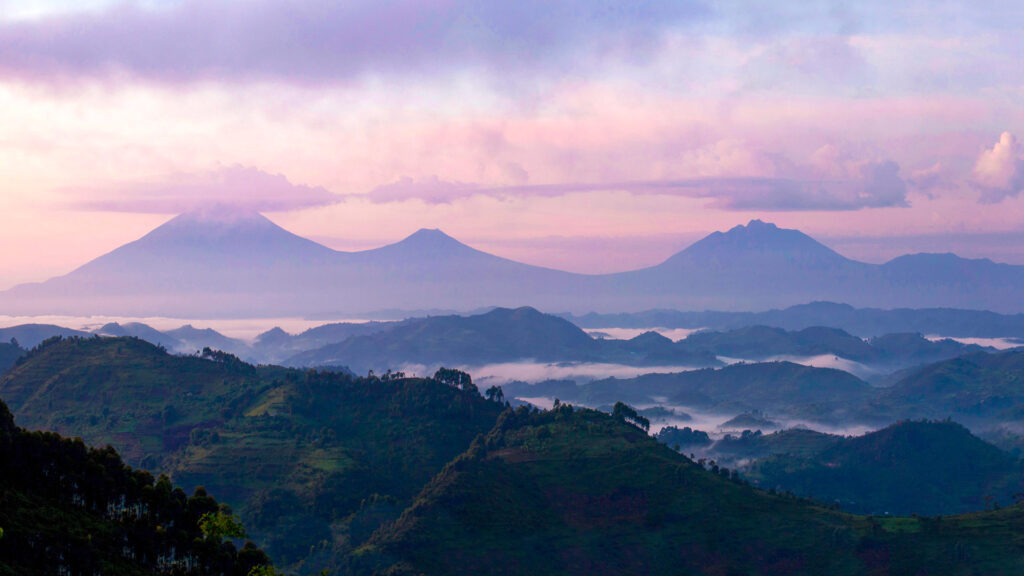
Three countries, two gorilla subspecies and one unbroken thread of forest: the Virunga Circuit follows the great apes of the Albertine Rift from the volcano slopes above Musanze to the cloud forest of Bwindi and, when conditions allow, the lowland rainforest of eastern Congo.

The Virunga Circuit Safari is a nine-day, three-country gorilla trekking journey built for travelers who want to understand the whole story of the world’s largest primates, not just one chapter of it. It is a Rwanda-Uganda-Congo gorilla safari in the truest sense: you trek mountain gorillas in the Virunga volcanoes of Rwanda, trek a second mountain gorilla population in Uganda’s ancient Bwindi forest, and complete the circuit with Grauer’s gorilla, the eastern lowland gorilla and the largest living primate on Earth, in Kahuzi-Biega National Park in eastern DR Congo.

9-Day Virunga Circuit Safari | Rwanda, Uganda & DRC

The Virunga Massif itself spans Rwanda, Uganda, and DR Congo, and the original idea of the circuit was to trek all three sides of it. Because the Congolese side of the massif (Virunga National Park near Goma) has been closed to tourism by the conflict in North Kivu, the Congo leg of this itinerary is built around Kahuzi-Biega instead. That changes the experience in a way that many guests find fascinating rather than disappointing: you see a different gorilla subspecies in a different habitat at a different altitude. Three countries, two subspecies, three completely different forests.

This safari is ideal for several kinds of guests. Primate collectors, who want to tick Africa’s great apes off with intelligence rather than haste, will find it the most complete gorilla itinerary available. Photographers get three contrasting light conditions and landscapes, from volcanic bamboo to dripping montane rainforest. Second-time gorilla trekkers who have already stood in front of a silverback in Rwanda or Uganda gain a reason to go further. And conservation-minded travellers will appreciate how clearly the journey shows what mountain gorilla tourism has achieved and what conflict it does to the species that live beside it.

A first silverback sighting in Volcanoes National Park is the kind of moment that people describe for years afterwards. A second, in the mist-hung forest of Bwindi, teaches you how different two populations of the same animal can feel. The third, with a gorilla heavier and darker than anything you have seen before, teaches you how much of this story is still unwritten. The practical outcome is just as valuable: every permit, border crossing, transfer, and lodge is arranged by a Rwanda-based team that handles these cross-border logistics every season, so your days are spent in the forest rather than in queues.

If you are still deciding between countries, our guide to Rwanda vs Uganda gorilla trekking explains the differences in cost, terrain, and access, and our overview of the Virunga Mountains explains why the three countries share one ecosystem. This itinerary exists for the traveller who has read both and decided that choosing one is unnecessary.

Kahuzi-Biega National Park lies in South Kivu province, roughly 30 kilometers from Bukavu, and as of our latest review, the city of Bukavu has been under the control of the M23/AFC armed coalition since February 2025, with fighting continuing in parts of the surrounding province. The US State Department rates South Kivu at Level 4: Do Not Travel, and most Western governments issue similar advice. Standard travel insurance may not respond to a trip in the region.

For that reason, the Kahuzi-Biega leg of this safari is operated on a conditional basis. It is confirmed for a departure only when three things are true at the same time: your government’s travel advice and your insurer both permit the crossing, our own ground team has verified the route and the park’s operating status within the weeks before departure, and you have given informed written consent. If any of these conditions cannot be met, we do not simply cancel the idea of a third country; we switch to the Nyungwe Rainforest Extension described below, which keeps the rest of the itinerary, your dates, and your lodges exactly as planned. You can read the full background on our Kahuzi-Biega National Park guide.

9-Day Virunga Circuit Safari Itinerary at a Glance.

Detail At a glance
Duration 9 days / 8 nights
Start and end point Kigali, Rwanda (Kigali International Airport)
Countries and parks Rwanda (Volcanoes National Park, Lake Kivu, and Nyungwe corridor), Uganda (Bwindi Impenetrable National Park, Rushaga sector), and DR Congo (Kahuzi-Biega National Park, subject to clearance)
Gorilla treks Three: mountain gorillas in Rwanda and Uganda, Grauer’s (eastern lowland) gorillas in DR Congo
Group size Private departures only; 2 to 8 guests, with a maximum of 8 per gorilla family
Trek difficulty Moderate to challenging; the effort depends on where each family is on the day.
Accommodation tier Luxury and exclusive-use lodges
Best season June to September and December to February (dry seasons)
Permits included Rwanda standard permit (USD 1,500), Uganda standard permit (USD 800), DR Congo permit (USD 400)

Permits are limited — spaces fill months ahead

Reserve Your Private Gorilla Trek

Speak with a Rwanda-based specialist today. We secure permits, match you to the right gorilla family, and plan every detail around your schedule.

No group departures · Private itineraries only · Direct Rwanda expertise

Detailed Itinerary for the 9-Day Virunga Circuit Safari. (Day by Day)

Day 1: Arrival in Kigali, Rwanda

Your safari begins at Kigali International Airport, where your guide meets you in the arrivals hall and assists with the formalities, most of which can be completed in advance. Rwanda’s capital is the cleanest and calmest gateway city in Africa, and the drive to your hotel takes around 20 to 40 minutes depending on traffic. You will be staying at a luxury city hotel, where you can enjoy a late lunch or early dinner at your pace.

If your flight lands in the morning, the afternoon is yours for a private Kigali city tour: the Kigali Genocide Memorial, one of the most important and sobering historical sites on the continent; the Kimironko Market; and the contemporary galleries of Kacyiru. These are optional, and you should not feel any pressure to fill the day. After a long-haul flight, a quiet evening is perfectly reasonable preparation for what follows. Your guide will brief you on the week ahead, collect passport details for the cross-border arrangements, and answer any questions about permits, fitness, or packing.

Meals: dinner.
Accommodation: luxury Kigali hotel.
Altitude: Kigali sits at roughly 1,500 meters.
Logistics: no early start today; keep your rain jacket and trekking boots in your hand luggage in case checked bags are delayed.

Day 2: Kigali to Volcanoes National Park

After a relaxed breakfast, you depart Kigali for the foothills of the Virunga volcanoes. The drive is approximately 100 to 110 kilometers and takes two to two-and-a-half hours on a well-maintained road, passing through the green, terraced hills that earned Rwanda its nickname, the Land of a Thousand Hills. As you approach Musanze, the landscape changes: the five volcanoes of the Rwandan Virunga range rise ahead of you, often wrapped in cloud, and the air cools noticeably.

Rwanda Safari Experiences: The Complete Expert Guide 2027

Wilderness Bisate Lodge

You check in to your lodge near Kinigi in time for lunch. Our partner lodges here are among the finest in Africa: Wilderness Bisate Lodge, Singita Kwitonda Lodge, One&Only Gorilla’s Nest, and Wilderness Sabyinyo Silverback Lodge. Which one you stay at depends on availability and your preferred style, whether that is the sculpted forest villas of Bisate, the contemporary service of Kwitonda, the larger resort grounds of Gorilla’s Nest, or the community-owned model of Sabyinyo.

In the afternoon you may visit the Dian Fossey Gorilla Fund’s research campus in Kinigi, which tells the story of the scientist who spent eighteen years studying these animals and who is buried in the forest she fought to protect. Your guide will give you a thorough briefing on tomorrow’s trek, check your boots, gloves, and rain gear, and answer questions about the gorilla family you are likely to be matched with.

Meals: breakfast, lunch, and dinner.
Accommodation: luxury lodge near Volcanoes National Park.
Altitude: lodges sit at roughly 2,200 to 2,500 meters.
Logistics: early night, as the trek day starts at dawn.

Day 3: Mountain Gorilla Trek in Volcanoes National Park (Trek One)

This is the first of the circuit’s three gorilla encounters. You rise before dawn for an early breakfast and drive to the park headquarters at Kinigi, where trekkers gather by about 7:00 a.m. for a ranger briefing. Rangers allocate each group of up to eight visitors to a habituated gorilla family based on overnight tracker reports and the group’s fitness. Our gorilla families guide profiles the families and explains how the allocation process works.

The drive from the briefing point to the trailhead takes 15 to 45 minutes. From there you walk through farmland at the park boundary, cross the stone wall that separates people from the forest, and enter the bamboo zone. Depending on where your family spent the night, the trek may be as short as 30 to 60 minutes or as long as four or five hours, over steep, muddy, and uneven volcanic ground at altitudes above 2,500 meters. Porters are available at the trailhead for a modest fee, and we recommend one regardless of fitness; the arrangement puts direct income into the surrounding community.

Rwanda Gorilla Trekking Expeditions

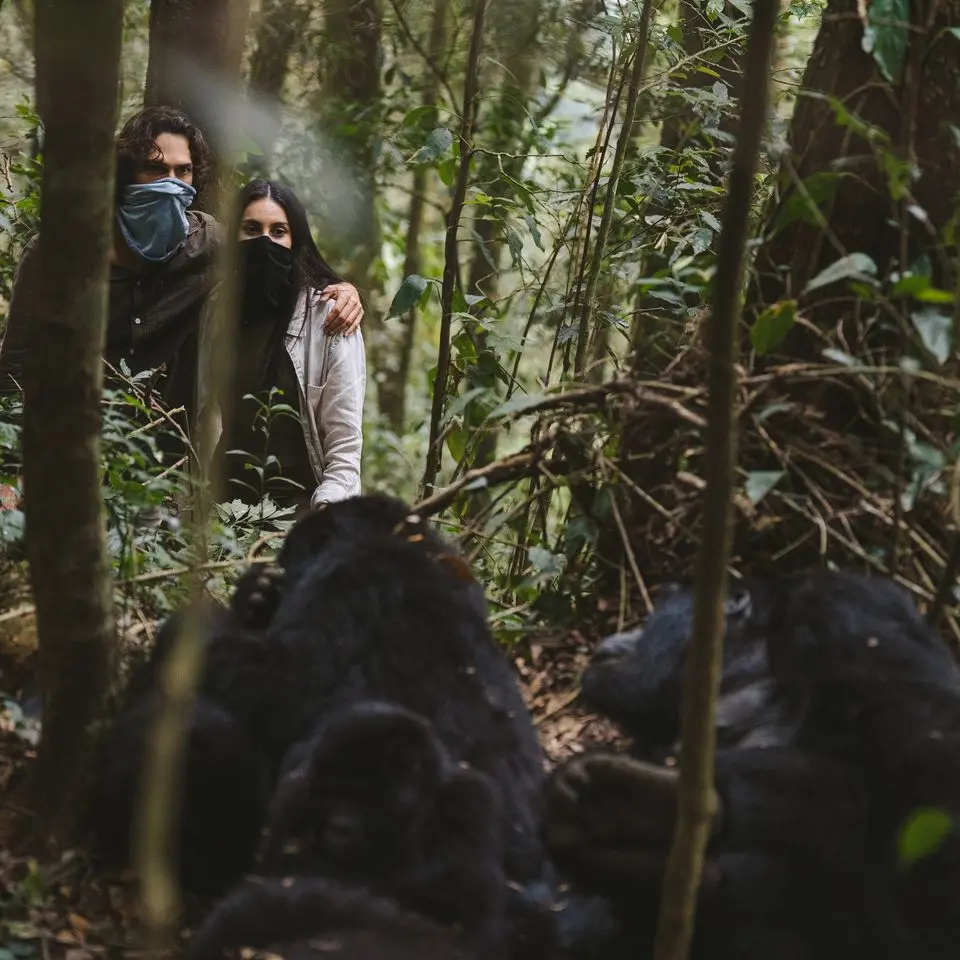
When the trackers make contact, you leave your walking sticks and bags behind, move forward quietly, and begin the one-hour observation period that is fixed across every permit in Rwanda. You may be as close as seven meters, although the gorillas sometimes decide otherwise and walk straight past you. A silverback weighing close to 200 kilograms rests against a hagenia tree, juveniles tumble through the undergrowth, and a mother holds an infant to her chest. There is no flash photography, and no need to say anything: the hour is yours.

Your trek walks back to the trailhead, where a certificate ceremony often follows, and you return to the lodge for a late lunch. The afternoon is free for a massage, a walk on the lodge grounds, or a visit to a local community project. In the evening, your guide will talk through tomorrow’s drive and the border crossing into Uganda.

Meals: breakfast, picnic lunch or lodge lunch, and dinner.
Accommodation: same lodge near Volcanoes National Park.
Highlights: first silverback sighting, bamboo forest, and volcano views.
Logistics: pre-dawn wake-up call, waterproof boots, and rain jacket essential.

Day 4: Rwanda to Bwindi, Uganda (Rushaga Sector)

Today you cross the border. After breakfast you drive northwest from Kinigi to the Cyanika border post, an approximately 1.5- to 2-hour journey on scenic roads that pass Lakes Burera and Ruhondo, the twin crater lakes whose views are among the most beautiful in Rwanda. Your guide handles the exit stamps and Ugandan entry formalities, which typically take about an hour with correct paperwork in advance.

How to Get to Bwindi Impenetrable National Park

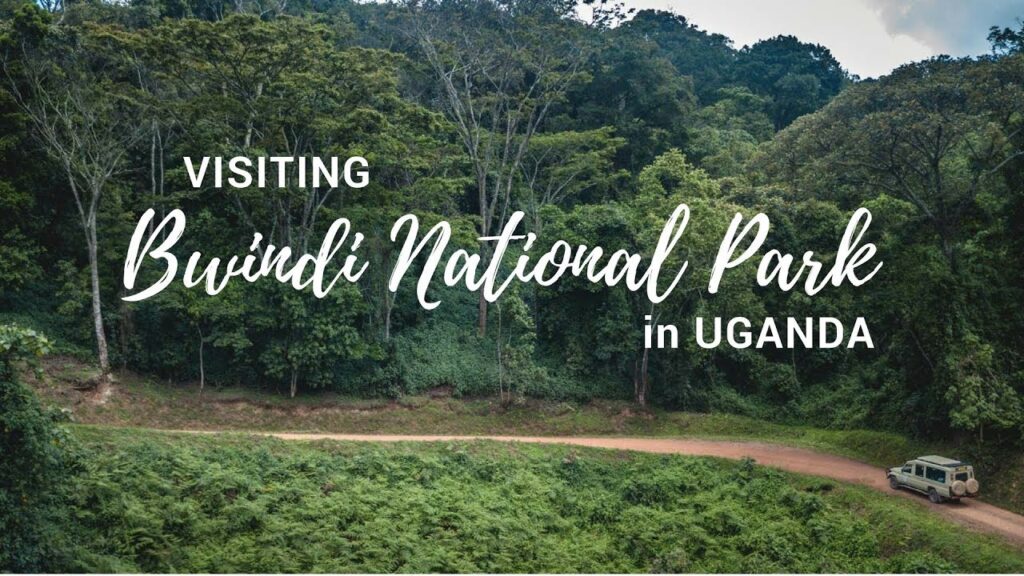
On the Ugandan side, your Ugandan driver-guide meets you, and you continue 1 to 2 hours through the terraced hills of Kisoro and Kabale districts to the Rushaga sector of Bwindi Impenetrable National Park. The door-to-door journey is roughly four to five hours. Rushaga was chosen deliberately: it is the closest Bwindi sector to Rwanda, has the largest number of habituated gorilla families in the park, and is the only sector in Bwindi where the gorilla habituation experience is offered.

You arrive at your lodge in the afternoon, with time to settle in and enjoy forest views. In the evening your guide briefs you on the next day’s trek. Because Bwindi’s terrain is generally steeper and denser than Rwanda’s, he or she will ask about your fitness and about the family you want to be matched with and may arrange a porter and walking stick for you.

Meals: breakfast, lunch, and dinner.
Accommodation: luxury lodge in Rushaga.
Altitude: approximately 1,700 to 2,300 meters.
Logistics: carry passports and yellow fever certificates in your day bag, not in checked luggage; exchange small US dollar notes for tips.

Day 5: Mountain Gorilla Trek in Bwindi (Trek Two)

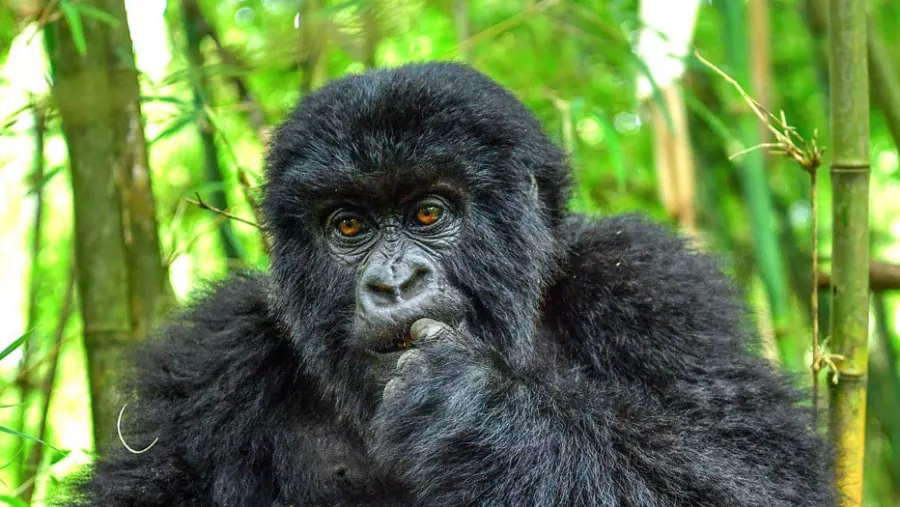
Your second encounter takes place in one of the oldest rainforests in Africa. Bwindi’s name comes from a local phrase meaning “place of darkness,” and when you step beneath the canopy at the start of the trek, you will understand why. The forest here is thick with ferns, lianas, and giant trees, and the terrain, which ranges from 1,160 to 2,607 meters across the park, is steeper and wetter than the volcano slopes of Rwanda.

After a briefing at the Rushaga headquarters at around 7:30 a.m., trackers lead you in. Treks can last from 30 minutes to as long as eight hours, depending on the family’s location, and the forest floor can be slippery. When you reach the gorillas, the same rules apply as in Rwanda: eight visitors per family at most, a one-hour observation window, and a seven-meter minimum distance. Many guests report that the atmosphere feels different from the Virungas: darker, closer, and more enveloping. Light comes in shafts through the canopy, and the gorillas are often partly hidden in vines.

3-Day Bwindi Gorilla Trekking Safari

For guests who want to go deeper, Rushaga offers the gorilla habituation experience, in which a maximum of four visitors spend up to four hours with a family that is still becoming accustomed to people, working alongside researchers and trackers. It costs USD 1,500 per person at current rates and is only available in this sector. Because it is an optional upgrade with very limited daily permits, you should request it at the time of booking.

You return to the lodge in the afternoon for a late lunch and rest. If energy remains, a guided walk through the surrounding community and its tea plantations gives you a feel for life at the edge of the forest.

Meals: breakfast, packed or lodge lunch, dinner.
Accommodation: luxury lodge in Rushaga.
Highlights: contrast between Virunga and Bwindi gorillas; optional habituation experience. Logistics: early start, gaiters and gloves recommended.

Day 6: Bwindi to Rwanda's Western Highlands

Today is a long travel day, and we plan it deliberately as a scenic one. After an early breakfast, you drive back to the Cyanika border, cross into Rwanda, and continue westward through Musanze, along the Lake Kivu corridor to the southwest of the country. The route follows the Congo-Nile Divide, among the most spectacular roads in Africa, with tea terraces, eucalyptus ridges, and long views of Lake Kivu.

For guests who prefer to reduce road time, a charter flight or helicopter transfer can be arranged for part of this journey. Your guide will talk you through the options at the Day 4 evening briefing.

You arrive at your lodge near Nyungwe Forest National Park, or in the Rusizi area if you are heading to the Congo leg, in time for dinner. This is a day for rest rather than exertion, and the lodge is a lovely place to enjoy sunset over the tea estates or the lake.

Meals: breakfast, lunch, and dinner.
Accommodation: luxury lodge in south-west Rwanda.
Altitude: Lake Kivu lies at around 1,460 meters; Nyungwe’s trails range higher.
Logistics: longest driving day of the safari; keep snacks and water in the vehicle.

Day 7: Cross into DR Congo to Bukavu, or the Nyungwe Rainforest Extension

This is the day when the itinerary divides in two, depending on whether the Congo conditions described above are met.

Option A: DR Congo, Bukavu. If clearance is confirmed, you drive from your lodge to the border at Rusizi (Cyangugu), complete exit formalities in Rwanda, and enter the Democratic Republic of the Congo at Bukavu. The DRC tourist visa and a yellow fever certificate are required; the visa has historically cost around USD 100 and is arranged in advance. You transfer to a secure lodge in Bukavu on the shore of Lake Kivu, with an armed security escort and a Congolese ground partner. In the afternoon your guide briefs you on the trek. The park headquarters is some 30 to 45 minutes from the city.


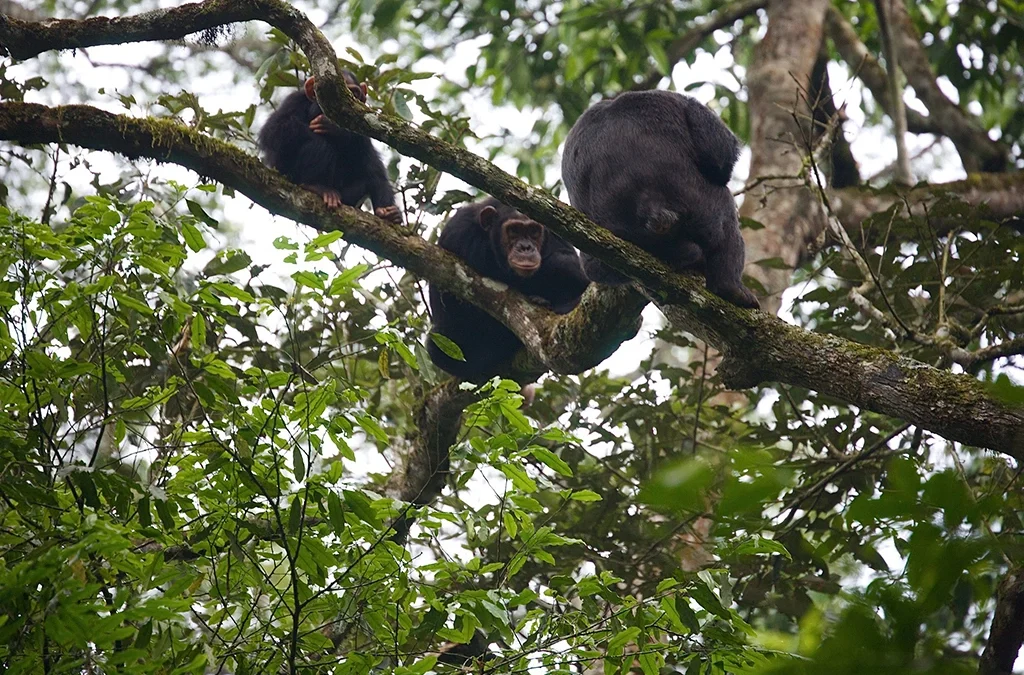
Option B: Nyungwe Rainforest Extension. If the Congo leg cannot be confirmed, you remain in Rwanda and spend the day in Nyungwe Forest National Park, one of Africa’s oldest montane rainforests and home to 13 primate species. A morning chimpanzee trek (permit approximately USD 150 per person) is followed by an afternoon visit to the Uwinka canopy walk, a suspension bridge system that rises to about 70 meters above the forest floor.

7-Day Luxury Rwanda Safari: Nyungwe, Kivu & Gorillas

Meals: breakfast, lunch, and dinner.
Accommodation: Option A, secure lodge in Bukavu;
Option B, a luxury lodge near Nyungwe.
Logistics: Option A requires passport originals, the visa, and a yellow fever certificate in your day bag.

Day 8: Grauer's Gorilla Trek in Kahuzi-Biega, or Second Day in Nyungwe (Trek Three)

Option A: Kahuzi-Biega National Park. The final trek of the circuit takes place in one of the oldest gorilla tourism destinations in the world; organized visits to Kahuzi-Biega began in 1973. The park is a UNESCO World Heritage Site covering close to 6,000 square kilometers, and the trekking takes place in its smaller highland sector at roughly 1,500 to 2,700 meters, with Mount Kahuzi (3,308 meters) and Mount Biega (2,790 meters) forming the backdrop. The altitude is lower and the air warmer than at Volcanoes National Park, so most guests find the walking less exhausting, although treks of two to six hours are normal.

Kahuzi-Biega National Park 2027: Access, Cost & Safety Guide

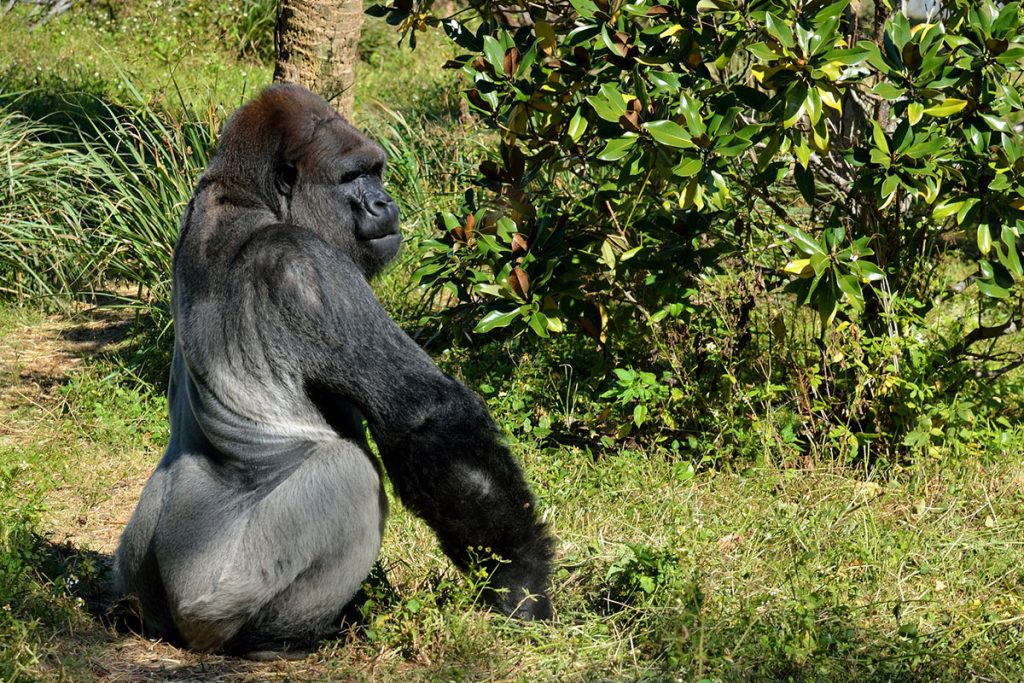
Your guides take you to one of the habituated families. These have historically included Mpungwe (the largest, about 21 members) and Chimanuka (about 19 members), among others. The gorilla you are looking for is Grauer’s gorilla, Gorilla beringei graueri, the largest of all gorillas, with mature males reaching around 250 kilograms. It is classified as Critically Endangered, and the sight of a silverback that size moving through lowland forest is unforgettable. The rules are the same as elsewhere: a maximum of eight visitors, a one-hour observation period, and a minimum age of 15. The Congo permit has historically cost around USD 400 per person.

After the trek you return to the border and cross back into Rwanda at Rusizi, where your vehicle and lodge are waiting. The park’s own conservation story, including its listing as a World Heritage Site in Danger, is a sobering and important part of the day.

Option B: Second day in the Nyungwe region. If you are on the extension, today you can choose between a colobus monkey trek (the Angola colobus moves in troops of up to several hundred), a guided waterfall hike, birdwatching for Albertine Rift endemics, or a leisurely day at your lodge. A morning on Lake Kivu is also possible.

Meals: breakfast, lunch, and dinner.
Accommodation: luxury lodge in southwest Rwanda.
Highlights: Grauer’s gorilla (Option A) or chimpanzee and colobus encounters (Option B). Logistics: early start, long day with a border crossing.

Day 9: Return to Kigali and Departure

Today you head back to Kigali. By road the journey is long, typically six to seven hours from the south-west, and many guests prefer a short domestic flight from Kamembe Airport near Rusizi, which cuts the journey to around an hour of flying plus short transfers. On arrival in Kigali, you have time for a day room, lunch, and last-minute shopping for Rwandan coffee and crafts before your evening international departure.

If your flight leaves later or the following day, we can extend the stay in Kigali or add a night at a luxury lake or forest lodge. Many guests extend their journey to include Akagera National Park’s Big Five savannah or a Volcanoes National Park golden monkey day; explore our Rwanda safari guide for ideas.

Meals: breakfast, lunch.
Accommodation: none (dayroom optional).
Logistics: allow at least three hours before an international departure.

Plan Your Rwanda Safari

Start Planning a Private Gorilla Trek

Rwanda gorilla permits sell out months in advance. Secure your dates before the season closes.

What’s Included and What’s Not Included

Included

  • Rwanda gorilla trekking permit (USD 1,500) and Uganda gorilla trekking permit (USD 800)
  • DR Congo (Kahuzi-Biega) gorilla permit and park fees, where Option A is operated.
  • Eight nights of luxury accommodation as described, on a sharing basis
  • All meals as specified on the itinerary
  • Private 4×4 safari vehicle with an English-speaking driver-guide in Rwanda and Uganda, and arranged ground partners in DR Congo
  • Cross-border transfer coordination and border-formalities assistance
  • Airport transfers in Kigali
  • Bottled water during activities
  • A dedicated trip planner from our Rwanda-based team

Not included

  • International flights to and from Kigali
  • Visas (Rwanda e-visa, Uganda visa, East Africa Tourist Visa, DRC visa)
  • Travel insurance, including medical evacuation cover
  • Gratuities for guides, drivers, porters, and lodge staff
  • Alcoholic and premium beverages (unless included by the lodge)
  • Optional activities such as golden monkey trekking, the Uganda habituation experience, Nyungwe chimpanzee trekking, charter flights, and helicopter transfers
  • Personal items, laundry, and phone calls

Gorilla Families and Trekking Difficulty

Gorilla trekking is not a fixed-difficulty activity like a summit hike. The animals move every day, so the distance and terrain you face depend on where your assigned family has gone since the previous afternoon. On this circuit you will meet three different systems.

In Rwanda, rangers allocate each group of up to eight visitors to a family at the Kinigi briefing the same morning, based on the trackers’ overnight reports and a rough assessment of the group’s fitness. Guests who want a gentler day can request it, and rangers try to match older or less mobile visitors to families that are closer or on easier ground. Some treks last 30 to 60 minutes; others last four hours or more. If you want to choose a family in advance, Rwanda’s exclusive-use permit allows it, as described in our exclusive gorilla trekking guide.

In Bwindi’s Rushaga sector, allocation also happens at the briefing, although the sector’s larger number of families gives guides more room to match groups to terrain. Treks of 30 minutes to eight hours are possible, and the forest is dense and slippery.
3-Day Bwindi Gorilla Trekking Safari

In Kahuzi-Biega, the park has historically had five habituated families out of around nine known in the highland sector, so the choice is narrower, but the lower altitude helps. We ask every guest to tell us honestly about their fitness and any joint or heart concerns when booking, and we pass the information to the rangers. We cannot guarantee a short walk, and nobody can.

Elevation Profile Summary

Altitude is a real consideration on this safari because it moves between roughly 1,500 and 3,000 meters several times. The figures below are approximate, and some are marked for confirmation on your route.

Stage Approximate altitude What it means for you
Kigali (Days 1 and 9) About 1,500 m Comfortable; most guests feel no effects
Volcanoes National Park lodges (Days 2 to 3) About 2,200 to 2,500 m Mild altitude; stay hydrated.
Volcanoes gorilla trek (Day 3) About 2,200 to 3,400 m Steep, muddy volcanic slopes; potentially 300 to 800 m of climb depending on the family
Bwindi, Rushaga (Days 4 to 5) About 1,160 to 2,607 m across the park; lodges roughly 1,700 to 2,300 m Frequent ups and downs in ridge-and-valley terrain
Lake Kivu corridor and Nyungwe (Days 6 to 8, Option B) The lake is about 1,460 m; Nyungwe forest is higher. Moderate; canopy walk and chimp trails involve steep sections.
Kahuzi-Biega highland sector (Day 8, Option A) About 1,500 to 2,700 m Warmer, lower altitude; less breathless

Total elevation gain on a trek day varies between almost nothing and well over 800 meters. In terms of cumulative effort, the Rwanda and Uganda trek days are the most demanding. If you are concerned, speak to your doctor before travelling, and read our Volcanoes National Park page for acclimatisation tips.

Accommodation and Lodges

This safari uses luxury and exclusive-use accommodation or midrange lodges throughout. Each region has a character, and we choose the lodge to match.

Volcanoes National Park (Rwanda). The cluster of lodges near Kinigi is one of the best-concentrated collections of safari accommodation in Africa. Wilderness Bisate Lodge is set on a restored volcanic hillside, with circular thatched villas and views of the Virunga peaks. Singita Kwitonda Lodge brings the Singita brand’s design and service to the park boundary. One&Only Gorilla’s Nest sits among ancient fig trees with a spa and multiple dining venues. Wilderness Sabyinyo Silverback Lodge, set against the slopes of Sabyinyo, has a community-ownership model that sends significant revenue to neighboring villages. All four are within roughly 20 to 40 minutes of the Kinigi trailhead.
Clouds Mountain Gorilla Lodge

Clouds Mountain Gorilla Lodge

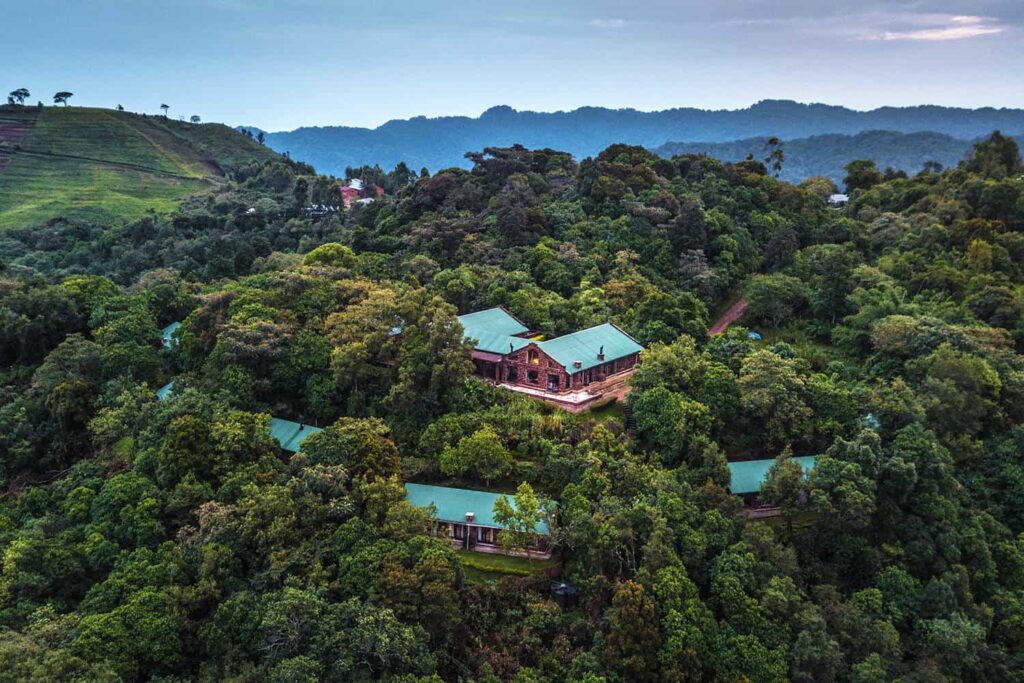
Bwindi, Rushaga sector (Uganda). The southern sectors of Bwindi have seen the fastest growth in genuine five-star lodges, specifically built for the cross-border traveller. Properties here are typically small, perched on ridges with views across the forest canopy, and offer a level of design and privacy that was rare a decade ago.

South-west Rwanda (Nyungwe and Lake Kivu). One&Only Nyungwe House sits on a working tea plantation at the forest edge, and Lake Kivu offers several boutique lakeside hotels.

Bukavu (DR Congo, Option A). Lodging in Bukavu is limited and is arranged with security in mind; our team selects a secure, lakeside property.

Wildlife and Nature to Expect

Beyond the three gorilla encounters, the circuit passes through some of the most biodiverse landscapes in Africa. In Volcanoes National Park, the endemic golden monkey, Cercopithecus kandti, lives in the bamboo zone and can be trekked as an extra activity (permit approximately USD 100 per person). The park also supports forest elephants, buffalo, bushbuck, and more than 170 bird species. The volcanic scenery, with five peaks, bamboo, hagenia woodland, and open moorland, is itself a highlight, and the twin crater lakes of Burera and Ruhondo give you one of the most photogenic drives in Rwanda.
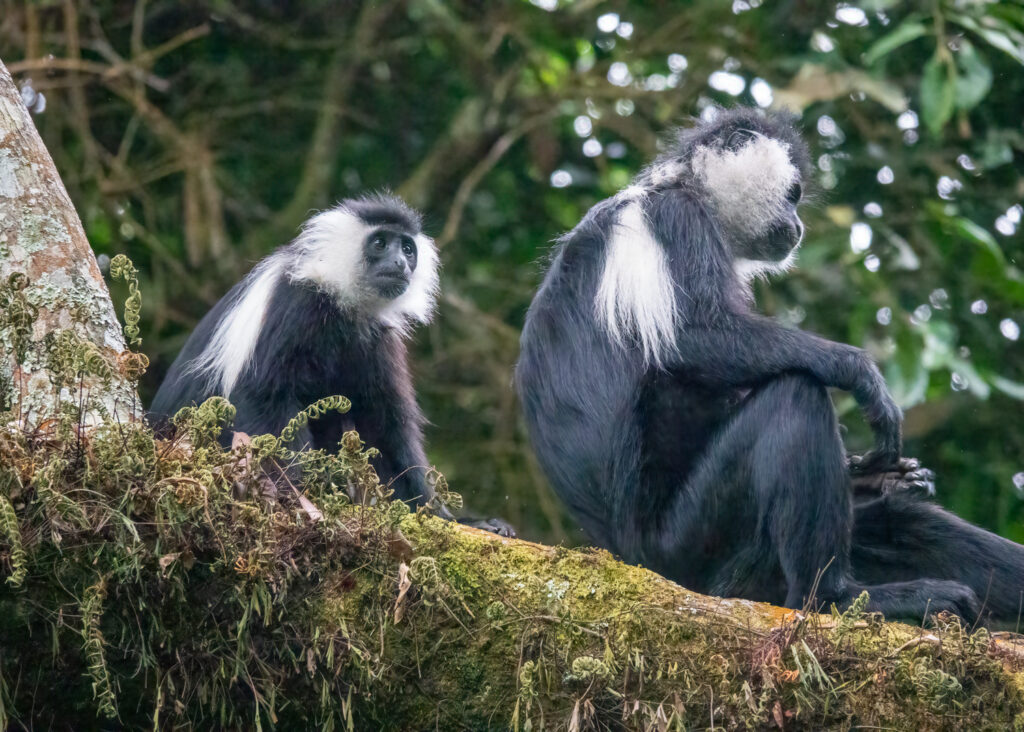
Angola Colobus Monkey Troops

Bwindi holds more than 120 mammal species and over 350 bird species, including many Albertine Rift endemics, and its forest is thought to have survived the last Ice Age. In the Rushaga sector, you may hear or see black-and-white colobus monkeys, other monkeys, forest duikers, and a remarkable range of butterflies.

Nyungwe has 13 primate species, including chimpanzees and the Angola colobus, as well as more than 300 bird species. Kahuzi-Biega adds forest elephants, chimpanzees, and more than 340 bird species to its gorillas. You may not see all these animals, but the circuit is rewarding for its density of life.

Physical Difficulty and Fitness Requirements

You don’t need to be an athlete for this safari, but you should have a reasonable baseline of fitness, as you will trek on three separate days at altitude, with long drives in between. Volcanoes National Park treks start at around 2,500 metres and may climb above 3,000 metres on steep, muddy volcanic slopes. Bwindi’s terrain is steep and dense, with many ascents and descents. Kahuzi-Biega is lower and warmer but can be thick and humid.

We recommend that you walk for two to three hours at a time in the weeks before travel, including hills and uneven ground, and break in your boots. Hiking poles are provided at trailheads; porters are strongly recommended for guests over 60 or with knee, hip, or back concerns, and a porter will carry your bag and help on steep sections. For guests with limited mobility, the ranger team will try to match you to a nearer family, and for those who want complete control of pace, exclusive-use permits offer a more flexible option in Rwanda.

The minimum age for gorilla trekking is 15 in all three countries. Anyone with a cold, flu, or any contagious respiratory illness will be refused access to the gorillas to protect them. If you are unwell before departure, tell us immediately.

Best Time to Go

You can do the Virunga Circuit Safari all year, but the season changes the experience. Rwanda and Uganda each have two dry seasons and two wet seasons, and altitude keeps temperatures mild. The figures below are typical ranges and should be checked against the latest forecasts.

Best time for gorilla trekking.

Season Months Weather and temperature Trails, crowds, and value
Long dry season June to September Days of 20 to 27°C (68 to 81°F) in lower areas and 15 to 20°C (59 to 68°F) in the mountains; cold early mornings (5 to 10°C / 41 to 50°F) Firmest trails and best visibility; peak demand; Rwanda and Uganda permits and lodges sell out 6 to 12 months ahead
Short rains October to November Warm days, afternoon showers, mostly dry mornings Lush and quieter; Uganda’s discounted permit applies on fixed dates in November.
Short dry season December to February Similar to June to September, slightly warmer Excellent conditions with somewhat lower demand than the summer peak; book early for Christmas and New Year.
Long rains March to May Heavier, more persistent rain; muddy trails April and May are the quietest months, with lower lodge rates, Uganda’s discounted permit applying on fixed dates, and some mountain roads requiring four-wheel drive.

For this specific itinerary, the best months are June to September and December to February, when trails are firmest and the cross-border road journeys are most reliable. If you value solitude and lower rates and are comfortable with mud, April, May, and November can be excellent, with the proviso that Uganda’s discounted permits are non-reschedulable. Golden monkey and chimpanzee activity is typically high when forest fruit is abundant, which is often in the shorter rains. For fly-in versus road transfers, the dry months are the most dependable for either, while the wetter months make road transfers slower.

Gorilla Permits, Park Fees, and Costs.

Item Cost (per person) Notes
Rwanda gorilla permit, Volcanoes National Park USD 1,500 Issued by the Rwanda Development Board; fixed year-round
Rwanda exclusive-use permit Approx. USD 15,000 per group of up to 8 Optional; private buyout of one family’s daily visit
Uganda gorilla permit, Bwindi USD 800 (USD 600 in April, May, and November on fixed dates) Since March 2026, permits for foreign visitors must be booked through a licensed Ugandan tour operator, with full payment due at the time of booking.
Uganda gorilla habituation experience (Rushaga only) USD 1,500 Up to four hours; maximum four visitors per day
Kahuzi-Biega gorilla permit Approx. USD 400 (range reported at USD 250 to 500) Historical figure; confirm current price and operating status
Golden Monkey Trek (Rwanda) USD 100 Optional
Chimpanzee trek, Nyungwe (Rwanda) USD 150 Fallback activity

Add the three gorilla permits, and the permit cost alone is around USD 2,700 per person, before lodges, transfers, and guides. That is the arithmetic behind our indicative starting price. Because permits for peak months sell out far in advance, you should aim to book 9 to 12 months ahead for June to September and December to February, and at least three to six months ahead for the other months. Rwanda requires full payment in advance, and rescheduling a confirmed permit usually carries a fee.

Packing and Gear List

Gorilla forests are wet, muddy, and cool, even in the dry season. Pack with layers.
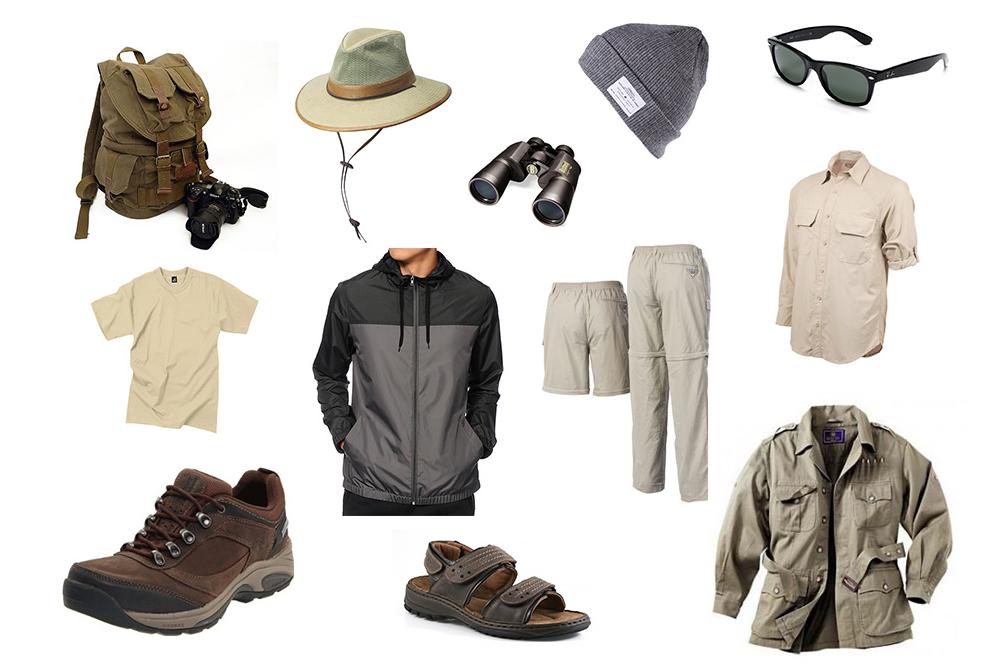
What to Pack for a Safari

  • Waterproof, ankle-supporting trekking boots, already broken in
  • Long-sleeved shirts and long trousers in neutral, earth-toned colors (olive, khaki, brown, grey); avoid bright colors and white
  • A lightweight waterproof rain jacket and a warm fleece for cold mornings
  • Gardening gloves for gripping vegetation, plus gaiters against stinging nettles and ants
  • A day pack with at least two liters of water, snacks, and a small first-aid kit
  • Quality binoculars and polarized sunglasses
  • A camera with a fast lens and spare batteries; no flash is permitted near gorillas
  • Hat, sunscreen, and insect repellent
  • Universal or Type G charging adaptors
  • Small US dollar notes for tips and porters
  • Passport with at least six months’ validity and blank pages for three countries’ stamps
  • Original yellow fever certificate
  • Personal medication and a copy of your travel insurance policy

Getting There

Most guests fly into Kigali International Airport, which has direct flights from Nairobi, Entebbe, Dar es Salaam, Johannesburg, Dubai, Brussels, London, and Paris. Your guide will meet you at arrivals. The drive from Kigali to Volcanoes National Park is two to two-and-a-half hours by road, and a helicopter transfer of around 30 minutes is possible for guests who want to save time. Cross-border moves in this itinerary are by road: Cyanika for Uganda and Rusizi (Cyangugu) for DR Congo. A domestic flight from Kamembe Airport to Kigali is possible for the return.

Visa and Entry

Rwanda offers an e-visa for most nationalities, which currently costs around USD 50 and is usually processed within a few days; you can apply on the official immigration portal at migration.gov.rw. Uganda issues an e-visa for foreign visitors, and the East Africa Tourist Visa may cover both Rwanda and Uganda. The DR Congo requires its visa, which has historically cost around USD 100, and a yellow fever certificate. Our team will guide you through the paperwork for all three countries. Always check your government’s current travel advice before travelling, especially for the DRC; US citizens can find this information on the US State Department’s website.

Health and Vaccinations

No vaccination is legally required for Rwanda, except for a yellow fever certificate if you arrive from an endemic country; however, a yellow fever certificate is required for DR Congo and is wise to carry throughout. Malaria prophylaxis is recommended, particularly for lower-altitude areas such as Lake Kivu’s shores, Bukavu, and Akagera; the risk is lower at high altitudes in Volcanoes National Park. Please consult a travel-health clinic six to eight weeks before departure and ensure routine vaccinations are up to date. You will wear a mask near the gorillas in many parks to protect them from human respiratory illness.

Currency and Tipping

Lodges and tourist services widely accept US dollars, and they prefer newer notes (post-2013) in acceptable condition. Local currencies are the Rwandan franc, Ugandan shilling, and Congolese franc; you will need very little of them. As a guideline, tip your driver-guide USD 20 to 30 per day, and lodge staff USD 10 to 15 per day for the team as a whole. Trackers, rangers, and porters are tipped separately at the end of each trek.

Plan Your Rwanda Safari

Start Planning a Private Gorilla Trek

Rwanda gorilla permits sell out months in advance. Secure your dates before the season closes.

Frequently Asked Questions about the 9-Day Virunga Circuit Safari.

What is the Virunga Circuit Safari?

The Virunga Circuit Safari is a nine-day luxury itinerary that combines gorilla trekking in Rwanda, Uganda, and the Democratic Republic of the Congo. You trek mountain gorillas in Rwanda’s Volcanoes National Park and Uganda’s Bwindi Impenetrable National Park, and, where conditions allow, Grauer’s (eastern lowland) gorillas in Kahuzi-Biega National Park. It is designed for travellers who want to see both gorilla species and compare three different forest habitats on a single trip.

Can you do gorilla trekking in three countries in one trip?

Yes, in principle you can trek gorillas in Rwanda, Uganda, and DR Congo in a single trip, and this safari is designed that way. Rwanda and Uganda are both open and well established. The DR Congo leg depends on security conditions in South Kivu, so it is operated conditionally; if it cannot be confirmed, we substitute chimpanzee trekking in Nyungwe so that your dates and lodges do not change.

Is it safe to go gorilla trekking in DR Congo right now?

Not without serious caution. The US State Department rates South Kivu, where Kahuzi-Biega is located, at Level 4: Do Not Travel, and the nearby city of Bukavu has been under armed-group control since February 2025. We only operate the Congo leg when your government’s advice, your insurer, and our own on-the-ground verification all permit it, and we recommend that you treat any operator who promises a guaranteed Congo trek with skepticism.

Why does this safari go to Kahuzi-Biega instead of Virunga National Park?

Virunga National Park, near Goma in North Kivu, has been closed to ordinary tourism because of the conflict in the area, and its gorilla permits are currently suspended. Kahuzi-Biega in South Kivu protects a different subspecies, Grauer’s gorilla, and is the alternative gorilla destination in DR Congo. The regional security situation also affects it, which is why the leg is conditional.

How much does a three-country gorilla safari cost?

Gorilla permits alone cost roughly USD 2,700 per person across the three countries: USD 1,500 in Rwanda, USD 800 in Uganda, and approximately USD 400 in DR Congo. With luxury lodges, private transport, and guides, the nine-day Virunga Circuit Safari starts at approximately USD 18,500 per person sharing, with the final price depending on the lodges, season, and group size. International flights, visas, and tips are additional.

How much is a gorilla permit in Rwanda?

A standard gorilla trekking permit in Rwanda costs USD 1,500 per person, issued by the Rwanda Development Board for Volcanoes National Park. It covers park entry, a ranger guide, and one hour with a gorilla family. An exclusive-use permit for a private group costs approximately USD 15,000 for up to eight people.

How much is a gorilla permit in Uganda?

A standard Uganda gorilla permit costs USD 800 per person, with a discounted USD 600 rate on fixed, non-reschedulable dates in April, May, and November. Since March 2026, foreign visitors must book through a licensed Ugandan tour operator and pay in full at the time of booking. The gorilla habituation experience in Rushaga costs USD 1,500.

What is the difference between mountain gorillas and Grauer's gorillas?

Mountain gorillas (Gorilla beringei beringei) live in cool, high-altitude forests in Rwanda, Uganda, and Virunga National Park and are trekked in Volcanoes National Park and Bwindi. Grauer’s gorillas (Gorilla beringei graueri) live in warmer, lower rainforests in eastern DR Congo, are the largest gorillas (up to around 250 kilograms), and are Critically Endangered. Kahuzi-Biega is the main place to see them.

How long do I get with the gorillas?

One hour. The one-hour observation limit applies in Rwanda, Uganda, and DR Congo, and it applies to every permit type, including exclusive-use permits. The only longer option is the Rushaga gorilla habituation experience in Uganda, which allows up to four hours.

How hard is gorilla trekking in Rwanda, Uganda and Congo?

The difficulty depends on where your assigned family is on the day. Treks can last from 30 minutes to eight hours over steep, muddy, and uneven terrain at 1,500 to 3,400 meters. Rwanda’s volcano slopes are generally more predictable, Bwindi is often steeper and denser, and Kahuzi-Biega is lower and warmer. Porters, walking sticks, and a family matched to your fitness help, and nobody can guarantee a short trek.

What is the minimum age for gorilla trekking?

The minimum age is 15 years in Rwanda, Uganda, and DR Congo, and the rule is enforced without exception to protect gorillas from human illness. Younger family members can enjoy golden monkey trekking, cultural visits, and Kigali tours in Rwanda instead.

How far in advance should I book?

For June to September and December to February, book 9 to 12 months in advance. For other months, three to six months is usually enough. Rwanda permits require full payment in advance, and Uganda permits require full payment at booking, so fix your dates before committing.

What happens if the Congo leg cannot go ahead?

We switch you to the Nyungwe Rainforest Extension, which replaces the Congo crossing with chimpanzee trekking, the Uwinka canopy walk, and colobus monkey encounters. Your dates, lodges in Rwanda and Uganda, and other bookings remain unchanged, and we will advise you of any cost differences before departure.

What vaccinations do I need for this safari?

A yellow fever certificate is needed for DR Congo, and is required for Rwanda if you arrive from an endemic country. Malaria prophylaxis is recommended, and your doctor can advise on routine vaccinations. No other vaccinations are legally required for Rwanda.

What vaccinations do I need for this safari?

A yellow fever certificate is needed for DR Congo, and is required for Rwanda if you arrive from an endemic country. Malaria prophylaxis is recommended, and your doctor can advise on routine vaccinations. No other vaccinations are legally required for Rwanda.

Is it worth doing gorilla trekking in more than one country?

For many travellers, yes. The three forests feel different, the gorilla populations differ, and the contrast makes each trek more meaningful. If you only have time for one, our comparison of the Rwanda vs Uganda gorilla trekking can help you choose, and a combined itinerary like this one suits those who want the full picture.

Plan Your Rwanda Safari

Start Planning a Private Gorilla Trek

Rwanda gorilla permits sell out months in advance. Secure your dates before the season closes.

Book Your Virunga Circuit Safari

Cross-border gorilla safaris are won or lost on logistics: permits that must be secured months ahead in three different systems, border crossings that must be timed correctly, and lodges that hold very few rooms. Our Rwanda-based team handles all of it, and we would rather tell you the truth about conditions than sell you a dream we cannot stand behind. If you would like to trek mountain gorillas in Rwanda and Uganda and have the opportunity to meet Grauer’s gorilla as well, please tell us your dates and group size, and we will check permit and lodge availability for you, usually within a few minutes. Permits for the peak months go quickly, so the sooner you enquire, the more choice you have.

You can reach us through our contact page, learn more about our team, or return to the Rwanda Gorilla Expeditions homepage.