Multi-Country Safaris in East Africa: How to Combine Rwanda With Uganda, Kenya, and Tanzania

The best multi-country safari starts with Rwanda’s gorillas and then adds Uganda, Kenya, and Tanzania over 10 to 16 days. See routes, costs, and timing.

A multi-country safari in East Africa links two or more countries into one private journey, and the most rewarding version begins with mountain gorilla trekking in Rwanda and then continues into Uganda, Kenya, or Tanzania for a second, entirely different kind of wildlife. For most travellers, the sweet spot is ten to sixteen days, as the duration is long enough to do each country properly without spending the holiday in transit. Rwanda works best as the opening chapter since gorilla permits are fixed to a single date, so the trek is the one appointment you cannot move, and everything else can be built around it.

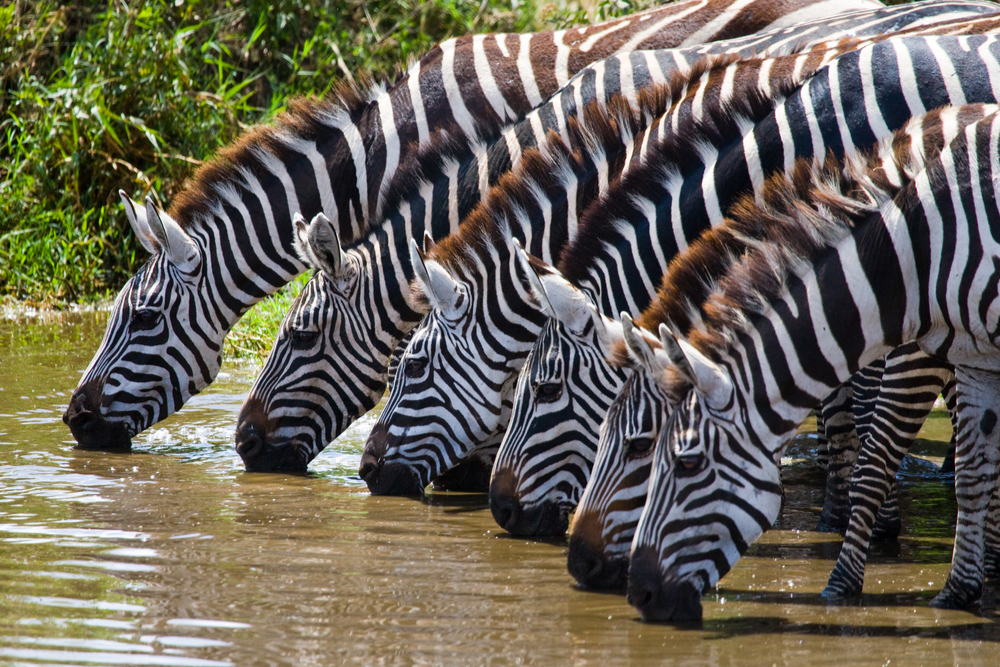
Multi-Country Safaris: Rwanda, Uganda, Kenya & Tanzania

Kigali is also the easiest gateway in the region, with a short drive of two to two and a half hours to Volcanoes National Park and onward flights of roughly an hour or two to Entebbe, Nairobi, and Zanzibar. Tanzania adds the Serengeti and Ngorongoro Crater, Kenya adds the Masai Mara and private conservancies, and Uganda adds a second gorilla forest and a lower permit price. Expect a realistic budget of roughly USD 9,000 to over USD 20,000 per person for a genuinely luxurious two-country itinerary, with the gorilla permit alone costing USD 1,500. This guide explains how to choose your countries, when to travel, how the logistics, visas, and flights really work, and what to book first.

As safari specialists, we spend our working lives in East Africa, securing permits with the Rwanda Development Board, matching guests to the right gorilla family, and coordinating the handover to partners in all East African countries. If you are still early in your research, read it end to end, then explore our Rwanda safaris and safari experiences pages for the building blocks of your Rwanda trip. If you already have dates in mind, skip to the sections on seasons, costs, and what to book in advance, and then speak to us at Rwanda Gorilla Expeditions.

Permits are limited — spaces fill months ahead

Reserve Your Private Gorilla Trek

Speak with a Rwanda-based specialist today. We secure permits, match you to the right gorilla family, and plan every detail around your schedule.

No group departures · Private itineraries only · Direct Rwanda expertise

What a Multi-Country Safari Really Is, and Who It Suits.

A multi-country safari is a single, continuously planned itinerary that crosses at least one international border, with one lead planner responsible for the permits, transfers, lodges, and timing in every country. That definition matters, because there is a big difference between one coherent journey and two separate holidays stapled together. The first has been sequenced so that the physically demanding days come early, the permits line up, and the transfers are timed around flight schedules. The second tends to leave the traveller with an awkward day lost to connections, a visa problem at a border, or a gorilla permit date that clashes with a migration crossing.

The travellers who benefit most are those who want contrast. East Africa offers experiences that are wildly different from one another: a quiet hour with a mountain gorilla family in a cloud forest, a dawn drive among lion prides on open plains, a boat at sunset among hippos, and a night barefoot on a Swahili beach. No single country offers all of them. Rwanda gives you the gorillas, golden monkeys, and chimpanzees in compact, superbly managed parks. Tanzania and Kenya offer you the scale of the savannah and, in season, the Great Migration. Uganda gives you the longest primate list in the region and a second gorilla forest. When you stitch two of them together, each enhances the other: you arrive on the plains with the stillness of the forest in your mind, and you arrive in the forest having already learned how to be patient with animals.

It suits first-time safari guests who have the time and budget to see the best of the region rather than a slice of it, and it also suits experienced travellers returning for the one experience they have not had. It is particularly well suited to honeymooners and anniversary couples, multigenerational families with teenagers aged fifteen or over, who are the minimum age for gorilla trekking, and photographers who want both forest and plains light. It is less suited to anyone who hates travel days, because even the best-designed multi-country safari includes a few mornings of airports and airstrips. If you would rather stay in one place and go deep, a single-country itinerary such as our Best of Rwanda’s National Parks Safari may be the better answer, and we will tell you so honestly.

Why Rwanda Is the Best Starting Point for Multi-Country Safaris

Rwanda is the best starting point for a multi country safari because it combines the most fixed and most limited booking in the region, the gorilla permit, with the most efficient airport and the shortest transfers. Kigali International Airport is clean, calm and easy to clear, and the road to the gorillas is a smooth two to two and a half hours. By comparison, the drive from Entebbe to Bwindi Impenetrable Forest in Uganda is commonly quoted at eight to ten hours, which is why a growing number of travellers fly into Kigali and drive to southern Bwindi, a journey of roughly four to five hours depending on the border post used.

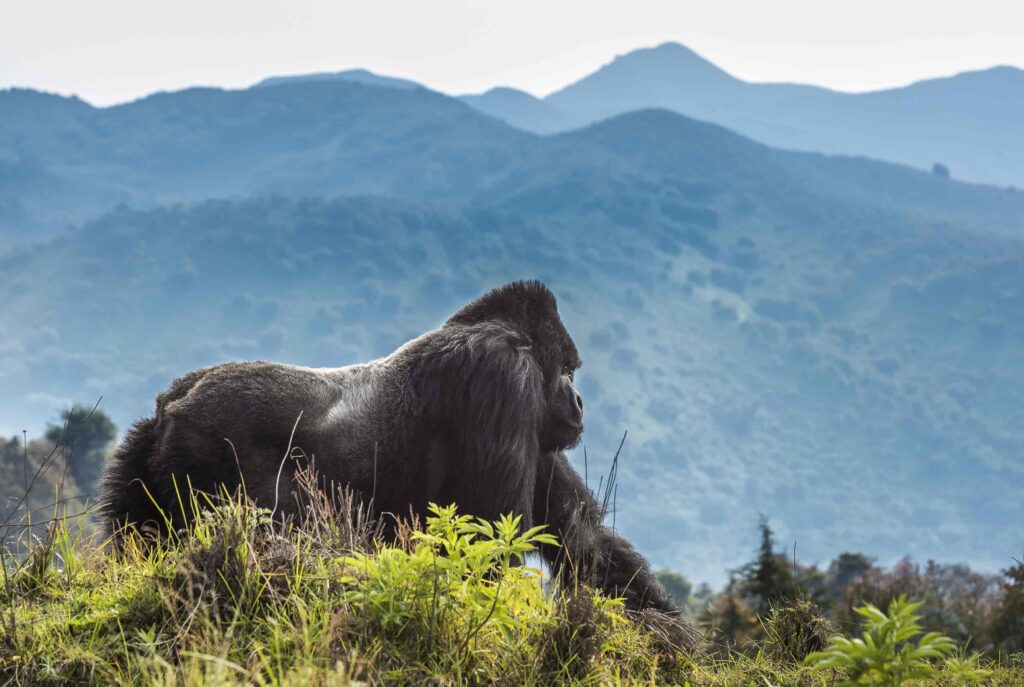
Volcanoes National Park Rwanda: Gorilla Trekking Guide 2027

The permit is the one thing you cannot move. A gorilla trekking permit for Rwanda costs USD 1,500 per person and is issued by the Rwanda Development Board for a specific date and a specific gorilla family. Each habituated family is limited to eight visitors a day, and each visit lasts one hour, so the total number of permits released daily is deliberately small. Every other element of a multi-country safari is far more flexible than that: a Serengeti camp can often offer another night, a Mara conservancy can sometimes find a tent, and a flight can be rebooked. A permit for your preferred date is the item most likely to run out, so we always confirm the gorilla date first and build the rest of the journey around it.

Gorilla trekking is the most physically demanding part of almost every East African itinerary. Depending on where the family has moved overnight, the walk to reach the gorillas can last from thirty minutes to five hours through steep, wet, high-altitude forest above 2,500 meters. In Kenya and Tanzania, you do game drives from a vehicle instead of on foot. Doing the trek first means you tackle it fresh, with no accumulated fatigue from long safari days and early starts, and you can adjust comfortably if rain makes the trails slippery. It also gives you a buffer: if a trek is delayed or you pick up a cold, which can result in a ranger asking you not to trek to protect the gorillas, you still have days in hand rather than a connecting flight waiting.

The other reason to start here is that Rwanda is more varied than most visitors expect. The north is volcanic highlands and bamboo forest, the southwest is Nyungwe, one of Africa’s oldest rainforests, and the east is the open savannah of Akagera. If you have ten days, Rwanda alone can fill them, as our ten-day Best of Rwanda itinerary shows. If you have fourteen or sixteen, you can spend five to seven days in Rwanda, including Volcanoes National Park and either Akagera National Park or Nyungwe Forest National Park, and still leave room for a second country. This decision is relevant for budget as well as experience: during the low season, Rwanda offers a genuine permit discount for exactly this kind of stay, which we explain in the cost section below.

Choosing Your Countries: Rwanda With Uganda, Kenya, or Tanzania.

The right second country depends on what you want your second week to feel like, because Uganda, Kenya and Tanzania each offer something different from Rwanda and from each other. The mistake we see most often is travellers choosing a combination based on map distance rather than experience, so it is worth thinking about the character of each pairing before you look at flights.

Rwanda and Tanzania: gorillas and the Great Migration

Rwanda and Tanzania are the pair that most travelers picture when they imagine a bucket-list East African journey, and it is a particularly strong one. In Rwanda you trek gorillas in the Virunga volcanoes, and in Tanzania you move to the Northern Circuit for the Serengeti’s migration plains and the Big Five density of Ngorongoro Crater.

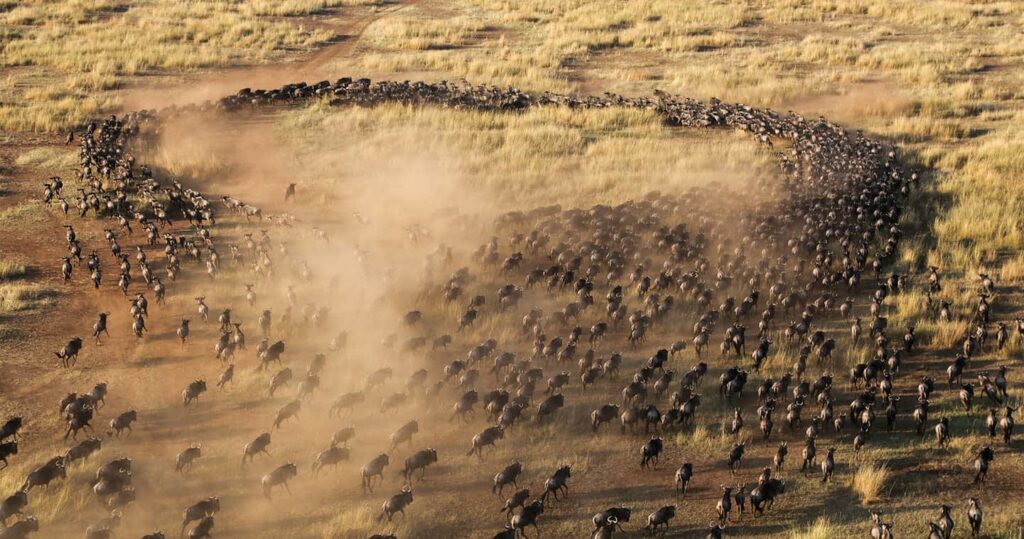
Great Migration in the Masai Mara

Our full Tanzania safaris guide sets out the four circuits, the fees, and the migration calendar in detail, and our guide to the Serengeti explains the regions of the park month by month. Logistically, the route usually runs from Kigali to Nairobi to Kilimanjaro International Airport near Arusha, since RwandAir also lists a Kilimanjaro service, so confirm the current schedule. Plan a half day to a full day for the connection, and never schedule it back-to-back with a morning gorilla trek. A twelve- to sixteen-day itinerary typically allocates five to seven days to Rwanda and the remainder to the Serengeti and Ngorongoro, with an optional Zanzibar finale reached by RwandAir’s direct Kigali flight, launched at the end of 2025, or by a domestic flight from Arusha. Our Zanzibar guide covers the island’s coasts, and the choice between the calm north and the tide-swept southeast is worth reading before you book.

Rwanda and Kenya: Primates and plains

Rwanda and Kenya are the best combination for travellers who want the Masai Mara or private conservancy luxury and who value a short, seamless connection. Kigali to Nairobi is a flight of roughly one and a half to two hours, and Nairobi is the hub for every light aircraft departure to the Mara, Amboseli, Laikipia, and Samburu. Our Kenya safaris guide explains how Kenya’s parks, reserves, and conservancies differ, which matters because conservancies permit night drives and walking safaris that national parks do not. The Masai Mara is the headline, with the migration crossing the Mara River between roughly July and October.

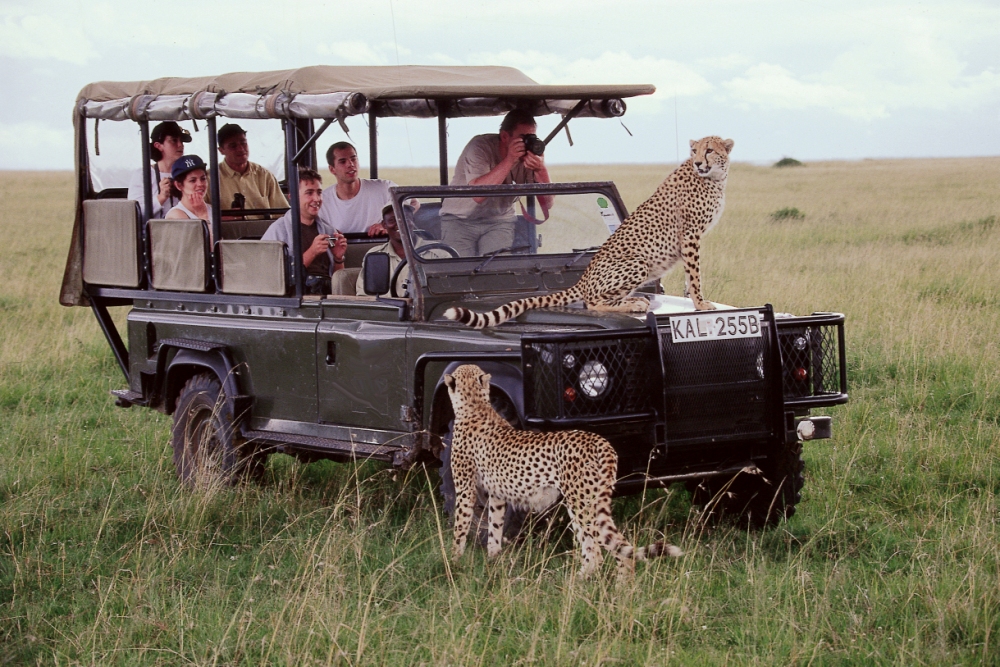
Kenya Safaris 2027: Complete Guide to Parks, Cost & Timing

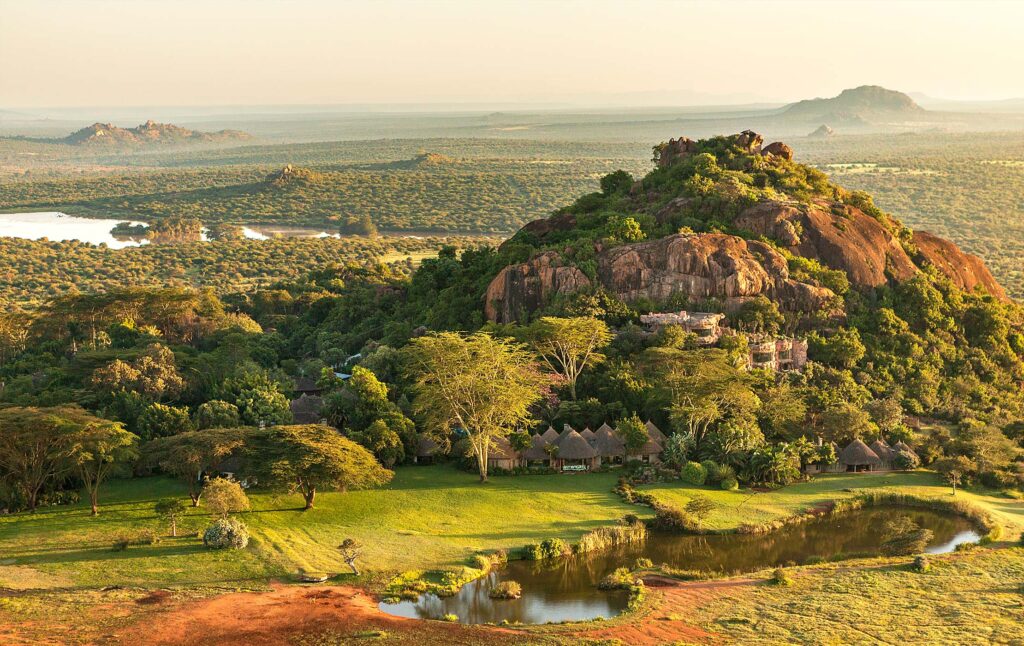
Travellers who want elephants beneath Kilimanjaro should read about Amboseli, and those who want rhino tracking and privacy should look at the Laikipia Plateau, where Ol Pejeta Conservancy shelters the last two northern white rhinos on earth. The great advantage of Kenya is its ability to deliver the very top of the luxury market, with ultra-exclusive camps in the conservancies and the most straightforward tourist entry system of the three neighbors.

Rwanda and Uganda: Two gorilla forests and the longest primate list.

Rwanda and Uganda is the combination for primate devotees, because it lets you compare the two stunning gorilla landscapes in a single journey, and our Rwanda versus Uganda gorilla trekking comparison sets out the differences in difficulty, group sizes and cost. The Virunga volcanoes in Rwanda offer polished logistics and shorter treks on average, while Bwindi Impenetrable Forest in Uganda offers older, denser, hillier forest, a choice of four trekking sectors, and a longer list of other wildlife in neighbouring parks. Our Uganda safaris guide covers the wider country, including chimpanzees, tree-climbing lions and boat safaris. The practical trick is to enter Uganda overland from Rwanda. From Kigali, the border at Cyanika is roughly three hours and 119 kilometres away via Musanze, and from there the southern Bwindi sectors of Rushaga and Nkuringo are close, while the Katuna border serves the northern approach through Kabale. A trek in Uganda is usually priced at USD 800 per person for a foreign non-resident at the time of writing, compared to USD 1,500 in Rwanda, so many guests trek once in each country to experience both and then spend the savings on better lodges.

Beach finales: Zanzibar and the Kenyan coast

Zanzibar Travel Guide: Beaches, Stone Town & Getting There

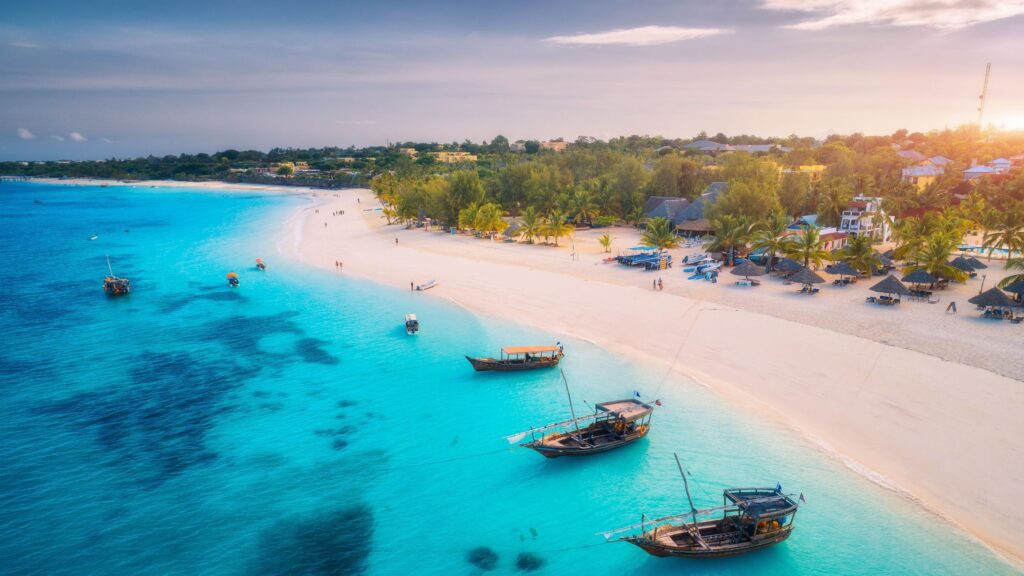
A beach finale is not a country on its own, but it is the most common third chapter, and it changes how a long safari feels. After ten or twelve days of early alarms, ninety minutes of stillness with a silverback, long game drives, and three or four nights on the sand, this is the right way to land. Zanzibar is the natural choice from Rwanda or Tanzania, with white sand, Stone Town, and the red colobus monkey found nowhere else on earth. The Kenyan coast at Diani, Watamu, and Lamu works best as part of a Kenya itinerary, particularly between July and October, when the weather on the coast overlaps with the Mara migration season.

A note on the Democratic Republic of Congo

The Virunga massif also extends into the Democratic Republic of Congo, and for years the so-called Virunga circuit linking Rwanda, Uganda, and Congo was among the most celebrated gorilla itineraries in the world. Today, we cannot recommend it. Virunga National Park’s gorilla permits remain suspended because of regional security restrictions, and the Ebola outbreak in eastern Congo that the World Health Organization declared a public health emergency of international concern in May 2026 makes the area inadvisable for leisure travel. Reports earlier this year also indicated that Rwanda restricted entry for foreign nationals who had recently been in the DRC, so including Congo in your route can jeopardize your Rwanda leg altogether. We would rather build a superb itinerary in places that are open and safe than sell a route that we cannot deliver.

Plan Your Rwanda Safari

Start Planning a Private Gorilla Trek

Rwanda gorilla permits sell out months in advance. Secure your dates before the season closes.

Multi-Country Safari Routes by Trip Length.

The best multi-country safari routes are built around no more than two countries and four or five bases, and the right length is the one that leaves at least two full nights in every place you sleep. The sample routes below are starting points that we adapt to your dates, permits, and preferences. Everyone begins and ends in Kigali or another major international gateway and is designed as a fully private journey with your guide and vehicle.

Ten days: Rwanda gorillas with a Kenya or Zanzibar finish

A ten-day route is tight but excellent when the priorities are clear. Spend three nights in Rwanda, arriving in Kigali, driving to Volcanoes National Park, and trekking gorillas on day two, with an optional golden monkey trek or Lake Ruhondo boat excursion the following morning, then flying out of Kigali on day four. Continue to Nairobi and on to the Masai Mara for four nights, then finish with two or three nights at the coast or an extra night in the Mara. It is a lean schedule with three or four flights, and it works best for travelers who value time over variety. Alternatively, shift the balance to Rwanda and use our five-day Gorilla and Golden Monkey Discovery Safari for this section.

Twelve days: Rwanda and the Serengeti

Twelve days is the most requested length for gorillas and the Great Migration. Four nights in Rwanda, covering Kigali, Volcanoes National Park, and a forest or lake extension, are followed by a connecting day, then six nights in the Northern Circuit of Tanzania, typically two nights each in two different regions of the Serengeti chosen to match the migration’s position, and one night on the Ngorongoro rim. This itinerary is the format in which sequencing is most critical. Because the herds follow rainfall, the position of the migration in your month decides which Serengeti region you sleep in, and the camps in the right region book out first. We discuss this topic in the seasons section below.

Fourteen days: Rwanda, Uganda, and the primate trail

Fourteen days lets you take a genuinely profound look at the primates of the region. Begin with five nights in Rwanda, combining gorillas at Volcanoes with chimpanzees in Nyungwe, an itinerary similar in spirit to our eight-day Luxury Rwandan Primate Safari. Then cross at Cyanika into Uganda for a second gorilla trek in Bwindi and a few nights in a savannah park, such as Queen Elizabeth, for boat safaris and tree-climbing lions before flying out of Entebbe. The route is largely overland, so it is slower, but it is the most forgiving on baggage limits and flight changes, and the scenery from the Rwandan hills to the Kigezi highlands is spectacular in its own right.

Sixteen days: The complete East Africa journey

A sixteen-day itinerary is the expression of a complete East African safari. Plan for five or six nights in Rwanda, including both Volcanoes and either Akagera or Nyungwe, followed by six or seven nights in either Tanzania or Kenya, and then three nights on Zanzibar or the Kenyan coast. Each leg is long enough that you stop living out of a bag, and the beach finale is long enough to be restorative. This route offers the best opportunity to take advantage of the Rwanda low-season permit discount, as it requires only two qualifying nights in Akagera or Nyungwe, which a sixteen-day itinerary includes anyway.

The Best Time for a Multi-Country Safari in East Africa

The best time for most multi-country safaris is June to September, when Rwanda’s dry season overlaps with the Mara migration crossings and the Serengeti’s northern sector, although the right month depends on which wildlife you most want to see. East Africa’s two rainy seasons, the long rains from March to May and the short rains in November, bracket two dry windows, and understanding how each country’s calendar lines up is the key to a successful itinerary.

Best time for gorilla trekking.

June to September: the classic window

Rwanda’s long dry season, from June to September, offers firmer trails and the most comfortable gorilla trekking, while Kenya’s Masai Mara and Tanzania’s northern Serengeti reach peak migration activity from roughly July through October. This is by far the most popular period for combined itineraries and the most competitive for gorilla permits and small camps. We recommend booking six to twelve months in advance for these months. September is a favorite among guides in the northern Serengeti, as crossings remain active while visitor numbers are noticeably lower than in August. Government fees in the Mara rise to USD 200 per adult per day from July to December under the county’s seasonal structure, so the price of peak migration season is visible in the cost sheet as well as the calendar.

December to March: calving season and a second dry window

December to February is Rwanda’s short dry season and an excellent window, and it coincides with calving season on the southern Serengeti plains around Ndutu, which many guides rate as the best predator viewing of the year with fewer vehicles than the July to September crossings. This is a particularly strong combination for gorillas in Tanzania and also for gorillas in Kenya’s Laikipia, which is a year-round destination. Be aware that the Christmas and New Year period carries lodge supplements and is the second hardest time for permits.

April, May, and November: the green season and double discounts

The wetter months are the best-kept secret of luxury multi-country safaris, because they offer real savings and quieter parks. Rwanda’s Development Board offers a 30 percent discount on a gorilla permit, bringing it from USD 1,500 to USD 1,050, from November to May for guests who spend at least two nights in Akagera or Nyungwe, with the nights and one paid activity documented. Uganda has also introduced reduced-price permits for April, May, and November, reportedly USD 600 instead of USD 800. In other words, a November or April-to- May itinerary that begins in Rwanda and continues to Uganda can save a meaningful amount on both permits. The trade-off is mud on forest trails and heavier rain, so good boots, gaiters, and a flexible attitude are essential. Kenya and Tanzania in these months offer their lowest lodge rates of the year, lush landscapes, and excellent birding, but the migration is dispersed rather than concentrated at river crossings.

Month Rwanda gorillas Tanzania (Serengeti) Kenya (Masai Mara) Notes
January-February Excellent, short dry season Calving season, southern plains Resident wildlife, quieter Good Laikipia rhino tracking
March-May Wet, muddy; Rwanda discount Nov-May Long rains, lowest rates Long rains, lowest rates Best value: Uganda reduced permits in Apr-May.
June-September Peak dry season Western Corridor to northern crossings Migration arrives; crossings Jul-Oct The book allows for 6-12 months ahead.
October Short rains begin Northern Serengeti is still active. Herds linger; fees are USD 200. Fewer vehicles than August
November Short rains; discount available Herds turn south. Light afternoon showers Underrated value month
December Short dry season Herds back on the southern plains Resident wildlife Festive supplements apply.

Getting There and Moving Between Countries: Flights, Borders, and Timings

On a multi-country safari, travel between countries is almost always done by a mixture of scheduled flights, light aircraft, and, in the case of Rwanda and Uganda, an overland border crossing; the timings below are what we plan around. Nearly all long-haul travellers reach the region through Kigali, Nairobi, or Entebbe, and from Kigali the connections are good: Kigali to Nairobi takes roughly one and a half to two hours, Kigali to Entebbe about an hour, and RwandAir’s network also includes Kilimanjaro and Mombasa, with a direct Kigali to Zanzibar service that began at the end of November 2025. Schedules do change, particularly after the disruption many carriers experienced during the 2026 Ebola outbreak, so we confirm current flights at the time of booking rather than relying on a timetable from months earlier.

Crossing from Rwanda into Uganda by road

The road crossing is one of the most useful and least understood pieces of information for planners. The journey from Kigali to Bwindi usually takes four to five hours via either the Cyanika border near Kisoro, best for the southern Rushaga and Nkuringo sectors, or the Katuna border near Kabale, which serves the northern side. The drive from Kigali to Cyanika alone is about three hours. Your Rwandan guide hands you over to a Ugandan driver-guide at the border, which is the standard arrangement because vehicles and driver licenses are country-specific. Uganda is one hour ahead of Rwanda, which can be confusing when planning trek start times and flight departures. Because a gorilla trek can run for several hours, we never schedule a flight out of Kigali on the day you trek in Bwindi unless it leaves late in the evening, and we advise not leaving before about ten at night. The Entebbe route is an entirely unique proposition, with a drive of eight to ten hours from the airport to Bwindi, unless you take a light aircraft to an airstrip near the forest.

Flying between Kenya and Tanzania is possible.

The cleanest way to move between Kenya’s Mara and Tanzania’s Serengeti is by scheduled light aircraft, using a regional hub such as Nairobi or Arusha. An overland border crossing at Namanga is possible, but the final roads turn from tarmac to gravel and add significant time. Within each country, light aircraft connect park airstrips, and the roughly 15-kilogram soft-bag luggage limit matters from the first day. Our Tanzania guide notes that the overland run from Arusha to the Serengeti’s Seronera area is about 325 kilometers and around eight hours, which is why luxury itineraries default to flying. In Kenya, domestic safari flights depart from Nairobi’s Wilson Airport, not the international terminal at Jomo Kenyatta, which can be 40 minutes to an hour apart in traffic. Allow a three-hour connection at minimum, or, much better, sleep a night in Nairobi.

Connection buffers that actually work

Our rule is simple: never plan a gorilla trek, a migration game drive, or a morning light aircraft departure on the same day as an international flight, and build in at least one flexible day somewhere in the middle of the itinerary. Gorilla treks occasionally run late. Light aircraft are subject to weather and sometimes combined with other guests’ schedules. A buffer costs the price of one extra night and saves the cost of a missed connection, which is why we think it is the best money in the budget.

Visas, Permits, and Health Entry Rules for Multi-Country Safaris

Visas are the part of multi-country planning that goes wrong most often, because East Africa does not have a single visa that covers every country you might visit. The East Africa Tourist Visa costs USD 100, is valid for 90 days with multiple entries, and covers Kenya, Uganda, and Rwanda only. It must be issued by the country where you first enter the region, and it is only valid while you remain inside those three countries. The Ugandan immigration authority lists the requirements on its official portal, including a passport valid for at least six months, a photograph, a yellow fever certificate, a return ticket, and an itinerary. You can read the details on the official Uganda immigration guide.

Tanzania and Kenya are handled separately.

Tanzania sits outside the joint visa and requires its own visa, priced at USD 50 for most passport holders and USD 100 for United States citizens, which can be obtained online or on arrival at Kilimanjaro for eligible nationalities. A single Tanzanian visa covers both the mainland and Zanzibar, though Zanzibar has introduced a separate insurance and tourism levy that you should confirm. Kenya replaced its visa with an Electronic Travel Authorization in January 2024, applied for online through the official Kenya eTA portal at roughly USD 30 to 34, with processing normally taking two to three working days, although we recommend applying at least two to four weeks ahead. Citizens of East African Community states are exempt from this requirement. If your route is Rwanda, Kenya, and Tanzania, then you might hold an East Africa Tourist Visa for the first two and a separate Tanzanian visa for the third, or buy separate visas for each. We check which is cheaper and simpler for your passport.

Yellow fever and other health documents

Carry a yellow fever vaccination certificate on every multi-country trip. Rwanda requires it from travellers arriving from endemic countries, Uganda’s joint visa application asks for it, and Tanzania and Kenya require it from travellers arriving from or transiting through endemic countries, which include Rwanda and Uganda. Because you will be crossing between those countries, the certificate is effectively mandatory in practice. Beyond that, hepatitis A and B, typhoid, and rabies are commonly recommended for East Africa, and malaria prophylaxis is generally advised for lower-elevation areas such as Akagera, the Serengeti, and the Mara, while the high-altitude gorilla zone has a lower risk. See a travel medicine specialist four to six weeks before departure, and use the CDC’s travel health guides or your national equivalent for current notices.

Permit rules to know before you book

Both gorilla permits are tied to one person, one date, and, in practice, one park sector. Rwanda’s permit is non-refundable once issued, and rescheduling is subject to the Rwanda Development Board’s conditions and charges. In Uganda, permits are sector-specific, and foreign non-residents must reportedly book through a licensed Ugandan tour operator rather than directly. The minimum age for gorilla trekking is fifteen in both countries. These are the details a coordinating operator should be handling for you in writing before you pay a deposit.

Plan Your Rwanda Safari

Start Planning a Private Gorilla Trek

Rwanda gorilla permits sell out months in advance. Secure your dates before the season closes.

What a Multi-Country Safari Costs: A Realistic Luxury Budget.

A realistic luxury multi-country safari costs roughly USD 9,000 to USD 20,000 or more per person for ten to sixteen days, depending on lodge tier, the number of internal flights, and the season. Our Kenya and Tanzania guides set out the two components that vary most, and the figures below are drawn from them, so you can see where the money goes.

Government fees and permits

Government fees are fixed regardless of operator. In Rwanda, the gorilla permit is USD 1,500, the golden monkey permit is USD 100, and the Nyungwe chimpanzee permit is USD 150, with exclusive private gorilla trekking priced at about USD 15,000 for a group, which you can explore on our exclusive gorilla trekking guide. In Tanzania, the Serengeti’s non-resident entry fee is roughly USD 70 to 83 per person per 24 hours, plus VAT, and there is a separate USD 295 per vehicle fee for a descent into the Ngorongoro Crater. In Kenya, fees range from USD 80 a day at Tsavo and Nairobi National Park to USD 200 per adult per day in the Masai Mara from July to December, under a tariff structure that took effect on 1 October 2025.

Lodges and camps

Accommodation is where the budget really moves. In Rwanda, the finest lodges around Volcanoes, such as Singita Kwitonda Lodge, Wilderness Bisate, One&Only Gorilla’s Nest, and Wilderness Sabyinyo Silverback Lodge, sit at the top of the continent’s range. In Tanzania, a comfortable tented camp typically costs USD 400 to 800 per person per night on a full board basis, while the most exclusive fly-in lodges cost USD 1,200 to over USD 2,500. Kenya’s best conservancy camps are in the same band, with Laikipia’s most exclusive private houses higher still. Internal flights typically cost USD 150 to 350 per person per sector in Tanzania and USD 150 to 320 in Kenya, and a two-country itinerary may include four to six sectors.

What a typical total looks like

Route Typical length Indicative cost per person What drives the price?
Rwanda + Kenya 10-14 days USD 9,000 to 20,000+ Conservancy camps, number of Kenya regions
Rwanda + Tanzania 12-16 days USD 10,000 to 20,000+ Fly-in Serengeti camps, season
Rwanda + Uganda 10-14 days USD 7,000 to 15,000 Lodge tier, whether Uganda uses fly-in access
Rwanda + Tanzania + Zanzibar 14-18 days USD 12,000 to 25,000+ Beach resort tier, extra flights

These are indicative ranges for travelling privately as a couple at a luxury standard, drawn from the combined itinerary figures in our country guides, with the Rwanda-Uganda range reflecting Uganda’s lower permit fee. They exclude international flights, visas, insurance, and gratuities. A transparent quotation should list permits, lodges, flights, and transfers separately so you can see what you are paying for; that is how we write ours. The Rwanda safari styles guide shows how honeymoon, family, photographic, and conservation journeys change the shape of the budget.

Where the savings are

The most meaningful savings in a multi-country safari are structural rather than discount-driven. Travelling in the green season can reduce lodge rates and, in Rwanda and Uganda, the cost of permits. Choosing one rather than three Kenyan or Tanzanian regions removes expensive internal flights. And crossing overland from Rwanda into Uganda is cheaper and often more rewarding than a connection through a hub airport. We would always rather re-engineer a route than ask you to compromise on the experiences that matter most.

Where to Stay on a Luxury Multi-Country Safari

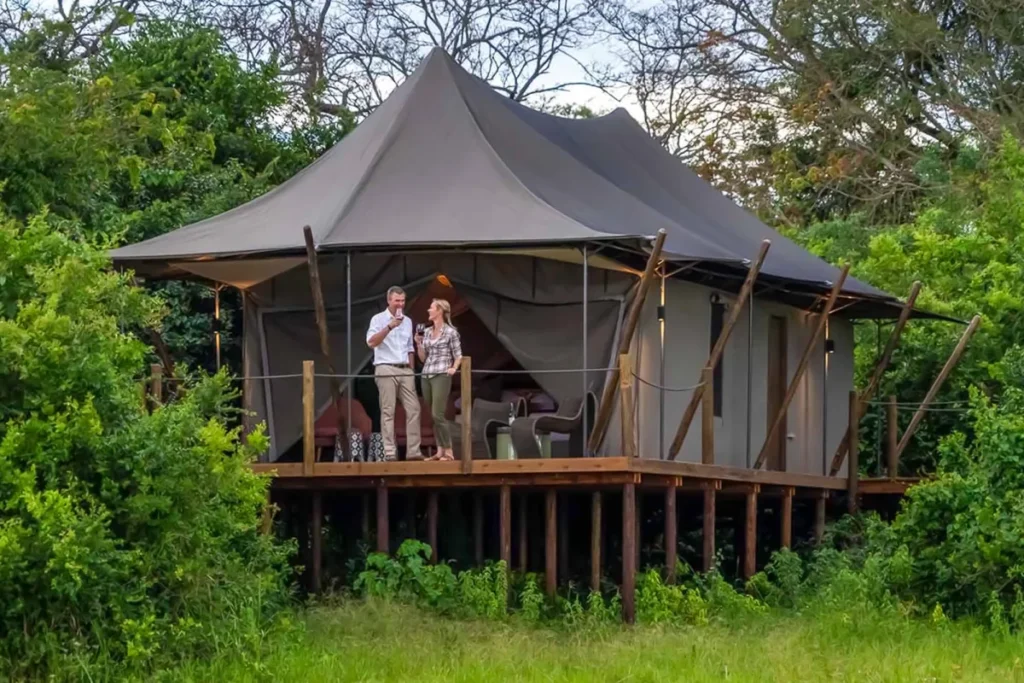
The best multi-country safaris use a small number of exceptional lodges, rather than many average ones, because each country rewards a minimum of two nights in one place. Around Volcanoes National Park, the choice is among the best on the continent. Singita Kwitonda Lodge sits against the park boundary with uninterrupted views of the volcanoes, Wilderness Bisate is a cluster of thatched forest villas on a reforested hillside, One&Only Gorilla’s Nest offers gracious, unhurried luxury, and Wilderness Sabyinyo Silverback Lodge is a community-owned lodge at the foot of Mount Sabyinyo. In Akagera, Wilderness Magashi Camp and Ruzizi Tented Lodge are the lodges we most often use for Big Five game drives.

Family Rwanda Safari Style

In Tanzania, the Serengeti’s lodges are chosen by the migration, not the brand: Seronera in the center for year-round wildlife, Singita Grumeti’s concession for the Western Corridor, and the remote northern Kogatende and Lamai sector for the Mara River crossings. In Kenya, our guide mentions Angama Mara, Mahali Mzuri, and Mara Plains Camp in the Mara conservancies, as well as Segera and Loisaba in Laikipia. Zanzibar’s north coast has Kilindi and Zuri. The best lodges sell out first, particularly in July to October and December to January, so decide the lodge tier at the same time as the dates.

What to Pack for a Multi-Country Safari

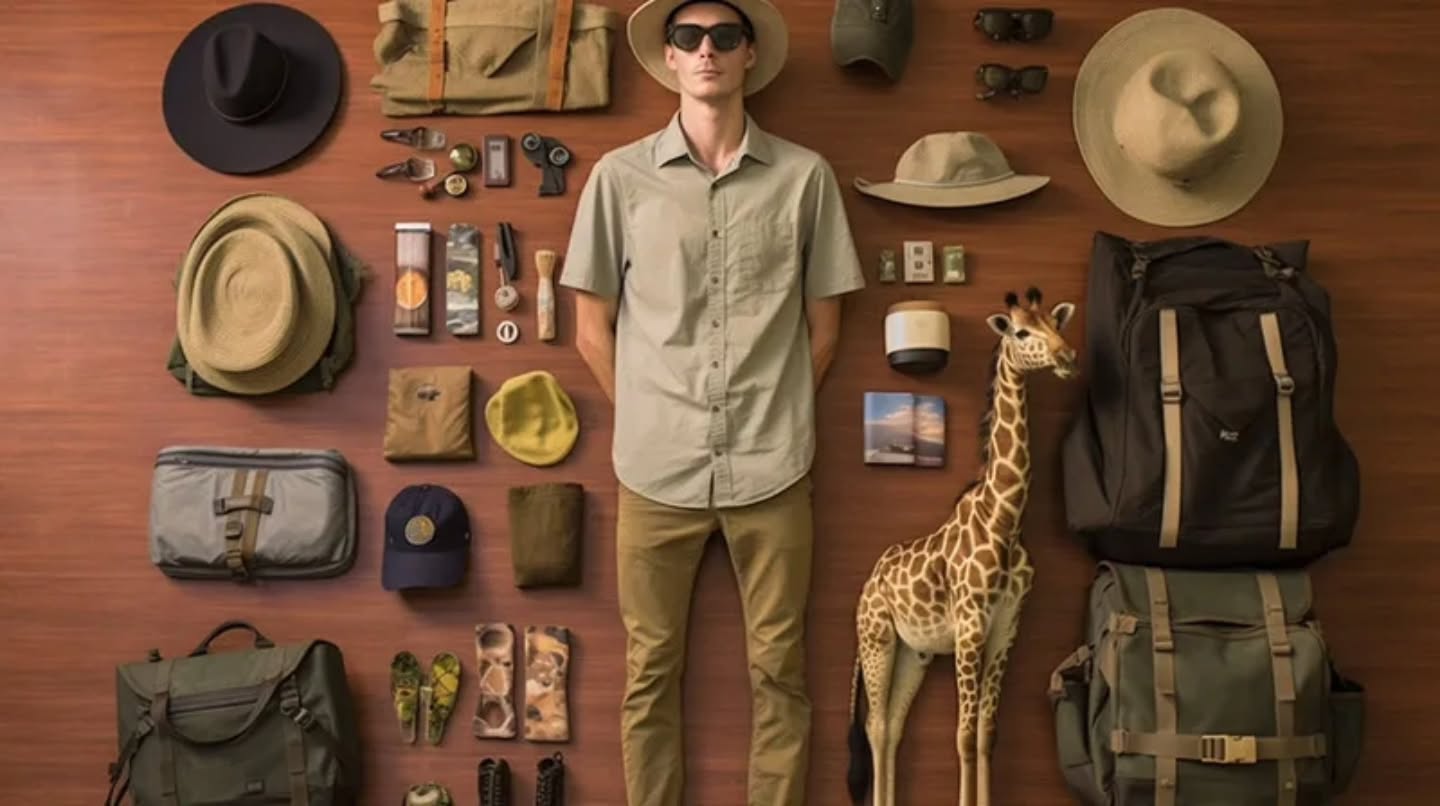
Packing for a multi-country safari is a compromise between forest kit and plains kit, and the governing constraint is the luggage limit on light aircraft, which is typically around 15 kilograms in a soft-sided bag. Use a duffel bag rather than a rigid suitcase, and leave a spare bag at your Kigali or Nairobi hotel if you will be returning there. For gorilla trekking, you need waterproof ankle-supporting boots, long trousers and long sleeves in dark neutral colors, a light waterproof jacket, gaiters against stinging nettles, and gardening gloves for steep vegetation. For the plains, you need neutral khaki or olive clothing, a warm fleece for pre-dawn drives, a wide-brimmed hat, sunglasses, high-SPF sunscreen, and your own binoculars.

What to Pack and Wear for a Ngorongoro Crater Safari

Photographers should bring a fast lens, f/2.8 or wider, for the dim understorey of the gorilla forest, where flash photography is strictly prohibited, and a telephoto lens of 200 millimeters or more for the open plains. Carry spare batteries and cards, because there is rarely a reliable power supply on long mornings. Pack medication in your hand luggage along with copies of your yellow fever certificate and visa documents, and bring enough cash in small notes for tips, which are customary for guides, rangers, porters, and camp staff.

Health, Safety, and the Ebola Situation

East Africa remains a safe region for safari travel, but you should check official health advice immediately before booking and before departure, because an outbreak of Bundibugyo virus disease in eastern Congo and Uganda was declared a public health emergency of international concern by the World Health Organization in May. Governments responded quickly, with the United States raising its advisory for Uganda to Level 4 and Rwanda to Level 3 in May, border restrictions between Uganda and the DRC, and some airlines suspending services, including a pause in KLM flights to Entebbe that was scheduled to resume in August. Industry sources later reported that Uganda’s outbreak had been declared over by the WHO after the required 42 days with no new cases, while the outbreak in eastern Congo continued. Advisories can change quickly, so confirm the current position with the World Health Organization, the CDC, and your government’s travel advice rather than relying on this guide, which was last checked in October 2026.

It helps to understand the geography. The outbreak’s epicenter is in Ituri Province in eastern Congo, a region far from the tourist corridors, and Uganda’s gorilla parks in the far southwest and Rwanda’s Volcanoes National Park are hundreds of kilometers from it. We keep Congo out of every itinerary, and we choose routes through Kigali, Nairobi, and Arusha, which have remained unaffected as hubs. We also recommend comprehensive travel insurance with medical evacuation and trip cancellation cover, taken out at the time of booking, because it protects the non-refundable gorilla permit as well as the lodges. Gorilla trekking already runs under strict health protocols, since mountain gorillas share enough DNA with humans to catch our respiratory illnesses. Rangers may ask a visibly unwell visitor not to trek, which is another reason to build a buffer day into the plan.

Sequencing Rules From Years on the Ground

The sequence of a multi-country safari matters more than the destinations, and the same few rules apply to almost every itinerary we plan. Please confirm the gorilla permit date before anything else. Put the physically demanding gorilla trek first in the journey. Match the second country to the season, because you would rather not be in the Serengeti’s wrong region or Kenya’s wettest month. Never connect an international flight on the same day as a trek or a migration game drive. Keep to two countries unless you have at least sixteen days, as three countries almost always means losing a full day to each crossing. And finish with the experience that is best for slowing down, whether that is a lakeside lodge, a beach, or a quiet conservancy.

Laikipia Plateau Safari Guide: Rhinos, Wild Dogs & Star Beds

One further piece of advice is to treat the low-season permit discount as a design tool rather than just a price cut. Because the Rwandan discount requires two nights in Akagera or Nyungwe, and the nights must be documented with one paid activity, a November to May journey that begins in Rwanda’s lower parks and ends at Volcanoes naturally qualifies. Travellers sometimes tell us they did not expect to spend a week in Rwanda and then say it was the highlight. The Rwanda Development Board’s low season discount guide sets out the official conditions, and we will tell you plainly whether your dates qualify.

Plan Your Rwanda Safari

Start Planning a Private Gorilla Trek

Rwanda gorilla permits sell out months in advance. Secure your dates before the season closes.

Frequently Asked Questions About Multi-Country Safaris

What is a multi country safari?

A multi-country safari is a single planned journey that crosses at least one international border so that you see the wildlife of two or more countries on one itinerary. In East Africa, the most popular options combine Rwanda’s mountain gorillas with Uganda, Kenya, or Tanzania. The advantage over booking separate trips is that one planner coordinates permits, transfers, flights, and lodges so that nothing clashes. Typical journeys last ten to sixteen days. A well-designed itinerary uses no more than two countries and four or five bases, with at least two nights in each place. It also builds in a buffer day for weather and trek delays. Private itineraries are the norm at the luxury end, with your own guide and vehicle throughout.

Which countries can you combine on a multi country safari in East Africa?

The most common combinations are Rwanda with Uganda, Kenya, or Tanzania, and each pairing offers a different second week. Rwanda with Tanzania delivers gorillas and the Serengeti migration, plus Ngorongoro Crater’s Big Five. Rwanda with Kenya delivers gorillas and the Masai Mara or Laikipia’s private conservancies, with a one-and-a-half- to two-hour flight from Kigali to Nairobi. Rwanda with Uganda delivers two gorilla forests and a longer primate list, with a road crossing at Cyanika or Katuna. Zanzibar or the Kenyan coast often forms a beach finale. We do not currently recommend including the Democratic Republic of Congo, because Virunga’s gorilla permits remain suspended and the 2026 Ebola outbreak is centered in the east of that country.

How much does a multi country safari cost?

A luxury multi-country safari typically costs between USD 9,000 and USD 20,000 or more per person for ten to sixteen days, depending on lodge tier, season, and the number of internal flights. The Rwanda gorilla permit alone is USD 1,500, and exclusive private trekking is priced at about USD 15,000 per group. In Tanzania, a comfortable tented camp costs roughly USD 400 to 800 per person per night, while top fly-in camps cost USD 1,200 to over USD 2,500. In Kenya, the Masai Mara reserve fee is USD 200 per adult per day from July to December. A Rwanda and Uganda itinerary is usually cheaper because Uganda’s permit is USD 800. Flights, visas, insurance, and tips are normally extra, and we itemize every line.

How many days do you need for a multi country safari?

Ten days is the practical minimum for a two-country safari, and twelve to sixteen days is the comfortable range. Ten days allows roughly three nights in Rwanda and four in Kenya’s Masai Mara, plus a short coast or Mara extension, but it involves several flights. Twelve days suits Rwanda and the Serengeti, with about four nights in Rwanda and six in Tanzania. Fourteen days suits Rwanda and Uganda overland, with five nights in each and a savannah stop. Sixteen days allows for both countries, plus a three-night beach finale on Zanzibar or the Kenyan coast. Three countries rarely work in under sixteen days, because each border crossing costs most of a day.

What is the best time of year for a multi country safari in East Africa?

June to September is the best overall window, because Rwanda’s long dry season overlaps with the Mara migration crossings, which run roughly July to October. December to February is the strongest alternative, with Rwanda’s short dry season and calving on the southern Serengeti plains at Ndutu. April, May, and November are the value months, with lower lodge rates and discounted permits in both Rwanda and Uganda. Rwanda’s gorilla permit falls from USD 1,500 to USD 1,050 from November to May with two qualifying nights in Akagera or Nyungwe. Uganda reportedly offers USD 600 permits in April, May, and November. The trade-off is muddier trails and more rain.

Can I combine Rwanda gorilla trekking with a Tanzania safari?

Yes, and it is one of the most requested combinations in East African luxury travel. The usual route flies from Kigali to Nairobi and on to Kilimanjaro International Airport near Arusha, which takes half a day to a full day, including the connection. A direct RwandAir flight from Kigali to Zanzibar has also operated since the end of November 2025, which suits a beach finale. We confirm the gorilla trek first, because permits are date-specific, and build the Serengeti and Ngorongoro days around it. Tanzania needs its own visa, at USD 50 for most nationalities and USD 100 for United States citizens. A typical itinerary lasts twelve to sixteen days.

Can I combine Rwanda and Uganda gorilla trekking in one trip?

Yes, you can trek gorillas in both countries in one trip, and many guests do so to compare the two forests. The route runs overland from Kigali to southern Bwindi in roughly four to five hours via the Cyanika border near Kisoro, about three hours and 119 kilometers from Kigali, or via Katuna near Kabale. Uganda is one hour ahead of Rwanda, which affects start times. A Uganda permit costs USD 800 for a foreign non-resident, compared with USD 1,500 in Rwanda, though Uganda’s tariff is reviewed periodically. Both countries set the minimum age at fifteen and limit each family to eight visitors for one hour. Leave at least a night between treks to rest.

Do I need separate visas for a multi country safari in East Africa?

Often yes, because there is no single visa for the whole region. The East Africa Tourist Visa costs USD 100 and covers Kenya, Uganda, and Rwanda for 90 days with multiple entries, but it does not cover Tanzania. Tanzania requires its own visa, at USD 50 for most nationalities or USD 100 for United States citizens, and that single visa covers the mainland and Zanzibar. Kenya uses an Electronic Travel Authorization costing roughly USD 30 to 34, which is not required for East African Community citizens. For Rwanda, Kenya, and Tanzania, we compare the joint visa with individual ones and choose the cheaper, simpler option. Always check your passport’s requirements with the official portals before you pay.

What is the East Africa Tourist Visa and which countries does it cover?

The East Africa Tourist Visa is a joint visa covering Rwanda, Uganda, and Kenya for tourism, priced at USD 100. It is valid for 90 days, permits multiple entries, and cannot be extended. You must enter the region through the issuing country, and it remains valid only while you travel within those three countries. Uganda’s immigration portal lists a passport with six months’ validity, a photograph, a yellow fever certificate, a return ticket, and an itinerary as requirements. Leaving the three-country bloc, for example, to Tanzania, can end its validity. For travellers visiting all three countries, it usually costs less than buying separate visas, although rules can change.

How do I travel between countries on a multi country safari?

You travel between countries by scheduled flights and light aircraft and, between Rwanda and Uganda, by a road border crossing. Kigali to Nairobi takes roughly one and a half to two hours, and Kigali to Entebbe about an hour, while RwandAir’s network also lists Kilimanjaro and Mombasa. In Kenya, safari flights leave from Nairobi’s Wilson Airport, not Jomo Kenyatta’s, so allow a three-hour connection at least. Light aircraft typically limit baggage to around 15 kilograms in soft bags. Between Arusha and the Serengeti, the road is about 325 kilometers and eight hours, which is why luxury itineraries usually fly. We schedule a buffer, never connecting an international flight on a trek day.

Is it safe to do a multi country safari in East Africa in 2027?

Safari travel in Rwanda, Kenya, Tanzania, and the main tourist areas of Uganda continues, but you must check current health advice before booking. The World Health Organization declared the Bundibugyo Ebola outbreak in eastern Congo and Uganda a public health emergency of international concern in May 2026. The United States raised its Uganda advisory to Level 4 and Rwanda’s to Level 3 that month. Uganda’s outbreak is over, while the outbreak in eastern Congo still continues. The epicenter is in Ituri Province, far from the gorilla parks. We exclude Congo, recommend travel insurance with medical evacuation, and advise checking WHO, CDC, and your government’s advice at booking and before departure.

How far in advance should I book a multi country safari?

Book six to twelve months ahead for June to September and December to January travel, because gorilla permits and small camps sell out first. Permits for July and August can be unavailable many months in advance. For other months, three to six months is usually enough for the Rwanda leg, though earlier is always better. Small conservancy camps in Kenya may have fewer than ten suites and book nine to twelve months in advance for July to October. Light aircraft seats should be requested three to six months ahead for peak dates. Apply for visas two to four weeks before travel. Tell us your dates, and we will check permit availability, normally within a few minutes.

How do I book a multi country safari with Rwanda Gorilla Expeditions?

You book by sending us your travel dates, group size, and the experiences you care about most, and we check gorilla permit availability with the Rwanda Development Board before anything else. We then design a private itinerary and send an itemized quotation covering permits, lodges, transfers, and flights, with no hidden fees. Once you approve it, we reserve the permit and lodges and confirm the arrangements with partners in neighboring countries. Rwanda permits are non-refundable once issued, so we put the terms in writing before you make a deposit. You can reach us through our contact page, by email, or on WhatsApp. Every inquiry receives a personal response from a Rwanda-based specialist, not an automated reply.

Is it better to visit one country in depth or several on one safari?

One country in depth is better if you have fewer than ten days or dislike travel days, while two countries suit travellers with ten to sixteen days who want contrast. A single-country trip such as Rwanda’s ten-day Akagera, Nyungwe, and Volcanoes circuit gives three ecosystems with simple logistics. Two countries add a different style of wildlife, such as the Serengeti’s plains or Bwindi’s second gorilla forest, but cost at least one connecting day and extra flights. Three countries rarely make sense in less than sixteen days. If you are unsure, tell us your length and priorities, and we will say honestly which approach delivers more.

Ready to Trek? Permits are limited — plan early.

Plan Your Multi-Country Safari With Rwanda Gorilla Expeditions

A multi-country safari is at its best when someone who knows the ground has thought about the order of things: which permit to secure first, which border to cross, which camp to book before it sells out, and where to leave a buffer for a long trek. At Rwanda Gorilla Expeditions, that is what we do, from the first permit check through to the farewell transfer. Whether you are drawn to gorillas and the Great Migration, to Kenya’s private conservancies, to a second gorilla forest in Uganda, or to a beach at the end of it all, we will build it around your dates and your pace and tell you honestly if a route is a poor idea.

Start on our contact page, or read more about who we are first. Tell us your dates and we’ll check permit availability within a few minutes.