What’s Included and What’s Not Included
Included
- Rwanda gorilla trekking permit (USD 1,500) and Uganda gorilla trekking permit (USD 800)
- DR Congo (Kahuzi-Biega) gorilla permit and park fees, where Option A is operated.
- Eight nights of luxury accommodation as described, on a sharing basis
- All meals as specified on the itinerary
- Private 4×4 safari vehicle with an English-speaking driver-guide in Rwanda and Uganda, and arranged ground partners in DR Congo
- Cross-border transfer coordination and border-formalities assistance
- Airport transfers in Kigali
- Bottled water during activities
- A dedicated trip planner from our Rwanda-based team
Not included
- International flights to and from Kigali
- Visas (Rwanda e-visa, Uganda visa, East Africa Tourist Visa, DRC visa)
- Travel insurance, including medical evacuation cover
- Gratuities for guides, drivers, porters, and lodge staff
- Alcoholic and premium beverages (unless included by the lodge)
- Optional activities such as golden monkey trekking, the Uganda habituation experience, Nyungwe chimpanzee trekking, charter flights, and helicopter transfers
- Personal items, laundry, and phone calls
Gorilla Families and Trekking Difficulty
Gorilla trekking is not a fixed-difficulty activity like a summit hike. The animals move every day, so the distance and terrain you face depend on where your assigned family has gone since the previous afternoon. On this circuit you will meet three different systems.
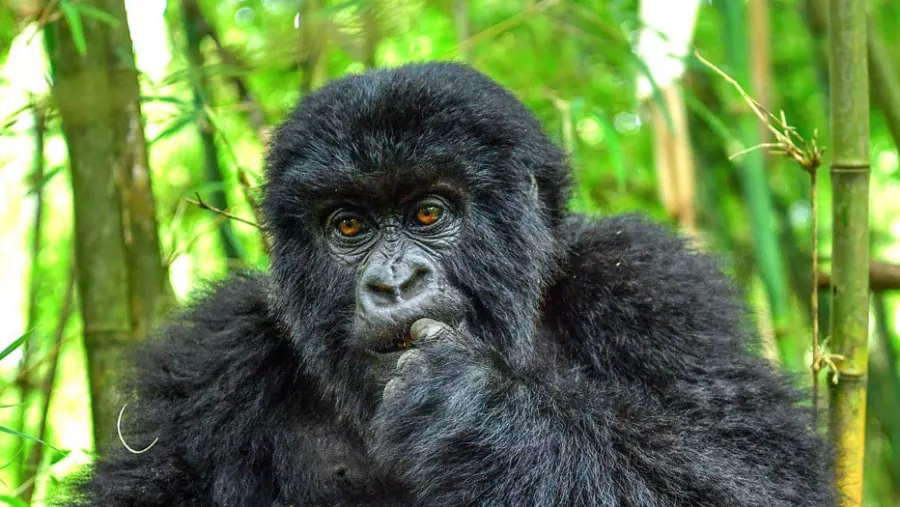
In Rwanda, rangers allocate each group of up to eight visitors to a family at the Kinigi briefing the same morning, based on the trackers’ overnight reports and a rough assessment of the group’s fitness. Guests who want a gentler day can request it, and rangers try to match older or less mobile visitors to families that are closer or on easier ground. Some treks last 30 to 60 minutes; others last four hours or more. If you want to choose a family in advance, Rwanda’s exclusive-use permit allows it, as described in our exclusive gorilla trekking guide.
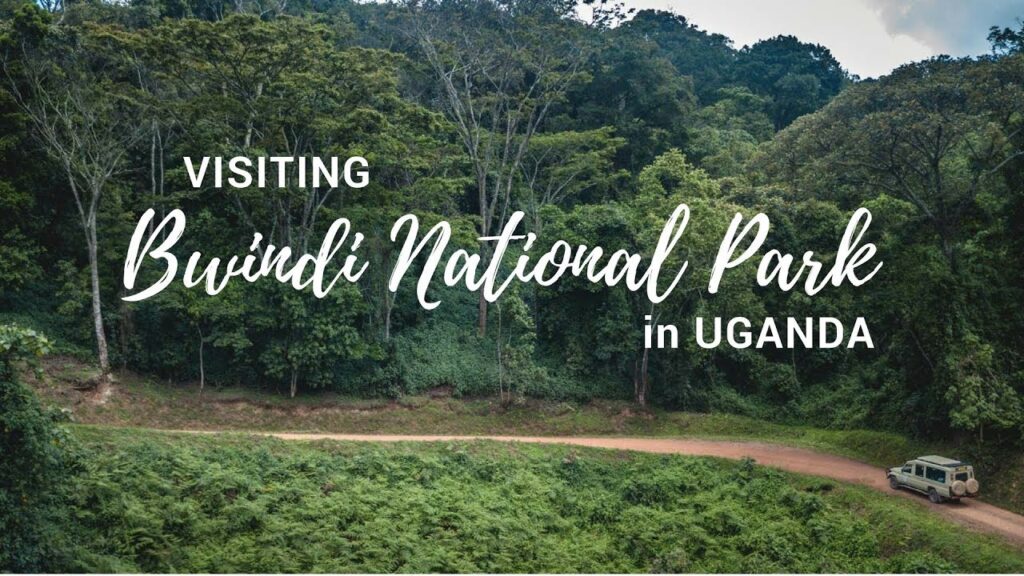
In Bwindi’s Rushaga sector, allocation also happens at the briefing, although the sector’s larger number of families gives guides more room to match groups to terrain. Treks of 30 minutes to eight hours are possible, and the forest is dense and slippery.
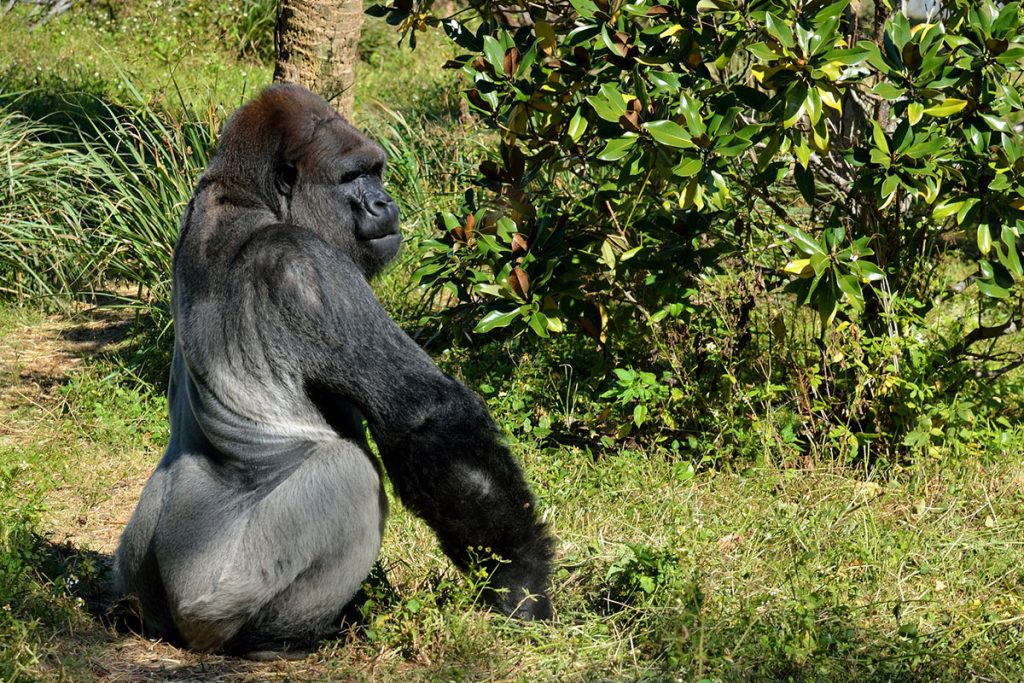
In Kahuzi-Biega, the park has historically had five habituated families out of around nine known in the highland sector, so the choice is narrower, but the lower altitude helps. We ask every guest to tell us honestly about their fitness and any joint or heart concerns when booking, and we pass the information to the rangers. We cannot guarantee a short walk, and nobody can.
Elevation Profile Summary
Altitude is a real consideration on this safari because it moves between roughly 1,500 and 3,000 meters several times. The figures below are approximate, and some are marked for confirmation on your route.
| Stage |
Approximate altitude |
What it means for you |
| Kigali (Days 1 and 9) |
About 1,500 m |
Comfortable; most guests feel no effects |
| Volcanoes National Park lodges (Days 2 to 3) |
About 2,200 to 2,500 m |
Mild altitude; stay hydrated. |
| Volcanoes gorilla trek (Day 3) |
About 2,200 to 3,400 m |
Steep, muddy volcanic slopes; potentially 300 to 800 m of climb depending on the family |
| Bwindi, Rushaga (Days 4 to 5) |
About 1,160 to 2,607 m across the park; lodges roughly 1,700 to 2,300 m |
Frequent ups and downs in ridge-and-valley terrain |
| Lake Kivu corridor and Nyungwe (Days 6 to 8, Option B) |
The lake is about 1,460 m; Nyungwe forest is higher. |
Moderate; canopy walk and chimp trails involve steep sections. |
| Kahuzi-Biega highland sector (Day 8, Option A) |
About 1,500 to 2,700 m |
Warmer, lower altitude; less breathless |
Total elevation gain on a trek day varies between almost nothing and well over 800 meters. In terms of cumulative effort, the Rwanda and Uganda trek days are the most demanding. If you are concerned, speak to your doctor before travelling, and read our Volcanoes National Park page for acclimatisation tips.
Accommodation and Lodges
This safari uses luxury and exclusive-use accommodation or midrange lodges throughout. Each region has a character, and we choose the lodge to match.
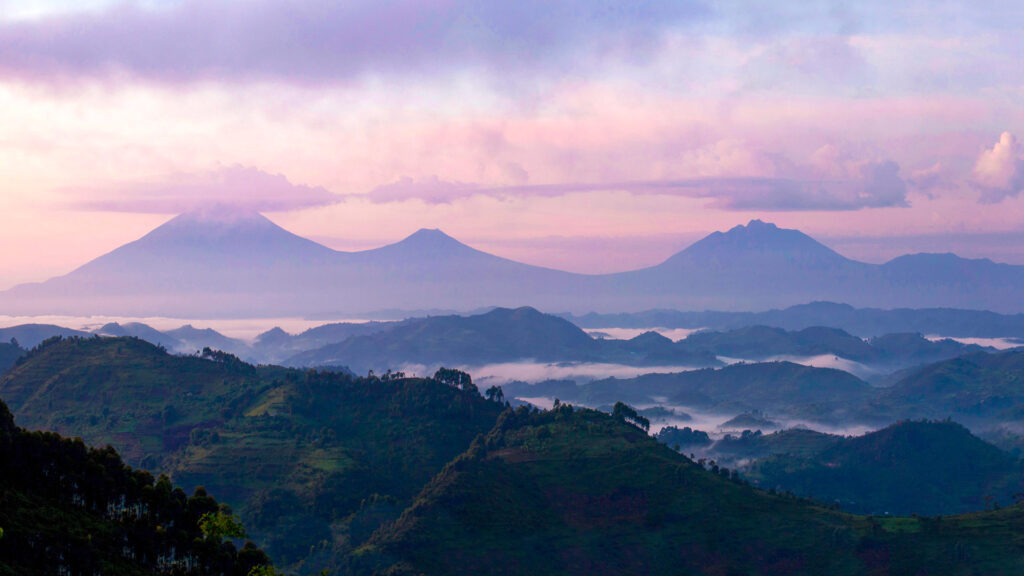
Volcanoes National Park (Rwanda). The cluster of lodges near Kinigi is one of the best-concentrated collections of safari accommodation in Africa. Wilderness Bisate Lodge is set on a restored volcanic hillside, with circular thatched villas and views of the Virunga peaks. Singita Kwitonda Lodge brings the Singita brand’s design and service to the park boundary. One&Only Gorilla’s Nest sits among ancient fig trees with a spa and multiple dining venues. Wilderness Sabyinyo Silverback Lodge, set against the slopes of Sabyinyo, has a community-ownership model that sends significant revenue to neighboring villages. All four are within roughly 20 to 40 minutes of the Kinigi trailhead.
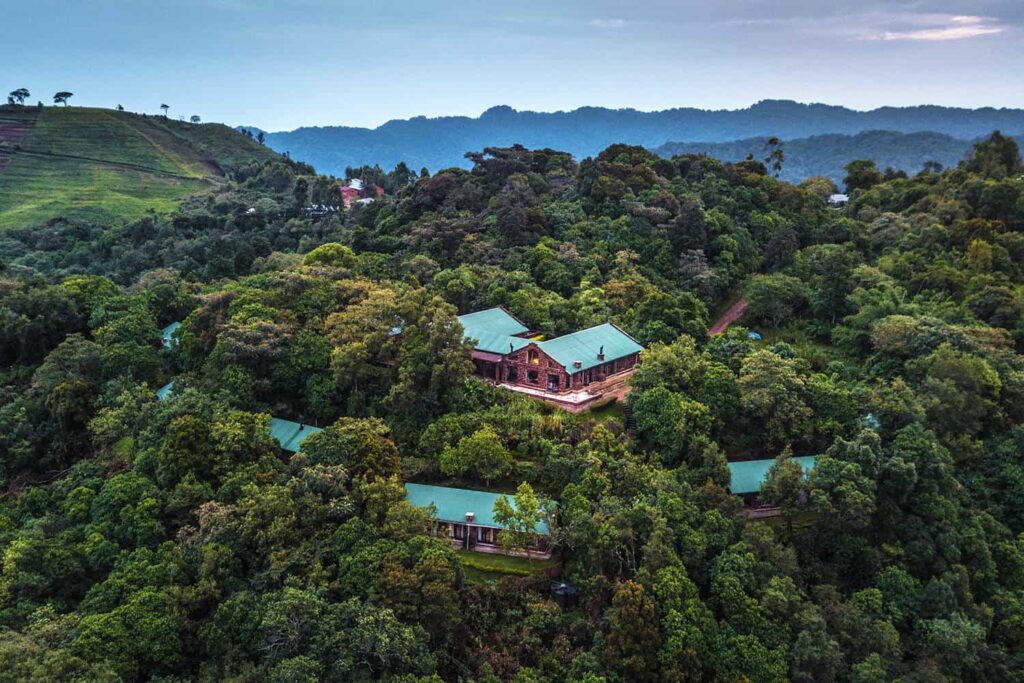
Clouds Mountain Gorilla Lodge
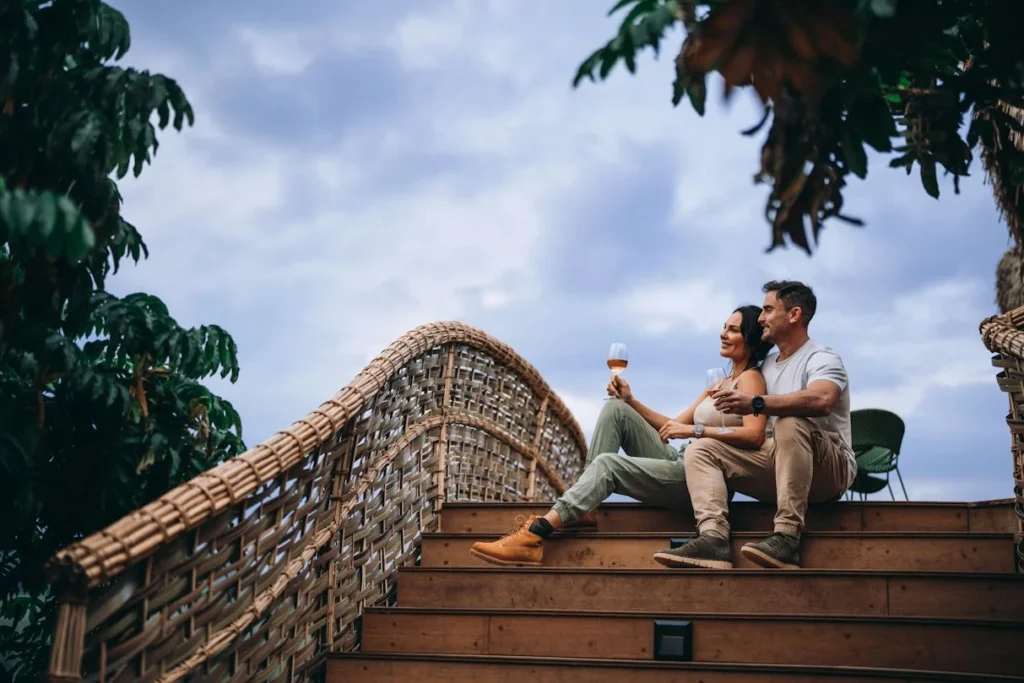
Bwindi, Rushaga sector (Uganda). The southern sectors of Bwindi have seen the fastest growth in genuine five-star lodges, specifically built for the cross-border traveller. Properties here are typically small, perched on ridges with views across the forest canopy, and offer a level of design and privacy that was rare a decade ago.
South-west Rwanda (Nyungwe and Lake Kivu). One&Only Nyungwe House sits on a working tea plantation at the forest edge, and Lake Kivu offers several boutique lakeside hotels.
Bukavu (DR Congo, Option A). Lodging in Bukavu is limited and is arranged with security in mind; our team selects a secure, lakeside property.
Wildlife and Nature to Expect
Beyond the three gorilla encounters, the circuit passes through some of the most biodiverse landscapes in Africa. In Volcanoes National Park, the endemic golden monkey, Cercopithecus kandti, lives in the bamboo zone and can be trekked as an extra activity (permit approximately USD 100 per person). The park also supports forest elephants, buffalo, bushbuck, and more than 170 bird species. The volcanic scenery, with five peaks, bamboo, hagenia woodland, and open moorland, is itself a highlight, and the twin crater lakes of Burera and Ruhondo give you one of the most photogenic drives in Rwanda.
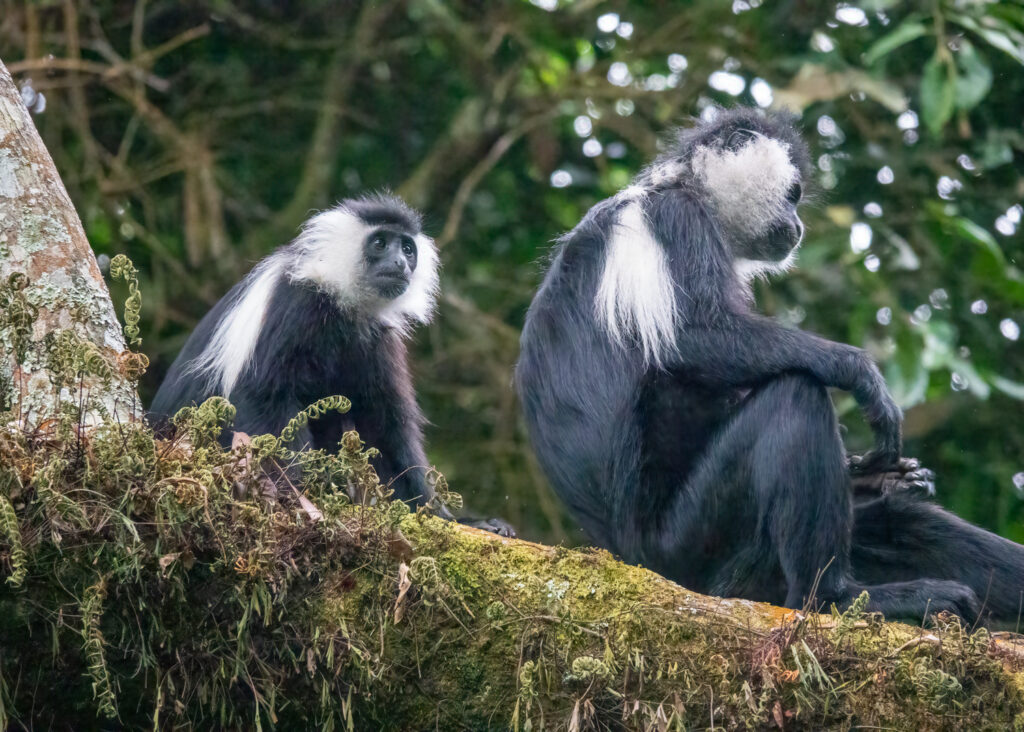
Bwindi holds more than 120 mammal species and over 350 bird species, including many Albertine Rift endemics, and its forest is thought to have survived the last Ice Age. In the Rushaga sector, you may hear or see black-and-white colobus monkeys, other monkeys, forest duikers, and a remarkable range of butterflies.
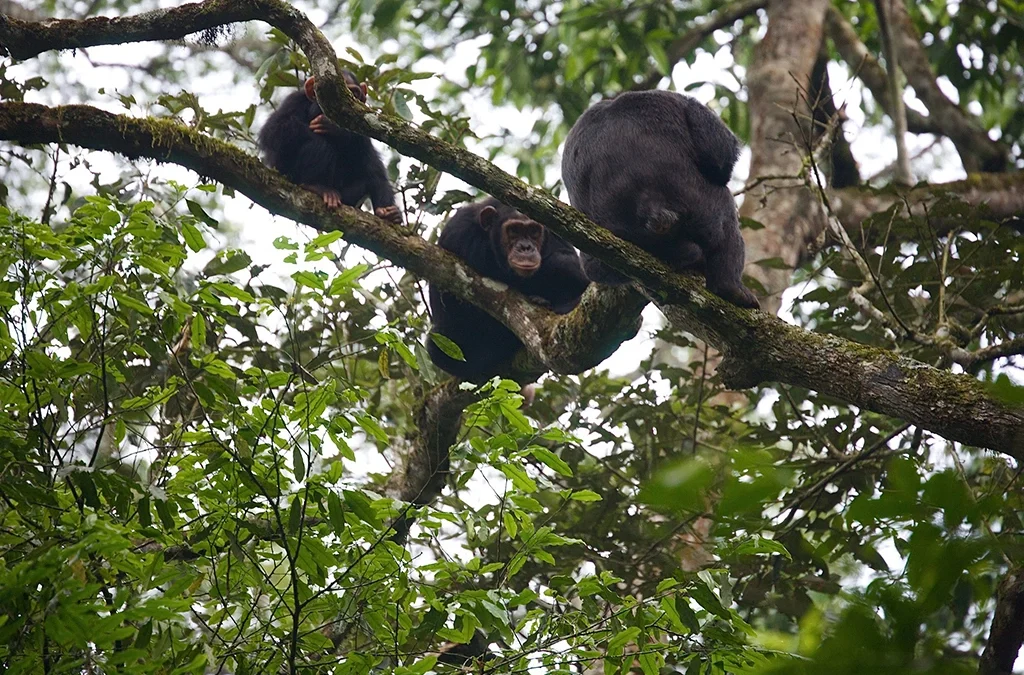
Nyungwe has 13 primate species, including chimpanzees and the Angola colobus, as well as more than 300 bird species. Kahuzi-Biega adds forest elephants, chimpanzees, and more than 340 bird species to its gorillas. You may not see all these animals, but the circuit is rewarding for its density of life.
Physical Difficulty and Fitness Requirements
You don’t need to be an athlete for this safari, but you should have a reasonable baseline of fitness, as you will trek on three separate days at altitude, with long drives in between. Volcanoes National Park treks start at around 2,500 metres and may climb above 3,000 metres on steep, muddy volcanic slopes. Bwindi’s terrain is steep and dense, with many ascents and descents. Kahuzi-Biega is lower and warmer but can be thick and humid.
We recommend that you walk for two to three hours at a time in the weeks before travel, including hills and uneven ground, and break in your boots. Hiking poles are provided at trailheads; porters are strongly recommended for guests over 60 or with knee, hip, or back concerns, and a porter will carry your bag and help on steep sections. For guests with limited mobility, the ranger team will try to match you to a nearer family, and for those who want complete control of pace, exclusive-use permits offer a more flexible option in Rwanda.
The minimum age for gorilla trekking is 15 in all three countries. Anyone with a cold, flu, or any contagious respiratory illness will be refused access to the gorillas to protect them. If you are unwell before departure, tell us immediately.
Best Time to Go
You can do the Virunga Circuit Safari all year, but the season changes the experience. Rwanda and Uganda each have two dry seasons and two wet seasons, and altitude keeps temperatures mild. The figures below are typical ranges and should be checked against the latest forecasts.

| Season |
Months |
Weather and temperature |
Trails, crowds, and value |
| Long dry season |
June to September |
Days of 20 to 27°C (68 to 81°F) in lower areas and 15 to 20°C (59 to 68°F) in the mountains; cold early mornings (5 to 10°C / 41 to 50°F) |
Firmest trails and best visibility; peak demand; Rwanda and Uganda permits and lodges sell out 6 to 12 months ahead |
| Short rains |
October to November |
Warm days, afternoon showers, mostly dry mornings |
Lush and quieter; Uganda’s discounted permit applies on fixed dates in November. |
| Short dry season |
December to February |
Similar to June to September, slightly warmer |
Excellent conditions with somewhat lower demand than the summer peak; book early for Christmas and New Year. |
| Long rains |
March to May |
Heavier, more persistent rain; muddy trails |
April and May are the quietest months, with lower lodge rates, Uganda’s discounted permit applying on fixed dates, and some mountain roads requiring four-wheel drive. |
For this specific itinerary, the best months are June to September and December to February, when trails are firmest and the cross-border road journeys are most reliable. If you value solitude and lower rates and are comfortable with mud, April, May, and November can be excellent, with the proviso that Uganda’s discounted permits are non-reschedulable. Golden monkey and chimpanzee activity is typically high when forest fruit is abundant, which is often in the shorter rains. For fly-in versus road transfers, the dry months are the most dependable for either, while the wetter months make road transfers slower.
Gorilla Permits, Park Fees, and Costs.
| Item |
Cost (per person) |
Notes |
| Rwanda gorilla permit, Volcanoes National Park |
USD 1,500 |
Issued by the Rwanda Development Board; fixed year-round |
| Rwanda exclusive-use permit |
Approx. USD 15,000 per group of up to 8 |
Optional; private buyout of one family’s daily visit |
| Uganda gorilla permit, Bwindi |
USD 800 (USD 600 in April, May, and November on fixed dates) |
Since March 2026, permits for foreign visitors must be booked through a licensed Ugandan tour operator, with full payment due at the time of booking. |
| Uganda gorilla habituation experience (Rushaga only) |
USD 1,500 |
Up to four hours; maximum four visitors per day |
| Kahuzi-Biega gorilla permit |
Approx. USD 400 (range reported at USD 250 to 500) |
Historical figure; confirm current price and operating status |
| Golden Monkey Trek (Rwanda) |
USD 100 |
Optional |
| Chimpanzee trek, Nyungwe (Rwanda) |
USD 150 |
Fallback activity |
Add the three gorilla permits, and the permit cost alone is around USD 2,700 per person, before lodges, transfers, and guides. That is the arithmetic behind our indicative starting price. Because permits for peak months sell out far in advance, you should aim to book 9 to 12 months ahead for June to September and December to February, and at least three to six months ahead for the other months. Rwanda requires full payment in advance, and rescheduling a confirmed permit usually carries a fee.
Packing and Gear List
Gorilla forests are wet, muddy, and cool, even in the dry season. Pack with layers.
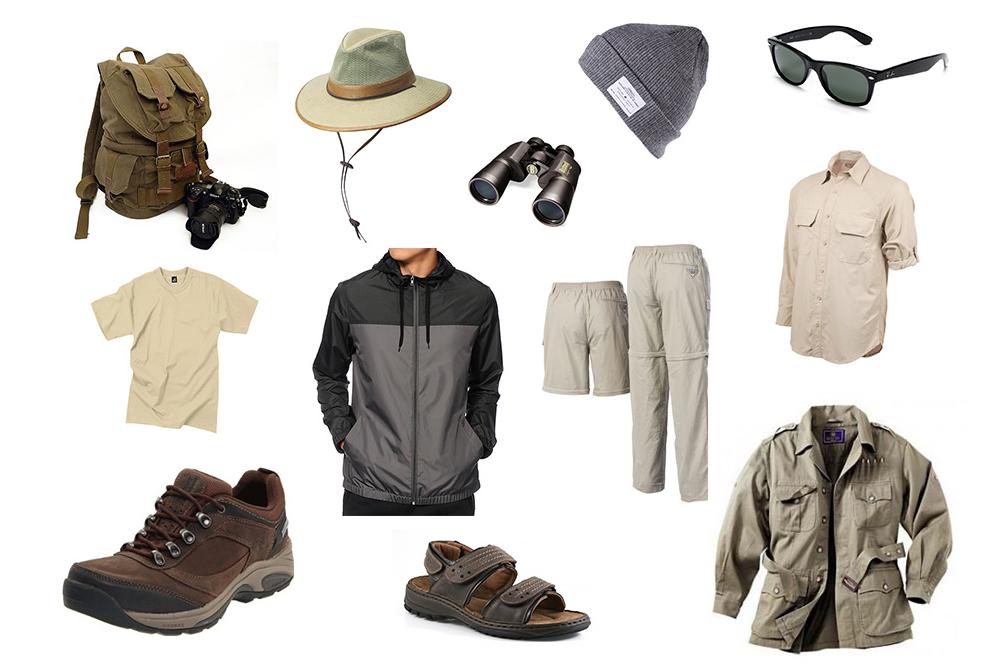
- Waterproof, ankle-supporting trekking boots, already broken in
- Long-sleeved shirts and long trousers in neutral, earth-toned colors (olive, khaki, brown, grey); avoid bright colors and white
- A lightweight waterproof rain jacket and a warm fleece for cold mornings
- Gardening gloves for gripping vegetation, plus gaiters against stinging nettles and ants
- A day pack with at least two liters of water, snacks, and a small first-aid kit
- Quality binoculars and polarized sunglasses
- A camera with a fast lens and spare batteries; no flash is permitted near gorillas
- Hat, sunscreen, and insect repellent
- Universal or Type G charging adaptors
- Small US dollar notes for tips and porters
- Passport with at least six months’ validity and blank pages for three countries’ stamps
- Original yellow fever certificate
- Personal medication and a copy of your travel insurance policy
Getting There
Most guests fly into Kigali International Airport, which has direct flights from Nairobi, Entebbe, Dar es Salaam, Johannesburg, Dubai, Brussels, London, and Paris. Your guide will meet you at arrivals. The drive from Kigali to Volcanoes National Park is two to two-and-a-half hours by road, and a helicopter transfer of around 30 minutes is possible for guests who want to save time. Cross-border moves in this itinerary are by road: Cyanika for Uganda and Rusizi (Cyangugu) for DR Congo. A domestic flight from Kamembe Airport to Kigali is possible for the return.
Visa and Entry
Rwanda offers an e-visa for most nationalities, which currently costs around USD 50 and is usually processed within a few days; you can apply on the official immigration portal at migration.gov.rw. Uganda issues an e-visa for foreign visitors, and the East Africa Tourist Visa may cover both Rwanda and Uganda. The DR Congo requires its visa, which has historically cost around USD 100, and a yellow fever certificate. Our team will guide you through the paperwork for all three countries. Always check your government’s current travel advice before travelling, especially for the DRC; US citizens can find this information on the US State Department’s website.
Health and Vaccinations
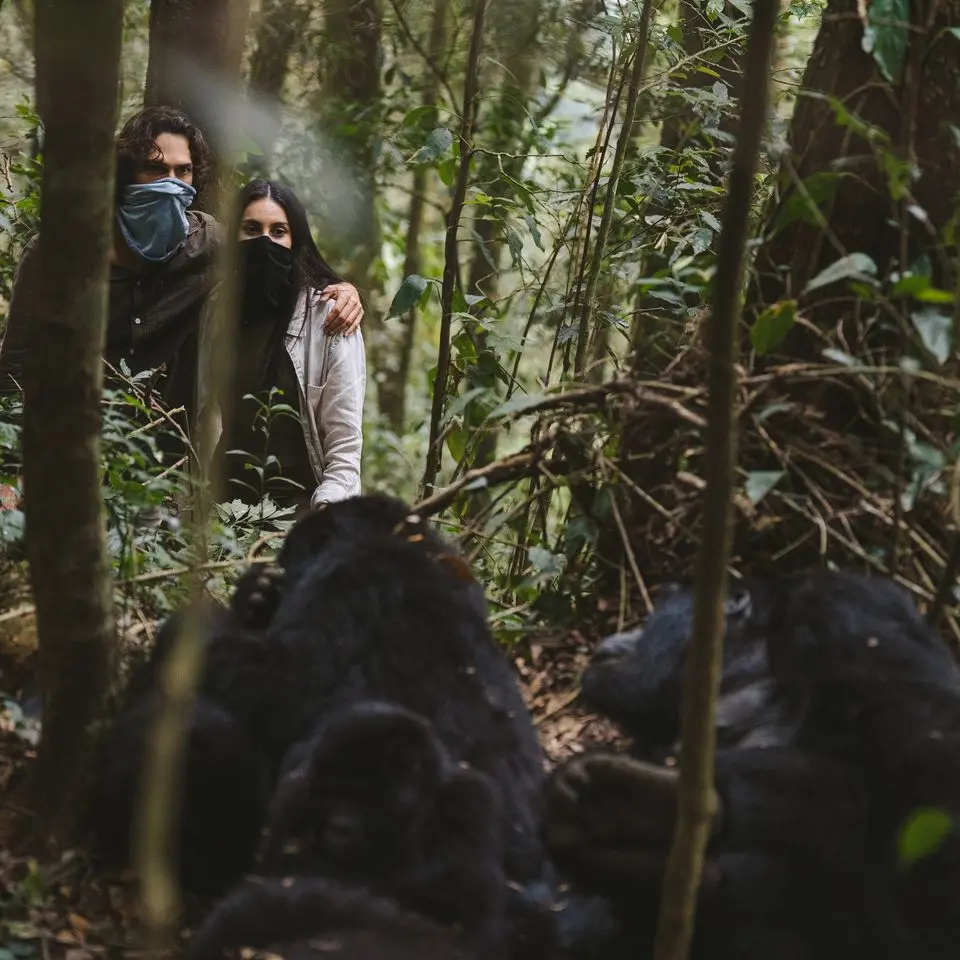
No vaccination is legally required for Rwanda, except for a yellow fever certificate if you arrive from an endemic country; however, a yellow fever certificate is required for DR Congo and is wise to carry throughout. Malaria prophylaxis is recommended, particularly for lower-altitude areas such as Lake Kivu’s shores, Bukavu, and Akagera; the risk is lower at high altitudes in Volcanoes National Park. Please consult a travel-health clinic six to eight weeks before departure and ensure routine vaccinations are up to date. You will wear a mask near the gorillas in many parks to protect them from human respiratory illness.
Currency and Tipping
Lodges and tourist services widely accept US dollars, and they prefer newer notes (post-2013) in acceptable condition. Local currencies are the Rwandan franc, Ugandan shilling, and Congolese franc; you will need very little of them. As a guideline, tip your driver-guide USD 20 to 30 per day, and lodge staff USD 10 to 15 per day for the team as a whole. Trackers, rangers, and porters are tipped separately at the end of each trek.