Volcano Hiking in Rwanda: The Complete Guide to Bisoke, Karisimbi, Muhabura, and More.

Volcano hiking in Rwanda means guided climbs of Bisoke, Karisimbi, and Muhabura from USD 75. Plan your luxury Virunga hiking safari with our team.

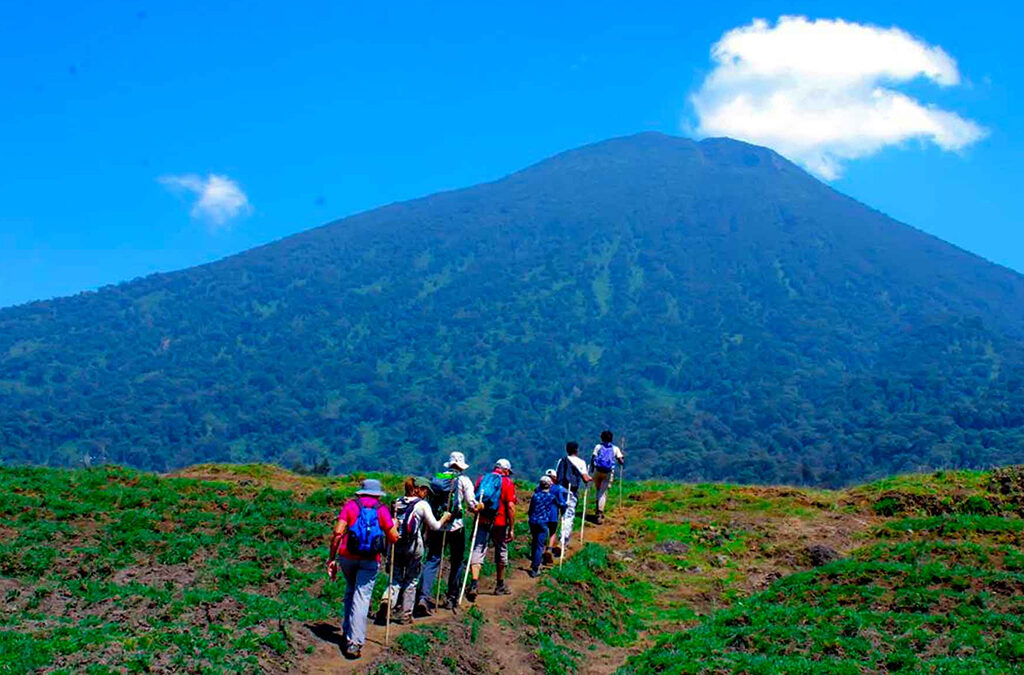
Volcano hiking in Rwanda means guided day and overnight climbs of the Virunga volcanoes inside Volcanoes National Park, with Mount Bisoke (3,711 metres, a crater lake summit in about six to seven hours) the most popular, Mount Karisimbi (4,507 metres, a two-day expedition) the highest, and Mount Muhabura, Mount Gahinga, and the Dian Fossey graves trail completing the menu. Every hike is arranged through the Rwanda Development Board, accompanied by rangers and guides, and requires a permit that costs from about USD 75 for Bisoke to about USD 400 for Karisimbi, on top of the separate USD 1,500 permit for gorilla trekking. Groups are capped at twelve people per hike, and the minimum age is 15. Most hikes start at the park headquarters in Kinigi, a two-to-two-and-a-half-hour drive from Kigali, with a 7:00 a.m. briefing. The volcano climbs are the physical counterpart to a gorilla trek: they use different permits, different days, and different muscles, and they give a Rwanda safari a mountain chapter that most visitors never realize exists.

Volcano Hiking in Rwanda: Bisoke, Karisimbi & Permit Guide

What makes Rwanda exceptional for volcano hiking is the combination of scale and access. Five of the eight Virunga volcanoes lie in or on the border of Rwanda’s Volcanoes National Park, and four of them can be climbed on trails that need no mountaineering skill, only fitness, sturdy boots, and a willingness to deal with mud. The forests that clothe their slopes are the home of the world’s mountain gorillas, and the same trails pass through bamboo, moss-draped Hagenia woodland, and a high-altitude zone of giant lobelia that looks like another planet. You can summit a volcano before lunch and be soaking in a hot bath at one of the finest safari lodges in Africa by mid-afternoon.

The right climb depends on who you are. Bisoke suits most reasonably fit travellers and rewards the effort with a crater lake. Karisimbi suits experienced walkers who want a genuine high-altitude challenge, including a night at camp close to freezing. Muhabura is steep and quiet and appeals to those who want to be alone on a mountain. Gahinga is the gentlest summit, and the Dian Fossey graves trail adds history to a trip that might otherwise be purely scenic. Choosing well matters more than choosing hard, because a poor match between a hiker and a trail is the most common reason people describe a hike as unpleasant.

Permits are limited — spaces fill months ahead

Reserve Your Private Gorilla Trek

Speak with a Rwanda-based specialist today. We secure permits, match you to the right gorilla family, and plan every detail around your schedule.

No group departures · Private itineraries only · Direct Rwanda expertise

Which Volcanoes Can You Hike in Rwanda?

You can hike four Virunga volcanoes from the Rwandan side with a standard permit: Bisoke, Karisimbi, Muhabura, and Gahinga, plus a combined Muhabura–Gahinga route, while Sabyinyo is offered only when trail conditions allow and should always be confirmed. Rwanda’s park contains five of the Virungas’ eight volcanoes, namely Karisimbi, Bisoke, Muhabura, Gahinga, and Sabyinyo, and the remaining three, Mikeno, Nyiragongo, and Nyamuragira, lie in the Democratic Republic of Congo.

Volcano Height Typical duration Difficulty Permit (international)
Bisoke 3,711 m 6 to 7 hours round trip Moderate to strenuous USD 75
Karisimbi 4,507 m 2 days, 1 night Strenuous, cold camp USD 400
Muhabura 4,127 m 8 to 9 hours round trip Strenuous USD 75
Gahinga 3,474 m about 6 hours round trip Moderate USD 100
Sabyinyo 3,669 m single day Strenuous, technical USD 75
Dian Fossey graves mid-slope trail a few hours round trip Moderate USD 75

Why choose Rwanda over Uganda or Congo?

All three Virunga countries protect part of the range, but only Rwanda offers a full menu of climbs with the lodge infrastructure to match. Uganda’s Mgahinga Gorilla National Park covers the northern slopes of Muhabura, Gahinga, and Sabyinyo and offers its own hikes, while Congo’s Virunga National Park holds the active volcanoes Nyiragongo and Nyamuragira, but its tourism has been repeatedly suspended by regional insecurity, and permits are suspended at the time of writing. For travelers who value reliable access, Rwanda offers the most practical choice.

What Makes the Volcano Hikes Different From the Gorilla Treks

A gorilla trek is unpredictable by design: the walk may take thirty minutes or five hours, and the destination is wherever the animals choose to spend the night. A volcano hike is the reverse. The route is fixed, the summit is known, and the challenge is purely about the climb. That difference shapes how you plan. Volcano hikes reward a steady pace, good preparation, and an early start, while gorilla treks reward flexibility and a calm mind. Many guests find they enjoy the contrast so much that they plan the second activity as carefully as the first.

How Volcano Hiking Works in Volcanoes National Park

Every volcano hike in Rwanda is guided, permit-based, and managed by the Rwanda Development Board, which means you cannot hike independently, and the system is straightforward once you know it. Permits are issued for a specific person and date through the Rwanda Development Board booking portal, with a minimum age of 15 and a maximum of twelve hikers per group on each mountain. The permit covers park entry and a ranger guide, and it does not cover transport, porters, meals, or tips.

The Morning Briefing at Kinigi

Most volcano hikes begin at the park headquarters in Kinigi with a 7:00 a.m. briefing, the same point used for gorilla trekking. You register, confirm your permit, and meet your guide and rangers, who explain the pace, the wildlife rules, and what to do if the weather turns. After the briefing, you travel by vehicle to the trailhead, which for Bisoke is about thirty minutes away on a rough volcanic road. Arriving fifteen minutes early gives your guide time to match you to a pace group, and it gives you time to hire a porter or a walking stick.

Guides, Rangers, and Porters

Every group travels with an experienced guide and armed rangers, because the trails run through wildlife habitat and, in several cases, along an international border. Porters are registered members of the surrounding communities, hired at the park headquarters for about USD 15 to 20 plus a tip, and we recommend one for every hiker on every climb. The income goes directly to households living along the park boundary, which is one of the most visible ways in which a visitor’s spending supports conservation.

Group Sizes and Private Hiking

The official limit of twelve hikers per group is a ceiling, not a target, and on busy days it is possible to find yourself with a larger party than you would like. Our private itineraries are arranged so that you hike with your guide and your pace, which makes a significant difference on the steep sections and at the summit, where time at the top depends on weather rather than on a group schedule.

Mount Bisoke: Rwanda’s Most Popular Volcano Hike

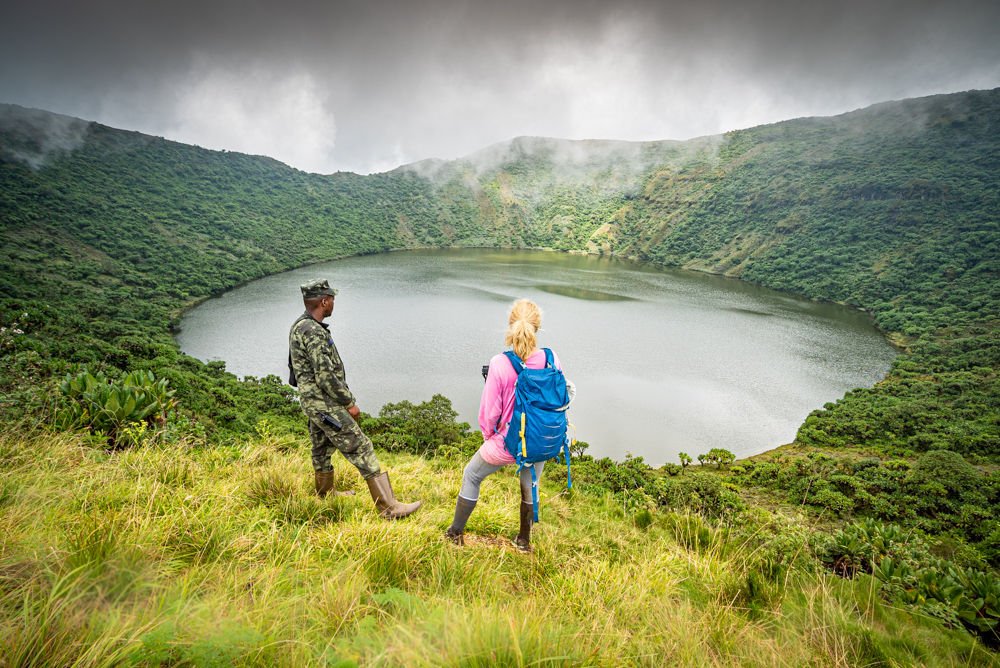
Mount Bisoke is a 3,711-meter dormant volcano on the Rwanda–Congo border that you climb in a single day to reach a crater lake commonly cited as around 400 meters across. The hike starts at about 2,700 metres, climbs about a thousand vertical metres through bamboo, Hagenia woodland, and a giant lobelia zone, and takes roughly three to four hours up and two hours down. The permit costs about USD 75 per person. Cloud usually builds by mid-morning, so an early start gives the best chance of a clear lake.

Mount Bisoke Hike: Rwanda’s Crater Lake Volcano Guide 2027

Bisoke is the best all-round introduction to volcano hiking in Rwanda, as it is achievable for most reasonably fit travellers while still providing a genuine summit experience. It last erupted in 1957, when two cones formed on its northern flank and left behind Lake Ngezi, a smaller crater lake that makes a gentler alternative. Our Virunga Mountains guide places Bisoke alongside the other volcanoes, and the sections below cover its logistics in detail.

Lake Ngezi: The Gentle Alternative

Lake Ngezi is a small, shallow crater lake on Bisoke’s lower flank, and the walk takes about three to four hours round trip. It is the easiest volcano-related hike in the park and suits older travelers, families with teenagers, and anyone who wants the volcanic landscape without the full climb. The slower pace gives more time for golden monkeys, birds, and forest plants.

Mount Karisimbi: The Two-Day Summit Expedition

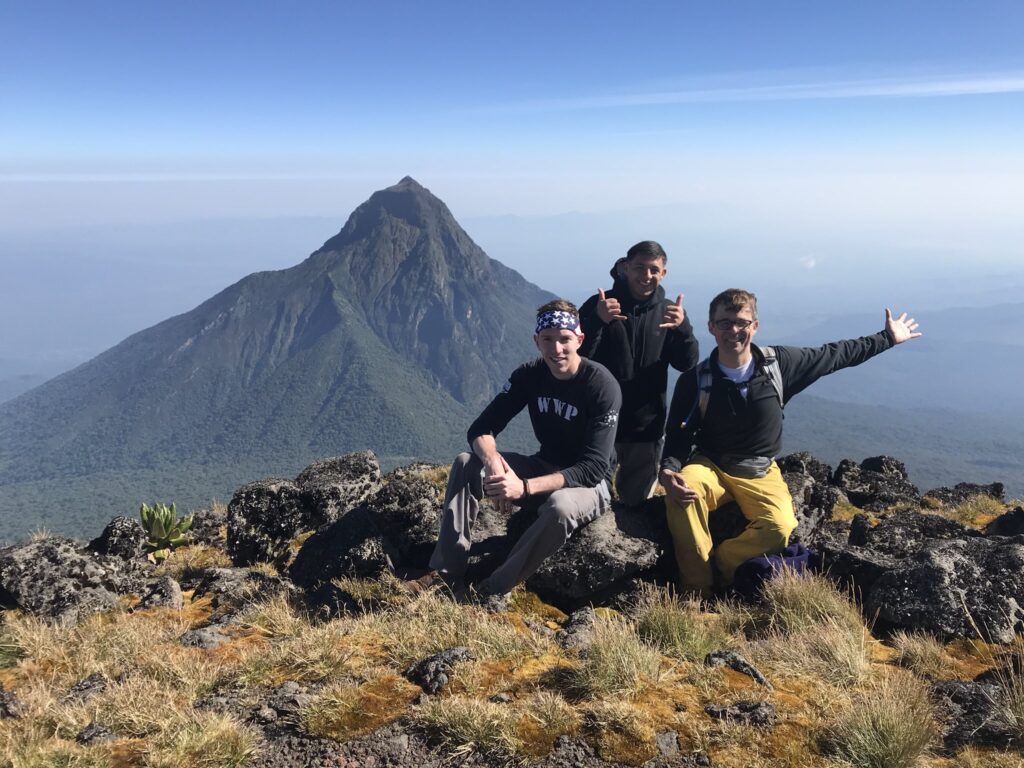
Mount Karisimbi, at 4,507 metres, is the highest peak in the Virungas and in Rwanda, and it is climbed as a two-day, one-night expedition with camping near 3,700 metres, followed by a pre-dawn push to the summit. The permit costs about USD 400 per person; the minimum age is 15, and groups are limited to twelve. The volcano’s name comes from the Kinyarwanda word for snow, and it earns it: the upper slopes can see frost, hail, and sleet even at this latitude close to the equator, and nights at camp regularly fall close to freezing.

Mount Karisimbi Hike: Rwanda’s Highest Volcano Guide & Permit

Day One: Forest, Bamboo, and the Climb to Camp

The first day follows a long, steady climb through bamboo and montane forest to the overnight camp. Porters carry the camping equipment, so you walk with only a day pack, and the pace is deliberately measured to help the body adjust. The climb to camp is commonly quoted at around five to six hours, though the duration varies with fitness and conditions. By late afternoon you reach a basic camp in the saddle area, where the temperature drops fast and the sky, when clear, shows more stars than most visitors have ever seen.

The Night at Camp

Nights at camp are cold, and this is the detail most tour listings underplay. A sleeping bag rated near freezing, thermal base layers, a warm hat, and dry socks are essential, and anyone who tends to feel the cold should bring more than they think they need. Altitude can also make sleep restless, with headaches and short breaths common at 3,700 meters. We advise guests to spend at least a night or two at moderate elevation before attempting Karisimbi, rather than arriving from sea level and climbing within 48 hours.

Day Two: Summit at Sunrise and the Descent

The summit push usually starts before dawn, with headlamps and a steady climb over rocky, open terrain and finally the high-altitude vegetation zone. Reaching the top for sunrise, with the Virunga range and the Congolese plains spread beneath you, is the experience that justifies the effort. After time at the summit, you return to camp for breakfast and then descend to the trailhead, where your driver is waiting. Trekking poles make a significant difference on the descent, which is harder on the knees than the ascent.

Is Karisimbi Right for You?

Karisimbi is demanding but not technical, and it is suitable for fit, experienced walkers who are comfortable with cold and altitude. Anyone with cardiovascular or respiratory conditions should consult a doctor before booking, and everyone should train for sustained uphill walking. If you are unsure, the shorter Bisoke hike is a good test of how you handle altitude and mud before committing to a two-day expedition.

Mount Muhabura: The Steep, Quiet Climb

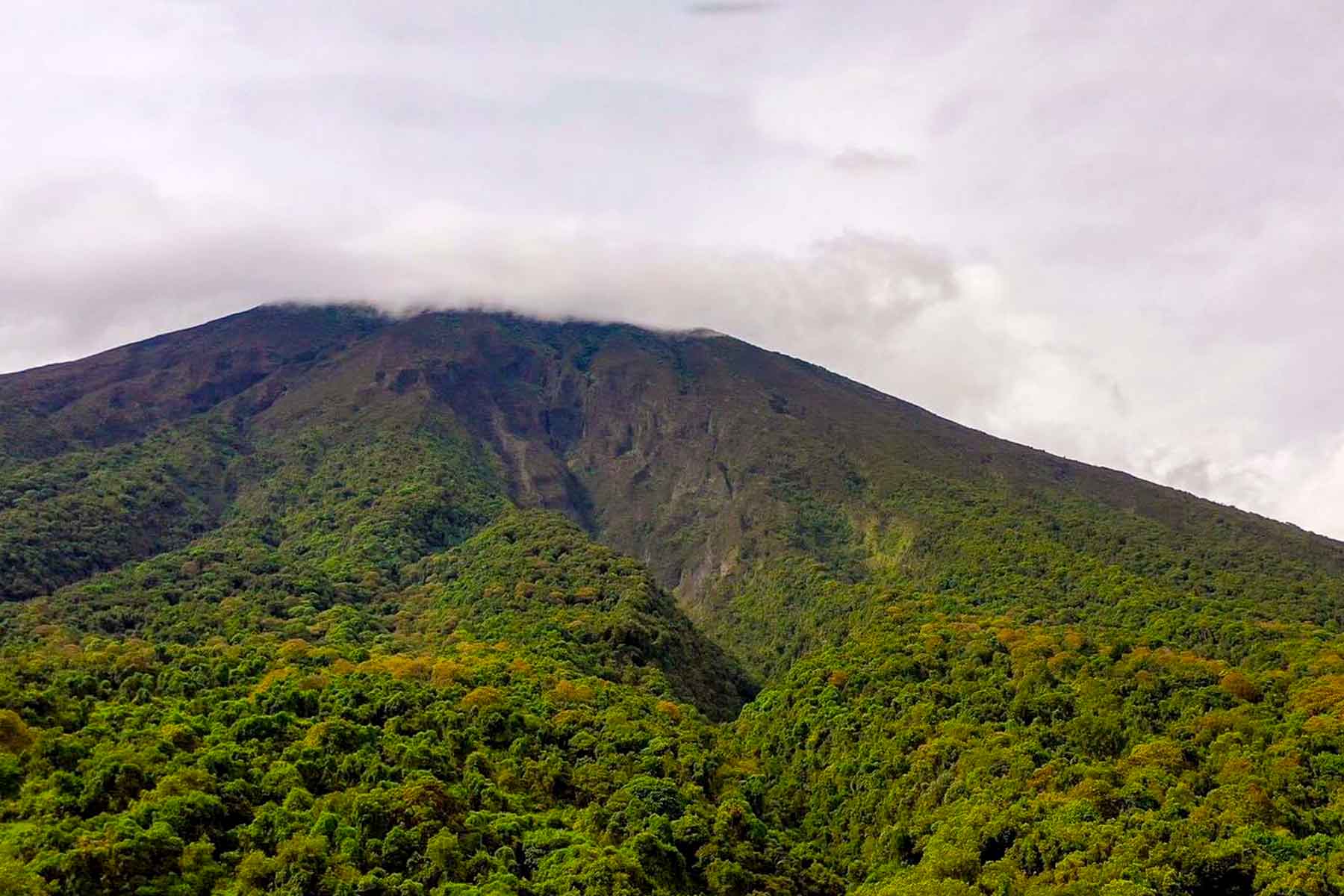
Mount Muhabura, at 4,127 metres, is Rwanda’s second-highest volcano and its steepest day hike, a round trip of roughly eight to nine hours that must be completed in a single day. The name means “the guide” in Kinyarwanda, reflecting a history as a navigation landmark, and the mountain straddles the Rwanda–Uganda border. The Rwanda Development Board calls it the most difficult standard hike because of its steepness and the fact that the round trip cannot be split.

Mount Muhabura

What to Expect

The trail climbs steadily through farmland, bamboo, and montane forest into the high-altitude vegetation zone, and the reward at the top is a small crater lake and broad views across the twin lakes of Burera and Ruhondo below, as well as into Uganda. Muhabura is far less crowded than Bisoke, which makes it appealing to hikers who value solitude. The permit costs about USD 100 per person for international visitors, and the minimum age is 15.

Mount Gahinga and the Muhabura–Gahinga Route

Mount Gahinga, at 3,474 meters, is the smallest of the three eastern Virungas and the gentlest of the summit hikes, a round trip of about six hours through pure bamboo forest to a swampy caldera. Its name means a small pile of stones in the local dialect, and its summit once held a crater lake that has since become a lush swamp. The permit costs about USD 75, and the Rwanda Development Board limits groups to twelve.

For hikers who want more, a combined Muhabura–Gahinga route is available for travellers with summit ambitions but no mountaineering skills. It has its own permit, which costs more than a single-mountain fee, so confirm the current figure when booking. We usually suggest this option only for strong walkers who have time for a long day.

Mount Sabyinyo: The Technical Summit

Mount Sabyinyo, at 3,669 metres, is the oldest volcano in the range and the most technical, with an exposed upper ridge that has required ladders and rope-assisted scrambling. Its summit sits at the point where Rwanda, Uganda, and the Democratic Republic of Congo meet, which gives it a unique appeal. Most of the mountain lies in Uganda, and the Rwandan route has at times been closed or restricted while trail safety is reviewed, so we never promise it. If a Sabyinyo summit is important to you, tell us early and we will confirm what is open on your dates.

The Dian Fossey Graves Hike

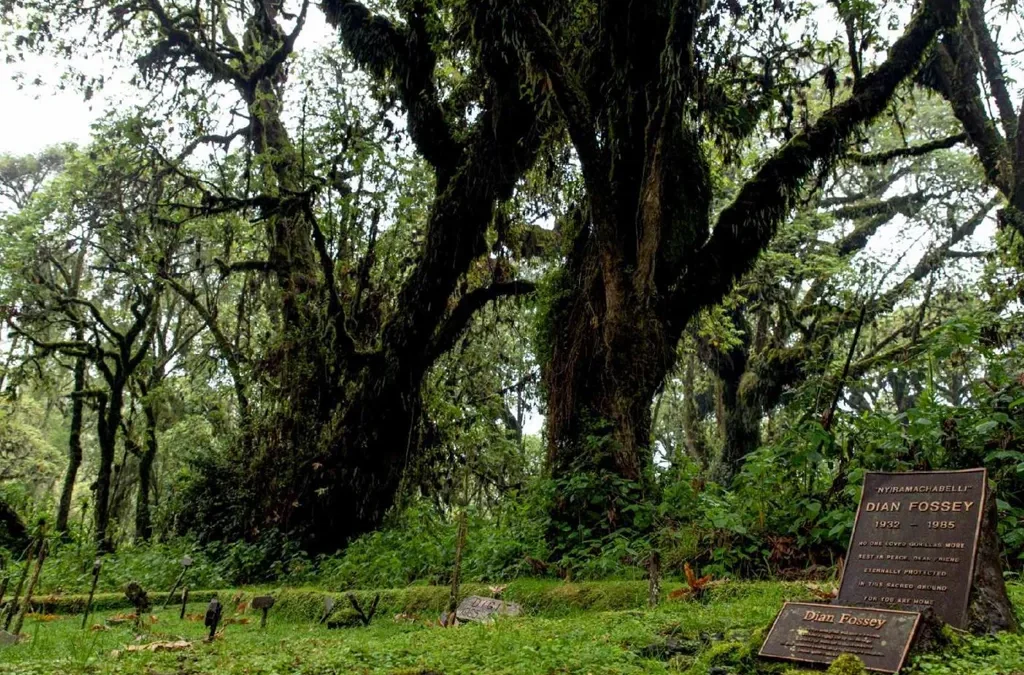
The Dian Fossey graves hike is a guided walk to the site of her Karisoke Research Centre in the saddle between Bisoke and Karisimbi, where she is buried beside the gorillas she protected. Fossey founded Karisoke in September 1967, and the center took its name from the two volcanoes it sits between. The hike is moderate rather than strenuous, takes a few hours round trip depending on pace and conditions, and costs around USD 105 per person on the schedule we quote. It adds historical weight to a volcano itinerary and is a favorite with guests interested in conservation history.

Dian Fossey Tomb Hike

Karisoke and the Dian Fossey Gorilla Fund

The Dian Fossey Gorilla Fund continues the research Fossey began, including at the Ellen DeGeneres Campus near Kinigi, which opened in 2022. The history is also woven into the gorilla families themselves: our guide to the gorilla families of Volcanoes National Park explains how groups such as Susa trace their lineage to Fossey’s research, and our behind-the-scenes gorilla experience goes further for guests who want time with researchers.

Easier Walks Near the Volcanoes

Not every visitor wants a summit day, and the Musanze area offers gentler options that still give a feel for the volcanic landscape. The Musanze Caves are a network of ancient lava tubes that run for around two kilometers underground and require no special fitness. The twin crater lakes of Burera and Ruhondo, northwest of Musanze, are best enjoyed on a boat excursion that shows the volcanoes reflected in the water. Buhanga Eco-Park, a small sacred forest in Musanze, offers an easy walk with cultural significance, and the Lake Ngezi walk described above gives a taste of Bisoke. All of these serve as great rest-day activities between demanding treks, and we have built several into our 4-day exclusive gorilla and golden monkey safari.

Plan Your Rwanda Safari

Start Planning a Private Gorilla Trek

Rwanda gorilla permits sell out months in advance. Secure your dates before the season closes.

Wildlife and Plants on the Volcano Trails

The volcano trails pass through some of the richest montane habitat in Africa, with golden monkeys, forest buffalo, duikers, more than 200 recorded bird species, and a vegetation sequence that changes with every few hundred meters of climb. The trails sit inside the same protected forest as the habituated gorilla families, so wildlife encounters are genuine rather than staged, and a gorilla meeting on a hike is an occasional bonus rather than a promise. A volcano permit is not a gorilla permit, and nobody can guarantee a sighting on a volcano trail.

The Four Vegetation Belts

Climbing from farmland, you pass through bamboo, whose hollow stems click and creak in the wind, then a belt of Hagenia and Hypericum woodland draped in moss, lichen, and orchids, and finally a high zone of giant lobelia, tree senecio, and everlasting flowers that exist only on the highest mountains of East and Central Africa. On the upper slopes of Karisimbi, the vegetation thins into open, rocky terrain where frost and hail are possible. Ask your guide to stop at a few of the larger lobelias: their thick rosetted stalks are built to survive frost at night and sun by day, and they make a better lesson in evolution than any brochure.

Golden Monkeys, Birds, and Larger Mammals

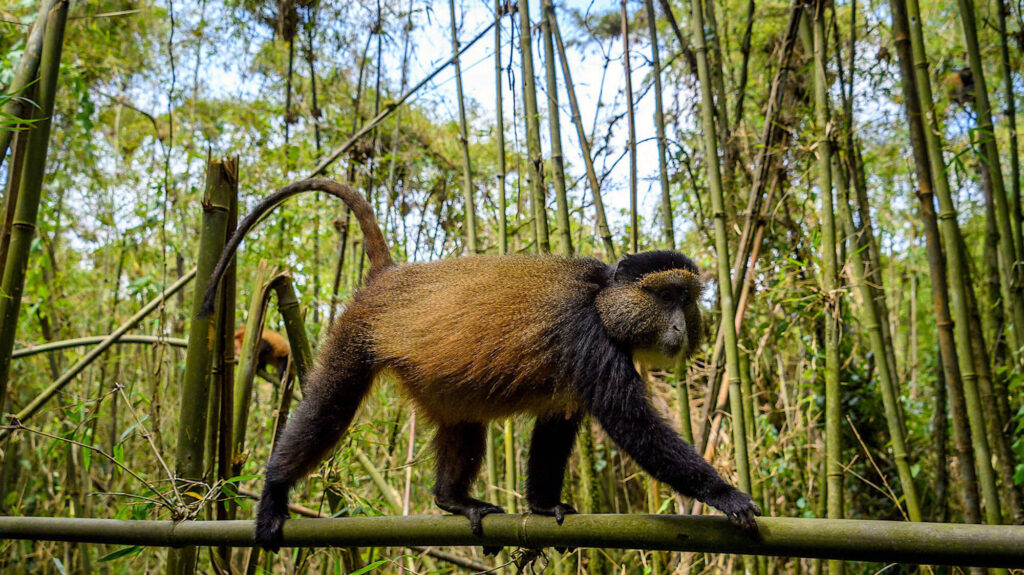
Golden monkeys live in large troops in the bamboo zone, and you will often hear their crashing movement before you see their orange-gold fur. Albertine Rift endemics such as the Rwenzori turaco and the handsome francolin are among the birds that reward patient observers, and buffalo and duikers are regular signs on the trail. Photographers should bring a lens in the 200 to 400 millimeter range for monkeys and birds and a mid-range zoom for summit views. If primates are the real draw, give them dedicated time through a golden monkey trek rather than treating them as a side note.

Meet Gorillas on the Trail

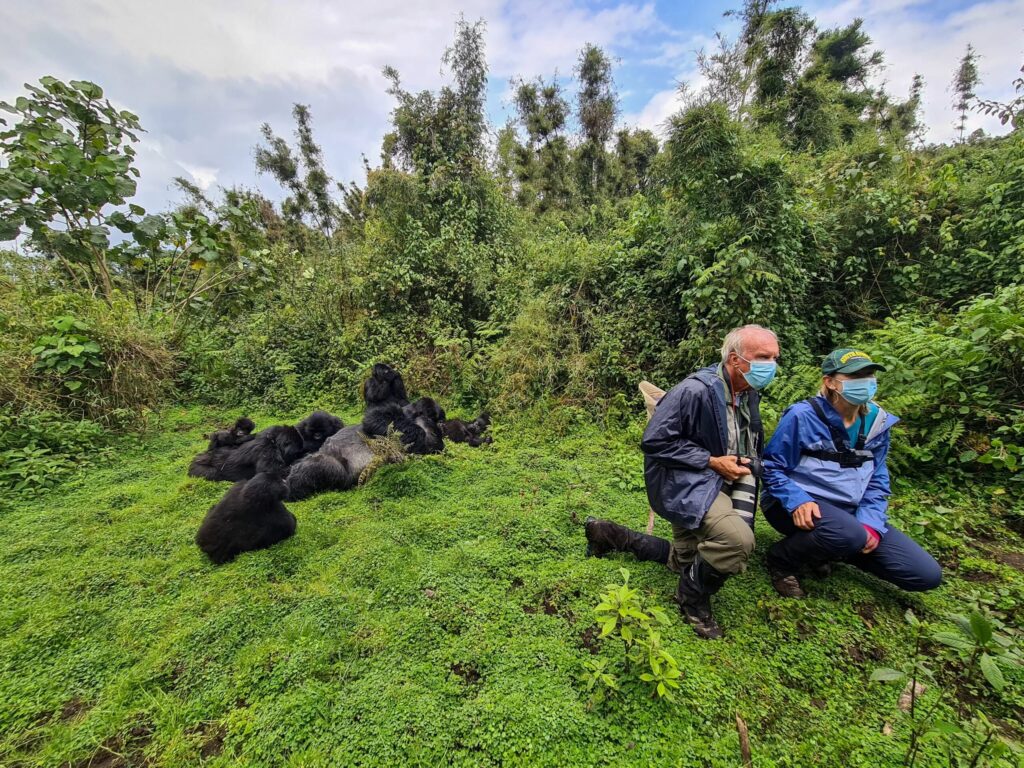
Gorilla families range freely across the Virunga slopes, and the park rules apply the moment hikers and gorillas share the same space. The minimum distance is seven meters, voices drop to whispers, and your guide will move the group away calmly if the animals approach. A chance meeting is brief and unplanned and is not a substitute for a proper trek, which gives a managed full hour with a habituated family.

Rwanda’s Volcanoes Compared With Kilimanjaro and the Rwenzori Mountains

Rwanda’s volcanoes offer a shorter, gentler, and far more luxurious alternative to East Africa’s famous mountain expeditions, and they suit travelers who want a summit without a week of commitment. Mount Kilimanjaro in Tanzania rises to 5,895 meters and typically takes five to nine days to climb, while the Rwenzori Mountains in Uganda are a multi-day wilderness trek through some of the wettest terrain on the continent. Both are serious undertakings that demand weeks of preparation.

The Virunga climbs sit at the other end of the spectrum. Bisoke is a single day, Karisimbi is two days, and the summits are lower, but the combination of cloud forest, gorilla habitat, and world-class lodges makes them uniquely rewarding for the time invested. For travellers who want a bigger mountain challenge, the volcanoes also make an excellent acclimatisation and training block before Kilimanjaro, and our Tanzania safaris page shows how we pair northern Tanzania with Rwanda.

How Hard Is Volcano Hiking in Rwanda? Fitness, Altitude, and Mud

Volcano hiking in Rwanda is physically demanding but not technical, and the three real challenges are altitude, mud, and sustained uphill effort. You do not need climbing experience for Bisoke, Karisimbi, Muhabura, or Gahinga, but you do need a baseline of cardiovascular fitness and a willingness to walk for hours on steep, slippery ground. The Rwanda Development Board’s own description of Bisoke is a fair summary of all of them: it can be a memorable experience, but also one of the most challenging things a person can undertake if physically unfit.

Altitude

The trails start at around 2,700 meters, and the summits range from 3,474 to 4,507 meters. Kigali sits at about 1,500 meters, so you will already feel the change when you reach Kinigi. Headaches, fatigue, and nausea are possible above 3,000 meters even for fit hikers, and Karisimbi’s overnight camp near 3,700 meters is high enough to affect sleep. We recommend at least one full night in the Kinigi area before any climb and two before Karisimbi. If you feel unwell on the mountain, tell your guide at once, because descending is the best treatment and guides will turn a group around without hesitation.

Mud, Rain, and Footing

The volcanic soil is slippery, and the trails can become staircases of mud after rain. Waterproof ankle-supporting boots, gaiters, and trekking poles are not optional extras. In the dry months the footing is far better, but even then the upper zones are damp, and cloud can arrive within minutes. Hiring a porter is the single best decision you can make, because an extra arm on the steep, slick sections makes a real difference to both safety and enjoyment.

Training Before You Arrive

In the weeks before your trip, regular hill walking or stair climbing with a loaded day pack builds the right muscles, and walking downhill matters as much as walking uphill, because the descents are what tire the knees. Break in your boots well before you travel. If you have heart, lung, knee, or hip concerns, consult a doctor, and consider the shorter options such as Lake Ngezi or Gahinga. The CDC’s Rwanda travel health guidance is a useful starting point for vaccinations and general health planning.

Common Mistakes When Planning Volcano Hikes in Rwanda

Most problems on volcano days come from planning and assumptions, not from the mountains themselves. The first and most common mistake is arriving too late: between a long flight, the two-and-a-half-hour drive, and the 7:00 a.m. briefing, there is no margin, so we always recommend arriving at least a night before. The second is underestimating mud and arriving in trainers or unwaterproofed boots. The third is skipping the porter, which saves a small amount and costs a great deal in comfort on the steepest sections.

The fourth is scheduling a volcano hike the day before a gorilla trek, which can leave weary legs just when the trek demands the most. The fifth is choosing the hardest hike rather than the right one: Karisimbi is magnificent, but it is a poor choice for someone who has never walked at altitude or slept in the cold. The sixth is building an itinerary with no spare day, which leaves no room to move a hike when the cloud settles on the summit. The seventh is assuming a permit price you saw online is current, since fees change, and we confirm every figure with the Rwanda Development Board before quoting.

Best Time for Volcano Hiking in Rwanda

The best time for volcano hiking in Rwanda is the dry seasons, June to September and December to February, when trails are firmer and summits are more likely to be clear. Hiking is possible all year because the park does not close for the rains, but the difference between a dry July morning and a soaked April one is enormous. Because the point of a volcano climb is the view, weather matters far more here than it does for gorilla trekking.

Best time for gorilla trekking.

June to September and December to February

The long dry season gives the firmest trails and the best chance of a clear summit, but it is also the busiest period for lodges and permits. The short dry season is our favorite window: the park is quieter, the light is exceptional, and January in particular combines fresh vegetation with reliably dry footing. Volcano permits are usually easier to obtain than gorilla permits, but it is still wise to confirm several weeks ahead.

March to May and October to November

The rains turn the trails to deep mud and often lock the summits in cloud for days. The forest is at its most vivid, and the crowds thin out, but Karisimbi in particular becomes a harder, colder, wetter undertaking. If you travel in the rains, keep a spare day in the itinerary so a hike can be moved to the best weather. For a broader view of the calendar, see our guide to the best time for a Rwanda safari.

Time of Day

Cloud tends to build on the upper slopes by mid-morning, so an early departure gives the best chance of a clear view. If your lodge is close to the park, ask for an early breakfast and a flask of tea instead of waiting for the standard service, because an hour can be the difference between a lake view and a wall of white.

Which Volcano Hike Suits Which Traveller?

The right volcano is the one that matches your fitness, your appetite for discomfort, and the time you have, and a good operator will tell you honestly when a more ambitious choice is a mistake. These are the patterns we see most often.

First-time visitors and couples celebrating a special occasion are best served by Bisoke, which delivers a genuine summit and a crater lake without an overnight camp. Fit, experienced hikers who want a serious challenge should consider Karisimbi, ideally after acclimatising with a night or two at Kinigi, while strong walkers who prefer quiet trails will enjoy Muhabura. Families with teenagers aged 15 and over can manage Bisoke or Gahinga if everyone is reasonably active, while families with younger children should look to the Musanze Caves, the twin lakes, and Buhanga Eco-Park instead. Older travellers often prefer Lake Ngezi or the Dian Fossey graves hike, which offer the volcanic landscape and the history at a gentler pace.

Photographers tend to favor Bisoke for its summit light and lake and the lower forest for golden monkeys, and they should plan the early start carefully because the clearest views come in the first hours after sunrise. Travellers who simply want to feel the mountains without the effort can enjoy the volcanoes from the terrace of a lodge, which is a perfectly legitimate way to experience the Virungas. Whatever your profile, tell us how you walk, handle cold, and sleep at altitude, and we will recommend the trail that fits you best, not the one that sounds most impressive.

A Private Volcano Day, Hour by Hour

A well-run private volcano day is built backwards from the 7:00 a.m. briefing so that nothing about the morning feels rushed. On the evening before, your guide checks the forecast, confirms your porter, and walks you through the plan over dinner. Breakfast is served early, usually around 5:45 a.m., with a flask of tea or coffee and a packed lunch prepared by the lodge kitchen. Your driver-guide collects you in time to reach Kinigi at least fifteen minutes before the briefing, and the vehicle stays with you all day, so there is no scramble for transport at the trailhead.

After the hike, the aim is recovery. Boots and wet layers go to the lodge laundry, a hot bath or shower is ready on your return, and a spa treatment or a long lunch on the terrace follows. Dinner is best kept relaxed, and we usually avoid scheduling anything before eight o’clock the next morning. Guests who have tried the alternative, a hurried volcano day squeezed between airport transfers, almost always tell us they would never do it that way again.

Volcano Hiking Permits in Rwanda: Costs and How to Book

Volcano hiking permits in Rwanda are issued by the Rwanda Development Board for a named person and date, and for international visitors they cost about USD 75 for Bisoke and Gahinga, about USD 100 for Muhabura and about USD 400 for Karisimbi. Foreign residents in Rwanda pay less, and the Rwanda Development Board’s portal lists the rates for each category on the page for each mountain, including Bisoke, Muhabura, and Gahinga. The permit covers park entry and a ranger guide and does not include transport, porters, accommodation, meals, or tips.

Item Typical cost
Mount Bisoke hike (international visitor) about USD 75 per person
Mount Gahinga hike about USD 75 per person
Mount Muhabura hike about USD 100 per person
Mount Karisimbi two-day hike about USD 400 per person
Dian Fossey’s graves hike around USD 105 per person
Porter (recommended) USD 15 to 20, plus tip
Gorilla trekking permit USD 1,500 per person
Golden monkey trekking permit USD 100 per person
Tourist visa on arrival (30 days) USD 50

How Far Ahead to Book

Volcano permits are generally easier to obtain than gorilla permits, but they are not unlimited, and group caps of twelve per mountain mean popular dates can fill. We advise confirming Bisoke and Muhabura four to six weeks ahead in the dry season and earlier for July, August, and the festive period. Karisimbi needs extra lead time because of the porters and camping equipment, so we ask for at least two months. Gorilla permits are the scarce item and should be secured first, six to twelve months ahead for peak dates, with volcano days built around them.

What the Total Cost Really Looks Like

The permit is the smallest part of the bill for a luxury traveler. The real costs are your private vehicle and driver-guide, porters, lodge nights near the park, and any extras such as a lodge-prepared picnic or spa treatment on your return. The finest lodges around Kinigi often charge well over USD 1,000 per person per night in high season, so the volcano permit is almost incidental. We provide itemized quotations so you can see each element separately.

How to Get to the Volcanoes From Kigali

The volcano trails are reached via Kinigi, about 100 kilometers northwest of Kigali, a drive of two to two and a half hours on a paved road through Musanze. Almost every traveller flies into Kigali International Airport, spends at least one night near the park, and drives to Kinigi each morning for the 7:00 a.m. briefing. A same-day round trip from Kigali is not realistic: the drive alone totals around five hours, and the altitude change is abrupt.

Visas, Health, and Entry

A 30-day tourist visa is available on arrival for many nationalities at USD 50, and the official Rwanda immigration site gives current rules and e-visa options, which are worth checking before you fly because requirements vary by passport. A yellow fever certificate is required if you arrive from or through an endemic country. Comprehensive travel insurance that includes emergency medical evacuation is essential, and we consider it non-negotiable for every guest.

Getting Around

Your private four-wheel drive and driver-guide handle the transfer to Kinigi, the drive to the trailhead and the return, and wait for you at the end of the hike. The trailhead roads are rough and sometimes difficult in the rains, so a driver who knows them is a real advantage. We also time the departure so you don’t have to wait at the briefing while we form groups.

What to Pack for a Volcano Hike in Rwanda

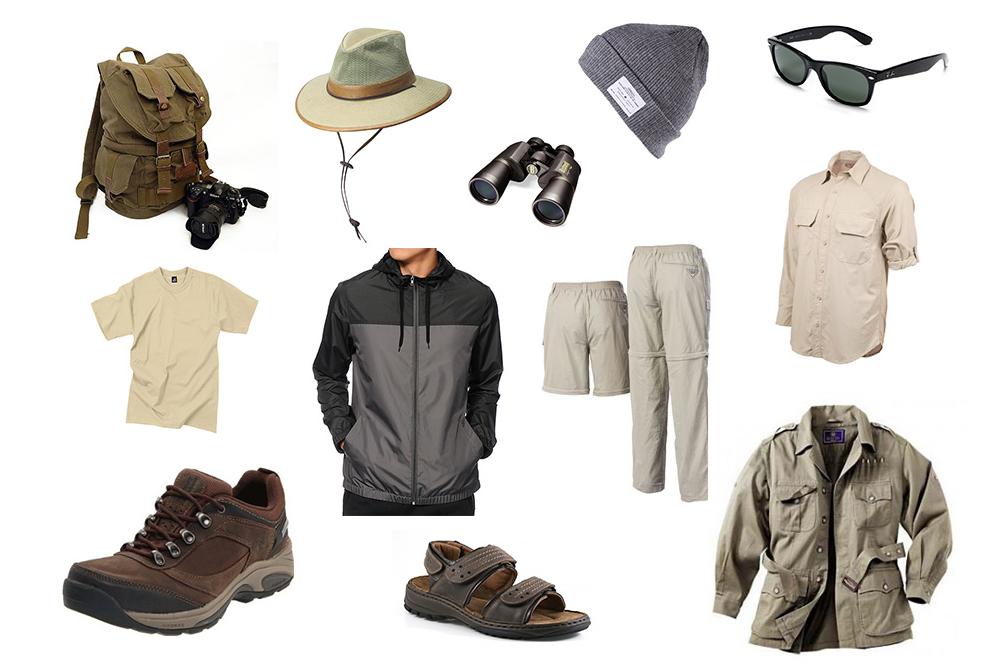
The right kit for volcano hiking in Rwanda is layered, waterproof, and built for mud: sturdy, waterproof, ankle-supporting boots; gaiters; a light rain shell; a warm mid-layer; gloves; and a hat. The summits can sit at single-digit temperatures once wind and cloud arrive, even when the trailhead is mild, and a single squall can change the character of the day. Pack for cold and wet conditions even if the morning dawns sunny.
What to Pack for a Safari

Clothing, Footwear, and Equipment

Wear moisture-wicking base layers and quick-drying trousers, and avoid cotton, which holds moisture and chills at altitude. Trekking poles help on both ascent and descent, and gardening gloves are useful on root-laced slopes where you will grab branches for balance. Carry at least two liters of water, high-energy snacks, sunscreen, insect repellent, lip balm, and a small first-aid kit with blister plasters, and cover your day pack against rain. Binoculars are valuable for birds, and a camera with a good zoom handles golden monkeys and distant views.

Extra Kit for Karisimbi

Karisimbi demands more. Bring a sleeping bag suited to near-freezing temperatures, a sleeping mat if you want extra insulation, thermal base layers, a warm hat, spare dry socks, a headlamp with spare batteries, and a down or synthetic insulated jacket. The pre-dawn summit push is the coldest part of the trip, so keep your warmest layers within easy reach.

The Luxury Touches Worth Arranging

This stage is where a specialist operator earns its fee. We can arrange a lodge-prepared picnic with a flask of hot chocolate for the summit, dry boots and socks waiting in the vehicle, a warm towel and a cold drink at the trailhead, and a massage booked for your return. None of this is standard on a budget package, and all of it changes how you feel at the end of a demanding day.

Plan Your Rwanda Safari

Start Planning a Private Gorilla Trek

Rwanda gorilla permits sell out months in advance. Secure your dates before the season closes.

Where to Stay Near the Volcanoes: Luxury Lodges in the Virunga Foothills.

The foothills around Kinigi hold a small cluster of the finest safari lodges in Africa, and each puts you within a short drive of the trailheads. Choosing between them is a matter of style rather than quality, and rates change by season, so we confirm availability and pricing when quoting.

Wilderness Bisate

Bisate Lodge

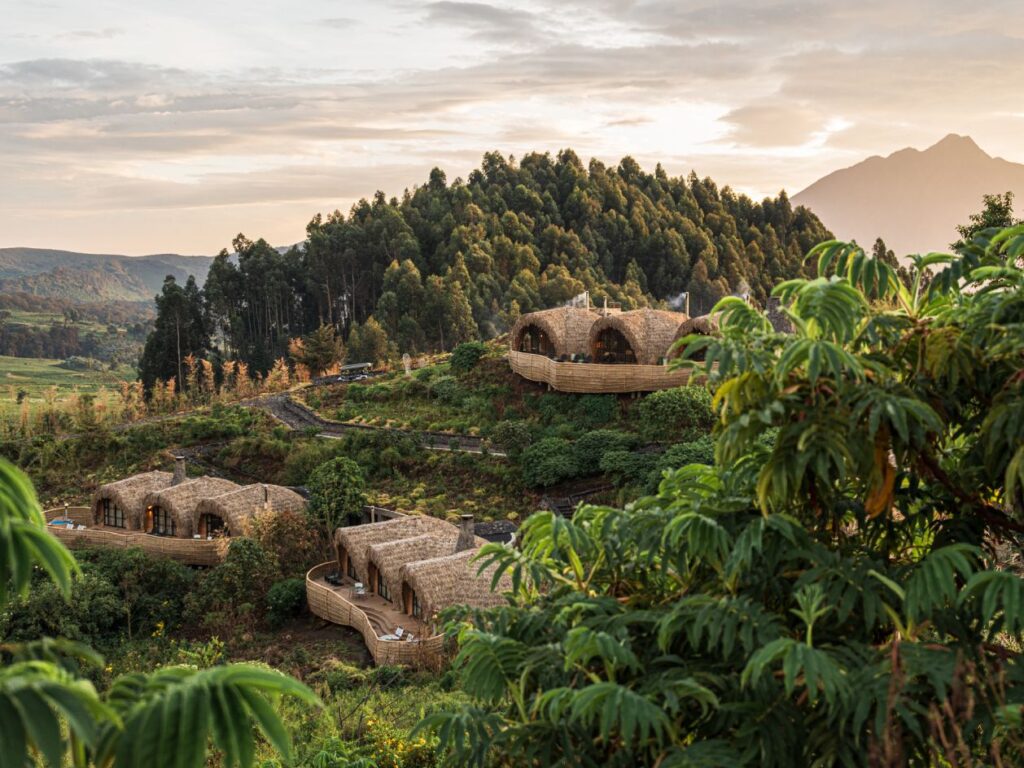
Bisate takes its name from the village on the lower slopes of Bisoke, and its circular thatched forest villas sit on a replanted hillside. It is the closest you can get to waking up on the mountain and is a favorite among honeymooners and photographers.

Singita Kwitonda Lodge

Singita Kwitonda Lodge

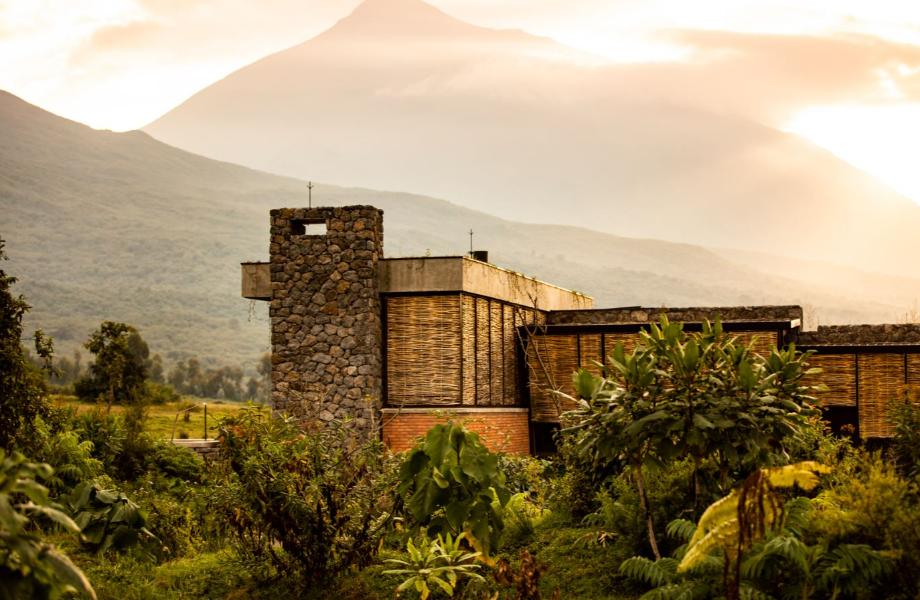
Kwitonda sits directly against the park boundary with uninterrupted volcano views, and its guiding team is strong on birds, ecology, and geology. It suits travellers who want serious naturalist company on both their rest days and hiking days.

Wilderness Sabyinyo Silverback Lodge

Wilderness Sabyinyo Lodge

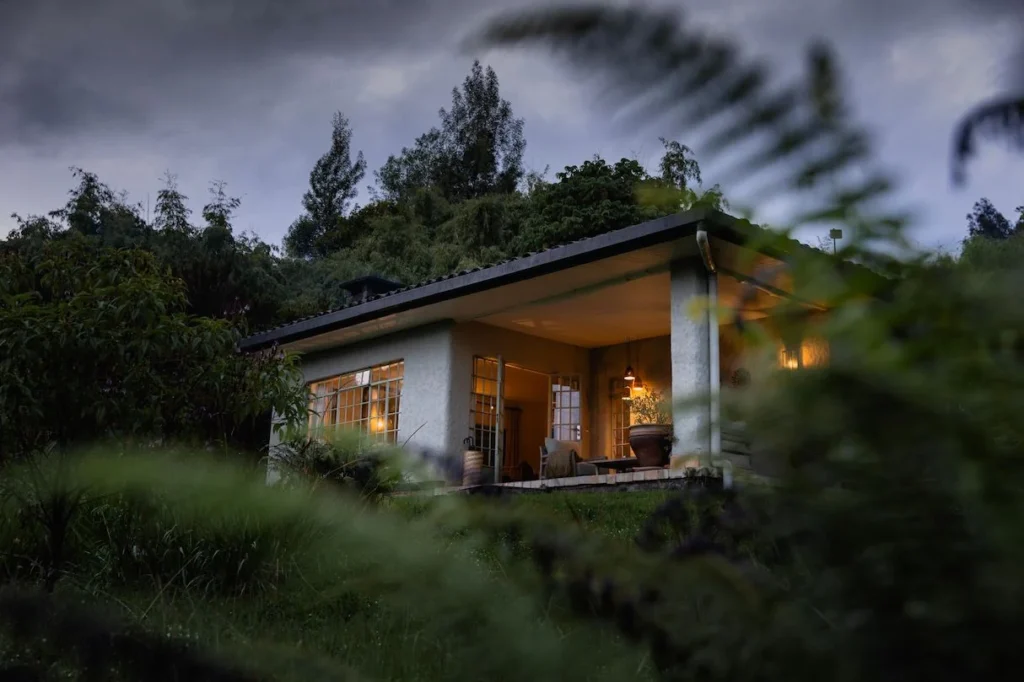
Community-owned and managed by Wilderness, Sabyinyo Silverback sits at the base of the range’s oldest volcano and runs on a genuine social-enterprise model. You can see how different lodge styles fit into different trips in our collection of Rwanda safari experiences and our guide to Rwanda safari styles.

Combining Volcano Hiking with Gorilla Trekking and Golden Monkeys

The best way to hike Rwanda’s volcanoes is to build them into a three-to-five-day stay in the Volcanoes region alongside a gorilla trek and golden monkeys, with a rest or low-effort day between the two hardest activities. Because the permits are separate, the sequence can be flexible, protecting the one booking that cannot move: the gorilla permit.

Golden Monkey Trekking in Rwanda: $100 Permit & Luxury Guide

On day one, arrive from Kigali, settle in, and rest. On day two, trek gorillas. On day three, hike Bisoke or do a gentler activity such as golden monkeys, depending on how your legs feel. On day four, consider the Dian Fossey graves hike or a boat excursion on Burera and Ruhondo. For Karisimbi, we usually add two days at the end, so the gorilla date is secured first and the expedition is scheduled around the best forecast. This order protects the irreplaceable activity and allows the volcano days to shift with the weather.

Gorilla treks are unpredictable: you may walk thirty minutes or five hours. A volcano climb the day before can leave your legs tired just when the trek demands the most, while a volcano climb afterwards is a pleasure because the key permit is already done. This is the detail that an itinerary built by someone who has watched hundreds of guests make this journey handles for you.

Golden Monkeys and Rest Days

Golden monkey trekking costs USD 100 per permit and works well as a recovery activity in the bamboo zone of the same volcanoes. The Musanze Caves and the twin lakes make equally excellent rest-day options, and all are available in our 5-day gorilla and golden monkey discovery safari.

Safety, Border Awareness, and Responsible Hiking

Volcano hiking in Rwanda is safe when done with registered guides and rangers, and the border positions on Bisoke, Karisimbi, and Muhabura are managed carefully so visitors remain on the Rwandan side at all times. Armed rangers accompany every group as a precaution against wildlife incidents and to maintain security on border mountains. Congo’s Virunga National Park has experienced repeated tourism suspensions, but those conditions do not affect hiking in Rwanda, and the simple rule is to stay on the marked route and never cross the rim.

Health and Altitude Safety

Altitude headaches, nausea, and fatigue are possible above 3,000 meters, even for fit hikers. Drink plenty of water, move at a steady pace, and tell your guide at once if you feel unwell. Good travel insurance that covers emergency evacuation is essential.

Leaving No Trace and Protecting Gorillas

Pack out everything you carry in, stay on the trail, and never feed or approach wildlife. Gorilla families range across the volcano slopes, so if you meet them, the 7-meter rule applies, and guides will lead the group away calmly. Mountain gorillas are vulnerable to human respiratory infections, so tell your guide before the hike if you have a cold or cough. This principle sits behind Rwanda’s approach to ethical wildlife tourism, which has become a global benchmark.

How Volcano Tourism Supports Communities

Every permit, porter fee, and lodge night feeds a conservation economy that has brought the mountain gorilla back from the edge of extinction. Rangers are funded, porters earn a direct income, and lodges employ hundreds of people from nearby villages. You can strengthen that effect by hiring a porter, tipping fairly, buying crafts from local cooperatives, and choosing lodges with documented community programs.

Insider Tips for Volcano Hiking in Rwanda

The most useful volcano knowledge comes from watching many hikes: how trails behave after rain, when clouds really lift, and how to pace a climb so you still have energy at the top. First, ask your driver to wait at the trailhead so that a vehicle is on hand if the weather turns or a hiker is struggling. Second, eat at the summit rather than waiting for the descent, because cold and hunger make the way down feel longer. Third, hike at a pace where you can still hold a conversation, since the guests who push hard in the first hour are the ones who struggle in the lobelia zone. Fourth, carry small notes for porter and ranger tips so you are not hunting for change at the end of a tiring day. Fifth, if a summit is clouded in when you arrive, wait ten or fifteen minutes before giving up, because cloud often lifts in bursts. Finally, schedule something easy for the evening, because a quiet dinner and an early night are worth more than a late activity after a volcano day.

Volcano Hiking Itineraries We Would Recommend

These are starting points rather than fixed products, and each can be extended with Nyungwe or Akagera and made fully private.

Three Days: Bisoke and Gorillas

Arrive in Kigali and transfer to Kinigi for the night. Spend day two on the gorilla trek, which is the fixed, permit-dependent element, and day three on the Bisoke hike before returning to Kigali in the evening. This is a compact, high-impact plan for travellers with limited time and good fitness, but it leaves no buffer for weather, so we recommend adding a night if possible.

Five Days: Gorillas, Golden Monkeys, and a Volcano

Exclusive Gorilla Trekking in Rwanda: The Private Trek Guide

Add a gorilla trek, golden monkeys, and either the Bisoke or the Dian Fossey graves hike to a comfortable Volcanoes stay, with the twin lakes or the Musanze Caves as a rest day. This is our most popular shape for first-time visitors because it balances effort and recovery.

Seven Days: Karisimbi and the Full Volcano Experience

For strong hikers, combine a gorilla trek and Bisoke with a two-day Karisimbi expedition, allowing a rest day before the climb and another afterwards. Finish with two nights on Lake Kivu or in Nyungwe to recover. This is the plan for travellers who want the volcano chapter of Rwanda to be a real adventure, not just a single day.

Plan Your Rwanda Safari

Start Planning a Private Gorilla Trek

Rwanda gorilla permits sell out months in advance. Secure your dates before the season closes.

Frequently Asked Questions About Volcano Hiking in Rwanda.

Which volcanoes can you hike in Rwanda?

You can hike Mount Bisoke, Mount Karisimbi, Mount Muhabura, and Mount Gahinga in Volcanoes National Park, plus the Dian Fossey graves trail and a combined Muhabura–Gahinga route. Bisoke is 3,711 metres, Karisimbi 4,507 metres, Muhabura 4,127 metres, and Gahinga 3,474 metres. Mount Sabyinyo, at 3,669 metres, is offered only when trail conditions allow, so confirm before you plan around it. All hikes are guided, require a Rwanda Development Board permit, and have a minimum age of 15.

How much does it cost to hike a volcano in Rwanda?

Permits cost about USD 75 for Bisoke and Gahinga, about USD 100 for Muhabura, and about USD 400 for Karisimbi for international visitors. Foreign residents pay less, with the Rwanda Development Board listing USD 60 for Gahinga and USD 250 for Karisimbi. The permit covers park entry and a ranger guide. A porter costs about USD 15 to 20 plus a tip, and transport, meals, and lodging are extra. We provide itemized quotations with no hidden fees.

What is the easiest volcano to hike in Rwanda?

Mount Gahinga, at 3,474 meters, is the gentlest summit hike, taking about six hours round trip through bamboo forest to a swampy caldera. The Lake Ngezi walk on Bisoke’s lower flank is easier still at about three to four hours round trip. Bisoke itself is moderate to strenuous but achievable for most fit travelers. The permit for Gahinga costs about USD 75, and the minimum age is 15.

How difficult is the Mount Karisimbi hike?

The Mount Karisimbi hike is strenuous, with a long climb to a camp at about 3,700 meters on day one and a pre-dawn summit push to 4,507 meters on day two. It is not technical, but altitude, cold, and sustained uphill walking make it demanding. Nights at camp can fall close to freezing, and frost or hail is possible on the upper slopes. The permit costs about USD 400, groups are limited to twelve, and the minimum age is 15.

How long does it take to hike Mount Bisoke?

The Mount Bisoke hike takes about six to seven hours round trip, including three to four hours up, time at the crater lake, and about two hours down. The day starts with a 7:00 a.m. briefing in Kinigi and a thirty-minute drive to the trailhead at roughly 2,700 meters. The summit stands at 3,711 meters. Strong hikers can finish in under five hours, while a relaxed pace is the norm for most visitors.

Do you need a guide to hike volcanoes in Rwanda?

Yes, every volcano hike in Rwanda must be guided. The trails run through protected wildlife habitat and along international borders, so rangers and guides accompany every group, and independent hiking is not permitted. The permit includes a ranger guide, and the maximum group size is twelve. Hiring a porter in addition is strongly recommended and supports local households. Our private guides also interpret the plants, birds, and conservation story along the route.

What is the best time of year for volcano hiking in Rwanda?

The best time is the dry seasons, June to September and December to February, when trails are firmer and summits are more likely to be clear. Hiking is possible all year because the park does not close for the rains, but March to May and October to November bring deep mud and frequent cloud. The Volcanoes region receives around 2,000 millimeters of rain a year. An early start improves the chance of a clear view in any season.

Can you combine volcano hiking with gorilla trekking?

Yes, and most of our guests do. The activities use separate permits and take place on different days, with gorilla trekking costing USD 1,500 and Bisoke about USD 75. We secure the gorilla date first, then schedule volcano days on flexible dates so they can move with the weather. A three-to-five-day stay in the Volcanoes region works well.

What is the minimum age for volcano hiking in Rwanda?

The minimum age is 15 years for Bisoke, Karisimbi, Muhabura, Gahinga, and the combined Muhabura–Gahinga route, according to the Rwanda Development Board. Gorilla trekking has the same age limit. Groups are limited to twelve hikers. Younger children cannot join these climbs, but they can enjoy the Musanze Caves, the twin lakes, and Buhanga Eco-Park. Anyone with heart, lung, or serious joint conditions should consult a doctor before booking.

Will Lake Kivu explode?

Scientists and governments monitor Lake Kivu precisely because of this question, and visitors face no meaningful risk during a normal stay. It is one of only three lakes known to be capable of a limnic eruption, alongside Lake Nyos and Lake Monoun in Cameroon, and it holds roughly 55 billion cubic meters of dissolved methane at around 300 meters depth. The lake is permanently stratified, with only the upper layer, down to about 70 meters, mixing. Rwanda extracts methane through projects such as the 26-megawatt KivuWatt plant near Karongi, which lowers gas levels while generating electricity. Rwanda and the DRC have signed management prescriptions to govern extraction safely.

Is volcano hiking in Rwanda safe given the border with Congo?

Yes, volcano hiking is safe on the Rwandan side. Armed rangers accompany every group, the routes stay inside Rwanda, and guides show you exactly where the border runs on the rim. Congo’s Virunga National Park has had repeated tourism suspensions due to regional security conditions, but these do not affect Rwanda’s Volcanoes National Park. The rule is simple: stay on the marked trail and follow your guide. We check the current position before every departure.

How far is the volcano trailhead from Kigali?

The volcano hikes start from Kinigi, about 100 kilometers northwest of Kigali, a drive of two to two and a half hours. From Kinigi, a further drive of about thirty minutes on a rough road reaches the Bisoke trailhead. We advise staying at least one night near the park rather than attempting a same-day round trip. Private transfers from Kigali International Airport are included in all of our itineraries.

How do I book a volcano hike and a luxury Rwanda safari?

Tell us your dates, group size, and fitness level, and we will check permit availability with the Rwanda Development Board and hold your lodge and vehicle. Your quotation sets out the payment schedule, and permits are secured in your name before you travel. Gorilla permits for peak months should be requested six to twelve months ahead, volcano permits four to six weeks ahead and Karisimbi at least two months ahead. You can reach us on WhatsApp or through our contact page.

What should I wear for a volcano hike in Rwanda?

Wear layered, quick-drying clothing, waterproof ankle-supporting boots, gaiters, a light rain shell, gloves, and a hat. The summits can reach single-digit temperatures with wind and cloud even when the trailhead is mild, and rain is possible at any time of year. Avoid cotton, which holds moisture and chills at altitude. Poles are strongly recommended for descents, and a waterproof cover protects cameras. For Karisimbi, add a sleeping bag, thermal layers, and a headlamp.

Ready to Trek? Permits are limited — plan early.

Plan Your Volcano Hiking Safari With Rwanda Gorilla Expeditions

Volcano hiking in Rwanda is best experienced as part of a considered journey rather than a standalone activity, and that is precisely what our team at Rwanda Gorilla Expeditions designs: private itineraries that combine the right volcano for your fitness, the gorillas, the golden monkeys and the finest lodges in the Virunga foothills, handled end to end by people who work in this landscape every day.

Learn more about the team on our About Us page, or start the conversation today. Tell us your dates and we’ll check permit availability within a few minutes. Message us on WhatsApp or use our contact page, and we will take it from there.