Other Wildlife in Akagera: Hippos, Crocodiles, Shoebills, Giraffes, and Birds.
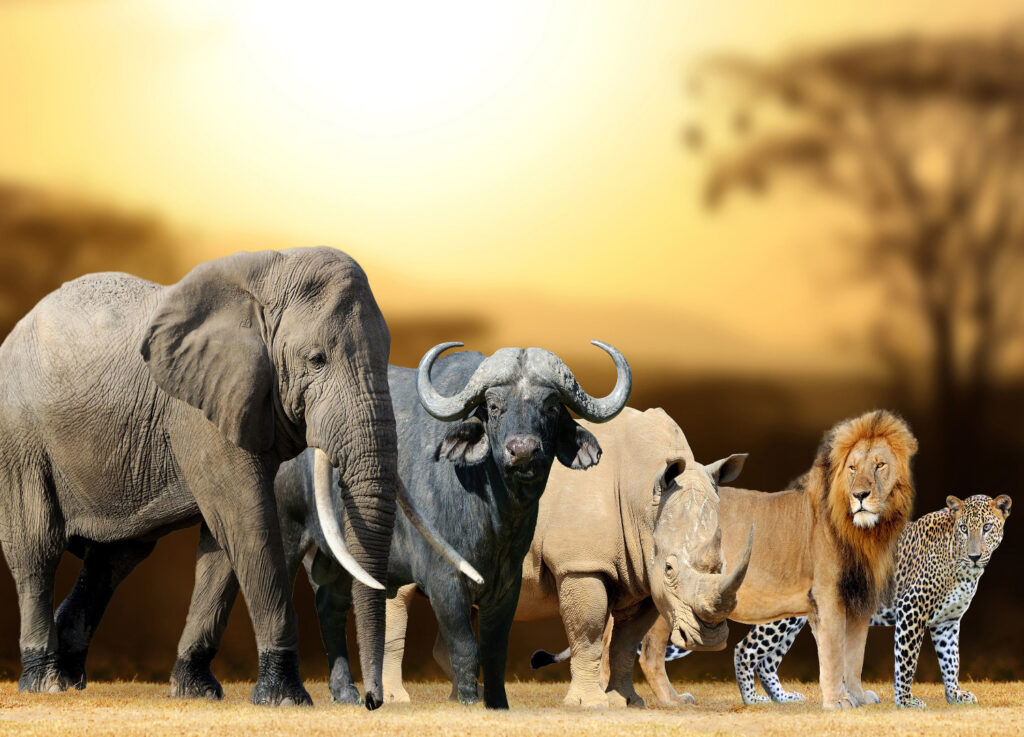
Beyond the Big Five, Akagera is home to some of the most varied wildlife in Rwanda, and it is the reason a two- or three-night stay never feels like a checklist. Hippos and Nile crocodiles are plentiful in Lake Ihema and the Kagera River, and the boat safari is the best way to see them, along with fish eagles, pelicans, and kingfishers. Giraffes, zebras, topi, eland, impala, waterbuck, roan antelope, and oribi graze the open country, and baboons and vervet monkeys are common near the lodges. Spotted hyenas and side-striped jackals can appear on night drives, along with white-tailed mongooses and genets.
Birders will find the park exceptional. Around the papyrus swamps and lakes, especially Lake Rwanyakazinga and Lake Shakani, the elusive shoebill stork is a prized sighting, and papyrus gonolek, swamp flycatcher, and African fish eagle are among the more accessible specialties. The park’s bird list exceeds 500 species, and the wetter months, when migrants arrive, are rewarding for keen birders. If birds matter to you, tell us when you inquire, and we will pair you with a guide who knows the swamps.
Akagera Game Drives, Night Drives, Boat Safaris, and Other Activities.
Akagera offers a broader menu of activities than a conventional game-drive park, and the best Big Five stays use several of them. A typical two-night stay includes an afternoon game drive on arrival, a full day or two of shorter drives on the next day, a Lake Ihema boat safari, and a night drive, with the order shaped by animal movements and the weather.
Game Drives: Half-Day and Full-Day
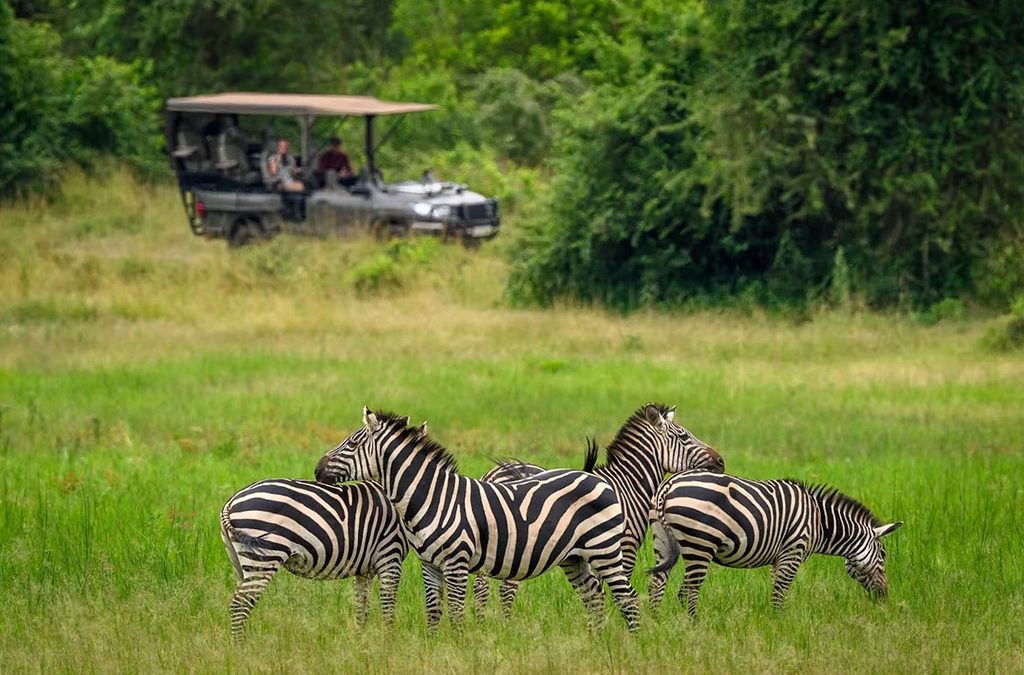
Game drives are the core activity, and in Akagera they can be done in a private vehicle with a driver-guide arranged through your lodge or operator, or in a park-operated vehicle. The park’s own price list shows a half-day drive of up to five hours at USD 200 per vehicle for up to seven people and a full-day drive at USD 350 per vehicle, with self-drive guides available at USD 25 for a half day and USD 40 for a full day. Private guided drives with a dedicated vehicle and an experienced guide are priced higher and are the way we recommend most guests see the park, because the guide, not the vehicle, determines how many animals you see. Full-day drives with a picnic lunch let you reach the northern plains, where lions, rhinos, and buffalo concentrate, and the early start, at the gate when it opens around six, gives you the best light and the best chance of seeing lions.
Night Drives for Leopards and Nocturnal Wildlife
Night drives last about two and a half hours and are priced at USD 40 per adult and USD 25 per child aged six to twelve in the park’s price list in park vehicles with a spotlight and a ranger. They are the best opportunity to see leopard, genet, civet, white-tailed mongoose, side-striped jackal, and the occasional hyena, and they add a dimension that day drives cannot. Night drives are generally open to guests staying inside the park and, at some lodges, nearby, so check your lodge arrangements when you book, as they are not available to day visitors.
Boat Safaris on Lake Ihema
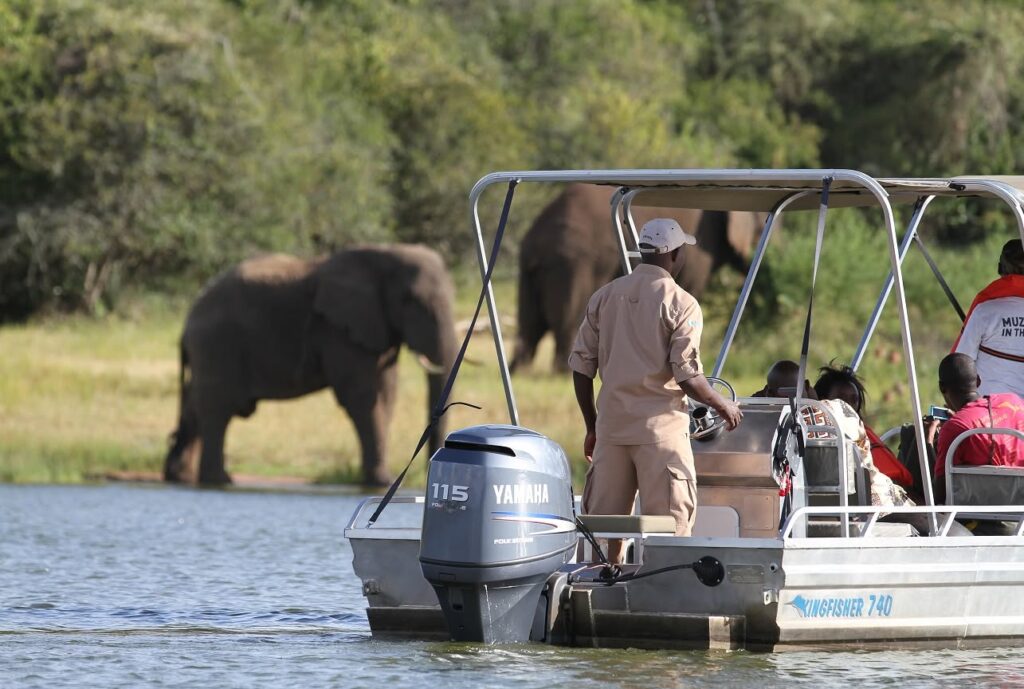
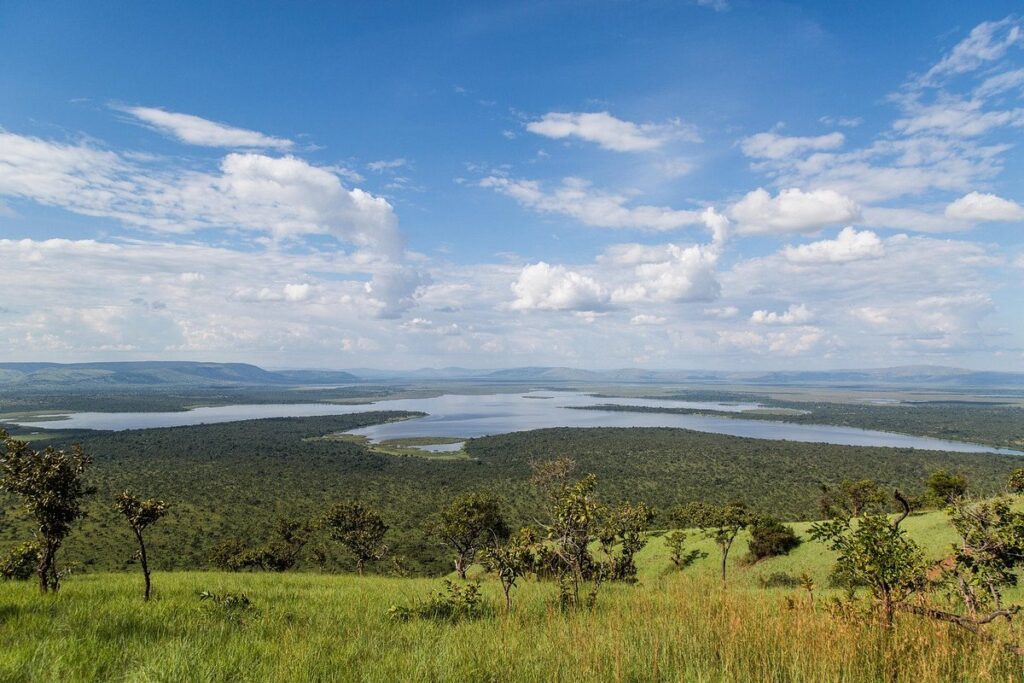
The one-hour scheduled boat trip costs USD 35 per adult in the morning or during the day, and USD 45 for the sunset departure, with lower rates for children. A private small boat for up to eleven people costs USD 200. From the water, you can get close to hippos, crocodiles, and waterbirds without disturbing them, and the sunset trip, with elephants sometimes visible on the shore, is among the most atmospheric hours of any Rwanda itinerary. We schedule a boat trip on the first afternoon for guests arriving from Kigali, and it is also a convenient option for travellers who would prefer to rest their legs.
Walking Safaris, Rhino Tracking, and Community Visits
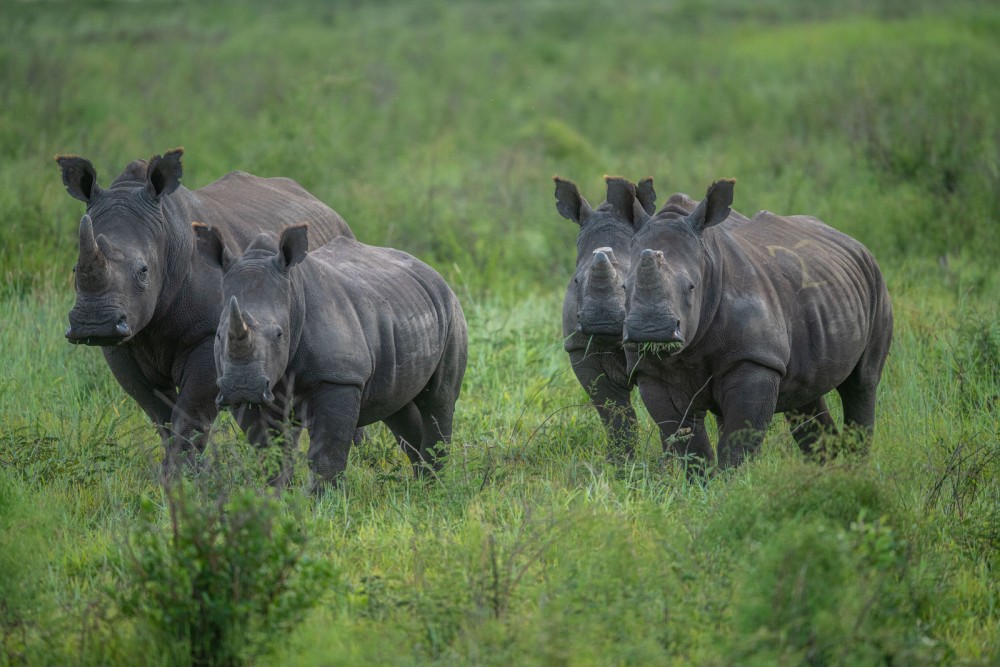
The park’s “Walk the Line” experience, a seven-kilometer guided walk along the fence line that takes about two hours, costs USD 30 per adult and needs a minimum of three people. It gives you a ground-level view of the landscape, as well as the plants and insects that vehicles miss, with an armed ranger. Rhino tracking with the monitoring team is available at some lodges and depends on the rhinos’ location and the team’s schedule, and it is not offered as a standard, bookable activity. Beyond the park, community visits to nearby villages and cultural experiences can be added.
Akagera National Park Fees and Safari Costs
Akagera’s entry fee is charged per person per day or night, and the park’s 2025 price list shows USD 100 per adult and USD 50 per child aged six to twelve for one day or night, USD 150 and USD 75 for two nights, and USD 200 and USD 100 for three nights, with children five and under free. Vehicles add USD 40 for a foreign-registered car or minibus, and the park is cashless, accepting MTN Mobile Money, bank transfer, and Visa or Mastercard. These are the park’s published figures, and fees are revised periodically, so we confirm the current price in writing in every quotation, and travelers should treat any older figure, including some on third-party websites, with caution.
Cancellation Terms and Booking Rules
Park activities have a clear cancellation scale: 20 percent of the amount due if you cancel more than 30 days before arrival, 30 percent if you cancel more than seven days before, 50 percent if you cancel in the last seven days, and 100 percent if you cancel once the activity is due to start. No-shows and late arrivals receive no refund, but the park will refund in full if it cancels for weather or operational reasons. Written notice is required. These conditions are one reason to buy travel insurance that covers non-refundable items.
How Much is a Rwanda Big Five Safari Really Costs
Park fees are a small part of the cost, while lodges, transfers, and guiding make up most of the bill. Lodges range from value properties at around USD 150 per person per night to ultra-luxury camps at USD 1,000 or more, with a private vehicle and guide adding to the cost. A realistic guide is that a seven-day Rwanda journey with gorillas, Akagera, and premium lodges costs roughly USD 8,000 to 15,000 per person, and a flying itinerary with helicopter or light-aircraft transfers costs more, often well into the five figures.
Best Time for a Big Five Safari in Rwanda
The best time for game viewing in Akagera is the long dry season from June to September and the shorter dry spell from mid-December to February, when the grass is short and animals concentrate around water. From June to September, the vegetation thins, the roads are firm, and wildlife is easiest to see, which is also the busiest period for lodges, so book early. Mid-December to February offers a second dry window with fewer vehicles. March to May and October to November are the rainy seasons, with taller grass, harder game viewing, and lower rates, though they are the best months for birds and for green scenery and photographers who prefer dramatic skies. Rain in Akagera is less constant than in the northern forests, and many travelers enjoy the quiet.

Because gorilla permits tend to sell out in the same dry months, we advise building your trip around the permit date, then fitting Akagera before or after it.
How Many Nights to Spend in Akagera
Two nights is the practical minimum for a Big Five safari in Rwanda, and three nights is ideal. With one night, you get at most two drives, and the park’s size and the animals’ habits mean you may see only part of what it holds. With two nights you can do an afternoon drive, a full day and a morning drive, a boat trip, and a night drive, which gives a fair chance at four or five of the Big Five. With three nights you can repeat the best areas, add a walking safari or a second night drive, and give yourself the margin that leopards and black rhinos demand. If your trip is mostly about gorillas and you have only two nights, we recommend keeping both in Akagera instead of splitting them with another park.
Where to Stay in Akagera: Luxury and Mid-Range Lodges.
The lodge sets the tone and the logistics of an Akagera stay, and the park offers four distinct options. Wilderness Magashi, in the quieter north on the shore of Lake Rwanyakazinga, is the ultra-luxury choice and the one we recommend to guests who want exclusivity and the best access to the northern plains, with game viewing and boat activities from camp, and it is reached by a long drive or by light aircraft. Ruzizi Tented Lodge, on Lake Ihema near the southern entrance, is a mid-range tented camp with excellent value and good food, and it is a good first Akagera base. Akagera Game Lodge, a hotel-style property on a hill with a swimming pool, is the most accessible option for families and groups, while Karenge Bush Camp, a simpler and quieter property in the north, is better suited to travelers who prefer a rustic bush experience.
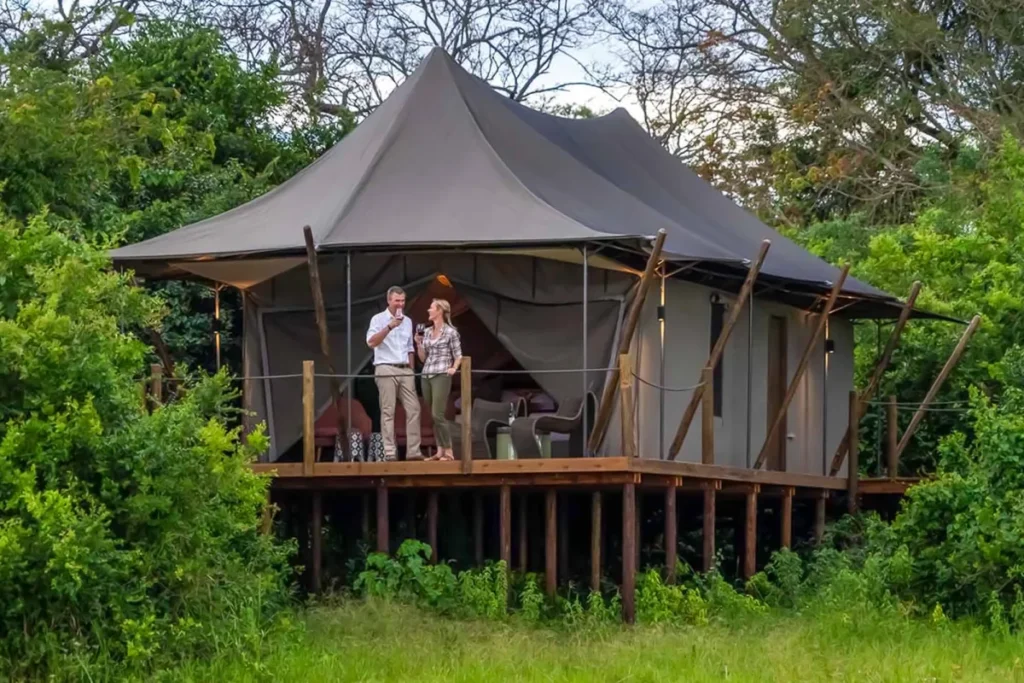
Wilderness Magashi
For travelers on a luxury itinerary, the usual pattern is a more modest or boutique stay in Kigali, two or three nights in Akagera at Magashi or Ruzizi, and then the four-star-plus lodges of the Volcanoes area, such as Singita Kwitonda Lodge, Wilderness Bisate, One&Only Gorilla’s Nest, and Wilderness Sabyinyo Silverback Lodge.
A Typical Day in Rwanda Big Five Safari
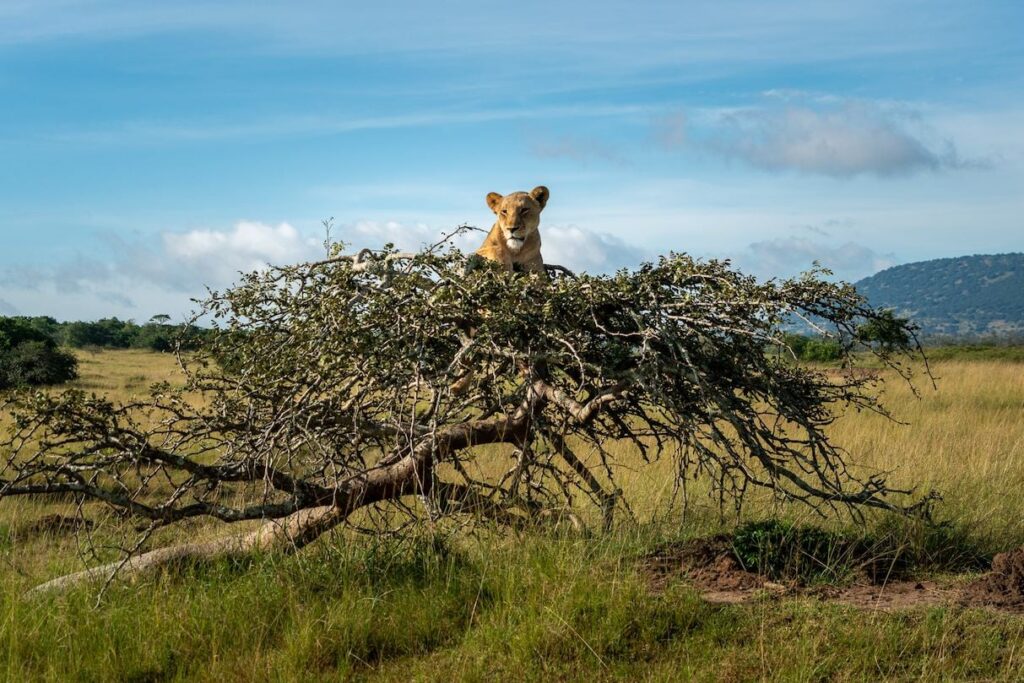
A typical Akagera day begins before dawn with tea and a light breakfast, and the first drive leaves at about 6:00 AM, when the gates open and the light is soft. Mornings are the best time for lions and for general activity, and your guide will head for the plains where the predators were located the previous evening. Around 9:30 or 10:00 AM, you return for a full breakfast or, on a full-day drive, you stop for coffee and continue. Midday is for rest, lunch, and a swim at the lodge, because animals shelter from the heat, and the afternoon drive leaves at about 3:30 PM. Late afternoon is when elephants and buffalo move toward water and when light is best for photography, and the day ends with sundowners at a viewpoint and a night drive, if you have booked one. On boat days, the sunset cruise on Lake Ihema takes the place of part of the afternoon.
Getting to Akagera: Road Transfers, Flights, and Combining With Gorillas
Most guests reach Akagera by private road transfer from Kigali, a drive of about two to two and a half hours in a four-wheel-drive vehicle with a driver guide, and this route is the simplest and most economical option. You arrive in time for an afternoon game drive, which is why we schedule it that way. Light-aircraft or helicopter charters can fly the Kigali-Akagera leg in about fifteen minutes, and they are worth considering for travelers with limited time, those staying at Magashi, or a luxury trip that is built around flying, as in our 9-day luxury flying safari. Self-driving is permitted, but we do not recommend it for Big Five safaris because a guide’s knowledge of animal locations is worth far more than the saving.
The journey from Akagera to Volcanoes National Park is about four to five hours by road, so most itineraries break the trip in Kigali for a night or schedule a flight. A natural sequence is Kigali and Akagera for two or three nights, then north to the gorillas, which gives your legs the savannah first and the demanding trek last. Some travelers prefer to trek first and relax in Akagera afterwards, which also works. Because gorilla permits are the scarcest element, we fix the permit date first and build the rest around it.
What to Pack for an Akagera Big Five Safari
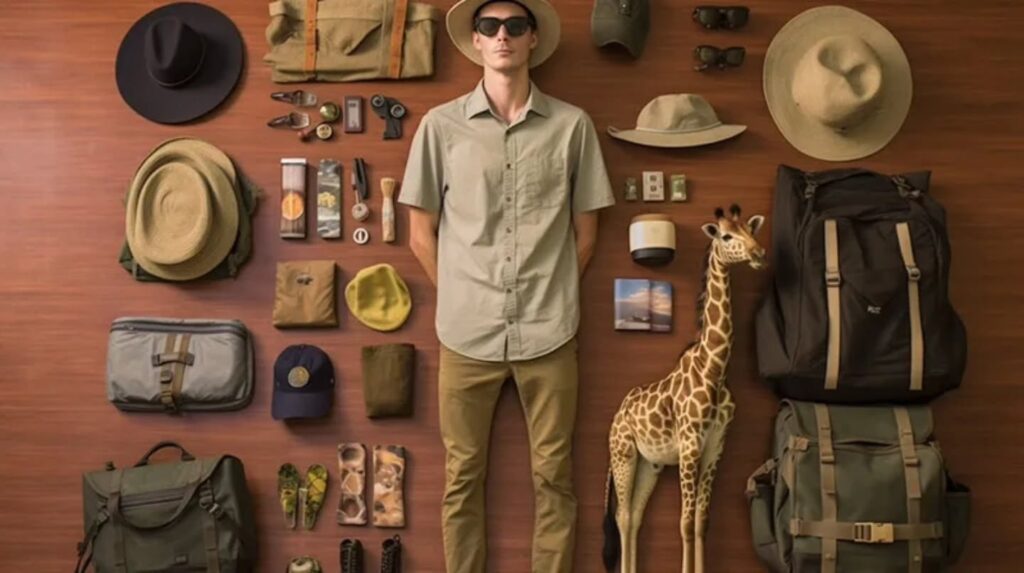
Pack light, neutral layers, a wide-brimmed hat, polarized sunglasses, and a good pair of binoculars, and bring the camera lens that makes the most of long distances. Mornings and night drives are cool, and midday is warm, so a fleece or windproof jacket, long trousers, and closed shoes are important. Neutral colors such as khaki, olive, and brown work best, while bright colors or black and navy, which can attract tsetse flies, should be avoided. High-SPF sunscreen, insect repellent, a refillable water bottle, and a head torch are useful. For photography, a lens of 300 millimeters or longer is recommended, a dustproof camera bag and spare batteries and cards are worth the weight, and a beanbag for the vehicle window is better than a tripod.
Health, Safety, and Malaria on a Rwanda Safari
Rwanda is one of the safest countries in Africa for visitors, and Akagera is a well-managed, fenced, and patrolled park, with ranger teams and a long record of safe tourism. The main health consideration is malaria, because Akagera is at a lower altitude than the northern highlands and the risk is higher there, so you should speak to a travel medicine clinic about prophylaxis six to eight weeks before departure and use repellent at dusk. A yellow fever certificate is required if you arrive from an endemic country, and routine vaccinations and hepatitis A and typhoid are commonly advised. On game drives, stay in the vehicle unless your guide says otherwise, keep your voice low, and never approach animals on foot. Travel insurance with medical evacuation is essential, as it is for any safari.