Birdwatching in Rwanda: The Complete Luxury Birding Safari Guide (2027–2028)

Birdwatching in Rwanda is one of the most rewarding birding experiences in Africa, with more than 700 recorded species, around 29 Albertine Rift endemics found nowhere else on earth, and the best sites, Nyungwe Forest for montane specials and Akagera National Park for savannah and wetland birds, separated by a single day’s drive. A well-planned 8- to 10-day birding safari can realistically produce 300 to 350 species, including the Rwenzori turaco, the red-collared babbler, Grauer’s swamp warbler, and, with luck and patience, the shoebill. What makes Rwanda unusual is not only the checklist but also the ease of seeing it: the country is small, the roads are good, the parks are well run, the lodges are among the finest on the continent, and the same journey that delivers your birds can also deliver mountain gorillas, chimpanzees, and the Big Five.

Birdwatching in Rwanda: 700+ Species, Top Sites & Luxury Tours

The Albertine Rift is the reason serious birders come here in Rwanda. This chain of mountains along the western arm of the Great Rift Valley holds more endemic birds than any other region of mainland Africa, and Rwanda protects a large share of them in Nyungwe National Park, a forest of about 1,019 square kilometers where around 27 to 29 Albertine Rift endemics live alongside more than 320 recorded species. A second great habitat, Akagera National Park in the east, adds the savannah grasslands, a lake, and papyrus-swamp avifauna of more than 490 species, and a third, the high-altitude wetland of Rugezi Marsh in the north, holds the endangered Grauer’s swamp warbler. Volcanoes National Park adds more than 200 species and around 17 of the Albertine endemics in bamboo and montane forest, and Gishwati-Mukura, the newest park, contributes more than 230 species to the list.

The country is safe and orderly, Kigali is a straightforward international gateway, drive times between the key birding sites range from two to six hours, and birding does not require the long, difficult transfers that define birding in many other African countries. Seasons matter less because the Albertine endemics are resident all year round, though the months from November to April add migrants and breeding plumage while the dry months of June to September make trails and game drives easier. If you have already seen the remarkable birding destinations of southern or eastern Africa, Rwanda gives you a new set of species in a new habitat. If you are new to birding, it gives you a first trip that is both comfortable and extraordinary. Our team designs private birding journeys around your target species, your pace, and your budget.

Permits are limited — spaces fill months ahead

Reserve Your Private Gorilla Trek

Speak with a Rwanda-based specialist today. We secure permits, match you to the right gorilla family, and plan every detail around your schedule.

No group departures · Private itineraries only · Direct Rwanda expertise

Why Rwanda Is One of Africa’s Best Birdwatching Destinations.

Rwanda is one of Africa’s best birdwatching destinations because it combines more than 700 species, a concentration of Albertine Rift endemics that cannot be matched elsewhere, a mosaic of habitats from rainforest to papyrus swamp to open savannah, and a standard of access and comfort that makes serious birding easy. The country is roughly the size of Wales, yet it spans altitudes from about 1,000 metres on the shores of Akagera’s lakes to more than 4,500 metres on the summit of Mount Karisimbi.

The Albertine Rift endemics

The Albertine Rift Endemic Bird Area is a global hotspot, and Rwanda holds about 29 of the endemic species recorded in the region. Nyungwe alone holds about 27 of these species, making it the most important site in the country and one of the best in Africa. These birds are resident throughout the year and do not migrate, so the chance of finding them is not governed by the season, although fieldcraft, guide quality, and patience matter a great deal. The Albertine Rift montane forest ecoregion is listed among the Global 200 conservation priorities, and birding here supports the same protected areas that safeguard mountain gorillas and chimpanzees.

A compact country with varied habitats

Rwanda’s birding habitats stack tightly together. Montane rainforest dominates the southwest, volcanic bamboo and Hagenia woodland the northwest, savannah and lakes the east, high-altitude papyrus marsh the north, and the shores of Lake Kivu the west. Wetlands cover about ten percent of the country, and the main protected ones, Rugezi, Akanyaru, and Nyabarongo, support large numbers of waders and waterbirds. A single journey can therefore sample a forest, swamp, lake, and savannah without a day lost to travel.

Rwanda compared with its neighbors

Uganda’s checklist is longer, at more than 1,000 species, and Uganda is the better choice for a pure species count. Rwanda is the better choice for a shorter, more comfortable, and more luxurious trip with the same Albertine specials and far shorter drives. Many serious birders combine the two, using Rwanda for Nyungwe and Akagera and Uganda for Bwindi, Queen Elizabeth, and the shoebill at Mabamba, and our multi-country safaris are built to make that crossing seamless.

Access, safety, and infrastructure

Rwanda’s roads between the parks are well maintained, its parks are among the best managed in Africa, and the park authorities and African Parks provide trained guides at every major site. Lodge quality is exceptional, and the major properties operate to a standard that is rare in birding destinations. For travellers who want serious birding without sacrificing comfort, there is no better combination in East Africa.

Nyungwe National Park: Rwanda’s Premier Birdwatching Destination

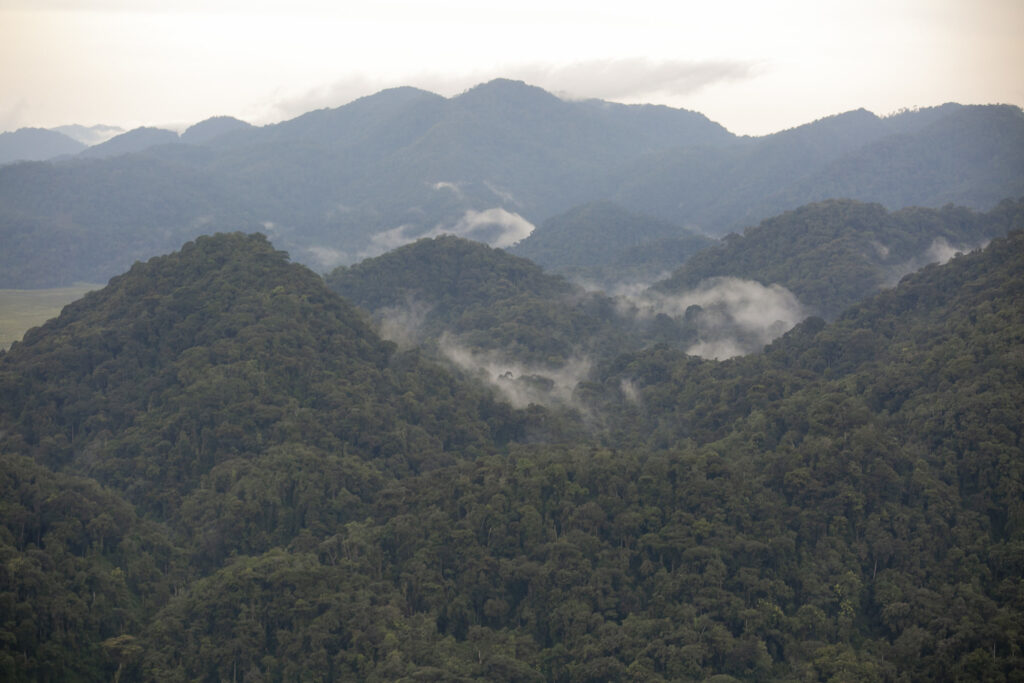
Nyungwe National Park is Rwanda’s premier birding destination, an ancient montane rainforest in the southwest of the country with more than 320 bird species, around 27 to 29 Albertine Rift endemics, and a canopy that has stood largely unbroken for millennia. It is managed by African Parks and is the single most important stop on any Rwanda birding itinerary.

Nyungwe Forest National Park: Rwanda's Chimp Trekking Guide

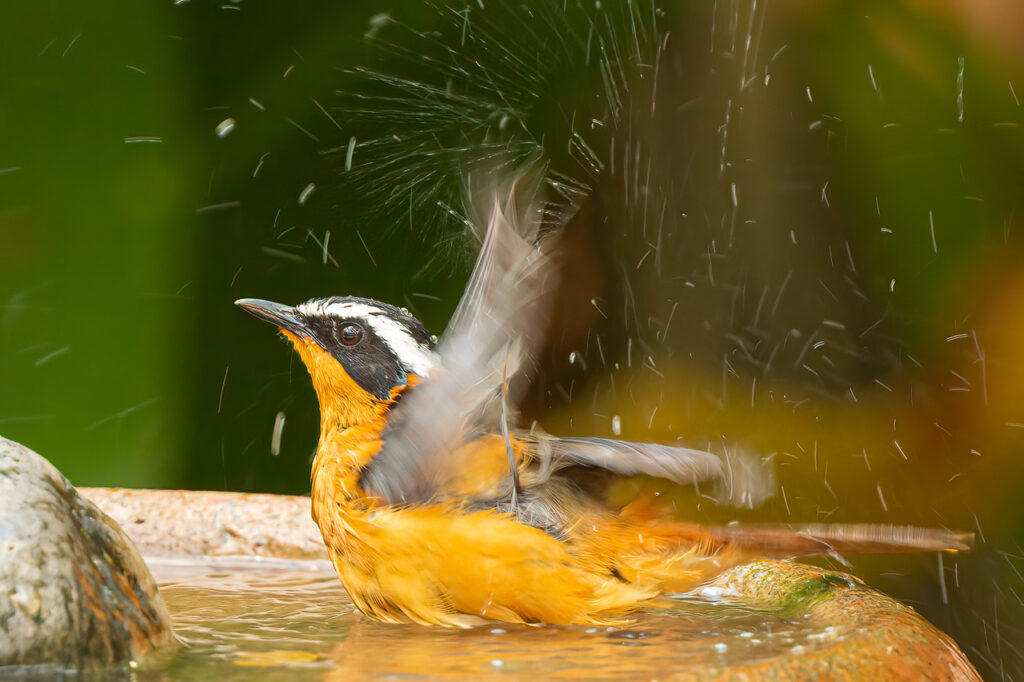
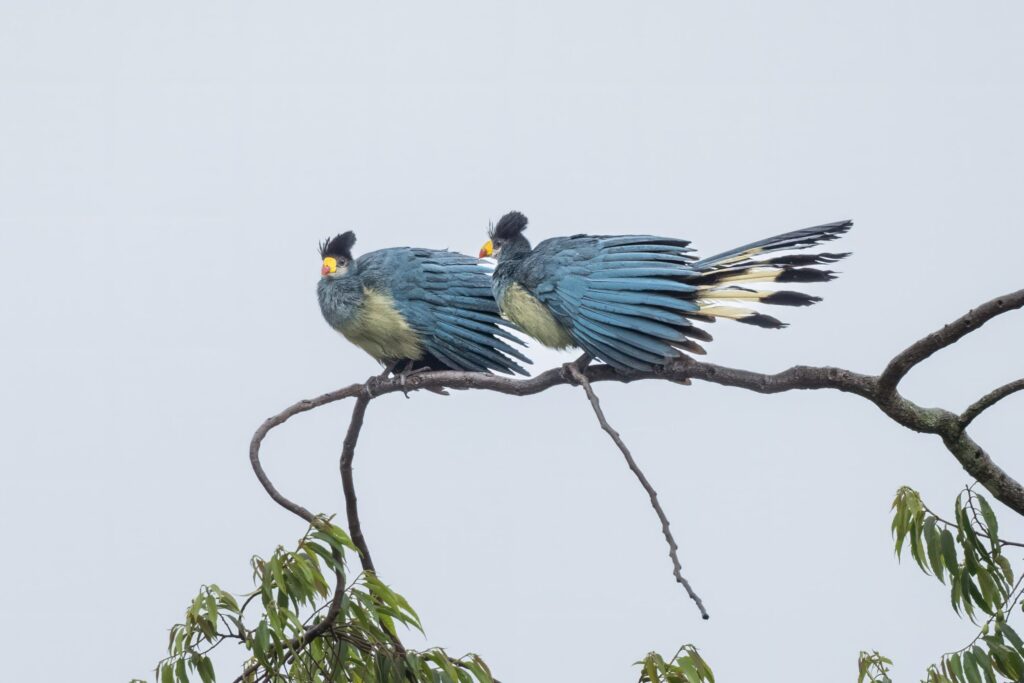
The headline species include the Rwenzori turaco, a spectacular crimson-winged turaco that is a regular sight at the forest edge; the Great Blue Turaco; the Regal sunbird; the Kungwe apalis; the Albertine owlet; the Handsome spurfowl; the Purple-breasted sunbird; and the Rwenzori batis. The most sought-after of all is the red-collared mountain babbler, which travels in noisy flocks and is notoriously unpredictable, and whose presence in Rwanda is one of the great draws for serious listers. Other Albertine endemics worth targeting include Shelley’s crimsonwing, the Stripe-breasted tit, the Strange Weaver, Archer’s ground robin, and Chapin’s flycatcher.

How birding works in a rainforest like Nyungwe

Forest birding is slower and more demanding than savannah birding. Visibility is limited; many species stay in the canopy or the dense understory, and the best results come from a patient, experienced guide who knows the bird calls. We strongly recommend arranging a specialist bird guide in addition to the park’s ranger guide, because the difference in results is dramatic. Mixed feeding flocks, the dense bands of birds that move through the forest together, are the key to the endemics, and a birding guide who can read the forest will locate them. Early mornings are best, with the first two to three hours after sunrise, which in Rwanda is close to 6:00 AM all year because of the country’s equatorial position, and these hours are the most productive.

The best trails and sites

The Uwinka visitor center area and its trail network are the main base for forest birding; the canopy walkway gives a rare view into the treetops where turacos and sunbirds feed, and the forest edge and tea plantations around Gisakura are excellent for turacos and for relaxed birding with a coffee in hand. The marshy valleys within the park hold the elusive swamp specialists, including Grauer’s swamp warbler, and the trails that lead to them are among the most rewarding in the park. Birding Guides tailor routes to the target species and to the current fruiting of key trees, which is why we always recommend giving yourself at least two full days.

Costs and logistics at Nyungwe

Guided nature walks and birding activities at around USD 40 per person for international visitors, with park entry and the canopy walkway charged separately, and chimpanzee trekking at USD 150. Because fees have changed since African Parks took over management, we confirm every figure at the time of quotation. A specialist birding guide is arranged privately and is typically a day rate on top of park fees. Nyungwe is five to six hours from Kigali by road, so we recommend a minimum of two nights and ideally three for a serious birder.

Where to stay in Nyungwe

One&Only Nyungwe House, on the edge of the forest beside a working tea estate, is the benchmark luxury lodge, with private guides, a spa, and some of the best food in southern Rwanda. Several mid-range lodges near Gisakura serve travelers with smaller budgets. The best birding lodges are those with a garden or forest edge, because the first and last hours of the day can be spent on the terrace with a cup of tea and a pair of binoculars.

Akagera National Park: Savannah, Lakes and the Shoebill

Akagera National Park is Rwanda’s best birding site for savannah, lake, and papyrus-swamp birds, with more than 490 species recorded, and it is one of the few places in the country where the rare shoebill, among the most sought-after birds in Africa, can be seen. Covering about 1,085 square kilometers in the east of the country, it is managed by African Parks and is also Rwanda’s only Big Five park, which makes it an ideal companion for a birding safari.

The shoebill and the papyrus specialists

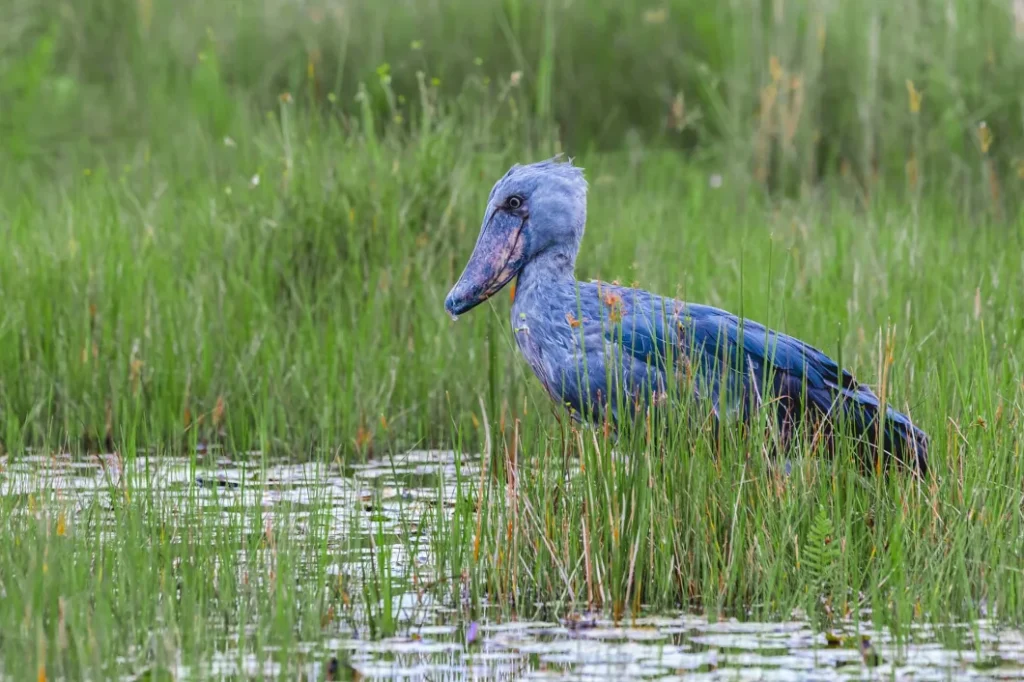
Shoebill the star of Akagera's wetland

The shoebill is the star of Akagera’s wetlands, though you can never guarantee sightings, which demand patience and a skilled boat guide. The swamps around Lake Ihema and the papyrus-fringed channels are the key areas, and a morning boat trip is the best way to search for it. Other papyrus specialists include the Papyrus gonolek, the Papyrus canary, the White-winged warbler, Carruthers’s cisticola, and, with luck, the African finfoot, a secretive water bird that skulks along the edges of the lake.

The savannah and woodland species

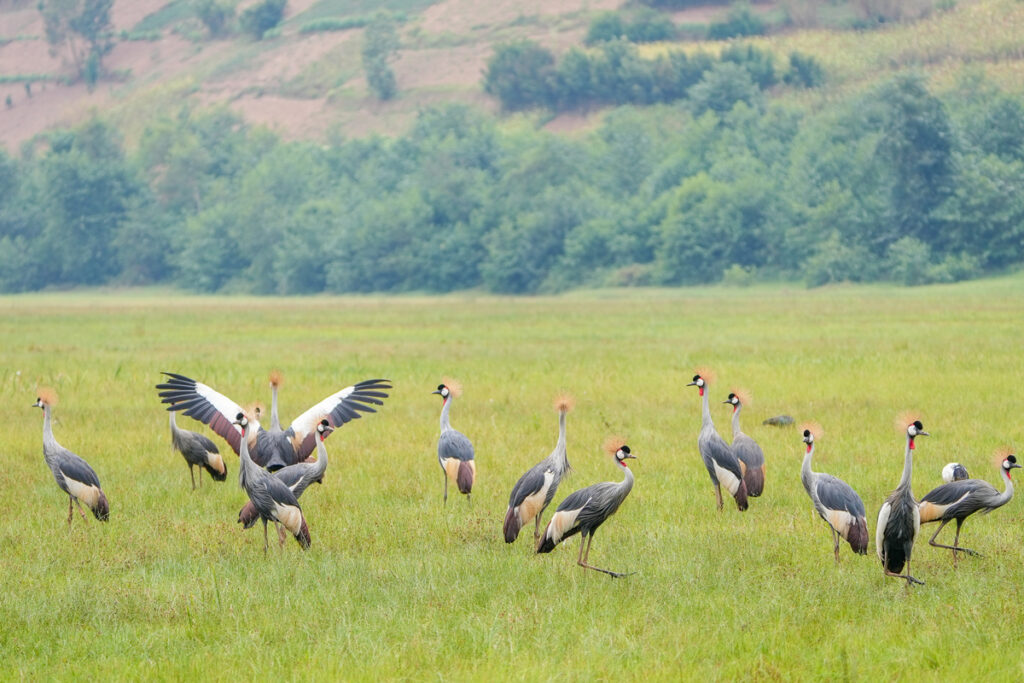
Away from the water, Akagera’s open grassland and acacia woodland host a different range of birds. The red-faced barbet and Souza’s shrike are among the specials sought by visiting birders, and the park is also home to grey crowned cranes, African fish eagles, a wide range of raptors, bee-eaters, hornbills, rollers, and starlings. Game drives in the northern sector around Lake Rwanyakazinga and the Mutumba hills provide access to the woodland species, and night drives, which cost about USD 40 per person, add owls and nightjars to the list.

Akagera fees and activities

International visitors pay about USD 100 for a one-day entry, USD 150 for two nights and USD 200 for three, with no additional charge beyond the third night for stays of up to a week. Boat trips cost about USD 35 for the morning and USD 45 for the sunset departure, with a private boat costing about USD 180. For those who want a dedicated park guide, guide fees are about USD 25 for a half day and USD 40 for a full day.

Where to stay in Akagera

Family Rwanda Safari Style

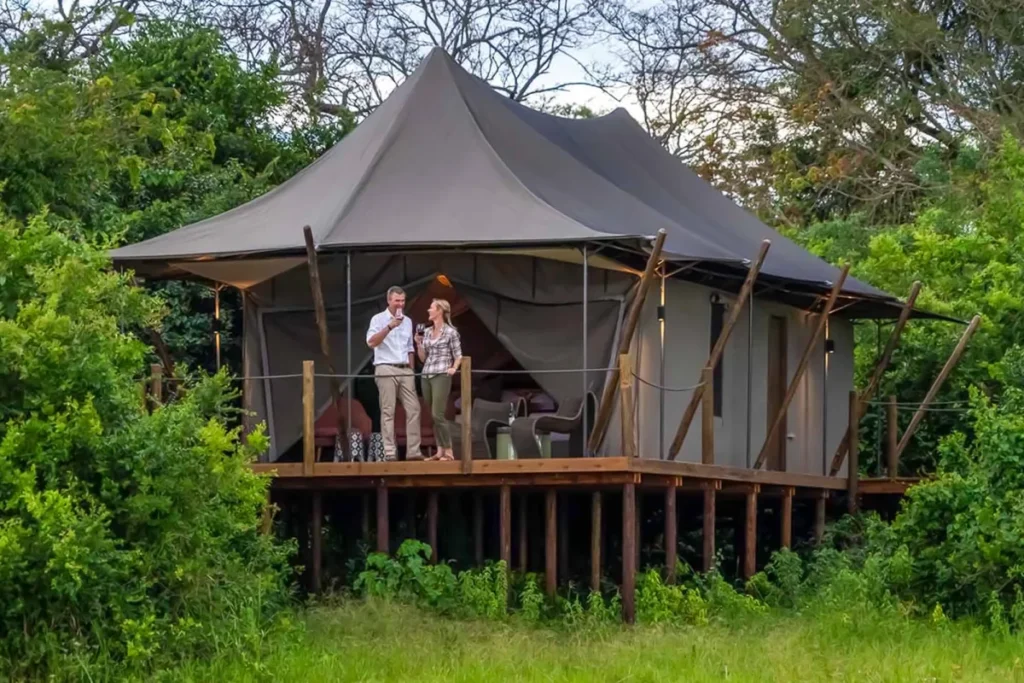
Wilderness Magashi Camp on Lake Rwanyakazinga is the finest luxury camp in the park and puts you in the quietest sector, while Ruzizi Tented Lodge on Lake Ihema gives easy access to the best boat and shoebill areas. Both are excellent bases for birding, and luxury camps in Akagera typically cost between USD 700 and USD 1,500 per person per night. Two nights is the minimum for a birder, and three is better if the shoebill is a priority.

The best time for Akagera birding

The dry season from June to September concentrates wildlife around the lakes and makes game drives easier, while the wetter months from November to April bring migrants and breeding plumage and are widely regarded as the best time for birds. Both seasons are productive, and the choice depends on whether you want the best chance of mammals or the largest number of bird species.

Volcanoes National Park and Musanze: Montane Birding Around the Gorillas

Volcanoes National Park is home to more than 200 recorded bird species, including around 17 that are endemic to the Albertine Rift, and its bamboo, Hagenia woodland, and montane forest make it the easiest place in Rwanda to add endemic birds to a trip focused on mountain gorillas. Birding is not the park’s main purpose, but the species list is strong, and the lodges at the foot of the volcanoes put you in excellent habitat before breakfast.

Birds you can see on gorilla and golden monkey days

The Rwenzori turaco, the handsome spurfowl, and a range of montane sunbirds, warblers, and flycatchers are regularly seen on the forest trails during gorilla and golden monkey treks, and guides who know the birds will pause to point them out when the group is waiting at the trailhead. Trekkers should not expect the focused birding of Nyungwe, but a keen observer will quietly add a dozen endemics to the list without altering the schedule. A gorilla permit costs USD 1,500 and a golden monkey permit USD 100, which means a birder who is also a primate lover can combine the two on the same journey.

Dedicated birding at the lodges and eco-parks

Views From Singita Kwitonda

The gardens and forest edges of the luxury lodges near Kinigi are excellent for sunbirds, bishops, and tropical boubous, and the best properties have guides who can lead early-morning bird walks on request. Buhanga Eco-Park near Musanze, a small sacred forest with trails and cultural significance, is a pleasant and easy site for forest birds and a good use for a rest day. Hikes such as the climb to the Dian Fossey site and the crater lake on Mount Bisoke, which cost around USD 75, pass through habitat that holds mountain specials, and the long trail to the summit of Karisimbi, at about USD 400, reaches the moorland species that live above the bamboo.

Where to stay

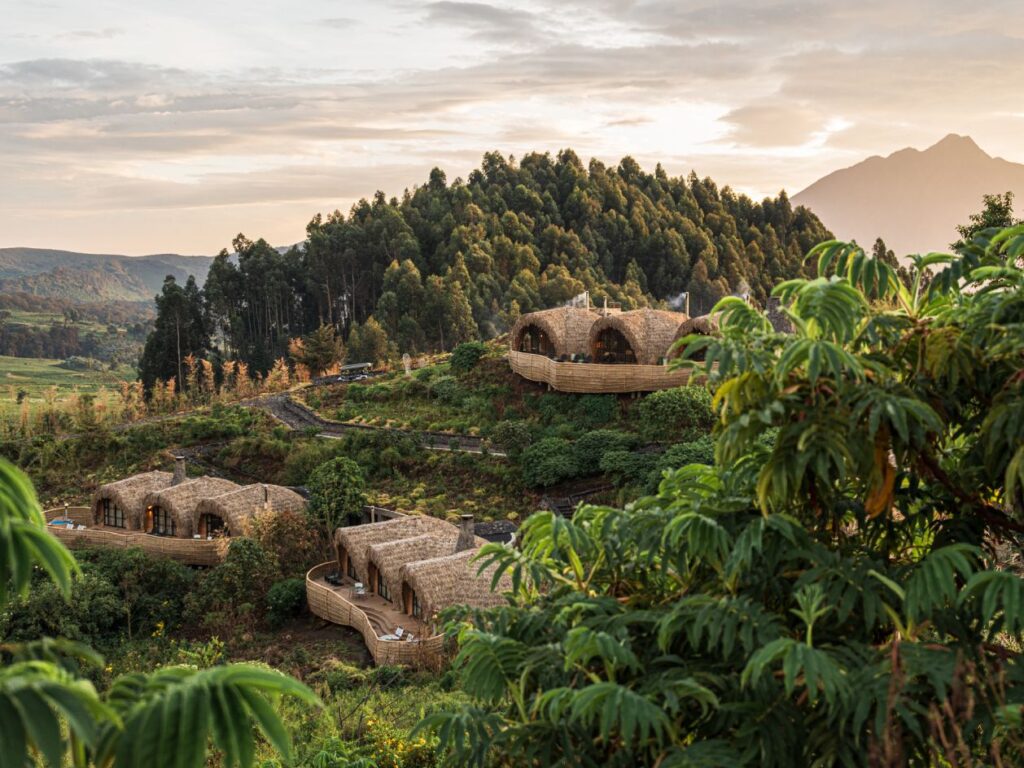
Wilderness Bisate, Singita Kwitonda Lodge, and One&Only Gorilla’s Nest are the benchmark properties, at roughly USD 2,400 to USD 3,800 per person per night on an inclusive basis, while Wilderness Sabyinyo Silverback Lodge and similar lodges begin at around USD 800 to USD 1,200. All of them have gardens that reward a quiet hour at dawn.

Plan Your Rwanda Safari

Start Planning a Private Gorilla Trek

Rwanda gorilla permits sell out months in advance. Secure your dates before the season closes.

Rugezi Marsh, Lake Kivu, and Rwanda’s Wetland Birding Sites

Rugezi Marsh is Rwanda’s most important high-altitude wetland and a Ramsar site, and it is the best place in the country to look for the endangered Grauer’s swamp warbler, a bird that exists only in the Albertine Rift and depends on papyrus and sedge marsh. It lies in the north near the twin lakes of Burera and Ruhondo, which makes it a natural addition to a stay at Volcanoes, and it is one of the least visited sites on any Rwanda itinerary, which is part of its appeal.

Birds in Rugezi Marsh

Birding at Rugezi

The marsh sits at altitude and is cool, often misty and open, with boardwalks and tracks that allow access to the edges. Its key birds include Grauer’s swamp warbler, the White-winged swamp warbler, the Papyrus canary, Grauer’s rush warbler, and a range of waterbirds. A local guide is essential because the key species are skulking and respond to precise knowledge of their calls and habitat.

Other wetlands and the Lake Kivu shore

Rwanda’s other major wetlands, including the Akanyaru and Nyabarongo systems, support large numbers of waders, herons, ibises, cranes, and migratory waterbirds, and Lake Kivu’s shoreline and islands add cormorants, kingfishers, and sunbirds to the list. In Kigali, Nyarutarama Lake is a small but productive urban site that makes a good first morning for a birder who has just landed. A night or two on the shore of Lake Kivu between Nyungwe and Volcanoes gives time for a relaxed boat trip and some leisurely lakeside birding.

Gishwati-Mukura National Park

Gishwati-Mukura, Rwanda’s newest national park, protects two remnant montane forests, Gishwati and Mukura, and has recorded more than 230 bird species, including Albertine Rift endemics such as the Purple-breasted sunbird, the Rwenzori batis, and the Regal sunbird. It is smaller, quieter, and less visited than Nyungwe, and it offers a pleasing contrast for birders who have already explored the larger forest. It was opened to visitors in December 2020, and the Gishwati concession is operated by the Wilderness and the Forest of Hope Association.

Rwanda’s Most Wanted Birds: Target Species and Where to Find Them

Rwanda’s most wanted birds are the Albertine Rift endemics of Nyungwe, the shoebill and papyrus specialists of Akagera and Rugezi, and a handful of flagship species such as the Rwenzori turaco and grey crowned crane that even non-birders remember. Knowing which site holds which bird is the foundation of a good itinerary.

The Albertine Rift endemics

Nyungwe is the place for the vast majority of them. The Rwenzori turaco is the easiest and most spectacular, often seen near the Uwinka and Gisakura areas and in volcanoes. The regal sunbird, the purple-breasted sunbird, and the blue-headed sunbird are the jewel-like nectar feeders of the forest edge. The Kungwe apalis, the Rwenzori batis, the Stripe-breasted tit, and Chapin’s flycatcher are small, fast-moving species that are found with mixed flocks. The Albertine owlet and the handsome spurfowl are shy and require early starts and local knowledge. The Red-collared mountain babbler is the real prize, a noisy and nomadic species that can take days to locate and that makes any sighting memorable.

The forest giants and canopy species

The Great Blue Turaco is a huge, spectacular forest bird that is found in Nyungwe, and hornbills, barbets, and a range of forest fruit-eaters feed in the canopy. The canopy walkway provides a rare eye-level view into this world, and a morning spent on it, with a knowledgeable guide, can add species that are almost impossible to see from the ground.

The Great Blue Turaco

Wetland and papyrus specialists

The shoebill is the headline species of Akagera’s swamps, and it is worth stating plainly that it is never guaranteed. Papyrus gonolek, Papyrus canary, the white-winged warbler, Carruthers’s cisticola, and the African finfoot are the supporting cast. At Rugezi, Grauer’s swamp warbler is the target. Allow time and use a boat in Akagera and a guide in Rugezi, and your chances improve substantially.

Savannah and open-country birds

In Akagera’s savannah and woodland, the red-faced barbet, Souza’s shrike, grey crowned crane, and African fish eagle are among the most sought-after species, with a rich supporting cast of raptors, bee-eaters, rollers, hornbills, bustards, and starlings. Night drives add owls and nightjars, and in the wet season the park is full of migrants.

Migrants and seasonal birds

Between roughly October and April, Palearctic migrants from Europe and Asia swell the list, including swallows, wagtails, warblers, waders, and raptors, while intra-African migrants move in response to rainfall. The Albertine endemics are resident and do not follow these movements, but the lakes and wetlands of the east come alive with visitors during the northern winter.

Best Time for Birdwatching in Rwanda

The best time for birdwatching in Rwanda depends on what you want, but November to April offers the largest species list, breeding plumage and migrants, while June to September offers the easiest trails and game drives, and the Albertine Rift endemics can be seen in every month. Rwanda sits close to the equator and at altitude, so temperatures are mild throughout the year, and the main seasonal variable is rainfall.

Best time for gorilla trekking.

November to April: migrants and breeding plumage

The wetter months bring Palearctic migrants to the lakes and wetlands, trigger breeding behavior in many resident species, and produce the greenest landscapes. Birders who prioritize a long species list often choose this period, and the cost of lodges is lower than at the June to September peak. The trade-off is mud on the forest trails, and the wettest period is March to May, when proper rain gear is essential.

June to September: the dry season

The long dry season offers firm trails, clear mornings, and the best game viewing at Akagera, because animals concentrate around the lakes. It is also the peak tourism period, with lodges at their highest rates and gorilla permits selling out many months ahead. Birders who want to combine serious birding with gorillas and the Big Five will often find this season the most efficient.

December to February: the short dry season

A second dry window offers optimal conditions across all parks with fewer visitors than the northern summer, though Christmas and New Year are busy. Migrants are present, breeding is under way, and trails are generally manageable, which makes January and February a quietly excellent time to visit.

Time of day

Birding in Rwanda is best in the first two to three hours after sunrise, which is close to 6:00 AM all year, and the last hour before sunset, close to 6:00 PM. Midday is quiet in the forest and hot on the savannah, and a long lunch and a rest are part of the rhythm of a rewarding birding day.

Birdwatching Safari Cost in Rwanda: Fees, Guides, and Lodges.

A luxury birdwatching safari in Rwanda costs roughly USD 8,000 to USD 16,000 per person for eight to ten days, excluding international flights, with the range driven mostly by lodge choice and by whether gorillas are included. These are planning figures for two travelers sharing a private vehicle with a specialist guide, and they are not formal quotations.

Park fees and activity costs

The park fees for a birding safari are modest compared with the lodges. Akagera costs international visitors USD 100 for a day and USD 200 for three nights; boat trips cost about USD 35 to USD 45; night drives about USD 40; Nyungwe guided walks and birding activities about USD 40; chimpanzee trekking about USD 150; golden monkey trekking USD 100; and a gorilla permit USD 1,500.

Specialist guide and vehicle

A specialist birding guide is arranged privately and is typically a day rate on top of the park’s own guides, and a private safari vehicle with a driver is the standard way to link the parks. Together they typically account for a significant share of the budget, but for a serious birder they are the best money spent on the trip, because a skilled guide can double the number of species you see. Private road transfers between parks cost around USD 250 to USD 400 per leg if booked separately and are included in a full itinerary.

Lodges

Bisate Lodge

Lodges are the largest cost. The signature gorilla lodges at Volcanoes charge about USD 2,400 to USD 3,800 per person per night, while luxury camps in Akagera and Nyungwe typically cost USD 700 to USD 1,500. A birding-focused journey that omits gorillas and spends more time at Nyungwe and Akagera is therefore substantially cheaper than a primate-led journey of the same length, and a birder who wants the best of both can add a short Volcanoes stay at the end.

Tips and extras

Budget USD 300 to USD 800 per person for tips, porters, and small extras on a longer journey, with guides and rangers typically receiving USD 20 to USD 50 per person per day and drivers USD 15 to USD 25 per day. Visa costs are USD 50 for a single-entry thirty-day visa and USD 100 for the East Africa Tourist Visa if you are also visiting Uganda or Kenya.

Plan Your Rwanda Safari

Start Planning a Private Gorilla Trek

Rwanda gorilla permits sell out months in advance. Secure your dates before the season closes.

Getting to and Around Rwanda’s Birding Sites: Flights, Visas, and Distances.

Almost every international visitor reaches Rwanda’s birding sites through Kigali International Airport, and from there a private vehicle with a driver-guide links the key sites, with drive times of two to six hours. Rwanda does not have a safari-style domestic air network, so road transfers dominate the logistics, which makes the order of your stops important.

Flights and visas

Kigali is served by RwandAir and by major international carriers, including KLM, Brussels Airlines, Qatar Airways, Turkish Airlines, Ethiopian Airlines, and Kenya Airways. Most visitors pay USD 50 for a thirty-day single-entry visa, available on arrival or online through Irembo, and the East Africa Tourist Visa at USD 100 covers Rwanda, Kenya, and Uganda for ninety days if you enter through the issuing country. Passports should be valid for at least six months, and you should confirm current rules with Rwanda’s immigration authority before you travel.

Distances and drive times

Akagera’s southern gate is about two to two and a half hours from Kigali, Volcanoes is about 110 kilometers and two to two and a half hours, Gishwati-Mukura is about three hours to the west, and Nyungwe is about 225 kilometers and five to six hours. Between Nyungwe and Volcanoes by the Lake Kivu road, the drive is seven to eight hours without stops, and we always break it with a night on the lake. Rugezi Marsh is a short drive from the Volcanoes lodges and can be done as a half-day excursion.

Logical routes for a birding safari

The classic route runs from Kigali to Akagera for savannah and wetland birds, then west across the country to Nyungwe for the Albertine endemics, then north along Lake Kivu to Volcanoes, finishing with gorillas, golden monkeys, and Rugezi Marsh. Birders who want to maximize forest time can reverse the route or omit Akagera, and our 10-day best of Rwanda’s national parks safari follows this circuit.

A Typical Birding Day in Nyungwe and Akagera: Timings and What to Expect

A typical birding day in Rwanda begins before dawn, includes a long, quiet midday and ends with a second outing in the late afternoon, and understanding that rhythm helps you judge how many days you really need. Because Rwanda sits on the equator, daylight is almost constant at about twelve hours, with sunrise close to 6:00 AM and sunset close to 6:00 PM in every month.

A day in Nyungwe

The day begins with a pre-dawn breakfast at about 5:15 AM and a short transfer to the Uwinka area or the forest edge at Gisakura, where the first light brings turacos and sunbirds to the treetops. The first three hours are the most productive and are spent walking slowly on a chosen trail with your specialist guide, stopping for every flock and call. By about 10:00 AM activity slows, and a late breakfast or a rest at the lodge is the sensible response. The afternoon outing, from about 3:30 PM, targets a different habitat, perhaps the swampy valley floor or the tea-plantation edge, and ends at dusk with a drink on the terrace and the day’s list. If chimpanzee trekking is included, it replaces the morning outing and starts earlier, often at about 5:30 AM.

A day in Akagera

An Akagera day begins even earlier, because the best game viewing and bird activity occur at first light. Guests leave the camp at about 6:00 AM for a morning game drive through the woodland and grassland, where barbets, shrikes, and raptors are active, returning for a late breakfast. The midday hours are hot and quiet, so guests should spend them resting in the shade of the lodge. At about 3:00 PM the boat trip on Lake Ihema or the afternoon drive begins, and the golden light around the papyrus is the best time to search for the shoebill and the Papyrus gonolek. A night drive, which costs about USD 40 per person, can follow dinner and adds owls and nightjars to the list.

How fieldwork changes with the weather

Rain and mist change the rhythm of forest birding, and in the wet months a guide will often wait for a break in the weather, when birds emerge to feed in bursts. A light waterproof hat, a hat with a brim, and patience are essential, and the most memorable sightings often come in the first dry hour after a storm. In the dry season, the challenge is the opposite, because dust and heat make the savannah quiet by mid-morning, so the early start becomes even more important.

Pace and the number of days you need

A realistic birding pace is two outings per day with a rest in between, which means a serious birder needs at least two full days in Nyungwe, two in Akagera, and one at Rugezi or Volcanoes. Adding the travel days on either end gives you the 8-10 days we recommend for your first birding trip in Rwanda. Shorter trips can be rewarding, but they sample a single habitat rather than the full variety that makes the country special.

Choosing a Birding Guide and Birding Responsibly in Rwanda.

The single most important factor in a successful Rwanda birding safari is a skilled birding guide, because Albertine endemics in dense forest are found by sound and local knowledge far more than by sight. We arrange specialist guides in addition to the park’s rangers, and the difference in results is dramatic.
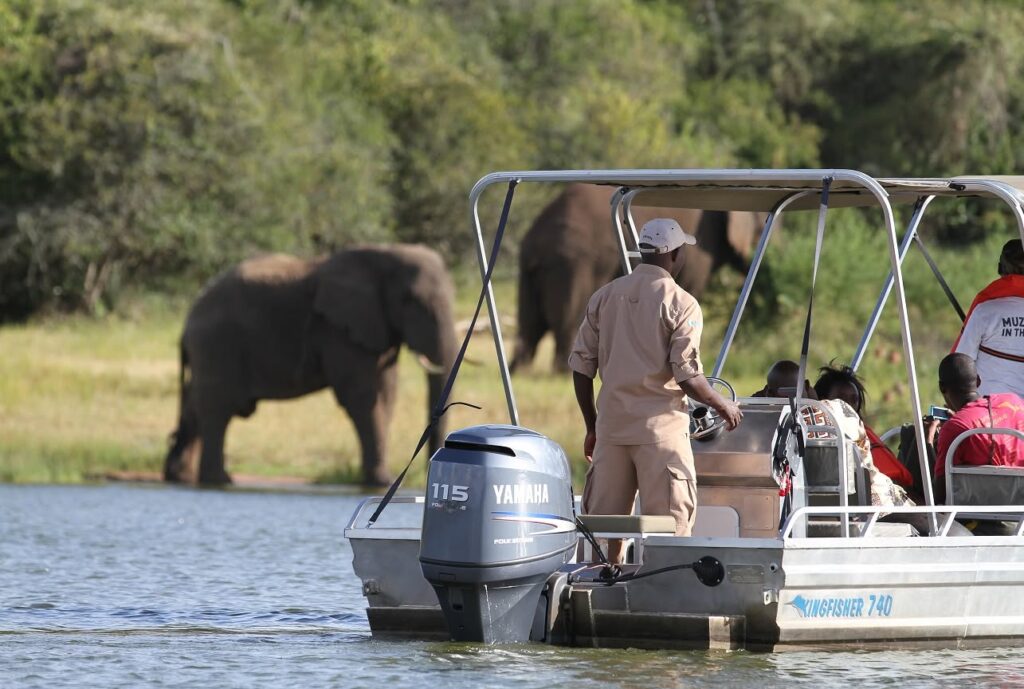
Boat Safari on Lake Ihema

A park ranger-guide knows the trails, the wildlife, and the rules, but a specialist bird guide knows the calls, the feeding trees, and the flock patterns that turn a quiet forest into a productive one. In Nyungwe in particular, a skilled guide can find the red-collared mountain babbler flock that an unaided visitor would walk past. We match guides to your level, whether you are a lister chasing every endemic or a keen amateur who wants a relaxed and knowledgeable companion.

Responsible birding means keeping a respectful distance, never disturbing nests, staying on trails, and avoiding excessive playback of recorded calls, especially in small forest reserves where birds can be stressed by repeated use. Park rules govern conduct and guides will explain them. Flash photography is discouraged for birds and prohibited near primates, and drones are not allowed in Rwanda’s parks. For photographers, a lens that reaches at least 400 millimeters is useful in the forest and on the lakes, and patience matters more than equipment.

Group size and pace

We keep birding groups small, usually two to four guests, because large groups make forest birding harder and noisier. A sustainable and productive pace includes two outings per day, one at dawn and one in the late afternoon, with a long midday rest. We never schedule a long transfer on the morning of a key target.

What to Pack and What to Book in Advance for Rwanda Birding Safari

What you pack should be built around binoculars, layers, and waterproofs, and what you book in advance should begin with the lodges and any gorilla or chimpanzee permits you intend to use, because these sell out before anything else. Birders have specific needs that general safari guides rarely cover.
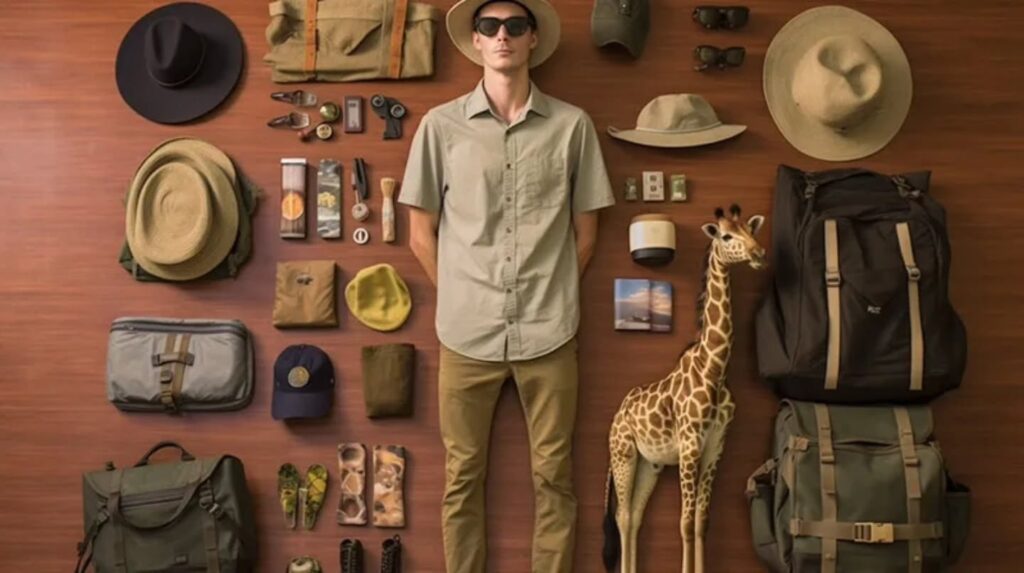
What to Pack and Wear for a Ngorongoro Crater Safari

What to book and when

For June to September and Christmas and New Year, book lodges and gorilla permits six to twelve months ahead, and chimpanzee permits as soon as your itinerary is fixed, since only around two dozen are issued each day. A specialist birding guide, especially a well-regarded one, should be reserved as early as your dates are set. Akagera boat trips and night drives are easier but should still be booked before arrival.

Optics and field gear

Pack 8×42 or 10×42 binoculars, which are the standard choice for forest and savannah, and consider a spotting scope for Akagera’s lakes. A field guide such as Birds of East Africa, a bird-list app on your phone, and a small notebook are all useful, and a headlamp helps on night drives and pre-dawn starts. Lens cloths and silica packets are valuable in the damp of Nyungwe.

Clothing

For Nyungwe and Volcanoes, pack dark neutral long trousers and long-sleeved shirts, a lightweight waterproof jacket, waterproof ankle-supporting boots, gaiters, thin gardening gloves, a hat, and insect repellent. For Akagera, bring light cotton layers in neutral tones, a wide-brimmed hat, sunscreen, and a warm layer for early morning. Avoid bright colors, which can disturb wildlife and birds.

Rwanda-specific tips

Rwanda bans single-use plastic bags, so avoid packing them. On the last Saturday morning of each month, the national community work day, Umuganda, brings most of the country to a standstill for several hours, so avoid scheduling long transfers at that time. Rwanda drives on the right, uses European-style two-pin sockets at 230 volts and runs on Central Africa Time, and lodges accept cards, though cash is useful for tips.

Health, Safety, and Practical Advice for a Rwanda Birding Trip

Rwanda is regarded as one of the safest and best-organized countries in Africa for visitors, but a safari still requires basic health preparation, and the most useful step is to see a travel-medicine clinic six to eight weeks before departure. Guidance from the US Centers for Disease Control and Prevention is a valuable complement to your clinic’s advice.

Vaccinations and malaria

A yellow fever certificate is required if you arrive from or transit a country with yellow fever transmission, and hepatitis A, typhoid, and tetanus are commonly recommended. Malaria risk is lowest at the high altitudes of Nyungwe and Volcanoes and higher in Akagera and Kigali, so prophylaxis is usually advised for itineraries that include the savannah.

Safety and conduct

Kigali is clean and orderly, the main roads between the parks are well maintained, and birding takes place on established trails with trained guides. Take care on wet forest trails, wear boots with excellent grip, and follow your guide’s instructions near water and swamps. If you are also trekking gorillas, the rules on distance, health, and conduct apply, and you must not trek if you are unwell.

Combining Birdwatching with Gorillas, Chimpanzees, and the Big Five

One of Rwanda’s exceptional advantages for birders is that a single trip can combine world-class birding with mountain gorillas, chimpanzees, and the Big Five, and the same itinerary can serve a serious lister and a non-birding partner without compromise. This is how most of our luxury guests experience the country.

A short volcano stay at the end of a birding journey adds gorilla trekking at USD 1,500 per person and golden monkey trekking at USD 100.

Chimpanzees and the canopy walk

Nyungwe’s chimpanzee trekking, at about USD 150 per person, and the canopy walkway fit naturally into a birding stay, since both take place in the same forest. Our luxury Rwandan primate safari pairs Nyungwe with volcanoes and lets you tailor it with a specialist bird guide.

Akagera’s Big Five

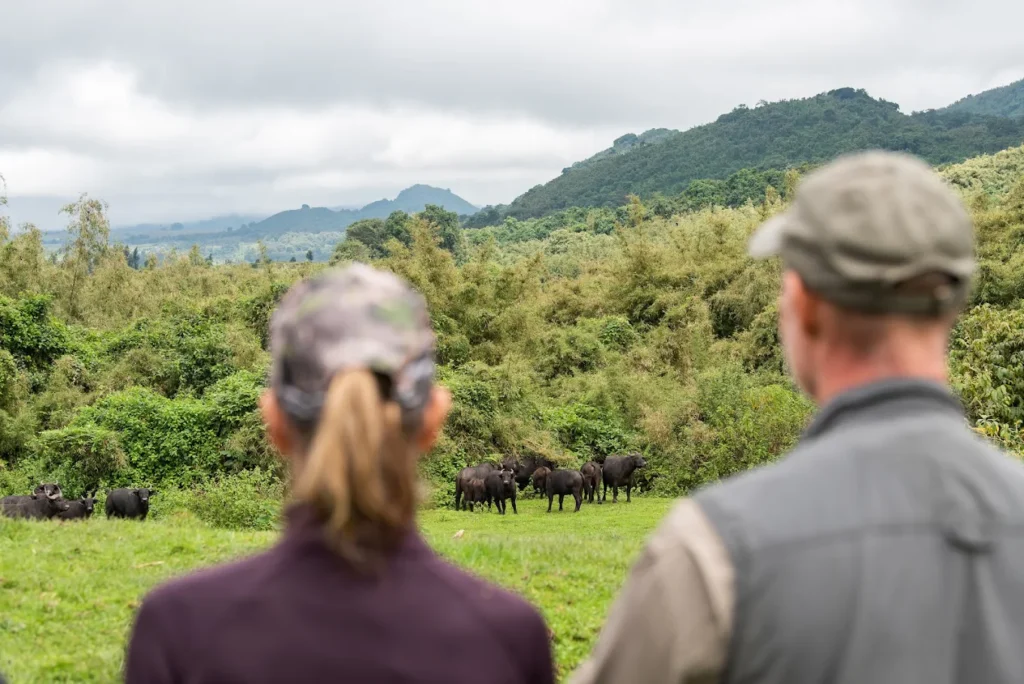
Akagera adds lions, elephants, buffalo, leopards, and rhinos to the bird list, with boat safaris on Lake Ihema giving a different perspective on the park. Explore our Rwanda safari styles to see how you can build photographic and conservation journeys around these opportunities.

Birding across the border in Uganda and Kenya

Rwanda combines well with Uganda, where Bwindi Impenetrable Forest, Kibale, and Queen Elizabeth National Park add further Albertine endemics and a longer checklist, and with Kenya and Tanzania for classic savannah birding in the Masai Mara and Serengeti.

Common Mistakes to Avoid When Planning a Rwanda Birding Safari

The most common mistakes in planning a Rwanda birding safari are allowing too little time in Nyungwe, relying on a general guide rather than a specialist, and building the route so that the longest drive falls on the day of a key target. All three are easy to avoid with a little foresight.

Too little time in Nyungwe

A single night in Nyungwe is rarely enough, because the long drive in and out consumes most of two days and the best birding is at dawn. Plan at least two full days, and three if the Red-collared mountain babbler and the other endemics are priorities.

Over-reliance on ranger-guides alone

Park rangers are knowledgeable and professional, but a specialist bird guide transforms the experience, so book one early. The best guides are often reserved months ahead.

Rushing the shoebill

The shoebill rewards patience, and a single morning boat trip may not be enough. Allow at least two nights in Akagera and two boat outings if the shoebill is a priority, and be prepared for the possibility that it may not appear.

Packing the itinerary too tightly

Birding is physically and mentally tiring, and the best trips build in rest. A long lunch and a quiet afternoon are part of the rhythm of a rewarding birding day, and a rest day at Lake Kivu between Nyungwe and Volcanoes is a pleasing way to recharge.

Plan Your Rwanda Safari

Start Planning a Private Gorilla Trek

Rwanda gorilla permits sell out months in advance. Secure your dates before the season closes.

Frequently Asked Questions About Birdwatching in Rwanda.

How many bird species are there in Rwanda?

Rwanda has more than 700 recorded bird species, including around 29 Albertine Rift endemics. Nyungwe National Park holds more than 320, Akagera National Park more than 490, Volcanoes National Park more than 200, and Gishwati-Mukura National Park more than 230. A focused 8-10 day trip can realistically record 300 to 350 species. Uganda’s list is longer, at more than 1,000, but Rwanda’s is concentrated into a much smaller and more accessible area.

What is the best place for birdwatching in Rwanda?

Nyungwe National Park is the best place for birdwatching in Rwanda, with more than 320 species and around 27 to 29 Albertine Rift endemics. It is an ancient montane rainforest of about 1,019 square kilometers in the southwest, managed by African Parks. Akagera National Park is the best site for savannah, lake, and papyrus birds, with more than 490 species, including the shoebill. Rugezi Marsh is the best site for Grauer’s swamp warbler, and Volcanoes National Park offers montane species around the gorilla lodges. Most birders visit at least Nyungwe and Akagera, and many add Volcanoes.

When is the best time for birdwatching in Rwanda?

The best time for birdwatching in Rwanda depends on your priorities, but November to April offers the longest species list because of migrants and breeding plumage. June to September is the dry season, with firmer trails and the best game viewing in Akagera. The Albertine Rift endemics are resident all year, so they can be seen in every month. March to May is the wettest period, and the forest trails are muddy, while December to February is a pleasant short dry window. Sunrise is close to 6:00 AM all year, and the first two to three hours of daylight are the most productive.

Can you see the shoebill in Rwanda?

You can see the shoebill in Rwanda, mainly in the papyrus swamps around Lake Ihema in Akagera National Park, but sightings are never guaranteed. A morning boat trip, which costs about USD 35 per person, is the best way to search. The bird is shy and spends long periods motionless among the papyrus, so patience and a skilled boat guide matter. We recommend at least two nights in Akagera and two boat outings if the shoebill is a priority. Uganda’s Mabamba Swamp is a more reliable site, and some birders combine the two countries.

How many Albertine Rift endemic birds are there in Rwanda?

Rwanda has about 29 Albertine Rift endemic bird species. Nyungwe National Park holds around 27 of them, which makes it one of the best sites for the group in Africa. Volcanoes National Park holds around 17, and Gishwati-Mukura adds species such as the Purple-breasted sunbird, the Rwenzori batis, and the Regal sunbird. Rugezi Marsh holds the endangered Grauer’s swamp warbler. These birds are resident and do not migrate.

How much does a birdwatching safari in Rwanda cost?

A luxury birdwatching safari in Rwanda costs roughly USD 8,000 to USD 16,000 per person for eight to ten days, excluding international flights, for two travelers sharing. The range depends mostly on lodge choice and on whether gorillas are included. Akagera entry costs international visitors USD 100 per day, boat trips about USD 35 to USD 45, and a gorilla permit USD 1,500. Lodges at Volcanoes charge about USD 2,400 to USD 3,800 per person per night, while camps in Akagera and Nyungwe typically cost USD 700 to USD 1,500. A specialist guide and private vehicle are additional. Please provide us with your dates, and we will send you an itemized quotation.

Do I need a bird guide in Rwanda?

You do not need a specialist bird guide for casual birding, but you should have one if you want to see the Albertine Rift endemics. Park ranger-guides are knowledgeable and professional, yet a specialist knows the calls and the flocks that produce species such as the Red-collared mountain babbler. In Nyungwe in particular, a good guide can double the number of species you see. We arrange specialist guides in addition to the park’s own guides, and book them early because the best are reserved months ahead. Guides typically receive a tip of USD 20 to USD 50 per day.

How many days do you need for birdwatching in Rwanda?

You need at least eight to ten days for a serious birdwatching trip in Rwanda, with a minimum of two to three nights in Nyungwe and two in Akagera. A shorter trip of four to five days can sample one site, but you will miss the contrast between forest and savannah. Nyungwe is five to six hours from Kigali by road, so the transfer consumes a large part of the first and last days. A night on Lake Kivu between Nyungwe and Volcanoes breaks the seven- to eight-hour drive. Birders who add gorillas should allow two further nights at Volcanoes.

Is Rwanda or Uganda better for birdwatching?

Uganda has the longer bird list, with more than 1,000 species, while Rwanda has the shorter drives and the more luxurious lodges. Both offer Albertine Rift endemics, with Nyungwe in Rwanda and Bwindi in Uganda as the key forests. Rwanda’s distances are small, and a single trip can combine Nyungwe, Akagera, and Volcanoes in eight to ten days. Uganda is better for a very long species list and for the shoebill at Mabamba Swamp. Many serious birders combine the two countries, and the East Africa Tourist Visa at USD 100 covers Rwanda, Uganda, and Kenya.

What birds can you see in Nyungwe Forest?

Nyungwe Forest holds more than 320 bird species, including the Rwenzori turaco, the Great Blue Turaco, the Regal Sunbird, the Kungwe Apalis, and the Albertine Owllet. The handsome spurfowl, the purple-breasted sunbird, and the Rwenzori batis are also sought-after endemics. The Red-collared mountain babbler is the most prized bird of all and the hardest to find. The Uwinka area and the forest edge near Gisakura are the main birding bases. Early mornings are best, and a specialist guide greatly improves your chances.

What birds can you see in Akagera National Park?

Akagera National Park holds more than 490 bird species, including the shoebill, the Papyrus gonolek, the Papyrus canary, the Red-faced barbet, and Souza’s shrike. Grey crowned cranes, African fish eagles, the African finfoot, and a wide range of raptors, bee-eaters, and kingfishers also live there. The swamps around Lake Ihema are the best area for papyrus specialists, while the northern woodlands near Lake Rwanyakazinga hold the savannah species. Night drives, at about USD 40 per person, add owls and nightjars. Boat trips on Lake Ihema are the best way to see waterbirds.

Can you combine birdwatching with gorilla trekking in Rwanda?

You can combine birdwatching with gorilla trekking in Rwanda easily, because the main birding sites and Volcanoes National Park lie within a single country-wide loop. A gorilla permit costs USD 1,500 per person, and a golden monkey permit costs USD 100, and both can be added to the end of a birding itinerary. Volcanoes National Park itself holds more than 200 bird species, including around 17 Albertine Rift endemics. Rugezi Marsh is a short drive from the Volcanoes lodges and can be visited on a rest day. Our 10-day best of Rwanda’s national parks safari is designed around this combination.

How do I book a birding safari in Rwanda?

You book a birding safari in Rwanda by choosing your dates and target species, then reserving lodges, a specialist guide, and any gorilla or chimpanzee permits around them. A specialist operator coordinates all of this in a single itinerary, with permits issued by the Rwanda Development Board and African Parks. For June to September and Christmas and New Year, start six to twelve months ahead. A deposit is usually required to confirm lodges, and permits are paid in full at booking. We provide an itemized quotation with no hidden extras.

Is Rwanda safe for birdwatching?

Rwanda is regarded as one of the safest countries in Africa for tourists, and birding takes place on established trails with trained guides. Kigali is clean and orderly, and the roads to Nyungwe, Akagera, and Volcanoes are well maintained. Malaria risk is lowest at altitude and higher in Akagera and Kigali, so prophylaxis is usually advised. A yellow fever certificate is required if you arrive from an endemic country. We recommend a travel-medicine consultation six to eight weeks before you travel.

What should I pack for birdwatching in Rwanda?

For birdwatching in Rwanda, you should pack 8×42 or 10×42 binoculars, a field guide or bird app, waterproof boots, gaiters, and a lightweight waterproof jacket. Dark neutral long trousers and long-sleeved shirts are best in Nyungwe and Volcanoes, with light cotton layers and a wide-brimmed hat for Akagera. A headlamp helps on pre-dawn starts and night drives, and a spotting scope is worthwhile for Akagera’s lakes. Photographers should bring a lens of at least 400 millimeters. Bring insect repellent, sunscreen, and a refillable water bottle, and avoid single-use plastic bags, which are banned in Rwanda.

Ready to Trek? Permits are limited — plan early.

Plan and Book Your Birdwatching Safari in Rwanda with Rwanda Gorilla Expeditions.

If this guide has helped you decide where and when to go birding in Rwanda, the next step is to fix your dates, because the best lodges and specialist guides are booked many months ahead and gorilla and chimpanzee permits are limited. Rwanda Gorilla Expeditions is a specialist operator based in Rwanda, and we handle permits, lodges, private transfers, specialist guides, and in-country support so that you can concentrate on the birds. Every itinerary is private and built around your dates, your target species, and your budget, and every quotation is itemized with no hidden extras.