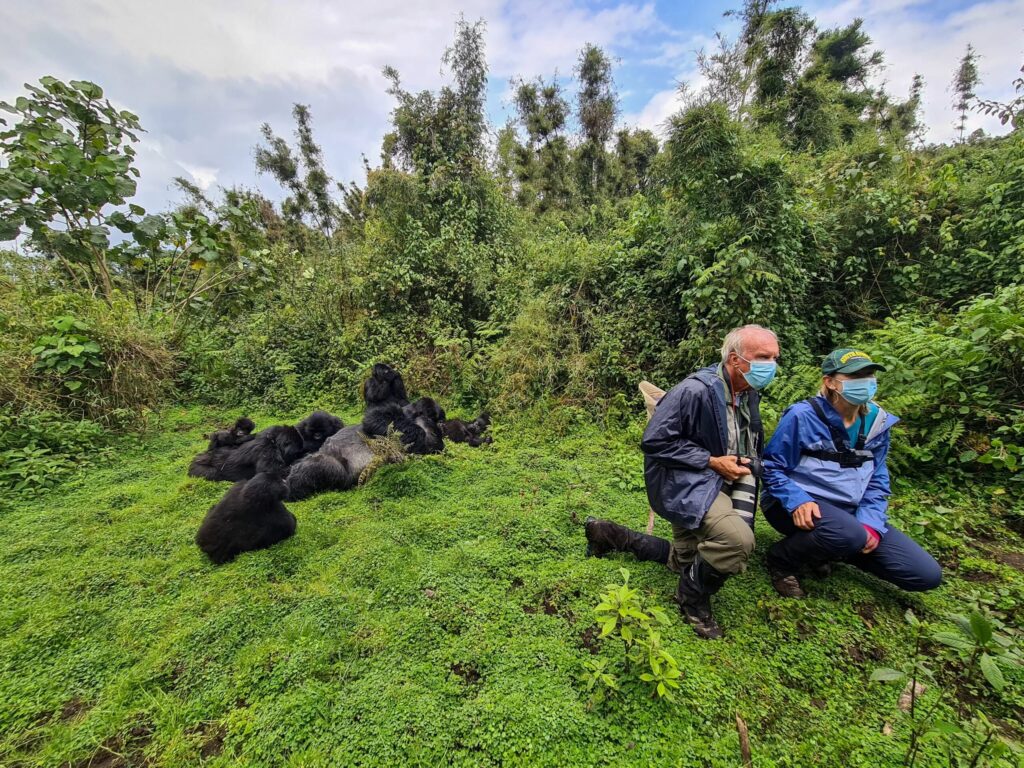
Golden Monkey Trekking in Rwanda: The Complete Luxury Guide to Volcanoes National Park.

Golden monkey trekking in Rwanda costs USD 100 per permit and takes one hour in the bamboo forest of Volcanoes National Park. Tell us your dates to plan.

Golden monkey trekking in Rwanda is a guided, one-hour encounter with a habituated troop of endangered golden monkeys in the bamboo forest of Volcanoes National Park, and for international visitors it costs USD 100 per person through a permit issued by the Rwanda Development Board. You report to the Kinigi Park headquarters at 7:00 a.m., where a ranger guide assigns you to one of the habituated golden monkey troops that tourists visit. You then walk for roughly one to two hours through farmland and into dense bamboo before you find the troop, and your hour begins. A golden monkey trek is less strenuous than gorilla trekking.

Golden Monkey Trekking in Rwanda: $100 Permit & Luxury Guide

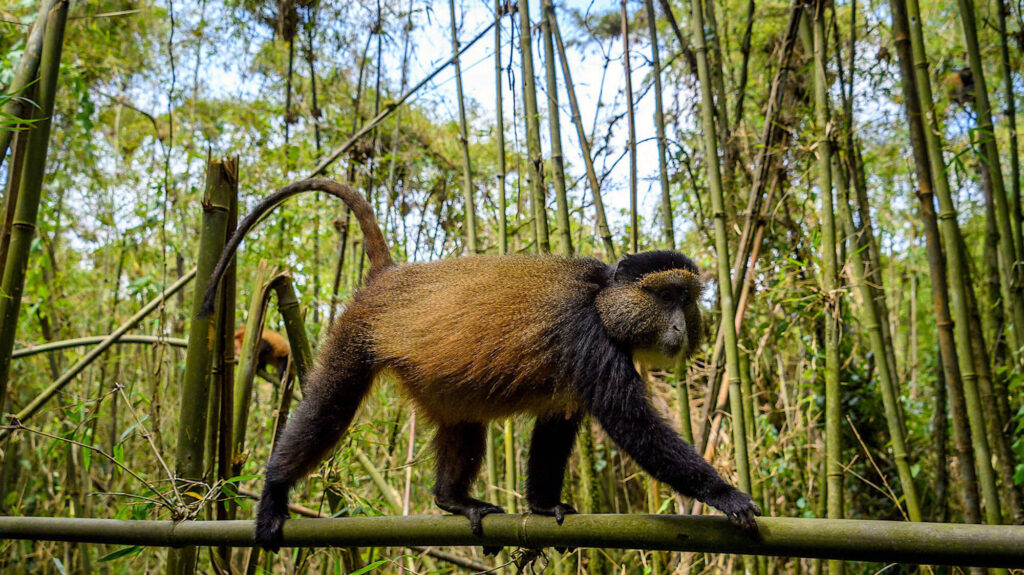
The golden monkey, Cercopithecus kandti, is a copper-gold and black guenon that lives almost nowhere else on earth except in the Virunga Mountains, and it is listed as endangered on the IUCN Red List. The minimum age is 12, three years younger than the gorilla minimum of 15, which is why the trek is the primate activity that brings an entire family into the forest together.

The experience could hardly be more different from a gorilla trek. Where the gorillas are weighty and silent, the golden monkeys are quick, loud, and endlessly in motion, and the bamboo above you can seem to erupt as dozens of animals leap from stem to stem. The walk is lighter, the permit costs one-fifteenth of the USD 1,500 gorilla trekking permit, and the encounter is easy to schedule for the day after your gorilla trek, at a lodge at the foothills of the Virunga Mountains that has been chosen for its comfort rather than its proximity to a trailhead. Most guests add it as an afterthought and call it a highlight afterwards.

Permits are limited — spaces fill months ahead

Reserve Your Private Gorilla Trek

Speak with a Rwanda-based specialist today. We secure permits, match you to the right gorilla family, and plan every detail around your schedule.

No group departures · Private itineraries only · Direct Rwanda expertise

What Is Golden Monkey Trekking in Volcanoes National Park?

Golden monkey trekking is a regulated wildlife activity in which a small party of visitors, accompanied by armed rangers and trackers, is led on foot to a habituated troop of golden monkeys and permitted to observe them at close range for a fixed period, which in Rwanda is one hour. It takes place only in Volcanoes National Park, the 160-square-kilometer Rwandan sector of the Virunga Massif, and the process mirrors gorilla trekking closely enough that first-time visitors sometimes assume the two are the same product. They are not. The golden monkey permit is a separate document, the trailheads are different, the group sizes are different, and the terrain, the sounds, and the emotional register of the morning are all different.


How the experience differs from a gorilla trek

A gorilla trek is built around stillness. You approach a family of animals that weigh up to two hundred kilograms, and you stand quietly at seven meters while a silverback decides that you are uninteresting. A golden monkey trek is built around movement. The troop is spread across a wide area of bamboo; the animals feed at every height from the forest floor to the top of the culms, and individuals approach, retreat, stare, squabble, and leap with a restlessness that leaves most guests laughing aloud within ten minutes. There is also a practical difference that matters to a photographer: you are generally in a rolling situation rather than a fixed one, which means you follow the animals a few steps at a time as the guide advises, instead of standing in a single position for the hour.

Why it belongs on a luxury itinerary

A golden monkey trekking day is the most efficient use of a rest day in the entire program for travelers investing in a gorilla permit and a high-end lodge. It requires less effort than a gorilla trek, which gives your legs a day to recover, and it fills the second morning with a wildlife encounter that is genuinely distinct from the first rather than a pale repeat. In the 5-day Gorilla & Golden Monkey Discovery Safari, we place it on day four for that reason, with the afternoon spent on a private boat on the twin crater lakes of Burera and Ruhondo, so that the day feels like a change of pace rather than another early start. It is also the activity that most reliably suits a mixed-age party, as children from 12 can join it and grandparents who would find a four-hour gorilla climb daunting can walk it comfortably.

Meet the Golden Monkeys: Appearance, Behavior, and Range

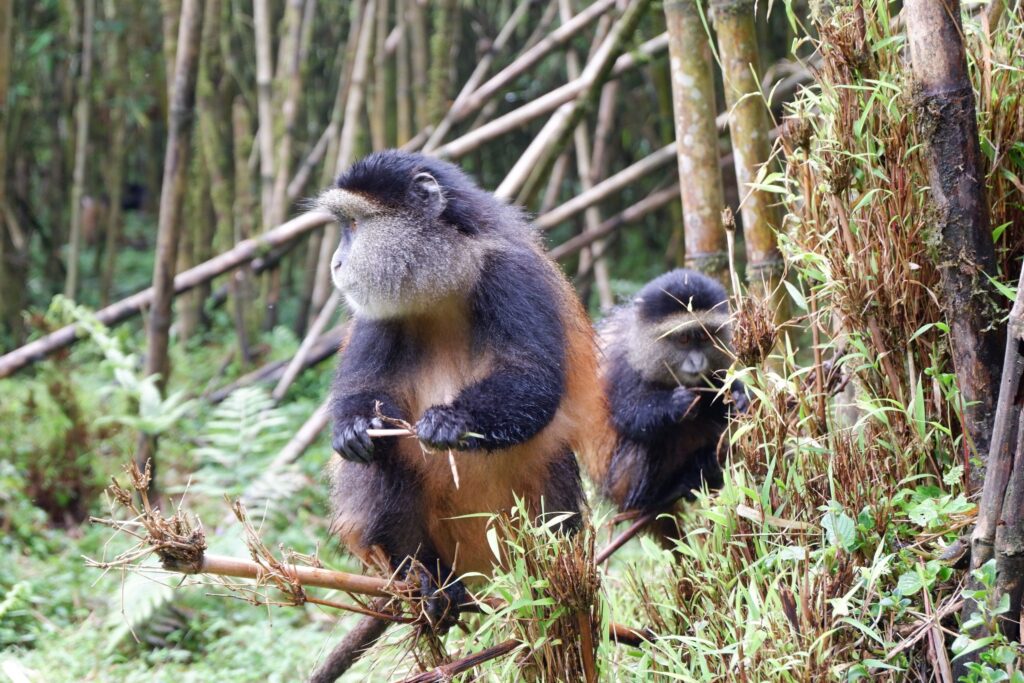
The golden monkey is a medium-sized guenon whose body, cheeks, and a band across the brow are a bright golden-orange, set off by a black face, crown, shoulders, limbs, and the last third of the tail. That coloring is unmistakable, and in the dim green light of the bamboo forest, the animals look almost lit from within. Scientists long classified it as a subspecies of the blue monkey, and the IUCN Red List still lists it under the name Cercopithecus mitis kandti, but many primatologists now treat it as a full species, Cercopithecus kandti, and you will see both names used by guides and in the literature.

Where golden monkeys live

Golden monkeys are endemic to a tiny strip of the Albertine Rift. They occur in Volcanoes National Park in Rwanda, in Mgahinga Gorilla National Park in Uganda, in Virunga and Kahuzi-Biega national parks in the Democratic Republic of the Congo, and in the Gishwati forest fragment in western Rwanda. In the Virungas they favor the bamboo zone, where the dominant species is mountain bamboo, and they have been recorded between roughly 2,100 and 3,500 meters above sea level. The habituated Rwandan troops that are visited by tourists range on the lower and middle slopes near Mount Sabyinyo and Mount Gahinga, and park guides and operators report that the larger of the two troops numbers somewhere between 80 and 100 individuals. Wild groups elsewhere are usually much smaller, up to around thirty, which is one reason the Volcanoes troops feel so exuberant.

What they eat, and why bamboo matters

5-Day Luxury Rwanda Gorilla & Golden Monkey Safari 2027

A published study of two Rwandan golden monkey populations, carried out in Volcanoes National Park and in Gishwati, found that the park groups were overwhelmingly leaf-eaters, with young bamboo leaves and bamboo shoots making up between roughly 73 and 87 percent of their diet depending on the group, whereas the Gishwati group took nearly half of its diet, about 49 percent, as fruit from 22 different tree and shrub species. The finding explains a great deal about their behavior. Bamboo shoots appear seasonally, and researchers link the timing of golden monkey reproduction in the Virungas to the timing of bamboo shoot availability, which also explains why the troops tend to concentrate in places where bamboo is freshly shooting at the start of the rains. It is a detail worth knowing before you go, because it means the monkeys are not wandering randomly. Your trackers are reading the forest as the monkeys read it.

Why They Are Endangered

The golden monkey is listed as endangered because its range is small and has been shrinking for decades. Habitat loss and fragmentation, much of it between the 1950s and the 1990s, cut the forests that the species relies on, and the contrast between the two Rwandan sites is striking. The Gishwati forest once covered an estimated 250,000 acres, but by 2001 the native forest there had collapsed to roughly 1,500 acres, while the Virunga population in Volcanoes National Park is considered stable but exposed. Researchers working in Rwanda point to continued pressure from illegal bamboo and firewood harvesting, feral dogs, cattle grazing, and a very dense human population on the park boundary, and long-term data show reduced bamboo regeneration, which is the single most important habitat resource for the species. Tourism is part of the answer, because the permit revenue and the guides’ employment give surrounding communities a financial reason to defend the bamboo. The Dian Fossey Gorilla Fund, whose Karisoke Research Centre has worked in these mountains since Fossey founded it in 1967, remains one of the key institutions studying and protecting the Virunga wildlife.

Golden Monkey Trekking Permit: Cost, Rules, and Booking in Rwanda

A golden monkey trekking permit in Rwanda costs USD 100 per person for international visitors, and the Rwanda Development Board issues it. The permit includes park entry, a ranger guide, a tracking team, and the one-hour visit with a habituated troop. It does not include accommodation, transfers, porters, tips, or any other element of your wider safari, and because permits are tied to named individuals and dates, passport details are required at the time of booking. The tariff published by the Rwanda Development Board breaks the fees down by visitor category, and the table below summarizes them as they stand

Visitor category Adult Student or child
International visitor (foreign non-resident) USD 100 Not listed
Foreign resident in Rwanda USD 65 USD 45
East African citizen USD 65 USD 45
East African foreign resident USD 80 USD 45
Rwandan citizen RWF 4,000 RWF 2,000

How the price compares with the other primate permits

The USD 100 permit sits at the accessible end of Rwanda’s primate tariff. A standard mountain gorilla permit costs USD 1,500 per person, the exclusive-use gorilla permit that buys out an entire family for a single group costs approximately USD 15,000 as a flat fee, and a chimpanzee permit in Nyungwe Forest costs USD 150. Understood in that light, the golden monkey permit is not a budget compromise but a value decision, and it buys a morning that most guests describe as one of the most joyful of their entire trip.

Minimum age, group size, and the one-hour rule

The Rwanda Development Board sets the minimum age for golden monkey trekking at 12 years, and it applies a separate figure of 15 years to gorilla trekking. Some operator pages, including a few that we have seen, claim that there is no minimum age for golden monkeys. The official tariff says 12, and that is the figure we plan around. The RDB’s published rules also allow up to sixteen visitors per golden monkey group, double the cap of eight that applies to each gorilla family, which means the encounter is livelier and less hushed than a gorilla morning. If a quieter party matters to you, tell us when you inquire, because we can structure the day around a private guide and vehicle for your group even when the permit group is shared. As with gorillas, you are given a fixed hour once the troop is found, and visitors with respiratory symptoms may be asked to stay behind, because primates share enough of our biology to catch our infections.

How far ahead to book

Golden monkey permits are far easier to secure than gorilla permits, but easier is not the same as guaranteed, particularly for a party of six or more in July, August, December, or January. Our practical advice is to secure the gorilla permit first, since it is the scarce resource and the one that dictates your dates, and then add the golden monkey day on the following morning once the gorilla date is confirmed. For travel in June to September or around Christmas and New Year, gorilla permits and the best lodges near Kinigi are routinely booked six to twelve months ahead, and that is the window in which your golden monkey day should also be arranged. Permits are paid for in advance, are linked to specific dates, and are generally non-refundable, so we ask guests to fix their travel dates with confidence before passport details are submitted.

Tell us your dates, and we will check what is available before you commit to anything.

Plan Your Rwanda Safari

Start Planning a Private Gorilla Trek

Rwanda gorilla permits sell out months in advance. Secure your dates before the season closes.

How a Golden Monkey Trek Unfolds from Lodge to Bamboo Forest.

A golden monkey trek is a morning activity that begins before dawn and normally finishes by late morning or early afternoon, with the one-hour encounter at its center. The Rwanda Development Board requires visitors to report to the Kinigi park headquarters at 7:00 a.m., and the time you are actually slotted for is allocated when the permit is booked, so your lodge and guide will confirm the exact plan the evening before. Everything below reflects how we run the day for private guests in practice.

Before dawn and the briefing at Kinigi

Breakfast at the lodges around Volcanoes National Park is served from about 6:00 a.m., and the transfer to Kinigi takes between 20 and 40 minutes depending on which property you are staying at. The headquarters sits on the southern edge of the volcanic range at an altitude of well over two thousand meters, so expect a cold, clear start, with night temperatures around Kinigi typically falling to between 8 and 12 degrees Celsius. Dancers and drummers often greet arriving guests while staff serve coffee. Park rangers then brief the groups on the rules, which are strict and exist for the monkeys’ sake: keep your voice low, never eat or drink near the animals, do not touch them or attempt to feed them, use no flash, and remain with your guide at all times. Visitors who are coughing, sneezing, or feeling unwell may be turned away. Groups are then formed and matched to a troop, and you will be offered a porter, which we recommend for every guest regardless of fitness. Porters are registered local community members, the fee is modest at around USD 10 to 20 plus a tip, and the help on wet ground is genuine.

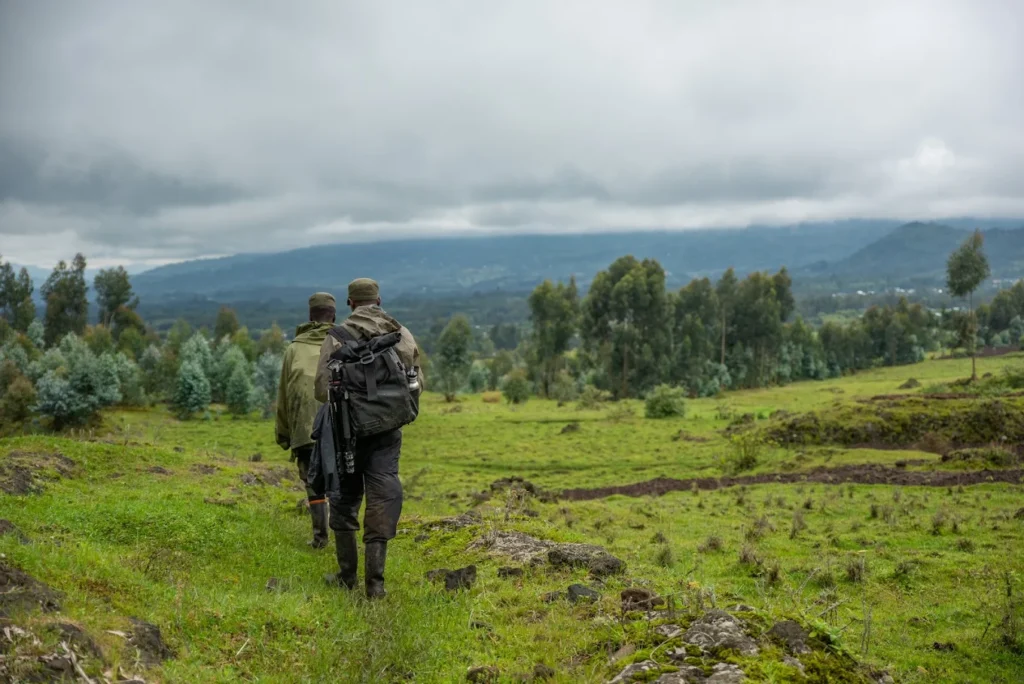
Trackers in Volcanoes National Park, Rwanda

The walk into the bamboo

From the briefing you drive a short distance to the trailhead, which lies at the edge of the potato and pyrethrum fields that ring the park. A low stone wall marks the boundary, built to keep buffalo and elephants out of the crops, and as you cross it, the world changes abruptly. The farmland ends, the air cools, and within a few minutes you are in the lower forest and then in bamboo, where the light turns green and filtered and the stems creak constantly overhead. Trackers who have been following the troop since first light radio your guide with the troop’s position. The habituated troops are found on the lower slopes near Mount Sabyinyo and Mount Gahinga, which are lower and gentler than the gorilla sectors, and the walk typically lasts between one and three hours, although it can occasionally be longer if the troop has moved overnight. Your guide will tell you honestly, once the assignment is made, what kind of morning to expect.

The hour with the troop

You usually hear the troop before you see it. A crack of bamboo, a quick cascade of movement high in the culms, and then dozens of small gold-and-black shapes are crossing the forest at head height and above. The monkeys feed on shoots and leaves, drop to the ground to forage, wrestle, groom each other, and scold the intruders with a hoarse chatter. They are habituated, so they behave naturally and mostly ignore you, although curious juveniles will sometimes pause on a stem at eye level and inspect you. Your ranger keeps time quietly, and the rules on distance are the same spirit as for gorillas: keep back, stay calm, and let the animals set the pace. Photographers will discover that the bamboo shades the light unpredictably and that the animals rarely stay still, which rewards a quick lens, a high shutter speed, and plenty of patience.

After the trek

Lake Burera and Lake Ruhondo

Private Boat Cruise on the Twin Lakes

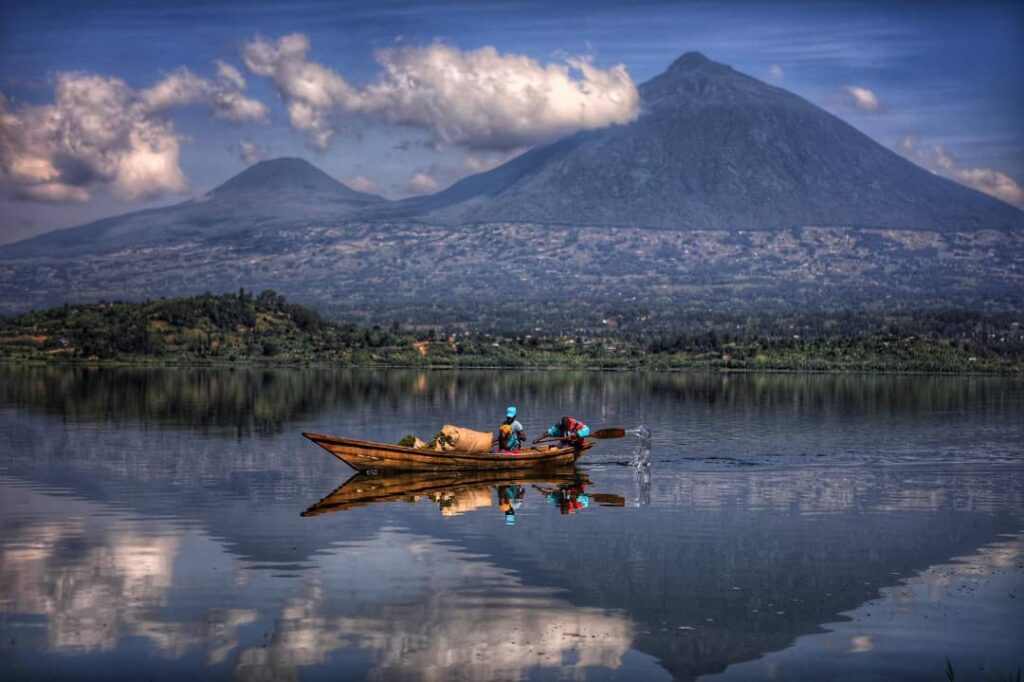
Groups leave the forest as quietly as they entered, retrace their route to the trailhead, and are driven back to Kinigi, where a certificate of participation is presented. Most guests are back at their lodge between late morning and early afternoon, with ample time for a long lunch, a spa treatment, or an excursion in the afternoon. In our own itineraries, this excursion often includes a private boat on the twin crater lakes of Burera and Ruhondo, which are a short drive from Musanze, where the Virunga cones are reflected in the lake surfaces on a clear day and local fishermen work the reed-fringed shores.

Difficulty, Fitness, and Altitude on the Golden Monkey Trek

The golden monkey trek is rated light to moderate and is significantly easier than a gorilla trek. The trailheads for the habituated troops lie at roughly 2,400 to 2,600 meters, the troops range on the lower and middle bamboo slopes, and the walk to the monkeys typically involves a modest climb of a hundred to three hundred meters through farmland and then bamboo, rather than the long steep ascents that some gorilla families require. The ground is different. It is often muddy and slippery, particularly in the rains, and because you are at altitude, any uphill walking feels harder than it would near sea level.

Who it suits

Because the minimum age is 12 and the effort is moderate, golden monkeys suit a wide range of travellers: families travelling with teenagers who are too young for the gorillas, older guests who want a primate encounter without a four-hour climb, and anyone who wants a gentle first morning at altitude before a more demanding trek. A number of our guests deliberately schedule the golden monkeys first as a warm-up so that their bodies have a night and a morning at altitude before the gorilla day, while others take them second as a lighter sequel. Either approach works, provided the gorilla date is the one that is fixed first.

Preparing and managing altitude

You do not need to be an athlete, but you should be able to walk uphill for an hour or two on uneven ground at roughly 2,400 meters in the cool and wet, carrying a small daypack. Six weeks of hill walking or stair climbing before you travel is time well spent. Drink water steadily, set a slow pace, and tell your guide at once if you feel breathless, dizzy, or unusually tired. Altitude sickness is uncommon at these elevations, but it is worth understanding that Kigali sits at about 1,500 meters, the lodges at Kinigi sit between roughly 2,000 and 2,400 meters, and the trek itself takes you higher still. Anyone with heart, lung, or joint conditions should have a conversation with their doctor before booking and should tell us early, because we can reorder an itinerary, add a rest day, or choose a different pairing around a specific health concern.

Golden Monkey Trekking vs Gorilla Trekking: Which One, or Both?

Most travellers who come to Volcanoes National Park should do both, as the two activities are complementary rather than competing with each other. A gorilla trek is a longer, harder, more expensive, and more emotionally weighty experience than a golden monkey trek, and for most guests it is the reason they came. A golden monkey trek costs USD 100 rather than USD 1,500; it is open to anyone aged 12 and over rather than 15; and the monkeys offer something the gorillas cannot: energy, humor, and movement on a scale that makes for exceptional photography. If you can only do one, and your party is aged 15 or older, choose the gorillas. If your party includes a 12- to 14-year-old, the golden monkeys are the primate encounter that the whole family can share.

Exclusive Gorilla Trekking in Rwanda: The Private Trek Guide

We recommend arranging the gorilla trek first in the planning sense, meaning you secure the gorilla permit date before anything else, as it is the scarcer permit and everything else is built around it. In the itinerary itself, either order can work. Placing golden monkeys on the first morning gives you a gentle acclimatisation walk and lets you test your boots on real forest ground, while placing them on the second morning provides you a lighter day after the demands of the gorilla climb and a very different emotional counterpoint. In the 5-day itinerary we place the gorillas on day three and the golden monkeys on day four, and on the 4-day Exclusive Gorilla & Golden Monkey Safari we do the same, with the lakes in the afternoon.

Can you do both on the same day?

We generally advise against it for our guests. Each activity has its briefing slot at Kinigi and its own trailhead. A gorilla trek can last up to five hours or more, and the second activity would take place when guests are tired and the light is poorer. However, since the RDB has scheduled both activities to start at the same time, they cannot be done on the same day. The result is usually two rushed encounters instead of one memorable one. Giving each activity its own morning costs only an additional night at the lodge, and for guests staying at the finest properties in the area, that night is rarely a hardship.

The Best Time for Golden Monkey Trekking in Rwanda

Golden monkey trekking runs every day of the year, so the question is not whether you can go but which conditions you prefer. Rwanda has two dry seasons and two rainy seasons, and the monkeys themselves are present throughout, although their movements shift with the bamboo. Daytime temperatures around Kinigi are typically between about 18 and 24 degrees Celsius, nights are between 8 and 12 degrees, and the mornings on the trek are cooler than the thermometer suggests because of the altitude and the damp.

Best time for gorilla trekking.

The dry seasons: June to September and December to February

The long dry season from June to September is the most comfortable time to trek. Trails are firmer, the volcano views are clear, and the bamboo forest is bright and photogenic. It is also the busiest period, so lodges and gorilla permits sell out six to twelve months ahead, and a golden monkey day added late can be tight for large parties. The short dry season from December to February is an excellent alternative, with similarly good conditions, slightly less competition, and a particularly luminous quality to the light, although the weeks around Christmas and New Year are busy.

The rains: March to May and October to November

The rainy months, March to May and October to November, are the quietest. The forest is at its greenest, the trails are muddier, and some days begin in cloud and heavy rain. For golden monkeys, the rains have a distinct advantage. Researchers link golden monkey feeding to the seasonal flush of bamboo shoots, and the troops can be concentrated in more predictable locations when the shoots are growing, which can shorten the walk. Photographers sometimes deliberately choose the shoulder months, as the diffuse light and saturated greens produce striking images and the forest is far less crowded. If comfort and clear views are your priorities, choose the dry seasons. If you value atmosphere, solitude, and a better chance of a last-minute permit, the green season has its devotees.

Current Conditions: Safety, the Congo Border, and the Regional Ebola Outbreak

You should plan a trip to Volcanoes National Park in 2027 with accurate information about two issues, the security situation along the Rwandan border with the Democratic Republic of the Congo and the Ebola outbreak in the DRC, and we would rather set them out plainly than leave you to discover them in a government advisory after you have booked.

What the government advisories say

The U.S. Department of State rated Rwanda at Level 3, Reconsider Travel, in its advisory dated 4 June 2026, citing crime, unrest, and health risks. Within that advisory it designates an area within 10 kilometers of Rwanda’s border with the DRC as Level 4, Do Not Travel, because of unrest, and it states explicitly that Volcanoes National Park is not included in this area of increased risk. The same advisory notes that the Rwanda Development Board and security forces maintain a robust presence in the park, that the Kinigi headquarters and the city of Musanze are outside the high-risk zone, and that visitors should use RDB-sanctioned treks with licensed guides. Canada’s travel advice, last updated in September 2026, takes a slightly different tone, advising a high degree of caution in the section of Volcanoes National Park along the DRC border because of occasional unclear border markings and the presence of rebel groups on the Congolese side, and you can read it at travel.gc.ca. We read both documents the same way: stay on sanctioned routes with armed RDB rangers, never walk independently near the border, and do not treat the park as a place for improvised excursions. Every step of a golden monkey trek that we arrange follows that rule.

The Ebola outbreak and what it means for entry

An outbreak of Ebola disease caused by Bundibugyo virus was declared in the DRC in May 2026, and the World Health Organization determined it to be a public health emergency of international concern. The U.S. Centers for Disease Control and Prevention describes it as the second-largest Ebola outbreak on record, with cases confirmed in several DRC provinces, including North Kivu and South Kivu, and with over 8,463 cases reported in the DRC; its assessment is that the overall risk to travellers remains low. You can follow the current figures on the CDC situation summary and the WHO outbreak page. In Rwanda, the Ministry of Health’s most recent notice, dated 16 June 2026, reported no cases in Rwanda and no active cases in the areas bordering it and confirmed that tourism and travel within the country were continuing as normal. The notice also set a firm entry rule that matters to anyone planning a regional itinerary: all foreign nationals who have travelled to, or transited through, the DRC within the 30 days before travelling to Rwanda will be denied entry. Do not combine your Rwanda trip with a recent visit to the DRC, and confirm the current status with us and the Rwanda Biomedical Centre before your flight.

How we handle this for guests

Our approach is straightforward. We monitor the advisories and the Rwandan notices, we tell you plainly when they change, and we plan itineraries entirely within the tourism circuit of Kigali, Volcanoes National Park, Lake Kivu, Nyungwe, and Akagera, where operations are continuing. Because permits are generally non-refundable and date changes can carry a fee, we strongly recommend comprehensive travel insurance that includes medical evacuation and trip cancellation, and we advise reading the policy wording carefully, because some insurers exclude destinations that carry a government advisory above a certain level. If you are weighing Rwanda against Uganda in light of all these factors, our comparison of Rwanda versus Uganda gorilla trekking explains the structural differences between the two countries, and we are glad to talk through the current picture for each.

Plan Your Rwanda Safari

Start Planning a Private Gorilla Trek

Rwanda gorilla permits sell out months in advance. Secure your dates before the season closes.

Where to Stay near Volcanoes National Park: Luxury Lodges for a Golden Monkey Safari.

The lodges around Volcanoes National Park are among the finest wildlife accommodations on the continent, and the choice between them is a matter of design, setting, and atmosphere rather than convenience, because most sit within 20 to 40 minutes of the Kinigi headquarters. They are priced per person per night, inclusive of meals and usually activities, and the top properties are at four-figure US dollar rates in peak months, so we quote the current rates for your dates rather than publishing numbers that go out of date. A few of them are worth describing, because they shape the character of the entire trip.

Wilderness Bisate
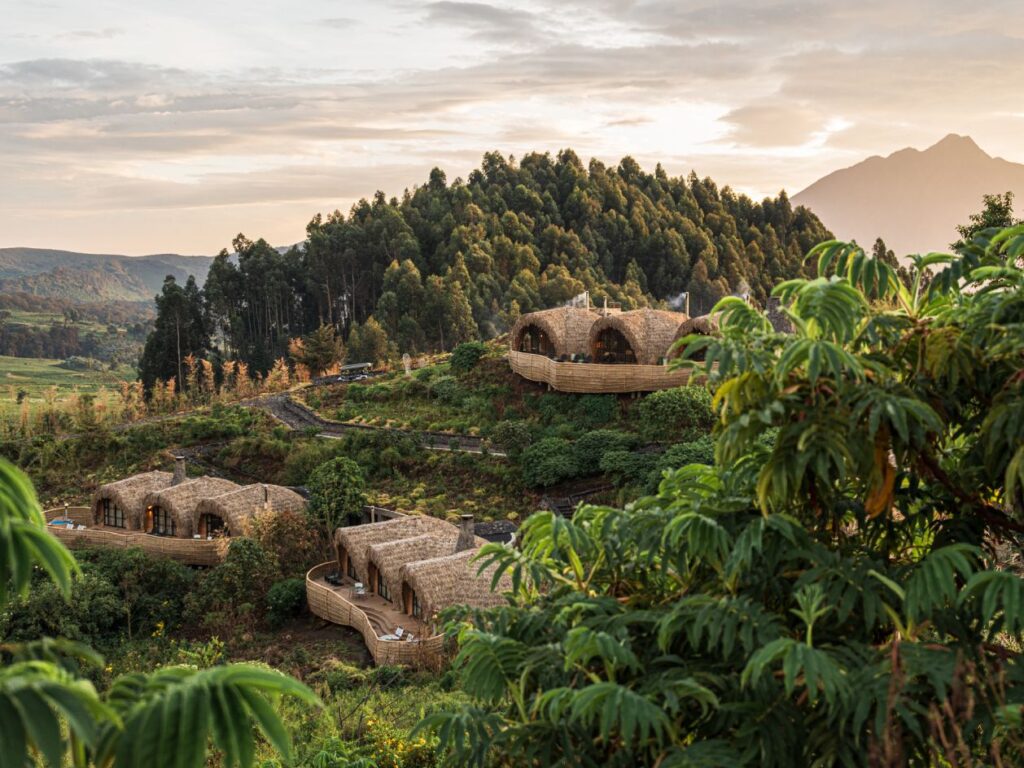
Bisate Lodge

Bisate sits on the rim of an eroded volcanic cone, where Wilderness has spent years replanting a degraded hillside with native forest, and its circular thatched villas look toward the volcanoes from among the trees. It is the choice for couples and for anyone who values architecture and conservation as much as service, and golden monkeys are sometimes seen from the villa decks. For honeymoons and milestone anniversaries, it is one of the most requested properties we offer, and you can see how we shape those journeys in our Rwanda safari styles.

Singita Kwitonda Lodge
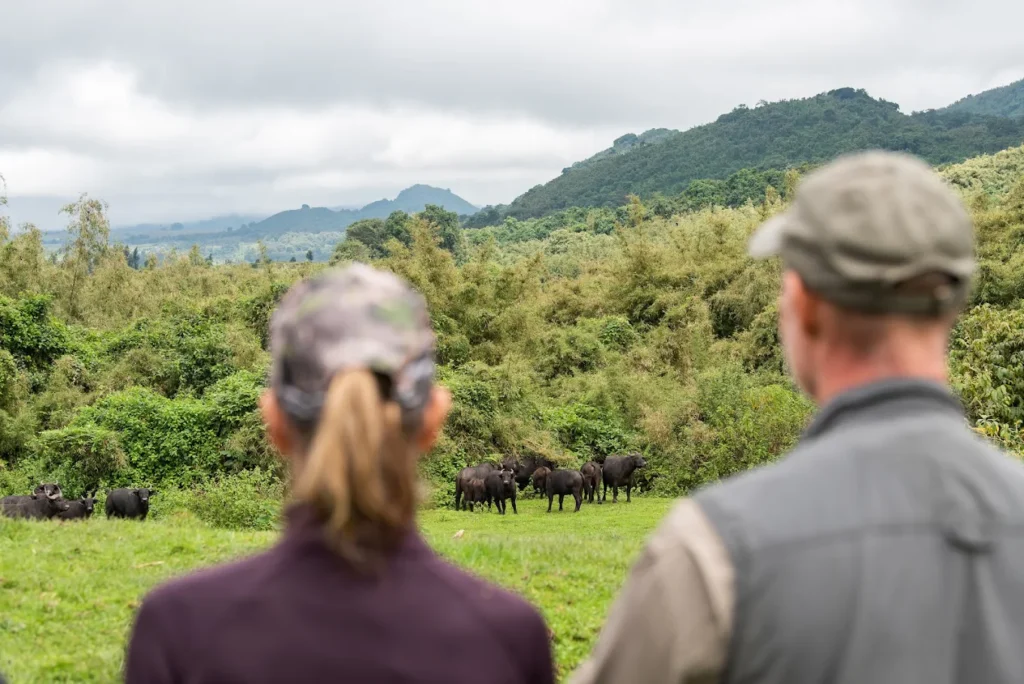
Views From Singita Kwitonda

Singita’s Rwandan lodge sits directly against the park boundary, with suites facing the volcanic range and a guiding team that has a deep knowledge of the Virunga ecology. The cuisine and the wine program are among the best in the region, and the staff-to-guest ratio allows a level of attention that few lodges anywhere can match. It suits travellers who want the full Singita experience in a primate setting.

One&Only Gorilla’s Nest
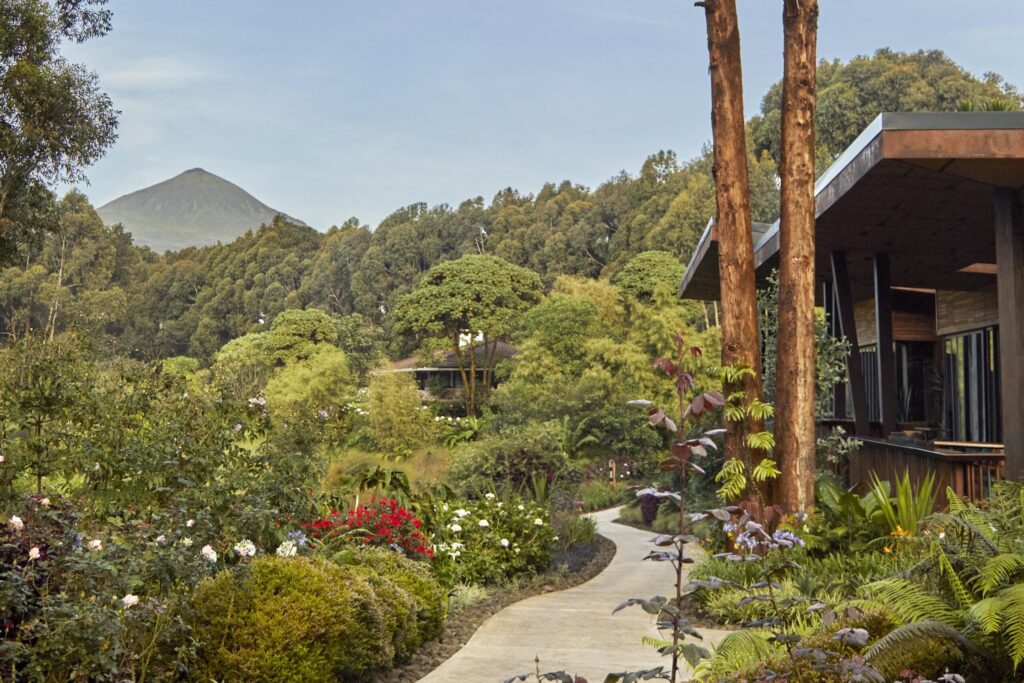
One&Only Gorilla Nest

One&Only’s lodge, set in gardens that are a destination in their own right, offers generous suites, a spa, and polished, gracious service. The atmosphere is one of unhurried elegance, a counterpoint to the physical intensity of the trekking day, and it suits travellers who want resort-grade comfort after a morning in the forest.

Sabyinyo Silverback Lodge and Virunga Lodge
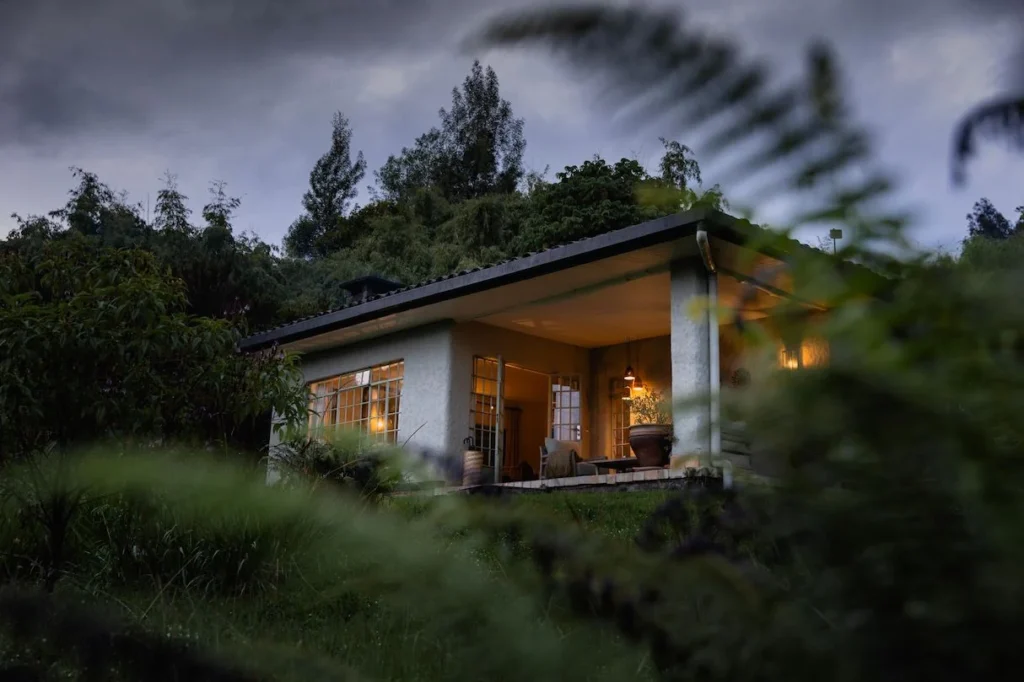
Wilderness Sabyinyo Lodge

Wilderness Sabyinyo Lodge

Wilderness Sabyinyo Silverback Lodge is one of the original luxury properties in the area, community-owned and managed by Wilderness, with stone cottages at the foot of Mount Sabyinyo, the oldest of the Virunga volcanoes. A stay carries a documented benefit for the people living around the park. Virunga Lodge perches above the twin lakes and pairs especially well with a golden monkey day that ends on the water. In Kigali, you can easily arrange a night in a five-star or boutique hotel before or after the park.

Getting There, Visas, Health, and Money

Almost every international visitor arrives through Kigali International Airport, and the drive from Kigali to the Volcanoes National Park lodges is roughly 100 to 110 kilometers on a paved road that takes two to two and a half hours. There are no scheduled domestic flights to the Musanze area, so the road transfer is standard, and a private helicopter transfer can be arranged at a premium for guests who prefer to save the time. Rwanda is compact, so moving between parks rarely takes more than a day.

Visa and entry

Most nationalities can obtain a 30-day tourist visa on arrival or online, and the U.S. State Department lists the fee at USD 50 for a single-entry visa and USD 70 for a multiple-entry visa. Your passport should be valid for at least six months from the date of arrival and have a blank page for the entry stamp. If your itinerary combines Rwanda with Uganda and Kenya, ask us whether the regional East Africa Tourist Visa suits your route, and check the current fee and rules on the official Rwandan immigration portal before you apply. Entry rules have been changing in 2026, as described above, so always confirm them close to departure.

Health

A yellow fever vaccination certificate is required if you arrive from, or have transited through, a country where yellow fever is present. Hepatitis A, typhoid, and routine boosters are commonly recommended, and your travel medicine clinic will advise on the rest. The malaria risk is lowest at the altitude of Volcanoes National Park and higher in Kigali and the lowland parks, so prophylaxis decisions depend on the full itinerary. Tap water is not safe to drink, so stick to sealed bottled water. Comprehensive travel insurance that includes medical evacuation is essential, since healthcare outside Kigali is limited and hospitals often require payment up front.

Money and tipping

The Rwandan franc is the local currency, but US dollars are widely accepted at lodges and by tourism providers, and international cards work at most lodges and in Kigali. The U.S. Embassy notes that many businesses will accept only US bills printed after 2009 and that exchange bureaus may refuse smaller denominations, so carry recent, undamaged notes. For tipping, a sensible guide is USD 20 to 30 per day for your driver-guide, USD 10 to 15 per day per guest into the lodge staff tip box, and a small amount for rangers and trackers, with USD 10 to 20 for a porter after a trek day. Tips are voluntary but customary, and they matter to the people who earn a modest living from the visitor economy around the park.

What to Wear, What to Pack, and How to Photograph Golden Monkeys

Dress for a cool, wet, muddy forest at altitude, and think in layers rather than in outfits. The bamboo zone is cooler and damper than the farmland below it; mornings at Kinigi are between about 8 and 12 degrees Celsius, and rain can arrive without warning in any month. Long-sleeved shirts and long trousers in muted greens, browns, or greys are the right choice, because bright colors and white can unsettle wildlife and attract insects, and the long sleeves protect you from stinging nettles and scratchy vegetation. A packable waterproof jacket is essential, and a fleece for the early start earns its place in your daypack.
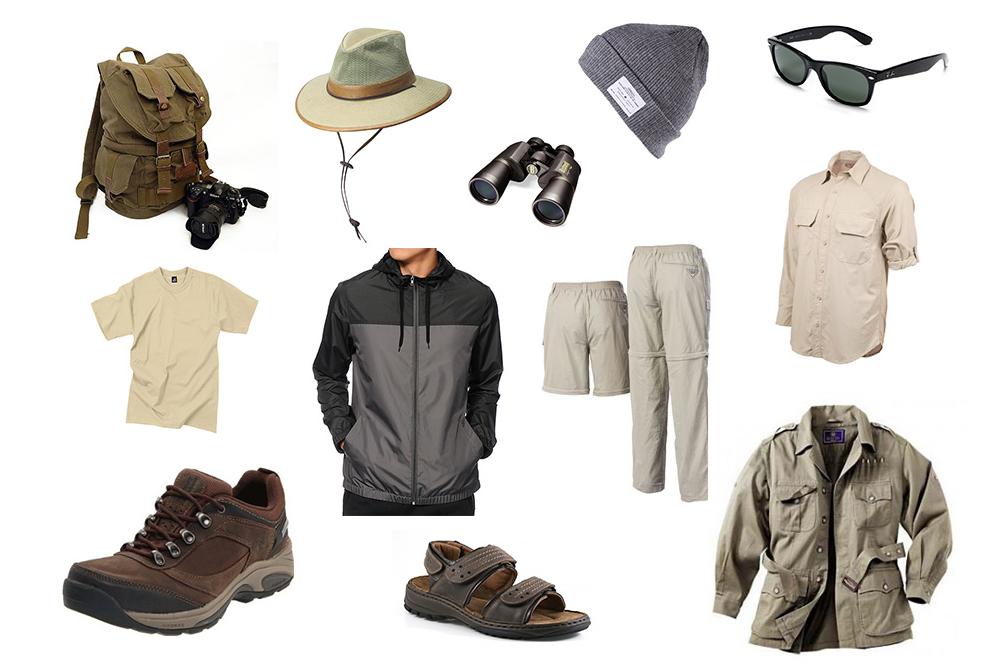
What to Pack for a Safari

Footwear and small essentials

Boots are the most consequential item. Waterproof, ankle-supporting trekking boots with a firm sole and good grip are non-negotiable, because the ground is often steep, slick, and uneven, and trainers or flat-soled shoes will make a manageable walk unpleasant. Gaiters keep mud and nettles out of your boots and are often available to hire at Kinigi, and lightweight gardening gloves are useful when you steady yourself on bamboo. Pack at least two liters of water, a packed lunch or snacks from your lodge, insect repellent, sunscreen, and a hat. Carry your boots in your hand luggage on the flight, as they are the one item you cannot easily replace, and break them in properly before you travel.

Photographing golden monkeys

Golden monkeys reward preparation. The bamboo forest is shaded, and the animals are small, fast, and almost constantly in motion, so a lens with a wide aperture and a reach of around 200 millimeters, such as a 70 to 200 millimeter zoom, is far more useful than a high-megapixel body. Use a shutter speed of at least 1/500 of a second where the light allows it, raise the ISO rather than risk blur, and shoot in short bursts when an animal pauses on a stem. Flash is prohibited, as with all primates in the park, and it would not help anyway. Binoculars of 8×42 magnification are a reliable companion for the high-canopy feeding, and a dry bag or rain cover for your camera is worth packing in any season. Photographers can add a second golden monkey morning to any of our itineraries for exactly this reason.

Golden Monkeys Beyond Volcanoes National Park: Gishwati-Mukura and Mgahinga.

Volcanoes National Park is the most reliable and the best-equipped place to see golden monkeys, but it is not the only one, and there are two alternatives that suit travellers who have already done the Kinigi circuit or who are building a longer regional itinerary. They are quieter and less polished, and we treat them as add-ons rather than substitutes.

Gishwati-Mukura National Park, Rwanda

Gishwati Forest in western Rwanda is the only other place in the country where golden monkeys can be tracked. It is a regenerating fragment of a once-vast forest, and in our Gishwati-Mukura National Park guide we explain how the park, gazetted in 2015 and opened to visitors in 2019, covers 34 square kilometers and sits about 157 kilometers, or three to four hours, from Kigali. The golden monkey groups here are smaller, and the experience is quieter than at Kinigi. There is no single dedicated permit price, and access is arranged as a package through the Forest of Hope Guest House or the newer high-end concession, so budgeting works differently from Volcanoes. It makes sense for travellers who want a second, more private encounter and a window on a conservation recovery, and it pairs naturally with a night on Lake Kivu between Volcanoes and Nyungwe.

Mgahinga Gorilla National Park, Uganda

Across the border, Mgahinga Gorilla National Park in the south-west corner of Uganda protects the Ugandan slopes of the same Virunga volcanoes and offers both standard golden monkey tracking and a full-day golden monkey habituation experience that is found only there. The Uganda Wildlife Authority issues the permits at USD 100, the same as in Rwanda. Mgahinga is a small, rustic park, and its infrastructure is considerably less developed than that around Kinigi. For a candid comparison of how the two countries differ on gorilla permits, access, comfort, and cost, read our guide to Rwanda versus Uganda gorilla trekking. Cross-border itineraries need extra attention currently, given the regional health measures described earlier, so speak to us before you plan one.

Building a Luxury Itinerary Across Rwanda and East Africa

A golden monkey day is rarely the whole of a luxury safari, and it fits best into a journey that gives each ecosystem its own character. Rwanda is compact enough to combine three completely different environments in a single trip without hurried transfers. In the east, Akagera National Park offers savannah game drives and boat safaris on lakes where hippos and crocodiles are abundant, and it has been restored, in partnership with African Parks, to a Big Five destination. In the southwest, Nyungwe Forest National Park offers chimpanzee tracking and a canopy walkway suspended some fifty meters above the forest floor. In the north, Volcanoes National Park offers the gorillas and the golden monkeys. Our 10-day Best of Rwanda’s National Parks Safari sequences all three, finishing with the gorillas on day eight and the golden monkeys on day nine, so the whole journey builds toward the mountains.

Extending into Uganda, Tanzania, and Kenya
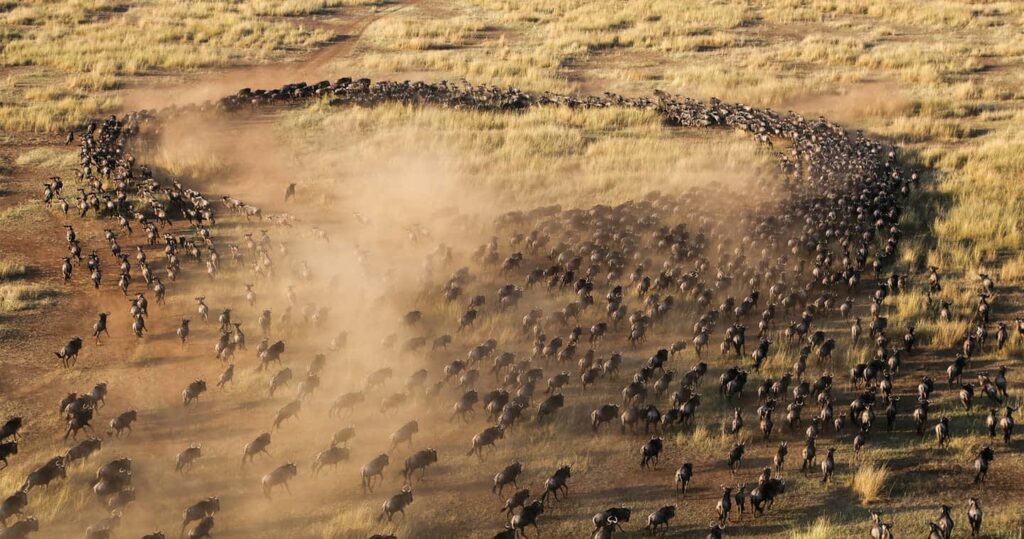
Great Migration in the Masai Mara

Rwanda is a natural opening chapter for a wider East African circuit, because Kigali has strong air connections and the country’s infrastructure is among the most reliable on the continent. Travellers commonly add the chimpanzees and the tree-climbing lions of western Uganda, the Serengeti and Ngorongoro Crater in Tanzania, the Masai Mara in Kenya, or a beach finish in Zanzibar. We design these as single, private journeys with one team handling permits, flights, and transfers, and our principle is to schedule the least flexible element, which is always the gorilla permit date, first.

Private, bespoke, and conservation-led

Everything we operate is private: your vehicle, your guide, and your itinerary are yours alone, even on days when the permit group in the forest is shared. For guests who want the encounter itself to be private, exclusive gorilla trekking lets one group buy out a gorilla family’s daily slot for roughly USD 15,000, and for guests who want depth over privacy, our behind-the-scenes gorilla trekking experience places a very small group alongside primatologists and veterinarians over several days. Neither changes the golden monkey day, but both change the shape of the journey around it.

What a Luxury Golden Monkey Trip to Rwanda Costs

The golden monkey permit itself is only a small part of the overall budget. At USD 100 per person it is one of the cheapest line items on any Rwanda itinerary, and the cost of a trip is driven overwhelmingly by the gorilla permit at USD 1,500 per person, the lodge, and the private guiding and transport. For a five-day private itinerary with one night in Kigali and three at a luxury lodge near Kinigi, our current indicative pricing starts at approximately USD 6,500 per person sharing at the luxury tier, rising to roughly USD 10,500 to 15,000 or more per person at the ultra-luxury lodges, with Bisate, Singita Kwitonda, and One&Only Gorilla’s Nest at the upper end. That pricing includes the standard gorilla permit, the golden monkey permit, the Dian Fossey and Karisoke hike permit, private 4×4 transport, a private guide and meals as specified, and it excludes international flights, visas, insurance, porter fees, and tips.

Prices vary with the season, with June to September and December to February the most expensive, and they vary with the lodge you choose, the length of the stay, and whether you upgrade to an exclusive-use gorilla permit. We provide an itemised quotation so you can see precisely what each element costs, which is also the best way to compare operators, as a lower headline price almost always reflects a shared vehicle, a less experienced guide, or a lodge a long way from the park. Understood properly, the golden monkey trek is not a significant cost driver. It is among the best-value mornings in East African travel.

Plan Your Rwanda Safari

Start Planning a Private Gorilla Trek

Rwanda gorilla permits sell out months in advance. Secure your dates before the season closes.

Frequently Asked Questions About Golden Monkey Trekking in Rwanda

How much does golden monkey trekking cost in Rwanda?

Golden monkey trekking in Rwanda costs USD 100 per person for international visitors, paid for through a Rwanda Development Board. The fee covers park entry, a ranger guide, and one hour with a habituated troop in Volcanoes National Park. Foreign residents and East African citizens pay USD 65 for adults, and children in those categories pay USD 45. Rwandan citizens pay RWF 4,000 for an adult and RWF 2,000 for a child. The permit does not cover transfers, accommodation, porters, or tips, so a porter at USD 10 to 20 and a tip for your guide are extra. As part of a private safari with Rwanda Gorilla Expeditions, the permit is included in the itinerary price and secured in advance, and the full cost of a five-day luxury itinerary.

What is the minimum age for golden monkey trekking in Rwanda?

The minimum age for golden monkey trekking in Rwanda is 12 years, according to the Rwanda Development Board. This is three years lower than the minimum age of 15 for mountain gorilla trekking, which makes golden monkeys the primate experience of choice for families with younger teenagers. Children aged 12 to 14 can therefore join the monkeys while their older siblings and parents trek gorillas, or the whole party can share the golden monkey morning together. Bring each child’s passport, because the permit is issued against named individuals. If your group includes younger children, Rwanda still offers the twin lakes of Burera and Ruhondo, the Musanze Caves, cultural village visits, and the Akagera savannah.

How long does a golden monkey trek take?

A golden monkey trek usually takes three to five hours from the Kinigi briefing to the return, including a one-hour observation period with the troop. The walk to the monkeys typically lasts one to three hours, depending on where the troop slept, but it can occasionally take longer. Your day begins around 5:30 or 6:00 a.m. with a lodge breakfast, you report to Kinigi at 7:00 a.m., and most guests are back at their lodges between late morning and early afternoon. The Rwanda Development Board sets the one-hour limit, which applies to every visitor. It protects the animals from stress and disease, and the same principle governs the gorilla encounter.

Is golden monkey trekking worth it?

Yes, golden monkey trekking is worth it for travellers who want a second, very different primate encounter in Volcanoes National Park. At USD 100 per person it costs one-fifteenth of a USD 1,500 gorilla permit, the walk is easier, and the troops are large, active, and highly photogenic. The larger troop is reported to number between 80 and 100 animals, so the forest around you is full of movement for the whole hour. The golden monkey is also found almost nowhere else in the world, with the Virunga Mountains, Gishwati, Mgahinga, and two DRC parks making up essentially its whole range. For a luxury traveller, the additional cost is trivial and the extra experience is substantial, especially after investing in a gorilla permit and staying at a top lodge. Most of our guests rank it among the highlights of their trip.

Can you do golden monkey trekking and gorilla trekking on the same day?

Technically it’s not possible. Each activity requires its own 7:00 a.m. briefing at the park headquarters. Two separate days produce better encounters and better photographs, because you arrive at each trek rested and with optimal light. The cost of the extra day is one more night at the lodge, which, at a property such as Bisate or One&Only Gorilla’s Nest, most guests find a pleasure rather than a burden. Secure the gorilla date first, then schedule the golden monkeys for the morning before or after that date. We build our 5-day and 4-day Volcanoes safaris exactly this way.

What is the best time of year for golden monkey trekking in Rwanda?

Golden monkey trekking runs every day of the year, and the best months for comfort are the dry seasons of June to September and December to February. The rainy months of March to May and October to November bring fresh bamboo shoots, which concentrate the monkeys and can make them easier to find. Trails are firmest and views clearest in the long dry season, but it is also when lodges and permits are scarcest, so book six to twelve months ahead. Daytime temperatures around Kinigi run from about 18 to 24 degrees Celsius all year, with chilly nights of 8 to 12 degrees. If you prefer quiet forests, a greener landscape, and easier permit availability, the rainy seasons are worth considering, provided you bring proper waterproofs and boots.

How difficult is the golden monkey trek?

The golden monkey trek is easier than gorilla trekking and is rated light to moderate. The troops range on the lower bamboo slopes at roughly 2,400 to 2,600 meters, so the climb is modest, although the ground can be muddy and the altitude makes any uphill walking feel harder than it would at sea level. The walk to the monkeys normally takes one to three hours, and a porter at USD 10 to 20 carries your pack and steadies you on slippery sections. You do not need to be an athlete, but you should be comfortable walking uphill for a couple of hours on uneven ground. Walking sticks are provided at the briefing center. Tell us in advance about any heart, lung, knee, or hip concerns so we can match the pace and the plan to you.

Are golden monkeys endangered?

Yes. The golden monkey is classified as endangered on the IUCN Red List. It lives only in the bamboo and montane forests of the Virunga Mountains and a few neighboring forests of the Albertine Rift, and its habitat shrank sharply between the 1950s and the 1990s. In the Gishwati forest of western Rwanda, native forest cover collapsed from an estimated 250,000 acres to roughly 1,500 acres by 2001. The population in Volcanoes National Park is considered stable, but researchers note continuing pressure from illegal bamboo harvesting, firewood collection, and grazing at the park boundary. Tourism is one of the funding mechanisms that protects the habitat, because permit revenue and guiding jobs give nearby communities a reason to defend the forest.

Is it safe to visit Volcanoes National Park right now?

Treks in Volcanoes National Park are operating under Rwanda Development Board ranger supervision, and the U.S. State Department states that Volcanoes National Park is not part of its Level 4 border zone, although it rates Rwanda as a whole at Level 3 as of June 2026. That Level 4 area covers the 10 kilometers nearest the border with the DRC, and the Kinigi headquarters and the town of Musanze lie outside it. Canada advises a high degree of caution along the park’s border section. Separately, an Ebola outbreak in the DRC was declared a public health emergency of international concern in 2026, and Rwanda’s Ministry of Health reported no cases in Rwanda in its notice of 16 June 2026. Conditions change, so confirm the latest guidance with us and with official sources before you book, and take insurance with medical evacuation cover.

Where else can you see golden monkeys besides Volcanoes National Park?

Outside Volcanoes National Park, tourists can see golden monkeys in Gishwati-Mukura National Park in western Rwanda and in Mgahinga Gorilla National Park in Uganda. Both are quieter than the Kinigi circuit, but neither offers the same infrastructure or lodge quality. Gishwati, about 157 kilometers, or three to four hours, from Kigali, has no single published permit price and is booked as a package. Mgahinga offers a full-day habituation experience found nowhere else, and its permits are set by the Uganda Wildlife Authority. The species also lives in the DRC’s Virunga and Kahuzi-Biega national parks, but those areas are affected by conflict and by the Ebola outbreak, and we do not plan visitors there.

How do I book a golden monkey permit in Rwanda?

You book a golden monkey permit through the Rwanda Development Board, either directly or through a licensed operator such as Rwanda Gorilla Expeditions. Provide the names and passport details of each trekker and your preferred date, and the permit is confirmed against RDB availability. Gorilla permits sell out far earlier than golden monkey permits, so secure the gorilla date first, six to twelve months ahead for June to September and December to January. Payment is made in advance, and changes can carry a fee, so fix your dates with confidence. If you book with us, we handle the permits, lodge, transfers, and guide as a single private package, and you receive an itemized quotation with no hidden costs.

What should I wear for golden monkey trekking?

Wear long sleeves and long trousers in muted greens, browns, or greys; waterproof ankle-supporting boots; gaiters; light gloves; and a packable rain jacket. The bamboo forest is cool, wet, and often muddy, and layers matter because mornings at Kinigi are around 8 to 12 degrees Celsius. Avoid bright colors, white, and perfume, which can unsettle wildlife and attract insects. Carry at least two liters of water, a packed lunch, insect repellent, and sunscreen. For photography, a 70 to 200 millimeter zoom and a high shutter speed work best, and flash is prohibited. Gaiters and walking sticks are normally available at the Kinigi briefing center if you would rather not travel with them.

Can I combine golden monkey trekking with a luxury gorilla safari?

Yes, and it is the most common pairing in Volcanoes National Park. A well-paced luxury itinerary schedules the gorilla trek on one morning and the golden monkeys on the next, with a lodge such as Bisate, Singita Kwitonda, or One&Only Gorilla’s Nest between them. Rwanda Gorilla Expeditions builds these journeys privately from three to ten days, with the 5-day Gorilla & Golden Monkey Discovery Safari being the pairing most guests choose. The same combination can be extended to Akagera for the Big Five, Nyungwe for chimpanzees, or a regional route into Uganda, Tanzania, or Kenya. Permits for both activities are arranged in advance, and the golden monkey day is usually a lighter, more relaxed morning that leaves the afternoon free for the twin lakes or a spa.

Do I need a visa and vaccinations to trek golden monkeys in Rwanda?

Most visitors need a Rwandan tourist visa, which the U.S. State Department lists at USD 50 for a single-entry 30-day visa, and a yellow fever certificate if arriving from a yellow fever country. Under current Ebola measures, Rwanda also refuses entry to foreign nationals who have been in or transited through the Democratic Republic of the Congo in the previous 30 days. Your passport should have six months of validity and a blank page. Hepatitis A, typhoid, and routine boosters are commonly recommended, and malaria risk is lowest at the altitude of Volcanoes National Park. Comprehensive travel insurance with medical evacuation is essential. Entry rules keep changing, so check the official Rwandan immigration and health notices close to departure.

Ready to Trek? Permits are limited — plan early.

Plan Your Golden Monkey Safari in Rwanda with Rwanda Gorilla Expeditions.

A golden monkey morning is one of the lightest and most joyful hours you can spend in East Africa, and it is made far better by a team that knows the forest, the permit system, and the lodges at ground level. At Rwanda Gorilla Expeditions we secure the permits, choose the lodge to suit your party, plan the sequence around the gorilla date, brief you honestly on current conditions, and look after every transfer from the moment you land in Kigali. Gorilla permits and the finest lodges near Kinigi sell out many months ahead, so the single most useful step is to begin the conversation now.

Reach us through our contact page, and read the full story of the people behind the safaris on our about page. Tell us your dates and we’ll check permit availability within a few minutes.