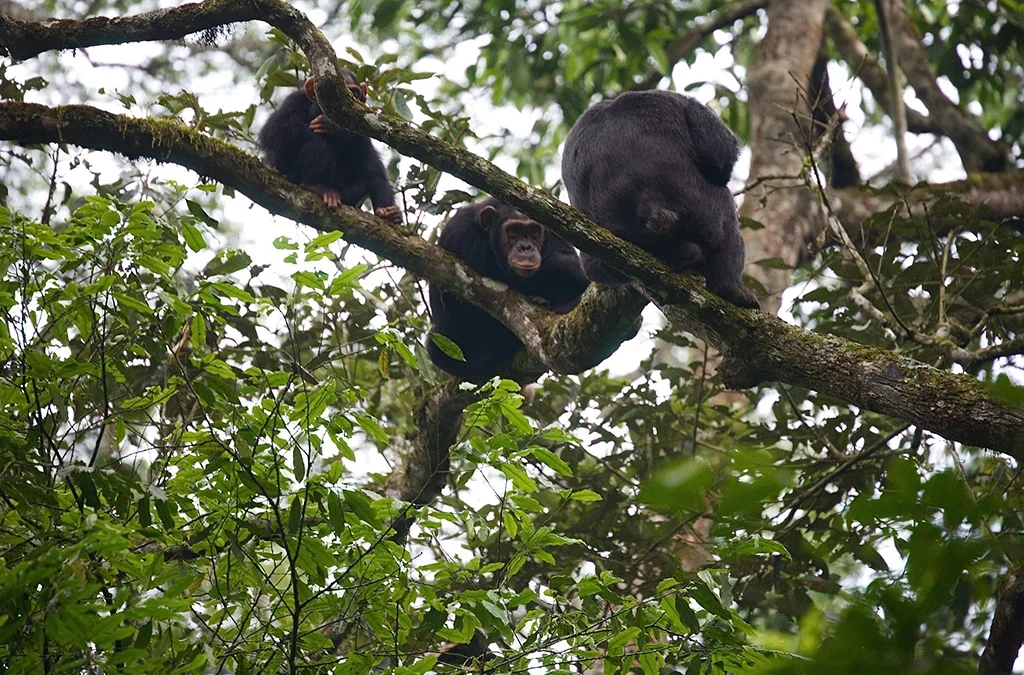
Gorilla Trekking Cost in Rwanda: The Complete 2027–2028 Budget Guide.

Gorilla trekking in Rwanda costs USD 1,500 per person for the government permit alone, and a complete luxury gorilla safari built around that permit typically costs between USD 7,000 and USD 15,000 per person once lodges, private ground logistics and supporting activities are included. The permit is issued exclusively by the Rwanda Development Board (RDB); it is the same fixed price in every month of the year for international visitors, and it buys one hour with one habituated mountain gorilla family in Volcanoes National Park, along with park entry, a ranger-guide, and the trackers who locate the family each dawn. It does not buy your bed, your breakfast, your transfer from Kigali, your visa, your tips, or your travel insurance, and that gap between the permit price and the real cost of the journey is where almost every traveler’s budget goes wrong.

The permit price is deliberately high. Rwanda charges roughly double what neighboring Uganda charges (USD 800 per person) because the Rwanda Development Board uses price as a conservation tool: fewer visitors per day, less pressure on the gorilla families, and a larger flow of revenue back into anti-poaching patrols, veterinary care from Gorilla Doctors, and the communities that live along the park wall. In return, Rwanda offers the shortest road transfer to mountain gorillas of any trekking destination on earth, about two to two and a half hours from Kigali International Airport, and the only cluster of genuinely world-class lodges within sight of the Virunga volcanoes.

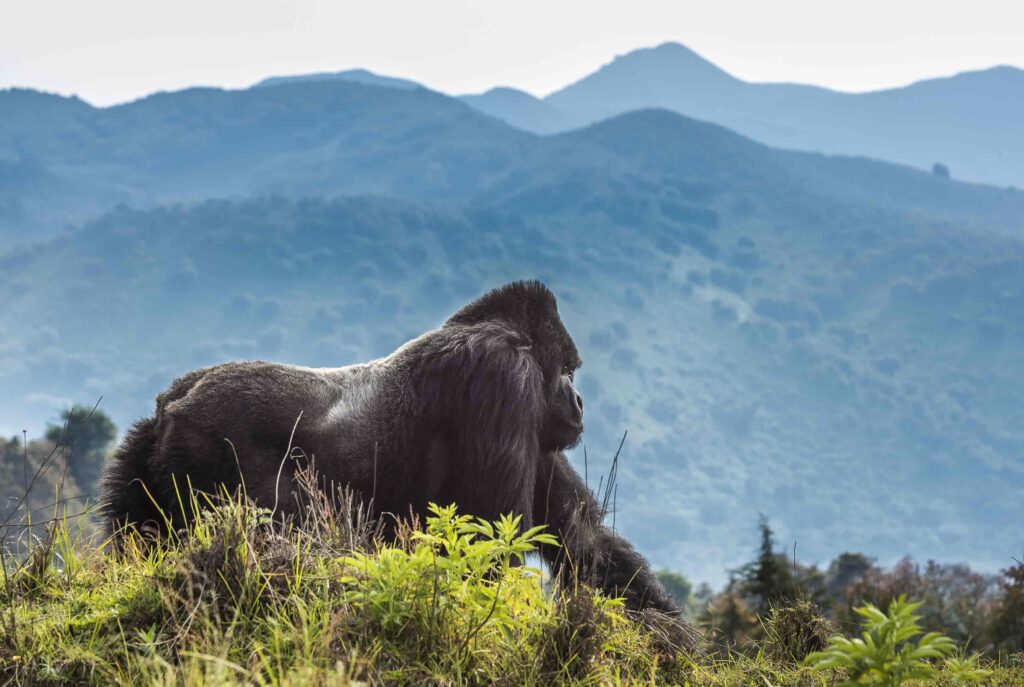
Volcanoes National Park Rwanda: Gorilla Trekking Guide 2027

Where the money goes beyond the permit depends almost entirely on where you sleep. The signature lodges beside the park, Wilderness Bisate, Singita Kwitonda Lodge, and One&Only Gorilla’s Nest, are currently priced at roughly USD 2,400 to USD 3,800 per person per night on a fully inclusive basis, which means a two-night stay costs more than three permits. A refined but less rarefied lodge in the same valley can bring the nightly figure down to somewhere between USD 800 and USD 1,200. A fully private “exclusive use” trek, in which a single group has a gorilla family to itself for the day, is priced at around USD 15,000 for the group, while the multi-day behind-the-scenes gorilla trekking experience with researchers and veterinarians costs about USD 15,000 per person.

Rwanda caps daily gorilla trekking at roughly 192 visitors per day, with one visit per family per day, which is why permits for June to September and the Christmas and New Year period routinely sell out six to twelve months in advance. The most useful single piece of financial advice we can offer is therefore not about saving money at all: it is to secure the permit date first and build everything else around it. If you want a quote built around your exact dates, our team at Rwanda Gorilla Expeditions will check permit availability and price the full journey for you.

Permits are limited — spaces fill months ahead

Reserve Your Private Gorilla Trek

Speak with a Rwanda-based specialist today. We secure permits, match you to the right gorilla family, and plan every detail around your schedule.

No group departures · Private itineraries only · Direct Rwanda expertise

Rwanda Gorilla Permit Cost: What USD 1,500 Actually Covers.

The Rwanda gorilla trekking permit costs USD 1,500 per person for international visitors; it is sold only by the Rwanda Development Board, and it covers a single trek to a single habituated gorilla family on a date and in a sector assigned at the time of booking. Every other expense in this guide is in addition to that figure. Understanding exactly what the permit covers is the foundation of any realistic Rwanda safari budget.

What is included in the permit fee?

The permit pays for your entry to Volcanoes National Park for the trekking day, the services of a ranger-guide who leads your group of no more than eight visitors, the work of the trackers who leave before dawn to locate the gorilla family from the previous evening’s nesting site, the armed escort that accompanies every trek as standard protocol, and the one hour you are permitted to spend with the gorillas once you reach them. It also includes the commemorative certificate that rangers issue after the trek. The guide enforces a nonnegotiable one-hour limit, which begins when your group settles near the gorilla family, not when you leave the trailhead, so the time spent walking to the gorillas does not count against it.

What the permit does not cover

The permit does not cover your accommodation, your meals, your private vehicle and driver-guide, your airport transfers, your visa, your international or domestic flights, a porter, a walking stick, tips, travel insurance, or medical evacuation cover. It also does not cover any additional activity such as golden monkey trekking, which is permitted separately. When a competitor advertises a “gorilla safari from USD 1,500,” they are quoting the permit and nothing else, and you should read any such figure as the cost of entry to the forest rather than the cost of the trip.

Where the permit money goes

Rwanda’s tourism revenue-sharing model commits ten percent of park revenue to projects in the communities around the national parks, and those funds have paid for schools, health clinics, water tanks, and cooperatives around Volcanoes National Park for many years. The balance supports ranger salaries, anti-poaching patrols, veterinary monitoring of the gorillas through the Gorilla Doctors program, and the management of the park itself.

Discounts and promotional rates that actually exist

For most international visitors there is no standard discount, and any operator who promises you a cheaper permit outside the official channels should be treated with caution. Two programs are worth knowing about. The first is a low-season multi-park incentive that has historically been offered between November and May, under which travelers who spend at least two nights in Akagera or Nyungwe before trekking in Volcanoes can receive a permit at roughly USD 1,050, a saving of about USD 450 per person. The second is the set of promotional rates announced by RDB in January 2026, which reduced the permit to USD 200 for Rwandans and East African Community citizens and to USD 500 for other African nationals outside the June to October peak. Neither promotion changes the USD 1,500 price for a traveler flying in from Europe, North America, or Asia on peak-season dates, but the multi-park incentive is genuinely valuable if your dates fall in the green season, and we will tell you whether it is in force when we check availability for your travel window.

Why the price is the same in every month

The permit price does not rise in the dry months or fall in the rains, unlike lodge prices, which can change by as much as forty percent between low and high season. This situation has a practical consequence that experienced planners use: because the permit is a fixed cost, the real saving available to a luxury traveler lies in the lodge rate, which is why shoulder-season dates in November or March can reduce a total trip cost by thousands of dollars without touching the permit line at all.

How Much a Luxury Gorilla Safari in Rwanda Really Costs.

A well-planned luxury gorilla safari in Rwanda costs roughly USD 4,500 to USD 5,500 per person for a refined three-day trek, USD 11,000 to USD 13,000 per person for a signature four-day stay at one of the great lodges, and USD 15,000 to USD 30,000 per person for a 7- to 10-day journey that adds Akagera, Nyungwe, or Lake Kivu, all excluding international flights and calculated for two travellers sharing. These are planning figures built from current lodge and permit pricing, not formal quotations, but they are close enough to let you decide which tier belongs to your journey before you speak to anyone.

Lodge Costs Near Volcanoes National Park

The premium lodges around Volcanoes National Park charge roughly USD 300 to USD 3,800 per person per night, on a fully inclusive basis, and because lodge nights typically account for sixty to seventy-five percent of the total cost of a Rwanda gorilla safari, your choice of lodge is the single largest financial decision you will make after securing the permit. All of these properties sit within about twenty to thirty minutes of the Kinigi park headquarters, which is a quiet advantage worth paying for: a shorter morning transfer means a later alarm, a calmer breakfast, and, on days when your family happens to be close to the trailhead, an earlier return to the lodge for the afternoon.

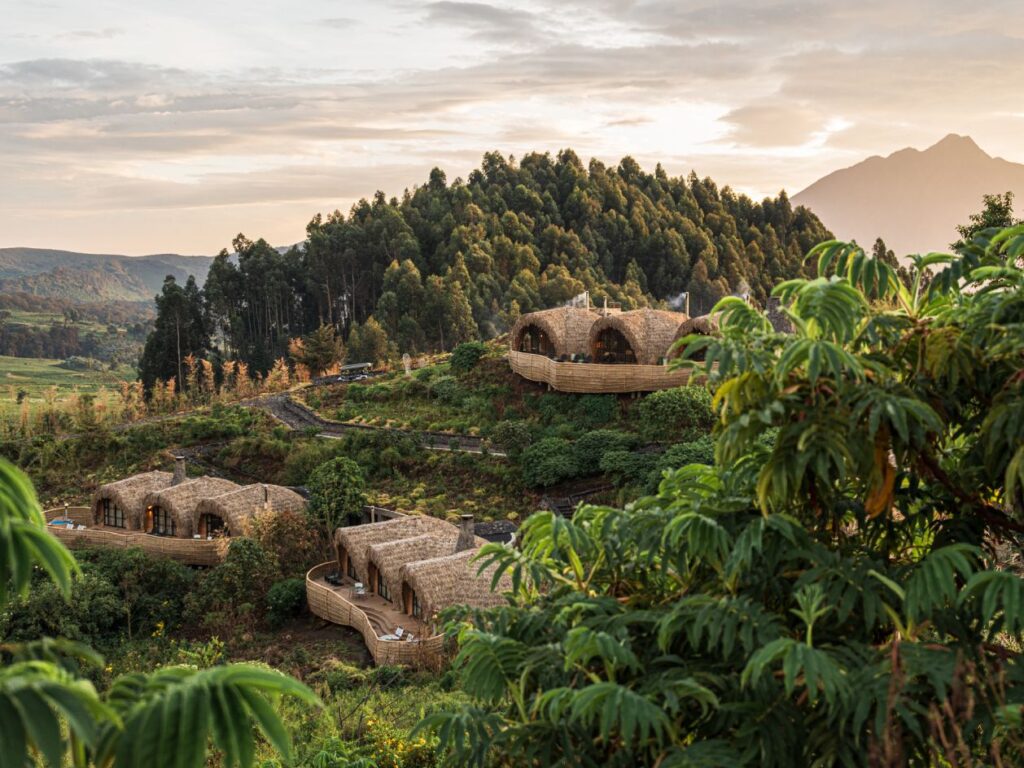
Wilderness Bisate

Bisate Lodge

Wilderness Bisate is the most architecturally distinctive property in the region, with six thatched forest villas positioned around the rim of an ancient eroded volcanic cone that Wilderness has spent years reforesting with native species. Rates run from about USD 2,569 per person per night in the March to April rains to approximately USD 3,795 between June and October and from mid-December through February. The lodge has only six villas, which makes it the hardest of the three to book at short notice for peak dates, and it is the property we suggest first for honeymooners and for guests who care about design and conservation in equal measure.

Singita Kwitonda Lodge

Singita Kwitonda Lodge sits on 178 acres bordering the park wall, with eight suites and a villa that look directly at Sabyinyo, Gahinga, and Muhabura. Rates are about USD 2,720 per person per night in the November and January to May windows, and USD 3,630 in the June to October peak and mid-December to early January holiday period, with a four-night minimum applying under some Singita promotions at the Volcanoes property. Private plunge pools, an in-suite spa space, a conservation room where guests are briefed before trekking, and a farm-to-table kitchen make it the strongest all-round choice for travelers who want impeccable service as much as extraordinary scenery.

One&Only Gorilla’s Nest

One&Only Gorilla’s Nest occupies the eucalyptus-scented edge of the park and is generally quoted at around USD 2,400 per person per night, rising in the high season. Its suites are the most spacious of the three, its spa and gardens are the most developed, and the atmosphere is one of polished, unhurried hotel-level luxury rather than remote bush intimacy. We recommend it to multigenerational families and to guests who want a full spa and wellness program between the physical demands of trekking days.

Wilderness Sabyinyo Silverback Lodge

Wilderness Sabyinyo Lodge

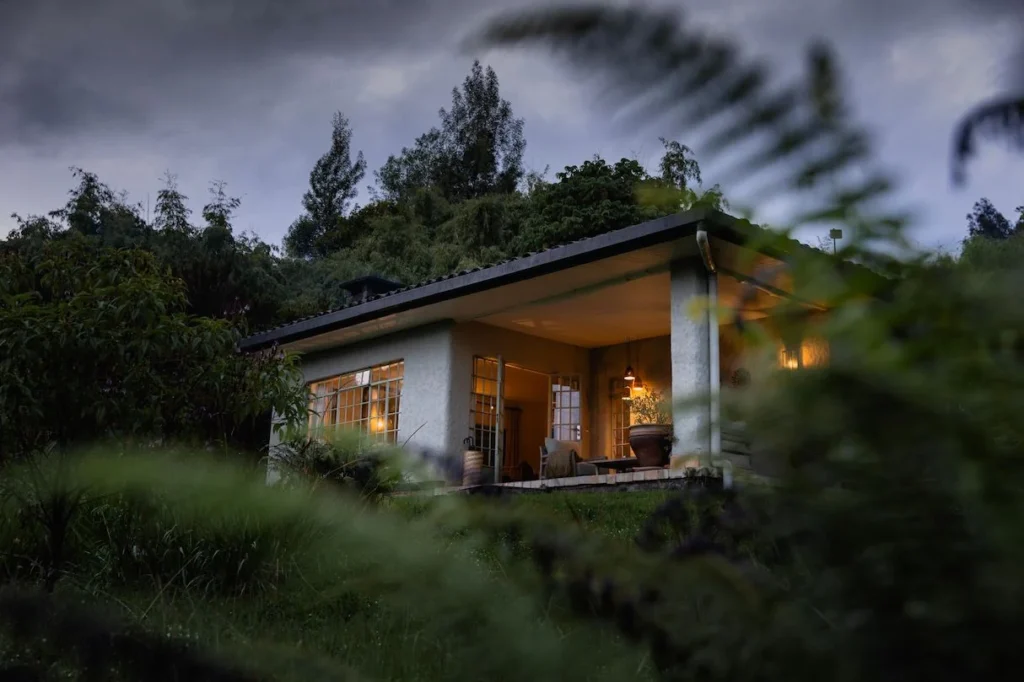
Below the three signature properties lies a refined tier of genuinely excellent lodges, including the community-partnered Wilderness Sabyinyo Silverback Lodge, at the base of Mount Sabyinyo, where nightly rates generally begin in the region of USD 800 to USD 1,200 per person. These lodges deliver the essentials of a luxury gorilla safari: exceptional guides, strong cuisine, large rooms, and fires lit at dusk, at a figure that can make the difference between a two-night and a four-night stay for the same overall budget. Because some of these lodges are community-owned, they also provide a documented conservation benefit that many guests find meaningful.

What lodge rates typically include

At the top end, the quoted rate is inclusive of all meals, house wines and spirits, laundry, guided activities from the lodge, and the use of the lodge’s trekking vehicle on gorilla mornings, but never the permit. Walking boots, gaiters, rain ponchos, and walking sticks are loaned at the more serious properties at no charge, a detail that saves luggage space and real money. Always ask whether the rate is per person sharing, whether a single supplement applies, and whether the seasonal band you are booking is the peak one, as the same suite can differ by USD 900 per person per night between April and July.

The Kigali night that most budgets forget

Almost every luxury itinerary begins or ends with a night in Kigali, whether because flights land late or because the return to the airport must be unhurried. Five-star hotels in the capital range from roughly USD 250 to USD 600 per night for a double, and a half-day city tour that includes the Kigali Genocide Memorial, the Inema Arts Centre, and the Kimironko market adds a layer of context that stays with guests long after the gorillas. Budget for this night in every quote.

Plan Your Rwanda Safari

Start Planning a Private Gorilla Trek

Rwanda gorilla permits sell out months in advance. Secure your dates before the season closes.

Exclusive and Behind-the-Scenes Gorilla Experiences: What USD 15,000 Buys you.

Rwanda’s two premium options for gorilla trekking, the exclusive private trek and the behind-the-scenes research experience, are each priced at approximately USD 15,000, but they are fundamentally different products: the first buys privacy, and the second buys access to the science. Choosing between them is largely a matter of what kind of traveler you are.

Exclusive-use gorilla trekking

An exclusive gorilla trek in Rwanda grants a single private group the entire gorilla family for the day, with no other visitors in the forest, a private briefing, flexibility over which family you visit, and the freedom to work around your own pace. At around USD 15,000 for the group, it is an exceptional value for a family of six or eight, for whom the per-person cost drops to the price of two standard permits, and it is correspondingly expensive for a couple. Honeymooners, photographers who need time and space for the light to change, families with an older member who benefits from a carefully matched family and a gentler pace, and private clients who simply do not want to share an experience are the guests who most often select it. The permit is only one part of the cost, and lodge, vehicle, and guide expenses sit on top.

The behind-the-scenes gorilla experience

The behind-the-scenes gorilla trekking experience runs over three consecutive days with a maximum of three visitors, who accompany primatologists, veterinary doctors, trackers, and researchers rather than simply joining a standard group trek. It is priced at about USD 15,000 per person for the gorilla component and is built for travelers whose interest extends from the encounter itself to the conservation system that makes it possible, for patrons of conservation organizations who want to see their support in action, and for guests who have already done a standard trek and want something deeper. It is less predictable than a standard trek by design, and it rewards patience.

How to decide between the two

If your priority is comfort, privacy, and photography, choose exclusive use. If your priority is understanding the animals and the work of protecting them, choose behind-the-scenes. If you have a large family or a group of friends travelling together, the maths of exclusive use often works in your favour when you divide the cost by eight. Both products require early booking and are not available on short notice, and we always discuss them with clients at the start of the planning process.

Other Permit and Activity Costs on a Rwanda Safari

Beyond gorillas, the standard foreign-visitor permit for golden monkey trekking in Volcanoes National Park costs USD 100 per person, and a chimpanzee trekking permit in Nyungwe Forest National Park costs USD 150 per person, which makes both some of the best-value primate encounters on the continent. They are the most efficient way to extend the primate portion of a Rwanda journey without extending the budget in proportion.

Golden monkey trekking at USD 100

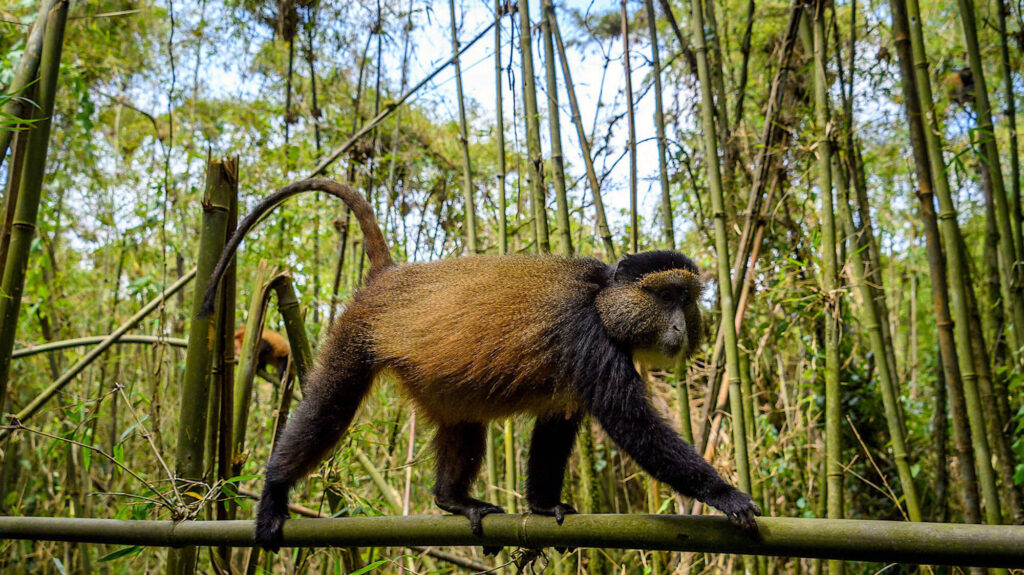
Golden Monkey Trekking in Rwanda: $100 Permit & Luxury Guide

The golden monkey, found only in the Virunga massif, lives in large, restless troops in the bamboo zone and is the perfect companion activity to a gorilla trek because it is easier physically and entirely different in character. A golden monkey trek can be done on the day after your gorilla trek, or on the same day on a one-day itinerary if the gorilla family is near the trailhead.

Chimpanzee trekking in Nyungwe at USD 150

7-Day Luxury Rwanda Safari: Nyungwe, Kivu & Gorillas

Nyungwe Forest National Park protects one of the oldest rainforests in Africa and thirteen primate species, and chimpanzee tracking there starts early and can be demanding. The permit is USD 150 per person, and the park’s canopy walkway, suspended roughly fifty meters above the forest floor, is a separate activity that rounds out the rainforest experience. Allow a minimum of two nights.

Akagera, Gishwati-Mukura, and the Dian Fossey hike

Akagera National Park in the east is Rwanda’s Big Five reserve, restored through a long-standing partnership with African Parks, and daily entry there is modest compared with a gorilla permit, in the region of USD 100 per person per day for foreign visitors, with game drives, boat trips, and night drives arranged separately. Gishwati-Mukura National Park is Rwanda’s newest park and offers chimpanzee and golden monkey tracking in a recovering forest. A guided hike to the former Karisoke Research Centre, where Dian Fossey is buried, adds a historical dimension to a volcano stay and the park arranges it. Confirm all non-gorilla fees at the time of booking, as they are revised periodically.

Rwanda vs Uganda vs DR Congo: Gorilla Permit Cost Compared.

Rwanda’s gorilla permit is USD 1,500, Uganda’s is USD 800, and the Democratic Republic of Congo’s has historically been about USD 400, but comparing permits alone is incomplete, and the cheapest permit rarely yields the best overall trip.

Uganda: the lower permit and the longer road

Uganda’s permits, sold by the Uganda Wildlife Authority, cost USD 800 and provide access to Bwindi Impenetrable Forest and Mgahinga Gorilla National Park, where there are more habituated families and a wider choice of sectors and where a separate, longer habituation experience is available. The saving of USD 700 per person is real, but it can be eroded by longer transfers from Entebbe, which are typically eight to ten hours by road or a domestic charter, and by a lodge landscape with fewer ultra-luxury options at the park’s edge. Uganda offers added value for travellers seeking chimpanzees at Kibale or tree-climbing lions in Queen Elizabeth National Park, helping to offset the logistics involved.

Democratic Republic of Congo

Gorilla permits for Virunga National Park have traditionally been priced around USD 400, but trekking there remains suspended because of regional security restrictions, so it cannot be recommended for planning at this time. We monitor the situation and advise clients if conditions change.

Which is better value for a luxury traveler?

For a guest whose budget starts at USD 10,000 per person, the USD 700 permit difference is a rounding error compared with the value of a short, smooth transfer, a top-tier lodge, and a fully integrated Rwanda itinerary. For a guest who wants more than one trek, a longer stay, and more primates, Uganda’s lower permit can pay for an extra trek or an extra night. Many of our clients combine both: Rwanda for the permit-to-lodge convenience and a second trek in Uganda.

How to Book a Rwanda Gorilla Permit and How Far Ahead to Do It

A Rwanda gorilla permit is booked either directly through the Rwanda Development Board’s online portal or through a licensed tour operator, and for travel between June and September or over Christmas and New Year, you should secure it six to twelve months in advance. The order of your decisions matters more than any other planning advice: dates first, permit second, lodge third, and flights last.

Booking directly or through an operator

A specialist operator such as Rwanda Gorilla Expeditions books the gorilla permit for you on your behalf but additionally checks availability across lodges, aligns the permit with the gorilla family that suits your fitness, and coordinates the transfer so that you arrive at Kinigi in time for the seven o’clock briefing. For luxury guests the operator route is almost always preferable, because the permit date, the lodge nights, and the flights are interdependent, and a single mismatch can cost thousands of dollars.

Permits are issued for a specific date, they are paid for in advance, and RDB’s rules on refunds and date changes are strict. Before paying any deposit, ask what happens if your flight is delayed, if you fall ill or if a date change becomes necessary, and ask us for the current terms. Travel insurance that covers non-refundable permit costs is more valuable on a gorilla safari than on almost any other kind of holiday.

Realistic lead times by season

For June to September and the December to early January holidays, six to twelve months is the realistic window, and for exclusive-use permits or travel for larger groups, it is wise to start even earlier. For March to May and October to November, three to six months is usually enough, though the best lodges can still fill. Last-minute permits do sometimes appear through cancellations, which is why our team checks availability continuously and why the closing line of this guide invites you to send us your dates.

Getting to Volcanoes National Park: Flights, Visas, and Transfers.

You reach Volcanoes National Park by flying into Kigali International Airport and driving north for about two to two and a half hours, roughly 110 kilometers on a tarmac road that climbs through the terraced hills to the town of Musanze and the park headquarters at Kinigi. That short distance is what makes a gorilla safari from Rwanda so efficient: guests who land in the morning can be at their lodge by lunchtime.

Flights into Kigali

Kigali is served by RwandAir and by major international carriers, including KLM, Brussels Airlines, Qatar Airways, Turkish Airlines, Ethiopian Airlines, and Kenya Airways, with connections through Amsterdam, Brussels, Doha, Istanbul, Addis Ababa, and Nairobi. International flights are the largest cost outside the safari itself and vary enormously by origin and season, so check them only after the permit and lodge dates are confirmed. A business-class fare from Europe or North America is a significant line in a luxury budget and is worth pricing separately.

Visas for Rwanda

Most visitors pay USD 50 for a thirty-day single-entry visa, available on arrival or in advance online, and a multiple-entry visa valid for ninety days costs USD 70. If your safari also includes Kenya and Uganda, the East Africa Tourist Visa costs USD 100 and is valid for ninety days across the three countries, provided you enter the region through the country that issues it. Passports should be valid for at least six months. This is because visa rules change and nationalities are treated differently.

The road transfer and the alternatives

A private vehicle with an experienced driver-guide is the standard luxury transfer and typically costs between USD 250 and USD 400 for the one-way journey, depending on vehicle and arrangement, though it is usually included in a full itinerary. Private charter flights and helicopter transfers can be arranged for guests who wish to reduce the journey to under an hour, at a cost that is often several thousand dollars per flight, and these are worth considering for guests with very tight schedules or limited mobility. Your lodge will usually receive you at the park boundary with a cold towel and a hot drink, which is the first sign that you have arrived at a carefully run place.

Plan Your Rwanda Safari

Start Planning a Private Gorilla Trek

Rwanda gorilla permits sell out months in advance. Secure your dates before the season closes.

Additional Costs: Porters, Tips, Insurance, and Extras

Beyond the permit, lodge, and transfers, a prudent luxury traveller should budget an additional USD 300 to USD 800 per person for porters, tips, insurance, and small extras, with the most important single item being the porter.

Porters

Registered community porters at Kinigi carry your daypack and help you over difficult terrain for a modest fee, typically in the region of USD 20 for the day, and a gratuity on top is customary. Hiring a porter is strongly recommended even for fit travelers, because the forest is steep and wet, and a porter’s firm hand on a slippery slope is worth far more than the fee. It also directly supports a local livelihood, which is one of the ways the conservation model reaches the community.

Tipping on a gorilla safari

Tips are not included in permit or lodge rates and are expected by custom. A reasonable guide is USD 20 to USD 50 per person for the park ranger-guide and trackers, pooled and given at the end of the trek, USD 15 to USD 25 per day for your driver-guide, and a contribution to the lodge staff tip box at departure. For a group that has had an exceptional trek, more is entirely appropriate. We brief every guest on tipping before departure so there is no awkwardness.

Travel insurance and medical evacuation

Comprehensive travel insurance with medical evacuation cover is essential for a trip whose largest costs are non-refundable. Choose a policy that covers trip cancellation, including the permit, emergency evacuation from a remote location, and treatment in Kigali, and check that it covers trekking at altitudes above 2,500 meters. Medical evacuation memberships such as flying-doctor-style schemes can provide additional peace of mind.

Smaller costs worth budgeting

Smaller items include the hire of gaiters, gloves, and a walking stick if your lodge does not lend them; additional drinks at the properties that do not provide them; souvenirs at artisan cooperatives; donations to community projects; and the extra photographic equipment that serious photographers sometimes hire. A realistic allowance for all of these is a few hundred dollars per person.

The best time for gorilla trekking in Rwanda and how it affects the price.

The best time for gorilla trekking in Rwanda is the long dry season from June to September, and the short dry season from December to February is an excellent alternative, but because the permit price does not change, the season you choose affects your lodge bill far more than it affects the gorillas. Gorillas can be trekked year-round, and families do not migrate from the trekking areas during the rains.

Best time for gorilla trekking.

June to September: peak conditions, peak prices.

Trails are firmer, mornings are crisp, and the skies are usually clear, which makes this the most comfortable time and the period when permits and lodges are most heavily booked. Lodge rates peak, and the highest-rated properties often sell out many months in advance. If you must travel in these months, book early and accept that the premium is the price of reliability.

December to February: the short dry season

Conditions are generally favourable, gorilla families are active, and demand, while high around Christmas and New Year, is more forgiving in January and February. This is a very sound choice for travelers who cannot travel in the northern summer and want drier conditions than the rains offer.

March to May and October to November: the green seasons

The rains make trails muddier and treks harder, but the landscape is at its most vivid; there are fewer visitors in the forest, and lodge rates drop significantly, with some properties offering rates in the region of twenty-five to thirty percent below peak. Experienced guests often deliberately choose these months for their value of space and light, comfort with a slower start, and readiness for a wet jacket; additionally, the November to May multi-park permit incentive can lower the permit cost. Good rain gear and well-fitted boots make an enormous difference.

A Gorilla Trekking Day in Detail: Timings, Difficulty, and What to Pack

A gorilla trekking day begins with breakfast at about 6:00 AM, a transfer to the Kinigi headquarters by about 6:45, a ranger briefing at 7:00 AM where groups of up to eight are matched to a family, and a trek that lasts anywhere from thirty minutes to five hours before the single hour with the gorillas, followed by a return that usually brings you back to your lodge by early afternoon. The most important thing to understand is that the difficulty is determined by where the gorillas slept, not by anything you or your guide can control.

The briefing and the matching of groups

At the briefing, rangers allocate groups to families, and a skilled operator will already have discussed your fitness with the park so that older guests or those with joint concerns are matched with a family that tends to range at lower altitude or closer to the trailhead. You can read about the families themselves on our page on the gorilla families of Volcanoes National Park, and our guides can advise on temperament, size, and typical range.

The trek itself

Treks cross farmland, climb through the stone-walled potato fields that line the park boundary, then enter bamboo forest and, on higher routes, the Hagenia woodland and giant lobelia zone of the Virunga Mountains. Expect mud, nettles, and steep, uneven ground. When the trackers make contact, they signal the group, and you leave non-essential items with the porters before approaching quietly. A minimum distance of seven meters applies, though inquisitive juveniles often make a fuss about it.

Fitness and age

The minimum age for gorilla trekking in Rwanda is fifteen. A moderate level of fitness is enough for most treks, though preparation in the weeks before travel and brisk hill walking and stair climbing make the day far more enjoyable, and anyone with heart or respiratory conditions should consult a doctor because the trek takes place at altitudes between roughly 2,400 and 3,000 meters.

What to pack
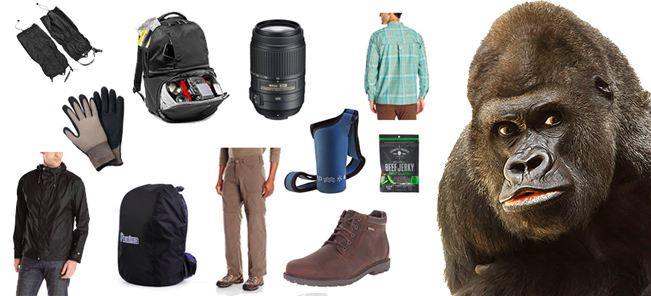
What to Pack for gorilla trekking

Pack layers in dark neutral colors, long trousers and long-sleeved shirts, a lightweight waterproof jacket, waterproof ankle-supporting hiking boots that have been worn in, gaiters, thin gardening gloves for gripping vegetation, a hat, sunscreen, insect repellent, a refillable water bottle of at least two liters, and a daypack. Bring a camera with a decent low-light capability and a lens that reaches at least 200 millimeters, switch off the flash entirely, and carry spare batteries, as cold mornings drain them fast. Avoid bright colors and strong perfume. Leave drones at home, because they are not permitted in the park.

Rules that protect the gorillas

You must not eat or drink in the presence of the gorillas, you must not approach them closer than seven meters, you must wear a surgical mask if you are unwell or if the guide asks you to, and you must not trek if you have a cold or other contagious illness. Gorillas share around ninety-eight percent of their DNA with humans and are susceptible to human respiratory infections, which is why the rules are enforced firmly and why tourism revenue also funds veterinary monitoring.

Health, Safety, and Vaccination Considerations for a Gorilla Safari

Rwanda is among the safest and best-organized countries in Africa for visitors, but a gorilla safari still requires basic health preparation, and the most important step is to take advice from a travel-medicine clinic six to eight weeks before departure.

Vaccinations and malaria

A yellow fever certificate is required if you are arriving from or transiting a country with yellow fever transmission, and standard recommended vaccinations for East Africa include hepatitis A, typhoid, and tetanus, with rabies and meningitis considered for some itineraries. Malaria risk is lowest at the high altitude of Volcanoes National Park and higher in Kigali and Akagera, so prophylaxis is usually recommended for itineraries that include lower-altitude areas. Ask your clinic for advice specific to your route.

Safety on the ground

Kigali is clean, orderly, and widely regarded as one of the safest capitals on the continent, and the northern road to Musanze is well maintained. Every trek is escorted by armed rangers as a standard precaution against wildlife encounters and not because of any particular risk. Our team provides a full pre-departure briefing and is reachable throughout your stay.

Is Gorilla Trekking in Rwanda Worth the Cost?

Gorilla trekking in Rwanda is worth the cost for travelers who value rarity, intimacy, and conservation impact, because there are only around 1,063 mountain gorillas left on earth, roughly 604 of them in the Virunga massif that includes Volcanoes National Park, and nothing else in wildlife travel puts you on foot within a few meters of an animal of this significance. The cost is the mechanism that makes the experience possible.

When the mountain gorilla census of 1981 counted only about 254 animals in the Virungas, extinction within a generation seemed likely. The recovery since then has depended on a model in which tourism revenue gives local communities and governments a direct economic reason to protect gorillas, supported by the veterinary care of the Gorilla Doctors and the patient research tradition begun by Dian Fossey in 1967. The International Union for Conservation of Nature now records the population as growing, which is why mountain gorillas are listed on the IUCN Red List as endangered rather than critically endangered.

On a per-minute basis, the permit looks extravagant, but on a per-memory basis it does not. Guests who have trekked gorillas almost universally describe the hour as the most affecting wildlife encounter of their lives, and the quality of the lodges, guides, and logistics that surround it in Rwanda is what turns a single hour into a fully realized journey. It is also one of the few expensive travel purchases that does measurable good: your fee pays rangers, funds veterinary teams, and builds schools.

Combining Gorilla Trekking with Other Rwanda and East Africa Experiences

Gorilla trekking pairs naturally with the rest of Rwanda’s compact, varied landscape and with the great safari circuits of Tanzania and Kenya, and the most satisfying luxury itineraries combine volcano, rainforest, and savannah in a single journey. The permit cost stays the same, no matter what you add, so the question is how best to spend the rest of your budget.

Within Rwanda

Add two nights in Akagera for Big Five game drives, two nights in Nyungwe for chimpanzees and the canopy walk, and a night or two on the shores of Lake Kivu for boat trips and village visits.

Into Tanzania and Kenya
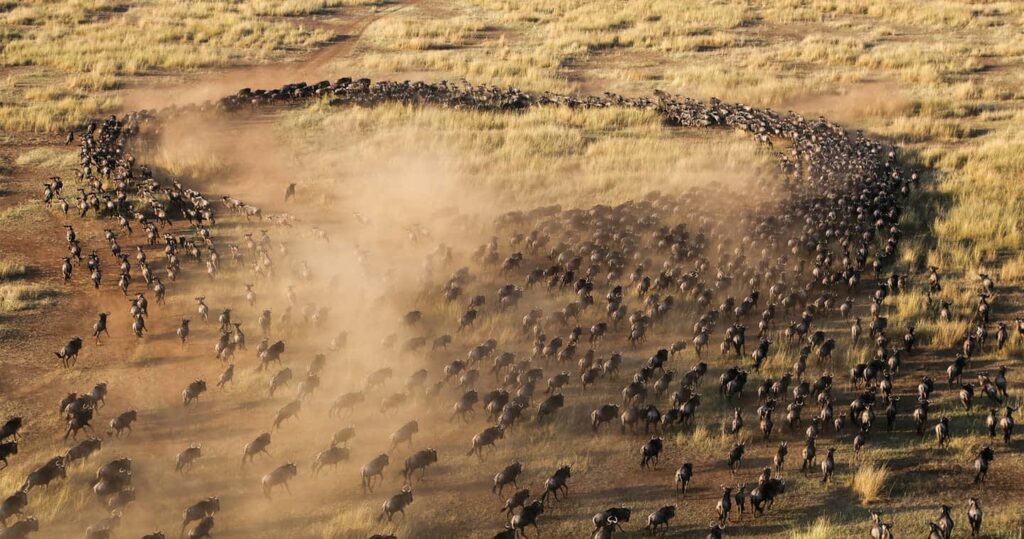
Great Migration in the Masai Mara

Rwanda opens a classic East African circuit. Our gorillas and Great Migration safari guides Volcanoes with the Serengeti and the Ngorongoro Crater can be extended to Zanzibar, while our primates and plains safari connects gorillas with the Masai Mara in Kenya. For more profound Kenya experiences, consider Laikipia’s private conservancies or Amboseli beneath Kilimanjaro. See all of our Tanzania safaris and Kenya safaris for further options.
Plan Your Rwanda Safari

Start Planning a Private Gorilla Trek

Rwanda gorilla permits sell out months in advance. Secure your dates before the season closes.

Frequently Asked Questions About the Cost of Gorilla Trekking in Rwanda.

How much does gorilla trekking cost in Rwanda?

A gorilla trekking permit in Rwanda costs USD 1,500 per person, and a complete luxury gorilla safari typically costs USD 7,000 to USD 15,000 per person once lodges and ground logistics are added. The permit is issued by the Rwanda Development Board and covers park entry, a ranger-guide, trackers, and one hour with a habituated gorilla family in Volcanoes National Park. Lodge nights are the largest additional cost, with the top properties charging roughly USD 2,400 to USD 3,800 per person per night. A refined three-day trip can be done for about USD 4,500 to USD 5,500 per person, while a signature four-day stay runs USD 11,000 to USD 13,000. International flights, visas, tips, and insurance are extra. Our team provides an itemized quotation for your exact dates.

How much is a gorilla permit in Rwanda in 2027 and 2028?

The Rwanda gorilla permit is USD 1,500 per person for international visitors in 2027, and the price is the same for 2028 travel at the time of writing. There is no seasonal variation, so a permit costs the same in July as it does in April. RDB announced separate promotional rates in January: USD 200 for Rwandans and East African Community citizens and USD 500 for other African nationals, but these do not apply to most international visitors and exclude the June to October peak. Rates are set by the Rwanda Development Board, so you should confirm the current figure at the time of booking. The permit is paid in advance and is tied to a specific date.

Why is gorilla trekking so expensive in Rwanda?

Gorilla trekking is expensive in Rwanda because the Rwanda Development Board deliberately uses a high permit price to limit visitor numbers and fund conservation. Only around one hundred permits are issued each day for Volcanoes National Park, with eight visitors per gorilla family and one visit per family per day. Ten percent of park revenue is committed to community projects around the park, and the rest supports ranger salaries, anti-poaching patrols, and veterinary care through the Gorilla Doctors program. The mountain gorilla population has grown to about 1,063 animals worldwide, and the tourism model is widely credited as the main reason. Higher prices also reduce the cumulative stress on habituated families and attract visitors who value the experience. The high fee is therefore a conservation instrument rather than a margin.

Is gorilla trekking cheaper in Uganda than in Rwanda?

Gorilla trekking permits are cheaper in Uganda, at USD 800 per person compared with USD 1,500 in Rwanda, but the total trip cost is not always lower. The Uganda Wildlife Authority sells permits for Bwindi Impenetrable Forest and Mgahinga Gorilla National Park. The USD 700 saving can be offset by the road journey from Entebbe, which takes eight to ten hours, or by the cost of a domestic charter flight. Rwanda’s Volcanoes National Park is only about two to two and a half hours from Kigali and has the strongest concentration of ultra-luxury lodges. Uganda offers more habituated families and a longer habituation experience.

How much does an exclusive or private gorilla trek cost in Rwanda?

An exclusive private gorilla trek in Rwanda costs approximately USD 15,000 for the group, compared with USD 1,500 per person for a standard permit. It gives a single group exclusive access to a habituated gorilla family for the day, with no other visitors in the forest. For a group of eight the per-person cost falls to roughly USD 1,875, which is only a modest premium over the standard permit. Lodge, vehicle, and guide costs are additional. It is chosen by honeymooners, photographers, families with older members, and private clients who want complete control over their pace.

How do I book a gorilla permit in Rwanda?

You book a Rwanda gorilla permit through the Rwanda Development Board’s online channels or through a licensed tour operator, and the full fee of USD 1,500 per person is paid at the time of booking. You will need your passport details, your preferred trekking date, and payment. The operator route is usually easier because the permit date must be coordinated with your lodge nights and flights. Once payment is received, you receive official confirmation of your trekking date, and the gorilla family is assigned at the briefing on the morning of the trek. Permits are date-specific and subject to RDB’s strict change and refund rules. Please provide us with your dates, and we will check availability and secure the permit for you.

How far in advance should I book a Rwanda gorilla permit?

For travel between June and September or over Christmas and New Year, you should book your Rwanda gorilla permit six to twelve months in advance. These periods have the highest demand, and with only about one hundred permits available each day, popular dates sell out quickly. For March to May and October to November, three to six months is usually sufficient. Exclusive-use permits and larger group trips need even longer lead times. Cancellations sometimes release last-minute permits, so it is always worth asking even at short notice. Our team monitors availability continuously.

What does the Rwanda gorilla permit include?

The Rwanda gorilla permit includes park entry to Volcanoes National Park, a ranger guide, trackers, an armed escort, and one hour with a habituated gorilla family. It also includes a completion certificate. It does not include accommodation, transfers, meals, a porter, tips, visas, flights, or travel insurance. Golden monkey trekking at USD 100 and chimpanzee trekking in Nyungwe at USD 150 are separate permits. A porter typically costs about USD 20 for the day. Lodge rates usually include meals and drinks but never the permit.

Is there a discount on the Rwanda gorilla permit?

There is no general discount, but a low-season multi-park incentive has historically reduced the permit to about USD 1,050 for travelers who spend at least two nights in Akagera or Nyungwe between November and May. This represents a saving of around USD 450 per person, or thirty percent, and eligibility depends on the current RDB rules. The January 2026 promotional rates of USD 200 for Rwandans and East African Community citizens do not apply to international visitors. You should treat any operator offering a permit below the official price outside these programs with caution. We confirm whether the multi-park incentive is in force when we price your itinerary. It is most valuable for guests who already plan to visit another park.

How much does a luxury gorilla safari in Rwanda cost per person?

A luxury gorilla safari in Rwanda costs roughly USD 11,000 to USD 13,000 per person for four days at one of the signature lodges, excluding international flights. Wilderness Bisate, Singita Kwitonda Lodge, and One&Only Gorilla’s Nest charge about USD 2,400 to USD 3,800 per person per night. Three nights at a blended rate of USD 3,000 per night totals USD 9,000, plus the USD 1,500 permit, a USD 100 golden monkey trek, and private ground logistics. A more refined three-day trip costs about USD 4,500 to USD 5,500. Multi-park journeys of seven to ten days reach USD 15,000 to USD 30,000. Solo travellers should expect to pay twenty to thirty percent more per person.

What is the best time of year for gorilla trekking in Rwanda?

The best time for gorilla trekking in Rwanda is the long dry season from June to September, with December to February as a strong alternative. Trails are firmer, skies are clearer, and treks are physically easier in the dry months. The wet seasons of March to May and October to November bring mud and rain but fewer visitors and lodge rates that can be twenty-five to thirty percent lower. The permit costs USD 1,500 in every month, so the seasonal saving comes from lodges. Gorillas can be trekked all year because the families do not leave the trekking areas in the rains. Book peak dates six to twelve months ahead.

How difficult is gorilla trekking in Rwanda?

Gorilla trekking in Rwanda ranges from moderate to strenuous, and a trek can last from thirty minutes to five hours each way. Difficulty depends on where the gorilla family slept the night before, which no one can predict. Trails cross farmland, bamboo forests, and steep, muddy slopes at altitudes between roughly 2,400 and 3,000 meters. Hiring a porter for about USD 20 and using a walking stick makes a significant difference. Operators can request that older or less mobile guests be matched with a family that tends to range closer to the trailhead. The minimum age is fifteen.

How much should I tip on a gorilla trek in Rwanda?

A customary tip for the ranger-guide and trackers on a gorilla trek in Rwanda is USD 20 to USD 50 per person, pooled and given at the end of the trek. Your driver-guide should receive about USD 15 to USD 25 per day, and the lodge has a staff tip box for general contributions at departure. Porters are usually paid about USD 20 for the day, and a gratuity on top is customary. Tips are not included in the permit price or in standard lodge rates. A sensible allowance for porters and tips together is USD 300 to USD 800 per person. We brief all guests on tipping before they travel.

How do I get from Kigali to Volcanoes National Park?

The journey from Kigali International Airport to Volcanoes National Park takes about two to two and a half hours by road, a distance of roughly 110 kilometers. The route passes through Musanze to the park headquarters at Kinigi, where the briefing starts at 7:00 AM. A private vehicle with a driver guide is the standard luxury transfer and typically costs USD 250 to USD 400 one way if arranged separately. Private charter flights and helicopter transfers can be arranged for guests who want a much shorter journey. Most lodges are twenty to thirty minutes from Kinigi. We arrange all transfers as part of our itineraries.

Do I need a visa and vaccinations for a Rwanda gorilla safari?

Most visitors need a Rwanda visa, which costs USD 50 for thirty days on a single entry and can be bought on arrival or online through Irembo. The multiple-entry visa costs USD 70, and the East Africa Tourist Visa, valid across Rwanda, Kenya, and Uganda, costs USD 100. A yellow fever certificate is required if you are arriving from or transiting through a country with yellow fever transmission. Hepatitis A, typhoid, and tetanus vaccinations are generally recommended, and malaria prophylaxis is usually advised for lower-altitude areas such as Kigali and Akagera. Passports should be valid for at least six months. Consult a travel-medicine clinic six to eight weeks before departure.

Ready to Trek? Permits are limited — plan early.

Plan and Book Your Rwanda Gorilla Safari with Rwanda Gorilla Expeditions

If the figures in this guide have helped you decide that a gorilla trek belongs in your travel plans, the most valuable next step is to fix a date, because permits are limited and the best lodges fill many months ahead. Rwanda Gorilla Expeditions is a specialist operator based in Rwanda, and we handle permit booking, lodge reservations, private transfers, and in-country support so that you can concentrate on the experience. Every itinerary is private and designed around your dates, your fitness, and your budget, and every quotation is itemized with no hidden extras.

You can learn more about our team, read more in our travel journal, or explore our gorilla trekking experiences before you decide. Tell us your dates and we’ll check permit availability within a few minutes. You can chat with a specialist on WhatsApp, send us an inquiry through our contact guide, or write to rwandagorillaxpeditions@gmail.com, and we will return with a clear, itemized plan for your Rwanda journey.