Rwanda National Parks at a Glance: Size, Location, and Drive Times.
Rwanda’s 4 national parks cover very different regions, with Akagera the largest at roughly 1,085 square kilometers, Nyungwe next at about 1,019 square kilometers, Volcanoes at 160 square kilometers, and Gishwati-Mukura the smallest at around 34 square kilometers, and the distances between them are short enough that a single private safari vehicle can link all four on one safari itinerary. The geography is easiest to understand if you imagine Kigali at the center, with Volcanoes to the northwest, Gishwati-Mukura to the west, Nyungwe to the southwest, and Akagera to the east.
Distances and drive times from Kigali
Volcanoes National Park is about 110 kilometers from Kigali International Airport, a two- or two-and-a-half-hour drive on tarmac to the park headquarters at Kinigi near the town of Musanze. Akagera’s southern gate is also roughly two to two and a half hours from the capital by road, which makes it possible to visit on a long day trip, though a night or two inside the park is far more rewarding. Gishwati-Mukura lies about three hours to the west on the road to Lake Kivu. Nyungwe is the furthest, around 225 kilometers and five to six hours from Kigali, and it is the drive that most travelers underestimate, which is why we generally route it as a one-way stage on a loop rather than as a return journey.
The logical Safari circuits
There are two sensible ways to join the parks. The western loop runs from Kigali through Nyungwe, up the shore of Lake Kivu, and on to Volcanoes, finishing with the mountain gorillas and a short return to Kigali, and it suits travelers who want the climax of the journey at the end. The eastern extension adds Akagera at the start so that the safari begins with savannah wildlife and ends with the forest.
The distances look modest, but Rwanda’s roads climb and descend constantly through the terraced hills, and a 100-kilometer trip here takes the time a hundred and fifty would in flatter countryside. The main routes are well surfaced, and the driving is orderly, but we plan every road transfer conservatively, and we always keep the longest drive away from the morning of a permit-dependent activity such as gorilla or chimpanzee trekking.
Volcanoes National Park: Gorillas, Golden Monkeys, and Volcano Hikes
Volcanoes National Park is Rwanda’s most famous protected area and the only place in the country where you can trek mountain gorillas, covering about 160 square kilometers of bamboo forest, montane woodland, and volcanic moorland on the slopes of the Virunga massif. It is also part of the larger Virunga Conservation Area that straddles the borders of Rwanda, Uganda, and the Democratic Republic of Congo, and its protected status goes back almost a century.
Mountain gorilla trekking
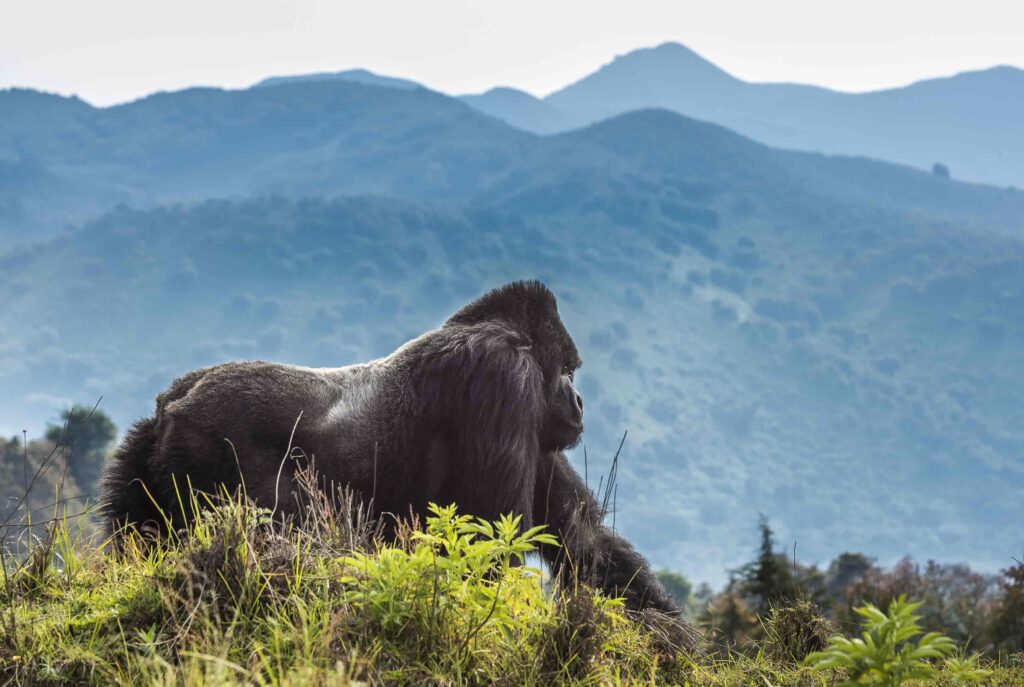
Roughly 604 of the world’s 1,063 or so mountain gorillas live in the Virunga massif, a large share of them within or beside Volcanoes National Park, and Rwanda’s habituated gorilla families are the most accessible in the world. A permit costs USD 1,500 per person, limits groups to eight visitors per gorilla family, and strictly enforces the one-hour rule. The park issues only about 192 permits a day, so dates between June and September and over the Christmas and New Year period often sell out six to twelve months ahead.
Golden monkey trekking
The golden monkey, a vividly colored primate found only in the Virunga massif, lives in large troops in the bamboo zone and is the perfect complement to a gorilla trek. The permit costs USD 100 per person, the trek is shorter and less strenuous than a gorilla trek, and unlike gorilla permits, golden monkey permits are rarely a constraint. A day of golden monkeys after a day of gorillas is the standard rhythm of our Volcanoes itineraries, and it appears in our 4-day exclusive gorilla and golden monkey safari.
Volcano hikes and the Dian Fossey trail
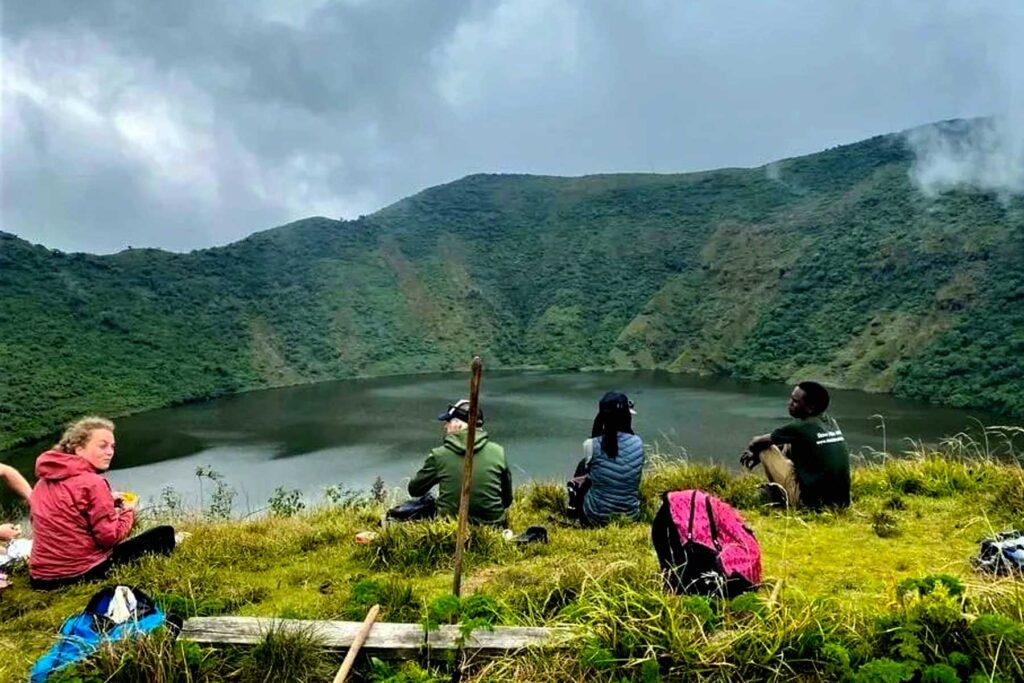
For guests with a spare day, Volcanoes offers a range of hikes for international visitors that are about USD 75 for Mount Bisoke and its crater lake, USD 75 for Mount Gahinga, USD 100 for Mount Muhabura, and USD 400 for the 2-day climb of Mount Karisimbi, which at about 4,500 meters is Rwanda’s highest peak. A guided hike to the former site of the Karisoke Research Centre, where primatologist Dian Fossey is buried beside the graves of gorillas she knew, costs about USD 75 and takes most of a day. We recommend it as a rest-day activity because it puts the whole conservation story into context, and our guests often tell us it is the most moving part of their stay after the mountain gorillas themselves.
Culture and community
The communities around the park wall are among the most visited in Rwanda, and cultural experiences at places such as the Iby’iwacu Cultural Village, where former poachers now perform traditional dance and demonstrate crafts, are included in our 3-day gorilla trekking and cultural safari. These visits are worth the time, and the revenue goes directly to the families that live along the park boundary.
Where to stay near Volcanoes
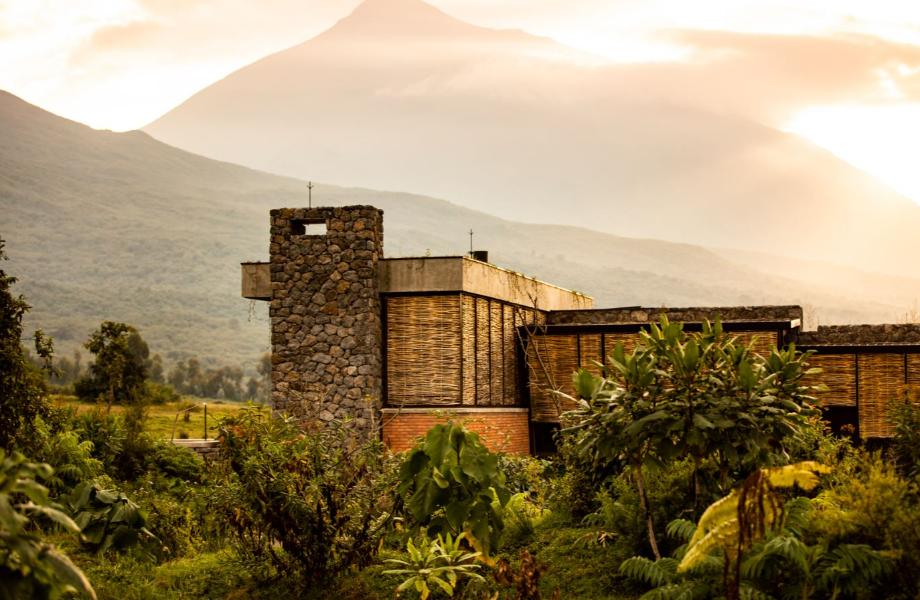
The strongest cluster of luxury lodges in East Africa sits at the foot of the Volcanoes National Park. Wilderness Bisate, Singita Kwitonda Lodge, and One&Only Gorilla’s Nest charge roughly USD 2,400 to USD 3,800 per person per night on an inclusive basis, while the more moderately priced Wilderness Sabyinyo Silverback Lodge and similar properties begin at around USD 800 to USD 1,200. All of them are within about twenty to thirty minutes of the Kinigi briefing point.
Akagera National Park: Rwanda’s Big Five Savannah
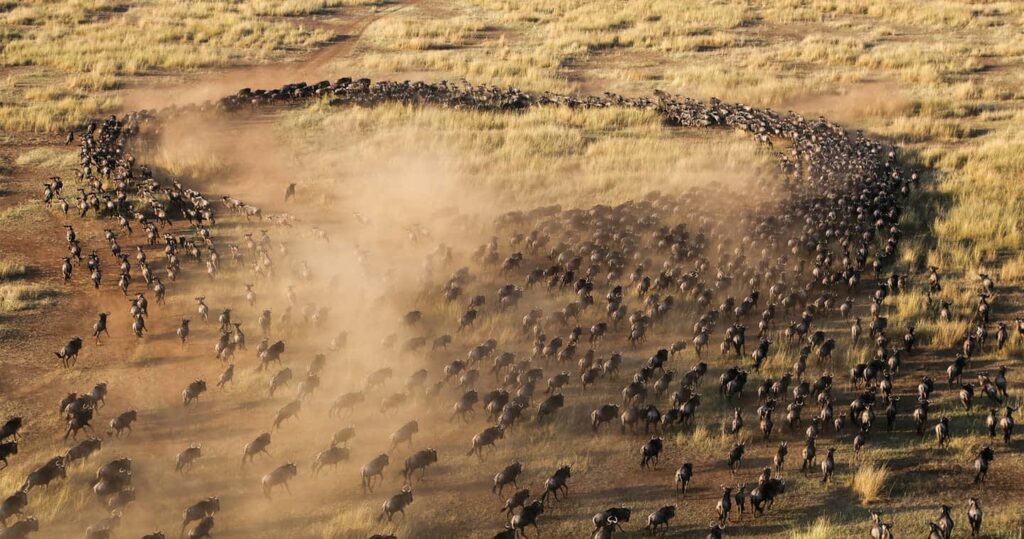
Akagera National Park is Rwanda’s only savannah reserve and its only Big Five destination, covering about 1,085 square kilometers of rolling hills, open plains, papyrus swamps, and a chain of lakes along the Tanzanian border in the east of the country, and it is one of the best conservation turnarounds in Africa. By the early 2000s the park had lost most of its wildlife to the pressures that followed the 1994 genocide, when displaced populations settled inside its boundary, and a partnership with African Parks beginning in 2010 transformed it. Lions were reintroduced in 2015 and eastern black rhinos in 2017, and today the park holds lions, elephants, buffalo, leopards, and rhinos, along with giraffes, zebras, hippos, crocodiles, topi, roan antelope, and more than 500 species of birds.
Game drives and the wildlife to expect
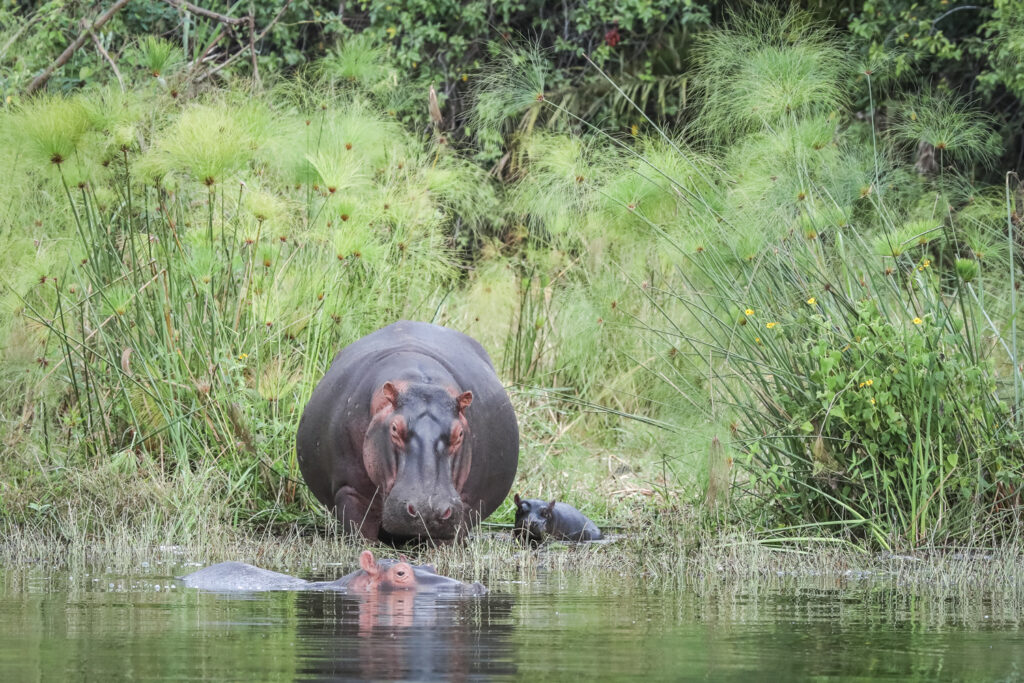
Akagera’s game viewing is more intimate and quieter than the renowned reserves of Tanzania and Kenya, with few vehicles and an excellent network of well-maintained tracks. The northern sector around the Mutumba hills and Lake Rwanyakazinga is the better area for lions and leopards, and the Ihema Lake system in the south is the heart of the hippo, crocodile, and bird country. Rhinos are monitored closely and are best found with the park’s trackers, and the best chance of elephants is in the dry season when the animals gather near water.
Boat trips, night drives, and other activities
International visitors pay about USD 100 for one day, USD 150 for two nights, and USD 200 for three nights, and there is no entry charge from the fourth night for stays of up to a week. On top of that, published activity fees include about USD 35 for a morning boat trip on Lake Ihema, USD 45 for the sunset boat trip, USD 180 for a private boat, USD 40 for a night drive and USD 25 for a behind-the-scenes tour of the park’s conservation work, with a USD 50 landing fee for aircraft flying into the park’s airstrip. A morning on the water at Lake Ihema, with pods of hippo and fish eagles overhead, is one of the finest activities in Rwanda and makes a pleasing counterpoint to the physical effort of the primate parks.
Where to stay in Akagera
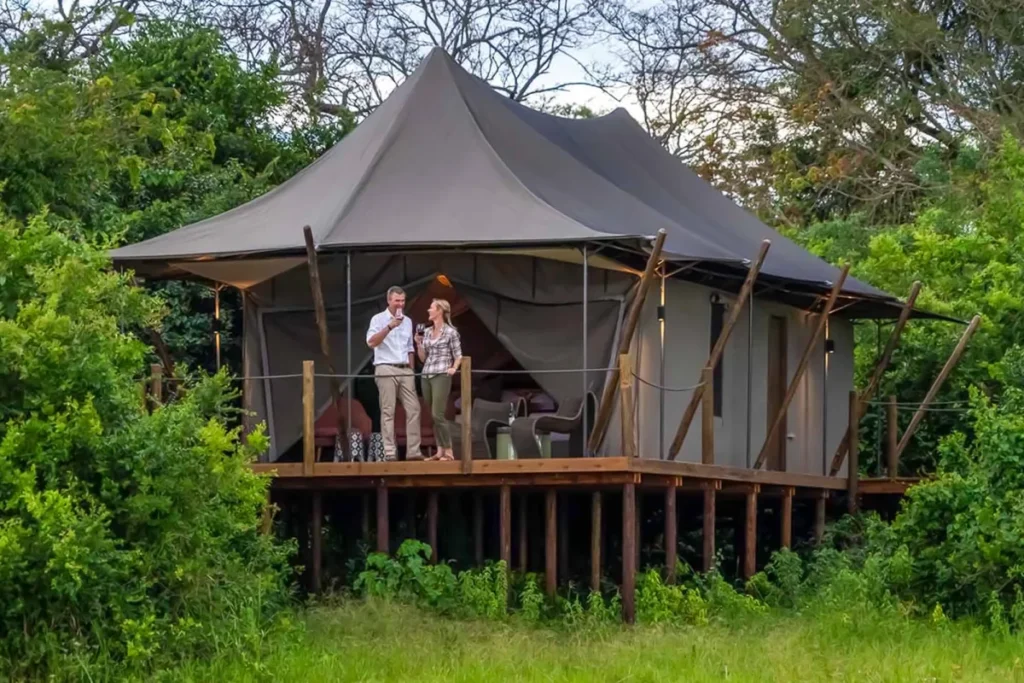
Wilderness Magashi Camp, on the shore of Lake Rwanyakazinga in the northern sector, is the standout luxury choice, a small tented camp with excellent guiding and private access to the quietest part of the park. Ruzizi Tented Lodge on Lake Ihema offers a more relaxed, mid-luxury experience with the lake as its focus. Luxury camps at Akagera typically cost from USD 700 to USD 1,500 per person per night, and a two-night stay is the ideal length to see the park without rushing.
When Akagera is at its best
The long dry season from June to September concentrates wildlife around the lakes and makes the Big Five easier to find, while the wetter months of November to April transform the park into green savannah and are the best time for birding, with large numbers of migrant species. Akagera is the lowest-altitude park in Rwanda and the warmest, so pack accordingly and bring malaria protection.
Nyungwe National Park: Chimpanzees, Canopy Walk, and Ancient Rainforest.
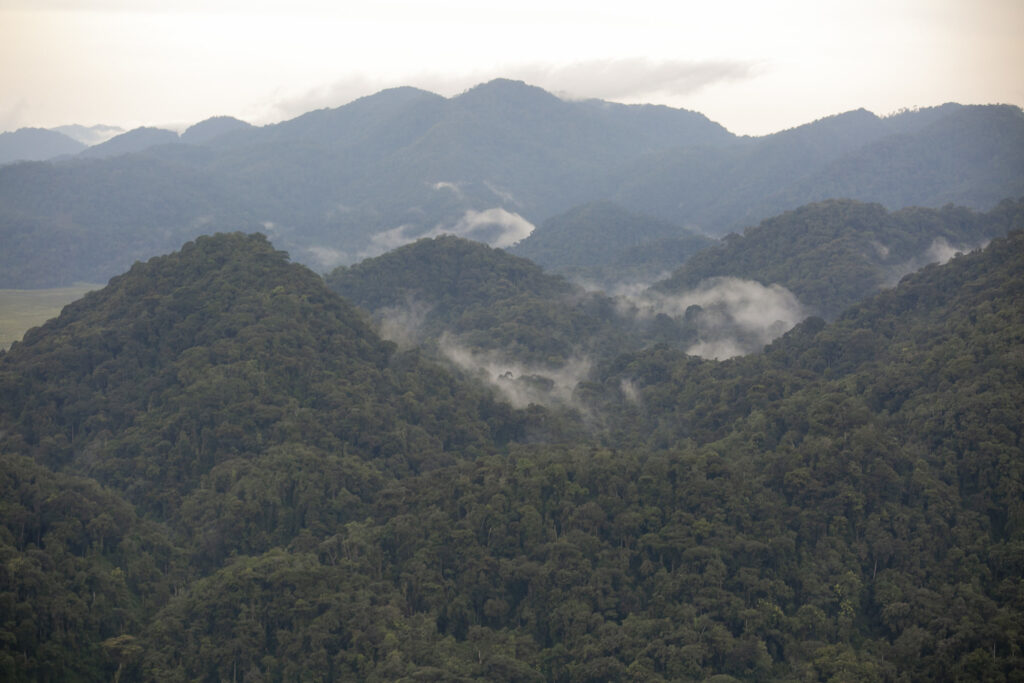
Nyungwe National Park is Rwanda’s largest forest and one of the oldest and most biodiverse montane rainforests in Africa, covering about 1,019 square kilometers in the southwest along the border with Burundi, with 13 primate species including the eastern chimpanzee, more than 300 bird species, and a canopy that has stood largely unbroken since before the last ice age. It is managed by African Parks, which assumed responsibility from the Rwanda Development Board in 2020, and its reputation among serious naturalists is higher than most visitors expect.
Chimpanzee trekking
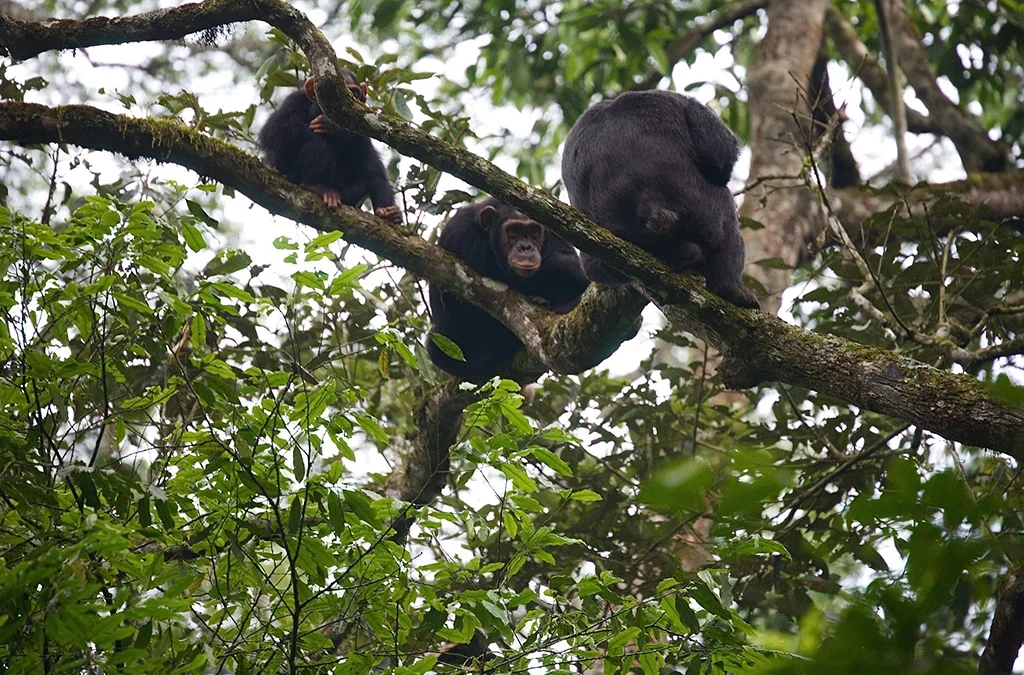
Chimpanzee trekking in Nyungwe costs about USD 150 per person, the minimum age is sixteen, and only around two dozen permits are issued each day for the habituated communities, which is why they should be booked well ahead. Treks begin early, typically in the pre-dawn hours, and the pace is faster and the terrain more varied than at Volcanoes, because chimpanzees move quickly through the canopy. The experience is noisy, active, and unpredictable, which is exactly the contrast with gorillas that many guests come for. Of the park’s estimated chimpanzee population of roughly 500, only a few communities have become habituated to visitors.
The canopy walk and other forest activities
The canopy walkway, one of only a handful in Africa, begins at the Uwinka visitor center and suspends visitors high above the forest floor, putting them somewhere between 50 and 70 meters above the ground, with walks run on a fixed morning and afternoon schedule. Other activities include guided birding, night walks, waterfall hikes, and tracking other primates, such as L’Hoest’s monkeys and the large troops of Angolan colobus that move through the forest.
The source of the Nile
Nyungwe is often cited as the location of the most distant headwaters of the Nile, through the Rukarara and associated streams that flow into the Kagera system and eventually to Lake Victoria. This detail is pleasing for travelers who want to place their safari in a larger geographical context, and it is one that guides at Uwinka are happy to explain.
Where to stay in Nyungwe
One&Only Nyungwe House
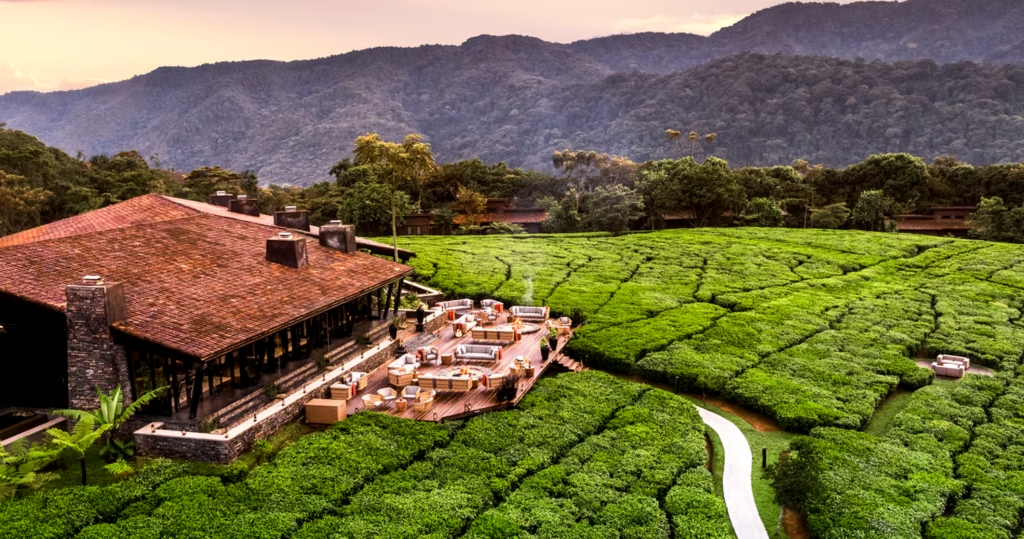
One&Only Nyungwe House, on the edge of the forest beside a working tea estate, is the benchmark luxury address, and it offers private guided activities, a spa, and some of the best food in southern Rwanda. Several mid-range lodges serve travelers on smaller budgets, and the tea plantations around Gisakura are worth a morning in themselves. We recommend two nights, because the long drive in and out is not worth making for a single night.
Weather and what to expect
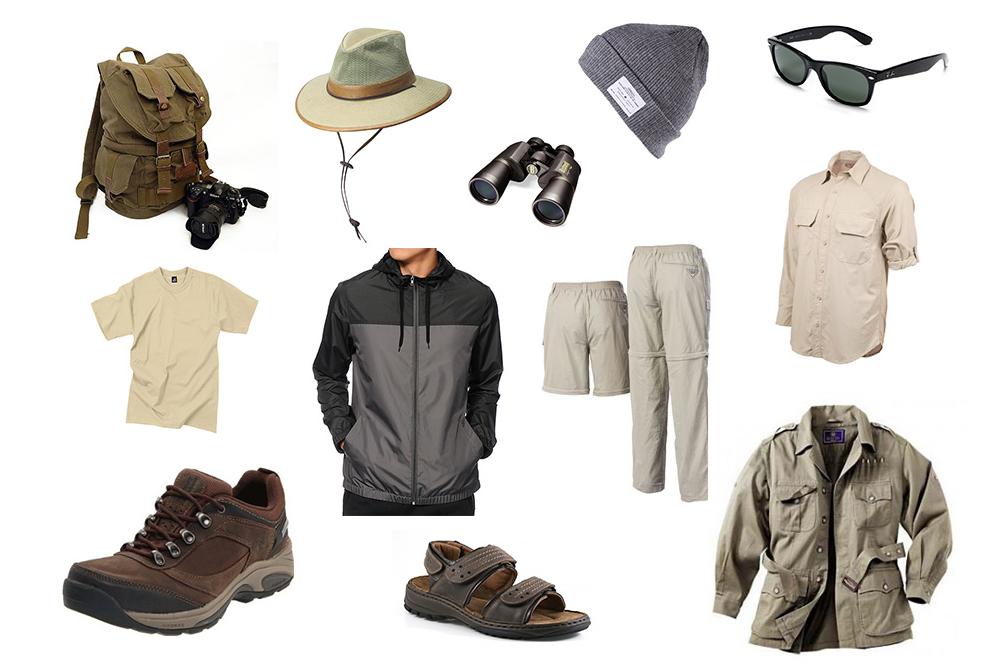
Nyungwe is wetter and cooler than the other parks, and mist is common year-round, so waterproofs and sturdy boots are essential. The dry season from June to September is the most reliable period for the canopy walk and chimpanzee treks, but it is never truly dry.
Gishwati-Mukura National Park: Rwanda’s Newest Park
Gishwati-Mukura National Park is Rwanda’s newest and smallest national park, created in 2015 to protect two remnant montane forests, Gishwati and Mukura, on the ridge between the Congo and Nile basins, and in 2020 UNESCO recognized it as a biosphere reserve. The park covers about 34 square kilometers and is the product of a decades-long recovery from severe deforestation, with chimpanzees, golden monkeys, and a growing number of bird species now returning to the replanted slopes. The Wilderness and the Forest of Hope Association operate the Gishwati concession, and they opened the forest to visitors in December 2020.
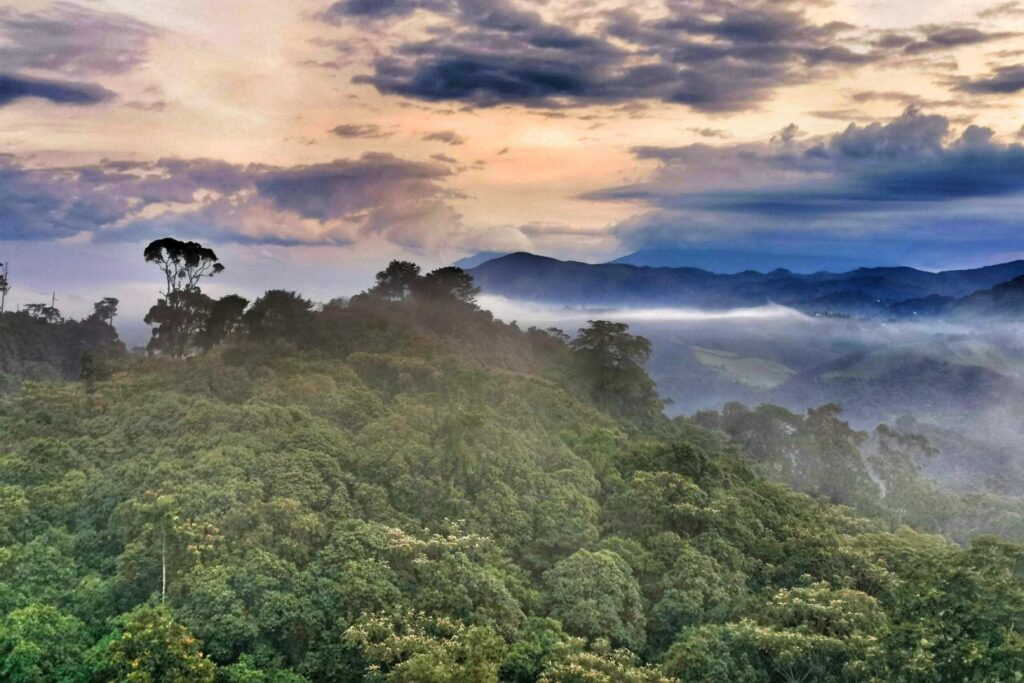
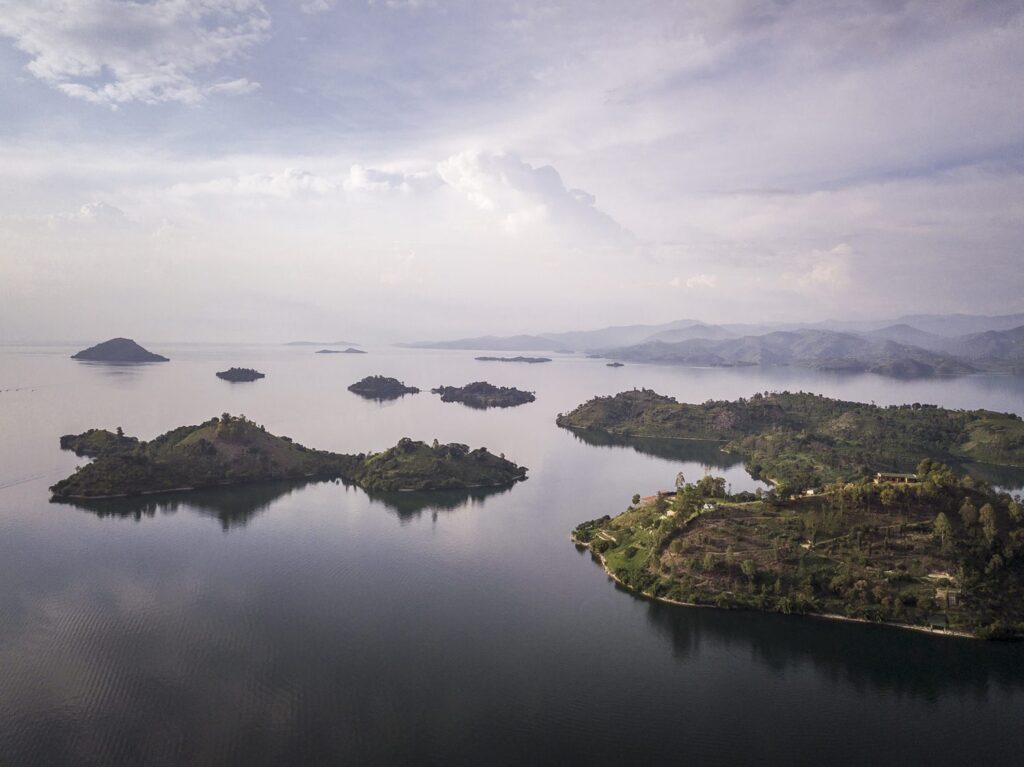
Activities center on chimpanzee tracking, golden monkey tracking, guided hiking, and birding in a forest that is smaller, quieter, and less crowded than Nyungwe. It is best treated as a 2-night extension rather than a standalone destination, and it fits naturally between Nyungwe and Volcanoes on the road beside Lake Kivu.
Gishwati-Mukura rewards travelers who have already seen the headline experiences and want something quieter, those with a particular interest in forest restoration, and anyone who wants to see conservation in the making. It is not the place for a first-time visitor with only a few days.